A Complete Smile Transformation in Pennsylvania: What You Need to Know First
Quick answer: A complete smile transformation in Pennsylvania combines cosmetic and restorative dental procedures — like veneers, crowns, implants, and whitening — into one personalized plan that fixes how your teeth look and function.
What a complete smile transformation typically includes:
- Veneers or crowns — to correct chips, cracks, discoloration, or uneven teeth
- Dental implants or bridges — to replace missing teeth and preserve jawbone health
- Teeth whitening — to brighten the overall shade before or alongside other work
- Invisalign or orthodontics — to fix spacing, crowding, or bite alignment
- Gum contouring — to balance the gumline for a more proportional smile
- Digital Smile Design — to plan and preview your results before treatment begins
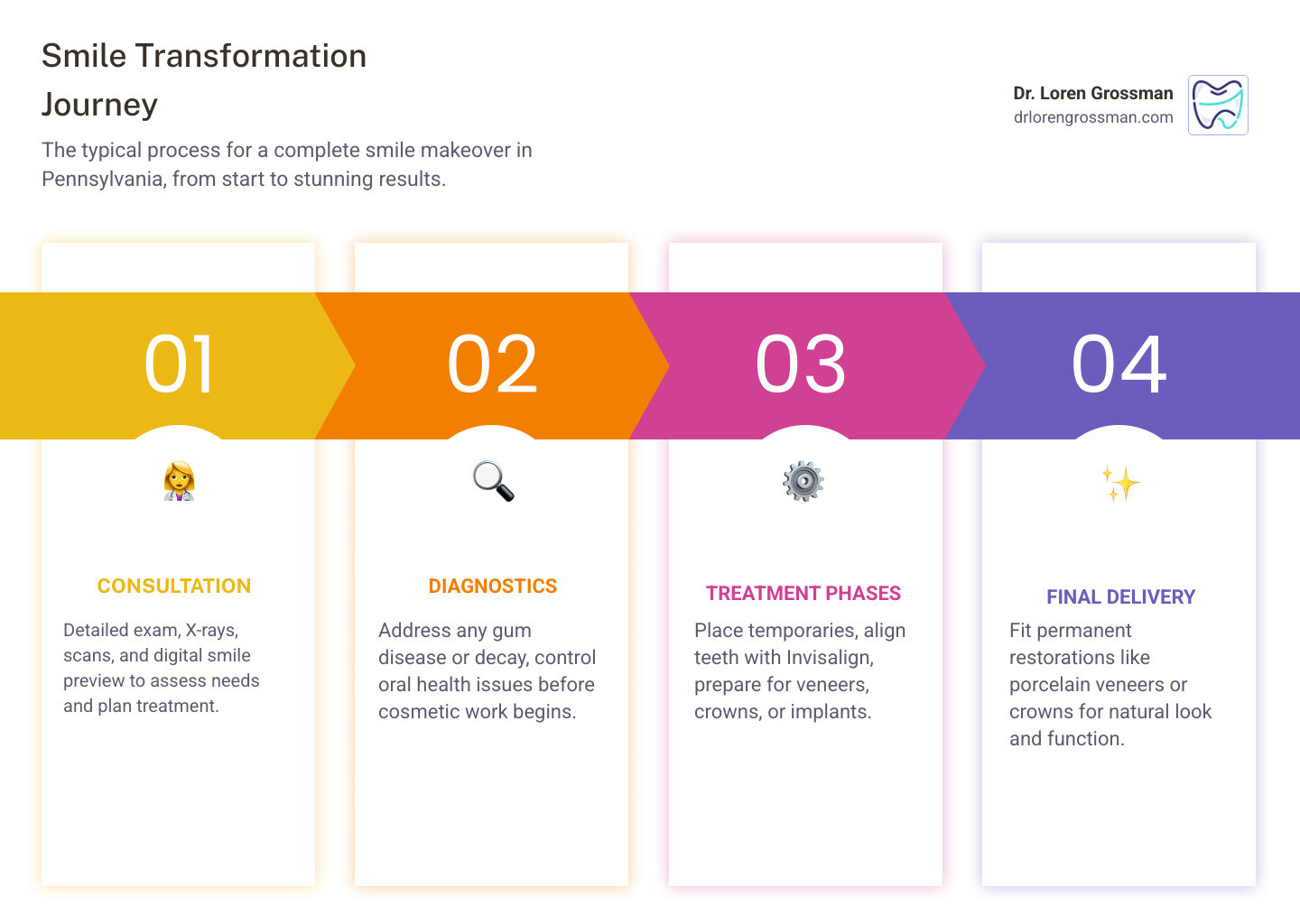
Most full smile transformations take 3 to 6 months, though complex cases can take longer. Treatment is done in phases — starting with a consultation and diagnostics, then any restorative groundwork, then cosmetic finishing.
A lot of people in Northeastern Pennsylvania feel held back by teeth they’re embarrassed about — whether that’s staining, chips, gaps, or missing teeth. The good news is that modern cosmetic dentistry can address all of these concerns in a single, coordinated treatment plan. You don’t have to settle for a smile that makes you want to hide.
I’m Dr. Loren Grossman, a cosmetic and family dentist serving the Wyoming Valley since 1984, and over the past four decades I’ve helped countless patients achieve a complete smile transformation in Pennsylvania — handling everything from simple veneers to complex full-mouth rehabilitations personally, from start to finish. In this guide, I’ll walk you through everything you need to know to make a confident, informed decision about your own smile journey.
What a Complete Smile Transformation in Pennsylvania Really Means
A smile transformation is not just “make my teeth whiter and send me on my way.” Sometimes whitening is part of it, but a true full transformation blends aesthetic dentistry with restorative care, bite stability, and long-term oral health.
For some patients, this means a few carefully planned cosmetic upgrades. For others, it means full mouth rehabilitation, where we rebuild worn, broken, or missing teeth so the smile looks natural and functions comfortably again. In other words, we are not only thinking about how the front teeth look in photos. We are also thinking about how you chew, how your bite fits together, how your gums support your teeth, and how your smile fits your face.
What is a complete smile makeover or transformation?
A complete smile makeover is a personalized treatment plan designed to correct multiple concerns at once, such as:
- Crooked teeth
- Chipped or cracked teeth
- Deep staining or discoloration
- Spaces or gaps
- Missing teeth
- Worn-down teeth
- Uneven tooth shapes
- An imbalanced gumline
- Old dental work that no longer looks natural
The goal is harmony. We want teeth that are healthy, comfortable, proportionate, and believable. “Believable” matters more than people think. The best smile makeover usually does not scream, “I had dentistry done.” It just looks like you were lucky enough to be born with a great smile.
Who is a candidate for a complete smile transformation in Pennsylvania?
Many adults are candidates, especially if they have more than one issue happening at the same time. Common examples include:
- Teeth worn down by grinding
- Missing teeth that affect chewing or appearance
- Gum disease that needs stabilization before cosmetic work
- Older crowns, fillings, or bridges that are failing
- Bite problems causing uneven wear
- Patients who have avoided treatment because of anxiety
- Adults who want to finally fix concerns they have hidden for years
Complex cases are often the best examples of why a comprehensive plan matters. If a patient has worn teeth, shifting bite, and missing teeth, doing one isolated procedure may not solve the larger problem. A full evaluation lets us design the right sequence and avoid patchwork dentistry.
Which Problems a Smile Makeover Can Fix

A smile makeover can fix more than many patients realize. Some concerns are clearly cosmetic, like stains or chips. Others start as health problems and become cosmetic problems too, like tooth loss, enamel wear, or bite collapse.
Common cosmetic and restorative issues Pennsylvania patients want to correct
The most common concerns we see include:
- Stained or dark teeth that no longer respond well to over-the-counter whitening
- Chipped, cracked, or broken teeth
- Uneven front teeth
- Small gaps or crowding
- Worn enamel from grinding or acid erosion
- Old metal fillings or outdated dental work
- Missing teeth
- A collapsed bite from long-term wear
- Gumline asymmetry or a gummy smile
- Bone loss in areas where teeth have been missing
These problems often overlap. A patient may come in saying, “I just want whiter front teeth,” but the real picture may include bite wear, old crowns, and a missing back tooth that changed how everything functions. That is why diagnosis comes first.
Health benefits beyond looks
A great smile makeover should improve health and daily life, not just aesthetics.
Benefits can include:
- Better chewing function
- Clearer speech
- Improved bite balance
- Support for the lips and facial profile
- Better gum health
- Protection for weakened teeth
- Reduced strain on the jaw joints
- Improved confidence and self-esteem
Replacing missing teeth is especially important. When a tooth is missing, the jawbone in that area can gradually shrink because it no longer gets normal stimulation. That bone loss can affect both oral health and facial appearance over time. Implants can help preserve that support.
Procedures Often Included in a Full Smile Transformation
A complete smile makeover is custom, not cookie-cutter. We choose procedures based on your goals, oral health, bite, timeline, and budget.
Common treatments include:
- Porcelain veneers
- Crowns
- Dental implants
- Implant bridges
- Traditional bridges
- Professional whitening
- Invisalign or clear aligners
- Cosmetic bonding
- Gum contouring
- Replacement of old restorations
Some cases involve only two or three of these. Others involve a phased combination.
How veneers, crowns, whitening, and Invisalign work together
Veneers are thin porcelain coverings bonded to the front of visible teeth. They are often used to improve shape, color, minor spacing, and symmetry.
Crowns cover the entire tooth and are often better for teeth that are heavily restored, cracked, root canal treated, or structurally weakened. Materials such as high-quality ceramics can create lifelike translucency while also providing strength.
Whitening is often used before veneers or crowns when natural teeth will remain visible. That helps us match restorations to a brighter, more uniform shade.
Invisalign or clear aligners can be a smart first step when crowding, spacing, or bite alignment is part of the problem. Sometimes moving teeth first allows us to be more conservative later and remove less natural tooth structure.
Here is a simple comparison:
| Treatment | Best for | Covers full tooth? | Typical role in a makeover |
|---|---|---|---|
| Veneers | Front-tooth color, shape, minor alignment issues | No | Cosmetic refinement |
| Crowns | Weakened, broken, worn, or heavily filled teeth | Yes | Strength plus aesthetics |
| Whitening | General discoloration | No | Brightens natural teeth |
| Invisalign | Crowding, spacing, bite issues | No | Prepares foundation for final cosmetics |
Shade matching is a big part of good planning. We do not want one tooth looking like a piano key next to a natural tooth. We choose colors and translucency carefully so the final result fits your face and looks realistic.
When implants or full-arch options are part of complete smile transformation pennsylvania plans
Missing teeth often require restorative treatment, not just cosmetic treatment.
Depending on the case, options may include:
- A single implant for one missing tooth
- An implant-supported bridge for multiple missing teeth
- A traditional bridge in select cases
- Full-arch implant restoration for major tooth loss
- Bone grafting or ridge preservation where support is limited
Implants are valuable because they replace the root as well as the visible tooth. That helps preserve bone and creates stable support. In full-arch cases, temporary teeth may sometimes be placed during treatment so patients are not left in a long awkward in-between phase.
If you want to explore your options, you can learn more about smile makeover services.
Advanced technology used by Pennsylvania cosmetic dentists
Modern smile design is much more precise than it used to be. Today, advanced cosmetic dentists may use:
- Digital photography
- Intraoral scanning instead of messy traditional impressions
- 3D imaging for implants and bite analysis
- Digital smile design to preview outcomes
- Guided implant surgery for precision
- High-quality ceramic materials
- Sedation options for anxious patients
Digital planning helps us see the big picture before treatment begins. That is especially helpful in full smile cases, where each tooth needs to relate properly to the others, to the bite, and to facial proportions.
Timeline, Cost, Recovery, and Maintenance
One of the most common questions we hear is, “How long is this going to take?” The honest answer is: it depends on what needs to happen first. Cosmetic work should not be rushed past untreated decay, gum disease, or bite instability.
How long does a complete smile transformation pennsylvania process take?
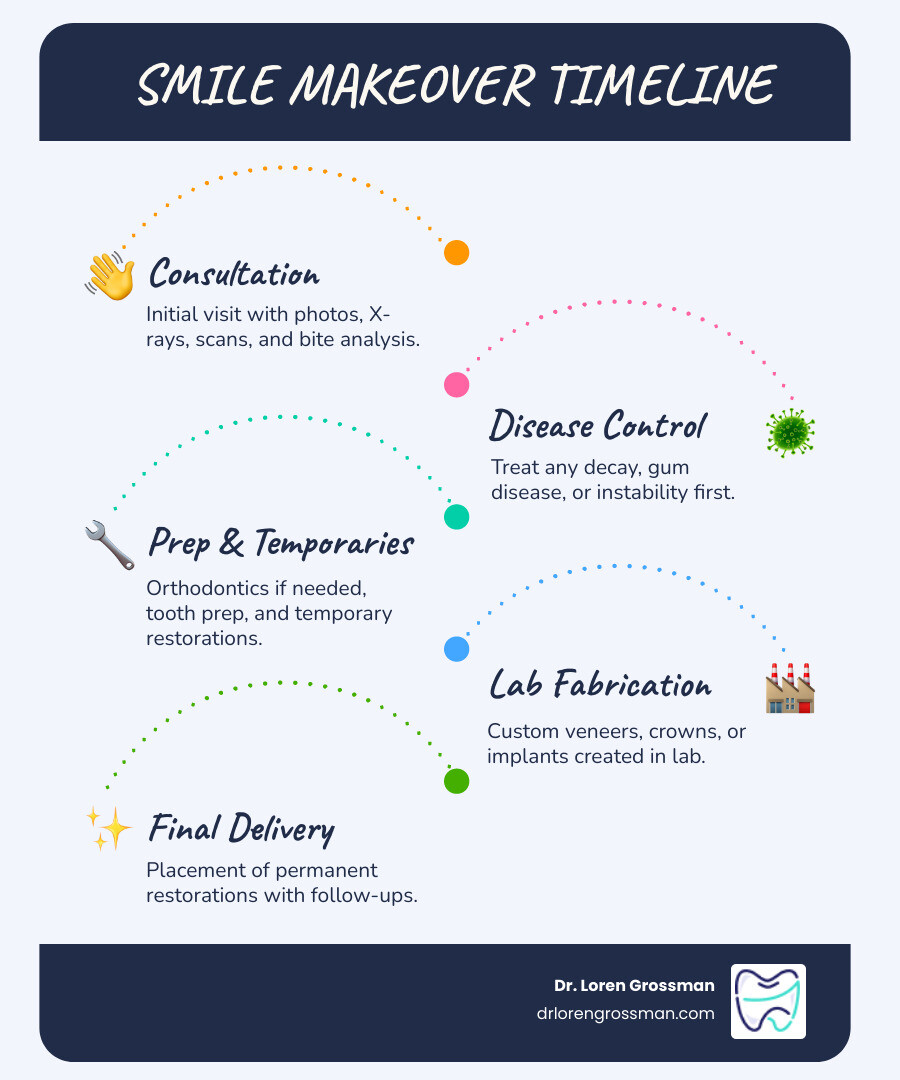
For many cases, the full process takes about 3 to 6 months. That matches common timelines reported for full mouth rehabilitation plans. More complex cases can take longer, especially if implants, grafting, orthodontics, or gum treatment are needed first.
A typical sequence looks like this:
- Consultation and planning
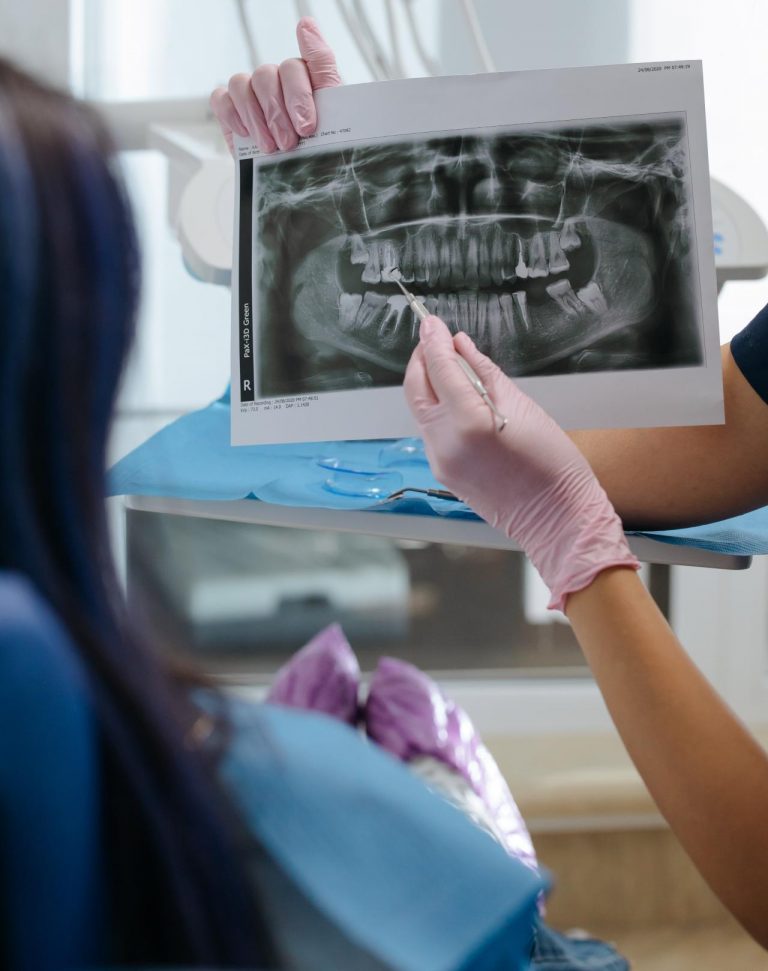
- Photos, X-rays, scans, and bite analysis
- Disease control, if needed
- Orthodontics or preliminary restorative work
- Tooth preparation and temporaries
- Lab fabrication
- Final delivery of veneers, crowns, implants, or bridges
- Follow-up visits and long-term maintenance
Some patients move through this quickly. Others phase care over time for comfort, healing, or budgeting reasons. There is no prize for finishing fastest. The prize is getting it done right.
Typical cost ranges and financing options in Pennsylvania
Smile makeover cost varies widely because there is no one-size-fits-all treatment plan.
Costs depend on factors such as:
- Number of teeth involved
- Whether veneers or crowns are needed
- Whether implants are part of the plan
- Whether orthodontics is needed first
- Material choice
- Lab complexity
- Whether gum or bone procedures are necessary
In general, patients may see pricing discussed in terms of per-tooth treatment for veneers or crowns, while larger rehabilitations may be quoted as a full-case plan. Insurance often has limited coverage for cosmetic procedures, but some restorative components may qualify when treatment is medically necessary.
Many patients make treatment more manageable through:
- Monthly payment plans
- Third-party financing
- Phased treatment
- Using insurance toward eligible restorative portions
The best way to get a realistic estimate is with a consultation and detailed treatment plan. We can show you what is necessary, what is optional, and what sequence makes the most sense financially.
Risks, recovery times, and long-term maintenance
Every dental procedure has tradeoffs, and good treatment planning means discussing them clearly.
Possible short-term effects may include:
- Tooth sensitivity after preparation or whitening
- Mild gum soreness
- Temporary bite adjustment discomfort
- Healing time after implant placement or grafting
- Adjustment period with temporaries or new restorations
Longer-term maintenance may include:
- Wearing a night guard if you grind your teeth
- Using retainers after Invisalign
- Keeping up with cleanings and exams
- Avoiding habits like chewing ice or opening packages with your teeth, which we strongly do not recommend despite your teeth’s ambitions
- Replacing restorations over time as needed
Restoration lifespan varies by material, bite forces, hygiene, and habits. Good home care and regular maintenance visits can make a major difference in longevity.
How to Choose the Right Dentist and What to Expect as a Patient
Choosing the right dentist for a full smile transformation matters just as much as choosing the right treatment. This is not the time for guesswork or bargain-bin shortcuts.
Look for a dentist who offers:
- Strong cosmetic and restorative experience
- Comprehensive diagnosis, not just quick sales talk
- Before-and-after examples of similar cases
- Clear communication
- A step-by-step treatment plan
- Quality materials and lab support
- Attention to bite and function, not only color
- Options for anxious patients, including sedation when appropriate
What happens during a smile makeover consultation?
At a proper consultation, we usually begin by listening. What bothers you? What would you change? What do you want your smile to feel like, not just look like?
Then the records phase may include:
- Photos
- X-rays
- Intraoral scans or impressions
- Gum evaluation
- Bite analysis
- Review of old restorations
- Discussion of goals and candidacy
In some cases, digital smile planning can help preview the direction of treatment. We can also talk through whether a concern is best handled with veneers, crowns, Invisalign, implants, or a combination.
By the end, you should understand:
- What problems are present
- Which ones need to be treated first
- What your options are
- How long treatment may take
- What maintenance will be required
- What the estimated investment looks like
For a closer look at the process, you can find more info about smile makeover services.
Questions to ask before committing to treatment
Before you say yes to a full case, ask smart questions such as:
- Have you treated cases like mine before?
- Do I need cosmetic treatment, restorative treatment, or both?
- Will I need Invisalign before veneers or crowns?
- Are implants recommended for my missing teeth?
- What materials are being used?
- How natural will the final result look?
- Will I have temporary teeth during treatment?
- How long will healing take?
- What maintenance will I need?
- What financing options are available?
- Should I get a second opinion for a complex case?
A good dentist should welcome these questions, not dodge them.
Real Results: What Successful Pennsylvania Smile Transformations Have in Common
The details vary from case to case, but successful smile makeovers tend to share the same core ingredients: planning, sequencing, realism, and follow-through.
Before-and-after patterns seen in real smile makeover cases
Across real-world smile rehabilitation cases, common patterns include:
- Worn or damaged back teeth restored with crowns
- Front teeth enhanced with veneers for shape and color
- Missing teeth replaced with implants or bridges
- Whitening used to improve the overall shade
- Bite correction completed before final cosmetics
- Temporary restorations used to test function and appearance
- Full mouth reconstruction when isolated fixes would not hold up
In more advanced cases, treatment may happen in phases so we can stabilize the mouth first and then refine the cosmetics. That phased approach is often what turns a dramatic case into a lasting success.
A few success factors we see again and again:
- Accurate diagnosis
- Healthy gums before cosmetic work
- Bite stability
- Thoughtful shade selection
- Realistic timelines
- Consistent maintenance after treatment
Why complete smile transformations often change confidence and daily life
This is the part patients remember most.
A complete smile transformation can change daily life by helping patients:
- Smile freely in photos
- Speak with less self-consciousness
- Eat more comfortably
- Feel more polished at work
- Reduce discomfort from worn or unstable teeth
- Stop hiding their mouth when they laugh
It is not vanity. It is quality of life. When you are no longer thinking about the tooth you hate every time you talk, that mental space opens up in a big way.
Patients often tell us the biggest change is not just the mirror. It is how normal life feels afterward. Ordering food is easier. Meetings feel easier. Family photos feel easier. Sometimes the most powerful result is simply not thinking about your teeth all day anymore.
Start Your Smile Makeover Journey in Northeastern Pennsylvania
If you are considering a complete smile transformation in Pennsylvania, the next step is a comprehensive consultation with a team that understands both aesthetics and function.
At Dr. Loren Grossman, we provide personalized cosmetic and restorative care in Kingston, Pennsylvania with a patient-first approach, advanced technology, and careful planning for every smile. Whether you are looking to brighten a few teeth or rebuild your smile more fully, we help you understand your options clearly and move at a pace that feels comfortable.
Our goal is simple: create a smile that looks natural, feels strong, and supports your confidence for the long term.
To get started, visit more info about smile makeover services.