A Brighter Smile Starts With Choosing the Right Method
If you’re exploring the best teeth whitening treatment options, here’s a quick breakdown to help you decide:
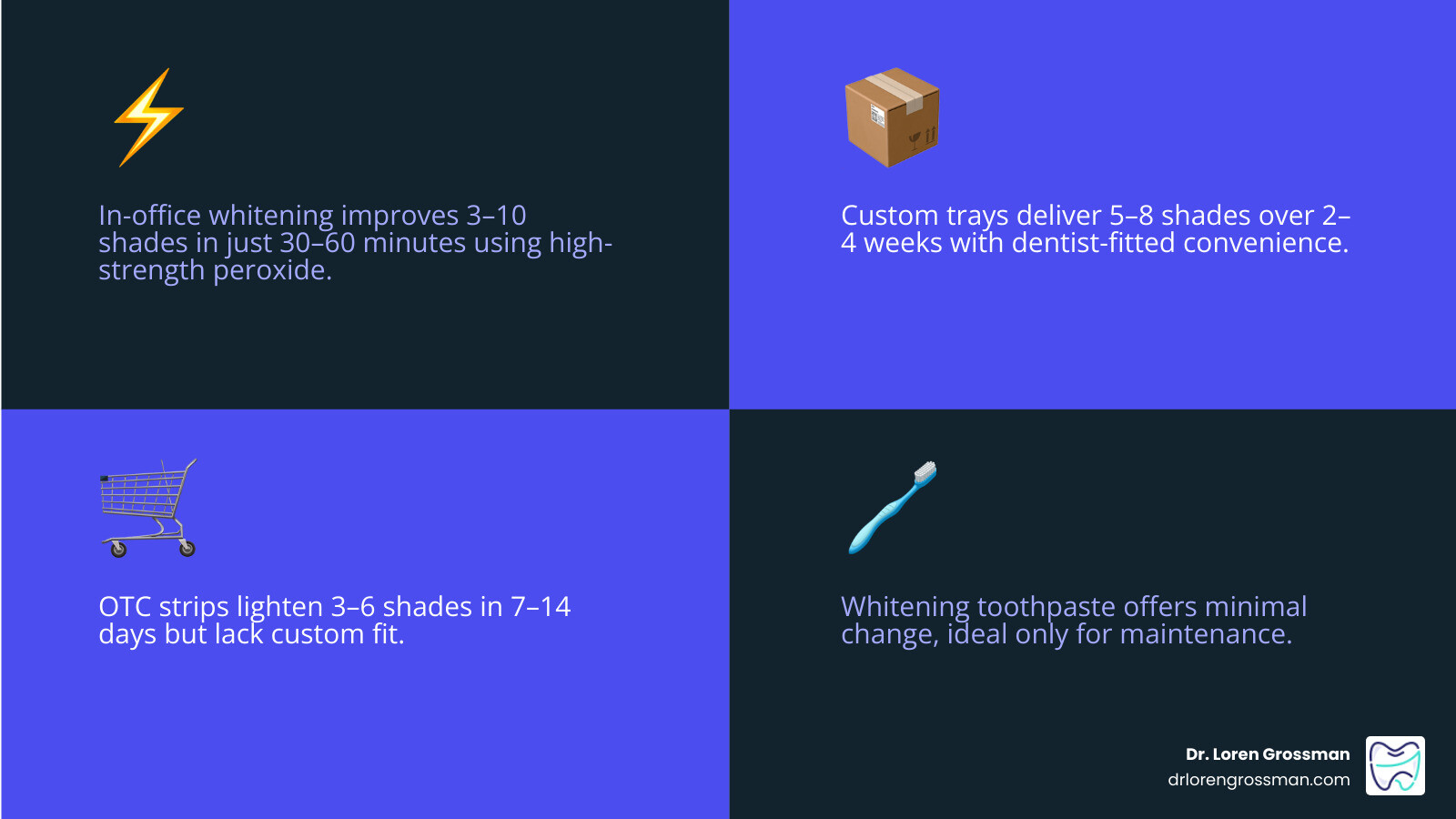
| Method | Shades Improved | Cost | Time to Results |
|---|---|---|---|
| In-office whitening (e.g., Zoom) | 3–10 shades | $300–$1,000 | 1 session (30–60 min) |
| Custom take-home trays | 5–8 shades | $150–$400 | 2–4 weeks |
| OTC whitening strips | 3–6 shades | $30–$60 | 7–14 days |
| Whitening toothpaste | Minimal | $5–$20 | Gradual (maintenance only) |
Most of us brush our teeth every day — and still end up with a smile that looks more coffee-stained than camera-ready. That’s because regular brushing removes plaque, not the deeper discoloration that builds up inside and on the surface of tooth enamel over time.
Teeth whitening is now the most requested cosmetic dental procedure in the world — and for good reason. A brighter smile can do a lot for your confidence. But with dozens of options out there, from grocery store strips to in-office laser treatments, it’s easy to feel overwhelmed about where to start.
This guide breaks down every major whitening method — how it works, what it costs, how long results last, and who should (or shouldn’t) try it.
I’m Dr. Loren Grossman, D.M.D., a cosmetic and family dentist with over 40 years of experience helping patients across Northeastern Pennsylvania achieve their best smiles — including with advanced systems like the Zoom II chairside whitening treatment. Helping patients navigate the best teeth whitening treatment options for their specific needs is a core part of what I do, and this guide reflects everything I’ve learned doing exactly that.
How Teeth Whitening Works: Bleaching vs Surface Stain Removal
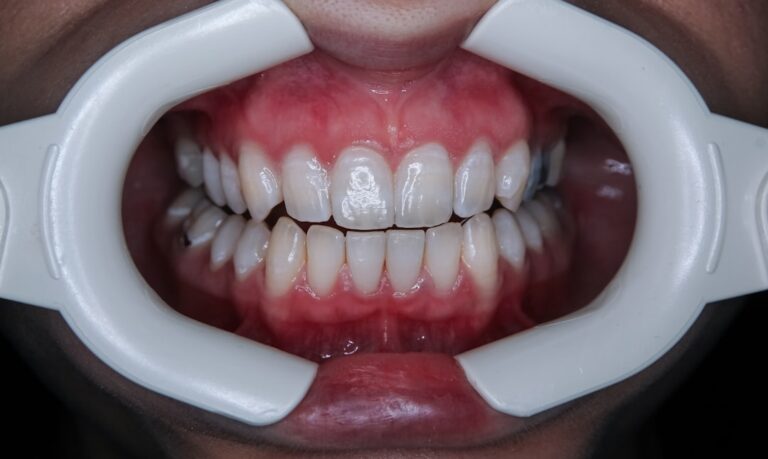
To understand the best teeth whitening treatment options, we first have to look at what’s happening under the microscope. Did you know that your tooth enamel actually looks like chicken wire when magnified? This porous structure allows stain molecules from coffee, tea, and red wine to settle deep within the “matrix” of the tooth.
There are two primary ways to tackle these stains: chemical bleaching and mechanical abrasion.
- Extrinsic Stains: These are surface-level discolorations caused by food, drink, or smoking. They sit on top of the enamel.
- Intrinsic Stains: These are internal. Over time, the “chicken wire” matrix of your enamel traps pigments, or the yellowish dentin layer beneath the enamel becomes more visible.
Why peroxide-based bleaching is usually the best teeth whitening treatment options for deeper stains
When we talk about true whitening, we are talking about oxidation. Peroxide—either hydrogen peroxide or carbamide peroxide—is the gold standard. When applied to the teeth, the peroxide releases oxygen molecules that “bubble out” the stains from the enamel matrix.
Hydrogen peroxide is the faster-acting agent, often used in professional settings at concentrations ranging from 15% to 43%. Carbamide peroxide is more stable and is frequently found in at-home kits (typically 10% to 35%). Because peroxide can penetrate the enamel to reach intrinsic stains, it changes the actual color of the tooth rather than just scrubbing the surface.
Why abrasive whitening helps only surface discoloration, not internal yellowing
Abrasive methods, such as whitening toothpastes containing hydrated silica or DIY trends like activated charcoal, do not bleach the teeth. Instead, they act like sandpaper to polish away extrinsic stains.
While this can make teeth look slightly brighter by removing “gunk,” it won’t change the underlying hue of your smile. Furthermore, overusing highly abrasive materials like charcoal or baking soda can actually wear down your enamel, making your teeth more sensitive and potentially revealing more of the yellow dentin underneath—the exact opposite of the result you want!

Ranking the Best Teeth Whitening Treatment Options by Results, Cost, and Speed
Choosing a method usually involves balancing three factors: how fast you want results, how much you want to spend, and how much sensitivity you can tolerate.
Best teeth whitening treatment options for fastest and most dramatic results
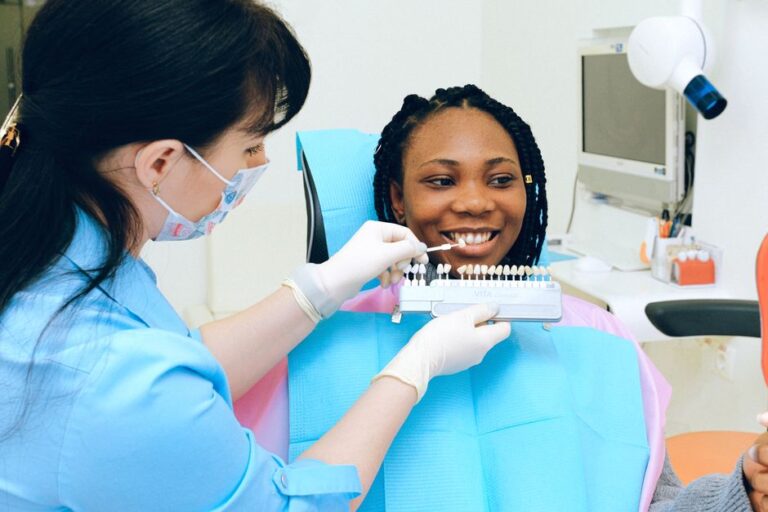
If you have a wedding in Kingston next week or a major presentation, professional in-office whitening is the undisputed winner. Using high-concentration gels and often LED or laser activation, we can lighten teeth by 3 to 10 shades in just one hour.
The process involves applying a protective gum barrier to prevent irritation, followed by the whitening gel. This method is the safest because it is monitored by a dental professional. While the cost ranges from $300 to $1,000, the speed and safety are unmatched. You can learn more about our specific Zoom whitening services to see if this high-impact option is right for you.
Best teeth whitening treatment options for value and at-home convenience
For those who prefer to whiten while watching TV, custom take-home trays provided by a dentist offer a fantastic middle ground. We take an impression of your teeth to create a tray that fits perfectly, ensuring the gel stays on your teeth and off your gums.
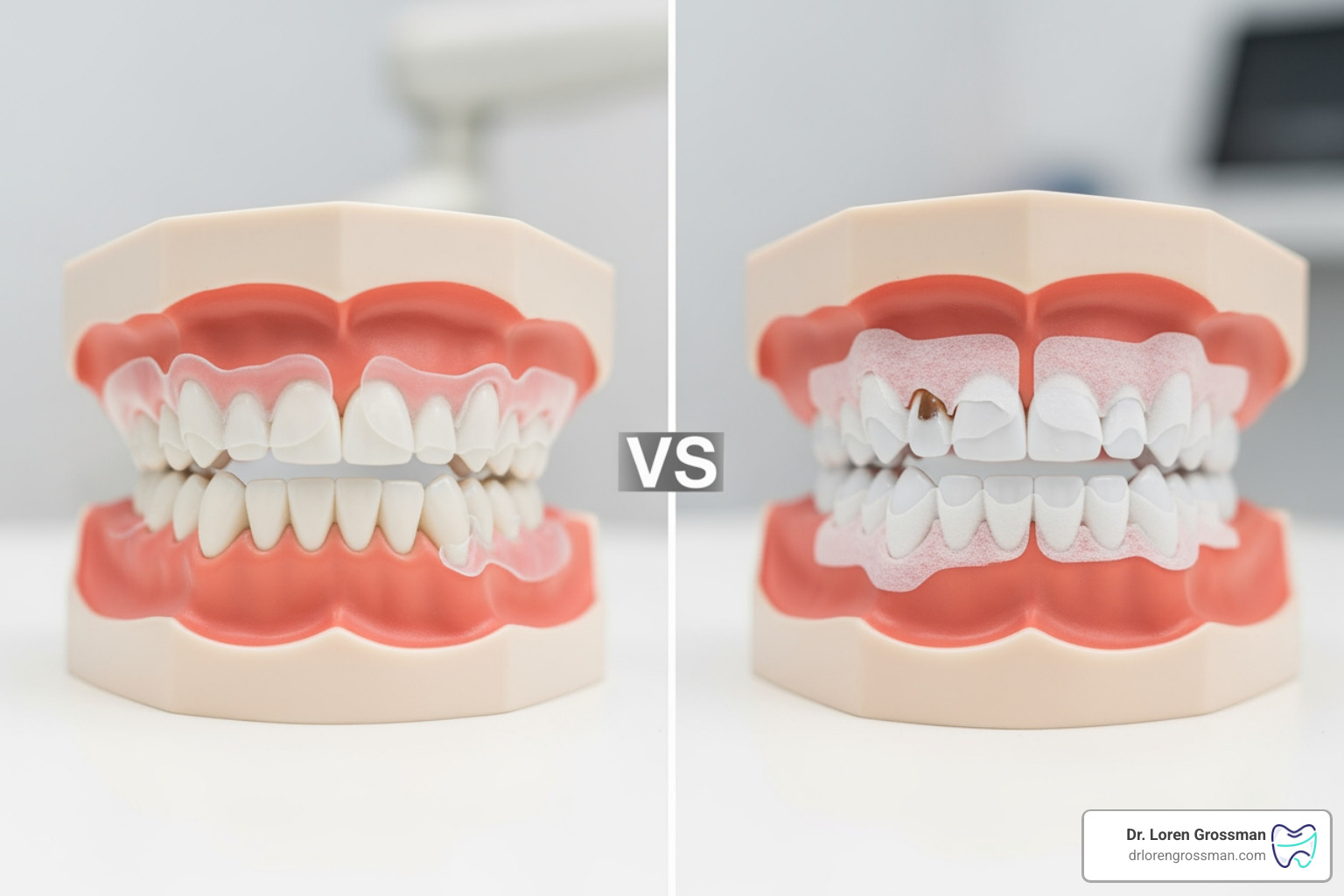
These trays typically produce a 5 to 8 shade improvement over two to four weeks. Over-the-counter (OTC) strips, like Crest 3D Whitestrips, are also popular and can achieve a 3 to 6 shade improvement. However, because they aren’t custom-fitted, they may not reach every nook and cranny. For more details on these varied approaches, check out our teeth whitening services page.
Best option for sensitive teeth, mild stains, and maintenance between professional visits
If you already have a fairly bright smile and just want to keep it that way, low-peroxide formulas or whitening pens are excellent. Whitening toothpastes are best used as a maintenance tool rather than a primary treatment. If you struggle with sensitivity, look for products containing desensitizing agents like potassium nitrate.
In-Office vs At-Home Whitening: What Actually Lasts Longer?
A common question we hear in our Kingston office is: “Which one stays white the longest?” The answer isn’t just about the product; it’s about the “relapse” factors in your lifestyle.
How professional chairside whitening compares with take-home trays and strips
Professional whitening uses a much higher concentration of peroxide (up to 43%) compared to OTC kits (3% to 20%). This allows for a deeper “deep clean” of the enamel matrix. However, some studies suggest that the slower, gradual whitening achieved with custom trays can be more stable long-term because the peroxide has more time to fully saturate the teeth over several weeks.
For a comprehensive look at the differences, this Teeth Whitening Guide 2026: Methods, Costs & Results provides excellent context on what to expect from various professional and retail systems.
How long whitening results last and how to keep teeth brighter longer
On average, professional whitening results last anywhere from 6 months to 3 years. To maximize this window, we recommend:
- The “White Diet”: For the first 48 hours after treatment, avoid dark liquids like coffee and balsamic vinegar.
- Use a Straw: This bypasses the front teeth.
- Storage Tips: Store your whitening gel in the refrigerator to extend its shelf life.
- Routine Touch-ups: Using your custom trays for a single night every few months can maintain that “just-whitened” look indefinitely.
For more on maintaining that glow, read about our Zoom Teeth Whitening maintenance protocols.
Safety First: Side Effects, Ingredients to Look For, and Who Should Skip Whitening
While whitening is generally safe, it is still a chemical process. Roughly 30% to 50% of users experience some level of transient sensitivity.
Ingredients dentists prefer and ingredients worth avoiding
- Look For: Hydrogen peroxide, carbamide peroxide, and fluoride (to help strengthen enamel).
- Avoid: Hydrated silica in high amounts and activated charcoal, which can be too abrasive. Also, be wary of highly acidic DIY “natural” recipes involving lemon juice, which can literally dissolve your enamel.
Common whitening side effects and how to prevent them
The most common side effect is “zingers”—sharp, temporary pains in the teeth. This happens because the whitening process temporarily opens the pores in your enamel. You can manage this by:
- Using a desensitizing toothpaste two weeks before whitening.
- Shortening your wear time.
- Consulting us to ensure your trays fit perfectly, preventing gum irritation.
Who should talk to a dentist before whitening or avoid it altogether
Whitening isn’t for everyone. We generally recommend that the following groups wait or seek alternative cosmetic options:
- Pregnant or nursing women: There isn’t enough research to guarantee safety for the baby.
- Those with untreated cavities: The whitening gel can travel through the cavity to the nerve—ouch!
- People with crowns or veneers: Bleach only works on natural tooth structure. If you whiten your teeth, your porcelain crowns will stay the same color, leading to a mismatched smile.
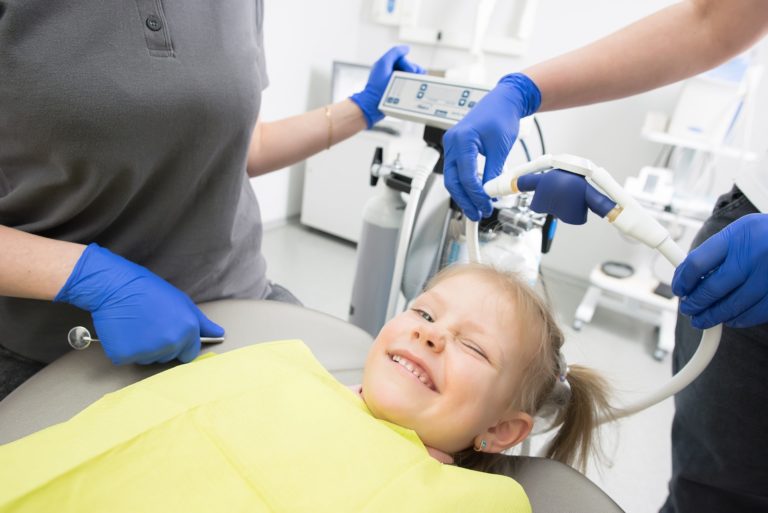
- Children: We usually recommend waiting until all permanent teeth have erupted and the tooth pulp is fully developed. You can find more specific advice in our article Is Teeth Whitening Safe for Kids? What Parents Should Know.
For a deeper dive into safety, visit Whiten Your Way: The Safest Methods for a Brighter Smile.
Natural Methods and Popular At-Home Products: What’s Worth Trying?
In the age of social media, “natural” whitening hacks are everywhere. But do they actually work?
Are natural remedies like baking soda, oil pulling, and charcoal effective or safe?
- Oil Pulling: While great for oral hygiene and reducing bacteria, there is no scientific evidence that it actually whitens teeth.
- Baking Soda: It’s a mild abrasive that can help with surface stains, but it won’t change your tooth’s base color.
- Activated Charcoal: We generally advise against this. It’s messy and often too abrasive for daily use.
What dentists want you to know before buying an at-home whitening product
Before you click “buy” on that viral kit, check the peroxide percentage. If it doesn’t list the active ingredients, skip it. For a curated list of what’s working this year, you can check out the Best At-Home Teeth Whitening Products of 2026 for a Brighter Smile or our own Buyer’s Guide: Best Teeth Whitening Options for 2026.
Frequently Asked Questions About the Best Teeth Whitening Treatment Options
Should you get a dental exam and cleaning before whitening?
Yes, absolutely. If you have plaque or tartar (calculus) on your teeth, the whitening gel will only whiten the tartar, not the tooth underneath. When the tartar is eventually removed, you’ll be left with “polka-dot” teeth. A professional cleaning ensures the gel has direct contact with the enamel.
Can whitening work on crowns, veneers, or fillings?
No. If you are planning to get a “smile makeover,” we usually recommend whitening your natural teeth first, then color-matching the new crowns or veneers to your new, brighter shade. This is a key part of Teeth Whitening for the Perfect Smile Makeover.
How often is it safe to whiten your teeth?
Over-whitening can lead to a translucent, grayish appearance and permanent sensitivity. Generally, one full treatment a year with minor touch-ups every 6 months is the maximum we recommend for maintaining a healthy, vibrant look.
Conclusion: The Right Whitening Method Depends on Your Stains, Sensitivity, and Goals
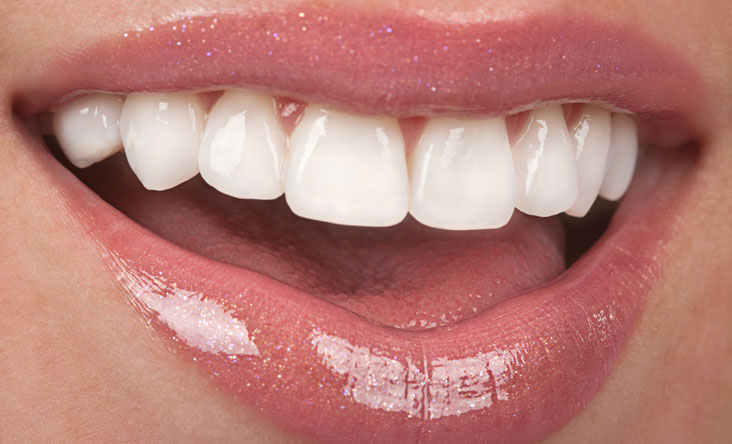
At the end of the day, the best teeth whitening treatment options are the ones that fit your lifestyle and keep your teeth healthy. Whether you choose the immediate “wow” factor of an in-office Zoom session or the steady progress of custom take-home trays, the goal is a smile that makes you feel like the best version of yourself.
If you’re in Kingston or the surrounding Northeastern Pennsylvania area, we’d love to help you navigate these choices. We provide personalized care and advanced technology to ensure your transformation is both beautiful and safe. Ready to see the difference? Explore our teeth whitening services and schedule your consultation today.