Simple Ways to Feel Calmer at the Dentist
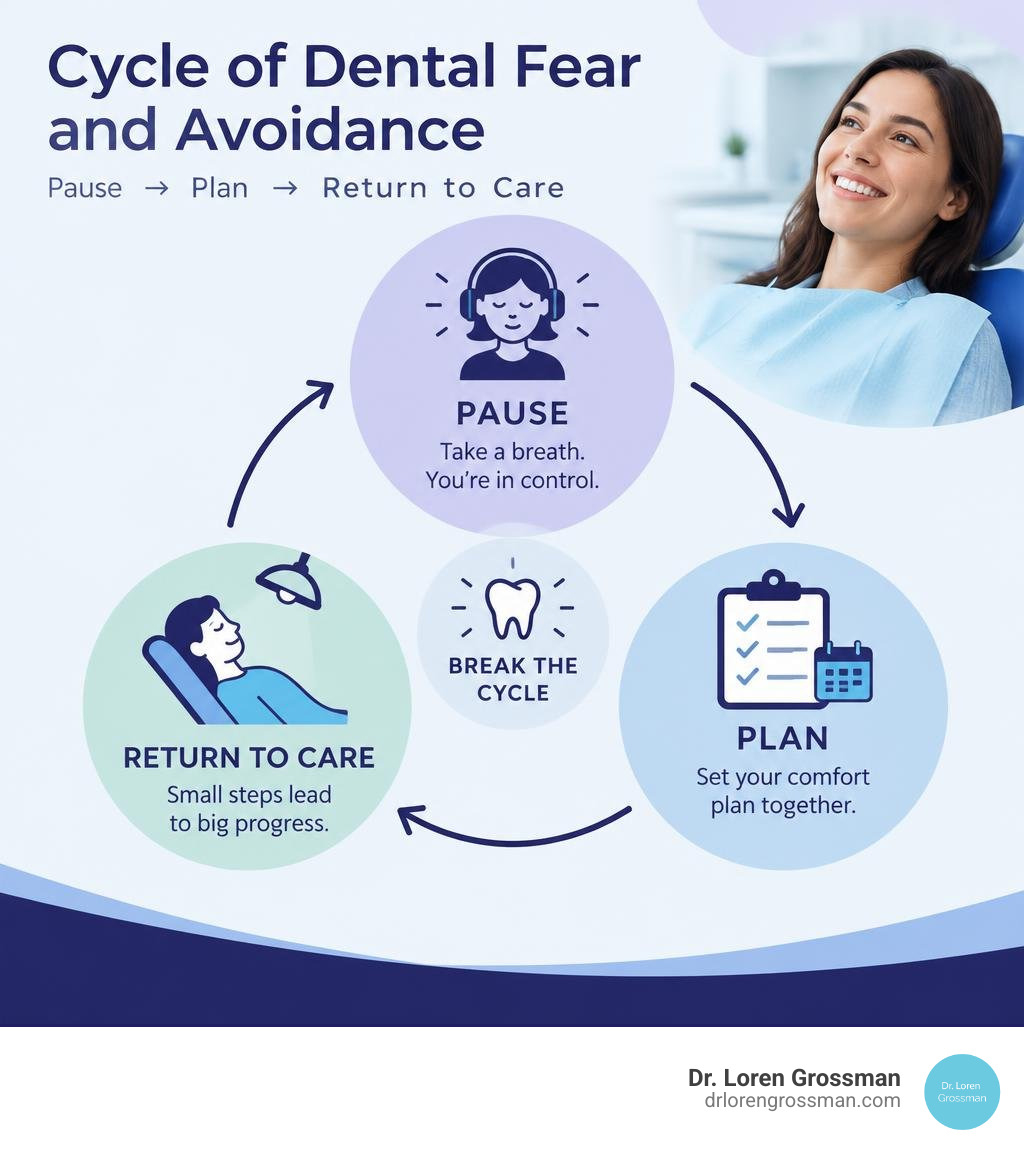
Tell the dental team what worries you before your visit. Ask them to explain each step, agree on a hand signal to pause, and bring headphones or a trusted person if that helps. If you have avoided care for years, ask whether your first visit can focus on an exam and a plan rather than treatment. You do not have to solve every fear at once.
I’m Dr. Loren Grossman, and I’ve cared for families in the Wyoming Valley since 1984. My dental anxiety tips for adults draw on decades of hands-on care and a belief that patients should feel heard at every visit.
Understanding Dental Fear and Its Root Causes
Dental fear is far more common than most people realize. When you feel a sense of dread as an appointment approaches, your autonomic nervous system reacts as though you are facing physical danger. Your heart races, your palms sweat, and your muscles tense up. This acute stress response can turn a routine checkup into an overwhelming ordeal, leading many people to delay necessary dental care until a minor problem becomes an urgent situation.
Understanding why this happens is the first step toward breaking the cycle. Whether your discomfort stems from sensory sensitivity, a fear of pain, or past negative experiences, recognizing these triggers allows us to tailor your care so you feel safe and in control.
What Is Dental Anxiety and Why Is It So Common?
While people often use the terms interchangeably, there is a clear distinction between mild dental anxiety and a full dental phobia. Dental anxiety involves a general sense of unease, nervousness, or worry prior to an appointment. Patients with anxiety often experience uncomfortable physical sensations, but they are still able to attend their visits. A dental phobia, by contrast, is an intense, irrational fear that leads to total avoidance of dental care, even when a person suffers from severe pain or infection.
Fear of the dental chair is a widespread issue:
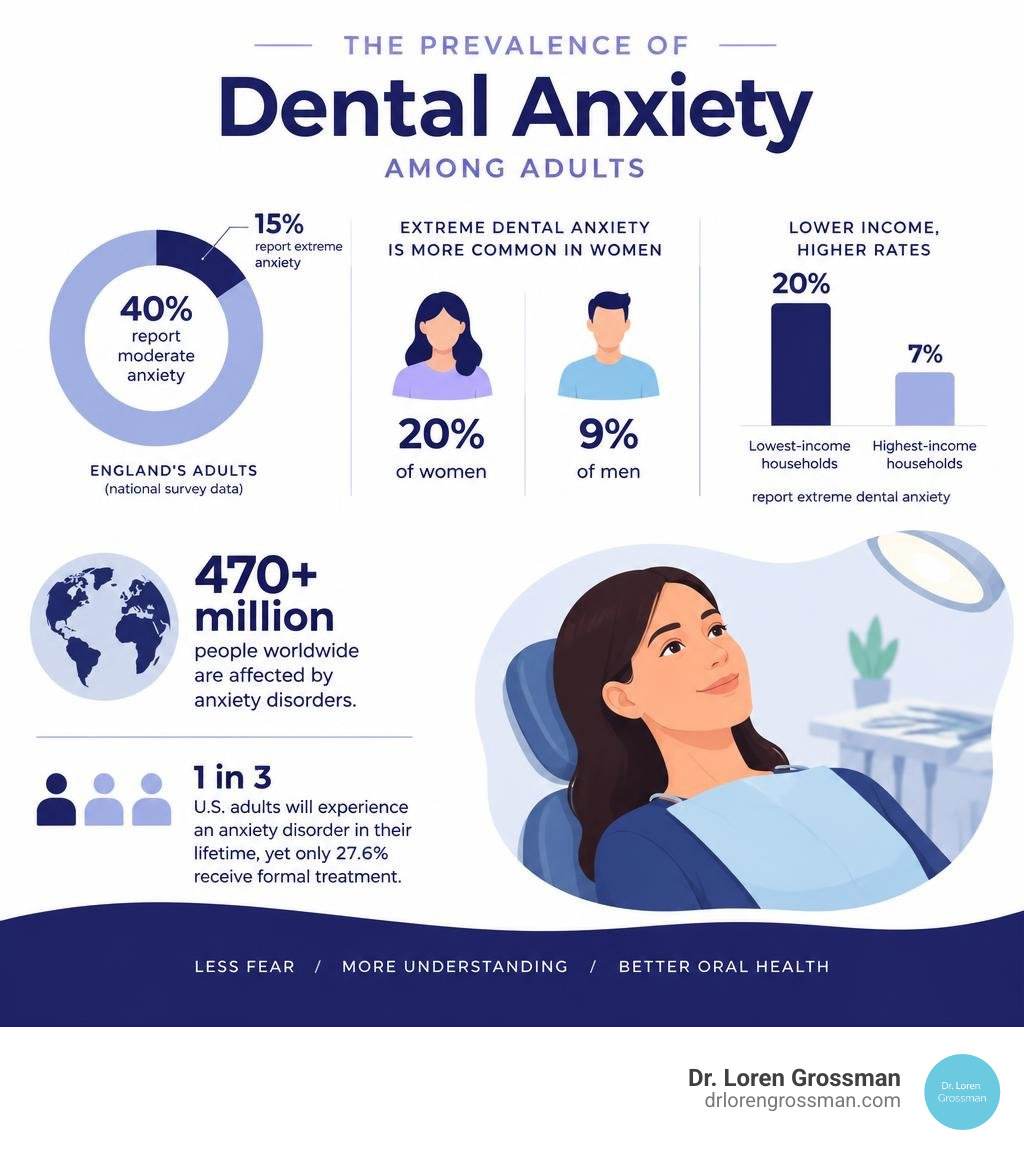
- In England’s national survey data, 15% of adults reported extreme dental anxiety, while 40% reported moderate anxiety.
- Extreme dental anxiety is notably more common in women (20%) than men (9%).
- Household income also plays a role: individuals in the lowest-income households report extreme dental anxiety at nearly triple the rate of those in the highest-income brackets (20% versus 7%).
- Beyond dentistry, anxiety disorders remain the most common mental health conditions worldwide, affecting over 470 million people globally. Approximately one in three U.S. adults will experience an anxiety disorder at some point in their lifetime, yet only about 27.6% receive formal treatment.
Because general stress and clinical anxiety often intersect with dental care, experiencing elevated nerves before a visit is entirely understandable. You are certainly not alone in these feelings.
Common Causes and Triggers of Dental Fear
Dental anxiety rarely appears out of nowhere. It is typically rooted in specific sensory triggers, past memories, or emotional vulnerabilities:
- Sensory Overload: The high-pitched whine of a dental drill, the sterile smell of antiseptic, the glare of overhead exam lights, and the vibration of dental instruments can overwhelm your senses. National surveys indicate that having a tooth drilled is the single most feared part of a visit, with 37% of adults reporting extreme anxiety about it.
- Fear of Needles and Local Anesthetics: Roughly 32% of adults report intense anxiety surrounding local anesthetic injections. Worrying about injection discomfort or fearing that the numbing agent will fail can cause severe distress.
- Past Traumatic Experiences: Many anxious adults carry painful memories of childhood dental procedures where they felt unheard, helpless, or experienced unexpected pain.
- Loss of Control and Personal Space: Sitting reclined in a dental chair while someone works closely inside your mouth can feel invasive. Not being able to speak easily creates a fear of being unable to stop what is happening.
- Embarrassment and Shame: Adults who have stayed away from the dental office for years often worry about receiving criticism or lectures regarding their oral health. This fear of judgment can keep them away longer than the fear of treatment itself.
Actionable Dental Anxiety Tips for Adults Before Your Appointment
Planning ahead helps calm your nervous system before you ever sit in the exam chair. Simple adjustments to your daily routine and communication strategy can significantly reduce pre-visit stress.

Communicating with Your Dental Team
Clear communication transforms your dental visit from an unpredictable event into a shared partnership. You should never feel that you have to hide your nervousness.
- Disclose Early: Inform the administrative team about your anxiety when you call to schedule. Let them know what specific aspects of care make you nervous.
- Write Down Your Questions: When feeling stressed, it is easy to forget what you wanted to ask. Bring a written list of questions or concerns to your visit.
- Request Step-by-Step Explanations: Ask your dental team to explain what they are doing before each step begins. Knowing what sound or sensation to expect eliminates surprising triggers.
- Choose a Responsive Practice: A supportive dental team will listen without judgment. If you are exploring comprehensive care or planning cosmetic improvements, knowing what to ask your cosmetic dentist ensures they prioritize your comfort alongside your aesthetic goals.
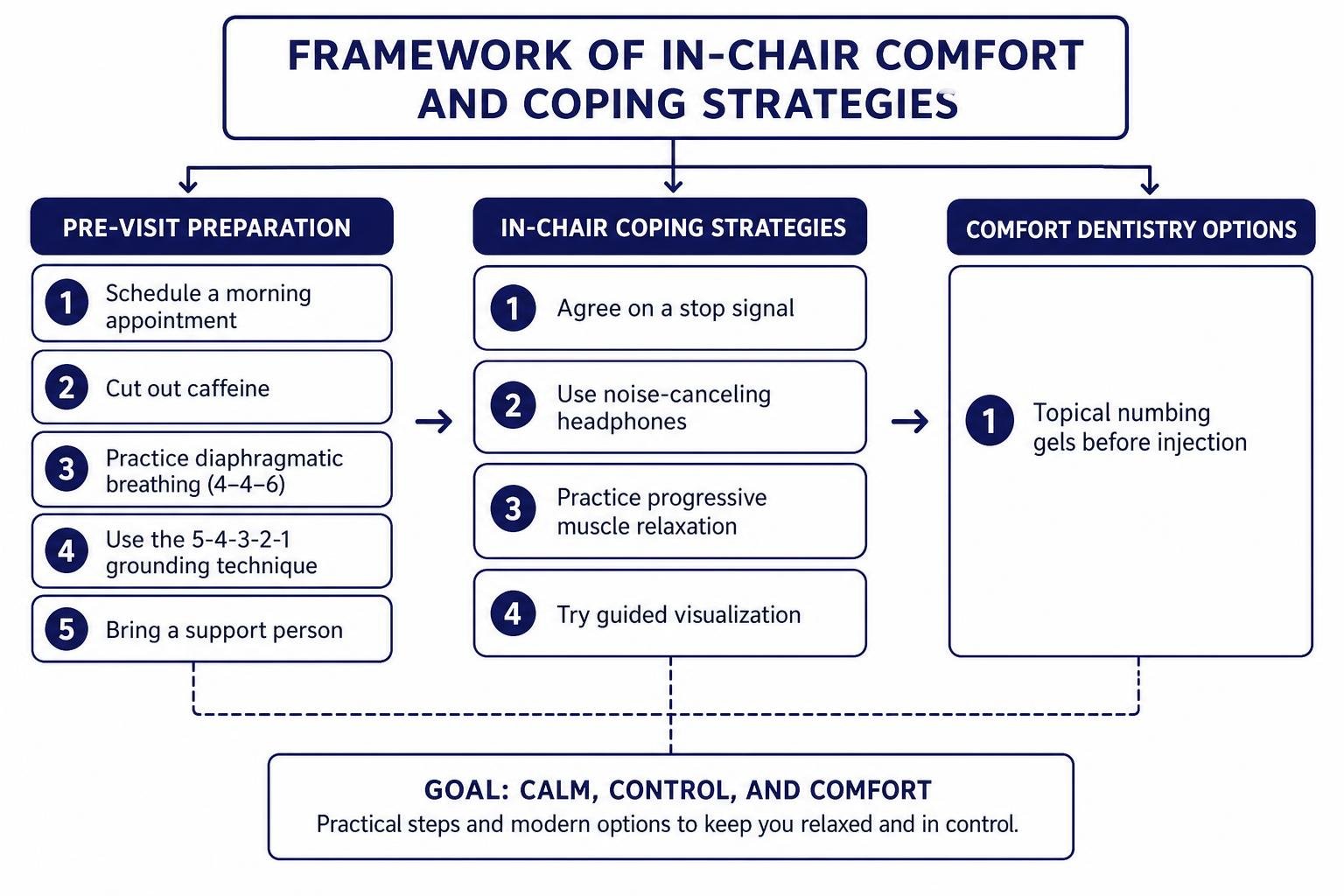
Pre-Visit Calming Routines and Preparation
What you do in the hours leading up to your appointment directly impacts your physical state in the chair:
- Schedule a Morning Appointment: Book your visit early in the day so you do not spend hours anticipating it.
- Cut Out Caffeine: Avoid coffee, energy drinks, and other stimulants before your appointment. Caffeine elevates your baseline heart rate and can amplify jitteriness and muscle tension.
- Practice Diaphragmatic Breathing: Deep belly breathing stimulates the vagus nerve, sending a physical signal to your brain to slow your heart rate. Breathe in slowly through your nose for four seconds, hold for four seconds, and exhale slowly through your mouth for six seconds.
- Use the 5-4-3-2-1 Grounding Technique: If panic rises while you sit in the waiting room, ground your senses by noticing five things you can see, four things you can physically feel, three things you can hear, two things you can smell, and one thing you can taste.
- Bring a Support Person: Having a trusted family member or friend accompany you to the office provides emotional reassurance and helps you stay relaxed.
For broader clinical perspectives on managing anticipatory stress, educational resources like the Cleveland Clinic guide on coping with dental anxiety offer helpful mental strategies.
In-Chair Coping Strategies and Comfort Techniques
Once you are in the treatment chair, practical coping mechanisms and modern comfort options allow you to maintain complete control over your care.
Proven Dental Anxiety Tips for Adults in the Chair
During treatment, active relaxation tools help you manage unexpected tension:
- Agree on a Stop Signal: Before any work begins, establish a simple non-verbal signal with your provider, such as raising your left hand. If you need a moment to swallow, take a breath, or ask a question, raising your hand pauses the procedure immediately.
- Use Noise-Canceling Headphones: Block out high-frequency dental sounds with your favorite music, an engaging podcast, or a soothing audiobook.
- Progressive Muscle Relaxation: When feeling tense, focus on intentionally squeezing and then releasing individual muscle groups, starting at your toes and working up to your shoulders. This releases subconscious physical bracing.
- Guided Visualization: Picture a peaceful, detailed environment—such as a quiet mountain cabin or a warm beach—focusing on the sensory details to divert your mind away from the clinical setting.
Sedation and Comfort Dentistry Options
Modern dentistry provides several clinical comfort solutions to ensure you remain completely relaxed and pain-free throughout your visit.
- Topical Numbing Gels: High-strength topical anesthetics are applied to the gum tissue before any injection, numbing the surface so you barely feel the local anesthetic.
- Nitrous Oxide (Inhalation Sedation): Often referred to as “laughing gas,” nitrous oxide is inhaled through a small nose mask. It creates a gentle, floating sensation that eases tension within minutes. The gas wears off quickly once turned off, allowing you to safely drive yourself home.
- Oral Conscious Sedation: A prescribed medication taken prior to your visit leaves you deeply relaxed and drowsy. You remain conscious and capable of answering questions, but your anxiety is minimized, and you will likely remember very little of the visit.
- Intravenous (IV) Sedation: Administered directly into the bloodstream, IV sedation provides deeper relaxation for complex procedures or severe dental phobias.
| Sedation Method | Level of Relaxation | Onset & Recovery | Can You Drive Yourself Home? | Best Suited For |
|---|---|---|---|---|
| Nitrous Oxide | Mild to Moderate | Rapid onset; clears in minutes | Yes | Mild to moderate nerves, routine cleanings, fillings |
| Oral Conscious Sedation | Moderate to Deep | Takes 30–60 mins; lasts several hours | No (escort required) | Moderate to severe anxiety, longer procedures |
| IV Sedation | Deep Conscious | Immediate onset; extended recovery | No (escort required) | Severe dental phobia, complex oral surgery |
If anxiety has caused you to put off appointments, exploring modern no-fear dentistry options can help you receive comfortable care tailored to your needs.
Rebuilding Confidence and Long-Term Oral Health
Overcoming dental anxiety is an ongoing process. Confidence is built through repeated, predictable visits where your boundaries are respected.

Long-Term Dental Anxiety Tips for Adults Returning After Years
If it has been years—or even decades—since your last dental appointment, taking that first step back into care can feel daunting. The following steps will make your return manageable:
- Schedule a Consultation-Only Visit: Your initial appointment does not have to involve any cleanings, drills, or treatment. It can simply be a conversation, a gentle visual exam, and digital x-rays to establish a baseline.
- Expect Non-Judgmental Care: Compassionate dental professionals focus on your current health and your future smile, never on how long you have been away.
- Stage Your Treatment Plan: You do not need to address every dental need at once. We can prioritize urgent needs first and spread other procedures out over time to match your comfort level.
- Reward Your Progress: Acknowledge your courage after each appointment. Plan an enjoyable activity afterward—such as a walk in the park or watching a favorite movie—to build positive associations with dental visits.
Whether you are catching up on preventive care or considering aesthetic upgrades—like learning about the painless truth about getting veneers—a phased, predictable approach keeps you in control.
When to Seek Professional Psychological Help
While in-office strategies and sedation help most patients, severe dental phobias may benefit from specialized mental health support. If thinking about dental care triggers severe panic attacks, nausea, or debilitating insomnia, professional psychological therapies can help:
- Cognitive Behavioral Therapy (CBT): CBT helps you identify distorted thoughts (such as catastrophic assumptions about pain) and reframe them into objective, manageable perspectives.
- Exposure Therapy: Working with a mental health therapist allows you to gradually confront dental stimuli—from viewing photos of dental tools to practicing sitting in a dental chair—in a structured, safe setting.
Combining psychological therapy with a compassionate dental provider offers a proven path to lasting relief from dental phobia.
Frequently Asked Questions About Dental Anxiety
Can I ask my dentist to stop during a procedure?
Yes, absolutely. You retain complete autonomy over your body throughout every dental procedure. Before treatment begins, agree on a simple stop signal (such as raising your left hand). Whenever you raise your hand, your dentist will pause treatment immediately, allowing you to rest, rinse, or ask questions before continuing.
What if I have avoided going to the dentist for years?
Dentists treat patients who have avoided care for years on a daily basis. You will not face judgment or lectures. Your initial visit can simply serve as an information-gathering appointment to assess your oral health and design a gentle, staged plan that works at your pace.
Does dental sedation completely eliminate anxiety?
Dental sedation significantly reduces or eliminates the emotional distress and physical tension associated with dental procedures. While mild sedation methods like nitrous oxide keep you relaxed yet alert, oral conscious sedation and IV sedation induce a deep state of calm where you may drift off to sleep and have little to no memory of the procedure.
Conclusion
Dental fear should never stand between you and a healthy, confident smile. By communicating your concerns openly, using proven in-chair relaxation techniques, and utilizing modern sedation options, you can comfortably take control of your oral health.
At the practice of Dr. Loren Grossman, we provide gentle, patient-focused care tailored to your comfort level. Whether you are returning for routine preventive care or exploring advanced restorations, our compassionate team is here to support you at every step. Discover how our comprehensive dental services can help you achieve a stress-free dental experience today.