Not Sure Which Cleaning You Need? Here’s the Quick Answer
When it comes to dental cleaning vs deep cleaning, the core difference comes down to one thing: where your gums stand right now.
| Regular Cleaning | Deep Cleaning | |
|---|---|---|
| Also called | Prophylaxis | Scaling and root planing |
| Best for | Healthy gums | Gum disease |
| Area treated | Above the gumline | Above and below the gumline |
| Anesthesia needed? | No | Yes (local) |
| Time | 30–60 minutes | 60–90 min per visit |
| How often | Every 6 months | Every 3–4 months until stable |
| Insurance coverage | Typically 100% | Typically 50–80% |
If your gums are healthy and your pocket depths measure between 1 and 3 mm, a regular cleaning every six months is all you need. If your pockets measure 4 mm or deeper — or if you have bleeding, swollen, or receding gums — your dentist will likely recommend a deep cleaning.
Still not sure which applies to you? Read on. This guide walks through both procedures in plain language so you know exactly what to expect.
Nearly half of American adults over 30 have some form of periodontal disease — yet many don’t realize it until a dentist measures their gum pockets. The truth is, most people assume their routine six-month visit covers everything. But for a large portion of patients, a standard cleaning simply isn’t enough.
That gap in understanding is exactly why this guide exists.
I’m Dr. Loren Grossman, a family and cosmetic dentist serving Northeastern Pennsylvania since 1984, and over four decades of practice I’ve helped thousands of patients navigate the choice between dental cleaning vs deep cleaning — many of whom had no idea they needed more than a routine visit. Understanding this distinction early can be the difference between saving and losing your teeth.
Dental Cleaning vs Deep Cleaning: The Core Difference
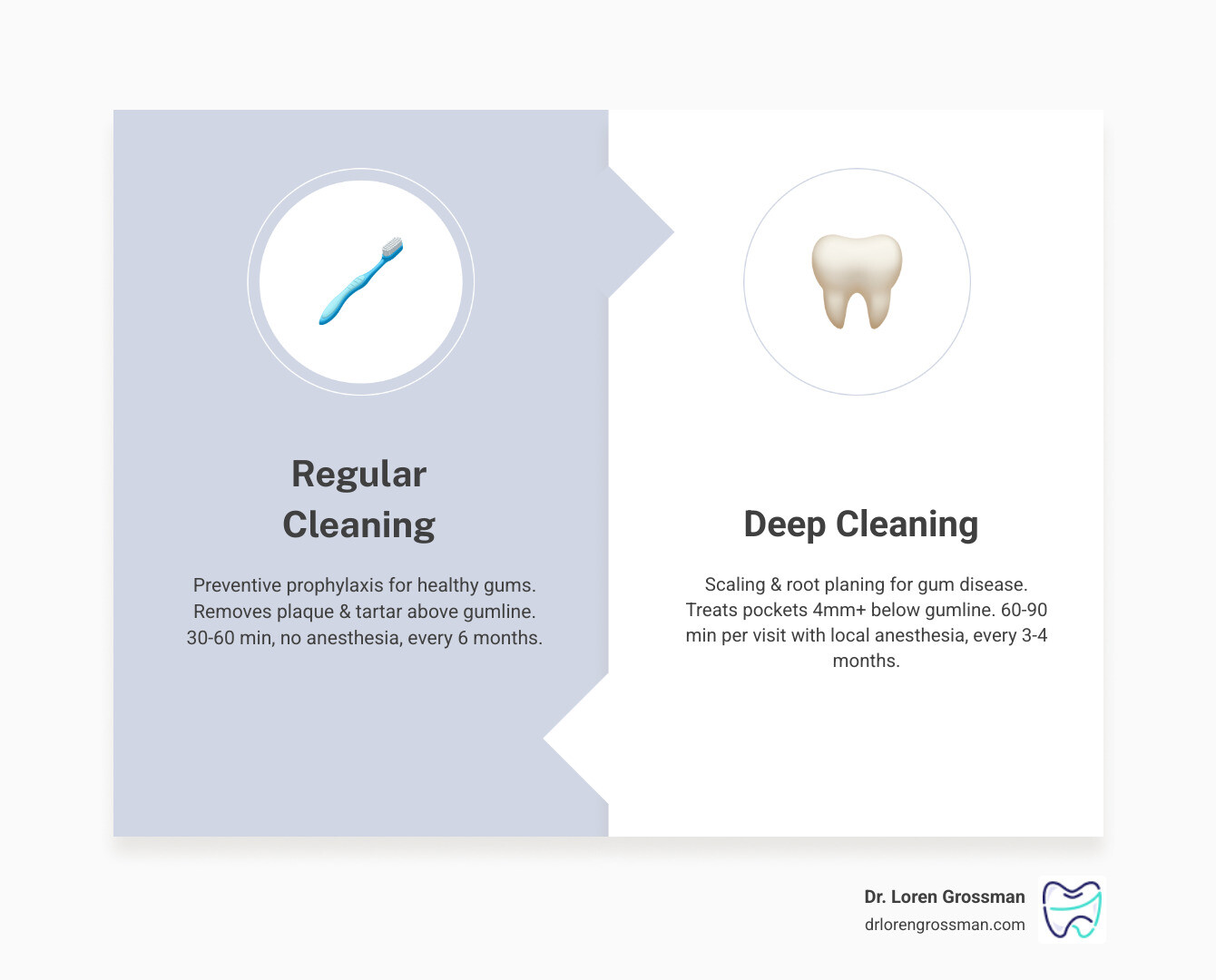
When we talk about the core difference in dental cleaning vs deep cleaning, we are really talking about the difference between a “shield” and a “cure.”
A regular cleaning is a preventive measure. Its purpose is to maintain a healthy mouth by removing the surface-level plaque and tartar that your toothbrush simply can’t reach. It focuses entirely on the area above the gumline. Think of it like a professional car wash for your teeth; it keeps things shiny and prevents rust from starting.
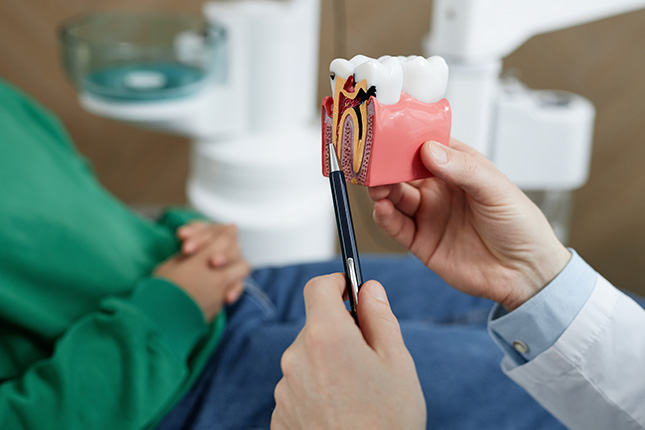
A deep cleaning, known clinically as scaling and root planing, is a treatment for an active infection. When bacteria migrate below the gumline, they create “pockets” of infection that destroy the bone and tissue holding your teeth in place. A regular cleaning cannot reach these depths. Deep cleaning involves going beneath the gumline to remove hardened tartar (calculus) from the roots of the teeth.
What a regular dental cleaning involves
A regular cleaning, or dental prophylaxis, is the standard visit most patients are used to. During this 30–60 minute appointment, our hygienist uses specialized tools to scale away plaque and tartar from the front, back, and sides of your teeth.
The process typically includes:
- Scaling: Removing tartar from above the gumline.
- Polishing: Using a gritty paste to remove surface stains and make teeth smooth.
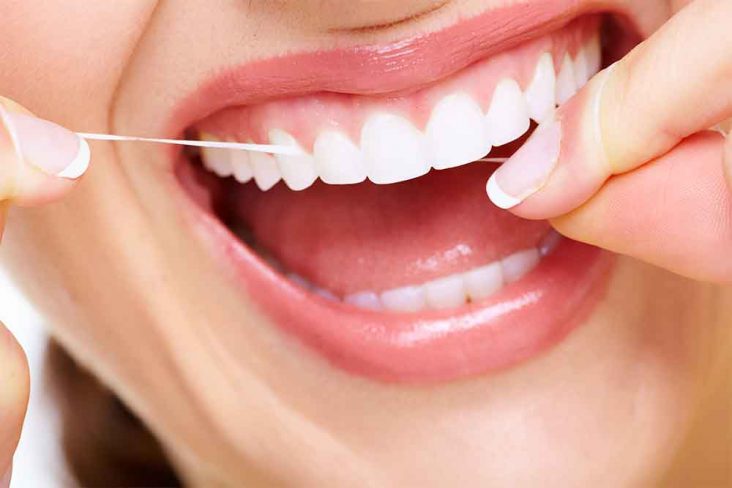
- Flossing: A professional-grade flossing to clear out tight spaces.
- Fluoride: An optional treatment to strengthen enamel against future cavities.
This is recommended every six months for patients with healthy gum tissue.
What a deep cleaning involves
Deep cleaning is a form of periodontal therapy. If we find that your gums have begun to pull away from your teeth, creating pockets deeper than 3mm, scaling and root planing becomes necessary.
This procedure involves:
- Scaling: Removing plaque and tartar from the tooth surface and the pocket area below the gumline.
- Root Planing: Smoothing the roots of the teeth. This is vital because bacteria love to “hook” onto rough spots on the roots. Smoothing them helps the gum tissue reattach to the tooth.
- Anesthesia: Because we are working deep under the sensitive gum tissue, we typically use a local anesthetic to ensure you don’t feel a thing.
- Multiple Visits: Depending on the severity, we may treat one or two “quadrants” of your mouth at a time, meaning the process can take 1–2 visits of 60–90 minutes each.
When You Need Each Type of Cleaning
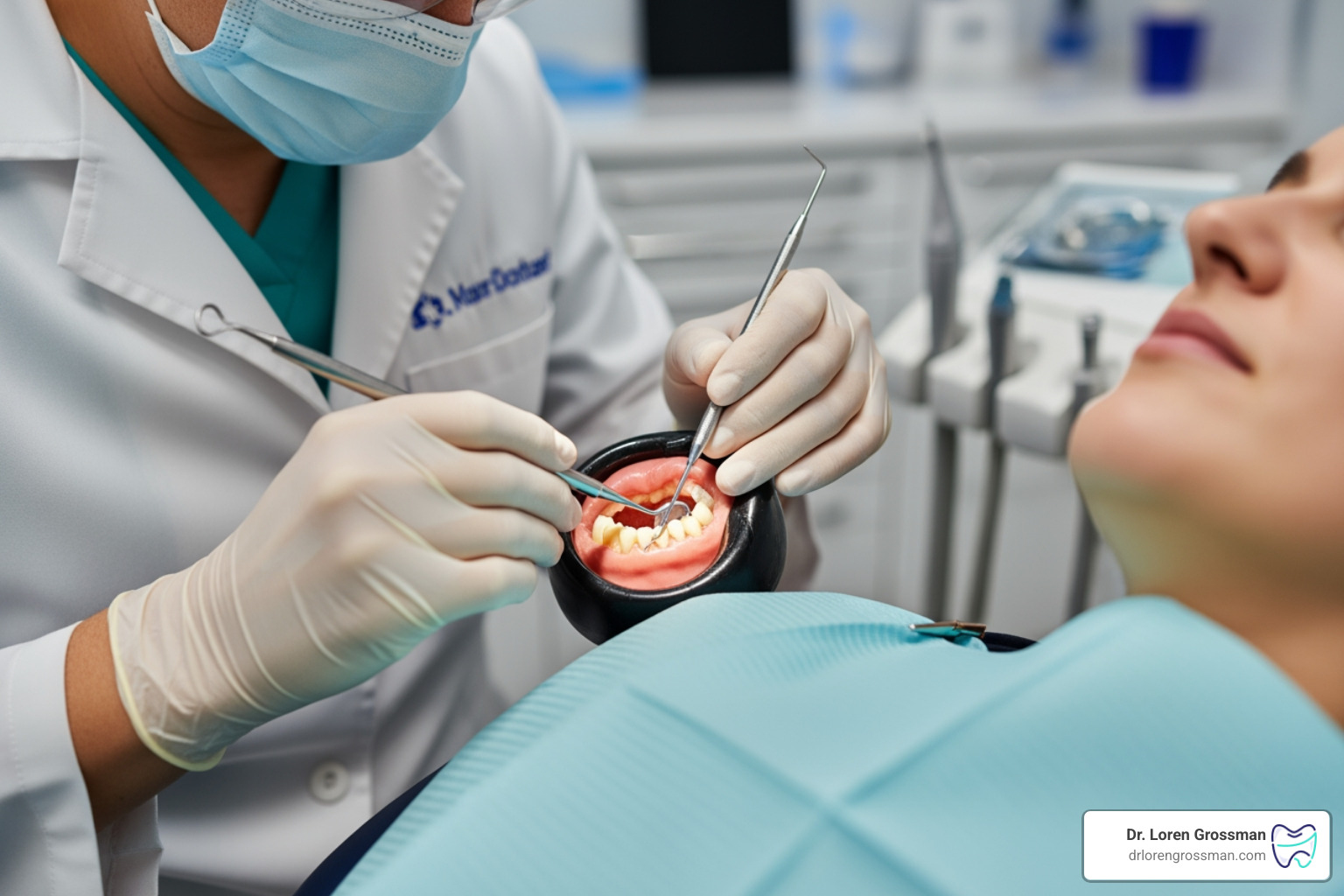
How do we decide which path to take? It isn’t a guess. During your comprehensive dental exam, we perform periodontal probing. This is where we use a small instrument to measure the space between your tooth and gum tissue.
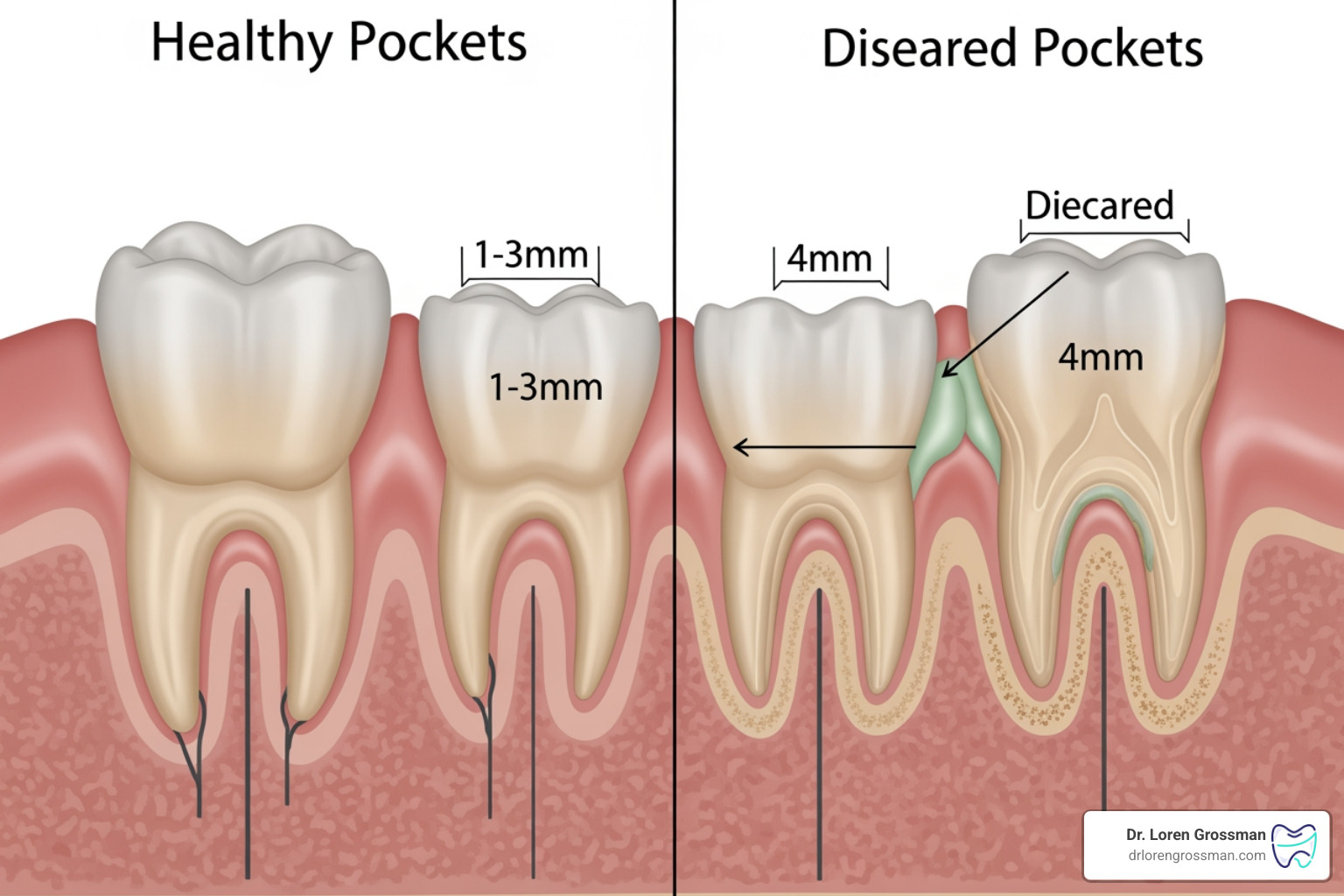
- 1–3 mm: Congratulations! These are healthy pockets that can be managed with a regular cleaning.
- 4 mm or deeper: This indicates the presence of gum disease and usually requires a deep cleaning to stop the infection from reaching the bone.
When a regular cleaning is usually recommended
We recommend a regular cleaning for patients with a healthy mouth and no history of bone loss. If you have mild plaque buildup but your gums aren’t bleeding or receding, maintenance care is the way to go. You can learn more about our general dentistry services here to see how we keep your smile on track.
Signs you may need a deep cleaning
Sometimes your body tells you that you need more than a basic cleaning before you even sit in our chair. Common symptoms include:
- Gums that are red, swollen, or tender.
- Bleeding every time you brush or floss.
- Chronic bad breath that doesn’t go away with mouthwash.
- Teeth that feel slightly loose.
- Gum recession (your teeth look “longer” than they used to).
- Increased sensitivity to hot or cold.
Statistics show that nearly 50% of adults aged 30 and older in the United States have some type of periodontal disease. If you notice these signs, it’s time for an evaluation.
How Dentists Decide in Dental Cleaning vs Deep Cleaning Cases
The diagnosis comes down to a process called periodontal charting. We look for “calculus deposits” (hardened tartar) on X-rays and measure inflammation. If we see that the infection is limited to the gums (gingivitis), it might be reversible with a thorough cleaning and better home care. However, if the infection has started to affect the bone (periodontitis), a deep cleaning is medically necessary.
How to tell which cleaning you need
While you can look for symptoms at home, you cannot self-diagnose your cleaning type. A professional evaluation is the only way to measure pocket depths accurately. We review your symptoms, X-rays, and probing results to create a personalized recommendation.
Can you choose a regular cleaning if you really need deep cleaning?
We often get asked, “Can I just have the regular cleaning today?” The honest answer is that doing a regular cleaning when you have periodontal disease is what we call “supervised neglect.” A regular cleaning will not reach the bacteria causing the bone loss. If we don’t treat the infection at its source, the disease will progress, eventually leading to tooth loss. Deep cleaning is an essential medical intervention to save your smile.
What to Expect During and After Each Procedure
We want you to feel comfortable, whether you’re here for a 30-minute polish or a more intensive periodontal treatment.
What happens at a routine cleaning appointment
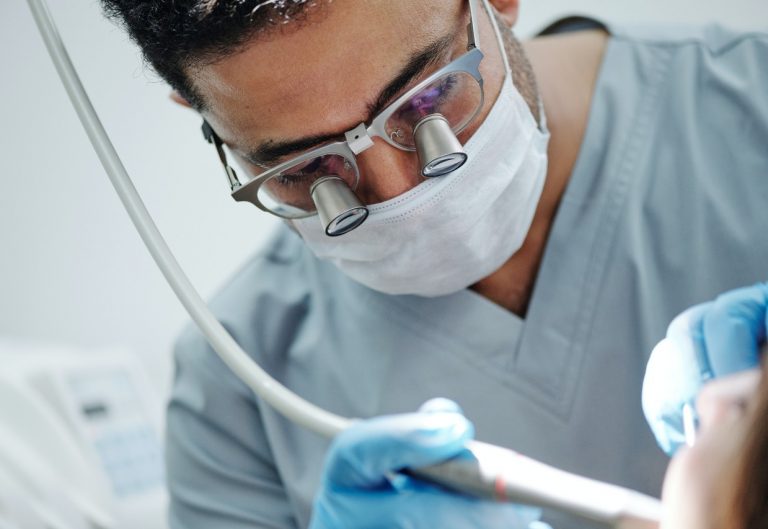
A routine visit is straightforward. After an exam update, we use ultrasonic and hand scaling tools to whisk away surface buildup. We finish with a polishing paste that removes stains from coffee or tea, followed by a floss check. Most patients leave feeling “squeaky clean” and can return to their normal diet immediately. You can find more preventive dental care tips on our blog to keep that feeling lasting longer.
What happens at a deep cleaning appointment
For a deep cleaning, we prioritize your comfort.
- Numbing: We use local anesthesia so the area being worked on is completely numb.
- Ultrasonic Scaling: We use a tool that vibrates at high speeds to break up large chunks of tartar.
- Hand Instruments: We use fine tools to reach the bottom of the pockets.
- Smoothing: We plane the roots to ensure they are smooth.
After the procedure, you might feel some mild soreness or cold sensitivity for a few days. We recommend soft foods and potentially a saltwater rinse for the first 48 hours.
Aftercare and maintenance for both types
Regardless of the cleaning type, home care is the foundation of your health.
- Brush twice daily: Use a soft-bristled brush.
- Floss daily: This is non-negotiable! Flossing makes a massive difference in preventing the bacteria buildup that leads to deep cleanings.
- Maintenance visits: If you’ve had a deep cleaning, we will likely move you to a “periodontal maintenance” schedule every 3–4 months. This allows us to monitor the pockets and ensure the infection doesn’t return.
Costs, Insurance, and Why Both Cleanings Matter
We understand that budget is a concern for many families in Kingston and the surrounding areas.
Regular cleaning vs deep cleaning cost and insurance differences
- Regular Cleanings: Most dental insurance plans cover these at 100% because they are considered “preventive.”
- Deep Cleanings: Because these are “periodontal therapy” (a medical treatment), insurance typically covers them at 50% to 80%. You may also have a deductible to meet.
While a deep cleaning has a higher upfront cost, it is significantly cheaper than the alternative: tooth extractions, bone grafts, and dental implants. Preventive dentistry in Pittston and Kingston is the best way to save money in the long run.
Why both cleaning types are important for long-term oral health
Both cleanings serve the same ultimate goal: keeping your natural teeth for a lifetime. Gum disease has been linked to systemic issues like heart disease, diabetes, and even Alzheimer’s. By managing the bacteria in your mouth—whether through prophylaxis or scaling—you are protecting your entire body. For more detailed clinical perspectives, you can read scientific research on deep cleaning or routine vs periodontal cleaning.
Frequently Asked Questions About Dental Cleaning vs Deep Cleaning
Does a deep cleaning hurt more than a regular cleaning?
Because we use local anesthetic for deep cleanings, you shouldn’t feel pain during the procedure—only some pressure. A regular cleaning is generally painless, though some patients with sensitive teeth may feel a slight “zing” during scaling. Any post-deep cleaning soreness is usually manageable with over-the-counter relievers.
How often should you get cleanings after a deep cleaning?
Once you have been treated for gum disease, you are more susceptible to it returning. We usually recommend periodontal maintenance every 3–4 months to keep the bacteria levels low and ensure your gums remain stable.
Can a deep cleaning cure gum disease?
Gingivitis can be cured. Periodontitis, however, is a chronic condition. While we can’t always “cure” it (meaning the bone won’t magically grow back), we can halt its progression. With proper deep cleaning and maintenance, you can keep your teeth and prevent the disease from getting worse.
Conclusion
Choosing between dental cleaning vs deep cleaning isn’t really a choice you make on your own—it’s a clinical decision we make together based on the health of your smile. Whether you need a simple polish or a deep-reaching therapy to save your teeth, our team at Dr. Loren Grossman is here to provide the compassionate, expert care you deserve.
If it’s been more than six months since your last visit, or if you’ve noticed your gums are red and bleeding, don’t wait. A simple exam can give you the answers you need and put you on the path to a healthier, more confident smile.
Ready to schedule? Explore our full range of dental services and let’s get your oral health back on track today.