How to Reverse Early Tooth Decay Before a Cavity Forms
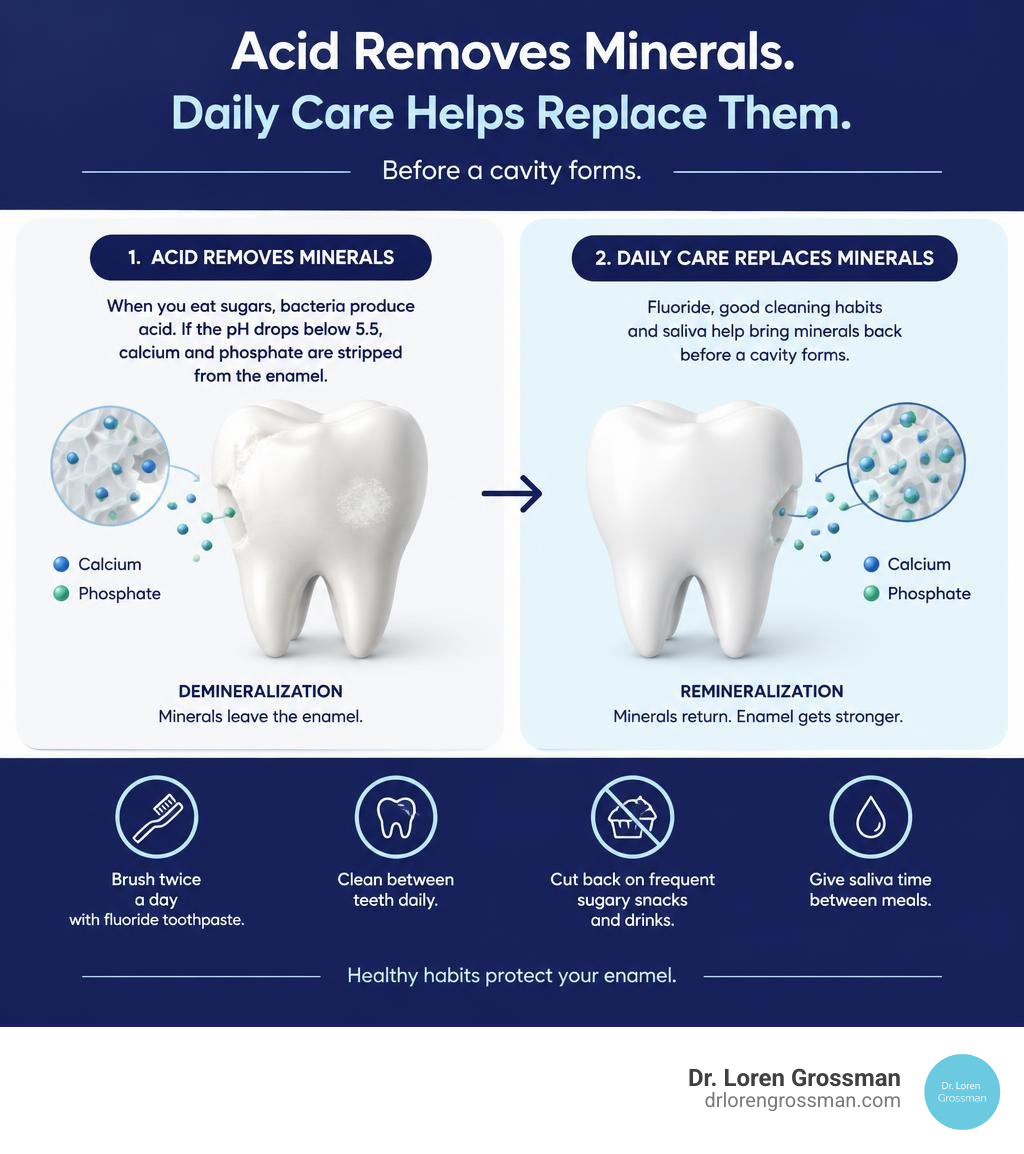
Early tooth decay can sometimes be reversed if the enamel surface is still intact. Brush twice a day with fluoride toothpaste, clean between your teeth daily, and cut back on frequent sugary snacks and drinks. Give saliva time between meals to help replace lost minerals. If you notice a chalky white spot, see a dentist soon to find out whether it can still heal without a filling.
A visible hole or broken enamel cannot grow back. The sooner you check a suspicious spot, the better your chance of keeping your natural tooth structure.
I’m Dr. Loren Grossman, a family dentist who has cared for patients in Northeastern Pennsylvania since 1984. In this guide, I’ll explain how to reverse early tooth decay when possible and how to tell when a tooth needs more care.
Understanding the Science: How to Reverse Early Tooth Decay at the Enamel Stage
Your tooth enamel is the hardest substance in your entire body. Roughly 96% of mature enamel is composed of pure minerals, organized primarily in a dense crystalline framework known as hydroxyapatite. Despite its rock-solid strength, this mineral lattice exists in a constant dynamic tug-of-war against the environment inside your mouth.
Every time you eat carbohydrates or fermentable sugars, naturally occurring bacteria in your plaque—such as Streptococcus mutans—feed on those sugars and produce organic acids as a byproduct. When these acids cause the pH inside your oral cavity to drop below the critical threshold of 5.5, the chemical environment turns destructive. Calcium and phosphate ions are actively stripped away from the hydroxyapatite matrix. We call this process demineralization.
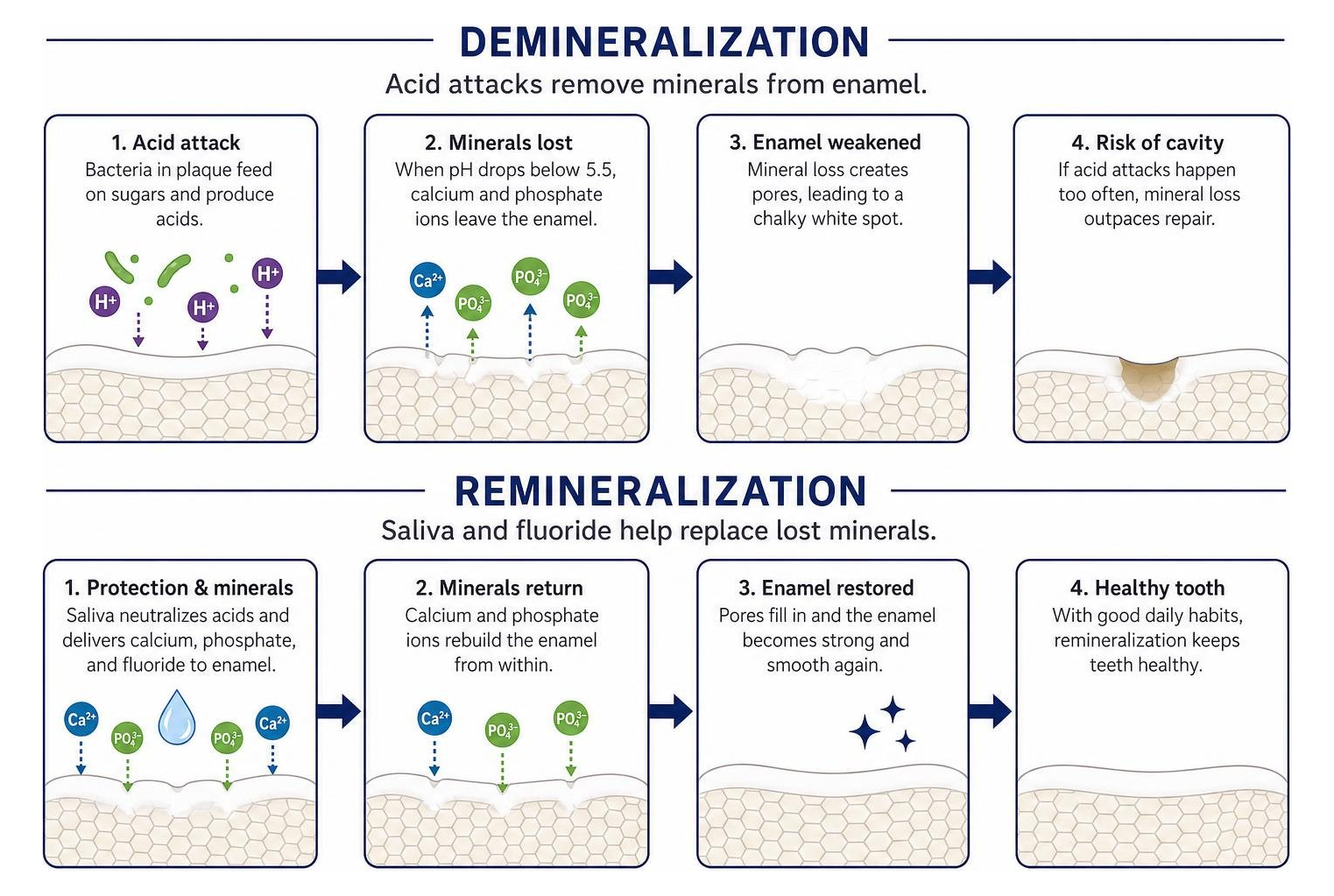
Fortunately, your body comes equipped with a built-in defense system: saliva. Saliva acts as a natural buffer, neutralizing bacterial acids and washing away residual food particles. More importantly, healthy saliva carries an abundance of bioavailable calcium and phosphate ions back to your teeth, depositing them back into the microscopic pores of your enamel.
When remineralization keeps pace with demineralization, your teeth remain healthy and strong. However, when acid attacks happen too frequently, mineral loss outpaces repair. Learning how to reverse early tooth decay comes down to tilting the biological balance decisively back toward remineralization before permanent physical collapse occurs.
Identifying Reversible White Spots vs. Permanent Cavities
Early demineralization does not look like a dark, hollow hole. Instead, it first reveals itself as an incipient lesion—often called a chalky white spot lesion.
When minerals leach out beneath the outermost enamel layer, the optical density of the enamel changes. Instead of translucent, healthy enamel reflecting light evenly, the porous, mineral-depleted area scatters light, creating a matte, chalky white patch. At this stage, the underlying protein matrix of the tooth remains structurally sound.
If demineralization continues unchecked, the subsurface enamel becomes increasingly porous until the delicate surface shell collapses. Once that structural cave-in happens, a true “cavity” (cavitation) is born. Understanding this boundary is vital for protecting weakened teeth against enamel erosion and cold pain, because a remineralization protocol only works as long as the surface remains intact.
How to Reverse Early Tooth Decay Before It Reaches Dentin
Dentists classify early demineralization confined to the outer enamel shell as an incipient lesion. The window to reverse this damage without drilling is narrow—often lasting only a few months, especially in the thinner enamel of children’s primary teeth.
Once bacterial acid penetrates through the enamel and reaches the underlying dentin layer, the biological game changes. Dentin is softer, more organic, and contains microscopic fluid-filled channels leading straight to the nerve pulp. Because dentin cannot remineralize in a way that rebuilds missing tooth structure, bacterial invasion past the enamel-dentin junction inevitably requires restorative treatment.
| Feature | Reversible Enamel Lesion (Incipient) | Irreversible Cavitation |
|---|---|---|
| Visual Appearance | Chalky, matte white or pale creamy spot | Brown, yellow, or dark spot with a visible pit |
| Surface Texture | Smooth and intact to a gentle dental explorer | Rough, sticky, or shows a distinct physical hole |
| Pain & Sensitivity | Typically asymptomatic; mild cold sensitivity | Temperature sensitivity, sweet sensitivity, or ache |
| Structural Integrity | Internal crystal loss; surface matrix intact | Collapsed enamel structure; dentin exposure |
| Clinical Solution | Therapeutic remineralization & hygiene changes | Mechanical removal of decay & composite filling |
Daily Home Protocols for Restoring Enamel Minerals
Restoring lost minerals requires a deliberate, consistent daily environment that minimizes acid contact and bathes your teeth in restorative ions.
Your daily routine should prioritize three key actions:
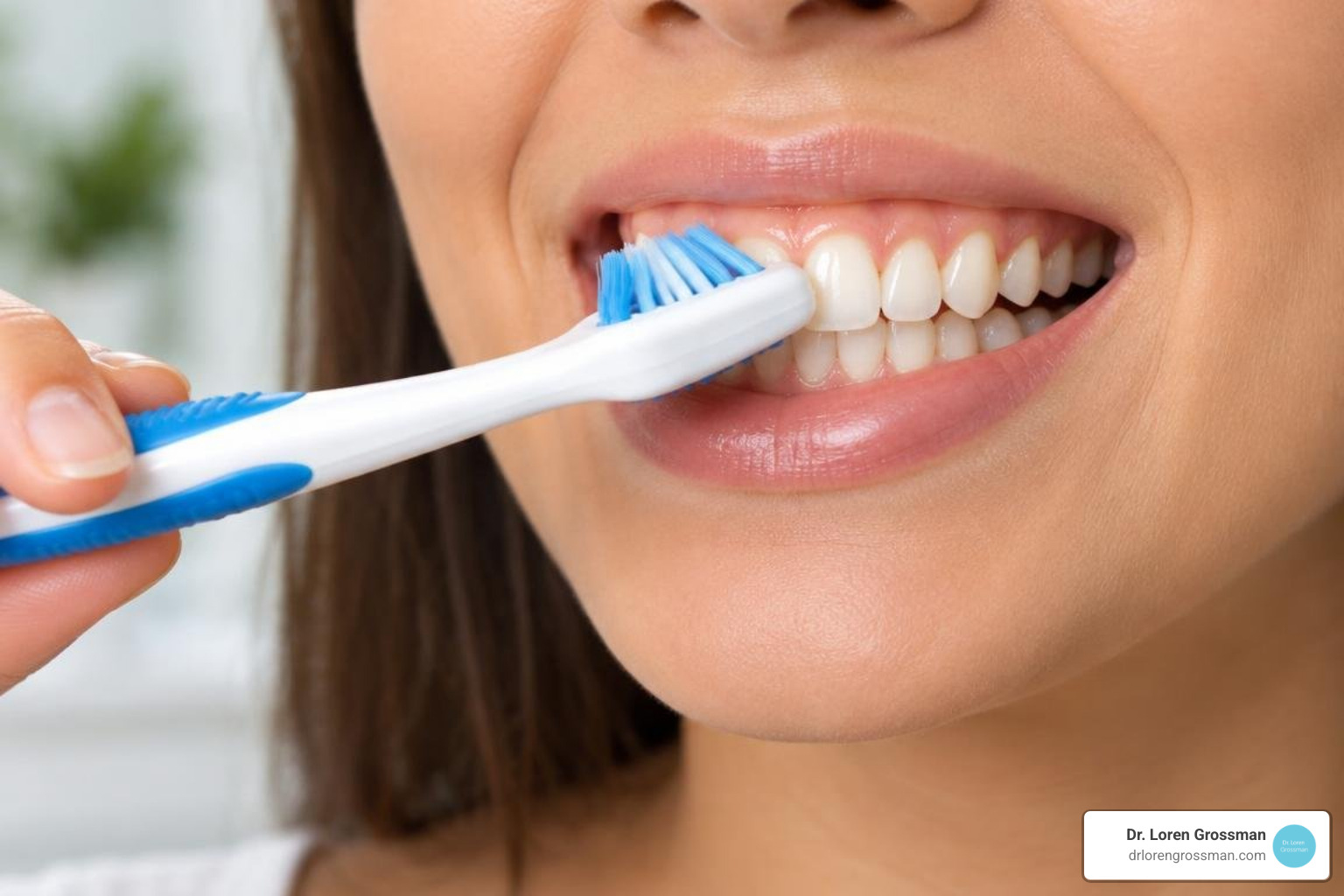
- Protect Your Mechanical Shield: Clean all surfaces of your teeth thoroughly twice each day. Plaque acts as a sponge that traps bacterial acid directly against the enamel; brushing disrupts this biofilm before it can sustain an acid attack.
- Clean Between the Teeth: Approximately 40% of your tooth surfaces sit between teeth where a standard toothbrush bristles cannot reach. Incorporating interdental cleaning and understanding the benefits of flossing stops interproximal white spot lesions from forming out of sight.
- Stimulate Protective Salivary Flow: Saliva requires roughly 30 to 60 minutes of neutral pH to efficiently redeposit calcium and phosphate back into enamel pores. You can support this process by drinking plenty of water throughout the day and using 100% xylitol-sweetened chewing gum. Chewing xylitol gum (aiming for roughly 5 grams of xylitol per day split over 3 to 5 exposures) not only stimulates mineral-rich saliva flow, but Streptococcus mutans bacteria cannot digest xylitol, which starves the acid-producing bacteria over time.
Nutritional Steps: How to Reverse Early Tooth Decay with Diet
When it comes to diet and tooth decay, frequency matters far more than total quantity.
Every single time you consume fermentable carbohydrates—whether it is a sugary soda, a handful of crackers, dried fruit, or even an all-fruit smoothie—plaque bacteria produce an acid spike that drops your oral pH below 5.5 for roughly 20 to 30 minutes. If you sip a sweetened iced coffee over a four-hour work morning, your teeth endure a four-hour continuous acid bath. If you consume that same drink in 15 minutes with a meal, your mouth experiences only one isolated acid spike that your saliva can quickly neutralize.
To rebuild weakened enamel from the inside out:
- Limit Snacking Intervals: Leave 2 to 3 hours between meals so your saliva has adequate time to neutralize acids and remineralize enamel.
- Incorporate Bioavailable Minerals: Consume dietary sources of calcium and phosphorus, such as dairy products (milk, plain yogurt, hard cheeses), fortified plant milks, leafy greens, almonds, and lean meats. Hard cheeses also stimulate saliva and raise oral pH almost immediately after eating.
- Optimize Vitamin D: Vitamin D is crucial for proper calcium absorption from the gut. Ensure adequate sun exposure or discuss supplementation with your primary physician to maintain healthy mineral metabolism.
- Rinse with Plain Water: After consuming acidic or starchy foods, vigorously swish with plain water to wash away debris and buffer oral acidity. Do not brush immediately—wait at least 30 minutes after consuming acidic foods or beverages to avoid scrubbing away softened, demineralized enamel.
Targeted Oral Hygiene and Therapeutic Pastes
Brushing with water alone is not enough to rebuild damaged hydroxyapatite crystals. You need active mineralizing agents:
- Fluoride Toothpaste (1,100 to 1,450 ppm): Standard over-the-counter fluoride toothpastes are the most clinically validated home defense. Fluoride replaces the hydroxyl group in hydroxyapatite to form fluorapatite, a crystal structure that is significantly harder and more acid-resistant (resisting dissolution down to a pH of 4.5).
- High-Fluoride Prescription Toothpastes (5,000 ppm): For patients showing active white spots or higher caries risk, we often prescribe high-strength formulations such as Clinpro 5000 or Fluoridex. Delivering roughly four times the fluoride concentration of regular pastes, these products dramatically accelerate mineral uptake into porous lesions.
- CPP-ACP (Casein Phosphopeptide-Amorphous Calcium Phosphate): Found in topical pastes like MI Paste, CPP-ACP binds to plaque and the tooth surface, delivering a concentrated reservoir of bioavailable calcium and phosphate directly into the enamel subsurface.
- Nano-Hydroxyapatite (nHA): Formulations containing synthetic nano-hydroxyapatite particles work by depositing microscopic synthetic crystals directly into open enamel pores, serving as a biocompatible mineralizer for patients seeking complementary care.
Application Tip: After brushing at night, spit out the excess foam but do not rinse your mouth with water. Leaving a thin layer of therapeutic paste on your teeth allows minerals to absorb into porous enamel undisturbed while you sleep.
Professional Non-Invasive Treatments for Incipient Caries
When home hygiene needs extra reinforcement, modern dentistry offers several powerful, drill-free therapies designed to stop early decay in its tracks.
Following routine preventive dental care tips allows our team to catch demineralization during routine check-ups and apply targeted therapies before permanent damage occurs.
In-Office Remineralization Therapies
We utilize evidence-based non-invasive interventions tailored to the specific stage and depth of your enamel lesion:
- Professional Fluoride Varnish (22,600 ppm): Applied in seconds as a sticky resin, high-concentration fluoride varnish adheres to the teeth and slowly releases therapeutic fluoride ions over several hours, strengthening outer enamel layers.
- Self-Assembling Peptide Matrix (Curodont Repair): Unlike surface varnishes, this breakthrough biomimetic liquid diffuses deep into the body of an intact white spot lesion. The specialized peptides self-assemble into a 3D protein scaffold that draws calcium and phosphate from your saliva directly into the core of the lesion, regenerating natural enamel minerals over 3 to 6 months without drilling.
- Icon Resin Infiltration: For cosmetically concerning white spots on front teeth (often visible after orthodontic bracket removal), resin infiltration uses a micro-invasive technique. A gentle conditioning gel prepares the porous lesion, followed by a light-cured, tooth-colored liquid resin that penetrates the porous enamel, halting lesion progression and restoring a natural, translucent appearance.
- Silver Diamine Fluoride (SDF): Widely used to instantly halt active decay in primary teeth or in patients who cannot tolerate conventional fillings. The silver acts as a powerful antimicrobial agent while the fluoride remineralizes the surrounding tooth structure. SDF permanently stains active decayed areas black, making it ideal for back teeth or temporary stabilization.
We track the progress of these treatments during your regular visits for comprehensive general dentistry services using visual exams, digital bitewing X-rays, and laser fluorescence tools like DIAGNOdent to verify that your enamel is hardening.
When Enamel Breakdown Requires Restorative Care
There is an absolute point of no return for remineralization therapy. Once the surface of the enamel physically fractures or an explorer detects a sticky pit, no toothpaste, peptide, or dietary shift can rebuild that lost architecture.
Attempting to “remineralize” a cavitated hole simply allows bacterial colonies to fester inside the dentin, eventually reaching the dental pulp and causing severe toothaches or abscesses. When a lesion breaks through the surface, evaluating restorative care and local fillings ensures the decay is removed and the tooth is restored with a durable, tooth-colored composite resin.
Dangerous Myths and Harmful Home Remedies to Avoid
The internet is full of “miracle cures” claiming to regrow decayed teeth overnight. Unfortunately, many of these viral trends do not work, and several cause severe, irreversible enamel destruction.
- Apple Cider Vinegar & Lemon Rinses: Some holistic blogs recommend acidic fruit juices or vinegar rinses to “alkalize” the body or clean teeth. In reality, with pH levels between 2.0 and 3.0, these liquids directly dissolve your enamel mineral matrix on contact, turning minor demineralization into widespread enamel erosion.
- Activated Charcoal & Baking Soda Scrubs: Highly abrasive charcoal pastes claim to scrub away decay and stains. In truth, they act like sandpaper against weakened enamel, wearing away your protective outer layer and exposing the yellower, softer dentin underneath.
- Pure Undiluted Essential Oils & Clove Oil: While clove oil (eugenol) provides temporary topical numbing for tooth pain, it possesses no remineralizing power. Applying undiluted essential oils directly to oral tissues can cause chemical burns to your gums without curing underlying decay.
- Oil Pulling Alone: Swishing with coconut or sesame oil can help reduce overall oral bacterial loads and dislodge loose debris. However, oil pulling does not remineralize enamel, deliver calcium or phosphate, or reverse cavities. It may be used as a supplementary hygiene step, but never as a replacement for clinically proven remineralization therapies.
Frequently Asked Questions About Enamel Remineralization
How long does it take to reverse early tooth decay?
For an intact, early-stage white spot lesion, measurable remineralization and enamel hardening typically take 6 to 8 weeks of consistent therapeutic care. Deeper subsurface lesions managed with peptide therapies (like Curodont) continue to rebuild internal mineral density over 3 to 6 months. Consistency with high-concentration fluoride, dietary changes, and daily interdental hygiene is essential throughout this entire window.
Can tooth decay be reversed naturally without fluoride?
Early decay can technically remineralize without fluoride if you maintain optimal oral hygiene, maintain high salivary flow, and supply ample calcium and phosphate through your diet or nano-hydroxyapatite products. However, remineralization without fluoride is significantly slower and less reliable. Fluoride creates fluorapatite, which is far more acid-resistant than your original enamel. For active, high-risk early lesions, fluoride remains the clinical gold standard.
What happens if you delay treatment for early tooth decay?
Because the outer enamel shell is only 1 to 2 millimeters thick, delaying treatment allows acid-producing bacteria to breach the enamel-dentin junction. Once inside the softer dentin, decay spreads laterally and much more rapidly toward the dental pulp. What could have been reversed with a simple non-invasive gel can quickly escalate into a deep cavity requiring a filling, a root canal, or even an extraction. This makes the importance of regular dental check-ups vital for catching demineralization while non-invasive reversal is still an option.
Conclusion
Tooth decay is not an inevitable, one-way street. In its earliest stages—before a physical cavity forms—your enamel possesses the remarkable ability to heal, absorb lost minerals, and harden once again. By recognizing chalky white spots early, cutting down on frequent acid-producing snacks, and using clinically proven remineralizing agents, you can protect your natural tooth structure for life.
If you suspect you have an early cavity, have spotted a white patch on your teeth, or simply want to optimize your family’s oral health, our team in Kingston, PA is here to help. Discover how our expert preventive and cosmetic dental services can keep your smile strong, healthy, and vibrant without unnecessary drilling. Contact Dr. Loren Grossman today to schedule your comprehensive preventive exam!