Why Enamel Erosion Cold Pain Happens — and What It Means for Your Teeth
Enamel erosion cold pain is one of the most common dental complaints — and one of the most misunderstood. If you’ve ever winced at a sip of ice water or felt a sharp sting walking outside on a cold Pennsylvania morning, you already know how disruptive it can be.
Here’s the short answer:
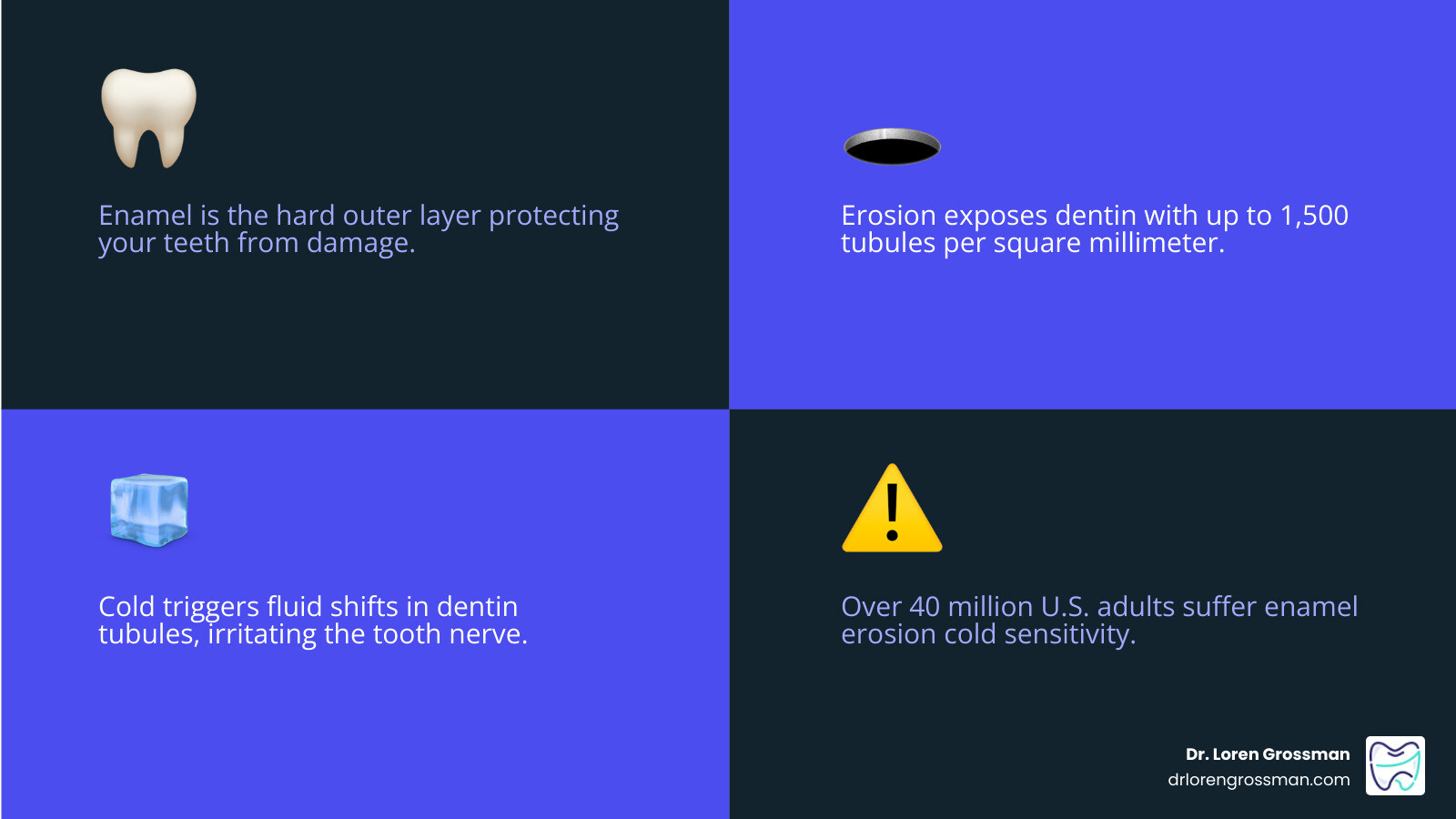
- Enamel is the hard outer layer protecting your teeth
- When acid, grinding, or aggressive brushing wears it away, the sensitive inner layer (dentin) becomes exposed
- Dentin contains thousands of tiny tubes connected to your tooth’s nerve
- Cold air or cold drinks shift fluid inside those tubes, triggering a sharp pain signal
- Over 40 million American adults experience this kind of cold-related tooth pain
That pain is your tooth telling you something important — and it’s worth paying attention to.
Enamel erosion is not the same as a cavity. It’s a gradual, chemical wearing-down of your tooth’s surface. And unlike a cavity, the enamel that’s lost cannot grow back. That’s what makes catching it early so critical.
This guide walks you through exactly what’s happening, why cold makes it worse, and what you can do about it.
I’m Dr. Loren Grossman, D.M.D., a cosmetic and family dentist serving Northeastern Pennsylvania since 1984, and I’ve spent decades helping patients understand and treat enamel erosion cold pain — from early-stage sensitivity to advanced wear requiring full restorations. Whether you’re just starting to notice a twinge or dealing with persistent discomfort, you’re in the right place.
What Enamel Erosion Is and Why It Leads to Cold Pain
Enamel erosion is the gradual loss of tooth enamel caused by acid and wear. Enamel is incredibly strong, but it is not indestructible. Repeated exposure to acids from food, drinks, stomach reflux, or dry mouth can soften and thin it over time.
Once enamel gets thinner, dentin underneath becomes exposed. That is where sensitivity starts to get dramatic. Dentin is much softer than enamel and contains microscopic channels called dentin tubules. Research commonly describes exposed dentin as containing up to 1,500 tubules per square millimeter. In simple terms: a lot of little pathways for cold to travel.
That is why enamel erosion cold pain can feel so sudden. It is not your teeth being dramatic. Well, not entirely.
How enamel, dentin, and pulp work together
Think of a tooth like a house with layers:
- Enamel is the roof and siding
- Dentin is the insulated framework underneath
- Pulp is the living center with nerves and blood vessels
When the outer shell is intact, cold has a harder time reaching the inner tissues. But when enamel wears away, cold can reach dentin much more easily. The tubules in dentin connect toward the pulp, where the nerve lives.
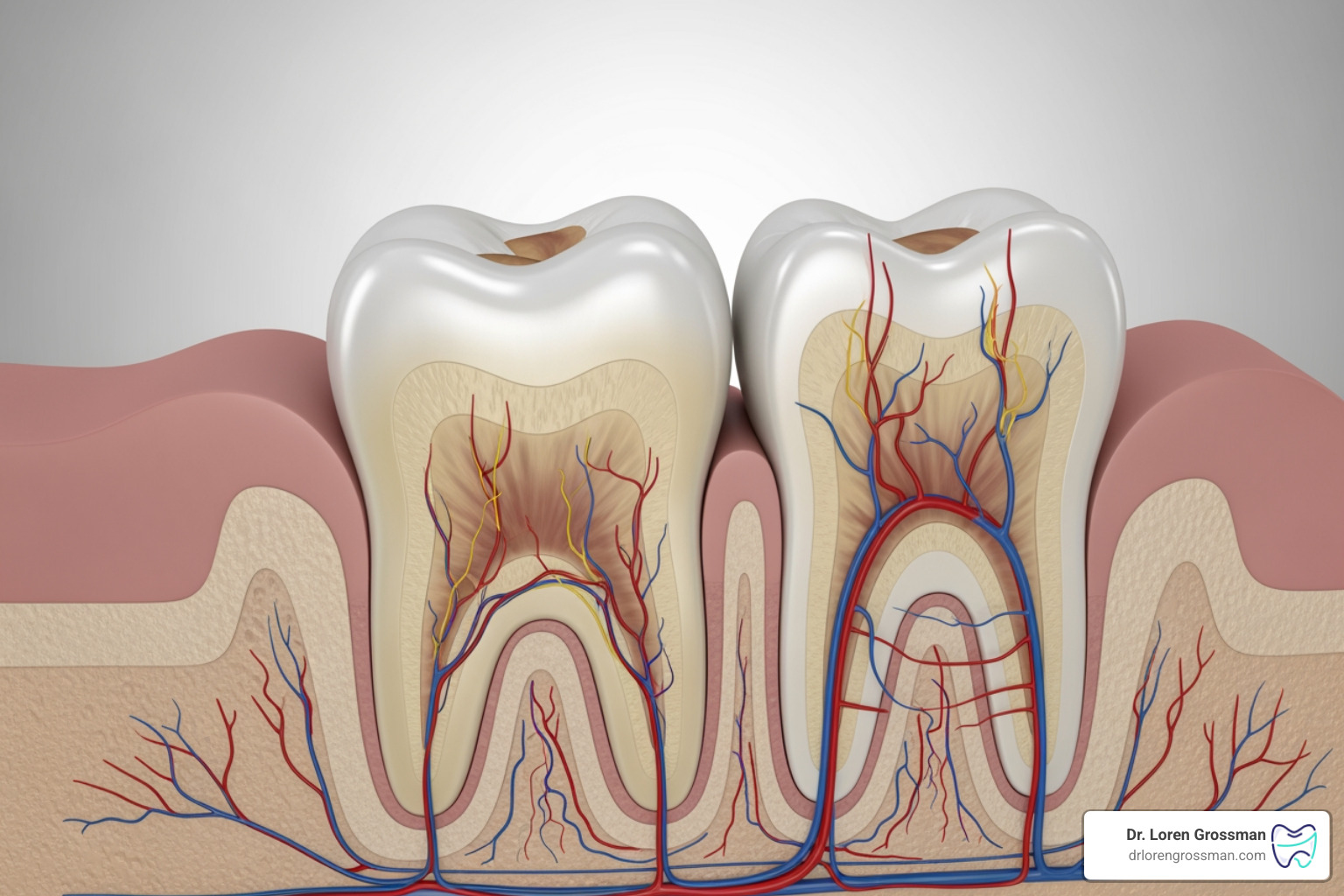
This helps explain the hydrodynamic theory, which is the main scientific explanation for sensitivity. Cold causes fluid inside those tiny tubules to move. That fluid shift stimulates nerve endings near the pulp, creating the classic sharp, quick zing.
Why cold air and cold drinks trigger enamel erosion cold pain
Cold triggers sensitivity in two common ways:
- Cold drinks create a direct temperature shock on exposed dentin
- Cold outdoor air can hit sensitive teeth when you breathe through your mouth
Rapid temperature changes matter too. Walking from a heated house into a freezing Kingston morning, then sipping iced coffee, is basically a stress test for sensitive teeth.
Some people also notice winter pain gets worse because enamel and dental materials can react slightly to temperature changes. Add dryness, mouth breathing, and sinus congestion, and the whole system becomes more reactive.
Can enamel erosion be reversed or only slowed down?
Lost enamel does not grow back. That is the frustrating part. We can support remineralization of weakened areas and make teeth more resistant with fluoride and good habits, but we cannot regrow fully lost enamel.
What we can do is:
- Slow or stop further erosion
- Reduce sensitivity
- Protect exposed areas
- Restore damaged teeth when needed
For a good overview, see this article on scientific research on enamel erosion.
The Main Causes of Enamel Erosion and Winter Tooth Sensitivity
Cold sensitivity rarely has just one cause. Usually, it is a combination of enamel wear plus a trigger that makes exposed dentin react.
Common causes include:
- Acidic drinks like soda, energy drinks, sports drinks, and citrus water
- Frequent snacking on acidic or sugary foods
- GERD or silent reflux bringing stomach acid into the mouth
- Dry mouth reducing saliva protection
- Teeth grinding or clenching
- Hard brushing or abrasive toothpaste
- Whitening products that temporarily increase sensitivity
- Gum recession exposing root surfaces
Everyday habits that wear enamel down
A few daily habits do more damage than people realize.
Frequent sipping is a big one. If you nurse lemon water, soda, or sports drinks all day, your teeth stay in an acidic environment for hours. That repeated exposure matters more than one quick drink with a meal.
Hard brushing is another. A toothbrush is not a scrub brush for grout. If you brush aggressively or use a stiff brush, you can wear enamel and contribute to gum recession.
Other common culprits include:
- Abrasive whitening toothpastes
- Chewing ice
- Grinding at night
- Clenching during exercise or stress
- Low saliva from dehydration, medications, or mouth breathing
Winter-specific triggers that make teeth hurt more
Winter adds its own special charm.
- Cold outdoor air hits exposed dentin
- Indoor heating dries the mouth
- Nasal congestion leads to mouth breathing
- Sinus pressure can create pain in upper teeth
- Holiday sweets and acidic drinks often increase
Dry mouth is especially important. Saliva helps neutralize acids and protect enamel. When indoor air is dry and we are not drinking enough water, enamel has less natural defense.
Sinus pressure can also confuse the picture. Inflamed sinuses, especially in cold and allergy season, can make upper back teeth feel sore even when the teeth themselves are fine.
Diet mistakes that worsen cold sensitivity in colder months
Several winter habits can quietly make sensitivity worse:
- Switching between very hot and very cold drinks
- Sipping tea with lemon all day
- Drinking wine at holiday gatherings
- Snacking on sour candy or citrus
- Eating sticky sweets frequently
- Using vinegar-heavy dressings often
- Crunching ice from drinks
Acid plus sugar is a rough combination. Acid softens enamel, and sugar feeds cavity-causing bacteria. If you already have worn enamel, that combo can turn a mild twinge into a recurring problem.
Early Symptoms and How to Tell Enamel Erosion from Other Problems
Enamel erosion usually starts subtly. Many people do not notice it until cold sensitivity shows up.
Early signs can include:
- A brief zing from cold drinks
- Sensitivity to sweets
- Teeth looking dull instead of glossy
- Slight yellowing as dentin shows through
- Transparent-looking edges on front teeth
- Small chips or rough edges
- Shallow scooped-out areas called cupping
Early symptoms of enamel erosion, especially enamel erosion cold pain
The first symptom is often mild sensitivity that comes and goes. You may notice it when:
- Drinking ice water
- Breathing in cold air
- Eating ice cream
- Biting into something sweet or acidic
At first, the pain may last only a few seconds. That short, sharp response is common with exposed dentin. As wear progresses, symptoms may become more frequent or affect more teeth.
How enamel erosion differs from cavities, gum recession, cracks, and sinus pain
Not every cold-sensitive tooth has enamel erosion. Here is the basic difference:
| Condition | Typical pattern | Common clues |
|---|---|---|
| Enamel erosion | More generalized wear across surfaces | Dull enamel, yellowing, broad sensitivity to cold and acids |
| Cavities | More localized | One spot catches food, pain with sweets, visible hole or dark area |
| Gum recession | Near gumline or roots | Root sensitivity, teeth look longer, brushing discomfort |
| Cracked tooth | Often one tooth | Sharp pain on release when biting, unpredictable temperature pain |
| Sinus pressure | Usually upper back teeth | Feels like several teeth hurt, worse with congestion or bending over |
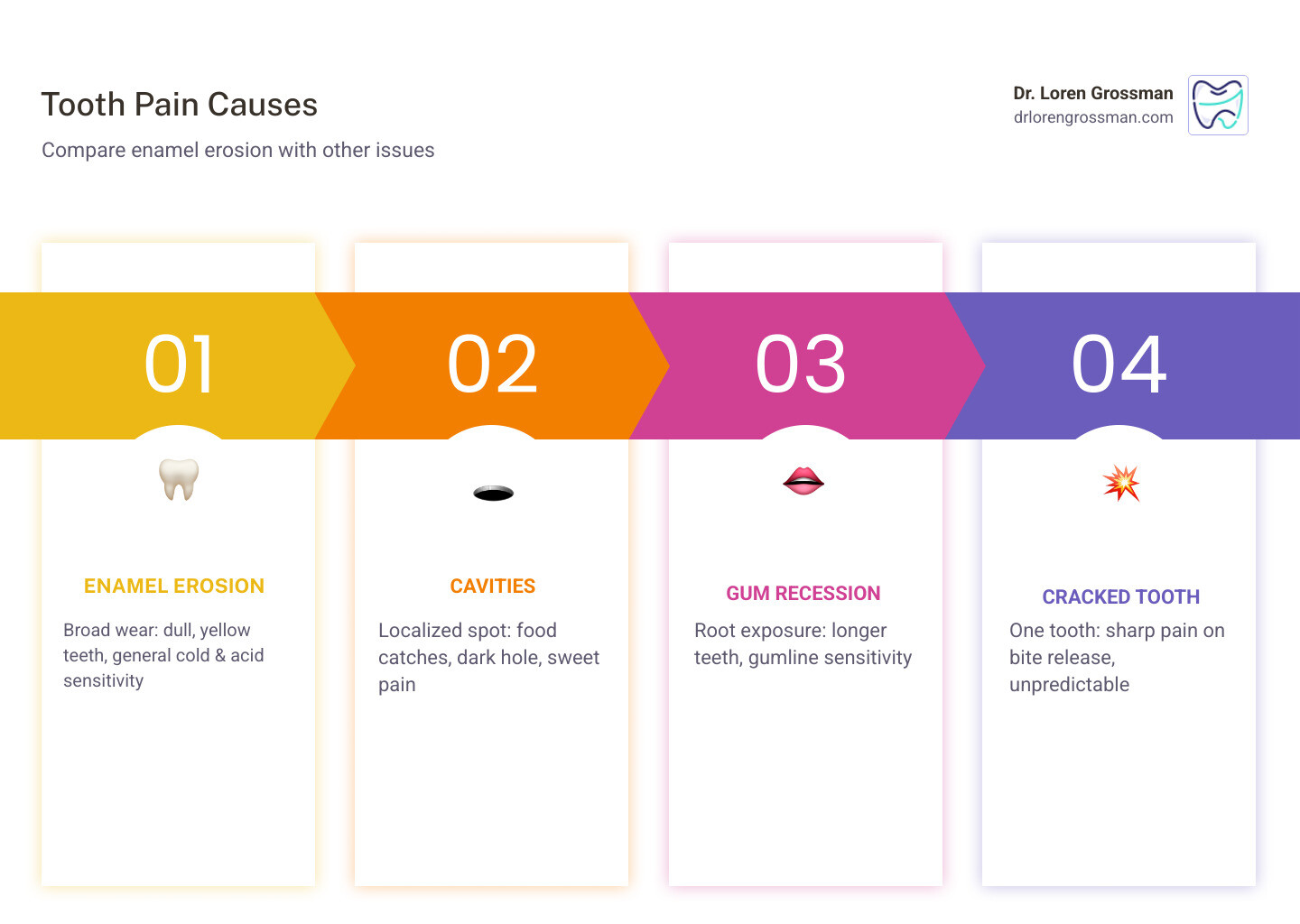
In general:
- Erosion tends to affect surfaces broadly
- Cavities create damaged spots
- Recession exposes roots
- Cracks often produce pain in one tooth
- Sinus issues affect upper teeth and change with congestion
Warning signs that mean it may be more than sensitivity
Please do not shrug off these symptoms:
- Pain that lasts longer than 30 seconds after cold exposure
- Pain in one specific tooth
- Swelling of the gums or face
- Fever
- Nighttime throbbing
- A tooth that looks darker than the others
- Pain after recent trauma
- Sensitivity that is getting worse instead of better
Those signs may point to decay, a crack, pulp irritation, or infection rather than simple exposed dentin.
What You Can Do at Home to Relieve and Prevent Cold Tooth Pain
Home care can help a lot, especially in early stages. The key is reducing triggers while helping the tooth become less reactive.
At-home remedies that actually help enamel erosion cold pain
These steps are practical and evidence-based:
- Use a soft-bristled toothbrush
- Switch to a desensitizing toothpaste with potassium nitrate or stannous fluoride
- Brush twice a day consistently
- Use a fluoride rinse at night if recommended
- Drink lukewarm instead of icy beverages for a while
- Rinse with plain water after acidic foods and drinks
- Breathe through your nose outdoors when possible
- Run a humidifier indoors during dry winter months
- Stay hydrated to support saliva
- Wear a night guard if you grind or clench
Quick relief list:
- Stop the trigger for a few days
- Use desensitizing toothpaste every day, not just once in a while
- Avoid brushing right after acidic foods or drinks
- Choose softer foods and moderate temperatures
- Schedule an exam if symptoms keep returning
One important note: do not scrub sensitive teeth harder trying to “clean them better.” Sensitive teeth do not need punishment.
How long desensitizing toothpaste and fluoride products take to work
This is one of the most common questions we hear.
Desensitizing toothpaste is not instant, but it can work fairly quickly with consistent use. Some research cited in the source material suggests stannous fluoride can reduce pain noticeably in about 8 days, and many patients feel meaningful improvement within about 2 weeks.
A realistic timeline:
- A few days: slight reduction in sharpness
- 1 to 2 weeks: noticeable improvement for many people
- Longer than 2 weeks with no change: time for a dental exam
Use matters. Brushing twice daily and sticking with the same product gives you the best chance of improvement.
Prevention habits that protect enamel long term
Good habits make a real difference:
- Wait about 30 minutes before brushing after acidic foods or drinks
- Keep acidic drinks to mealtimes instead of sipping all day
- Use a soft brush and gentle pressure
- Choose alcohol-free rinses if your mouth feels dry
- Limit whitening products if you are already sensitive
- Treat reflux or dry mouth issues
- Keep up with regular cleanings and exams
Small changes add up. Sometimes changing one habit, like replacing all-day lemon water with plain water, can reduce ongoing enamel wear significantly.
When to See a Dentist and What Treatments Help
If cold sensitivity is mild and improves with home care, great. If not, we should take a closer look.
When cold sensitivity needs a dental visit
You should schedule a dental visit if:
- Sensitivity lasts more than a couple of weeks
- Pain is severe or recurring
- One tooth hurts much more than the others
- You see visible wear, chips, or thinning
- Your gums are receding
- You suspect a cavity or crack
- Cold air hurts when you simply step outside
- Over-the-counter products are not helping
In the office, we may use:
- A visual exam
- X-rays
- Bite testing
- Pulp vitality testing
- Review of diet, habits, and symptoms
That helps us determine whether the problem is enamel erosion, decay, gum recession, a crack, or something else.
Professional treatments for enamel erosion and cold pain relief
Treatment depends on severity and cause. Options may include:
- Fluoride varnish to strengthen and protect vulnerable areas
- Bonding to cover exposed dentin
- Sealants on certain worn surfaces
- Night guards for grinding and clenching
- Crowns for teeth with significant structure loss
- Veneers in selected cosmetic and protective cases
- Gum grafts if recession is exposing roots
Root canal treatment is usually not the first step for sensitivity. It is considered only if the pulp is involved or the nerve is severely inflamed or damaged.
For additional reading, here is a helpful overview of scientific research on how dentists treat enamel wear.
Long-term risks of ignoring enamel erosion and cold sensitivity
Ignoring ongoing sensitivity can lead to:
- More severe pain
- Continued enamel loss
- Tooth fractures or chipping
- Higher risk of cavities
- Pulp irritation
- Difficulty chewing certain foods
- Changes in tooth shape and appearance
- More extensive and costly treatment later
Sensitivity is often an early warning sign. We would much rather help you with a small problem than rebuild a tooth after it cracks.
Frequently Asked Questions About Enamel Erosion Cold Pain
Does cold sensitivity always mean enamel erosion?
No. Enamel erosion is common, but it is not the only cause.
Cold sensitivity can also come from:
- Cavities
- Gum recession
- Cracked teeth
- Worn or leaking fillings
- Temporary whitening sensitivity
- Recent dental work
- Sinus pressure in upper teeth
That is why location, timing, and duration matter. Generalized brief sensitivity may point toward exposed dentin. Severe pain in one tooth points us in a different direction.
Which foods and drinks should I avoid if cold weather makes my teeth hurt?
Try to limit:
- Soda
- Sports and energy drinks
- Citrus fruits and juices
- Lemon water sipped all day
- Sour candy
- Vinegar-heavy foods
- Wine
- Very sugary snacks
- Ice chewing
You do not have to live in fear of a lemon forever. The bigger issue is frequency. Having acidic foods with meals is usually less harmful than sipping or snacking on them constantly.
Is winter tooth pain ever a dental emergency?
Sometimes, yes.
Seek prompt care if sensitivity comes with:
- Facial swelling
- Fever
- Pus or bad taste in the mouth
- Severe throbbing
- Trauma to the tooth
- A broken tooth
- Pain that wakes you up at night
- Rapidly worsening symptoms
If you are dealing with urgent symptoms, learn more about emergency dentistry services.
Conclusion: Protect Your Smile Before Sensitivity Gets Worse
Enamel erosion cold pain usually starts as a warning, not a disaster. A quick sting from ice water or cold air may seem minor, but it can be the first sign that enamel is thinning and dentin is exposed.
The good news is that early action works. With the right toothpaste, gentler habits, better hydration, diet changes, and professional care when needed, we can often reduce sensitivity and prevent more serious damage.
If your teeth are reacting to cold weather, cold drinks, or sweets, do not wait for the pain to get louder. Schedule a visit with our team in Kingston so we can identify the cause, protect your enamel, and help you feel comfortable again.