When a Dental Crisis Strikes: What You Need to Know Right Now
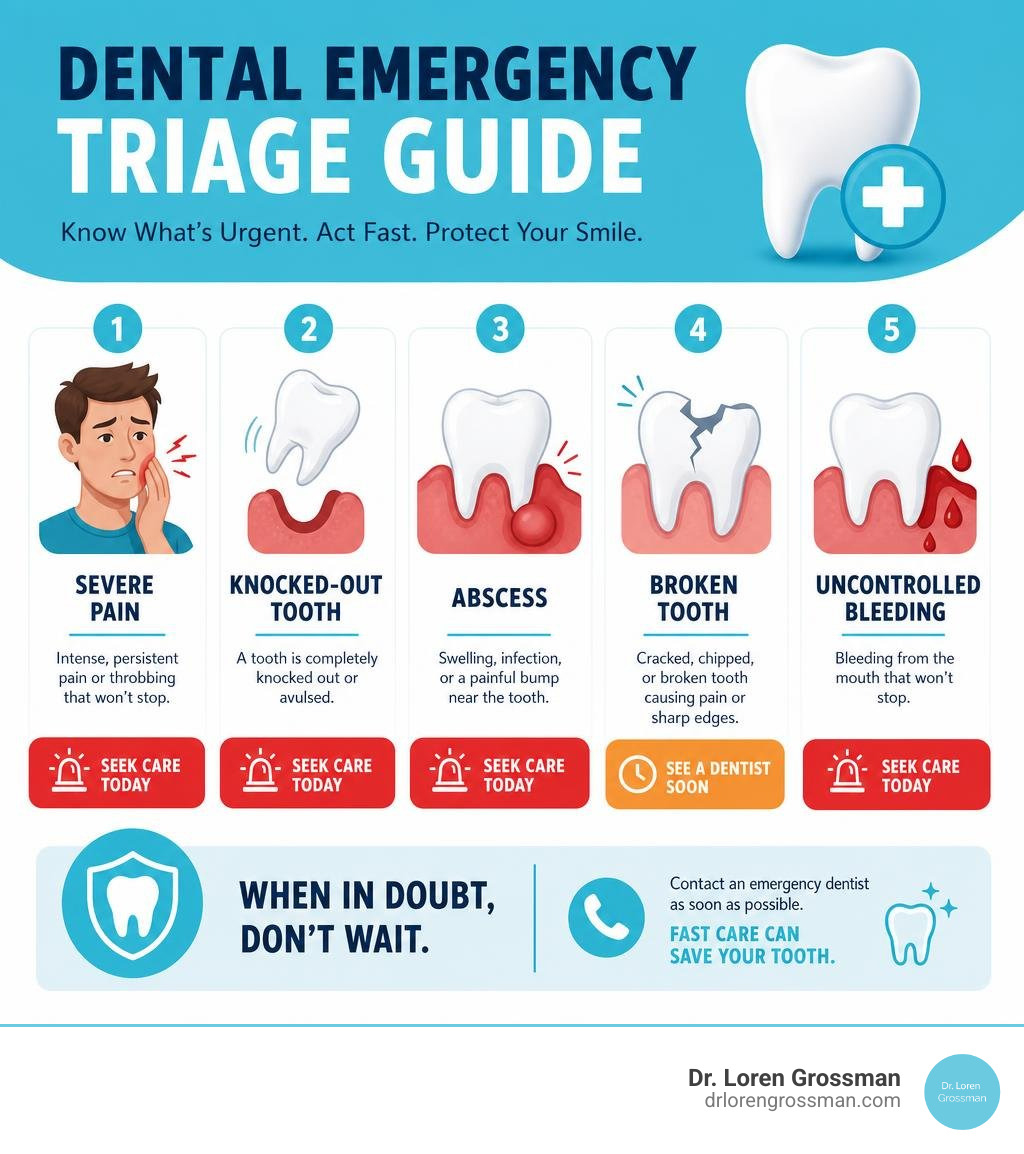
Seeing an emergency dentist as fast as possible can mean the difference between saving a tooth and losing it for good. Here’s a quick-reference guide to the most urgent situations:
Do you have a dental emergency? Look for these signs:
- Severe tooth pain that won’t stop
- A knocked-out or loose adult tooth
- Uncontrolled bleeding from the mouth
- Facial swelling or signs of infection (fever, swollen jaw)
- A broken or cracked tooth with sharp edges
- A lost crown or filling causing significant pain
- A dental abscess (a painful, swollen bump near the tooth)
If you have any of the above, contact an emergency dentist immediately. Do not wait for a regular appointment.
Dental emergencies are more common than most people realize. In the US alone, there are 2 million emergency department visits every year for nontraumatic dental problems — and most of those patients would have been better served by a dental professional than a hospital ER.
The truth is, most dental crises feel overwhelming in the moment. Pain is intense. The situation feels urgent. And it usually happens at the worst possible time — a weekend, an evening, or right before something important.
That’s exactly why knowing what to do before an emergency happens can save you serious pain, money, and stress.
I’m Dr. Loren Grossman, D.M.D., a family and cosmetic dentist serving Northeastern Pennsylvania since 1984, with decades of hands-on experience handling everything from routine care to complex emergency dentist situations. In this guide, I’ll walk you through seven practical tips to help you stay calm, act fast, and protect your smile when it matters most.
When to See an Emergency Dentist: Defining Urgent Dental Crises
It is 2:00 AM on a Saturday, and a throbbing ache in your jaw has kept you awake for hours. Or perhaps it is a sunny afternoon in Kingston, Pennsylvania, and a sudden slip on the pavement has left you with a cracked front tooth. Your immediate reaction is likely panic. You ask yourself: Is this a true dental emergency, or can it wait until Monday morning?
Understanding what qualifies as a genuine dental emergency is the first step toward getting the right care. Generally, a dental emergency involves severe pain, active bleeding, trauma to the mouth, or signs of a serious infection. These are situations where putting off treatment could lead to permanent damage, tooth loss, or systemic health issues.
If you are experiencing mild sensitivity to hot or cold, a tiny chip that does not hurt, or a loose bracket on your braces, these are typically considered non-urgent. While they still require professional attention, they can usually wait a day or two for a standard appointment. On the other hand, if you are dealing with any of the conditions highlighted in our guide to the Top 5 Common Dental Emergencies, you need to seek immediate professional help.
Common Dental Emergencies and Their Symptoms
Dental crises come in many shapes and sizes, but they almost always make their presence known through unmistakable symptoms. Recognizing these early signs can help you make informed decisions. Here are the most common emergencies we treat:
- Severe Toothache: This is not your run-of-the-mill sensitivity. We are talking about a sharp, constant, or throbbing pain that makes it impossible to sleep, eat, or concentrate. It often indicates deep decay, a cracked root, or an infection inside the tooth pulp.
- Knocked-Out (Avulsed) Tooth: Whether from a sports injury or an accidental fall, a completely dislodged adult tooth is a major emergency. There is a very narrow window of time—usually under an hour—to save the tooth.
- Abscessed Tooth: An abscess is a localized pocket of pus caused by a bacterial infection. It can appear as a painful, pimple-like bump on your gums. Left untreated, the infection can spread to your jaw, neck, and blood.
- Broken or Cracked Tooth: A fractured tooth can expose delicate nerves, causing intense pain and leaving the tooth highly vulnerable to rapid decay or infection.
- Lost Crown or Filling: When a restoration falls out, the underlying tooth structure is left completely exposed to bacteria, pressure, and temperature extremes, often resulting in sharp pain.
If you find yourself facing any of these situations, knowing how to react immediately is crucial. For detailed steps on managing these crises, check out our resource on Emergency Dental Services in Kingston PA: What to Do in a Dental Crisis.
How Quickly to Treat a Dental Abscess or Infection
When it comes to a dental abscess or a deep infection, time is your greatest enemy. A tooth infection will not go away on its own. In fact, delaying treatment allows bacteria to multiply and spread through the deep spaces of your face and neck.
A dental abscess can quickly escalate from a localized toothache to a systemic health crisis. If you begin to experience fever, facial swelling, difficulty swallowing, or trouble breathing, the infection may be spreading toward your airway or bloodstream, potentially leading to sepsis.
According to the Mayo Clinic: Tooth Abscess Symptoms and Care, immediate intervention is required to drain the infection, relieve pain, and stop the bacterial spread. If you suspect you have an abscess, you should contact an emergency dentist immediately. If you experience swelling that affects your breathing or swallowing and cannot reach a dentist, go to the nearest emergency room right away.
7 Essential Tips for Surviving a Dental Emergency
When a dental crisis strikes, your ability to remain calm and take the right first-aid steps can drastically improve your outcome. Having a plan—and a few basic supplies—can keep a bad situation from turning into a permanent disaster.
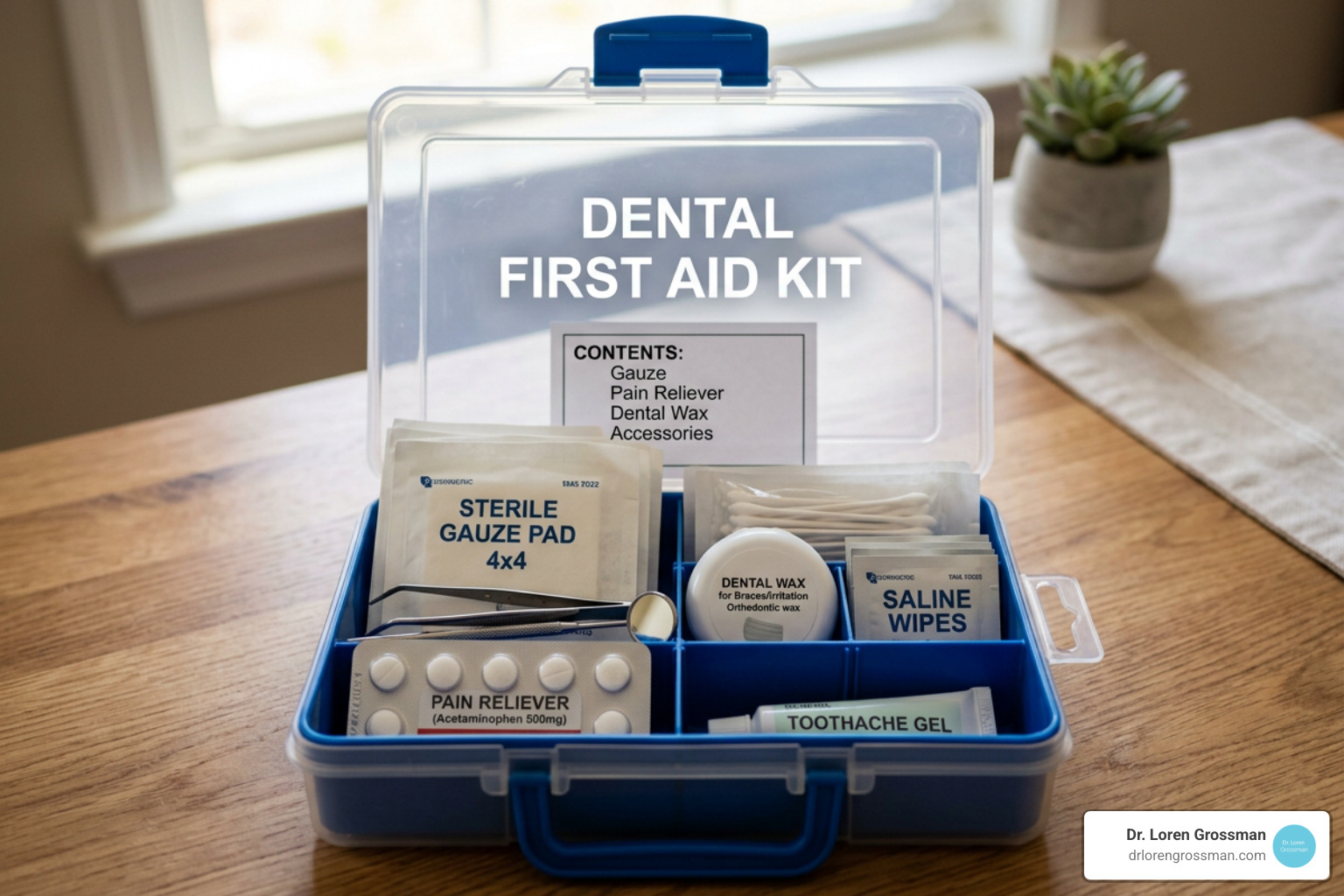
Here are seven essential tips to help you survive a dental emergency and protect your oral health until you can get into our chair.
1. Handle a Knocked-Out Tooth with Care
A knocked-out (avulsed) adult tooth is perhaps the most time-sensitive emergency in all of dentistry. If you act quickly and carefully, there is a very high chance the tooth can be successfully replanted and saved.
First, locate the tooth. Always handle the tooth by the crown (the chewing surface) and never touch the root. The root contains delicate periodontal ligament cells that are essential for the tooth to reattach to your jawbone. Touching or scrubbing the root can destroy these cells.
Gently rinse the tooth with clean water or milk if it is dirty, but do not use soap, chemicals, or scrub it. If possible, try to gently slip the tooth back into its socket and hold it in place by biting down softly on a clean piece of gauze or cloth.
If you cannot reinsert the tooth, you must keep it moist. Store it in a small container of cold milk, or use a specialized tooth preservation kit if you have one. If milk is not available, you can hold the tooth inside your cheek (though this is not recommended for young children who might accidentally swallow it). Do not store the tooth in plain tap water, as this can damage the root cells.
According to the guidelines from the American Association of Endodontists: Saving a Knocked-Out Tooth, you should aim to see a dentist within 30 to 60 minutes of the injury for the best chance of saving the tooth.
2. Manage Pain, Bleeding, and Swelling Safely
Before you can make it to our office, you will likely need to manage physical discomfort, minor bleeding, or swelling at home.
- Controlling Bleeding: If you have bitten your tongue, lip, or cheek, or if your gums are bleeding from trauma, apply gentle, direct pressure to the area using a clean piece of gauze or a damp tea bag. The natural tannins in tea can actually help blood clot faster. Keep your head elevated above your heart to help reduce blood pressure in the facial area.
- Reducing Swelling: Facial swelling is a common response to trauma or infection. Apply a cold compress or an ice pack wrapped in a cloth to the outside of your cheek for 15 minutes on and 15 minutes off. This constricts blood vessels, reduces inflammation, and naturally numbs the area.
- Managing Pain: Over-the-counter anti-inflammatory medications like ibuprofen are highly effective for dental pain because they target the inflammation surrounding the tooth. Always use medications as directed. Never place an aspirin directly against your gums or aching tooth. This is an old myth that can cause severe chemical burns on your soft oral tissues, making your pain much worse.
3. Protect a Chipped or Broken Tooth
A broken, cracked, or chipped tooth requires swift professional care to prevent bacteria from entering the inner chamber of the tooth. However, you can take a few steps to protect your mouth in the meantime.
First, rinse your mouth thoroughly with warm saltwater to clean the area and remove any debris or loose fragments. If you can find the broken pieces of your tooth, save them and bring them with you to your appointment.
If the broken tooth has a sharp or jagged edge that is cutting your tongue or the inside of your cheek, cover the sharp edge with a small piece of sugarless chewing gum, dental wax, or even a wet cotton ball. Avoid eating anything hard, crunchy, sticky, or extremely hot or cold until you have been evaluated.
For a complete breakdown of what to do immediately following a fracture, read our guide on what to do when you need immediate care: Emergency Dentist in Kingston PA: What to Do When You Need Immediate Care.
4. Know When to Go to the ER vs. an Emergency Dentist
One of the most common questions patients ask is whether they should head straight to the hospital emergency room or contact an emergency dental clinic.
As of June 2026, hospital emergency departments in the United States continue to see roughly 2 million visits annually for nontraumatic dental issues. This accounts for about 1.5% of all emergency room visits. However, most ERs do not have a dentist on staff. This means they cannot perform root canals, place fillings, or save knocked-out teeth. Instead, they can generally only offer temporary pain relief and antibiotics before referring you to a dentist.
You should choose the emergency room if you are experiencing a life-threatening emergency, such as a fractured jaw, deep facial lacerations, uncontrollable bleeding that does not stop after 15 minutes of direct pressure, or severe swelling that compromises your ability to breathe or swallow. For all other dental-specific issues, a dedicated emergency dental clinic is your best choice.
| Condition / Symptom | Go to the Hospital ER | See an Emergency Dentist |
|---|---|---|
| Severe Toothache / Abscess | No (Unless accompanied by fever/swelling) | Yes (Immediate care) |
| Knocked-Out or Broken Tooth | No | Yes (Immediate care) |
| Fractured Jaw or Facial Bones | Yes (Go immediately) | No (Follow up later) |
| Difficulty Breathing or Swallowing | Yes (Go immediately) | No |
| Uncontrolled Bleeding | Yes (If pressure fails) | Yes (If manageable) |
| Lost Filling or Crown | No | Yes (Schedule soon) |
5. Utilize Same-Day or Walk-In Appointments
When you are in severe pain, waiting several days for an open slot is simply not an option. Many dental practices maintain open blocks in their daily schedules specifically to accommodate unplanned emergencies.
If you experience a crisis, call our office as early in the day as possible. Explaining your symptoms clearly to our team helps us triage your situation and get you in for a same-day appointment. If you are dealing with a sudden, painful issue, please read our guide on Urgent Dental Care for People Who Can’t Wait to see how we streamline the process for immediate relief.
While some clinics accept walk-ins, calling ahead is always recommended. This allows the clinical team to prepare a treatment room, review your medical history, and ensure you are seen as quickly as possible upon arrival.
6. Understand Costs and Insurance Coverage
It is completely natural to worry about the financial aspect of emergency dental care. However, putting off treatment because of cost concerns often leads to far more complex—and expensive—procedures down the road. A simple filling today is much more affordable than a root canal, crown, or extraction and implant next month.
Most dental insurance plans provide coverage for emergency exams and palliative care (treatments designed to relieve immediate pain). Our team is highly experienced in navigating insurance benefits, and we will work with you to maximize your coverage.
For patients without insurance, or for treatments not fully covered by benefits, we offer clear, transparent pricing and flexible financing options to ensure you can get the care you need without added financial stress. We believe that receiving urgent, high-quality care should never be hindered by financial uncertainty.
7. Prevent Future Crises with Daily Habits
The absolute best way to survive a dental emergency is to prevent it from happening in the first place. While you cannot prevent every accident, the vast majority of emergency visits are caused by progressive issues like untreated decay or structural weakness.
- Maintain Excellent Oral Hygiene: Brush twice a day with fluoride toothpaste and floss daily to keep your enamel strong and prevent infections.
- Wear a Mouthguard: If you or your children play contact sports, a custom-fitted sports mouthguard is a simple, highly effective way to protect your teeth from trauma.
- Avoid Using Your Teeth as Tools: Never use your teeth to open packages, crack nuts, chew ice, or tear tape. Teeth are meant for chewing food, not acting as scissors or bottle openers!
- Schedule Regular Checkups: Routine exams allow us to catch small cracks, weak fillings, and early decay before they develop into painful emergencies.
For more expert advice on safeguarding your smile, check out our comprehensive guide: Tips from an Emergency Dentist on How to Prevent Dental Emergencies.
What Services Do Urgent Dental Clinics Offer?
An emergency dental clinic is uniquely equipped to handle a wide range of sudden oral health problems. Unlike general medical clinics, dental offices have specialized diagnostic tools and restorative materials on hand to address both pain and structural damage in a single visit.
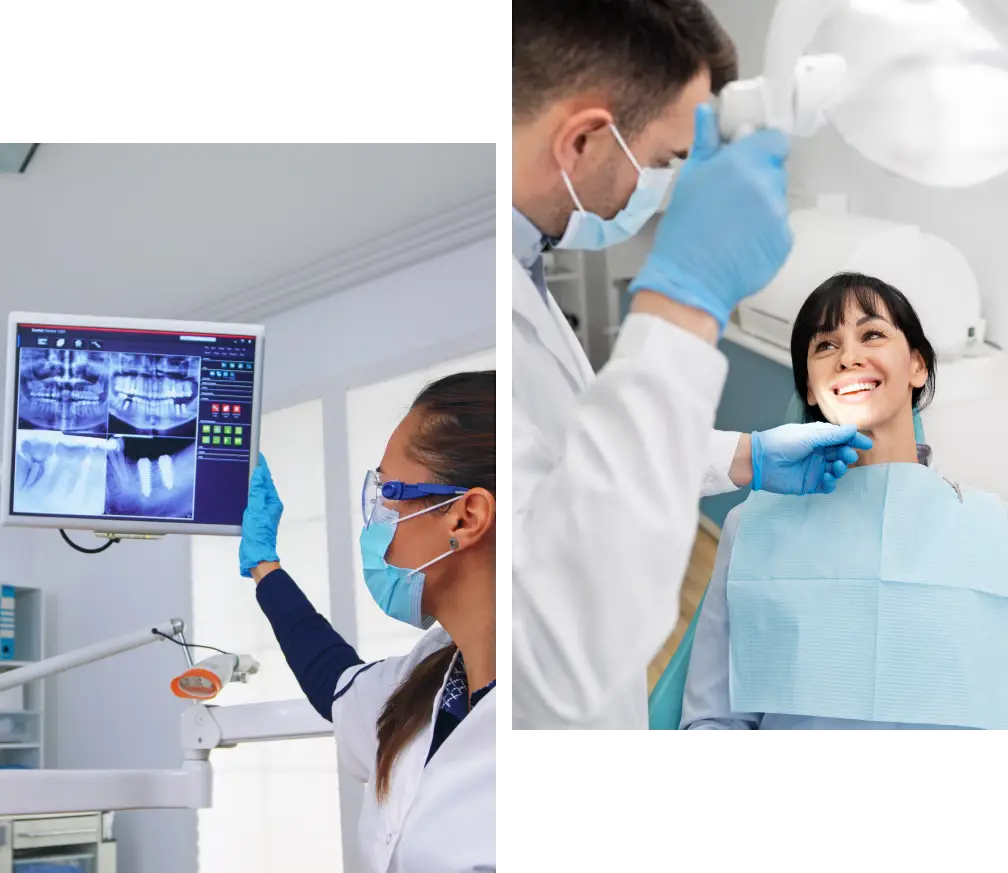
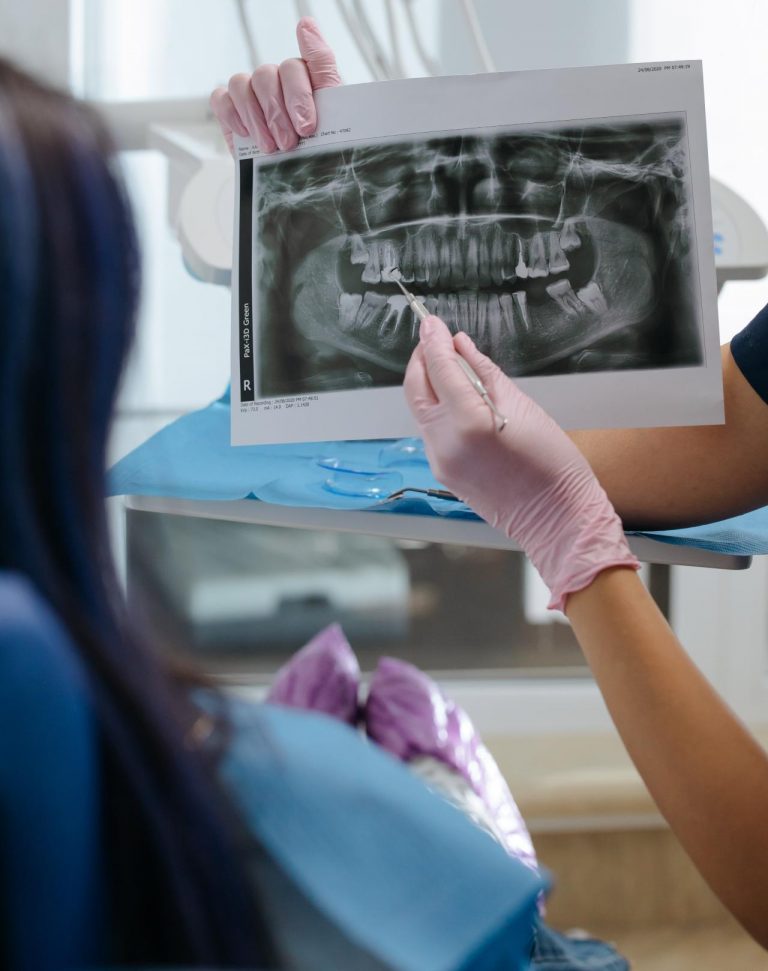
When you arrive for an emergency visit, our primary goals are to diagnose the root cause of your discomfort, eliminate pain, and stabilize your oral health. We use advanced digital imaging to quickly assess what is happening beneath the surface, allowing us to create an immediate, targeted treatment plan.
Common Procedures Performed by an Emergency Dentist
Depending on your specific situation, an emergency dentist may perform several urgent procedures to restore your health:
- Root Canal Therapy: Often feared but incredibly relieving, a root canal is performed when the inner nerve of a tooth becomes infected or inflamed. We remove the damaged tissue, clean the canal, and seal it to save your natural tooth and stop the pain.
- Emergency Extractions: If a tooth is too severely broken or infected to be saved, we can safely and comfortably extract it to prevent the spread of infection and prepare the area for a future replacement, such as a dental implant.
- Crown and Bridge Repair: If an existing restoration has broken or fallen out, we can repair, replace, or temporarily secure it to protect the underlying tooth structure.
- Emergency Fillings: For deep cavities or sudden structural chips, we place durable, aesthetic composite fillings to seal the tooth and eliminate sensitivity.
Frequently Asked Questions about Urgent Dental Care
What is the most common dental emergency?
By far, the most common dental emergency is a severe toothache. This is typically caused by deep tooth decay that has reached the inner pulp, a cracked tooth, an infection, or advanced gum disease. If you are experiencing constant, throbbing pain, it is a clear sign that you need to be evaluated by a professional.
Can I go to the ER for a toothache?
While you can go to the ER for a toothache, it is rarely the best option. Emergency room physicians do not have the dental training or specialized equipment required to treat the root cause of a dental issue. They cannot perform root canals or repair teeth. In most cases, they will only provide pain relievers or antibiotics and instruct you to see a dentist. Save yourself the time and expense by contacting an emergency dentist first.
Will dental insurance cover emergency visits?
Most dental insurance policies cover at least a portion of emergency care. This typically includes the diagnostic exam and emergency X-rays, as well as basic palliative treatments to relieve pain. Coverage for restorative procedures like root canals or crowns varies depending on your specific plan. Our office is always happy to help you check your benefits and understand your out-of-pocket costs before treatment begins.
Conclusion
A dental emergency can be incredibly stressful, but you do not have to navigate it alone. Knowing the right first-aid steps—and having a trusted professional to call—can make all the difference in protecting your health and preserving your smile.
At the office of Dr. Loren Grossman, we provide top-tier cosmetic and general dentistry in Northeastern Pennsylvania. We offer personalized care, advanced technology, and a patient-focused approach to deliver exceptional smile transformations and boost confidence. Whether you need immediate pain relief or are looking to protect your teeth for the long haul, our team in Kingston, Pennsylvania is here to help.
If you are located right here in NEPA and facing a crisis, do not wait. We invite you to explore our Emergency Dental Services in Northeastern Pennsylvania: Quick Care with Dr. Grossman or visit our dedicated Emergency Dentistry page to learn more about how we can get you out of pain and back to smiling today.