Why Bleeding Gums Are Never “Normal” — And What to Do About It
The good news? A bleeding gums fix is within reach for most people — often in as little as 10–14 days with the right approach.
Here’s a quick answer if you’re in a hurry:
- Brush gently twice daily with a soft-bristled toothbrush at a 45-degree angle
- Floss or water-floss every tooth daily to clear plaque at the gum line
- Rinse with an antimicrobial mouthwash or warm saltwater
- See a dentist if bleeding persists beyond two weeks — it may signal gum disease or another health condition
Bleeding gums are the number one early warning sign of gingivitis — the first stage of gum disease. Nearly 47% of American adults over 30 have some form of gum disease, and most don’t even know it.
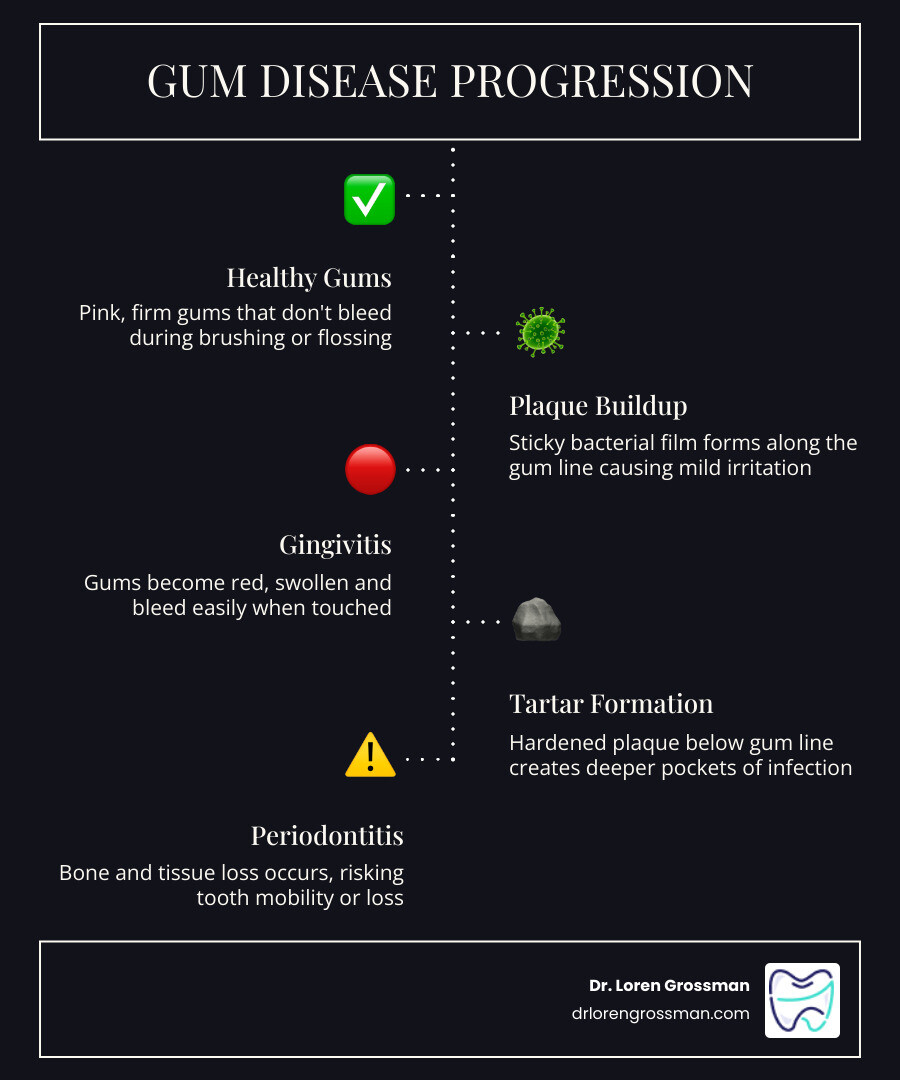
The sight of pink in the sink can feel alarming. But in the vast majority of cases, it means one thing: bacterial plaque has built up along your gum line, causing inflammation that makes your gum tissue fragile and prone to bleeding. Left alone, that same plaque hardens into tartar — and that’s when simple brushing is no longer enough.
Bleeding gums are never a normal part of brushing or flossing. Healthy gums simply don’t bleed.
I’m Dr. Loren Grossman, D.M.D., a family and cosmetic dentist serving Northeastern Pennsylvania since 1984, and in over four decades of practice I’ve helped countless patients find a lasting bleeding gums fix — from simple hygiene corrections to advanced periodontal care. In this guide, I’ll walk you through exactly what causes bleeding gums and how to stop them for good.
Why Your Gums Bleed: Identifying the Root Cause
To find the right bleeding gums fix, we first have to understand why the “seeing red” happens in the first place. Think of your gums like the foundation of a house. If the foundation is irritated or under attack, the whole structure is at risk.
The Plaque and Tartar Connection
The most common culprit is dental plaque—a sticky, colorless film of bacteria that constantly forms on your teeth. If you don’t remove it through daily brushing and flossing, it produces toxins that irritate the gum tissue. This leads to gingivitis, the earliest stage of gum disease.
When plaque sits for too long, it mineralizes into tartar (calculus). Tartar is like concrete; you cannot brush it away at home. It provides a rough surface for even more plaque to cling to, creating a vicious cycle of inflammation.
Beyond the Mouth: Systemic Factors
While poor oral hygiene is the leading cause, your gums can also bleed due to systemic issues or lifestyle choices. According to research on systemic causes of bleeding, several non-dental factors can play a role:
- Vitamin Deficiencies: A lack of Vitamin C (historically known as scurvy) or Vitamin K can impair your body’s ability to heal and clot, leading to spontaneous gum bleeding.
- Hormonal Changes: Pregnancy, puberty, and menopause cause hormonal shifts that increase blood flow to the gums, making them more sensitive to bacteria. This is often called “pregnancy gingivitis.”
- Medications: Blood thinners (like aspirin or warfarin) and certain blood pressure medications can make your gums more likely to bleed during routine cleaning.
- Smoking: This is a major risk factor. Smoking weakens your immune system’s ability to fight off gum infections and actually masks bleeding by restricting blood flow, meaning you might have serious disease without the “warning” of blood.
- Periodontitis: This is the advanced stage of gum disease where the infection spreads to the bone and ligaments. At this stage, the damage becomes irreversible without professional intervention.
The Ultimate Bleeding Gums Fix: A 4-Step At-Home Protocol
If you’ve noticed blood in the sink, don’t panic—but don’t ignore it either. We recommend a specific, evidence-based protocol to reverse inflammation before it turns into permanent bone loss.
Step 1: Upgrade Your Tools
The tools you use matter. Research shows that making a few simple switches can dramatically reduce gingivitis.
| Feature | Manual Brushing | Electric Toothbrush |
|---|---|---|
| Plaque Removal | Standard | 21% more effective |
| Gingivitis Reduction | Standard | 11% better reduction |
| Pressure Control | User-dependent | Often has built-in sensors |
The Protocol: Use an electric toothbrush with soft bristles. Hold it at a 45-degree angle to the gum line and move in small, circular motions. This ensures you are cleaning the “pocket” where the tooth meets the gum.
Step 2: Master the Art of Between-Teeth Cleaning
Many people stop flossing when they see blood, thinking they are “hurting” their gums. In reality, you need to floss more because the bleeding is caused by the bacteria you’re leaving behind.
While traditional string floss is great, many of our patients find the benefits of flossing daily are easier to achieve with a water flosser. In fact, water flossing has been shown to reduce gum bleeding by 29% to 93% more effectively than string floss in clinical trials.
Step 3: Rebalance the Microbiome
Your mouth is home to billions of bacteria. To stop the “bad” bacteria from winning, you can use an antimicrobial rinse (look for ingredients like cetylpyridinium chloride) or incorporate L. reuteri probiotics. These specific oral probiotics help crowd out the bacteria that cause inflammation and have been shown in 14 randomized controlled trials to significantly reduce bleeding on probing.
Step 4: Follow an Evidence-Based Schedule
Consistency is the secret ingredient. Following an evidence-based 7-step protocol—which includes tongue scraping and specific rinsing techniques—can turn the tide in just a couple of weeks.
Natural Remedies as a Bleeding Gums Fix
In addition to the mechanical removal of plaque, several natural remedies can soothe the tissue and speed up the healing process.
- Saltwater Rinse: Mix half a teaspoon of salt in a cup of warm water. It’s a natural disinfectant that helps reduce swelling.
- Turmeric Paste: Turmeric has powerful anti-inflammatory and antimicrobial properties. Applying a paste of turmeric and water to the gums for a few minutes can help.
- Oil Pulling: Swishing a tablespoon of coconut oil for 10–15 minutes may help “pull” bacteria out of the gum pockets.
- Green Tea: Drinking green tea contains antioxidants that can reduce the body’s inflammatory response to bacteria.
- Diluted Hydrogen Peroxide: A rinse made of equal parts water and 3% hydrogen peroxide can kill plaque-causing bacteria (just be sure not to swallow it!).
For more detailed instructions, you can find more info on home remedies for gums to supplement your routine.
Expected Healing Timeline for a Bleeding Gums Fix
When you start a new, rigorous hygiene routine, your gums might actually bleed more for the first 3 to 5 days. Don’t let this discourage you! This happens because you are finally disturbing the deep-seated bacteria in inflamed, fragile tissue.
- Days 1–3: Bleeding may persist or slightly increase as you clean deep pockets.
- Days 4–7: Inflammation begins to subside; gums may shift from bright red to a darker pink.
- Days 10–14: In cases of mild gingivitis, bleeding should stop entirely. The tissue becomes firm and resilient.
If you are still seeing blood after 14 days of strict compliance, it is a sign that the plaque has hardened into tartar or that an underlying health issue is present.
When to Worry: Red Flags and Professional Care
While most cases are solved with better home care, sometimes a bleeding gums fix requires a professional hand. If the infection has progressed to periodontitis, no amount of brushing at home will reach the bacteria hidden deep under the gum line.

Red Flags That Require an Urgent Visit:
- Persistent Bleeding: Bleeding that doesn’t stop after two weeks of improved hygiene.
- Loose Teeth: This indicates bone loss around the roots.
- Receding Gums: If your teeth look “longer,” your gums are pulling away.
- Persistent Bad Breath: Often a sign of “sulfur-producing” bacteria living in deep pockets.
- Spontaneous Bleeding: Gums that bleed even when you aren’t brushing or eating.
In rare cases, spontaneous or severe gum bleeding can be a “red flag” for systemic conditions like diabetes (which makes infections harder to fight) or even leukemia. This is why we take a holistic approach to your health. You can find more info about comprehensive dental services at our Wilkes-Barre office, where we screen for these issues.
If you aren’t sure if your symptoms are serious, read this guide on when to see a dentist for bleeding gums.
Professional Scaling as a Long-Term Bleeding Gums Fix
When home care isn’t enough, we perform a treatment called Scaling and Root Planing (SRP). This is often referred to as a “deep cleaning.”
- Scaling: We use specialized ultrasonic tools to remove tartar from above and below the gum line.
- Root Planing: We smooth out the roots of your teeth. This makes it much harder for bacteria to re-attach and allows the gum tissue to “re-attach” to a clean surface.
- Adjunctive Therapy: We may use Arestin, a localized antibiotic placed directly into the gum pockets, or laser therapy to kill bacteria and promote faster healing.
By measuring your pocket depths (the space between the tooth and gum), we can track your progress. Healthy pockets are 1–3mm; anything deeper requires this evidence-based protocol to reverse gingivitis.
Lifestyle Changes to Prevent Recurrence
Once you’ve achieved a bleeding gums fix, the goal is to keep it that way. Your lifestyle plays a massive role in how well your gums can defend themselves.

- Smoking Cessation: Since smokers are 2 to 7 times more likely to develop gum disease, quitting is the single best thing you can do for your oral health.
- Eat for Your Gums: A diet high in refined sugars and carbs feeds the bacteria in your mouth. Focus on Vitamin C (citrus, peppers) for collagen production and Vitamin K2 (leafy greens, fermented foods) to help with bone health and clotting.
- Manage Stress: High stress increases cortisol, which can trigger inflammation throughout the body, including your gums.
- Regular Check-ups: Even with perfect brushing, tartar can still form in hard-to-reach areas. Professional cleanings every six months are essential. Check out these preventive dental care tips for more ways to protect your smile.
Frequently Asked Questions about Bleeding Gums
How long does it take for bleeding gums to stop?
Typically, with the 4-step protocol mentioned above, mild cases of gingivitis resolve in 10 to 14 days. If the inflammation is moderate, it may take up to 4 weeks. If it persists longer, you likely have tartar buildup that requires professional removal.
Is it normal for gums to bleed a little during flossing?
No. While it is common, it is not normal. Healthy gum tissue is tough and resilient; it should be able to withstand flossing without any bleeding. If they bleed, it is a warning sign that the tissue is currently inflamed.
Can vitamin deficiencies cause my gums to bleed?
Yes. Vitamin C is crucial for collagen synthesis, which keeps your gum tissue “tight” around the teeth. A deficiency can lead to fragile vessels. Vitamin K is essential for blood clotting. If you have a balanced diet but still experience bleeding, it’s worth discussing with both your dentist and your doctor.
Conclusion
At the office of Dr. Loren Grossman, we believe that a healthy smile is the foundation of your overall well-being. Serving the Kingston and Wilkes-Barre communities of Northeastern Pennsylvania, we combine a patient-focused approach with advanced technology to provide the ultimate bleeding gums fix.
Whether you need a simple hygiene tune-up or more advanced periodontal care, our team is dedicated to providing personalized care that boosts your confidence and protects your health. If you’re ready to stop seeing red and start seeing a healthier smile, we’re here to help. To learn more about how we can help, explore more info about dental specialties and treatments or schedule your visit today.