Why Pediatric Dental Care Tips Are Essential for Your Child’s Health
Pediatric dental care tips are crucial for protecting your child’s teeth from cavities and decay—the most common chronic disease of childhood. More than half of children aged 6 to 8 have had at least one cavity in their baby teeth, and establishing good oral hygiene habits early can prevent pain, infections, and costly treatments down the road.
Quick Pediatric Dental Care Tips to Start Today:
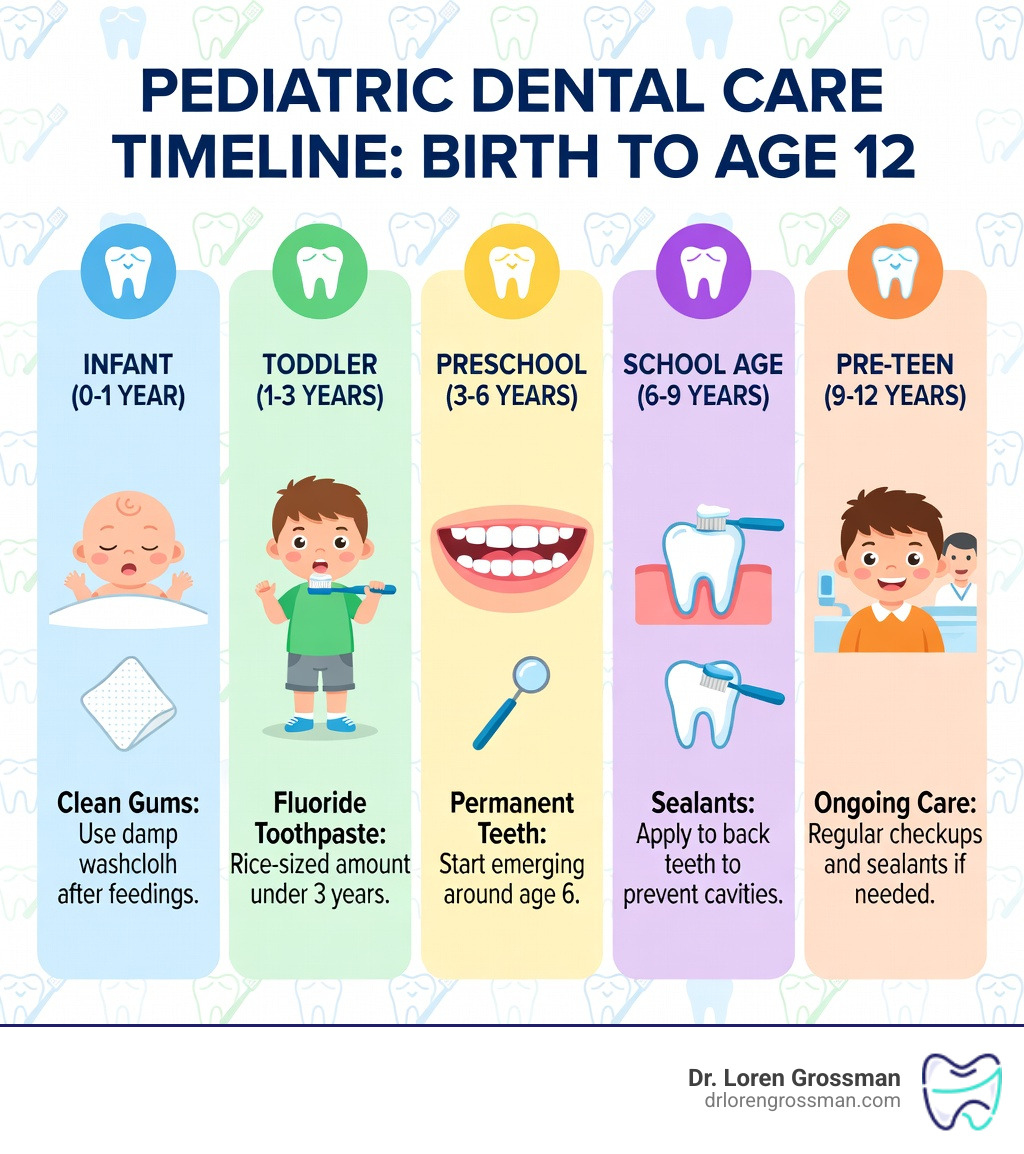
- Clean gums from birth – Wipe your baby’s gums with a damp washcloth after feedings, even before teeth appear
- First dental visit by age 1 – Schedule within 6 months of the first tooth or by their first birthday
- Use fluoride toothpaste correctly – Rice-sized smear for under 3 years, pea-sized amount for ages 3 and up
- Brush twice daily for 2 minutes – Use gentle circular motions along the gum line and all tooth surfaces
- Apply fluoride varnish – Ask your dentist about professional fluoride treatments that prevent 33% of cavities
- Get dental sealants – These protective coatings prevent 80% of cavities in back teeth
- Limit sugary drinks – Avoid bedtime bottles and offer water between meals
- Check for warning signs – Look for white or brown spots on teeth, especially near the gum line
Tooth decay doesn’t have to be inevitable. Research shows that children living in communities with fluoridated tap water have fewer cavities than children whose water isn’t fluoridated, and simple preventive measures like dental sealants can dramatically reduce your child’s risk. The consequences of untreated decay go beyond discomfort—dental problems are the leading cause of day surgery under general anesthesia in children under age 5.
I’m Dr. Loren Grossman, and I’ve been providing family and cosmetic dentistry to the Wyoming Valley since 1984. Throughout my career, I’ve helped countless families implement effective pediatric dental care tips to protect their children’s smiles from infancy through adolescence.
Why Early Oral Hygiene Matters for Your Child
Many parents ask us why they should worry so much about baby teeth since they’re just going to fall out anyway. It is a common misconception, but the truth is that primary teeth (baby teeth) are the foundation for a lifetime of health. According to research on Early Childhood Tooth Decay, tooth decay is the most common chronic infectious disease of childhood—more common than asthma or hay fever.
Baby teeth are essential for several reasons:
- Space Maintenance: They hold the exact spot needed for permanent teeth to erupt correctly. If a baby tooth is lost too early due to decay, the surrounding teeth can shift, leading to crowding and the need for extensive orthodontic work later.
- Nutrition and Speech: Children need healthy teeth to chew nutritious foods properly and to form sounds correctly as they learn to speak.
- Enamel Thickness: Baby teeth have much thinner enamel than adult teeth. This means decay can move through the tooth and into the nerve much faster, causing significant pain and infection.
When decay is left untreated, the consequences can be severe. Statistics show that the treatment of dental problems is the leading cause of day surgery under general anesthesia among children under the age of five. This is a stressful experience for both the child and the parent that can often be avoided with the right pediatric dentistry services. By prioritizing oral hygiene from day one, we help our children avoid missed school days, difficulty concentrating, and the physical pain associated with cavities.
Essential Pediatric Dental Care Tips by Age Group
Oral hygiene isn’t a “one size fits all” routine. As your child grows from a newborn to a school-aged student, their dental needs shift dramatically. We recommend parents view dental care as an evolving process, much like learning to walk or read. Integrating these pediatric dental care tips into your daily routine ensures your child is always protected at their specific stage of development.
Cleaning Gums and First Teeth (0-24 Months)
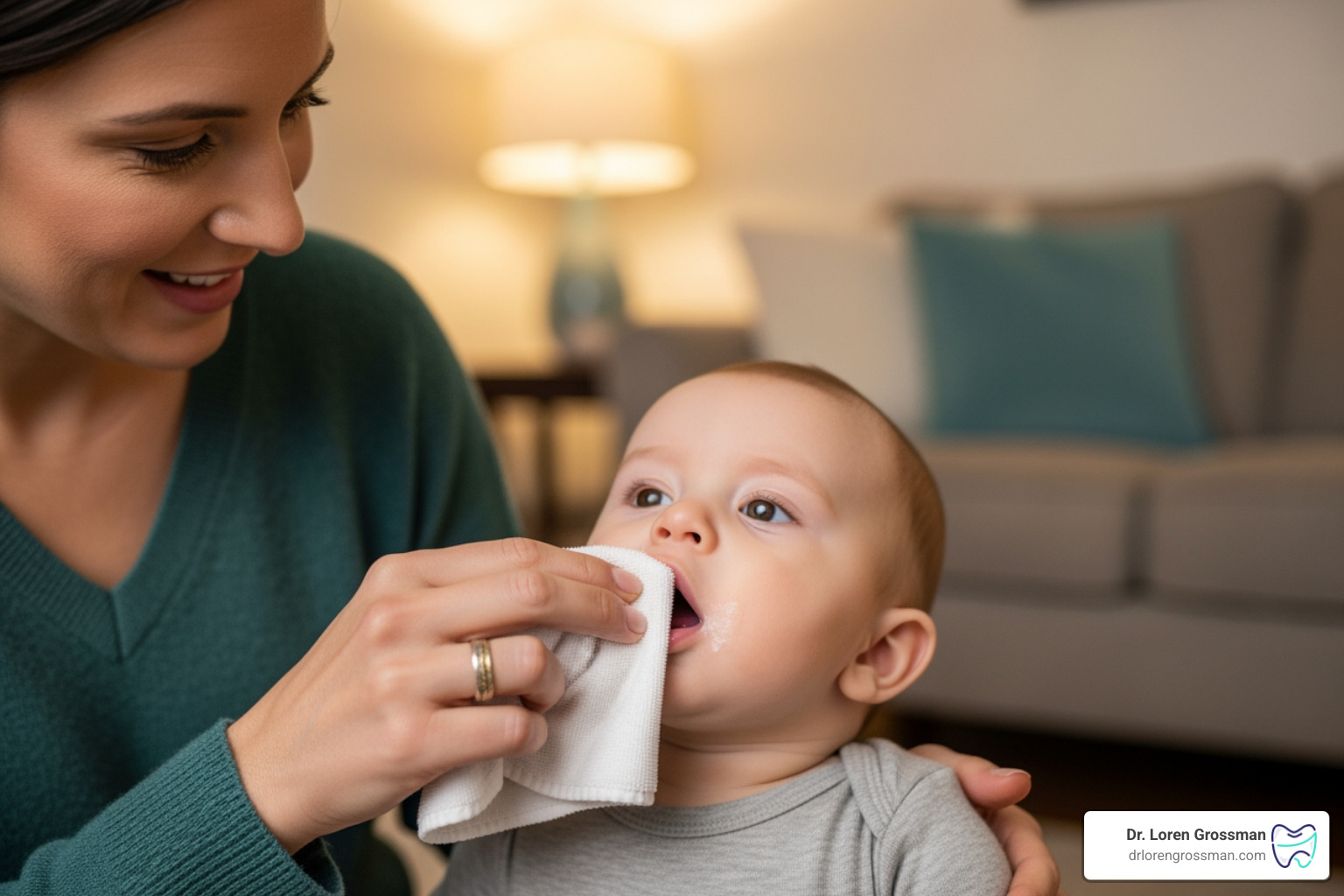
The journey to a healthy smile begins before the first tooth even breaks the surface. From birth to about 6 months, we suggest wrapping a clean, soft, moist cloth around your finger and gently wiping your baby’s gums at least twice a day, especially after feedings and before bed. This removes bacteria and gets your baby used to having their mouth cleaned.
Once that first tiny tooth appears (usually around 6 months), it’s time to upgrade to a soft-bristled infant toothbrush.
- Toothpaste Amount: For children under age 3, use a tiny “smear” or rice-sized amount of fluoride toothpaste.
- Frequency: Brush twice a day—once in the morning and once right before bed.
- Technique: Use very gentle circular motions. Don’t forget to gently brush the tongue to remove bacteria that can cause bad breath and plaque.
Brushing for Toddlers and School-Aged Kids (Ages 2-12)
By age 2 or 3, most children have all 20 of their primary teeth. This is a critical window for habit formation.
- The 2-Minute Rule: Aim for two minutes of brushing, twice a day. To make this fun, you can sing “Twinkle Twinkle Little Star” or use a fun timer app.
- The Pea-Sized Amount: Once your child reaches age 3, you can increase the amount of fluoride toothpaste to a pea-sized dollop.
- Supervision: Children typically don’t have the manual dexterity to brush effectively on their own until they are 7 or 8 years old (usually around the time they can tie their own shoelaces). We recommend that parents brush their child’s teeth first, then let the child “finish” to practice.
- Flossing: Start flossing as soon as two teeth touch each other. This is vital because toothbrushes cannot reach the tight spaces between teeth where food particles and plaque hide. Understanding the benefits of flossing daily is one of the best gifts you can give your child’s future smile.
| Age Group | Cleaning Tool | Toothpaste Amount |
|---|---|---|
| 0-6 Months | Damp washcloth/Gauze | None |
| First Tooth – 3 Years | Soft infant toothbrush | Rice-sized smear |
| 3 – 6 Years | Child-sized toothbrush | Pea-sized amount |
| 7+ Years | Power or manual brush | Pea-sized amount |
Protecting Teeth with Fluoride and Sealants
While daily brushing and flossing are the front-line defense, modern dentistry offers “superhero” tools to provide extra protection. These professional interventions are designed to seal out tooth decay and strengthen the tooth structure itself.
The Role of Fluoride in Pediatric Dental Care Tips
Fluoride is a naturally occurring mineral that hardens tooth enamel and can actually repair early stages of tooth decay. It works by “remineralizing” the spots where acid has started to eat away at the tooth.
There are three main ways your child gets fluoride:
- Systemic: Drinking fluoridated tap water. Children in communities with fluoridated water have significantly fewer cavities.
- Topical (Home): Using fluoride toothpaste for young children twice a day.
- Professional: Fluoride varnish applied by a dentist or doctor. Research shows that fluoride varnish can prevent about 33% of cavities in baby teeth. We can apply this quick, painless treatment up to four times a year depending on your child’s risk level.
One thing to watch for is dental fluorosis. This occurs when a child consumes too much fluoride while their permanent teeth are still forming under the gums, leading to faint white streaks on the teeth. This is why using the correct “rice-sized” or “pea-sized” amount of toothpaste is so important—it ensures they get the benefits without the risks.
Dental Sealants for Long-Term Protection
As your child’s permanent molars begin to erupt (usually around age 6 and then again at age 12), we highly recommend dental sealants. Molars have deep pits and fissures that are nearly impossible for toothbrush bristles to clean thoroughly.
A sealant is a thin, protective plastic coating that we “paint” onto the chewing surfaces of the back teeth. It acts as a shield, keeping food and plaque out of those deep grooves. Applying dental sealants to the back teeth prevents 80% of cavities. The process is completely painless, requires no drilling or numbing, and can last for several years.
Managing Diet, Habits, and Teething
What goes into your child’s mouth is just as important as how you clean it. In our Kingston and Scranton offices, we often tell parents that “frequency is worse than quantity” when it comes to sugar.
Nutritional Pediatric Dental Care Tips
Every time your child eats or drinks something sugary, bacteria in the mouth turn that sugar into acid. This acid attacks the teeth for at least 20 minutes. If a child is constantly sipping juice or snacking on crackers, their teeth are under a near-constant acid attack.
- The 20-Minute Rule: Limit snacking to specific times rather than “grazing” all day.
- Smart Swaps: Choose cheese, yogurt, apples, and crunchy vegetables. Cheese is especially great because it helps neutralize mouth acid.
- Beverage Choices: Water is the best drink for your child’s teeth. Limit juice to no more than 4 ounces a day and serve it only during mealtimes.
- The Bottle Rule: Never put your baby to bed with a bottle containing anything other than water. “Baby bottle tooth decay” occurs when milk or juice pools around the teeth for hours, leading to rapid and severe decay of the front teeth.
- Advanced Tools: For older children with braces or those who struggle with traditional floss, a Waterpik toothbrush or water flosser can be a game-changer in maintaining hygiene.
Breaking Habits: Pacifiers and Thumb-Sucking
Thumb-sucking and pacifier use are natural self-soothing behaviors for infants. However, if these habits continue past age 3, they can begin to affect the shape of the jaw and the alignment of the teeth.
Prolonged sucking can cause “open bites” or “crossbites,” where the upper and lower teeth don’t meet correctly. While most children stop on their own, we recommend using positive reinforcement to help them transition away from these habits by their third birthday. If you’re concerned about your child’s dental development, we can evaluate their bite during a regular check-up to see if orthodontic intervention might be needed in the future.
Safely Soothing Teething Pain
Teething can be a miserable time for babies and parents alike. While it’s tempting to reach for over-the-counter numbing gels, the FDA advises against them because they can contain benzocaine, which is dangerous for infants.
Instead, follow these tips for safely soothing teething pain:
- Cold, Not Frozen: A chilled (not frozen) teething ring or a clean, cold washcloth can provide immense relief.
- Gently Rub Gums: Use a clean finger to apply gentle pressure to the sore area.
- Avoid Teething Necklaces: These are a choking and strangulation hazard and are not recommended by pediatricians or dentists.
When to Call a Professional
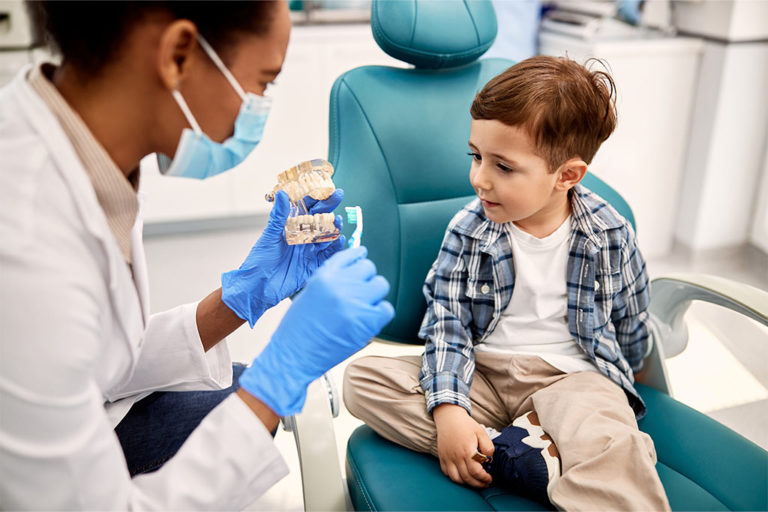
Establishing a “dental home” by age one is one of the most important pediatric dental care tips we can offer. This ensures that your child becomes comfortable with the dentist before any problems arise.
Recognizing Warning Signs
We encourage parents to use the “Lift the Lip” technique once a month. Simply lift your child’s upper lip and look at the teeth. You are looking for:
- White Spots: These are often the very first sign of decay and can sometimes be reversed with fluoride if caught early.
- Brown or Black Spots: These indicate a cavity that needs professional attention.
- Swollen or Red Gums: This can be a sign of infection or poor hygiene.
- Sensitivity: If your child complains when eating cold or sweet foods, they may have a cavity.
If you notice any of these signs, or if your child experiences a dental injury (like a knocked-out or loosened tooth), call us immediately. Preparing your child for their first visit involves keeping the conversation positive and “low-stakes.” We want them to feel that the dentist is a friend who helps keep their smile bright. For more general advice, the CDC provides excellent oral health tips for children that align with our practice’s philosophy.
Frequently Asked Questions about Pediatric Dental Care Tips
When should my child have their first dental visit?
The American Academy of Pediatrics and the American Dental Association both recommend that a child see a dentist within six months of their first tooth appearing, or by their first birthday at the latest. Early visits allow us to provide a “risk assessment” and catch potential issues before they become painful.
Is fluoride safe for my toddler?
Yes, fluoride is safe and highly effective when used in the correct amounts. For toddlers under 3, use a smear the size of a grain of rice. For children 3 to 6, use a pea-sized amount. At these levels, even if the child swallows a little bit, it is safe.
How do I manage my baby’s teething pain safely?
Avoid numbing gels and teething tablets. Stick to physical comfort like chilled teething rings, cold washcloths, or gently massaging the gums with a clean finger. If your child has a fever or seems excessively ill, contact your pediatrician, as teething usually only causes a very mild rise in temperature.
Conclusion
At the practice of Dr. Loren Grossman, we believe that every child in Kingston, Wilkes-Barre, Scranton, and Dallas deserves a healthy, confident smile. By following these pediatric dental care tips, you aren’t just preventing cavities; you’re setting the stage for a lifetime of overall health and self-esteem.
From our advanced technology to our warm, patient-focused approach, we are here to support your family every step of the way. Whether it’s your baby’s very first check-up or your teenager’s routine cleaning, we provide the personalized care your family deserves.
Ready to protect your child’s smile? Schedule a consultation for pediatric dentistry with Dr. Loren Grossman today and let’s build healthy habits together!