What to Know About Root Canal Recovery Time at a Glance
Root canal recovery time is a concern for many of the more than 15 million people who undergo this procedure each year — and the good news is that recovery is usually faster and more comfortable than most people expect.
Here’s a quick summary of what to expect:
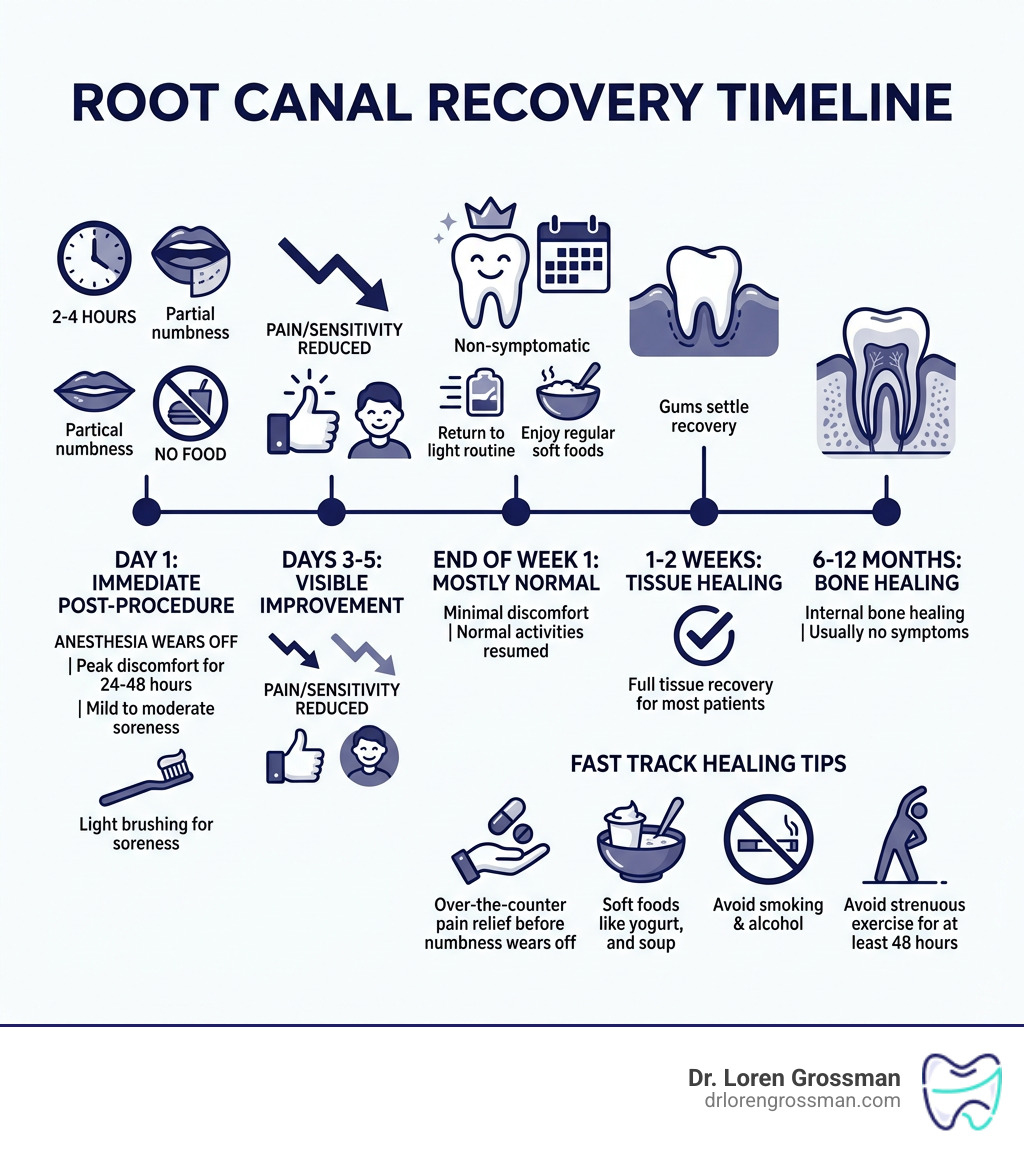
| Phase | Timeframe | What’s Normal |
|---|---|---|
| Anesthesia wears off | 2-4 hours after procedure | Numbness, avoid eating until clear |
| Peak discomfort | First 24-48 hours | Mild to moderate soreness, some swelling |
| Noticeable improvement | Days 3-5 | Pain and sensitivity decreasing daily |
| Most people feel normal | By end of week 1 | Minimal discomfort, return to routine |
| Full tissue healing | 1-2 weeks | Near-complete recovery for most patients |
| Bone healing (if large infection) | Up to 6-12 months | Internal healing, usually no symptoms |
The fastest way to speed up healing:
- Take OTC pain relievers (ibuprofen or acetaminophen) before the anesthesia wears off
- Stick to soft foods for the first few days
- Avoid smoking, alcohol, and strenuous exercise for at least 48 hours
- Get your permanent crown placed within 2-4 weeks
Many people dread the idea of a root canal — but the truth is, the procedure is designed to relieve pain, not cause it. The real discomfort comes from the infection the root canal is treating, not the treatment itself.
A root canal removes the infected or inflamed pulp — the soft tissue inside your tooth that contains nerves and blood vessels — then cleans, seals, and protects what remains. Once the source of infection is gone, most patients feel significant relief quickly.
I’m Dr. Loren Grossman, a family and cosmetic dentist serving Northeastern Pennsylvania since 1984, and as a member of Temple University’s Endodontology Society, I’ve guided countless patients through root canals with personalized, hands-on care. Let’s walk through exactly what you can expect — and how to make your recovery as smooth as possible.
What to Expect and How to Speed Up Healing
When you leave our office in Kingston or Dallas, the first thing you’ll notice is that your mouth feels like it belongs to someone else. That’s the local anesthesia doing its job. Typically, this numbness lingers for about two to four hours. During this window, we advise you to be extremely careful. It is surprisingly easy to bite your cheek or tongue without realizing it, which can lead to a very sore mouth once the feeling returns.
Once the anesthesia wears off, you might experience what we call “peak discomfort” within the first 24 to 48 hours. This isn’t the sharp, stabbing pain of an infected tooth; rather, it’s a dull ache or tenderness. This happens because the tissues surrounding the tooth roots—which were likely already irritated by infection—are now reacting to the recovery process itself.
Think of it like a deep cleaning for the inside of your tooth. Even with the best technology, the ligaments holding your tooth in place can become slightly inflamed. This is why understanding root canal recovery duration and expectations is so important; knowing that a bit of tenderness is normal can save you a lot of unnecessary worry.
Factors Influencing Root Canal Recovery Time
Not every root canal recovery is identical. Several 5 factors that affect root canal recovery time can shift your timeline by a few days:
- Severity of the Initial Infection: If you waited until you had a visible abscess or significant swelling before coming to see us, your body has more “cleanup” work to do. A tooth with a massive infection will naturally take longer to feel 100% than one caught early.
- The Number of Canals: Front teeth usually have one canal, while molars can have three or four. More canals mean a longer procedure and more internal surface area that needs to heal.
- Tooth Location: Molars at the back of the mouth handle the brunt of your chewing force. Because they are under more pressure, they may stay sensitive for a few extra days compared to a front tooth.
- Your Overall Health: Conditions like diabetes or a compromised immune system can slow down the body’s natural inflammatory response and healing process.
- Smoking and Lifestyle: Tobacco use is one of the biggest enemies of oral healing. It restricts blood flow to the gums, which is essential for transporting healing nutrients to the site.
Professional Tips for Root Canal Recovery Time
If you want to move through the recovery phases as quickly as possible, we recommend a “proactive” rather than a “reactive” approach. Here are our top post root canal recovery essential tips for a smooth healing process:
- The “Pre-emptive Strike”: Don’t wait for the pain to start. Take your first dose of over-the-counter pain medication while you are still numb. This helps stay ahead of the inflammation.
- Prioritize Rest: While you can technically go back to work the next day, your body heals best when it isn’t stressed. Take it easy for the first 24 hours.
- Elevate Your Head: When you go to sleep the first night, use an extra pillow. Keeping your head elevated reduces blood pressure in the head and neck area, which can minimize that annoying throbbing sensation.
- Stay Hydrated: Drink plenty of water, but skip the straws (more on that later). Hydration is key to keeping your saliva levels up, which protects the treated area.
Managing Pain and Oral Hygiene During Recovery
Managing discomfort is usually the top priority for our patients in Scranton and Wilkes-Barre. The most effective way to handle post-operative soreness is through a combination of medication and home care.

Most patients find that over-the-counter anti-inflammatories like ibuprofen (Advil or Motrin) are the gold standard for root canal pain. Because root canal discomfort is caused by inflammation of the periodontal ligament, ibuprofen works better than many other options by targeting that specific swelling. If you cannot take ibuprofen, acetaminophen (Tylenol) is a great alternative. In cases of moderate discomfort, we sometimes suggest alternating the two every three hours to provide continuous relief.
If you notice any swelling, a cold compress is your best friend. Apply an ice pack to the outside of your cheek for 20 minutes on, then 20 minutes off. This constricts blood vessels and numbs the area naturally. For more details on this technique, check out our guide: do you use ice after a root canal heres what you need to know.
Oral Hygiene Best Practices
One of the biggest mistakes patients make is being too afraid to clean the area. While you should be gentle, maintaining a clean mouth is vital to preventing secondary infections. Here are our root canal post treatment care recovery tips you need to know for hygiene:
- Brush Gently: Use a soft-bristled toothbrush. You can brush the treated tooth, but use a light touch. Avoid electric toothbrushes on that specific tooth for the first 48 hours if the vibration feels uncomfortable.
- The Saltwater Rinse: This is an old-school remedy that still works wonders. Mix half a teaspoon of salt in a glass of warm water and gently swish. This helps kill bacteria and soothes inflamed gum tissue.
- Flossing Caution: If you have a temporary filling, be very careful when flossing. Instead of pulling the floss back “up” through the teeth (which can snag and dislodge the filling), pull it through the side of the gap.
- Antibacterial Mouthwash: If we prescribed a specific rinse, use it exactly as directed to keep the bacterial load low while the tissues knit back together.
Diet and Lifestyle Adjustments for Faster Healing
Your diet plays a massive role in how quickly you bounce back. For the first few days, your mantra should be “soft and cool.” Heat can sometimes aggravate inflammation, so lukewarm or cool foods are often more soothing.
| Recommended Soft Foods | Foods to Avoid |
|---|---|
| Mashed potatoes (the ultimate recovery food!) | Crusty bread or sourdough |
| Greek yogurt or cottage cheese | Nuts, seeds, and popcorn |
| Smoothies (eat with a spoon, no straws) | Sticky candy or gum |
| Scrambled eggs or omelets | Spicy foods or acidic citrus |
| Hummus and soft pita | Tough meats like steak or jerky |
| Applesauce or mashed bananas | Ice cubes (don’t chew them!) |
A key tip for root canal recovery is to chew on the opposite side of your mouth. Even if the treated tooth doesn’t hurt, it is currently “weakened” until the permanent crown is placed. Chewing a hard crust of bread on a temporary filling is a recipe for a cracked tooth.
Lifestyle Factors to Avoid
To ensure your root canal recovery time stays on the fast track, there are a few things you need to hit the “pause” button on. These are four major recovery-blockers:
- Smoking and Vaping: We can’t stress this enough. Smoking doesn’t just slow healing; it increases the risk of the root canal failing entirely. The suction involved in smoking can also disturb the healing site.
- Alcohol: Alcohol can thin the blood and increase swelling. More importantly, it can have dangerous interactions with pain medications or antibiotics we may have prescribed.
- Strenuous Exercise: For the first 48 hours, skip the heavy lifting or the intense cardio at the gym. High-intensity exercise increases your heart rate and blood flow, which can lead to increased throbbing and even bleeding at the procedure site.
- Using Straws: The suction created by a straw can pull on the tissues and potentially dislodge a temporary filling or irritate the area. Stick to sipping directly from a cup.
Long-Term Outlook and When to Call Your Dentist
Once the first week has passed, you’ll likely feel like your old self again. However, the “recovery” isn’t quite finished. While the pain is gone, the internal healing time for root canal treatment continues under the surface.
The most critical step in long-term success is the placement of a permanent crown. After a root canal, the tooth is no longer “alive,” which means it can become brittle over time. A permanent crown acts like a helmet, protecting the tooth from fracturing under the pressure of your bite.
We typically recommend getting your permanent crown within two to four weeks of the procedure. If you wait too long, the temporary filling can leak, allowing bacteria to re-infect the canals you just paid to have cleaned!
Interestingly, while you’ll feel better in a few days, complete bone healing around the tip of the root can take anywhere from 6 to 12 months, especially if there was a large infection. We will often take a follow-up X-ray a year later just to ensure that the bone has fully regenerated.
Recognizing Potential Complications
While complications are rare, it’s important to know the difference between “healing soreness” and “something is wrong.” These are the red flags during recovery:
- Severe Swelling: If you notice swelling that is visible from the outside of your face, or if it seems to be spreading toward your neck or eye, call us immediately.
- Fever or Chills: This suggests the infection has not been fully contained and may be systemic.
- A Return of Symptoms: If you felt great for three days and then the intense pain suddenly returns, something needs to be checked.
- Uneven Bite: If it feels like the treated tooth is “hitting first” when you close your mouth, the filling might be too high. This puts immense pressure on the ligament and will cause significant pain until it is adjusted.
- Visible Discharge: Any sign of pus or a foul taste in the mouth is a reason for an urgent visit.
Frequently Asked Questions about Root Canal Recovery
How long until I can return to work or exercise?
Most of our patients in the Wilkes-Barre and Scranton areas find they can return to work or school the very next day. However, if your job involves heavy physical labor, you might want to wait 48 hours. As for exercise, we recommend avoiding high-impact activities for at least two days to prevent increased throbbing.
Is it normal for the tooth to feel sensitive when biting?
Yes! This is actually the most common complaint. It often feels like the tooth is “too tall.” This happens because the periodontal ligament—the “shock absorber” for your tooth—is inflamed and swollen, slightly pushing the tooth up. This pressure sensitivity usually fades within 3 to 7 days.
Why do I need a permanent crown after a root canal?
A root canal saves the structure of your tooth, but the tooth is essentially “hollowed out” and no longer receives blood flow. This makes it prone to cracking. A permanent crown seals the tooth against bacteria and provides the structural integrity needed for chewing. Without it, the tooth is at a much higher risk of a non-restorable fracture.
Conclusion
At the office of Dr. Loren Grossman, we believe that a root canal shouldn’t be a source of fear. By following these steps after a root canal, you can ensure that your path to a healthy smile is as fast and painless as possible.
Whether you are in Kingston, Scranton, or anywhere in Northeastern Pennsylvania, our team is dedicated to providing a patient-focused approach that combines advanced technology with a warm, welcoming environment. We don’t just treat teeth; we care for the people attached to them.
If you’re experiencing dental pain or have questions about a recent procedure, don’t hesitate to reach out. We’re here to help you achieve the exceptional smile transformation you deserve. More info about general dentistry services is just a click away!