The First Dental Visit: Why Timing Matters More Than You Think
When should kids first see a dentist? Here’s the short answer:
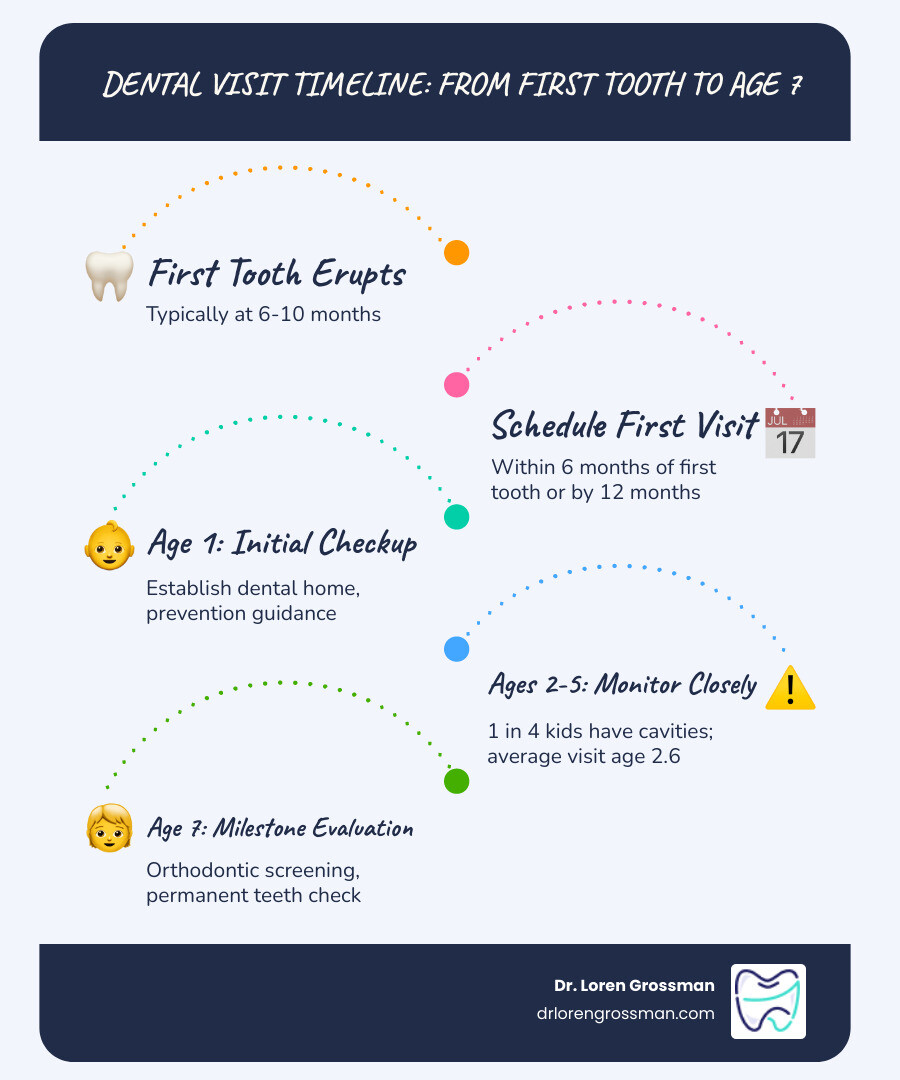
By their first birthday — or within 6 months of their first tooth coming in, whichever comes first.
That’s the guidance from the American Academy of Pediatric Dentistry (AAPD), the American Dental Association (ADA), and the American Academy of Pediatrics (AAP). All three major organizations agree on this timeline.
Most parents assume the dentist can wait until their child is 3 or 4. But by then, damage can already be done. Nearly 1 in 4 children ages 2–5 already has cavities in their baby teeth — and the average age of a first dental visit is still 2.6 years old.
That gap matters.
Early visits aren’t about drilling and filling. They’re about preventing problems before they start — and helping your child feel comfortable in the dental chair for life.
I’m Dr. Loren Grossman, D.M.D., a family dentist serving the Wyoming Valley since 1984, and over four decades of practice I’ve seen how the question of when should kids first see a dentist shapes a child’s long-term oral health. Starting children early is one of the most important things a parent can do, and in this guide I’ll walk you through exactly what to expect, when to go, and how to prepare.
When Should Kids First See a Dentist?
As we move through May 2026, the consensus among dental and medical professionals is stronger than ever. Whether you are a first-time parent or adding another “little nugget” to your family, the milestone for the first dental checkup is clear.
The short answer to when should kids first see a dentist
The rule of thumb is “First Tooth or First Birthday.” If your child’s first tooth sprouts at six months, you should have them in a dental chair by their first birthday. If they are a late bloomer and that first tooth doesn’t arrive until ten months, you should schedule the visit by the time they are 16 months old (six months after eruption).
You don’t need to wait for a full mouth of teeth, and you certainly don’t need to wait for a problem to arise. In fact, the goal is to visit the dentist while your child’s mouth is perfectly healthy so we can keep it that way.
Why waiting until preschool is often too late
Many parents (about 17%) wait until their child is older than four to visit us for the first time. Unfortunately, statistics show that nearly 25% of children between the ages of 2 and 5 already have cavities.
When parents delay that first visit, they often miss out on crucial guidance. Over 50% of parents of young children report they never received advice from their pediatrician or dentist about when to start these visits. Without this guidance, 1 in 6 parents mistakenly believe children should wait until age 4 or older. By waiting until preschool, we often find ourselves treating decay that could have been prevented with a simple 12-month checkup.
Why Early Dental Visits Matter More Than Many Parents Realize
It is a common misconception that baby teeth don’t matter because “they’re just going to fall out anyway.” We like to think of baby teeth as the “scouts” for the permanent teeth—they pave the way and hold the space for everything that comes later.
Baby teeth are temporary, but their job is not
Baby teeth serve several critical functions:
- Chewing: They allow your child to maintain proper nutrition.
- Speech: Teeth play a vital role in forming sounds and developing clear speech patterns.
- Spacing: They act as placeholders. If a baby tooth is lost too early due to decay, the surrounding teeth may shift, leaving no room for the permanent tooth to erupt. This often leads to the need for space maintainers or extensive orthodontic work later.
- Health: An infection in a baby tooth can actually travel down and damage the permanent tooth developing underneath it.
Problems a dentist can catch before they become painful
During an early visit, we aren’t just looking for holes in teeth. We are looking at the big picture:
- White spots: These are often the first signs of demineralization and “pre-cavities.”
- Oral habits: We can assess the impact of thumb-sucking or pacifier use on jaw development.
- Tongue ties: We check for physical constraints that might affect feeding or speech.
- Bite development: We ensure the upper and lower jaws are aligning correctly as they grow.
What major organizations recommend and why
The AAPD, ADA, and AAP all recommend the age one visit because it establishes a “Dental Home.” This is a relationship between the dentist and the patient that includes all aspects of oral health care delivered in a comprehensive, continuously accessible, coordinated, and family-centered way. Scientific research on a child’s first dental visit shows that children who have a dental home are more likely to receive appropriate preventive and routine oral health care.
What Happens at the First Appointment and How to Prepare
We know that “dentist anxiety” isn’t just for adults—parents often feel it on behalf of their kids! However, the first visit is designed to be low-stress, educational, and quick, usually lasting between 30 and 45 minutes.
What happens during a child’s first dental visit?
For very young children, we often use a “knee-to-knee” exam. You sit in the dental chair with your child facing you, and then you lower their head into the dentist’s lap. This allows your child to see you the whole time while we get a clear view of their mouth.
We will:
- Examine the teeth, gums, jaws, and oral tissues for proper growth.
- Perform a gentle cleaning if necessary to remove plaque or stains.
- Demonstrate proper home cleaning techniques.
- Review feeding practices (like the risks of “baby bottle tooth decay”).
- Discuss fluoride needs and pacifier habits.
How to prepare your child for the first dentist appointment
Preparation is key to a “no-tears” visit.
- Use Positive Language: Avoid words like “shot,” “drill,” or “hurt.” Instead, talk about the dentist “counting your teeth” or “making your smile shine.”
- Roleplay: Use a toothbrush to count your child’s teeth at home, or read books about first dental visits.
- Timing is Everything: Schedule the appointment in the morning when your child is well-rested and most cooperative.
- Bring a “Friend”: A favorite stuffed animal or blanket can provide a sense of security.
For more tailored advice, check out our guide on how to prepare your child for the first dentist appointment.
How to prepare yourself and the dental team
We want to know your child as well as you do. Come prepared with:
- A complete medical history, including any medications or allergies.
- Insights into your child’s temperament (e.g., are they prone to “stranger danger”?).
- A list of questions about teething, diet, or thumb-sucking.
You can learn more about our specific pediatric dentistry services to see how we accommodate our youngest patients in Kingston.
Home Oral Care Before and After the First Tooth
Oral hygiene starts long before the first tooth breaks through the gums. Setting a routine early makes the transition to brushing much easier.
Before teeth erupt: what parents should do daily
Even without teeth, bacteria can live on the gums. We recommend wiping your baby’s gums with a clean, damp cloth or gauze pad after every feeding. This removes food residue and gets your child used to having their mouth cleaned as part of their bedtime routine.
After the first tooth: brushing, toothpaste, and flossing basics
Once that first “pearly white” appears, it’s time to upgrade to a toothbrush.
- Brushing: Use a soft-bristled, child-sized toothbrush twice a day.
- Toothpaste: For children under age 3, use a tiny “rice-sized” smear of fluoride toothpaste. Once they turn 3, you can graduate to a “pea-sized” amount.
- Flossing: As soon as two teeth touch each other, you should begin flossing between them daily.
- Supervision: Children don’t have the manual dexterity to brush effectively on their own until they are 7 or 8 years old. You should be the primary brusher until then!
How to prevent baby bottle tooth decay
This is one of the most common issues we see in toddlers. It occurs when a child’s teeth are frequently exposed to sugary liquids (including milk, formula, and fruit juice) for long periods.
Best Practices:
- Never put your child to bed with a bottle containing anything other than water.
- Finish bottles before sleep and clean the teeth immediately after.
- Transition from a bottle to a “sippy cup” by their first birthday.
- Limit sugary snacks and sticky candies; opt for whole fruits instead.
Warning Signs of Decay:
- White spots on the teeth (near the gum line).
- Brown or black spots.
- Swollen or bleeding gums.
- Your child pulling away from cold or hot foods.
What to do if you notice a problem before the first visit
If you see any of the warning signs above, or if your child experiences a fall or mouth injury, don’t wait for the one-year milestone. Call us immediately. Early intervention can save a tooth and prevent a minor issue from becoming a painful emergency.
Ongoing Dental Visits, X-Rays, and Key Milestones as Kids Grow
The first visit is just the beginning. To maintain a healthy smile, consistency is vital.
How often should children visit after the first appointment?
For most children, we recommend a checkup every six months. These regular visits allow us to build trust with your child and catch small issues before they require invasive treatment. In some cases, if a child is at high risk for cavities, we may suggest visits every three months until their oral health stabilizes.
Are dental X-rays necessary at the first visit?
In most cases, no. We minimize X-ray exposure for young children. We typically only take X-rays if we suspect decay between the teeth that isn’t visible to the eye, or if there has been a significant injury. Routine “baseline” X-rays usually begin around age 5 or 6, when the permanent teeth start to move into position.
When should kids first see a dentist for milestone checkups at ages 1, 4, and 7?
While the six-month rule is standard, there are three “big” milestones in pediatric dentistry:
- Age 1: The “Get Comfortable” visit. We establish the dental home and focus on parental education.
- Age 4: The “Bridge” visit. By age 4, most children are mature enough to sit in the chair alone and follow instructions. This is a great time to reinforce hygiene habits and check for the effects of prolonged thumb-sucking.
- Age 7: The “Orthodontic” visit. The American Association of Orthodontists recommends a screening by age 7. This is when the first permanent molars erupt, allowing us to evaluate the backbite and identify any jaw alignment issues that might need early intervention.
For more on why these specific ages matter, you can read the Cleveland Clinic’s research on first-visit timing.
When should kids first see a dentist if you are choosing between a pediatric dentist and a general dentist?
This is a personal choice for every family.
- Pediatric Dentists have 2–3 years of extra training specifically focused on child behavior and development. Their offices are often designed like playgrounds to reduce anxiety.
- General Dentists (like our team) provide the benefit of “family dentistry.” We can treat the whole family in one location, and your child won’t have to “graduate” to a new office when they turn 18.
| Feature | Pediatric Dentist | General Dentist (Family) |
|---|---|---|
| Specialized Training | 2-3 years extra for kids | Broad training for all ages |
| Environment | Child-centric/Playful | Professional/Comforting |
| Longevity | Up to age 18-21 | Lifelong care |
| Convenience | Separate office for parents | One office for the whole family |
Choosing the right fit is important for long-term comfort. Read more about why choosing the right dentist in Kingston matters.
Frequently Asked Questions About When Should Kids First See a Dentist
Can my child see a dentist before age 1 if a tooth comes in early?
Absolutely. If your baby gets their first tooth at 4 months, schedule a visit by their 10-month mark. The “six months after the first tooth” rule is there to ensure we catch things early.
My child has no teeth yet at 12 months—should I still schedule a visit?
Yes. While rare, we still want to examine the gums and ensure the jaws are developing correctly. We can also discuss what to expect when those teeth finally do decide to make an appearance!
What if my child cries or refuses to open their mouth at the first visit?
Don’t worry—we’ve seen it all! Crying is a perfectly normal response for a toddler in a new environment. We are trained to perform quick, efficient exams even if a child is fussy. Often, the “exam” is just a quick peek while they are laughing or crying. As they come back every six months, they will build trust and the tears will turn into smiles.
Conclusion
The question of when should kids first see a dentist isn’t just about checking a box on a parenting to-do list; it’s about setting the foundation for a lifetime of health and confidence. By starting at age one, you aren’t just preventing cavities—you’re preventing dental phobia and ensuring your child’s smile grows as beautifully as they do.
At the office of Dr. Loren Grossman in Kingston, PA, we pride ourselves on providing a warm, welcoming environment for patients of all ages. We combine decades of experience with a gentle touch to make sure your child’s first visit is a positive one.
Ready to schedule that milestone appointment? Learn more about our pediatric dentistry services and let us help your child start their dental journey on the right foot. We look forward to meeting your family and seeing those “new chompers” in person!