Why So Many Kingston Parents Are Turning to Children’s Sedation Dentistry
Children sedation dentistry in Kingston is helping kids who struggle with dental fear get the care they need — without the tears, the struggle, or the trauma.
If your child dreads the dentist, you’re not alone. Dental anxiety is one of the most common reasons kids miss important dental care. And untreated dental problems in children can affect speech, eating, and the development of permanent teeth.
Here’s a quick overview of what Kingston parents need to know:
- What it is: Sedation dentistry uses safe, controlled medication to calm a child during dental treatment — without putting them fully to sleep (in most cases)
- Who it’s for: Very young children, kids with dental phobia, children with special needs (such as ADHD or autism), or those needing lengthy procedures
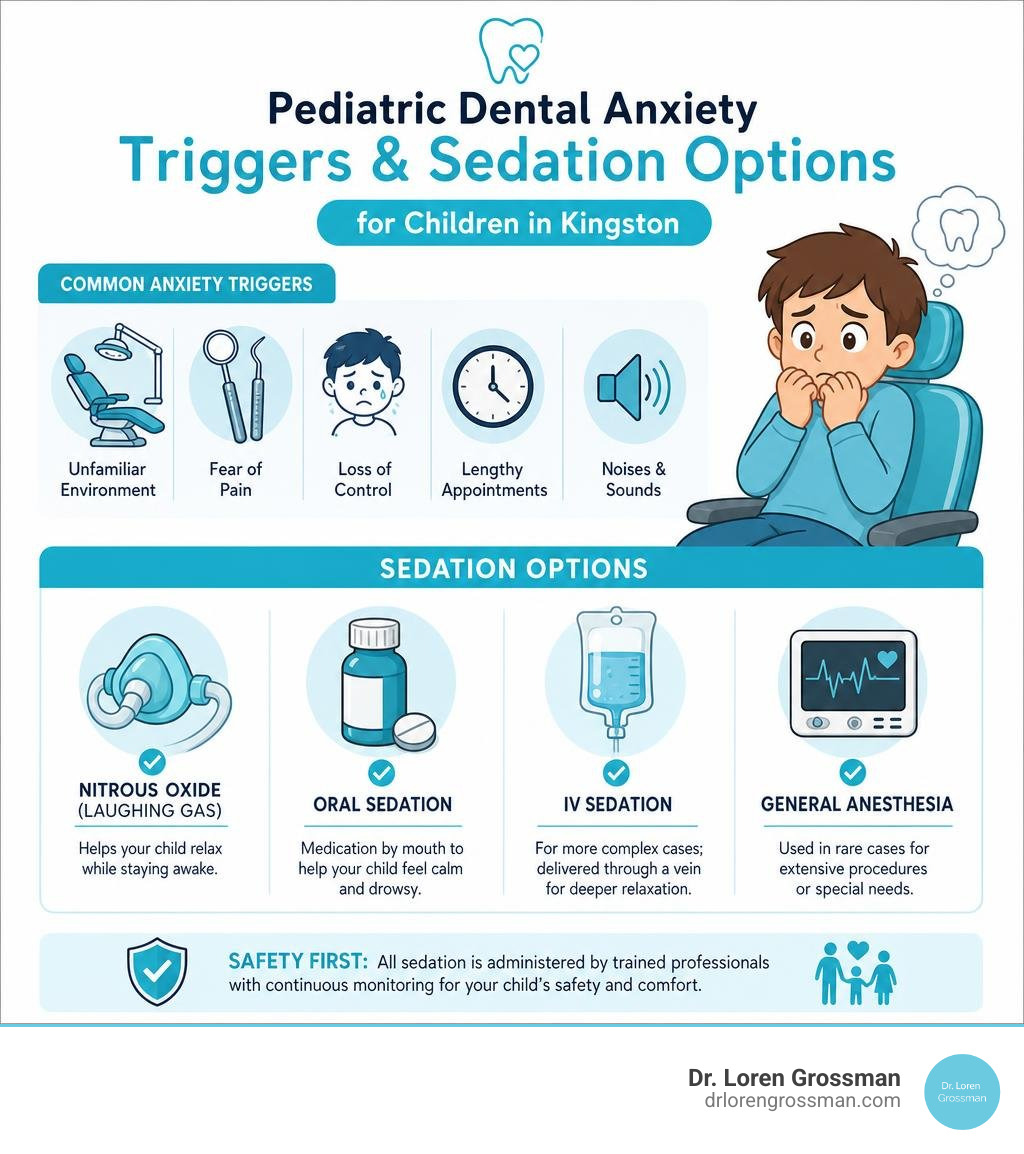
- Most common options: Nitrous oxide (laughing gas), oral sedation, and in rare cases, IV sedation or general anesthesia
- Is it safe? Yes — when administered by trained dental professionals with proper monitoring
- How to prepare: Follow fasting instructions, dress your child comfortably, and bring a favorite comfort item
Children are not born afraid of the dentist — they fear the unknown. The right environment, the right language, and the right sedation approach can completely change that experience.
I’m Dr. Loren Grossman, a family and cosmetic dentist serving the Wyoming Valley since 1984, and over the decades I’ve helped many anxious young patients get comfortable, effective dental care through children sedation dentistry in Kingston. In this guide, I’ll walk you through everything you need to know to make the right choice for your child.
The Role of Children Sedation Dentistry Kingston in Pediatric Care

When it comes to dental health, early experiences shape a child’s attitude toward oral care for the rest of their life. If a child’s early visits are filled with fear, stress, or physical restraint, they are highly likely to carry dental phobia into adulthood. This is where children sedation dentistry in Kingston plays a vital role.
Rather than forcing an anxious child through a scary procedure, pediatric sedation allows us to manage their anxiety safely and gently. By reducing the child’s nervous system response, we can perform necessary treatments efficiently while keeping the child completely relaxed.
As dental professionals, we understand that children are not just miniature adults. They have unique psychological needs, shorter attention spans, and limited abilities to cope with discomfort. This is why specialized training is so critical. Pediatric dentists undergo an additional 2 to 3 years of specialized training beyond traditional dental school, focusing heavily on child psychology, behavior management, and advanced pediatric sedation techniques. Understanding why choosing the right pediatric dentist in Kingston matters is the first step in ensuring your child receives compassionate, age-appropriate care that builds confidence rather than fear.
Conscious Sedation vs. General Anesthesia
One of the most common points of confusion for parents is the difference between conscious dental sedation and general anesthesia:
- Conscious Sedation: Under conscious sedation (such as nitrous oxide or mild oral sedatives), your child remains awake, responsive, and able to breathe on their own. They can still hear our voices, follow simple instructions, and let us know how they are feeling. The goal here is simply to take the “edge” off their anxiety, dull their pain sensitivity, and help them remain still.
- General Anesthesia: This is what most people refer to as “sleep dentistry.” Under general anesthesia, the child is completely unconscious and unresponsive. This level of anesthesia is typically administered by a certified medical anesthesiologist in a specialized hospital setting or an accredited ambulatory surgery center. It is reserved for complex oral surgery, extremely lengthy procedures, or children with severe physical or cognitive limitations that make conscious sedation unsafe.
At our practice, we prioritize comfort and safety by offering tailored pediatric dental services in Kingston designed to meet your child’s specific emotional and physical needs.
When is Children Sedation Dentistry Kingston Recommended?
Sedation is not a one-size-fits-all solution, nor is it used for every routine cleaning. We typically recommend children sedation dentistry in Kingston under specific circumstances:
- Extreme Dental Phobia or Anxiety: Some children experience panic attacks, hyperventilation, or uncontrollable crying at the mere thought of a dental chair. Sedation helps break this cycle of fear.
- Extensive or Complex Dental Work: If a child requires multiple fillings, pulpotomies (baby root canals), or crowns, staying still for an extended period can be physically and mentally exhausting. Sedation allows us to complete more work in a single visit.
- A Strong Gag Reflex: An overactive gag reflex can make even simple dental X-rays or minor fillings highly uncomfortable. Sedation relaxes these muscles, making the procedure smooth and gag-free.
- Special Healthcare Needs: Children with ADHD, Autism Spectrum Disorder (ASD), sensory processing disorders, or physical disabilities may struggle to remain still or tolerate the sensory overload of a dental office. Sedation provides a calm environment where they can safely receive care.
For parents navigating these challenges, reading through practical Kingston pediatric dentistry tips for parents can help you better understand behavior management and decide if sedation is the right path forward.
Common Types of Sedation Used in Pediatric Dentistry
Every child is unique, which is why we customize the sedation type and dosage based on your child’s age, weight, medical history, and anxiety level. During treatment, we continuously monitor your child’s vitals—including heart rate, blood oxygen levels, and blood pressure—to ensure absolute safety.
Below is a comparison table outlining the most common pediatric sedation options:
| Sedation Type | How Administered | Conscious State | Onset & Recovery Time | Best Used For |
|---|---|---|---|---|
| Nitrous Oxide (Laughing Gas) | Inhaled through a nose mask | Fully conscious, relaxed, slightly giggly | Onset: 20 seconds Recovery: 3–5 minutes |
Mild anxiety, short procedures, dental X-rays |
| Oral Conscious Sedation | Liquid or pill swallowed | Conscious but very drowsy/sleepy | Onset: 20 minutes Recovery: 2–8 hours |
Moderate anxiety, longer restorative treatments |
| IV Sedation / General Anesthesia | Intravenously (IV) | Completely unconscious (deep sleep) | Onset: Seconds Recovery: Several hours |
Severe dental phobia, complex oral surgery, special needs |
Nitrous Oxide (Laughing Gas)
Nitrous oxide, commonly known as “laughing gas,” is the mildest and most popular form of conscious sedation in pediatric dentistry. It consists of a safe mixture of nitrogen and oxygen that your child breathes through a small, scented nose mask.
The effects of laughing gas are almost immediate—taking as little as 20 seconds to kick in. Your child will experience a warm, floating sensation and a feeling of general well-being. Once the procedure is complete, we turn off the nitrous oxide and administer pure oxygen for several minutes. This quickly flushes the remaining gas from their lungs, allowing them to recover completely before they even leave the dental chair.
We always adhere to the ALARA (As Low As Reasonably Achievable) principle, ensuring your child receives the absolute minimum effective dose for both sedation and diagnostic imaging. To learn more about how we integrate these gentle approaches into our practice, explore our specialized pediatric dentistry care options.
Oral Conscious Sedation
For children who need a stronger level of relaxation than laughing gas can provide, oral conscious sedation is an excellent choice. This involves your child drinking a small amount of liquid medication about 20 to 30 minutes before their procedure begins.
Under oral sedation, your child will become very relaxed and drowsy. They may close their eyes and drift off into a light sleep, but they can easily be awakened with a gentle tap or a spoken word. A wonderful benefit of oral conscious sedation is its mild amnesic effect—most children have little to no memory of the actual dental work, leaving them with only positive associations of their visit.
IV Sedation and Deep General Anesthesia
For children with severe dental phobias, extensive dental decay requiring oral surgery, or significant developmental disabilities, intravenous (IV) sedation or deep general anesthesia is recommended.
This level of sedation is administered directly into the bloodstream by a licensed medical anesthesiologist. Your child will be in a deep, peaceful sleep and will not feel any pain or have any awareness of the procedure. Throughout the entire treatment, a dedicated anesthesia team monitors your child’s advanced life support systems, ensuring their heart rate, breathing, and oxygen levels remain perfectly stable.
Safety Protocols and Preparing Your Child for Sedation

At our office, your child’s safety is our absolute highest priority. Pediatric dental sedation is highly safe when administered by credentialed professionals who follow strict clinical guidelines. Before any sedation appointment, we perform a comprehensive medical history review, assessing any allergies, current medications, respiratory conditions, and past experiences with anesthesia. Our approach is guided by established pediatric sedation standards, including recommendations from the American Academy of Pediatric Dentistry on monitoring children before, during, and after sedation.
How to Prepare Your Child at Home
Parental preparation is key to a smooth, successful sedation appointment. Here is how you can prepare your child at home:
- Fasting Instructions: For oral and IV sedation, your child must have an empty stomach to prevent nausea and airway complications. Typically, this means no solid food or dairy after midnight the night before the appointment, and only clear liquids up to a few hours before. We will provide you with specific, exact fasting guidelines based on the sedation type.
- Comfortable Clothing: Dress your child in loose, comfortable clothing. This ensures they remain relaxed and allows us to easily place monitoring sensors on their chest and arms.
- Bring a Comfort Item: Encourage your child to bring their favorite stuffed animal, blanket, or toy to hold during the appointment.
- Arrange Childcare: If possible, arrange for siblings to stay at home so you can focus 100% of your attention on your child before and after the procedure.
If you are preparing for an upcoming visit, you can read our detailed guide on how to prepare your child for their first visit to help ease both your mind and theirs.
What to Expect During and After the Appointment
When you arrive, we will guide you and your child into a quiet, calming treatment room. If your child is receiving oral sedation, they will drink the medication and relax with you in a designated waiting area until it takes effect.
After the procedure is complete, your child will spend time in our recovery room as the sedation wears off. It is completely normal for them to feel groggy, dizzy, or slightly irritable as they wake up.
To ensure a safe recovery at home, follow these essential steps:
- Monitor Your Child Closely: Keep a close eye on your child for at least 12 to 24 hours. Do not let them run, climb stairs, or play roughly.
- Stick to a Soft Food Diet: Start with clear liquids (water, apple juice, or popsicles). If they tolerate liquids without nausea, progress to soft foods like applesauce, pudding, mashed potatoes, or soup.
- Avoid Dairy for 24 Hours: Dairy products can trigger nausea on an upset stomach post-sedation, so it is best to avoid milk, cheese, and yogurt on the first day.
- Manage Discomfort: If your child experiences mild soreness, administer child-appropriate doses of acetaminophen or ibuprofen as recommended by our team.
Frequently Asked Questions
FAQs About Children Sedation Dentistry Kingston
Is laughing gas safe for toddlers?
Yes, nitrous oxide (laughing gas) is incredibly safe and is widely considered the mildest, most reliable sedative in pediatric dentistry. It is non-allergenic, absorbs quickly, and is completely eliminated from the body within minutes of breathing pure oxygen.
What are the common side effects of pediatric sedation?
The most common side effects are mild and temporary. They include drowsiness, minor dizziness, irritability, and occasionally mild nausea. Serious side effects are extremely rare when sedation is administered by trained professionals.
How long does recovery take?
With nitrous oxide, recovery is virtually instant. For oral or IV sedation, children will feel groggy for several hours and should rest at home. We recommend a 24-hour activity restriction where they avoid sports, bike riding, or playground activities.
For more guidance on selecting the right dental team for your family, read our expert advice on finding the best in Kingston pediatric dentistry.
Is dental sedation safe for children with special needs?
Absolutely. In fact, sedation dentistry is often the safest and most humane way to provide high-quality dental care to children with special healthcare needs. For children with severe sensory sensitivities, autism, or ADHD, the sights, sounds, and physical sensations of a dental clinic can be overwhelming.
Sedation allows us to create an individualized care plan, bypassing sensory triggers and ensuring their physical safety. Combined with behavioral desensitization techniques, we can make sure your child receives the essential care they deserve. For parents managing complex pediatric oral health concerns, including structural issues, check out the parents guide to infant lip ties for specialized insights.
What are the costs and insurance options for pediatric sedation?
The cost of pediatric sedation varies depending on the type of sedation used and the duration of the procedure. Nitrous oxide is highly affordable and is often partially or fully covered by dental insurance plans. Deeper oral or IV sedation may have higher out-of-pocket costs due to the specialized medications and monitoring equipment required.
Many insurance policies, including certain Medicaid programs, cover dental sedation when it is deemed medically necessary (for example, for children with developmental disabilities or those requiring complex oral surgery). To help families manage any remaining out-of-pocket costs, we accept flexible payment options, including CareCredit financing, which offers 0% interest plans. For more tips on navigating these options, read our guide on navigating the Medicaid maze for your child’s smile.
Conclusion
At the practice of Dr. Loren Grossman, we believe that every child in Northeastern Pennsylvania deserves a healthy, beautiful smile—and a dental team that treats them with patience, warmth, and respect. No child should have to suffer through dental pain or fear the very place that is meant to help them.
Through personalized, compassionate children sedation dentistry in Kingston, we make stress-free dental visits a reality for anxious kids and their parents. Whether your child needs a simple filling, extensive restorative work, or specialized accommodations, our experienced team is here to support you every step of the way, laying the foundation for a lifetime of healthy smiles.
Don’t let dental anxiety stand in the way of your child’s health and happiness. Schedule a pediatric dentistry consultation with us today and let us help your child smile with confidence!