How Long Teeth Whitening Results Actually Last (Quick Answer)
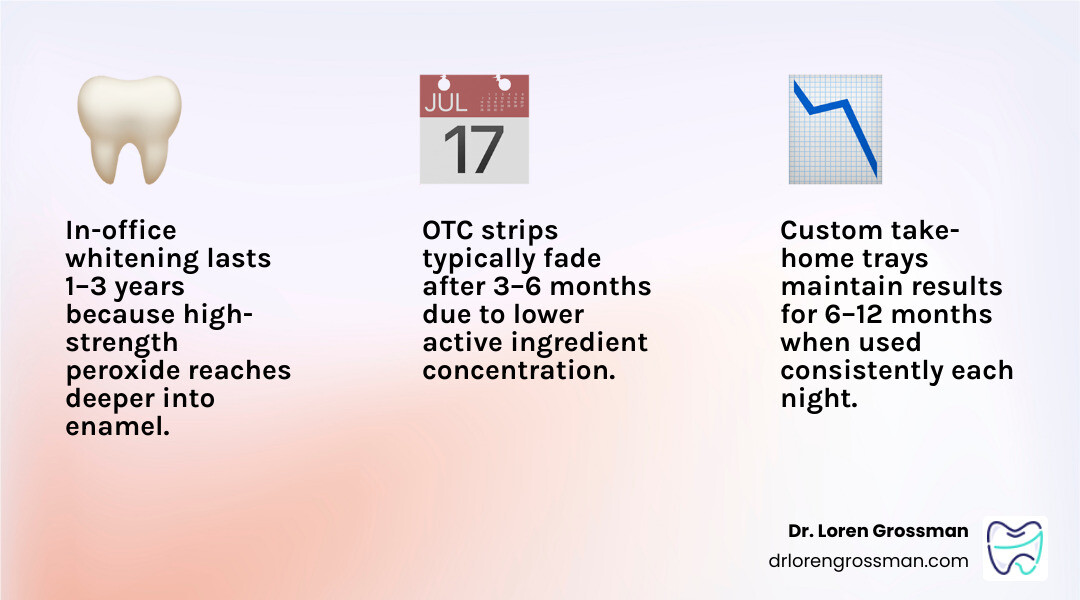
How long does teeth whitening last depends mostly on the method you use and your daily habits. Here’s a fast breakdown:
| Whitening Method | How Long Results Last |
|---|---|
| Professional in-office (e.g., Zoom) | 1 to 3 years |
| Custom take-home trays | 6 to 12 months |
| OTC whitening strips | 3 to 6 months |
| Whitening pens | 3 to 6 months |
No whitening result is permanent. But with the right care, professional results can last years — not just months.
Most people in Northeastern Pennsylvania who invest in a brighter smile want to know exactly what they’re getting for their time and money. Fair question. The honest answer is: it varies. Your diet, oral hygiene, age, and the method you choose all play a role.
A heavy coffee drinker who smokes will see results fade much faster than someone who drinks mostly water and brushes twice a day. Same treatment, very different outcomes.
I’m Dr. Loren Grossman, a cosmetic and family dentist with over 40 years of experience helping patients achieve lasting, confident smiles — including with advanced whitening systems like Zoom II, which I’ve used to transform hundreds of smiles right here in the Wyoming Valley. In that time, I’ve seen what determines how long teeth whitening lasts, and I’m sharing everything I know in this guide.
How Long Does Teeth Whitening Last by Method?
When we talk about cosmetic dentistry trends in May 2026, the focus has shifted toward longevity. Patients don’t just want white teeth for a weekend; they want a radiant smile that holds up through work presentations, family reunions, and everyday life. But as we see in our Kingston office, not all whitening methods are created equal.
The method you choose is the single most significant predictor of your results. While over-the-counter (OTC) options are convenient, they often act as a “quick fix” rather than a long-term solution. Professional treatments, on the other hand, use higher concentrations of active ingredients and specialized technology to reach deeper into the enamel.
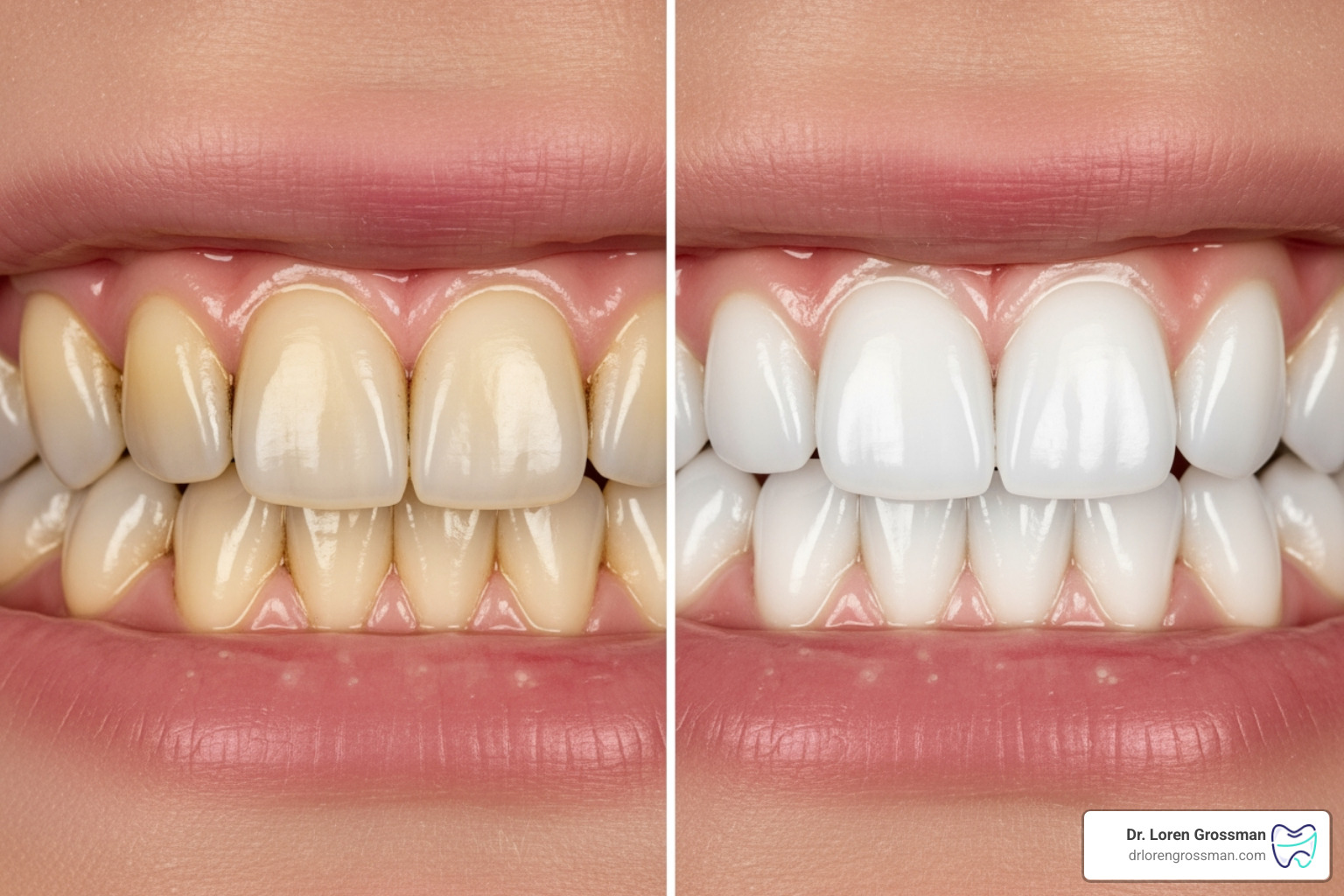
To help you decide which path is right for you, let’s look at the numbers.
| Feature | Professional In-Office | Custom Take-Home Trays | OTC Strips/Kits |
|---|---|---|---|
| Active Ingredient | 25%–40% Hydrogen Peroxide | 10%–22% Carbamide Peroxide | 6%–10% Hydrogen Peroxide |
| Application Time | 60–90 minutes | 1–2 weeks (daily) | 1–2 weeks (daily) |
| Longevity | 1 to 3 years | 6 to 12 months | 3 to 6 months |
| Safety | Dentist-supervised | Dentist-supervised | Self-applied |
For a deeper dive into these comparisons, check out our article on Which Whitening Method Wins? A Guide to Your Best Options.
Professional In-Office Whitening Results
If you are looking for the gold standard, in-office whitening is it. These treatments typically use a high-concentration hydrogen peroxide gel. Because the treatment is performed in a controlled clinical environment, we can use much stronger formulas than you’ll find in a drug store.
At our practice, we utilize Zoom technology. This process involves applying the whitening gel and then activating it with a specialized LED light. This light helps the peroxide penetrate the teeth more effectively, breaking up deep-seated stains in a single session. On average, professional in-office whitening results last between 1 and 3 years.
Why does it last so long? It’s about the depth of the treatment. While strips might just scrub the surface, professional systems like Zoom address both surface stains and deeper discoloration within the tooth structure. You can learn more about why we recommend this specific technology in our guide on Why You Should Choose Zoom Professional Teeth Whitening Services.
Custom Take-Home Trays and OTC Strips
Not everyone has the time for an in-office appointment, or perhaps you prefer a more gradual brightening process.
Custom Take-Home Trays: These are provided by your dentist. We take an impression of your teeth to create trays that fit your mouth perfectly. You’ll use a professional-grade carbamide peroxide gel at home. Because the trays are custom-fitted, the gel stays in contact with your teeth and away from your gums, leading to more even results and less irritation. These results typically last 6 to 12 months.
OTC Whitening Strips: These are the most common “DIY” option. They use a lower concentration of hydrogen peroxide (usually around 6% to 10%). While they can be effective for mild staining, they lack the “oomph” of professional products. Results generally last 3 to 6 months. If you use these, you may find yourself buying a new box every few months, which can actually make them more expensive than professional options in the long run.
For those trying to navigate the crowded aisles of the pharmacy, we’ve put together a Buyer’s Guide: Best Teeth Whitening Options for 2026 to help you avoid the duds.
Factors That Influence Your Whitening Longevity
Have you ever wondered why one person’s whitening lasts two years while another’s fades in six months? It’s rarely the fault of the whitening gel itself. Instead, it’s a combination of biology and lifestyle.

The Science of Stains: Extrinsic vs. Intrinsic
To understand how long does teeth whitening last, we have to look at what caused the stains in the first place:
- Extrinsic Stains: These are surface stains caused by what you eat and drink. Think coffee, tea, red wine, dark sodas, and tobacco. Whitening treatments are incredibly effective at removing these.
- Intrinsic Discoloration: This is darkening that happens inside the tooth. It can be caused by certain medications (like tetracycline), excessive fluoride during childhood, or trauma to the tooth. Intrinsic stains are much harder to treat and may require more frequent maintenance or alternative cosmetic solutions.
Diet and Lifestyle
Your enamel is porous, much like a sponge. When you consume dark-colored foods or beverages, those pigments (chromogens) seep into the pores.
- The “Dark” List: Coffee, black tea, red wine, beets, berries, and soy sauce are all major offenders.
- Tobacco Use: Whether you smoke or vape, nicotine and tar are the enemies of a white smile. They create stubborn, yellowish-brown stains that can quickly undo a professional whitening treatment.
Enamel Porosity
Genetics plays a role here. Some people naturally have more porous enamel, which absorbs stains faster. Others have naturally thicker, smoother enamel that resists staining more effectively.
Why Age and Genetics Matter for How Long Teeth Whitening Lasts
As we age, our teeth naturally change. The outer layer of enamel begins to thin out through years of brushing and chewing. Underneath that enamel is a layer called dentin, which is naturally yellowish. As the enamel thins, more of that yellow dentin shows through, making the teeth appear darker regardless of surface stains.
Teenagers vs. Adults: Interestingly, teenagers often see longer-lasting results from whitening. Younger enamel tends to be thicker and has had fewer years to accumulate deep stains. However, we always recommend that teenagers wait until their adult teeth have fully erupted and their enamel is mature before seeking professional whitening.
Genetic Starting Point: Everyone has a natural “limit” to how white their teeth can get. Just like some people tan easily while others just burn, some teeth respond dramatically to whitening while others only shift a few shades. A personalized assessment is the best way to set realistic expectations for your specific smile.
The Impact of Oral Hygiene on How Long Teeth Whitening Lasts
You can’t out-whiten a lack of hygiene. Plaque is a sticky film of bacteria that constantly forms on your teeth. If it isn’t brushed away, it can harden into tartar (calculus), which absorbs stains like a magnet.
- Daily Flossing: Stains often start in the crevices between teeth. If you aren’t flossing, those dark lines will make your whole smile look duller.
- Whitening Toothpaste: While these don’t usually contain enough peroxide to change your tooth’s natural color, they are excellent for removing new surface stains before they set in. Think of it as daily maintenance rather than a treatment.
For more on maintaining a healthy foundation, read Whiten Your Way: The Safest Methods for a Brighter Smile.
How to Extend and Maintain Your Brighter Smile
So, you’ve invested in a professional treatment—how do you keep it looking fresh? The first 48 to 72 hours after your treatment are the most critical. During this time, your enamel is slightly more porous than usual, meaning it will soak up colors even faster.
The “White Diet”
For the first few days post-whitening, we recommend sticking to a “White Diet.” This includes:
- Protein: Chicken, turkey, white fish.
- Grains: White rice, white pasta, white bread.
- Dairy: Milk, white yogurt, cottage cheese.
- Vegetables: Cauliflower, peeled potatoes.
Avoid anything with heavy pigments (like turmeric or balsamic vinegar) for at least 48 hours.
Smart Habits
- Use a Straw: If you can’t give up your morning iced coffee or tea, drink it through a straw. This bypasses the front of your teeth, significantly reducing contact with the staining liquid.
- Rinse After Meals: If you eat something staining and can’t brush immediately, rinse your mouth with plain water. This helps wash away pigments before they can settle into your enamel.
A bright smile is often the finishing touch on a total transformation. See how it fits into a larger plan in Teeth Whitening for the Perfect Smile Makeover.
Professional Cleanings and Maintenance Touch-Ups
Even with perfect habits, nature will eventually take its course. This is where professional maintenance comes in.
- Bi-Annual Hygiene Appointments: Seeing your dental hygienist every six months is non-negotiable. They use professional tools to scrape away hardened tartar and polish off surface stains that your toothbrush simply can’t reach. Many patients find that their teeth look a shade whiter just from a standard cleaning!
- Whitening Pens: These are great for on-the-go touch-ups. If you’ve just had a glass of red wine at dinner, a quick swipe with a whitening pen can help neutralize those pigments.
- Annual Touch-Up Sessions: Instead of waiting three years for your teeth to turn yellow again, consider a “mini” whitening session once a year. If you have custom trays, you can simply buy a refill of gel and do a 2-3 night “refresh” at home.
Investing in the right tools at home also makes a difference. For example, you can Get Your Pro-Sys Electric Toothbrush for Only $55 at our office, which is far more effective at stain removal than a manual brush.
Frequently Asked Questions About Whitening Duration
We hear a lot of questions in our Kingston practice about the “afterlife” of a whitening treatment. Here are the most common ones.
Does teeth whitening last forever?
The short answer is no. How long does teeth whitening last is a question of “how long can we delay the inevitable?” Teeth are living tissue, and they are constantly exposed to staining agents. Furthermore, the natural aging process will eventually cause the dentin to darken. However, most patients find that even after several years, their teeth are still lighter than they were before their very first treatment. Think of it like a haircut—it looks best right after it’s done, but it doesn’t mean you’ll go back to your original look overnight.
For more details on the specific Zoom process we use, visit our Zoom Teeth Whitening page.
When should I consider a touch-up treatment?
You don’t need to wait until your teeth are yellow again. Most dental professionals recommend a touch-up when you notice your teeth have faded by one or two shades. This usually happens around the 6 to 12-month mark for many people.
Visual monitoring is easy: just take a “before and after” photo in the same lighting. When you start to see the “after” photo looking a bit dull, it might be time for a refresh. We often run seasonal promotions to make this more affordable, such as our Holiday Season Special: 25% Off Opalescence Go Trays.
Is professional whitening worth the investment over OTC?
In terms of pure value over time, yes. While an OTC kit might cost $40 and a professional treatment costs significantly more, you have to look at the results. A single professional session can brighten your teeth by 6 to 8 shades and last for up to three years. To get that same level of brightness with OTC strips, you would have to use them almost constantly, which increases the risk of enamel damage and gum sensitivity.
Furthermore, professional whitening includes safety protocols. We protect your gums with a special barrier and monitor your enamel’s health. You can’t get that kind of peace of mind from a box at the grocery store. If you’re looking for the best results in the area, search for Brighten Your Smile: Expert Teeth Whitening Near Me and you’ll find us ready to help.
Conclusion
At the end of the day, a bright smile is more than just a cosmetic choice—it’s an investment in your self-esteem. Whether you’re preparing for a wedding, a job interview, or just want to feel better when you look in the mirror, understanding how long does teeth whitening last helps you make the best decision for your lifestyle.
At the office of Dr. Loren Grossman, we pride ourselves on providing personalized cosmetic care to the residents of Kingston and the surrounding Northeastern Pennsylvania communities. We don’t believe in a one-size-fits-all approach. We’ll look at your enamel, your history, and your goals to create a whitening plan that gives you a smile you’ll love for years to come.
Ready to start your transformation? Explore our full range of Services: Teeth Whitening or give us a call today to schedule your consultation. Let’s make that bright smile stay!