Why Sensitive Teeth Shouldn’t Stop You From Getting a Whiter Smile
Teeth whitening for sensitive teeth is absolutely possible — you just need the right approach.
Here are the safest methods, ranked from gentlest to most powerful:
- Desensitizing whitening toothpaste (e.g., Sensodyne Clinical White, Opalescence Sensitivity Relief) — slowest results, lowest risk
- Whitening strips for sensitive teeth (e.g., Crest 3DWhitestrips Sensitive & Gentle) — removes stains in 3 weeks, ADA-accepted
- Low-concentration at-home whitening trays (e.g., Opalescence Go 10%) — more noticeable results with manageable sensitivity
- Custom dentist-fitted trays with low-dose gel — precise fit reduces gum irritation, dentist-supervised
- Professional in-office whitening (e.g., Zoom) — fastest results, safest for sensitive teeth when supervised by a dentist
The key is to match the method to your level of sensitivity — and to never skip a dental check before you start.
A bright, confident smile is one of the most common things people want from their dentist. But if your teeth ache when you sip something cold or bite into something sweet, the idea of whitening can feel out of reach. The truth is, sensitivity doesn’t disqualify you from whitening — it just means you need to be smarter about how you do it.
Peroxide-based whitening products work by opening tiny pores in your enamel to lift deep stains. For people with sensitive teeth, that process can temporarily irritate the nerves inside the tooth. The result: that familiar sharp, zingy discomfort. But with the right products, the right concentration, and the right timing, most people with sensitive teeth can whiten comfortably and safely.
I’m Dr. Loren Grossman, a cosmetic and family dentist with over 40 years of experience helping patients in Northeastern Pennsylvania achieve brighter, healthier smiles — including those who thought their sensitivity ruled out teeth whitening for sensitive teeth entirely. From chairside Zoom whitening to custom take-home trays, I’ve guided countless patients through the process comfortably and with great results.
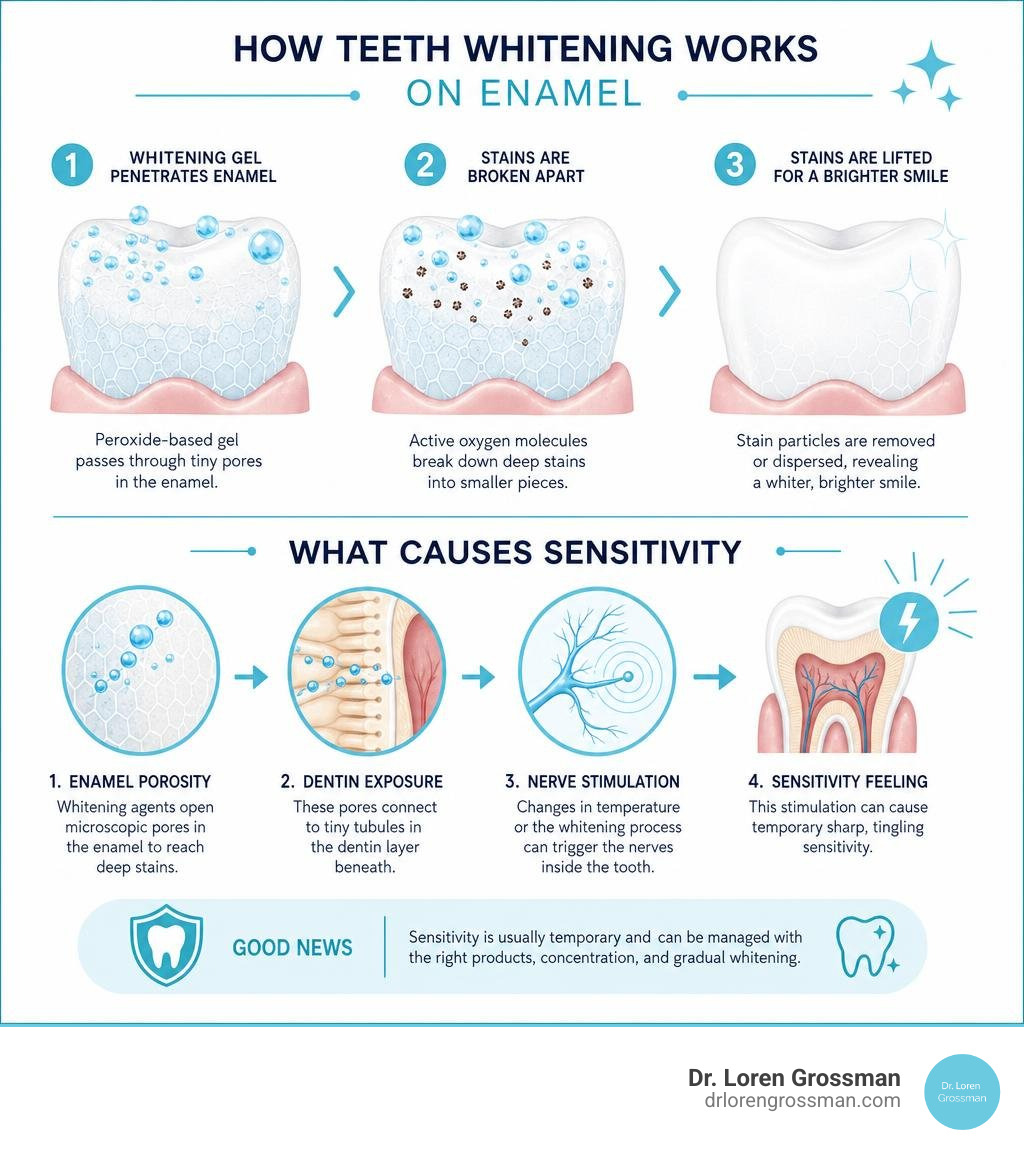
Basic teeth whitening for sensitive teeth terms:
- best teeth whitening treatment options
- professional teeth whitening vs at home
- how long does teeth whitening last
What Causes Tooth Sensitivity During Teeth Whitening?
To understand why teeth whitening can cause discomfort, we have to look closely at the microscopic structure of your teeth. Your teeth are not solid, impermeable blocks; they are dynamic structures with multiple layers.
The visible outer surface of your tooth is the enamel, which is the hardest substance in the human body. Just beneath the enamel lies the dentin, a softer, more porous layer. Dentin contains millions of microscopic pathways known as dentinal tubules. These tubules act as direct pipelines running from the outer edge of the dentin straight to the pulp chamber, which contains the tooth’s highly sensitive nerve endings.
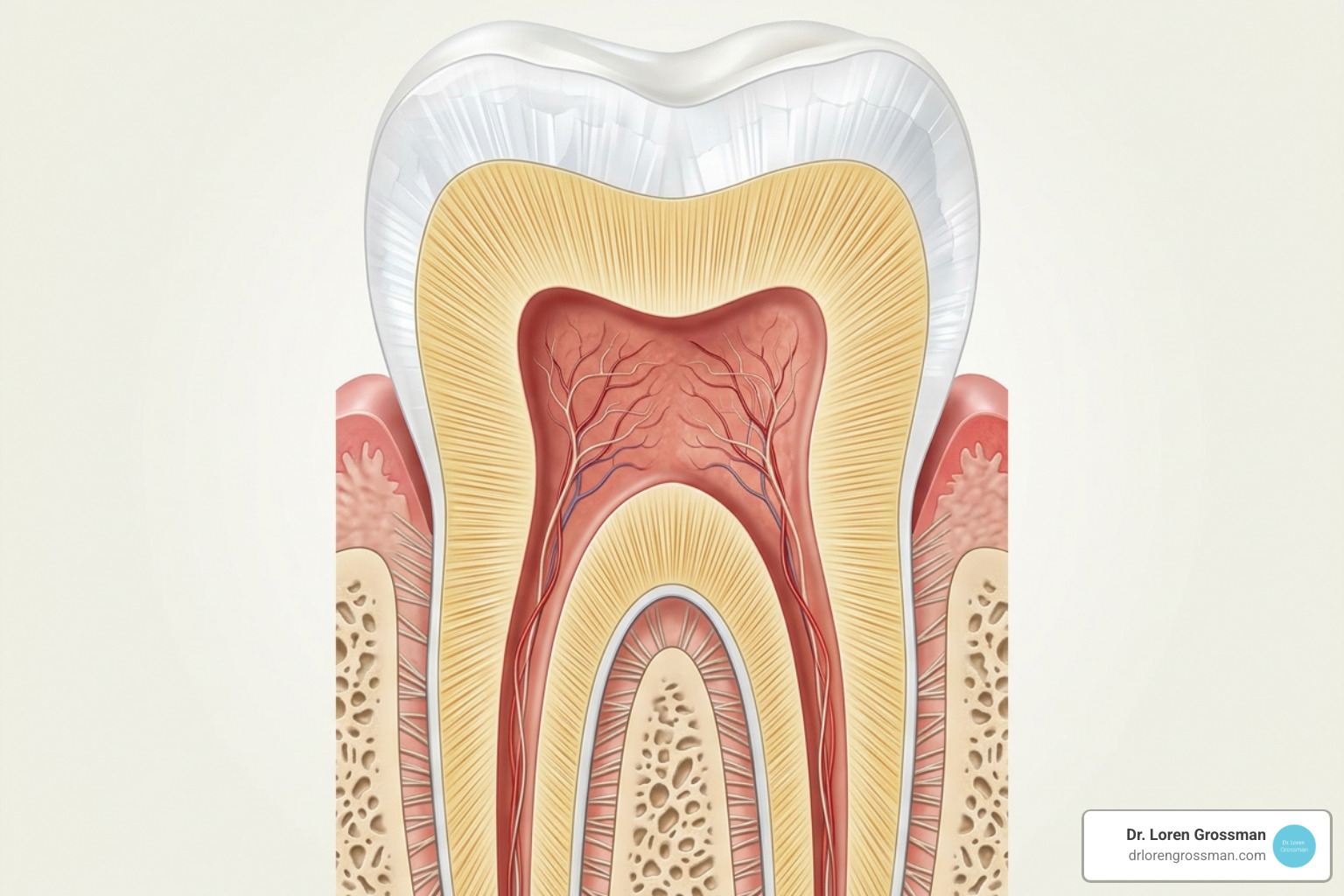
Under normal circumstances, your enamel shields these tubules from external stimuli. However, when we use chemical whitening agents like hydrogen peroxide or carbamide peroxide, a temporary biological shift occurs:
- Enamel Micro-Pores Open: Peroxides work by penetrating the enamel’s micro-pores to reach the discolored organic molecules within the tooth. As the peroxide breaks down these stains, it temporarily dehydrates the tooth.
- Fluid Shifts in Dentinal Tubules: The dehydration and active oxygen molecules cause fluid shifts inside the dentinal tubules. This rapid movement of fluid triggers the nerve endings in the pulp chamber, resulting in dentin hypersensitivity—often described as a sharp, sudden “zing.”
- Nerve Irritation: Because the whitening agent is actively penetrating deep into the tooth structure to lift stains, the nerve becomes temporarily inflamed.
Some products trigger this reaction much more severely than others. High-concentration whitening gels (often found in generic, over-the-counter kits) flood the teeth with high percentages of peroxide all at once. Without built-in desensitizing agents, these formulas leave the nerves completely unprotected, leading to intense pain and lingering sensitivity.
Best Practices for Teeth Whitening for Sensitive Teeth
If you struggle with sensitive teeth but still want a brighter smile, you do not have to settle for dull enamel. However, you must approach the process with a clear strategy.
First, let’s look at how the most common whitening methods stack up when it comes to keeping sensitive teeth comfortable:
| Whitening Method | Average Peroxide Concentration | Risk of Sensitivity | Treatment Duration | Best Suited For |
|---|---|---|---|---|
| Whitening Toothpastes | 0% (Peroxide-free or ultra-low) | Very Low | Daily use (ongoing) | Mild surface stains & maintenance |
| Sensitive Whitening Strips | Low (approx. 5% – 6%) | Low to Moderate | 30 mins daily for 18-21 days | Mild to moderate staining |
| Custom Dentist-Fitted Trays | Customizable (10% – 15% Carbamide) | Controlled / Minimal | 1 to 2 hours daily for 1-2 weeks | Moderate to deep staining |
| In-Office Professional Whitening | High (Supervised with barriers) | Controlled / Temporary | 1 hour session | Deep staining & rapid results |
To minimize discomfort and protect your enamel, we recommend following these core sensitivity prevention rules:
- Acclimate Your Teeth Gradually: Do not rush the process. If you are using at-home kits, start by wearing them for half the recommended time and slowly build up duration as your teeth adjust.
- Control the Treatment Duration: Giving your teeth a rest day between whitening sessions allows the enamel to rehydrate and the nerves to calm down.
- Prioritize Custom-Fitted Trays: Store-bought trays often allow whitening gel to spill onto the delicate gum tissue, causing painful chemical burns and localized sensitivity. Custom trays made by a dentist keep the gel locked precisely on your teeth, away from your gums.
To dive deeper into identifying the ideal system for your lifestyle, you can read our guide on Which whitening method is best for you?
Choosing the Right Ingredients for Teeth Whitening for Sensitive Teeth
When shopping for daily oral care and whitening products, reading the ingredient label is your best defense against pain. Look for formulation ingredients that actively block pain signals or rebuild enamel:
- Potassium Nitrate: This is the gold standard FDA-recognized desensitizing ingredient. It works by traveling down the dentinal tubules to calm the nerve endings inside the tooth, effectively blocking pain signals from reaching your brain.
- Stannous Fluoride: Unlike regular sodium fluoride, stannous fluoride creates a micro-thin, resilient barrier over exposed dentin. It physically plugs the open dentinal tubules to keep hot, cold, and sweet triggers out.
- Hydroxyapatite: Since hydroxyapatite makes up roughly 97% of your natural tooth enamel and 70% of your dentin, biomimetic hydroxyapatite in toothpaste helps naturally remineralize micro-pores and strengthen your enamel structure.
- Carbamide Peroxide vs. Hydrogen Peroxide: For sensitive teeth, carbamide peroxide is often preferred for at-home use because it breaks down and releases its whitening power much more slowly than hydrogen peroxide, presenting a gentler experience for the nerves.
For daily maintenance, we highly recommend incorporating specialized toothpastes. Options like Sensodyne Clinical White Enamel Strengthening Toothpaste are scientifically proven to provide 24/7 sensitivity protection alongside gentle stain removal. Another excellent daily option is Colgate Sensitive Whitening Toothpaste, which balances cavity protection, stain removal, and nerve-soothing care.
Safe At-Home Teeth Whitening for Sensitive Teeth Options
If you prefer to whiten in the comfort of your own home, there are several highly effective, clinically validated products designed with sensitive smiles in mind.
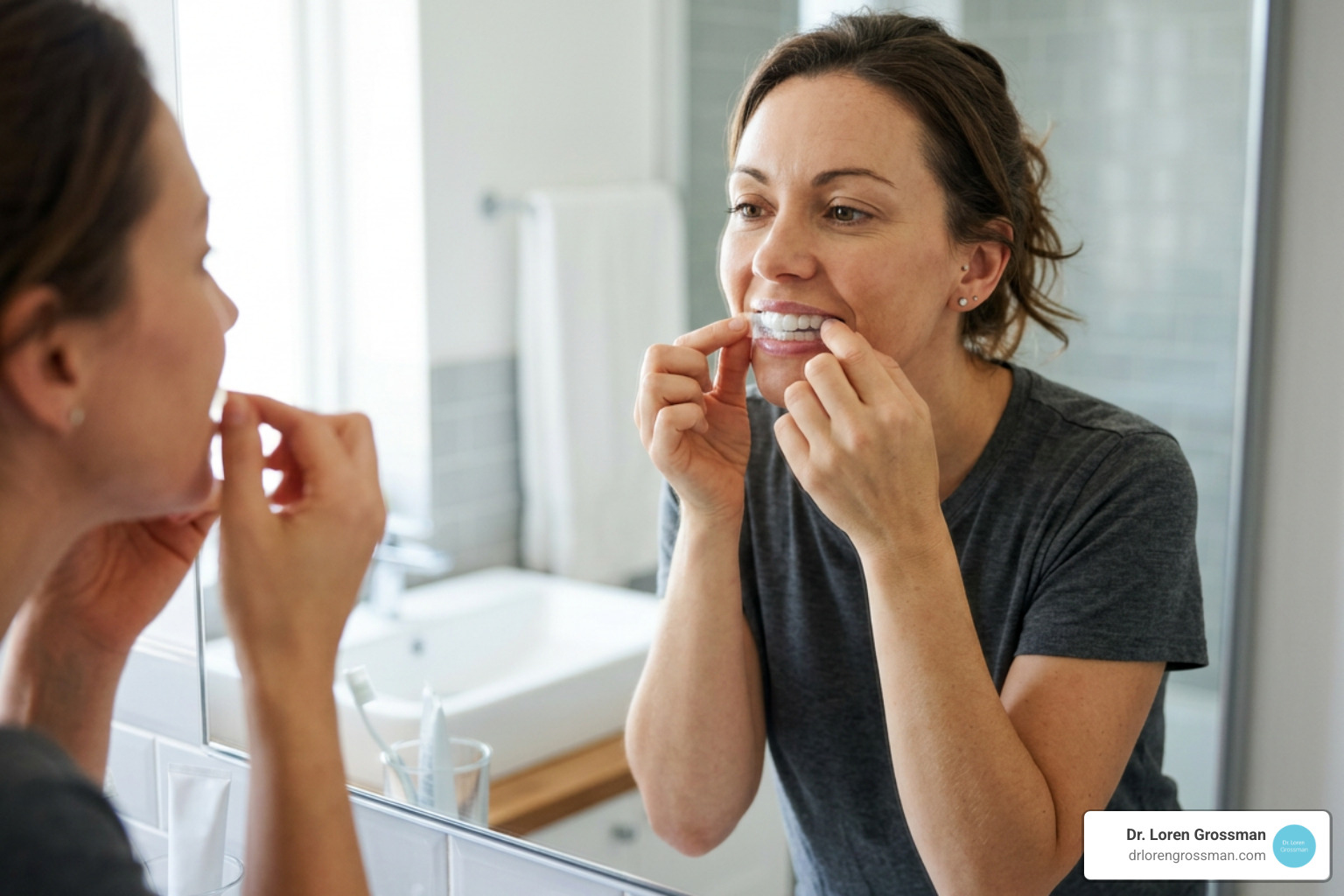
One of the most widely recognized options is the Crest 3D Whitestrips Sensitive & Gentle. This kit is specifically accepted by the American Dental Association (ADA) as safe and effective for teeth sensitive to chemical whitening. Formulated with a lower concentration of the same enamel-safe bleaching agent dentists use, these strips are designed for a 30-minute daily application and can gently remove 15 years of built-up stains in just 3 weeks.
To support your whitening routine and prevent rebound sensitivity, swap your standard toothpaste for Opalescence Sensitivity Relief Toothpaste. This dentist-designed formula combines rapid potassium nitrate release with maximum fluoride uptake. It is uniquely formulated to be less abrasive than other leading whitening toothpastes, allowing you to safely lift surface stains by up to two shades in just two weeks without scratching your enamel.
Before selecting a method, it is highly beneficial to review our comprehensive at-home vs professional whitening guide to see how these retail systems compare to clinical treatments. For a broader look at the top-performing products available this year, take a look at our Buyers Guide Best Teeth Whitening Options for 2026.
Professional In-Office Whitening vs. At-Home Options
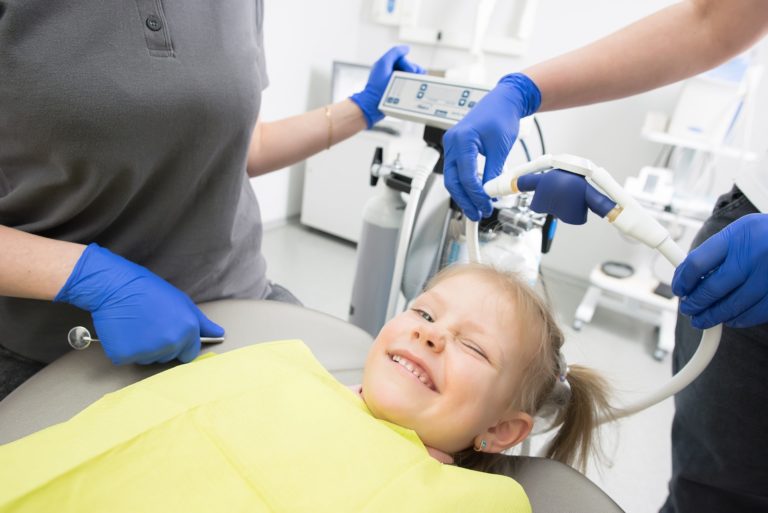
While at-home products are convenient, professional dental whitening remains the safest and most reliable route for patients with high tooth sensitivity. Many people assume that in-office whitening must hurt more because the bleaching gels are much stronger. In reality, the opposite is often true because of the precise clinical controls we put in place.
During a professional in-office treatment, we take extensive measures to safeguard your mouth:
- Gingival Protective Barriers: We apply a specialized, light-cured liquid barrier directly over your gums. This completely seals off the soft tissue, ensuring the high-strength whitening gel never makes contact with your gums—virtually eliminating the risk of chemical gum burns.
- Desensitizing Pre-Treatments: Before applying any whitening gel, we can treat your teeth with professional-grade desensitizing varnishes or high-fluoride compounds to block the dentinal tubules in advance.
- Customized Gel Concentrations: We don’t believe in a one-size-fits-all approach. If you have sensitive teeth, we can adjust the concentration of the gel and the duration of the light exposure to keep you completely comfortable.
If you want to achieve a dramatically brighter smile in a single visit without the common side effects of drugstore kits, our Zoom Teeth Whitening services are an excellent option. Zoom utilizes a light-activated gel containing advanced desensitizers like amorphous calcium phosphate (ACP), which actively fills in microscopic enamel defects during the whitening process.
To learn more about why this technology is so for sensitive teeth, read our article on Why choose Zoom professional whitening.
How to Manage and Prevent Sensitivity Before and After Treatment
Whether you choose an in-office treatment or a gentle at-home kit, how you care for your teeth before, during, and after the whitening process makes a massive difference in your comfort.
Use these practical, dentist-approved tips to keep your whitening experience completely pain-free:
- Start Using Desensitizing Toothpaste Early: Begin brushing with a potassium nitrate-based toothpaste at least two weeks before you start any whitening treatment. This allows the active ingredients to build up a protective shield around your tooth nerves.
- Use a Post-Treatment Desensitizing Gel: If you experience a sudden “zing” after whitening, apply a dedicated desensitizing gel or a dab of sensitive toothpaste directly to the sensitive teeth using a clean finger or a custom tray.
- Switch to a Soft-Bristle Toothbrush: Avoid scrubbing your teeth aggressively, especially right after whitening when your enamel is temporarily more porous. Use a soft-bristled toothbrush and a gentle, circular brushing motion.
- Make Temporary Dietary Adjustments: For 48 hours post-whitening, avoid highly acidic foods and beverages (like citrus fruits, tomatoes, soda, and white wine), as well as extremely hot or cold items. Stick to room-temperature, non-staining foods.
- Stay Hydrated: Drinking plenty of water helps your saliva naturally mineralize and rehydrate your teeth, which quickly closes open enamel pores and reduces sensitivity.
For a highly effective post-whitening care routine, we recommend Sensodyne Clinical Repair Whiten & Shine. This advanced formula starts repairing sensitive areas of your teeth in as little as 60 seconds while polishing away surface stains for a lasting, comfortable shine.
To ensure your bright results last as long as possible so you can minimize how often you need to whiten, explore our guide on How long does teeth whitening last?
Frequently Asked Questions About Whitening Sensitive Teeth
How long do whitening results last for sensitive teeth?
Generally, teeth whitening results last anywhere from six months to a full year, depending heavily on your lifestyle and oral hygiene habits. If you frequently consume staining agents like coffee, tea, red wine, or tobacco, your results may fade more quickly.
To safely maintain your bright smile without triggering new sensitivity, we recommend using a gentle, daily whitening toothpaste like Sensodyne Clinical White, which can keep your teeth up to two shades whiter over an eight-week period. You can also schedule minor touch-up treatments with custom low-dose trays every six to twelve months. To help plan your cosmetic budget, check out our Teeth whitening cost guide.
Is teeth whitening safe for children with sensitive teeth?
We strongly advise against using chemical teeth whitening treatments on children and young teenagers. A child’s permanent teeth have much larger pulp chambers and highly permeable, developing enamel. Introducing peroxide whitening agents too early can cause severe, irreversible nerve damage and intense chronic sensitivity.
Cosmetic whitening should generally be postponed until all permanent teeth have fully erupted and the root structures are completely developed—usually around age 16 or older. To learn more about protecting your child’s developing smile, read our dedicated article: Is teeth whitening safe for kids?
When should I consult a dentist before whitening?
You should always schedule a dental consultation before starting any whitening regimen, but it is absolutely critical if you already suffer from sensitive teeth.
During a preliminary exam, we check for issues like active tooth decay, fractured teeth, worn fillings, and significant gum recession. If whitening gel seeps into an open cavity or contacts exposed tooth roots (which do not have a protective layer of enamel), it can cause excruciating, long-lasting pain. We can help you address these underlying issues first, ensuring your whitening journey is both safe and comfortable.
If you are looking for trusted, professional care in Northeastern Pennsylvania, we invite you to schedule a consultation with us to understand the baseline health of your teeth. For comprehensive local assessments, you can locate an Expert teeth whitening near me to find our office and start your journey toward a brighter, pain-free smile.
Conclusion
Tooth sensitivity should never prevent you from achieving the bright, beautiful smile you deserve. By understanding what causes dentin hypersensitivity, choosing products with protective ingredients like potassium nitrate and stannous fluoride, and taking a gradual, controlled approach, you can successfully whiten your teeth without the “sensitive whine.”
At the office of Dr. Loren Grossman, we provide top-tier cosmetic and general dentistry in Northeastern Pennsylvania. We offer personalized care, advanced technology, and a patient-focused approach to deliver exceptional smile transformations and boost your confidence. Whether you are in Kingston, Pennsylvania, or the surrounding communities, our team is dedicated to keeping your whitening experience completely comfortable, safe, and effective.
Ready to transform your smile without the pain? Schedule a professional teeth whitening consultation with us today!