How Many Shades Whiter With Zoom Can You Really Expect?
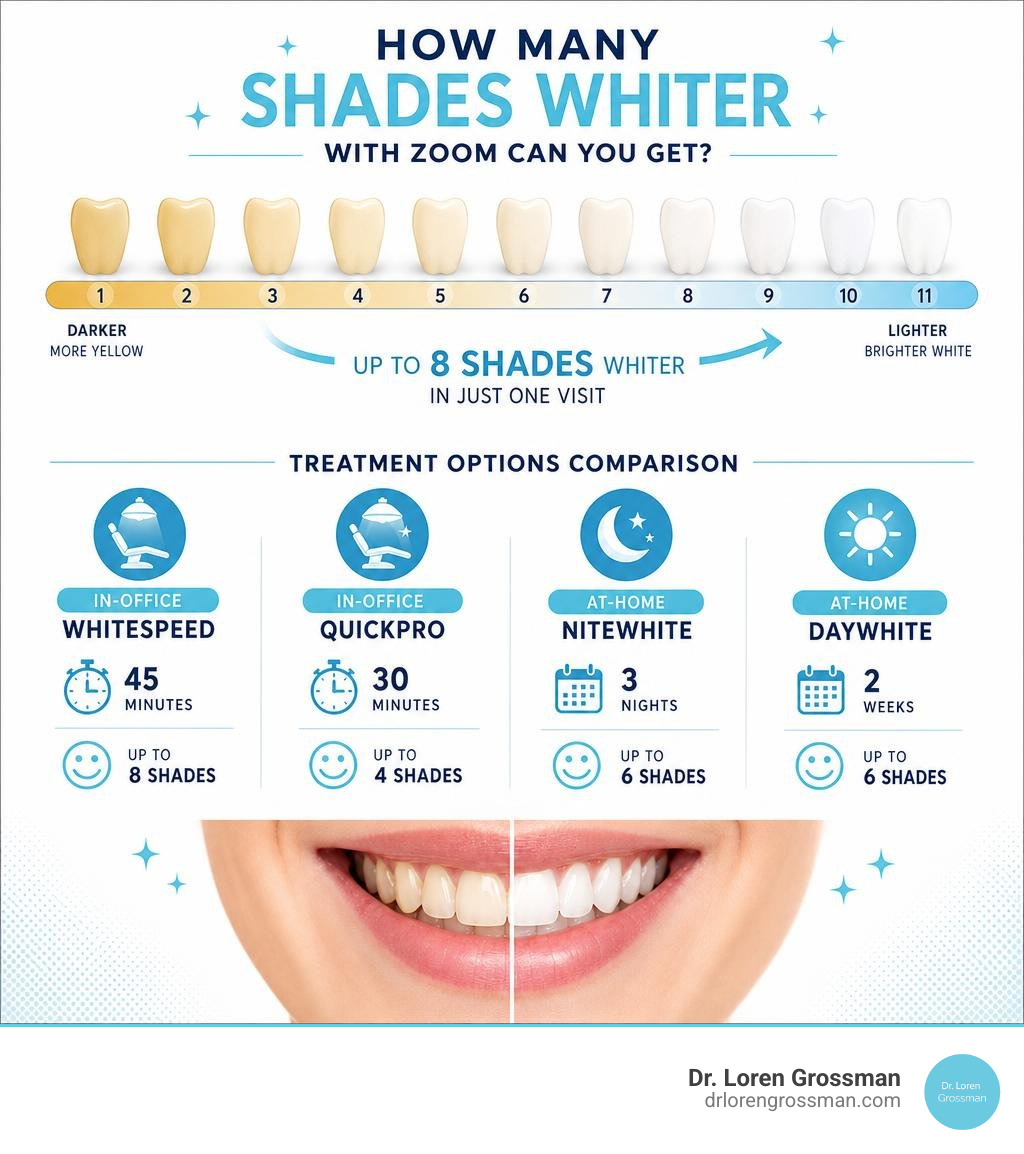
If you’re wondering how many shades whiter with Zoom whitening you can realistically get, here’s the short answer:
| Treatment | Shades Whiter | Time |
|---|---|---|
| Philips Zoom WhiteSpeed (in-office) | Up to 8 shades | 45 minutes |
| Philips Zoom QuickPro (in-office) | Up to 4 shades | 30 minutes |
| Philips Zoom NiteWhite (at-home) | Up to 6 shades | 3 nights |
| Philips Zoom DayWhite (at-home) | Up to 6 shades | 2 weeks |
Results vary based on your starting shade, stain type, and enamel characteristics.
Most patients who choose the in-office WhiteSpeed treatment see 6 to 8 shades of improvement in a single visit. Some cases — particularly those with yellow or brown extrinsic staining from coffee, tea, or wine — have shown results beyond 10 shades lighter.
At-home systems work more gradually but still deliver meaningful results, averaging around 6 shades after consistent use over a few nights to two weeks.
The bottom line: Zoom is one of the fastest and most effective whitening systems available today, whether you choose in-office or at-home treatment.
I’m Dr. Loren Grossman, a cosmetic and family dentist serving the Wyoming Valley since 1984, with extensive hands-on experience helping patients achieve dramatically whiter smiles — including with the Zoom chairside whitening system. Over the course of my career, I’ve seen how many shades whiter with Zoom patients can realistically achieve based on their unique dental profiles. In the sections below, I’ll walk you through everything you need to know to set accurate expectations before your appointment.
How many shades whiter with zoom word guide:
Determining How Many Shades Whiter With Zoom Your Teeth Can Become

When patients visit our Kingston, Pennsylvania office asking about teeth whitening, the very first question is almost always: “How white can my teeth actually get?”
To answer this, we must first look at how dentists measure tooth color. In professional cosmetic dentistry, we utilize the VITA Classical Shade Guide. This standard reference guide categorizes natural tooth shades into four primary color groups:
- A: Reddish-brown
- B: Reddish-yellow
- C: Greyish shades
- D: Reddish-grey
Within each group, there are numerical levels of darkness (from 1 to 4). For example, A1 is a very bright, light natural shade, while A4 is a deep, dark reddish-brown. When we say you can get up to 8 shades whiter, we are talking about moving 8 steps lighter along this professional scale.
However, the exact number of shades you will improve depends heavily on several distinct physiological and lifestyle factors:
1. Your Starting Shade
If your teeth are already relatively light (say, around a B2 or A2 on the VITA scale), you may only have room to improve by 3 to 5 shades before hitting your natural maximum brightness. Conversely, if your starting point is a darker shade like A4 or C4, you have a much wider spectrum of improvement available, making an 8-to-10 shade jump highly achievable.
2. Enamel Thickness and Density
Teeth are made of a dark, yellowish inner layer called dentin, protected by a semi-translucent outer layer called enamel. If you have naturally thin enamel — or enamel that has worn down over time due to acidic foods or teeth grinding — the yellow dentin underneath will show through more prominently. Whitening agents primarily penetrate and clean the enamel, meaning patients with thicker enamel often experience more dramatic, bright-white results.
3. The Type of Staining: Extrinsic vs. Intrinsic
- Extrinsic Stains: These are surface-level stains caused by external factors like drinking dark coffee, black tea, red wine, or smoking tobacco. These chromophores (color-causing molecules) sit within the outer enamel and respond beautifully to Zoom’s oxygenation process.
- Intrinsic Stains: These are deeper discolorations located inside the dentin. They can be caused by childhood exposure to certain medications (like tetracycline), excessive fluoride intake (fluorosis), or physical trauma to the tooth pulp. Intrinsic stains are much more stubborn. While Zoom can still brighten these teeth, they may require a combination of in-office treatments and prolonged take-home trays to achieve the desired shade.
To get a deeper understanding of how these biological factors interact with professional whitening gels, you can read this detailed Clinical review of Zoom whitening efficacy. When you are ready to make a change, understanding these variables is why we always recommend consulting a professional rather than guessing with store-bought options. You can explore more about our specialized approach in our guide on Why choose professional whitening services.
How Many Shades Whiter With Zoom WhiteSpeed Can You Expect?
For those looking for the gold standard of immediate, dramatic results, the Philips Zoom WhiteSpeed system is the undisputed champion.
WhiteSpeed is an in-office treatment that utilizes a proprietary 25% Hydrogen Peroxide gel. The magic happens when we activate this gel with a specialized blue LED light. This light-activated technology features a specific wavelength of blue light that accelerates the chemical reaction. It helps the hydrogen peroxide break down stubborn pigment molecules deep within the tooth structure up to 87% more effectively than using the gel alone.
With Zoom WhiteSpeed, you can realistically expect your teeth to become up to 8 shades whiter in just one session. The actual active whitening time is only 45 minutes, divided into three 15-minute segments.
One of the greatest features of the WhiteSpeed kit is its versatility. The system features variable light intensity settings (low, medium, and high). This allows us to customize the treatment intensity. If you have naturally sensitive teeth, we can lower the light intensity to ensure a completely comfortable experience without sacrificing your final, brilliant shade. For a closer look at the advanced science and components behind this system, you can review the Zoom WhiteSpeed product specifications.
How Many Shades Whiter With Zoom QuickPro vs At-Home Systems?
If you want professional results but are short on time, or if you prefer the comfort of whitening at your own pace at home, Philips Zoom offers excellent alternative options.
Philips Zoom QuickPro
QuickPro is an innovative, fast-acting varnish system that we can easily add to the end of your regular dental cleaning appointment.
- Shade Improvement: Up to 4 shades whiter.
- In-Office Time: Just 10 to 15 minutes in the chair.
- How it works: We apply a specialized whitening varnish directly to your teeth, followed by a protective sealing layer. No LED lamp is required. You simply walk out of our office and brush or wipe the dried varnish off your teeth 30 minutes later. It’s an incredibly convenient, budget-friendly option for a quick boost.
Zoom At-Home Systems (DayWhite & NiteWhite)
For patients who want to whiten in the comfort of their own homes using custom-fitted trays, Zoom offers two highly effective formulas:
- Philips Zoom DayWhite: Uses a potent hydrogen peroxide formula designed for short daily wear times. You wear the trays for 30 to 90 minutes once or twice a day. It typically delivers up to 6 shades of improvement over a two-week period.
- Philips Zoom NiteWhite: Uses a carbamide peroxide formula that breaks down slowly over several hours, making it perfect for overnight wear (or 4 to 6 hours during the day). Because of the extended contact time, NiteWhite is highly effective for deeper, darker stains, achieving up to 6 to 9 shades whiter after 14 days of consistent use.
No matter which path you choose, professional systems consistently outperform over-the-counter whitening strips, which rarely improve teeth by more than 1 or 2 shades and often cause uneven results. To compare these paths side-by-side and find your perfect fit, check out our comprehensive Guide to the best whitening options for 2026.
The Zoom Whitening Procedure and What to Expect
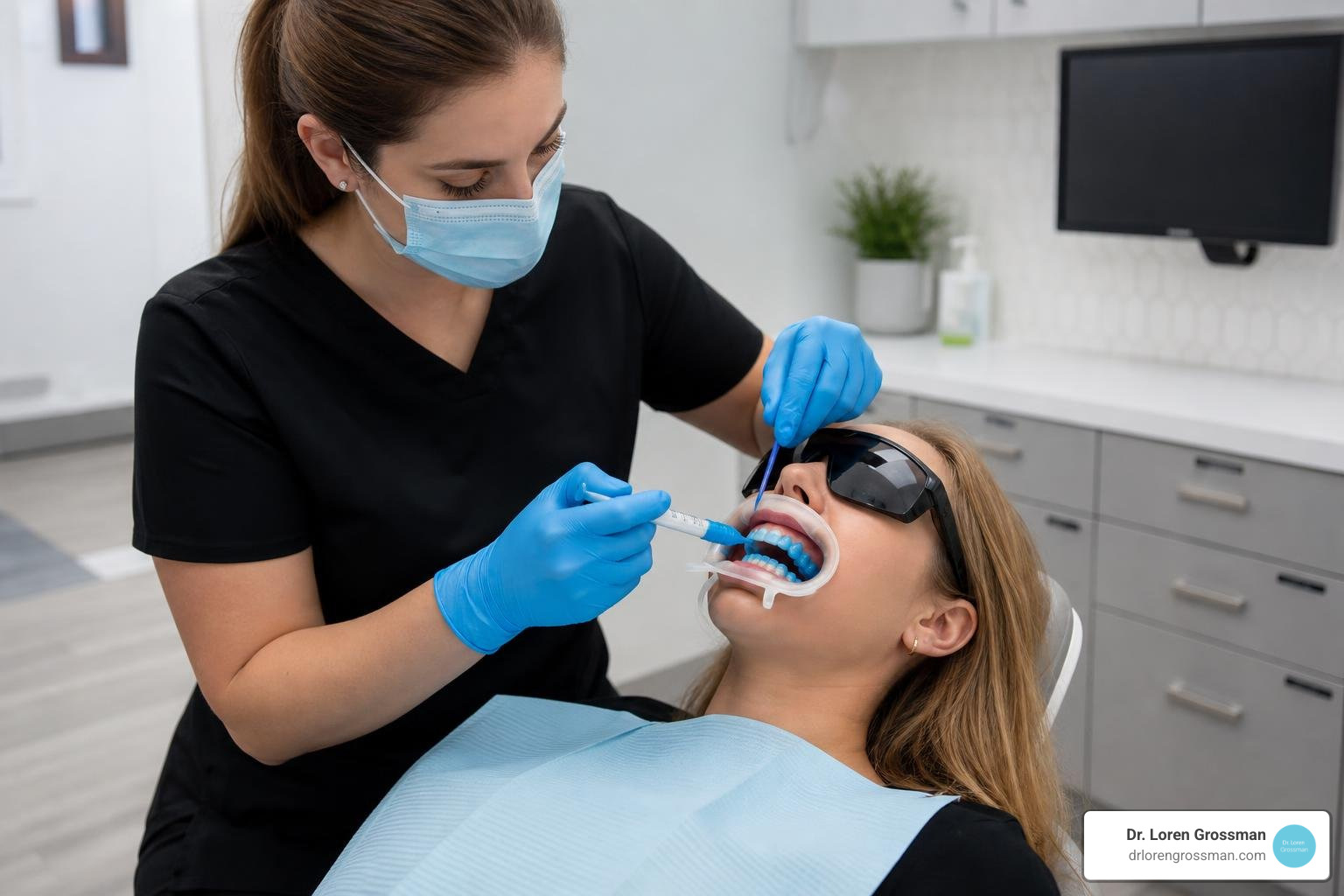
Understanding what happens during your appointment can help ease any anxiety and help you prepare for a seamless experience. When you choose the in-office Zoom WhiteSpeed treatment at our Kingston office, the entire process takes about an hour to an hour and a half from start to finish. Here is exactly what to expect:
- Preparation and Cleaning: We begin by checking your starting shade using the VITA guide. We then perform a quick polishing to ensure your teeth are clean and free of surface debris, allowing the gel to make direct contact with your enamel.
- Meticulous Isolation: Patient comfort and safety are our top priorities. We place a cheek retractor to keep your lips away from your teeth. Next, we apply a specialized liquid protective barrier (called Liquidam) along your gum line. This resin is cured with a light to create a solid, protective seal, ensuring the powerful 25% hydrogen peroxide gel only touches your teeth and never irritates your delicate gum tissues.
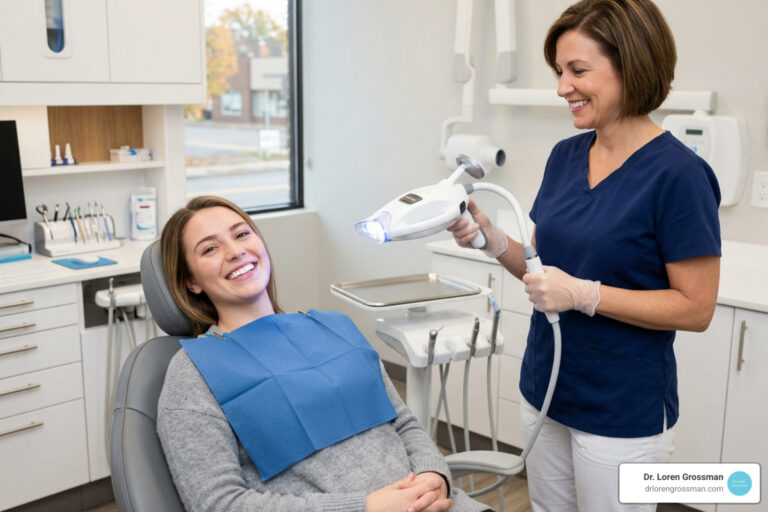
- Gel Application and LED Activation: Once your gums are fully protected, we apply a uniform layer of the Zoom whitening gel to the front surfaces of your teeth. We then position the Zoom WhiteSpeed blue LED lamp directly over your smile. The light runs for a 15-minute cycle, activating the gel to oxidize and lift away deep stains.
- Three 15-Minute Sessions: We repeat this application process three times, for a total of 45 minutes of active whitening. Between each session, we carefully remove the old gel and apply a fresh, active layer. If you have stubborn staining, we may occasionally recommend a fourth 15-minute session.
- Post-Treatment Protection: After the final session, we suction off the whitening gel and gently remove the protective gum barrier. We then apply a special post-treatment gel containing Amorphous Calcium Phosphate (ACP) and fluoride. This advanced formula immediately begins to remineralize your enamel, shield your teeth from temporary sensitivity, and lock in your sparkling new shade.
For a deeper dive into patient reviews, clinical step-by-steps, and procedural details, you can read more through this Zoom whitening procedure details resource.
Managing Sensitivity and Post-Treatment Aftercare
One of the most common questions we hear is: “Will Zoom whitening hurt?”
The honest answer is that temporary tooth sensitivity is a common side effect of any professional whitening treatment. During the whitening process, the enamel’s microscopic pores (dentinal tubules) open slightly to allow the oxygen molecules to reach the stained pigments. This temporary exposure can allow hot or cold temperatures to stimulate the nerves inside your teeth, occasionally causing brief, sharp flashes of mild discomfort known as “zingers.”
The good news? Zoom is uniquely designed to combat this. The Zoom gel formula includes built-in desensitizers, and clinical studies show that 99% of patients experience little to no sensitivity during the WhiteSpeed procedure, while 82% experience absolutely zero sensitivity afterward.
To ensure your experience is as comfortable as possible, we recommend these professional tips:
- Pre-Treatment: Brush with a desensitizing toothpaste containing potassium nitrate for two weeks leading up to your appointment.
- Immediate Relief: If you do experience post-treatment sensitivity, we can provide customized trays loaded with Relief ACP gel to soothe the nerves in your teeth.
- The 48-Hour “White Diet”: For the first 48 hours after your treatment, your enamel pores remain slightly open and highly susceptible to absorbing new stains. During this critical window, you must follow a strict “white diet.” Avoid heavily pigmented foods and beverages like coffee, dark teas, red wine, colas, soy sauce, mustard, tomato sauces, berries, and tobacco. Instead, stick to light-colored foods like chicken, turkey, white fish, white rice, pasta with white sauce, potatoes, and cauliflower.
If you must drink a dark beverage, always use a straw to bypass your front teeth entirely, and rinse your mouth with water immediately afterward. To learn more about protecting your investment, read our expert advice on How to make teeth whitening results last longer.
Frequently Asked Questions About Zoom Whitening
How long do Zoom teeth whitening results typically last?
On average, Zoom whitening results last between 12 to 24 months. The exact lifespan of your bright smile depends heavily on your daily habits, diet, and oral hygiene. If you are a heavy coffee drinker, tea lover, or tobacco user, your results may begin to fade closer to the 6-to-9-month mark without maintenance.
To keep your smile looking brilliant, we recommend brushing twice daily, flossing, visiting us for professional cleanings every six months, and utilizing custom at-home touch-up kits once or twice a year. Explore how a brighter smile fits into your overall aesthetic goals in our article on Teeth whitening for a perfect smile makeover.
Is Zoom teeth whitening safe for tooth enamel?
Yes, absolutely. Decades of clinical research have proven that professional teeth whitening under dental supervision is entirely safe for your tooth enamel. The Zoom whitening gel does not strip or wear away your enamel. In fact, because the formula contains Amorphous Calcium Phosphate (ACP) and fluoride, it actually helps to remineralize and strengthen the outer structure of your teeth during the process. For official safety data and clinical guidelines, you can view the Philips Zoom official intended use guidelines.
How much does Zoom whitening cost and does insurance cover it?
Because teeth whitening is classified as a purely cosmetic dental procedure, dental insurance plans do not cover the cost. The out-of-pocket cost for Zoom whitening varies depending on the specific treatment option you choose:
- Zoom WhiteSpeed (In-Office): Typically ranges from $350 to $600, which often includes custom-fitted trays and a take-home touch-up kit.
- Zoom QuickPro: A highly affordable option, usually ranging between $125 and $150.
- Zoom At-Home Kits: Generally cost less than full in-office treatments.
To help make your dream smile accessible, our Kingston office offers flexible payment and financing options. We are always happy to discuss these during your initial consultation!
Conclusion
Your smile is one of the very first things people notice about you. It speaks volumes before you even say a word. If deep stains from coffee, tea, aging, or lifestyle habits have caused you to hide your smile, professional Zoom teeth whitening offers a safe, highly effective, and clinically proven solution to restore your confidence.
Whether you want to unlock up to 8 shades whiter in a single, relaxing 45-minute chairside session with Zoom WhiteSpeed, or prefer the gradual, convenient path of professional at-home trays, our team is here to help you navigate your options.
At the practice of Dr. Loren Grossman in Kingston, Pennsylvania, we have spent over four decades providing top-tier cosmetic dentistry to patients throughout Northeastern Pennsylvania. We combine advanced dental technology with a warm, patient-focused approach to deliver exceptional smile transformations that look beautiful and natural.
Are you ready to reveal your brightest, most confident smile? Schedule a professional teeth whitening consultation with us today, and let’s find out exactly how many shades whiter your smile can get!