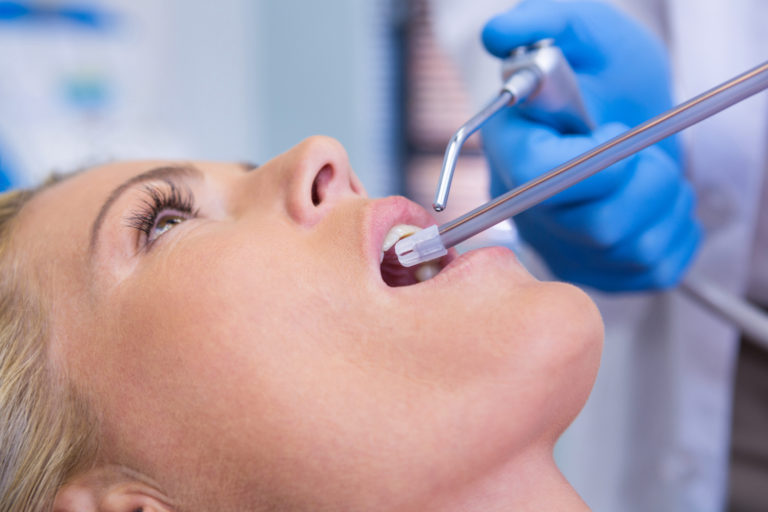
What Happens at a Dental Checkup?
At a routine dental checkup, the dental team reviews your health history, cleans plaque and tartar from your teeth, and checks your teeth, gums, and mouth for problems. The dentist may recommend X-rays if needed, then explains any findings and next steps. An exam and cleaning usually take 45 to 60 minutes.
I’m Dr. Loren Grossman. I’ve cared for families in the Wyoming Valley since 1984, and I know that understanding what happens at a dental checkup can make the visit feel easier. Here’s a closer look at each part of the appointment.
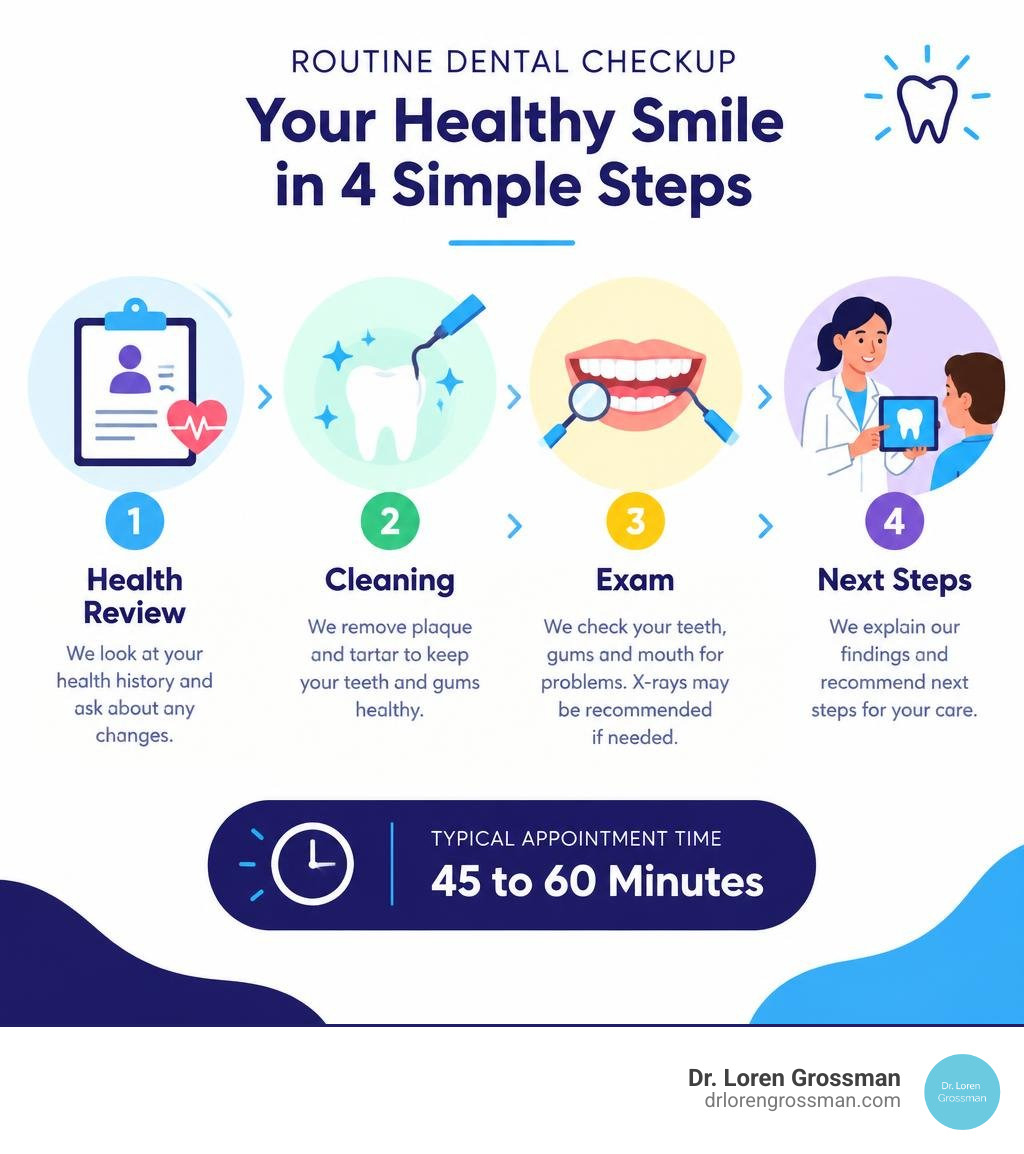
Terms related to what happens at a dental checkup:
Dental Checkup vs. Dental Exam: Understanding the Difference
Many patients use the terms “dental checkup” and “dental exam” interchangeably. While they usually occur during the exact same visit, they technically refer to distinct aspects of your care.
A dental checkup represents the broader, comprehensive appointment. It encompasses professional hygiene cleanings, administrative check-ins, periodontal screenings, oral health education, and diagnostic imaging. A dental exam, on the other hand, is the specific clinical assessment carried out by the dentist.
During the exam portion, the dentist evaluates the teeth, bone structure, soft tissues, and bite alignment to diagnose conditions like dental caries, periodontal disease, or oral pathology. According to the clinical overview of a dental exam provided by MedlinePlus, this evaluation serves as a vital preventive test to catch systemic and oral complications before they cause pain or permanent structural damage.
At our practice, we provide comprehensive general dentistry services designed to blend hygiene and clinical diagnostics into a seamless, stress-free experience.
| Feature | Dental Checkup (The Full Visit) | Dental Exam (The Dentist’s Assessment) |
|---|---|---|
| Primary Provider | Registered Dental Hygienist & Dentist | Licensed General Dentist |
| Core Focus | Plaque and tartar removal, stain polishing, preventive care, diagnostics | Diagnosis of decay, structural damage, bone loss, tissue abnormalities |
| Key Actions | Scaling, flossing, polishing, health history review, X-rays | Visual inspection, periodontal evaluation, bite check, oral cancer screening |
| Frequency | Typically every 6 months | Included during routine checkup visits |
What Happens at a Dental Checkup: Step-by-Step Breakdown
When you walk into our Kingston, Pennsylvania office, our primary goal is to ensure you feel informed, comfortable, and respected. We follow an orderly step-by-step sequence to deliver thorough preventive care.
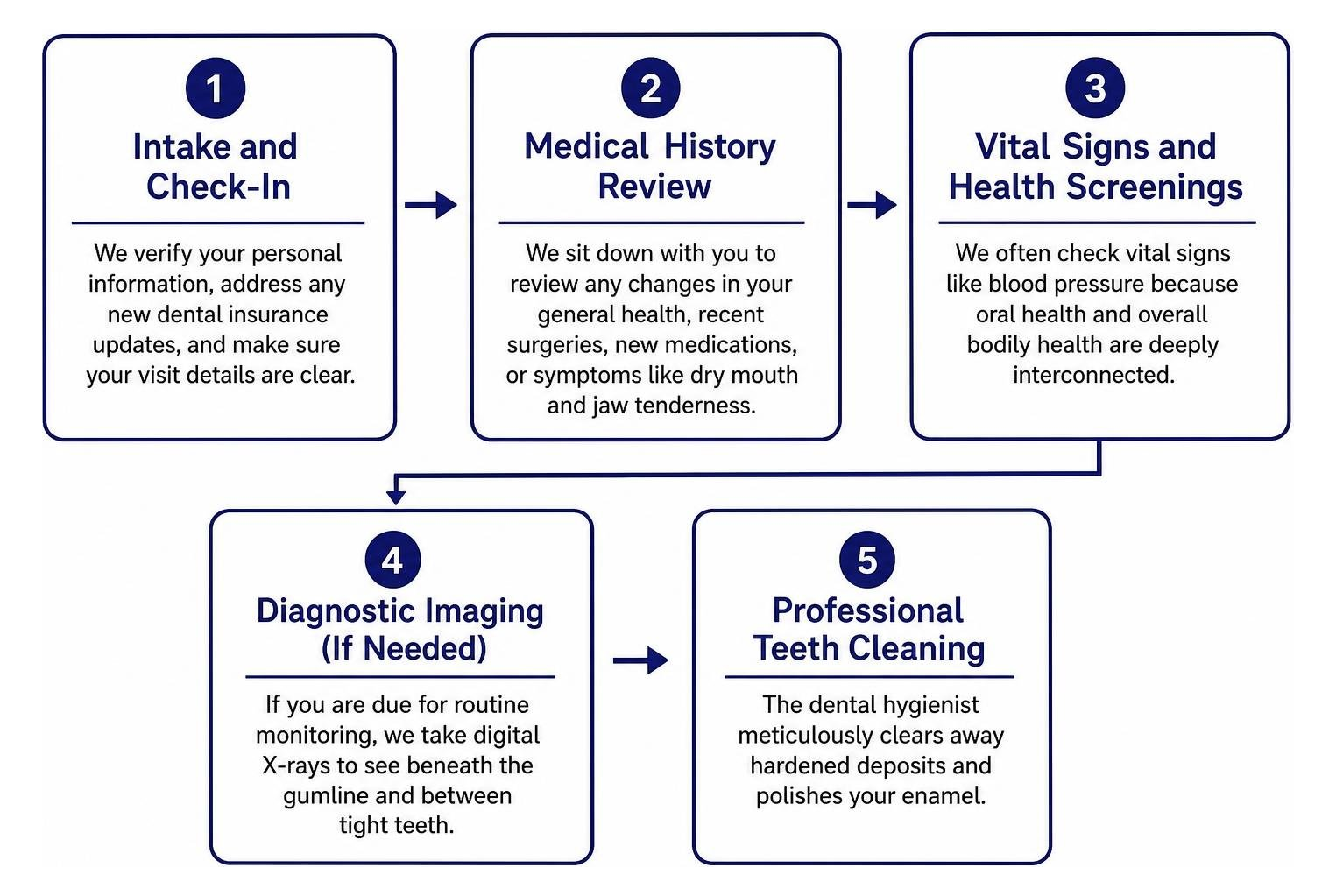
- Intake and Check-In: We verify your personal information, address any new dental insurance updates, and make sure your visit details are clear.
- Medical History Review: We sit down with you to review any changes in your general health, recent surgeries, new medications, or symptoms like dry mouth and jaw tenderness.
- Vital Signs and Health Screenings: Because oral health and overall bodily health are deeply interconnected, we often check vital signs like blood pressure. High blood pressure can influence dental treatments and point to broader cardiovascular risks.
- Diagnostic Imaging (If Needed): If you are due for routine monitoring, we take digital X-rays to see beneath the gumline and between tight teeth.
- Professional Teeth Cleaning: The dental hygienist meticulously clears away hardened deposits and polishes your enamel.
- Clinical Dental Examination: The dentist performs a comprehensive inspection of your teeth, gums, tongue, throat, and jaw joints.
- Discussion and Next Steps: We share our observations, answer your questions, and formulate a personalized treatment plan if any underlying issues need attention.
What Happens at a Dental Checkup During the Teeth Cleaning Phase
The cleaning stage is often the most recognizable part of your visit. It is performed by a licensed dental hygienist whose main focus is removing dangerous bacterial deposits that normal brushing cannot reach.
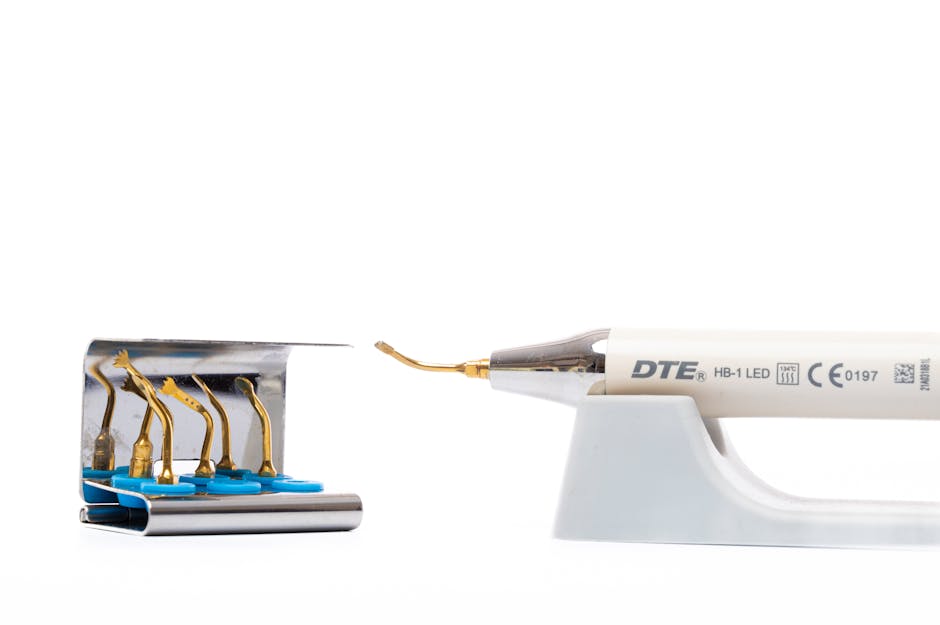
- Ultrasonic Scaling and Hand Debridement: Plaque is a soft, sticky film of bacteria that constantly coats your teeth. If it is not removed within 24 to 48 hours, minerals in your saliva harden it into tartar (calculus). Brushing and flossing cannot remove tartar once it sets. Using delicate ultrasonic instruments and precise hand scalers, the hygienist gently vibrates and lifts these calcified deposits away from the enamel and below the gum margin.
- Prophy Paste and Enamel Polishing: Once the tartar is completely removed, the hygienist applies a mildly abrasive, flavored paste (prophy paste) using a soft, spinning rubber cup. This smooths out microscopic rough spots on the tooth surfaces, making it harder for new plaque to cling to your teeth while lifting surface stains from coffee, tea, or everyday meals.
- Deep Interdental Cleaning: The hygienist gently flosses between each contact point to clear away lingering polishing paste and check for tight spots or shredding margins. Understanding the proven benefits of daily flossing at home helps you maintain these results long after leaving our office.
- Fluoride Varnish Application: For many patients, especially those prone to root sensitivity or cavities, the hygienist will paint a protective fluoride varnish over the teeth. This quick application remineralizes weakened enamel and guards against acid attacks.
What Happens at a Dental Checkup During the Dentist Examination
After your teeth are thoroughly cleaned and polished, the dentist conducts the technical clinical examination. This evaluation goes far beyond simply checking for cavities. As highlighted in Delta Dental’s guide to dental checkups and preventive visits, this exam acts as an essential diagnostic shield for your whole body.

- Visual Tooth Decay Inspection: Using a dental mirror and fine explorer probe, the dentist examines every surface of each tooth, checking for enamel softening, hairline fractures, worn restorations, or recurrent decay beneath existing fillings and crowns.
- Periodontal Tissue Assessment: The dentist inspects the gums for telltale signs of gingivitis or active periodontitis, such as redness, swelling, bleeding points, or tissue recession.
- Oral Cancer Screening: Oral cancer screenings are a standard, critical part of every exam. The dentist inspects your tongue, the floor of your mouth, the soft palate, tonsillar areas, and inner cheeks for unexplained lesions, white or red patches, or firm tissue changes.
- Lymph Node and Extraoral Palpation: The dentist gently feels the lymph nodes along your neck, jawline, and salivary glands to check for swelling, tenderness, or unusual lumps.
- Bite and Jaw Alignment Evaluation: The dentist evaluates how your upper and lower teeth meet when you chew and checks the temporomandibular joint (TMJ) for popping, clicking, or limited range of motion.
Diagnostic Tools and Preventive Treatments During Your Visit
Modern dentistry relies on advanced diagnostic instruments that allow us to detect oral health issues early, well before they trigger noticeable toothaches.
Digital Radiography (X-Rays)
Digital X-rays expose patients to minimal radiation compared to traditional film while producing instant, crystal-clear images. These images allow us to identify bone loss from gum disease, hidden interproximal cavities, cysts, impacted teeth, and root infections. Following a personalized, recommended dental X-ray schedule ensures we only take images when clinically appropriate for your oral health needs.
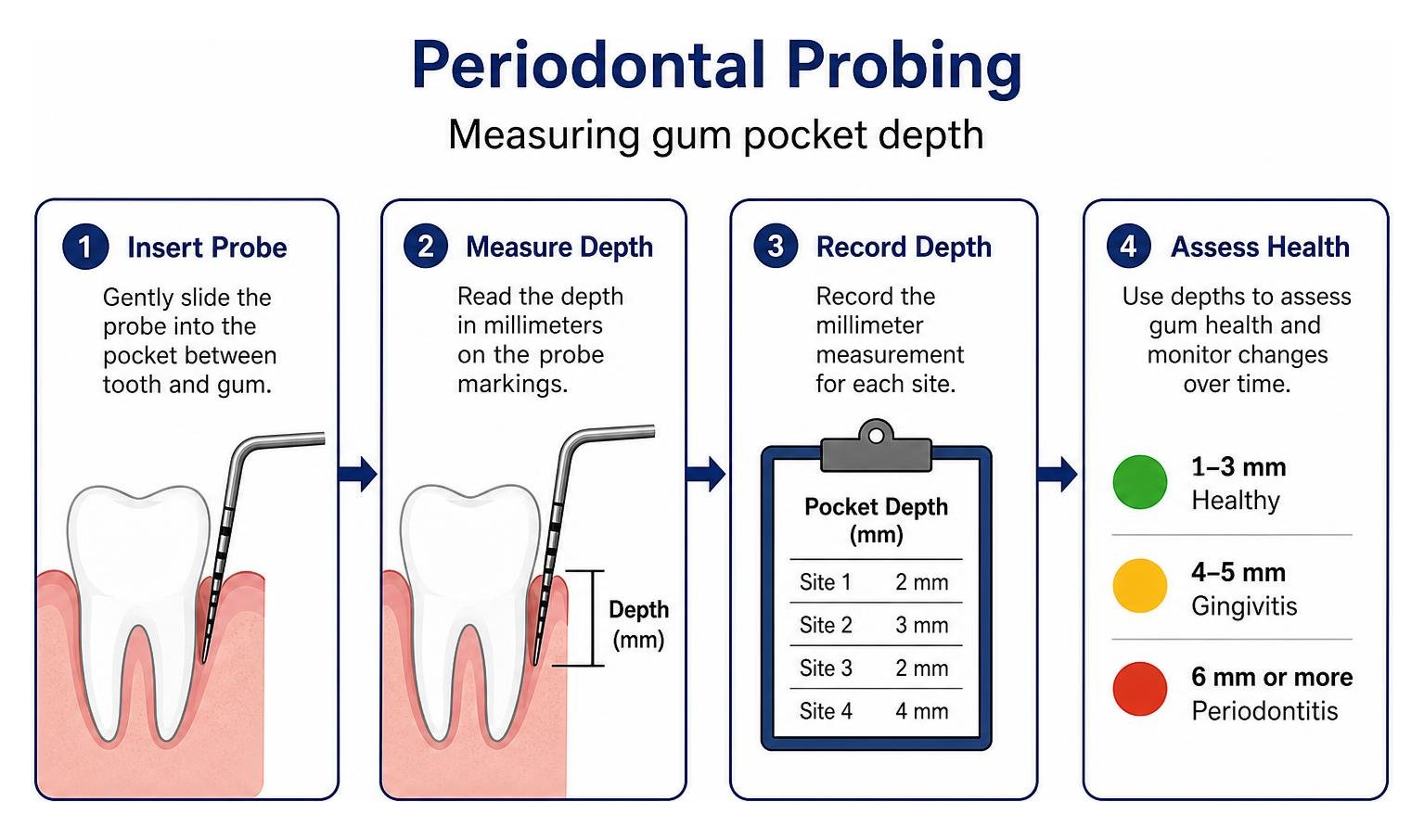
Periodontal Probing
To assess the foundation supporting your teeth, the dentist or hygienist uses a small, rounded measuring instrument called a periodontal probe. We gently slide the probe into the pocket between your tooth and gum tissue to measure depth in millimeters:
- 1 to 3 mm (Healthy): Gums fit snugly against the teeth with no significant bone loss or active inflammation.
- 4 mm (Mild Gingivitis/Early Disease): Pockets show slight inflammation and require attentive daily hygiene and regular cleanings.
- 5 mm and Greater (Active Periodontitis): Deep pockets indicate that plaque bacteria have traveled below the gumline, causing detachment and bone loss. This usually calls for specialized deep cleanings (scaling and root planing).
Preventive Sealants and Family Care
For younger patients and adults with deep grooves on the chewing surfaces of their molars, we often recommend protective dental sealants. Sealants provide a clear, protective resin shield over vulnerable pits, preventing food and bacteria from settling inside. Our trusted family dentistry practices ensure that every member of your family receives tailored preventive solutions under one roof.
How to Prepare and What to Expect Regarding Appointment Duration and Costs
Preparing for a dental checkup is straightforward. A little planning helps us give you the best possible care:
- Update Your Health Details: Write down any new medications, vitamin supplements, medical diagnoses, or recent surgeries.
- Note Any Symptoms: Make a quick mental note of any tooth sensitivity to hot or cold, gum bleeding, jaw popping, or chronic bad breath so you can mention it right away.
- Arrive a Few Minutes Early: Arriving early gives you plenty of time to check in, update paperwork, and relax before your appointment.
- Communicate Dental Anxiety: If dental visits make you nervous, please let our team know. We use gentle techniques, topical numbing gels, and open communication to keep you completely comfortable.
Appointment Length
A standard routine checkup and cleaning for an established patient typically lasts 45 to 60 minutes. If you are a new patient, or if it has been several years since your last dental visit, the appointment may take 60 to 75 minutes so we can complete a full series of baseline X-rays and a comprehensive health intake.
Costs and Insurance Coverage
- With Dental Insurance: Most dental insurance plans prioritize preventive care, commonly covering routine exams, standard cleanings, and annual diagnostic X-rays at 100% (often with zero out-of-pocket copay for two visits per year).
- Without Dental Insurance: Out-of-pocket costs for a preventive visit typically range from $80 to $200 for a standard exam and basic cleaning. If comprehensive new-patient X-rays or deep periodontal scaling are needed, costs can range between $300 and $400+. We always outline all costs clearly before performing any additional procedures.
Recommended Visit Frequency and Next Steps if Issues Are Found
A regular six-month recall schedule remains the golden standard for most healthy children, teens, and adults. However, visit intervals should always reflect your individual oral health profile.
Patients managing conditions like diabetes, active periodontal disease, chronic dry mouth, a high cavity rate, or pregnancy may benefit from visits every 3 to 4 months. We help determine the optimal frequency for dental visits based on your personal risk factors. Embracing proven preventive dentistry practices protects your natural smile and helps you avoid costly, extensive restorative procedures down the road.
If our clinical exam reveals an issue—such as a cracked filling, tooth decay, or advanced gum inflammation—there is no need to worry:
- Clear, Visual Explanations: We use high-resolution digital X-rays and intraoral camera photos to show you exactly what we see.
- Transparent Treatment Planning: We outline your restorative choices (such as tooth-colored fillings, crowns, or periodontal therapy), including timeframes and estimated costs.
- Specialist Referrals When Needed: If you require complex root canal therapy, advanced orthodontic adjustments, or oral surgery, we coordinate care directly with trusted regional specialists.
Prioritizing your routine dental checkups ensures your smile stays bright, healthy, and functional for years to come.
Frequently Asked Questions About Dental Checkups
How long does a typical dental checkup appointment take?
A routine checkup and cleaning generally takes 45 to 60 minutes. For established patients with healthy teeth and gums, the appointment moves quickly and smoothly. If you are visiting us for the first time, or if we are capturing a full set of diagnostic X-rays, plan for about 60 to 75 minutes.
Will a routine dental checkup and cleaning hurt?
A standard cleaning and exam should not be painful. You may feel slight pressure or light scraping sensations as the hygienist gently removes hardened tartar, along with the vibration of the polishing cup. If you have sensitive gums, exposed roots, or gum recession, let us know! We can apply fast-acting topical numbing gels to ensure you remain completely relaxed and pain-free.
What should I do if I haven’t been to the dentist in years?
First, know that our practice is a judgment-free zone. Our team understands that life events, busy schedules, and dental anxiety cause many people to delay care. When you return after several years, we start with a kind, thorough assessment, updated digital imaging, and a gentle cleaning tailored to your comfort level. Taking that first step back into the dental chair is the best thing you can do for your health.
Conclusion
Routine dental checkups are the cornerstone of lifelong oral health and overall physical well-being. By combining skilled hygiene cleanings, gentle tartar removal, and thorough clinical exams, these visits protect your natural teeth and help you avoid unexpected dental emergencies.
At the office of Dr. Loren Grossman in Kingston, Pennsylvania, we combine advanced dental technology with a warm, patient-first approach. Whether you are due for your six-month cleaning or haven’t visited a dentist in years, we are here to support your smile. Ready to prioritize your oral health? Contact our team today to schedule comprehensive dental services and experience comfortable, personalized dental care.