How Often Should You Go to the Dentist?
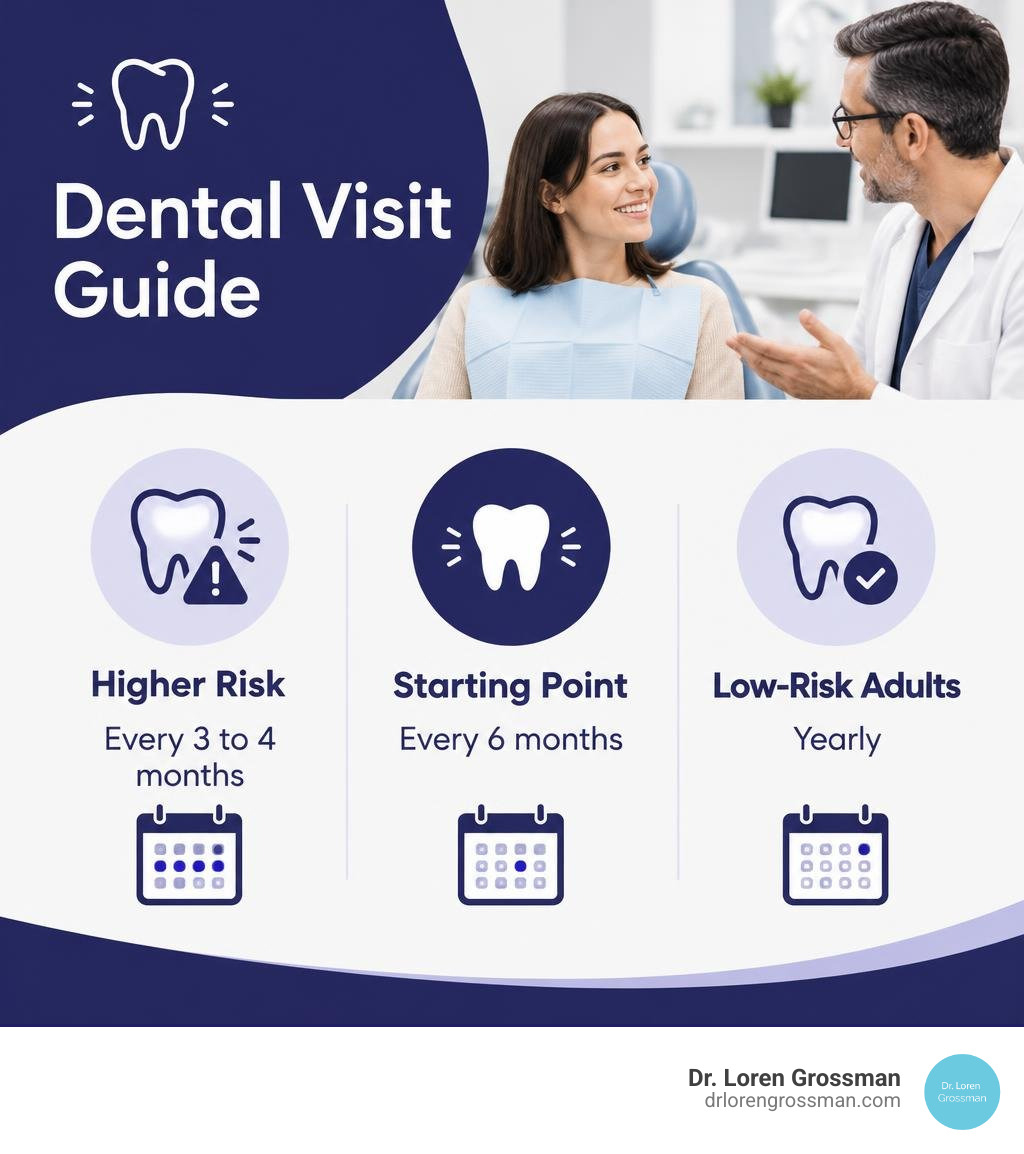
Every six months is a useful starting point, not a rule for everyone. If you have gum disease, frequent cavities, or dry mouth, your dentist may recommend visits every 3 to 4 months. If your teeth and gums are healthy and your risk is low, a checkup once a year may be enough. Your dentist should set the schedule after examining your mouth and reviewing your health.
I’m Dr. Loren Grossman, a Wyoming Valley family dentist since 1984, and I help patients answer the question: how often should you go to the dentist? My years caring for children and adults have shown me why the best schedule starts with the person, not the calendar.
The Myth of the Six-Month Rule: Where Did It Originate?
Almost everyone answers “twice a year” when asked how frequently they need a dental visit. Yet few realize this standard did not emerge from a double-blind scientific trial or a clinical breakthrough. Instead, its roots trace back to early twentieth-century advertising campaigns—most notably marketing by Pepsodent toothpaste in the 1920s and 1930s that urged people to “use Pepsodent twice a day, see your dentist twice a year.”
Over subsequent decades, this commercial slogan evolved into standard dental culture and was eventually mirrored by dental insurance reimbursement models. While a semi-annual cadence served as a practical public health baseline, modern dental science tells a different story.
A scientific scoping review on dental visit frequency evaluated the scientific basis behind fixed dental intervals. The findings revealed that traditional, rigid six-month recalls are supported by relatively weak historical evidence. Today, professional organizations like the American Dental Association (ADA) encourage tailored recall protocols based on each patient’s individual clinical risks, lifestyle factors, and oral disease history rather than a universal calendar interval.
What Actually Happens During a Routine Dental Checkup?
Understanding the importance of regular dental checkups begins with recognizing that a dental appointment involves far more than simply polishing your enamel.
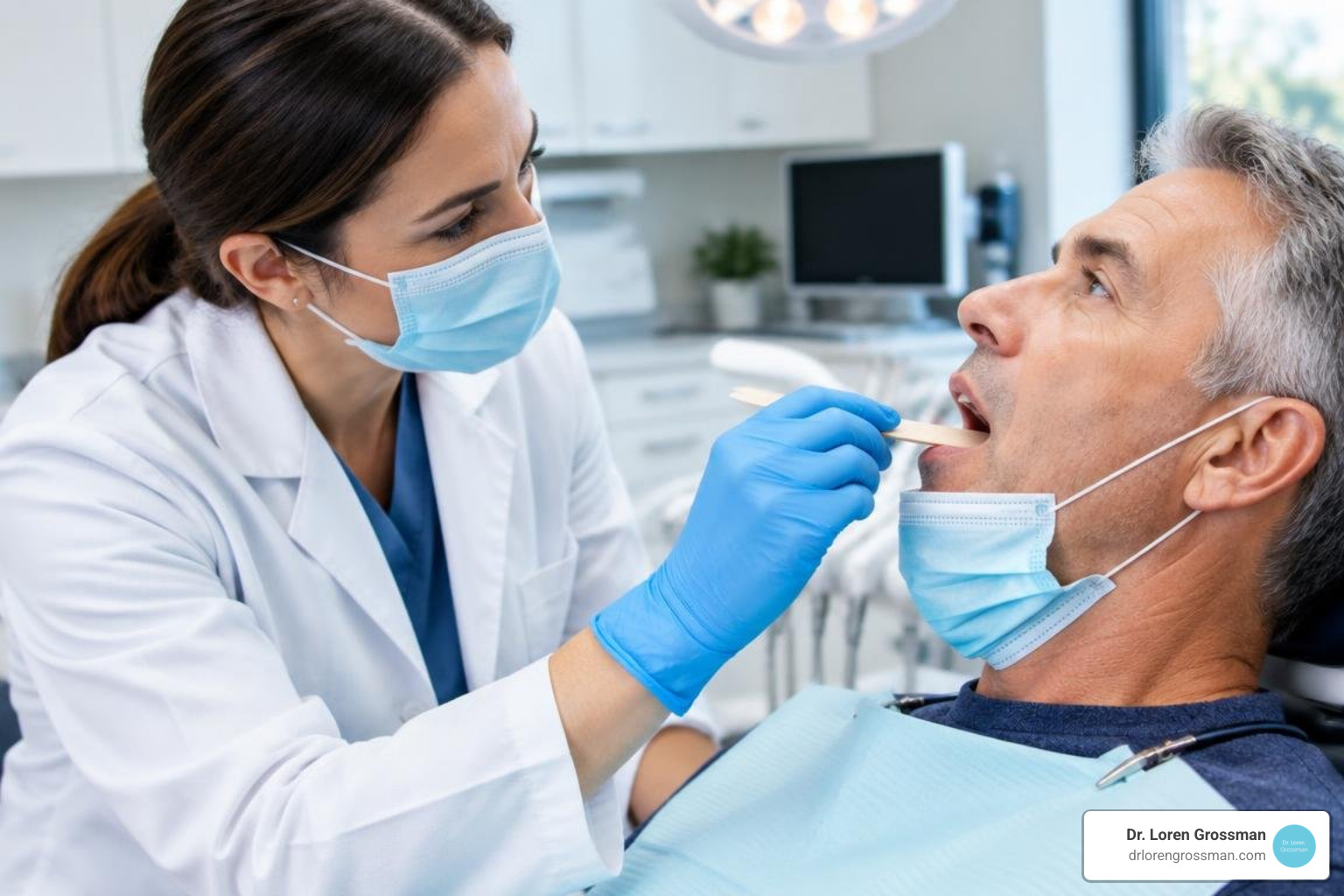
A comprehensive appointment consists of several synchronized diagnostic and preventive steps:
- Medical and Pharmacological Review: Many systemic conditions and medications directly influence oral health by altering salivary flow, gum tissue reactivity, or immune responses.
- Ultrasonic and Hand Scaling: Plaque that remains on the teeth hardens into calculus (tartar) within 24 to 72 hours. Once calcified, tartar cannot be removed by brushing or flossing alone. Dental hygienists use specialized ultrasonic scalers and hand curettes to eliminate these subgingival deposits.
- Periodontal Probing: A tiny millimeter ruler measures the depth of the sulcus (pocket) around each tooth. Pockets measuring 1 to 3 millimeters indicate healthy tissue, while measurements of 4 millimeters or deeper signal active inflammation, bone loss, or periodontal disease.
- Comprehensive Oral Cancer Screening: Your dentist evaluates the soft tissues—including the tongue, floor of the mouth, soft palate, and cheeks—for suspicious white or red patches (leukoplakia or erythroplakia), indurations, or asymmetrical tissue changes.
- Enamel Polishing and Topical Fluoride: A mild abrasive paste removes external surface stains, followed by a targeted fluoride or remineralizing application to strengthen enamel.
Why Diagnostic Examinations Outweigh Basic Cleanings
While a smooth, clean feel is satisfying, the diagnostic examination by your dentist is the most critical element of the visit. Many aggressive oral conditions develop silently without pain or noticeable signs in their earliest phases.
Tooth decay between tight contact points, microscopic cracks in old restorations, and bone loss from periodontitis remain hidden until significant structural damage occurs. Incorporating routine dental x-rays allows us to see inside the tooth structure and beneath the gumline to assess bone levels and detect interproximal decay. Following practical preventive dental care tips at home works in tandem with these diagnostic exams to stop minor issues from turning into severe dental problems.
How Often Should You Go to the Dentist Based on Your Risk Level?
Modern evidence-based dentistry uses risk stratification to determine how frequently you should sit in the dental chair. A major Cochrane systematic review on recall intervals (Fee et al., 2020) demonstrated that for low-risk adults, oral health outcomes regarding decay and gum health do not significantly differ between customized risk-based schedules and a rigid six-month schedule.
| Patient Risk Level | Recommended Visit Cadence | Key Patient Characteristics | Typical Clinical Focus |
|---|---|---|---|
| Low Risk | Every 9 to 12 Months | No active decay in 3+ years, healthy gum tissue, consistent home flossing and brushing, no systemic risk factors. | Preventive monitoring, plaque removal, baseline diagnostic X-rays, oral cancer screening. |
| Moderate Risk | Every 6 Months | Occasional cavities, mild gingival inflammation, orthodontic appliances, moderate plaque accumulation. | Tartar debridement, topical fluoride application, hygiene coaching, caries monitoring. |
| High Risk | Every 3 to 4 Months | Active periodontitis, diabetes, chronic dry mouth (xerostomia), heavy tobacco use, immune compromise. | Subgingival scaling, periodontal pocket maintenance, localized antimicrobials, soft tissue exams. |
High-Risk Groups Who Need Visits Every 3 to 4 Months
For individuals in higher-risk categories, waiting six months between cleanings allows pathogenic bacteria to recolonize deep beneath the gumline and cause irreversible bone and tissue loss:
- Adults with Active or Past Periodontitis: Periodontal pathogens repopulate periodontal pockets within 90 to 120 days following a deep cleaning. A 3-to-4-month periodontal maintenance cadence keeps these bacterial colonies suppressed.
- Individuals with Diabetes: Chronic high blood sugar impairs peripheral circulation and weakens immune responses, making gum tissue significantly more susceptible to severe infection.
- Patients with Dry Mouth (Xerostomia): Saliva buffers oral acids and washes away food debris. Without adequate salivary flow—often caused by common prescription medications—caries can destroy enamel along the gumline in just a few months.
- Smokers and Tobacco Users: Tobacco restricts blood flow to the gingiva, masking typical bleeding warning signs while accelerating bone loss and significantly increasing oral cancer risk.
- Expectant Mothers: Elevated progesterone levels during pregnancy can trigger pregnancy gingivitis, causing swollen, bleeding gums that benefit from an extra cleaning during the second or third trimester.
Can Low-Risk Adults Safely Visit Less Often?
If you are an adult with immaculate oral hygiene, no history of cavities in recent years, strong periodontal support, and no chronic systemic conditions, visiting the dentist once every 9 to 12 months is often appropriate once confirmed by your clinician.
However, low risk is not permanent. Diet changes, increased stress (which can cause teeth grinding), and new medications can alter your risk profile over time. Understanding the benefits of flossing daily and keeping up with daily interdental cleaning is what keeps low-risk patients in that healthy category.
Dental Checkup Schedules Across Different Life Stages
Our oral anatomy, physiological risks, and dental priorities evolve throughout life. That is why lifelong family dental care adapts to each developmental stage.

How Often Should You Go to the Dentist During Childhood?
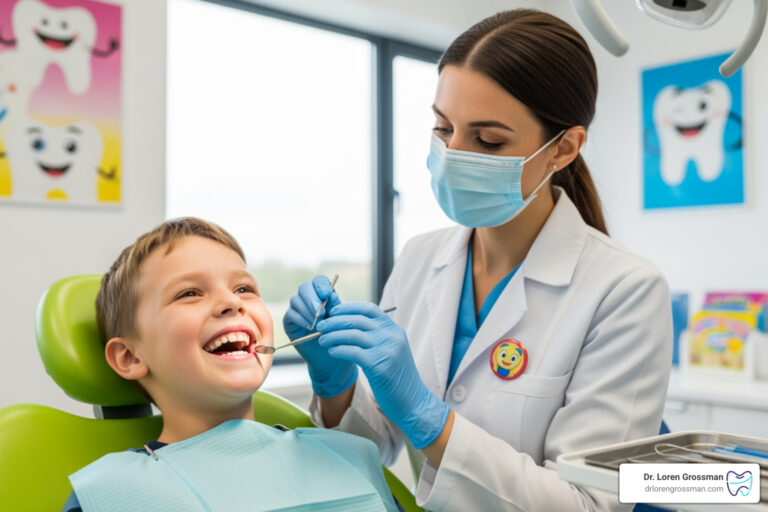
A child’s dental journey should begin early. The AAPD recommendations on pediatric dental periodicity state that a child should establish a “dental home” when their first primary tooth erupts, and no later than their first birthday.
Early childhood visits serve several purposes:
- Preventing Early Childhood Caries: Baby teeth have thinner enamel than permanent teeth, allowing decay to reach the inner pulp rapidly.
- Growth and Occlusion Monitoring: Dentists monitor jaw development, early bite alignment, and oral habits like thumb-sucking or tongue-thrusting.
- Protective Interventions: Applying topical fluoride varnishes and placing composite dental sealants over deep molars protects vulnerable biting grooves from plaque accumulation.
Most children benefit from a standard six-month recall schedule, though children with higher cavity risk or active orthodontic appliances may require checks every 3 months.
Senior Oral Health and Denture Care Considerations
As we age, our teeth and oral tissues face distinct biological challenges:
- Root Surface Caries: Receding gums expose the softer root cementum, which decays much more easily than outer enamel.
- Medication-Induced Xerostomia: Hundreds of common medications for blood pressure, depression, and pain reduce salivary output, elevating decay risk.
- Edentulous and Denture Maintenance: Even if you wear full dentures, routine dental visits remain essential. The underlying alveolar bone continuously resorbs over time, altering denture fit, which can cause soft tissue irritation, epulis fissuratum, and chewing difficulty. Furthermore, age is a primary risk factor for oral mucosal lesions and oral cancers, making professional soft-tissue screenings vital.
The True Costs of Delaying Dental Care and Urgent Warning Signs
Postponing dental visits to save time or money frequently leads to the opposite result. A minor area of demineralization can often be managed with preventive fluoride or a small, conservative filling.
When left unaddressed, decay travels through the enamel and dentin into the pulp chamber, requiring a root canal procedure, a core buildup, and a full-coverage crown—or even an extraction and dental implant. Practicing proactive preventive dentistry practices preserves your natural tooth structure and protects your budget over time.
Warning Signs Requiring Immediate Attention
Do not wait for your next scheduled checkup if you experience any of the following symptoms:
- Spontaneous or Throbbing Pain: Lingering pain after hot or cold foods, or a dull, throbbing ache when biting down.
- Persistent Bleeding or Gum Swelling: Gums that bleed easily during brushing, appear bright red, or feel tender to the touch.
- Localized Gum Abscess or Pimple: A small, draining bump on your gums (fistula), which often indicates an active infection at the tooth root.
- Loose Permanent Teeth: Any mobility in an adult tooth, which points to advanced bone loss or trauma.
- Non-Healing Oral Sores: Ulcers, red patches, or white plaques that persist for more than 10 to 14 days without resolving.
- Jaw Clicking or Facial Soreness: Persistent pain around the temporomandibular joint (TMJ) or waking up with sore facial muscles.
Understanding Dental Insurance and Out-of-Pocket Costs
Most dental insurance policies are structured around preventive care, typically covering two cleanings and routine diagnostic exams per calendar year at little to no out-of-pocket cost.
However, it is important to remember that insurance benefit structures are financial arrangements, not personalized clinical prescriptions. If your clinical profile calls for cleanings every 3 to 4 months due to periodontal maintenance needs, the long-term investment in that extra maintenance visit is far less costly than treating advanced periodontal bone loss or replacing lost teeth later on.
Frequently Asked Questions About Dental Checkups
How often should you go to the dentist if you have healthy teeth?
If you have no active cavities, healthy gums, and low systemic risk, an annual visit (every 12 months) may be sufficient. However, your dentist must evaluate your teeth, gums, and bone levels in person before safely recommending a yearly schedule.
Do you still need to see a dentist if you wear full dentures?
Yes. Annual visits are essential for denture wearers to check for soft tissue sores, assess jawbone resorption, adjust denture fit, and receive a professional oral cancer screening.
Can thorough brushing and flossing replace routine dental visits?
No. While daily brushing and flossing are necessary to remove soft plaque, they cannot remove mineralized tartar once it forms. In addition, only professional clinical exams and diagnostic X-rays can detect silent interproximal decay, early bone loss, and mucosal abnormalities.
Conclusion
The old guideline of seeing the dentist every six months works well as a general starting point, but your ideal visit schedule depends on your specific oral health, medical background, and individual risk factors. Whether your teeth need an annual checkup or maintenance every three to four months, consistent preventive care is the most reliable way to protect your smile and support your overall well-being.
At our Kingston practice, we focus on delivering comfortable, evidence-based care tailored to your unique smile goals. Explore our comprehensive dental services to learn more about how we support your long-term oral health.
References
Fee PA, Riley P, Worthington HV, Clarkson JE, Boyers D, Beirne PV. “Recall intervals for oral health in primary care patients..” The Cochrane database of systematic reviews, 2020. PMCID PMC8256238.