Signs of Teeth Grinding in Children: What to Look For
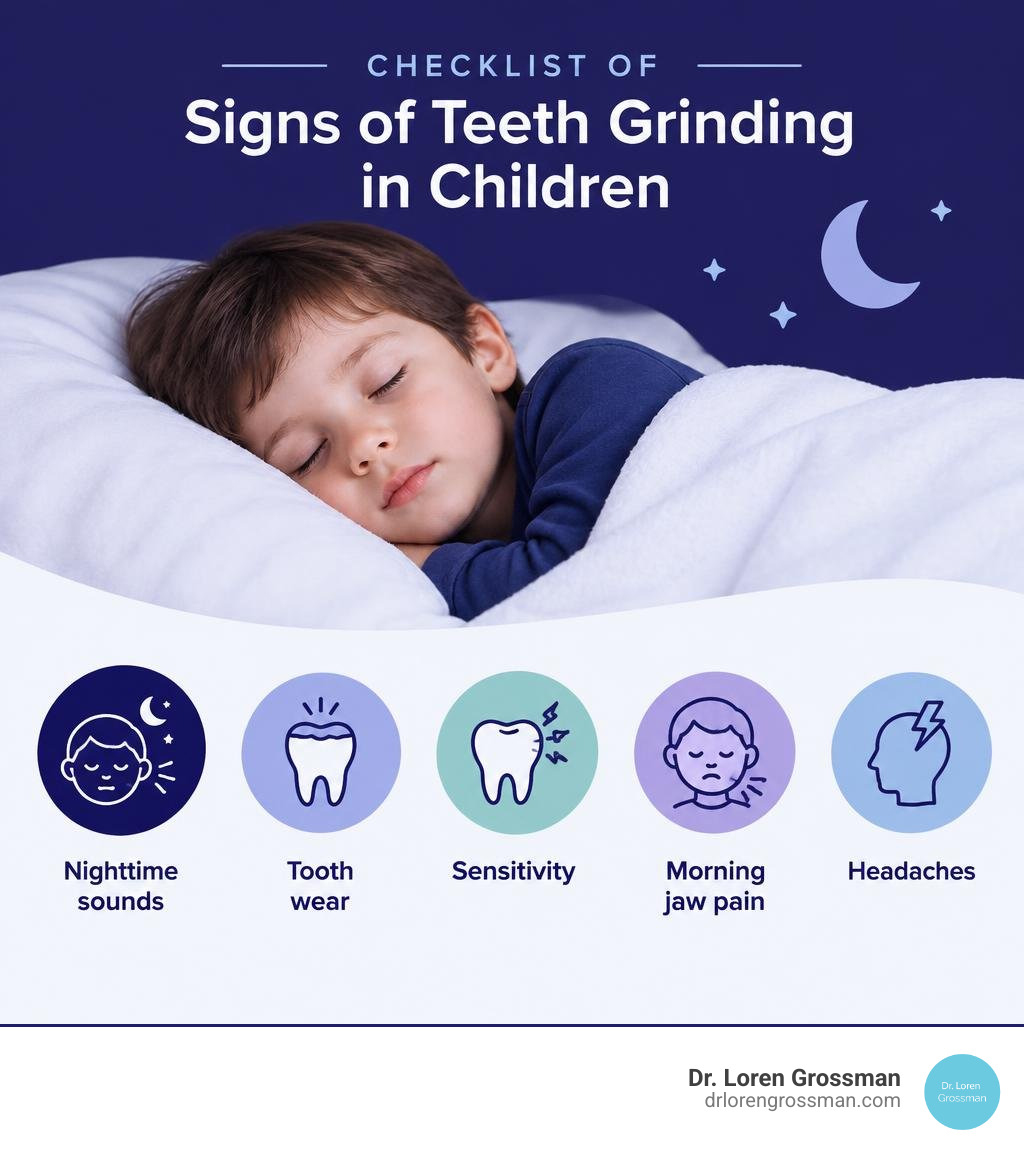
The clearest sign is a scraping or grinding sound while your child sleeps. Other signs include flattened or chipped teeth, tooth sensitivity, and a sore jaw or headache in the morning. Some children grind without making a sound, so it helps to notice changes in their teeth and ask how their jaw feels when they wake up.
Teeth grinding, also called bruxism, is common in young children and often fades as they grow. If you notice pain, visible tooth damage, or frequent grinding, a dental exam can help you decide what to do next.
I’m Dr. Loren Grossman, and I’ve cared for children and families in the Wyoming Valley since 1984. In my practice, I check for signs of teeth grinding in children and help parents understand when to watch and when to seek care.
Hearing a rhythmic, sandpaper-like sound coming from your little one’s bedroom can be jarring. In fact, research shows that between 13% and 49% of children experience pediatric bruxism at some point (Bulanda et al., 2021). An estimated 3 out of 10 kids grind their teeth before reaching age 5, with peak occurrence happening between ages 5 and 7.
Understanding childhood sleep stages helps demystify the habit. Teeth grinding often occurs during lighter sleep stages or brief transitions between rapid eye movement (REM) and non-REM sleep. While the majority of children outgrow the habit naturally by age 6 as their permanent dentition emerges, about one-third continue grinding into their teenage years. Learning what to look for empowers parents to protect their child’s developing smile.
Key Signs of Teeth Grinding in Children Every Parent Should Know

Spotting pediatric bruxism requires tuned-in observation because children rarely realize they are doing it. In more than 70% of pediatric cases, audible grinding precedes severe tooth wear and serves as the most relevant early indicator.
When children clench or slide their dental arches back and forth against each other, the friction creates distinct sounds ranging from faint clicking to loud grating that can easily wake up siblings. Clinical guidance on childhood teeth grinding emphasizes that observing these nighttime noises is often the very first clue for families.
These episodes frequently align with nocturnal microarousals—brief, partial awakenings where the central nervous system shifts sleep depth, triggering masticatory muscle contractions.
Visible Oral Signs of Teeth Grinding in Children
When grinding continues over weeks or months, the physical force leaves undeniable physical evidence across the mouth:
- Flattened Tooth Cusps: The natural, pointed peaks of primary molars and canines wear down flat, resembling smooth tabletops.
- Enamel Erosion and Thinning: Friction strips away outer enamel, sometimes revealing the darker, yellowish dentin layer underneath.
- Chipped or Fractured Edges: Front incisors may develop micro-fractures, jagged borders, or noticeable notches.
- Heightened Tooth Sensitivity: As protective enamel wears thin, children may complain of pain when eating warm soup, drinking cold water, or brushing.
When routine dental checks detect early enamel wear, families can seek specialized pediatric dental care to prevent irreversible damage and preserve primary tooth spacing.
Physical and Daytime Signs of Teeth Grinding in Children
The strain of nocturnal clenching doesn’t vanish when the morning sun comes up. Children often wake with localized muscular fatigue and discomfort that spills into daytime activities:
- Morning Jaw Soreness: Tightness or dull aches in the temporomandibular joint (TMJ) area upon waking.
- Unexplained Headaches: Frequent morning tension headaches centered around the temples or forehead.
- Earache-Like Sensations: Pain radiating near the ears without any active ear infection or middle-ear fluid.
- Temporal Muscle Tenderness: Palpable soreness when lightly pressing the cheeks or temples.
- Chewing Fatigue: Hesitation to chew tough foods like meats, raw apples, or crusty bread during breakfast or lunch.
Sleep and Behavioral Manifestations
Bruxism is rarely an isolated dental event; it is deeply intertwined with how well a child sleeps and feels. Children who grind their teeth often experience fragmented sleep architecture, leading to:
- Restless Sleep: Frequent tossing, turning, and unusual sleeping postures.
- Nighttime Waking: Waking up thirsty, disoriented, or startled during the night.
- Daytime Mood Shifts: Heightened irritability, tantrums, or low emotional resilience.
- Behavior and Attention Challenges: A study found that 40% of children with tooth grinding had elevated scores on the Achenbach Child Behavior Checklist, highlighting strong links to attention and behavioral struggles.
According to clinical research on pediatric bruxism, sleep bruxism should be viewed through a comprehensive biopsychosocial lens that connects physical jaw activity to underlying airway, neurological, and emotional health (Carrillo et al., 2026).
Common Causes and Risk Factors for Childhood Bruxism
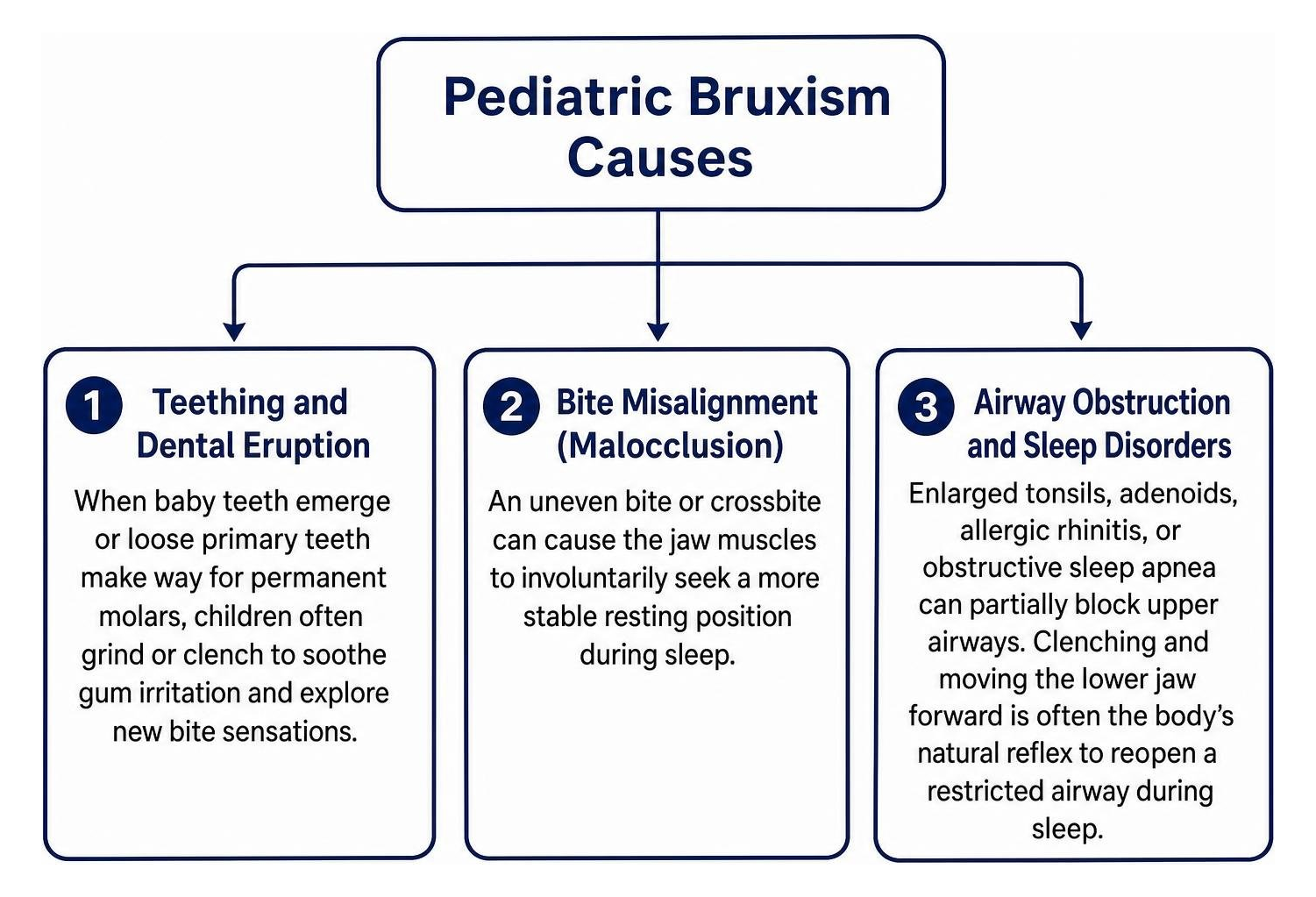
Understanding why your child grinds their teeth makes finding the right solution far easier. Pediatric bruxism is multifactorial, stemming from dental, physical, and psychological triggers:
- Teething and Dental Eruption: When baby teeth emerge or loose primary teeth make way for permanent molars, young children often grind or clench to soothe gum irritation and explore new bite sensations.
- Bite Misalignment (Malocclusion): An uneven bite or crossbite can cause the jaw muscles to involuntarily seek a more stable resting position during sleep.
- Airway Obstruction and Sleep Disorders: Enlarged tonsils, adenoids, allergic rhinitis, or obstructive sleep apnea can partially block upper airways. Clenching and moving the lower jaw forward is often the body’s natural reflex to reopen a restricted airway during sleep.
- Emotional Stress and Daily Anxiety: Big transitions—like starting kindergarten, welcoming a new sibling, test anxiety, or routine changes—frequently trigger jaw clenching.
- Neurological Factors and Medications: Conditions such as ADHD or cerebral palsy, as well as certain stimulant prescriptions or secondhand smoke exposure, are documented risk factors for childhood clenching.
For parents evaluating these symptoms at home, reviewing evidence on sleep bruxism in toddlers along with practical pediatric oral care tips provides practical clarity on what to monitor day to day.
Long-Term Consequences of Untreated Grinding
In most young kids, bruxism is a temporary developmental phase that resolves without long-term harm. However, severe or persistent grinding into the pre-teen and teenage years warrants close attention to prevent permanent oral issues.
One in six children and adolescents demonstrates clinical signs of temporomandibular disorders (TMD). When permanent teeth bear the brunt of heavy clenching, enamel loss is irreversible, potentially requiring restorative bonding, crowns, or orthodontic realignment down the road.
| Manifestation Feature | Mild / Temporary Primary Bruxism | Severe / Persistent Bruxism |
|---|---|---|
| Typical Age Group | Toddlers and preschoolers (ages 2–6) | School-age children and teens (ages 7+) |
| Enamel Wear Impact | Minimal smoothing of baby teeth | Visible flattening, chipping of permanent teeth |
| Pain & Discomfort | Rare, occasional mild muscle tiredness | Chronic jaw soreness, headaches, ear pain |
| Sleep Quality | Normal, undisturbed sleep cycles | Restless sleep, snoring, daytime fatigue |
| Intervention Needed | Watchful waiting, calming bedtime routines | Custom night guards, airway or orthodontic care |
Practical Home Remedies and Management Strategies
If your child’s grinding is mild and primarily linked to temporary developmental changes or daily stress, practical home care strategies can provide immediate relief:
- Establish a Relaxing Bedtime Routine: Create a soothing 30-minute wind-down ritual featuring a warm bath, soothing music, and a bedtime story to release physical muscle tension.
- Power Down Screens Early: Turn off televisions, tablets, and smartphones at least one hour before bed. Blue light stimulates the central nervous system, contributing to microarousals.
- Encourage Open Conversations: Give your child a safe space to discuss worries about school, sports, or friendships before tucking them in, reducing bedtime anxiety.
- Maintain Proper Hydration: Dehydration is an overlooked trigger that can increase muscle cramping and nocturnal clenching.
- Incorporate Magnesium-Rich Foods: Incorporating healthy snacks like bananas, spinach, and whole grains into dinner can support natural muscle relaxation.
- Avoid Hard and Sticky Foods: When morning jaw soreness occurs, serve softer meals to give overworked jaw muscles a well-deserved break.
Families can review evidence-based self-care and bruxism management recommendations to implement these soothing home habits effectively.
When to Seek Professional Dental Care and Clinical Treatments
While watchful waiting is appropriate for early childhood grinding, specific red flags signal that it’s time for a professional dental evaluation:
- Grinding continues after permanent incisors and six-year molars erupt.
- Your child frequently wakes with headaches, earaches, or painful jaw stiffness.
- You notice visible chips, thinning enamel, or flat spots on permanent teeth.
- Nighttime grinding is accompanied by loud snoring, mouth breathing, or gasping.
During a clinical evaluation, we perform a thorough bite assessment, examine muscle tone, check for enamel wear, and screen for airway compromises. For older children with permanent teeth, a custom-molded night guard provides comfortable, reliable protection against nocturnal clenching forces. If airway or bite issues are detected, coordinated care with orthodontists or pediatric ENT specialists ensures comprehensive relief.
When scheduling a visit, reviewing our guide on preparing for a pediatric dental visit helps ensure a comfortable, stress-free experience for your child.
Frequently Asked Questions About Pediatric Teeth Grinding
At what age do children typically outgrow teeth grinding?
Most children outgrow teeth grinding by age 6 as their baby teeth begin to exfoliate and adult teeth establish a permanent bite alignment. However, approximately one-third of children carry the clenching habit into their teenage years, which requires closer dental monitoring.
Can teething cause nighttime grinding in toddlers?
Yes. As primary incisors and molars push through sensitive gum tissue, infants and toddlers often grind or clench to relieve pressure, soothe discomfort, and explore their changing mouth sensations. Providing chilled teething rings and gentle gum massages helps alleviate this urge.
When does a child need a custom night guard for bruxism?
A custom night guard is typically recommended once a child has their permanent teeth (usually around age 7 or older) and shows ongoing enamel loss, tooth fractures, or chronic morning jaw pain. Night guards are rarely fabricated for toddlers with primary teeth because their jaws are growing rapidly.
Conclusion
Hearing your child grind their teeth at night can be unsettling, but in most cases, pediatric bruxism is a temporary developmental phase that resolves naturally. By recognizing the subtle physical signs, establishing calming bedtime routines, and monitoring enamel health, parents can ensure their child’s smile stays healthy and bright.
If your child is experiencing morning jaw soreness, visible tooth wear, or persistent grinding, our experienced team is here to help. Explore our comprehensive dental care services at Dr. Loren Grossman in Kingston, PA, to schedule an evaluation and protect your child’s oral health for years to come.
Scientific References
Bulanda S, Ilczuk-Rypuła D, Nitecka-Buchta A, Nowak Z, Baron S, Postek-Stefańska L. “Sleep Bruxism in Children: Etiology, Diagnosis, and Treatment-A Literature Review..” International journal of environmental research and public health, 2021. PMCID PMC8471284. Fatima Esmeralda Jasso Carrillo, Maria Argelia Akemi Nakagoshi Cepeda, Jorge Arturo Gutierrez Longoria, Kim Jong Won, Jaime Ivan Maldonado Tovar, Luis Alfredo de la Torre Gil, Silvia Martinez Peralta, Karol Yamilet Berrones Rodriguez, Juan Manuel Solis Soto. “Pediatric bruxism: A comprehensive review of clinical manifestations, diagnosis, and integrated management.” International Journal of Applied Dental Sciences, 2026. DOI 10.22271/oral.2026.v12.i1a.2321.