What a Family Dentist Does for Every Age
A family dentist cares for children, adults, and seniors in one practice. They help prevent problems with exams, cleanings, and oral hygiene advice. They also treat issues such as cavities and damaged or missing teeth. The care changes with each person’s age and needs, so a child learning to brush and an adult considering a crown can both get help.
I’m Dr. Loren Grossman, and if you’re wondering, “what does a family dentist do?”, I’ve spent my career putting that answer into practice. Since 1984, I’ve cared for Wyoming Valley patients with needs ranging from children’s fillings to dental implants and smile makeovers. The American Dental Association (ADA) notes that regular dental visits allow early detection of decay, gum disease, and oral cancers, which is why family dental care emphasizes prevention at every age.
Know your what does a family dentist do terms:
What Does a Family Dentist Do to Protect Oral Health?
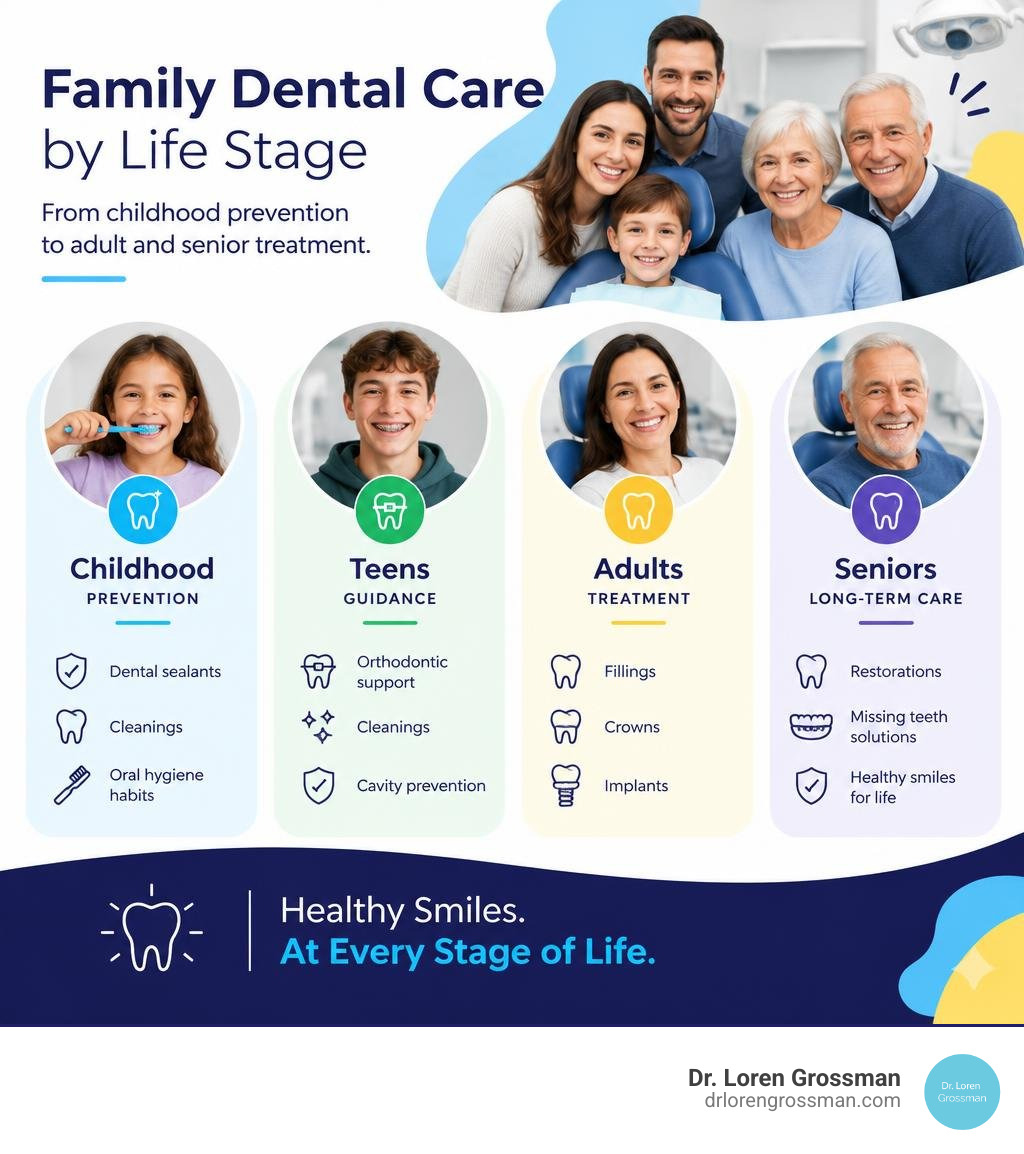
At its core, family dentistry focuses on safeguarding your smile throughout every season of life. Rather than treating oral health as a series of disconnected, isolated fixes, we view it as a continuous journey. By establishing a central dental home for the entire household, we monitor developmental milestones in children, preserve natural tooth structure in adults, and protect the functional independence of seniors.
A major part of this role revolves around proactive patient education and establishing long-term health records. When you visit a family dentist regularly, your clinical team builds a comprehensive archive of your dental history. This enables us to spot subtle shifts—such as micro-fractures in enamel, receding gum margins, or early signs of demineralization—well before they escalate into painful emergencies. Investing in lifelong oral health ensures that your family receives consistent, personalized guidance tailored to dietary habits, daily routines, and biological changes.
Defining Family Dentistry vs. General and Pediatric Dentistry
Navigating dental terminology can sometimes feel overwhelming. Many patients wonder how a family dentist differs from a general or pediatric dentist. According to the American Dental Association (ADA), most dentists in North America—about 158,000—practice general dentistry. All licensed dentists complete four years of dental school to earn their doctoral degree (DDS or DMD). However, their practice models and target demographics often differ significantly:
- General Dentists: Typically provide comprehensive general dental care to adults and older teenagers. While fully trained in oral medicine, some general practices choose to restrict their patient base to mature dentition.
- Pediatric Dentists: Complete two to three years of specialized residency training after dental school. Their clinical focus is exclusively dedicated to infants, children, and adolescents, particularly those with complex behavioral or anatomical needs. Once patients reach adulthood, they must transition out of a pediatric practice.
- Family Dentists: Bridge the gap by offering comprehensive, all-ages care under one roof. They possess the clinical breadth to treat primary, mixed, and permanent teeth. This eliminates the need for families to juggle multiple offices across town.
| Feature | Family Dentist | General Dentist | Pediatric Dentist |
|---|---|---|---|
| Target Age Group | All ages (infancy to geriatrics) | Primarily adults and older teens | Infants, children, and young teens |
| Continuity of Care | Lifelong (no transition required) | Ongoing for adults | Ends when the child reaches adulthood |
| Post-Graduate Training | 4-year dental doctorate + CE | 4-year dental doctorate + CE | 4-year doctorate + 2–3 year residency |
| Household Convenience | High (entire family in one visit) | Moderate (adult-focused) | Low for parents (children only) |
| Practice Environment | Multi-generational and adaptable | Professional adult setting | Child-centric and play-oriented |
What Does a Family Dentist Do for Children and Adolescents?
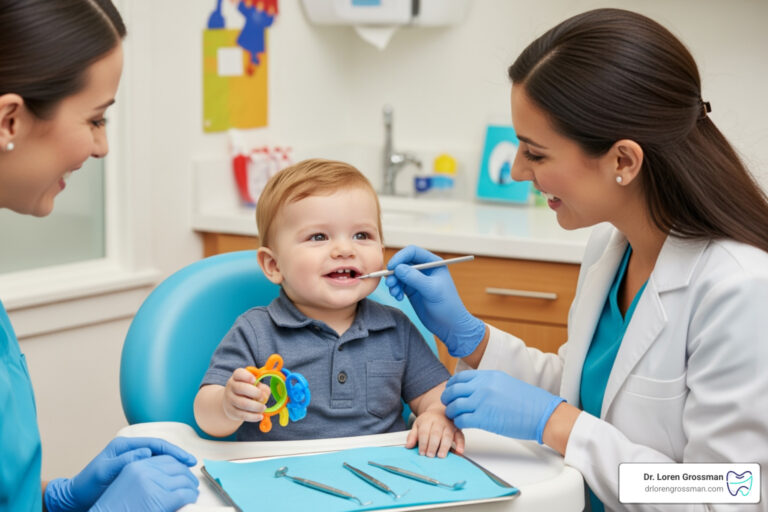
Early dental visits set the tone for how a person views dental care for the rest of their life. For toddlers and young children, we deliver gentle pediatric dental services designed to make checkups an enjoyable adventure rather than an intimidating chore.
During early childhood examinations, we monitor baby teeth eruption patterns, assess jaw development, and evaluate bite alignment. Preventive treatments play a massive role during these developmental years:
- Fluoride Treatments: High-concentration topical fluoride strengthens developing enamel and halts early decay.
- Dental Sealants: These thin, protective resin coatings are painted onto the deep grooves of molars to create a barrier against cavity-causing bacteria and food particles.
- Habit Counseling: We help parents gently manage thumb-sucking, pacifier reliance, and tongue-thrusting habits that could disrupt normal tooth alignment.
- Custom Athletic Mouthguards: For active teens playing sports, custom mouthguards provide superior impact absorption compared to over-the-counter options, preventing knocked-out teeth and soft tissue lacerations.
What Does a Family Dentist Do for Adults and Seniors?
As we mature, our oral health priorities shift from developmental monitoring to preservation, restoration, and aesthetic maintenance. Adults frequently experience issues such as worn fillings, enamel erosion, teeth grinding (bruxism), and early gum inflammation. Routine preventive dental check-ups allow us to intervene early with tooth-colored composite restorations before minor decay reaches the inner nerve.
For our senior patients, physiological changes require specialized attention. Aging often brings reduced salivary flow due to systemic medications, increasing the risk of root cavities. Furthermore, decades of natural wear take a toll on biting surfaces. We restore full chewing function and aesthetic balance using durable restorative crowns and bridges. When teeth are lost to severe decay or periodontal trauma, we place and restore permanent dental implants to preserve jawbone density and provide stable, natural-looking tooth replacements.
Comprehensive Services and Specialized Procedures Provided

Modern family dental practices utilize advanced clinical technology to provide a broad range of diagnostic, therapeutic, and cosmetic services. By incorporating high-definition intraoral cameras and low-radiation digital imaging, we allow you to see exactly what we see inside your mouth. This level of transparency transforms dental care into a collaborative partnership.
Preventive and Periodontal Care
Prevention is the cornerstone of lifelong oral health. Even with diligent home hygiene, mineralized tartar (calculus) accumulates in hard-to-reach pockets along the gumline. During routine professional cleanings, our hygienists use specialized ultrasonic and hand instruments to scale away plaque and tartar, polishing your teeth to a smooth, clean finish.
Beyond standard cleanings, comprehensive preventive dentistry practices include:
- Digital Radiography: Captures crisp diagnostic images with up to 80% less radiation exposure than traditional film.
- Periodontal Staging and Charting: We measure the depth of the pockets around every tooth to detect early gingivitis or advanced periodontitis before irreversible bone loss occurs.
- Oral Cancer Screenings: Every routine examination includes a thorough tactile and visual inspection of the tongue, throat, palate, and lymph nodes to identify mucosal abnormalities early.
Cosmetic Dentistry and Orthodontics
A healthy smile should also be one you are proud to share with the world. Modern family dentists offer a rich array of cosmetic dentistry solutions alongside functional care. Whether you are preparing for a major life event or simply want to refresh your appearance, aesthetic options include:
- Professional Teeth Whitening: In-office and take-home professional whitening systems lift stubborn stains caused by coffee, tea, and natural aging far more safely and effectively than commercial strips.
- Custom Dental Veneers: Ultra-thin shells of handcrafted porcelain are bonded to the front surfaces of teeth to correct deep discoloration, chips, gaps, or slight misalignments.
- Invisalign Clear Aligners: For teens and adults looking to straighten their teeth without metal brackets and wires, clear aligners offer a discreet, removable, and comfortable orthodontic solution.
Emergency Dentistry and Systemic Health Connections
Dental emergencies rarely happen at a convenient time. Whether it is a severe, throbbing toothache on a weekday morning or a chipped incisor from a weekend sporting event, having an established family provider ensures you know exactly who to call. We reserve dedicated time in our daily schedules to accommodate emergency dental appointments, providing prompt pain relief and stabilizing traumatic injuries.
Your mouth is also a window into your overall physical health. Decades of clinical research show that chronic oral infections and periodontal disease are directly linked to systemic conditions, including:
- Cardiovascular Disease: Bacteria from inflamed gums can enter the bloodstream, contributing to arterial inflammation and plaque buildup.
- Diabetes Control: Severe gum disease increases systemic inflammation, making it harder for diabetic patients to regulate blood glucose levels.
- Respiratory Illnesses: Inhaling oral bacteria from neglected periodontal pockets can exacerbate conditions such as pneumonia, particularly in elderly individuals.
Major Advantages of Choosing a Family Dental Practice
Choosing a family dental practice offers benefits that extend far beyond clinical treatments. It simplifies household logistics, fosters emotional comfort for anxious family members, and establishes deep multi-generational trust.
Convenient Scheduling and Pediatric Dental Anxiety Management
Managing multiple healthcare providers across different clinic locations is a major headache for busy parents. One of the greatest practical benefits of a family dental practice is consolidated block scheduling. Parents can schedule their own periodontal maintenance and restorative checks during the exact same appointment window as their children’s cleanings and fluoride treatments.
Furthermore, family practices excel at alleviating pediatric dental fear. When young children see their parents or older siblings calmly sitting in the dental chair, their natural anxiety diminishes through positive behavioral modeling.
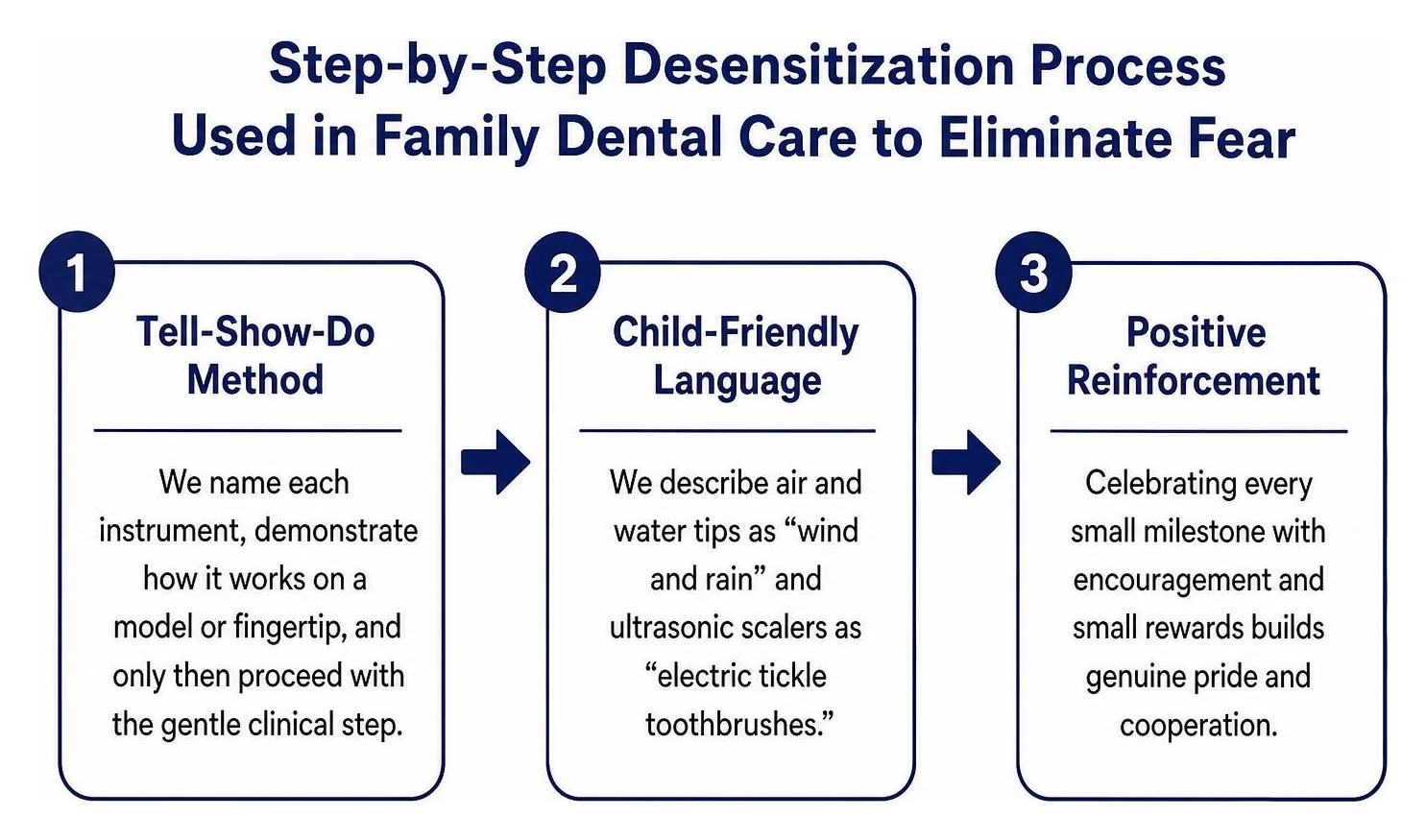
To create a calm, supportive environment for our youngest patients, we utilize proven anxiety-reduction techniques:
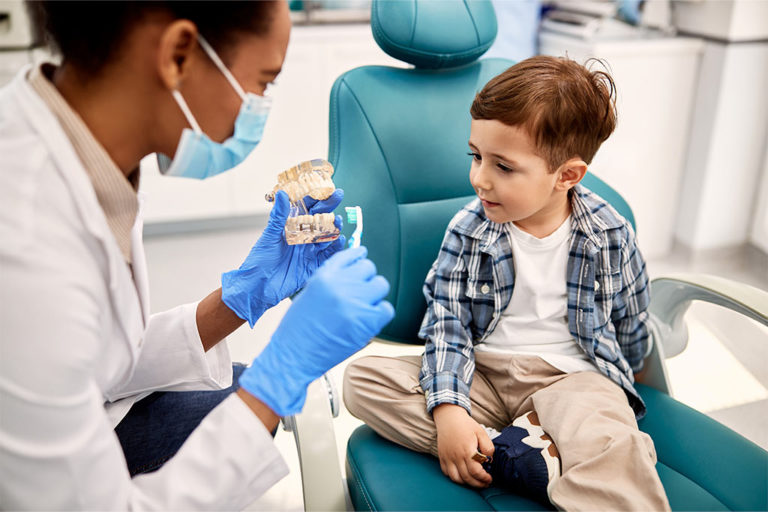
- The “Tell-Show-Do” Method: We name each instrument, demonstrate how it works on a model or fingertip, and only then proceed with the gentle clinical step.
- Child-Friendly Language: We describe air and water tips as “wind and rain” and ultrasonic scalers as “electric tickle toothbrushes.”
- Positive Reinforcement: Celebrating every small milestone with encouragement and small rewards builds genuine pride and cooperation.
- Pacing Controlled by the Patient: We give kids a “stop signal” (like raising a hand) so they know they are in complete control of their comfort.
Long-Term Dental History and Genetic Health Tracking
Genetics significantly influence your oral health. Enamel thickness, tooth morphology, salivary pH balance, and immune responses to periodontal bacteria frequently run in families. When a single dental team cares for multiple generations of your family, we can identify these hereditary patterns early.
If a parent has a history of aggressive gum recession or congenitally missing adult teeth, we monitor their children closely for identical tendencies. This deep contextual knowledge allows us to design targeted preventive plans decades ahead of time, heading off problems before they take root.
How to Select a Family Dentist and Prepare for Your First Visit
Finding the right dental home requires balancing clinical qualifications, technology, and interpersonal warmth. When evaluating local practices, look for a team that emphasizes comprehensive preventive care, uses modern diagnostic tools like digital radiography, and maintains transparent communication regarding treatment plans and fees.
Evaluating Practices, Insurance, and Treatment Costs
Cost and insurance compatibility are essential considerations for any household. A reputable family practice works closely with you to maximize your dental benefits and provide clear, upfront cost estimates before any treatment begins. If you are seeking exceptional care in Northeastern Pennsylvania, finding an experienced family dental practice in Pittston or Kingston ensures your loved ones receive high-caliber care close to home.
When speaking with prospective dental offices, consider asking:
- Do you treat both young children and mature adults?
- Are emergency appointments accommodated on the same day?
- What payment plans or financing options are available for procedures not fully covered by insurance?
- What modern comfort technologies (such as digital impressions or gentle local anesthesia techniques) do you utilize?
What to Expect During the Initial Appointment
Your family’s first visit sets the baseline for all future care. To make the appointment as smooth and efficient as possible, arrive about 15 minutes early with your identification, dental insurance cards, and a comprehensive list of current medications and medical conditions.
During the initial appointment, we perform a thorough assessment:
- A complete review of your systemic medical history and oral health goals.
- High-resolution digital X-rays to assess bone support and check for hidden interproximal decay.
- An extensive examination of your teeth, existing restorations, gum tissue, and jaw joints (TMJ).
- A non-invasive oral cancer screening.
- A refreshing professional dental cleaning (when gum health permits).
- A one-on-one consultation with the dentist to review digital findings and build a customized, prioritized treatment roadmap.
Frequently Asked Questions About Family Dentistry
At what age should my child first see a family dentist?
Both the American Dental Association and the American Academy of Pediatric Dentistry recommend that children visit the dentist when their first baby tooth erupts, or by their first birthday at the latest. Early infant oral exams allow us to check for proper tongue mobility, evaluate palate formation, and provide parents with essential guidance on teething relief, bottle habits, and infant gum cleaning.
How often should my family visit the dentist each year?
For most healthy children and adults, the ADA recommends visiting your family dentist at least twice a year (every six months) for professional cleanings and examinations. However, patients with active periodontal disease, a high cavity risk, or chronic medical conditions like diabetes may benefit from more frequent visits, such as every three to four months.
Can a family dentist provide orthodontic treatments like clear aligners?
Yes! Many family dentists are certified providers of advanced clear aligner therapies, such as Invisalign. We routinely correct mild-to-moderate alignment issues, crowding, and gaps for both teens and adults right in our office. If a patient presents with severe skeletal jaw discrepancies or complex malocclusion, we will coordinate care with a trusted local orthodontist.
Conclusion
A healthy, confident smile is one of your family’s greatest assets. By partnering with an experienced family dentist, you secure continuous, personalized care that adapts seamlessly as your children grow, your own dental needs evolve, and your parents enter their golden years. From gentle first cleanings to advanced restorations and cosmetic smile transformations, having a single, trusted dental home makes maintaining lifelong oral health convenient and rewarding.
If you are ready to experience compassionate, high-quality dental care tailored to every member of your household, explore our wide range of comprehensive dental services and schedule your family’s next visit with us today.