What Age Should Kids Start Going to the Dentist?
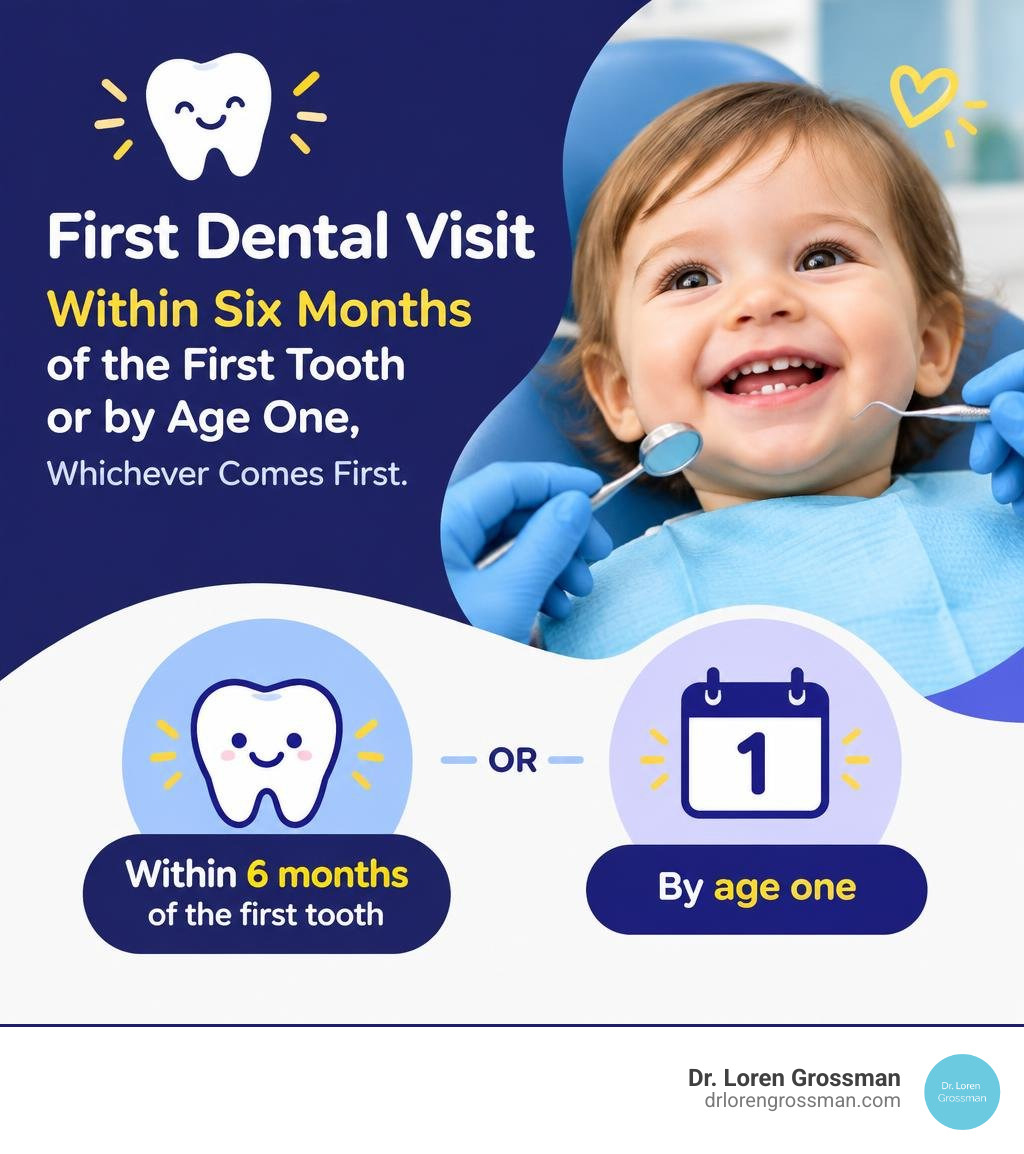
Wondering what age should kids start going to the dentist? Book the first visit within six months of the first tooth appearing, or by your child’s first birthday, whichever comes first. Don’t wait until age four. That early checkup gives the dentist a chance to spot problems and helps you learn how to care for your child’s teeth at home.
I’m Dr. Loren Grossman, and I’ve cared for children’s teeth in the Wyoming Valley since 1984. When parents ask what age should kids start going to dentist appointments, I encourage them to start with that first-birthday deadline and build a care plan from there.
Common what age should kids start going to dentist vocab:
The American Academy of Pediatric Dentistry (AAPD) and the American Dental Association both offer the same clear rule: children should see a dentist within six months after their first primary tooth erupts, or by their first birthday at the absolute latest. Establishing a dental home this early creates a foundation for lifelong oral wellness. Professional organizations follow established infant and toddler oral care guidelines to help parents navigate everything from teething pain to nutrition.
Teething typically begins around six months of age, though baby teeth can emerge anywhere between 4 and 12 months. By bringing your child to our Kingston practice early, we can track normal eruption patterns, assess gum health, and evaluate the soft tissues of the mouth. If you are exploring local options for your little one, reading a guide to finding pediatric dentistry in Kingston can give you helpful insight into what to look for in a family-oriented dental team.
What Age Should Kids Start Going to Dentist Appointments to Prevent Severe Decay?
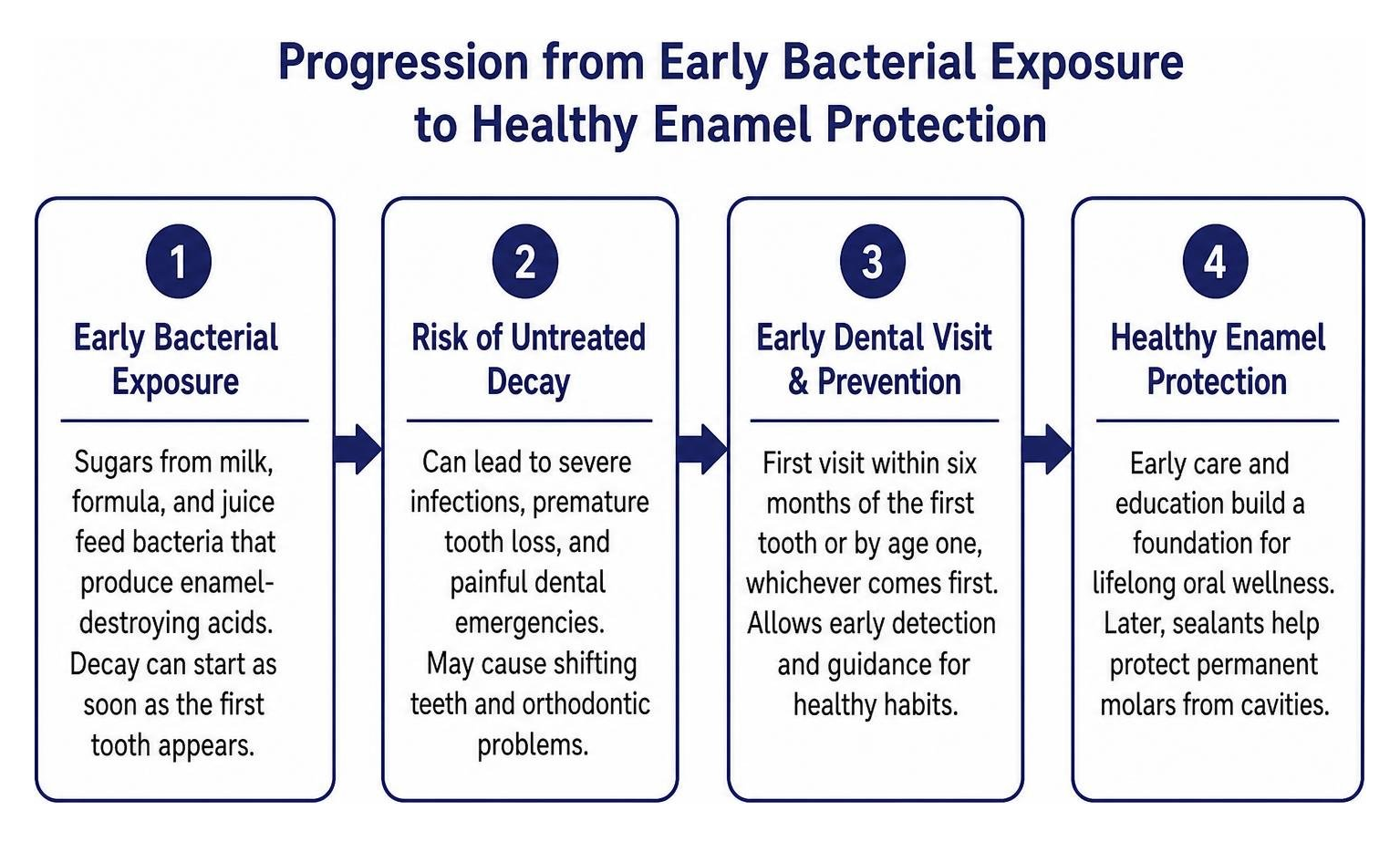
Many parents are surprised to learn that tooth decay is the most common chronic childhood disease in America—occurring roughly five times more frequently than asthma. Early childhood caries can develop rapidly as soon as the first primary tooth appears above the gumline. Sugars from milk, formula, and juice linger on baby teeth, feeding bacteria that produce enamel-destroying acids.
When decay is left untreated in infants and toddlers, it can lead to severe infections, premature tooth loss, and painful dental emergencies. Losing a primary molar too early can cause adjacent teeth to shift, blocking permanent teeth from emerging properly and creating severe orthodontic issues. Later in childhood, protective treatments like dental sealants for kids help shield vulnerable chewing surfaces from cavities, but preventive education must begin long before permanent molars appear.
The Real-World Gap: Why 17% of Parents Wait Too Long
Despite clear clinical consensus, a significant gap remains between guidelines and real-world habits. According to AAPD data, the average age of a child’s first dental visit is 2.6 years old. Even more concerning, recent surveys reveal that approximately 17% of parents wait until their child is older than four before scheduling their first dental check-up.
This delay often stems from the misconception that primary teeth do not matter because they eventually fall out. However, waiting until age four or five frequently transforms a child’s first dental experience from an easy, positive wellness check into an urgent visit for advanced decay, toothaches, or extensive restorative work.
| Factor | First Visit by Age One (Recommended) | First Visit at Age Four or Later (Delayed) |
|---|---|---|
| Visit Objective | Prevention, parental guidance, habit formation | Diagnosing cavities, treating established issues |
| Child’s Comfort Level | High familiarity, low anxiety, stress-free routine | Heightened fear due to unfamiliarity or tooth pain |
| Cavity Detection | Microscopic demineralization spotted early | Deep enamel decay or pulp infections present |
| Cost & Complexity | Simple check-ups and topical fluoride applications | Restorations, extractions, or sedation dentistry |
| Bite & Habit Review | Early correction of pacifier or thumb habits | Established misalignment or bite irregularities |
What Happens During an Early Pediatric Dental Visit
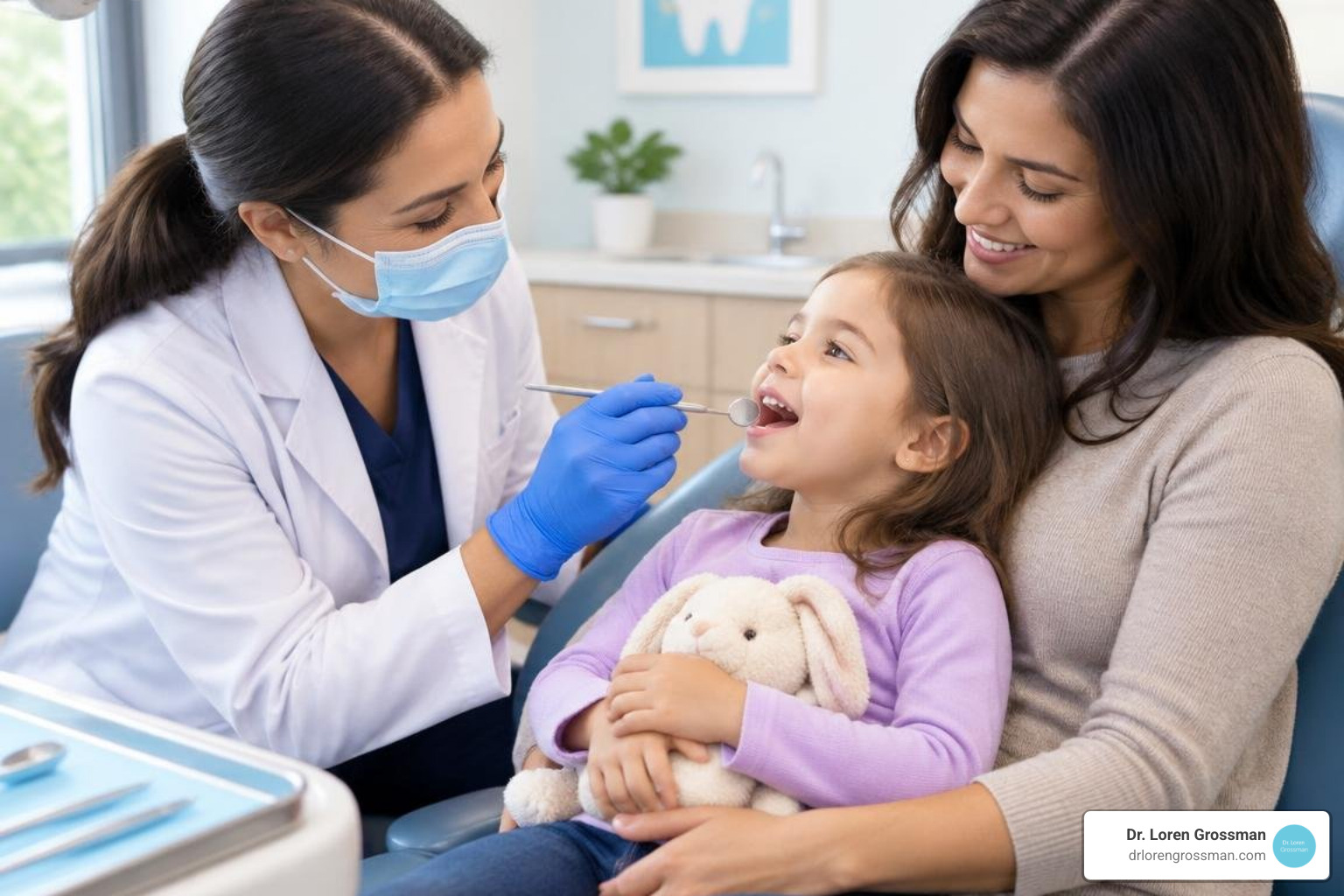
Parents often worry that a one-year-old will not sit quietly in a traditional dental chair. We do not expect them to! Infant and toddler dental visits are designed to be fast, gentle, and stress-free.
During these early appointments, we frequently perform a knee-to-knee exam. You sit facing the dentist with your knees touching, and your baby rests their head in the dentist’s lap while keeping their legs comfortably in yours. This position allows your child to see you the entire time while giving us a clear view of their mouth.
During this quick assessment, we examine:
- Developing primary teeth for signs of enamel demineralization or early decay
- Gum tissues, palate, tongue, and cheeks for any developmental anomalies or tongue-ties
- Jaw alignment, bite development, and spacing
- Oral cleanliness, gently wiping away soft plaque and applying a protective fluoride varnish to strengthen tooth enamel
Visit Frequency and Long-Term Oral Development
Following that first visit, children should visit the dentist every six months for routine monitoring. In cases where a toddler exhibits a higher risk for enamel hypoplasia or rapid decay, we may suggest coming in every three to four months.
Regular visits allow your child to naturally graduate from simple lap exams to sitting independently in the big chair for routine cleanings and bite evaluations. Understanding how often check-ups should occur keeps your family consistent, while learning more about the importance of regular dental check-ups reinforces how proactive care protects your child’s developing jaw and permanent teeth.
Managing Dental Anxiety and Exploring Advanced Comfort Options
Scheduling appointments in the morning when toddlers are well-rested and alert makes a remarkable difference in their experience. We use supportive, child-friendly terminology, showing instruments in a playful way before touching any teeth.
Children also pick up on parental emotions. Staying calm, smiling, and avoiding projecting past dental fears onto your child will help them view the office as a safe, welcoming place. For young children who require extensive restorative work or experience severe anxiety, exploring how children sedation dentistry helps young patients can provide a safe, gentle way to complete necessary treatments comfortably.
How to Prepare Your Child and Avoid Common Mistakes

Preparation begins at home days before the appointment. Talk about visiting the dentist with enthusiasm, comparing it to other exciting milestones like a first haircut.
Read illustrated children’s books about dental visits, or play pretend at home by counting each other’s teeth with a small flashlight and mirror. Avoid using trigger words like “shot,” “needle,” “drill,” or “hurt.” Even saying “it won’t hurt” introduces the idea of pain where none was expected. Reviewing detailed guidance on preparing your child for their first visit will help make the entire experience smooth and rewarding.
Critical Mistakes Parents Make with Baby Teeth
Even well-meaning parents can inadvertently encourage dental problems through common daily habits. Some of the most frequent missteps include:
- Bedtime Bottles: Putting a baby or toddler down for a nap or bedtime with a bottle of milk, formula, or juice allows sugars to coat the teeth for hours, causing rapid decay.
- Delayed Cup Transition: Continuing unmonitored bottle use past 12 to 14 months increases sugar exposure and alters palate formation. Transitioning to an open or straw cup around the first birthday is ideal.
- Skipping Early Oral Hygiene: Waiting until multiple teeth have erupted before starting a brushing routine allows harmful bacteria to colonize the mouth early.
- Prolonged Non-Nutritive Sucking: Allowing thumb-sucking or pacifier use past age two or three can push front teeth forward, narrow the upper arch, and cause open bites. Helpful pediatric dental tips for parents provide strategies to gently phase out these habits before they alter jaw growth.
Knowing What Age Should Kids Start Going to Dentist Visits for Sensory and Special Needs
For children with developmental differences, autism spectrum disorder, or sensory sensitivities, establishing care by age one is especially beneficial. Early exposure in a calm environment allows children to become familiar with the smells, sights, and sounds of the dental office before any invasive treatment is ever needed.
Parents can partner with us by providing communication scripts, scheduling pre-visit tours, and discussing sensory accommodations such as dimmed overhead lights, noise-canceling headphones, or weighted blankets. The University of Washington provides an excellent special needs parent guidance resource alongside an in-depth guide for autism spectrum oral care to assist families in planning a smooth appointment.
Maintaining Healthy Habits and Recognizing Warning Signs at Home
Long-term oral health starts with daily hygiene habits at home:
- Infants (Before Teeth): Wipe the gums twice a day with a soft, clean, damp washcloth or silicone finger slip after feedings to clear away milk sugars and massage gum tissues.
- Ages 0 to 3: As soon as the first tooth emerges, begin brushing twice daily using a soft-bristled baby toothbrush and a tiny smear of fluoride toothpaste (the size of a single grain of rice).
- Ages 3 to 6: Transition to a pea-sized amount of fluoride toothpaste. Teach your child to spit out the excess rather than swallow it, and avoid rinsing with water immediately afterward so the protective fluoride stays on the enamel.
- Supervision: Children lack the fine motor skills to clean every surface effectively on their own. Parents should supervise and assist with brushing until at least age seven or eight. For practical steps on managing brush time resistance, review these tooth brushing techniques for young children.
Signs Your Child Needs to See a Dentist Immediately
Do not wait for a six-month recall if you notice any unusual changes in your child’s mouth. Schedule an immediate evaluation if you observe:
- Chalky white spots, dark brown patches, or visible pits on the enamel
- Puffy, red, or bleeding gums when brushing
- Persistent bad breath that does not resolve after cleaning
- No primary teeth emerging by 12 to 14 months of age
- Sensitivity or complaints of pain when eating warm, cold, or crunchy foods
- Sudden facial trauma, chips, or tooth loosening from a fall or play injury, referencing clinical pediatric dental care guidelines for urgent response steps
Frequently Asked Questions About Early Pediatric Dental Visits
Is it really necessary to fix cavities in baby teeth since they fall out anyway?
Yes, absolutely. Primary teeth serve critical roles beyond chewing. They maintain space in the jaw for permanent teeth, guide jaw bone growth, and support normal speech development. Untreated cavities can cause severe infections (abscesses), damage the developing permanent tooth buds beneath the gums, and lead to systemic health issues.
How should I clean my baby’s mouth before their first teeth come in?
Use a clean, damp washcloth, a piece of sterile gauze, or an infant gum massager. Gently wipe along the upper and lower gum ridges twice a day, especially after morning feedings and before bedtime. This removes oral bacteria and gets your baby accustomed to having their mouth cleaned.
What should I do if my toddler knocks out a primary tooth?
If a baby tooth is completely knocked out (avulsed), do not attempt to push it back into the socket. Reinserting a primary tooth can fuse to the bone or injure the delicate permanent tooth developing directly underneath. Apply gentle pressure with a clean cloth to stop any bleeding and contact our office right away so we can take an X-ray, check for jaw fractures, and determine if a space maintainer is needed.
Conclusion
Starting dental visits by your baby’s first birthday sets the stage for a lifetime of healthy, confident smiles. By introducing your child to the dental office early, you prevent painful cavities, ensure proper bite alignment, and remove the fear of the unknown.
At Dr. Loren Grossman, we provide comprehensive, gentle care for every member of your family right here in Kingston, Pennsylvania. Whether you are welcoming your baby’s first tooth or keeping your family’s oral health on track, explore our comprehensive dental care services to schedule your child’s first visit today.