How to Get Kids to Brush Their Teeth Without a Bedtime Battle
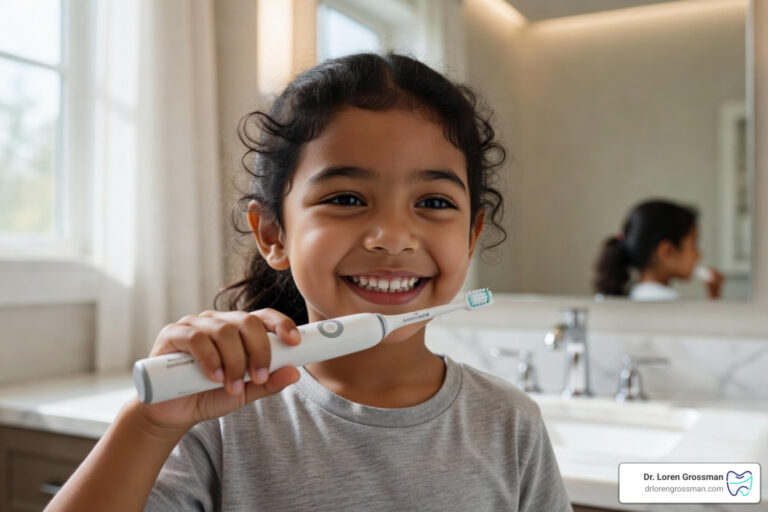
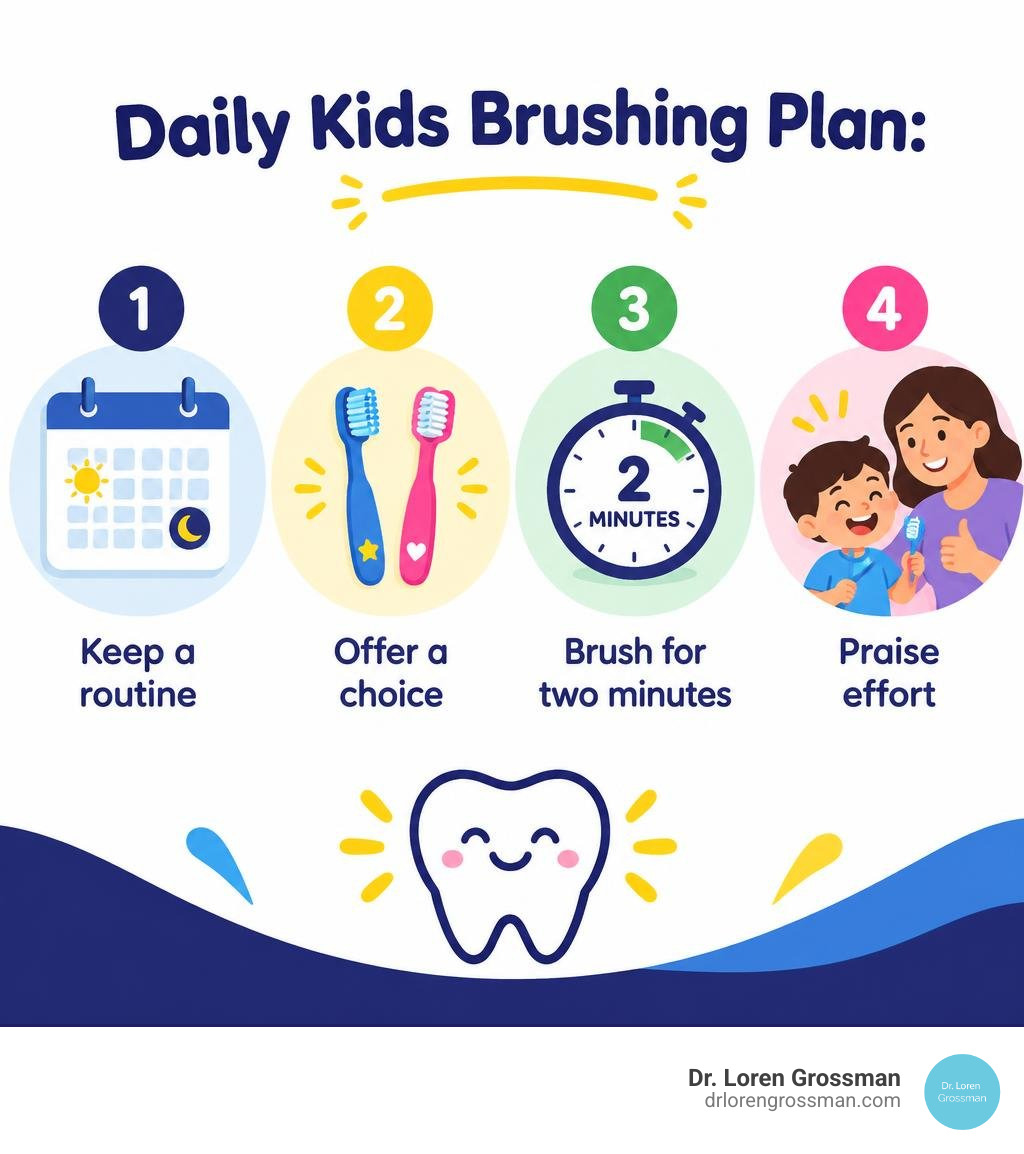
Make brushing predictable, then give your child a little control. Brush at the same time every morning and before bed. Let them choose a toothbrush or a two-minute song, but keep brushing itself non-negotiable. For younger kids, let them take a turn, then finish the brushing yourself. Praise the effort, even when the routine is not perfect.
If your child resists, try a small first step: “Let’s brush two teeth together.” Once they start, it may be easier to keep going. The goal is a calm routine that still gets their teeth clean.
I’m Dr. Loren Grossman, D.M.D., and I’ve cared for children and families in the Wyoming Valley since 1984. I’ll share practical ways to get kids to brush their teeth, along with guidance on when a dentist can help.
If nighttime at your house involves tears, hiding under blankets, and endless debates over holding a toothbrush, you are far from alone. Recent pediatric dental research indicates that roughly 40% of children do not brush twice daily. In fact, parents spend an average of 156 hours every year locked in power struggles over morning and bedtime hygiene.
Yet studies also reveal an encouraging truth: when oral hygiene shifts from an enforced chore into an engaging activity, compliance jumps to 92%. Learning how to get kids to brush their teeth without friction is all about understanding childhood psychology, adapting your technique to their developmental stage, and turning everyday hygiene into a positive family ritual.
Understanding Why Children Resist Brushing Their Teeth
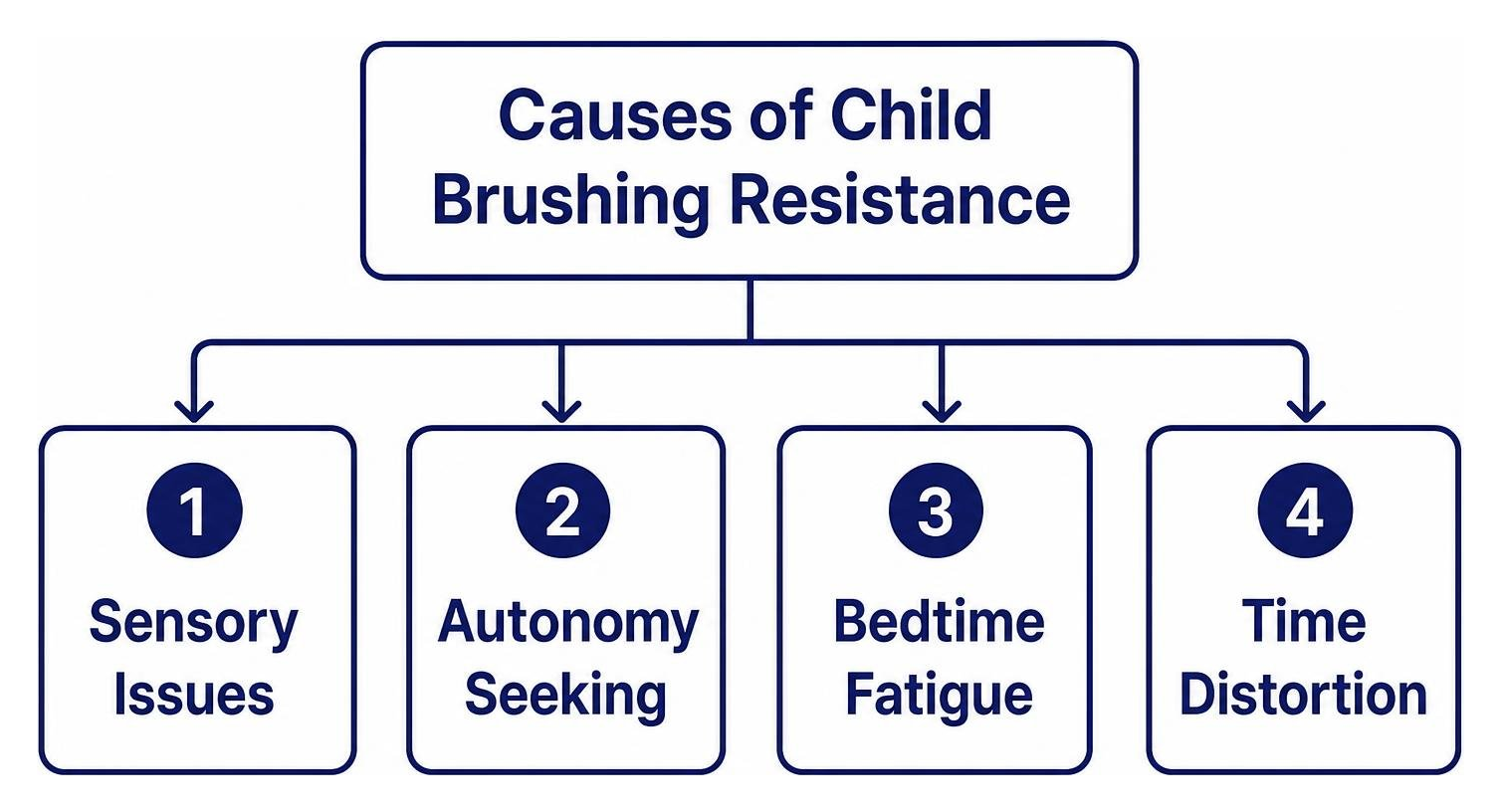
To resolve resistance, we must first recognize why our little ones view the toothbrush with such fierce suspicion. Children rarely resist out of pure stubbornness; more often, their behavior reflects genuine physical or developmental triggers.
- Sensory Sensitivities: A child’s mouth contains dense nerve endings. Hard bristles, cold tap water, foaming agents (like sodium lauryl sulfate), or strong mint flavorings can feel overwhelming, even painful, to young taste buds and tender gums.
- The Drive for Autonomy: Between the ages of two and five, children begin testing boundaries and exercising control. Brushing represents an intimate act where an adult places a foreign object inside their personal space. As detailed in pediatrician guidance on toddler brush battles, children often use the toothbrush as a symbolic tool to assert their emerging independence.
- Bedtime Fatigue: By the end of a long day, children experience depleted executive function and self-regulation. Introducing a fine-motor task right before sleep when they are overtired naturally invites meltdowns.
- Time Perception: Asking a four-year-old to stand still for two whole minutes feels like an eternity when they lack an adult understanding of time and future consequences.
How to Get Kids to Brush Their Teeth: 10 Fun and Creative Strategies
Transforming daily oral hygiene requires meeting kids where they are: in play, choice, and storytelling. When children feel a sense of ownership, their willingness skyrockets—research shows that kids who select their own brushing methods brush twice as long as those subjected to parent-enforced methods.
Here is a breakdown of proven motivation strategies, ranked by clinical effectiveness:
| Strategy | Effectiveness Rate | Estimated Cost | Best Age Group |
|---|---|---|---|
| Brushing Chart with Rewards | 92% | $5 – $10 | Ages 3–8 |
| Positive Reward System | 90% | Free – Low | All Ages |
| Electric Toothbrush | 88% | $20 – $50 | Ages 3–12 |
| Family Brushing Together | 88% | Free | All Ages |
| Story and Adventure Narrative | 86% | Free | Ages 2–6 |
| Gamified Brushing App | 85% | Free – $5 | Ages 4–10 |
| Character/Flavored Toothpaste | 82% | $3 – $7 | Ages 2–8 |
| Singing and 2-Minute Music | 80% | Free | Ages 1–6 |
| Teeth Whitening/Clean Challenge | 79% | Free | Ages 7–12 |
| Themed Manual Toothbrush | 75% | $3 – $8 | Ages 2–7 |
Practicing healthy habits together is an essential cornerstone of family oral care. Let’s explore how to put these top tools into action.
Interactive Tools: Electric Brushes, Music, and Gamified Apps
Modern oral care tools take the guesswork out of timing and plaque removal. Children using electric toothbrushes brush on average 30% longer and clean significantly more surface area than those using standard manual brushes.
- Powered Toothbrushes (88% Effective): Features like oscillating heads, soft vibrating bristles, and built-in two-minute quadrant timers make brushing effortless. The gentle vibration also provides pleasant sensory stimulation rather than abrasive scraping.
- Two-Minute Brushing Playlists (80% Effective): Cavities hate a good rhythm. Create a designated bathroom soundtrack featuring energetic two-minute tracks. The rule is simple: the brush moves until the song ends, turning the bathroom into a mini dance floor.
- Gamified Apps (85% Effective): Interactive smartphone apps pair with brushing routines to reward thorough coverage. As children brush, they can unlock virtual characters, defeat digital “sugar bugs,” and track daily streaks. For additional inspiration, review this guide on making oral hygiene fun.
Positive Reinforcement: Reward Charts and Adventure Storytelling
Positive reinforcement creates intrinsic motivation by celebrating small milestones.
- Visual Reward Calendars (92% Effective): Mount a colorful sticker chart at child eye-level in the bathroom. Earning a star for every completed morning and evening session builds visual momentum. Avoid using candy or sugary treats as prizes; instead, reward consistent weekly streaks with privileges like a trip to the local playground, an extra bedtime story, or picking the family weekend movie.
- Plaque Monster Narratives (86% Effective): Reframe the toothbrush as a magic wand or superhero shield. Tell your child you are hunting down sneaky “Sugar Bugs” or “Plaque Monsters” hiding in the back molars.
- The Post-Brush “Sparkle Check”: Finish every session with an official inspection. Look closely with a small flashlight or under the mirror light, tap their teeth gently, and declare them “officially shiny and superhero-approved!”
Age-by-Age Guide to Toothpaste Amounts and Proper Technique
Getting children to cooperate is only half the battle; ensuring proper technique preserves enamel and prevents early childhood caries. Consistent preventive oral care practices protect primary teeth, which serve as crucial space-holders for permanent teeth.
How to Get Kids to Brush Their Teeth in Toddlerhood and Preschool (Ages 1–5)
From the moment the first primary tooth erupts (typically around six months of age), oral hygiene begins.
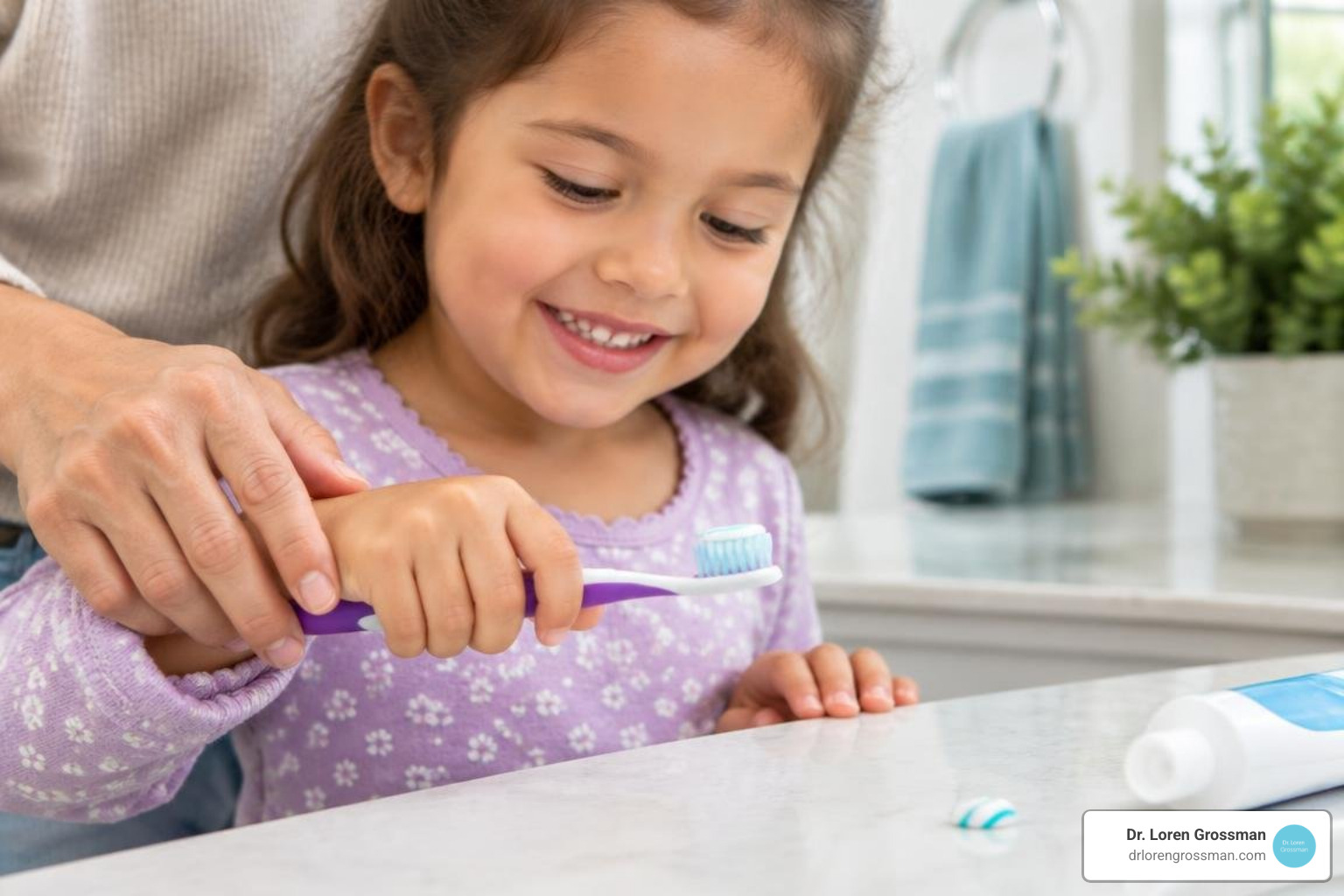
- Ages 0 to 3: Clean infant gums with a clean, damp washcloth. Once teeth emerge, switch to an ultra-soft infant toothbrush with a rice-grain-sized smear of fluoride toothpaste. At this stage, parents should perform the brushing entirely. If a toddler resists, employ the “Two-Tooth Rule”: start by brushing just two front teeth, praise their cooperation, and gradually work around the mouth.
- Ages 3 to 5: Transition to a pea-sized amount of fluoride toothpaste. Preschoolers love participating, so implement a “turn-taking” model: let your child do their “practice brush” first for one minute, then step in to complete the “grown-up finish” for the remaining minute to ensure all plaque is removed.
For specialized clinical monitoring throughout these foundational years, routine pediatric dental care ensures that teeth and jaws develop properly.
How to Get Kids to Brush Their Teeth Independently in School Age (Ages 6–12)
Between the ages of six and eight, children develop the manual dexterity necessary to tie their shoes, write smoothly, and navigate oral care independently.
- Supervised Independence (Ages 6–8): Children can now apply their own pea-sized amount of toothpaste and manage their brush strokes. However, parents should still stand nearby to ensure they spend the full two minutes and reach rear molars.
- Independent Maintenance with Spot Checks (Ages 9–12): Pre-teens manage their routines, but busy school schedules often lead to rushed sessions. Conduct occasional plaque-disclosing tablet tests (which temporarily stain unbrushed plaque pink or purple) once a month to visually show them spots they are routinely missing.
Defusing Daily Meltdowns: What to Do When Your Child Flat-Out Refuses
When a child crosses their arms, clamps their jaw shut, and refuses to cooperate, avoid getting pulled into an emotional power struggle. Escalating with anger or making scary threats about the dentist creates dental anxiety.
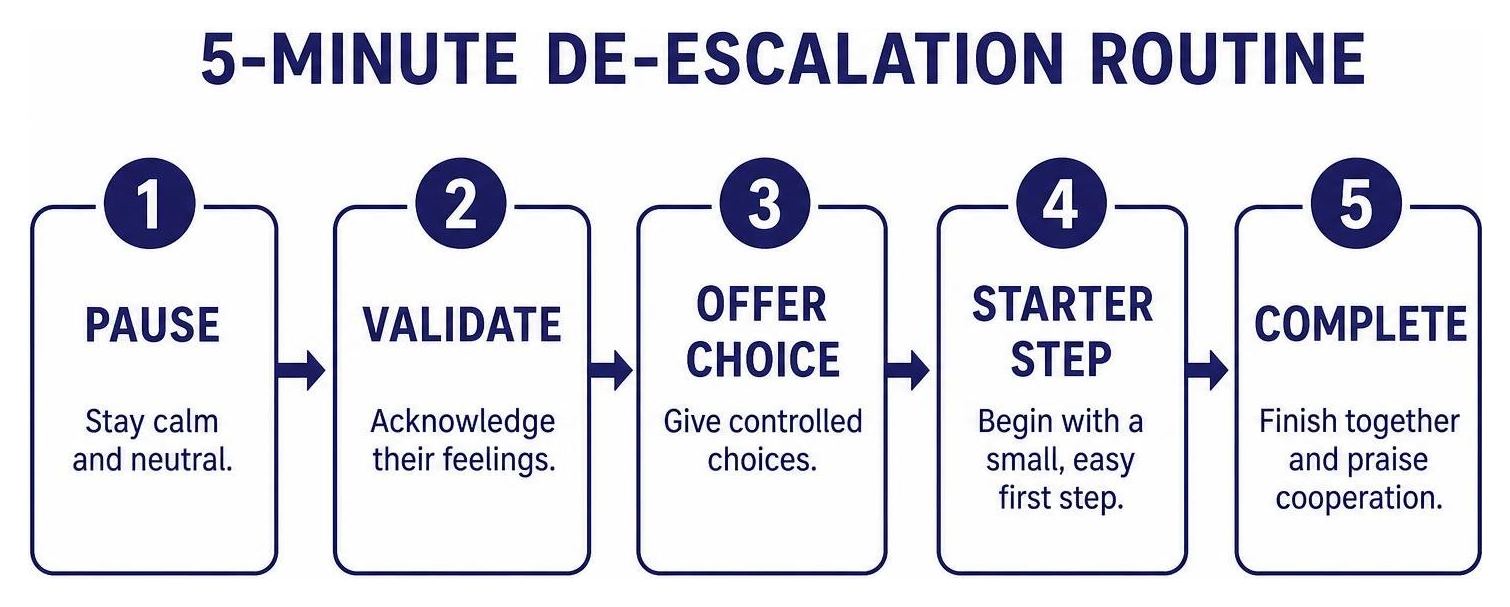
Instead, follow this structured, 5-minute de-escalation sequence:
- Stay Calm and Neutral: Lower your voice pitch and volume. Say: “I know you’re tired tonight, but brushing our teeth keeps them strong and healthy, just like eating dinner and sleeping.”
- Make It a Fixed Sequence: Anchor brushing into a predictable routine: Bath $\rightarrow$ Brush $\rightarrow$ Book $\rightarrow$ Bed. When the sequence never changes, children stop viewing it as a negotiable event.
- Offer Controlled Choices: Never ask, “Do you want to brush your teeth?” (which invites a resounding “No!”). Instead, offer choices within the framework:
- “Do you want to brush with the blue brush or the dinosaur brush tonight?”
- “Should we listen to the spaceship song or the jungle song while we clean?”
- “Do you want to brush in the bathroom mirror or while sitting in bed?”
- Take the Brush to Them: If a child is sick, exhausted, or overwhelmed, meet them where they are. Let them lie back on the sofa or bed with their head in your lap, brush gently, and use a damp paper towel to catch spit.
- Let Them Brush You First: Reverse the roles. Hand your child your toothbrush and let them gently brush your front teeth while you pull silly faces. Laughter breaks tension instantly and makes opening their own mouth feel natural.
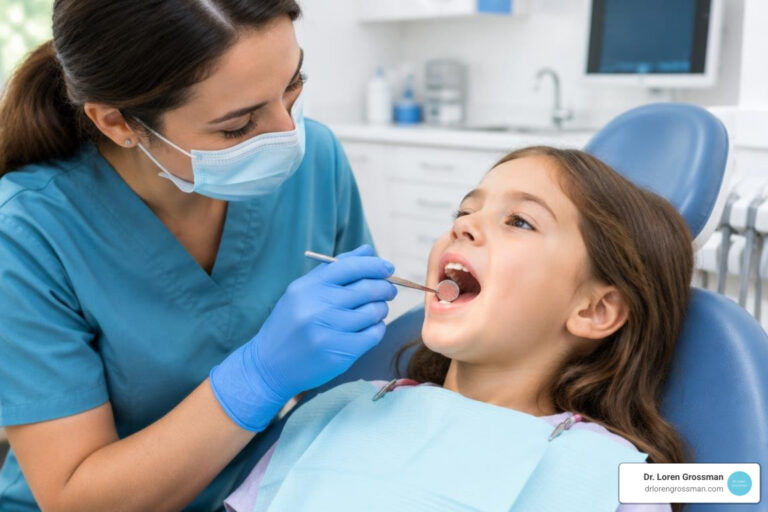
Building calm, comfortable habits at home is the best way of preparing kids for positive dental experiences when they visit our Kingston practice.
When to Seek Professional Dental Support for Brushing Battles
While daily resistance is a normal phase of early childhood, persistent oral distress can sometimes signal an underlying issue that requires clinical evaluation.
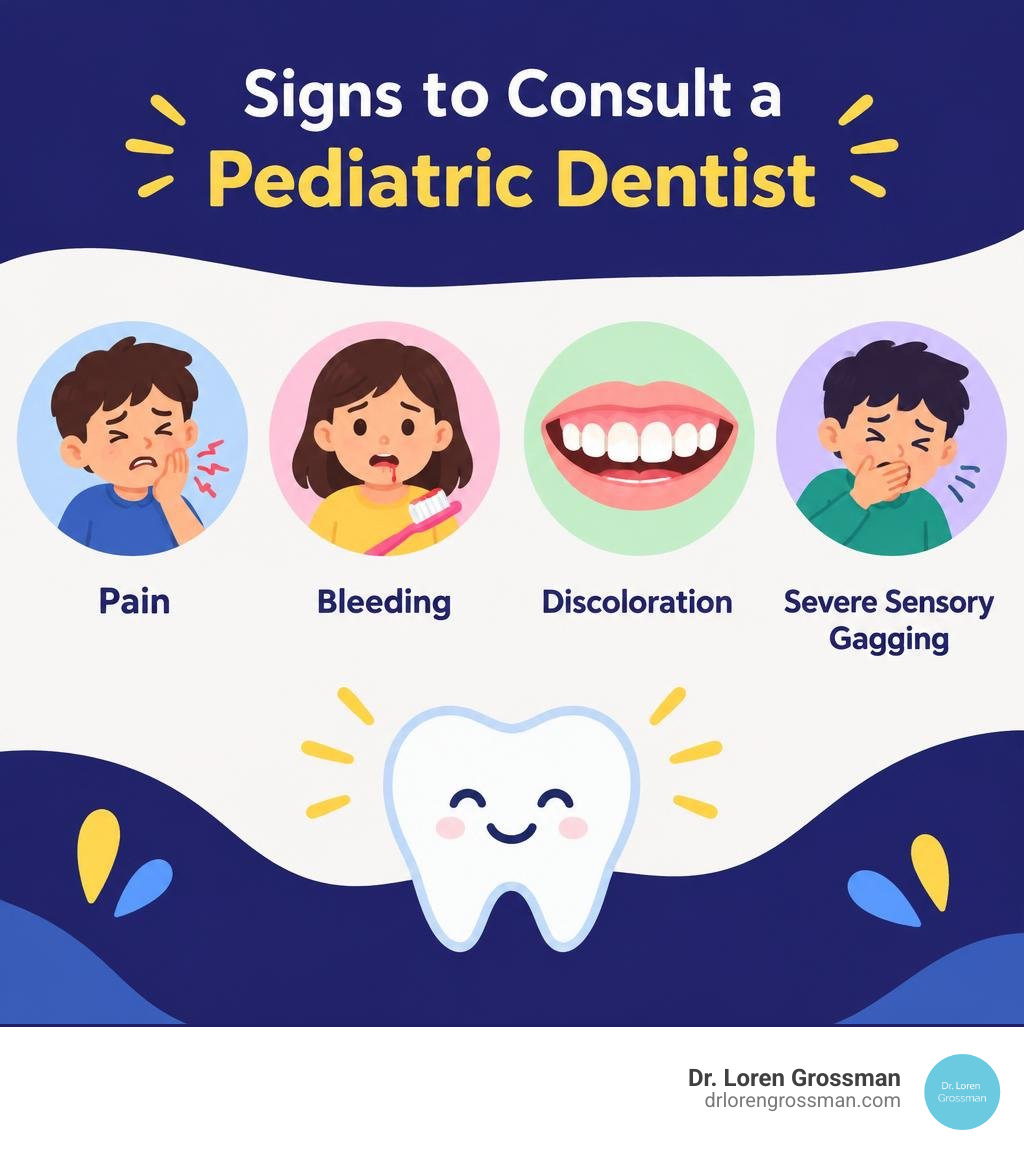
Schedule a dental assessment if you notice any of the following:
- Signs of Pain or Bleeding: If gentle brushing consistently causes crying, bleeding gums, or visible sensitivity to temperature, there may be active decay, gingival irritation, or enamel hypoplasia (thin enamel).
- White Spots or Discoloration: Chalky white bands near the gumline are early indicators of demineralization that require professional fluoride therapy before they turn into full cavities.
- Extreme Sensory Aversions: Children with hyper-sensitive gag reflexes, oral defensiveness, or neurodivergent sensory profiles may require specialized desensitization techniques and non-foaming, unflavored pastes.
- Unrelieved Power Struggles: If bedtime brushing consistently dissolves into intense distress that impacts your family dynamic, our team can provide in-office coaching, personalized brushing demonstrations, and preventive sealants to protect vulnerable enamel.
Scheduling regular dental checkups every six months starting at your child’s first birthday or first tooth allows our team to monitor oral growth and catch problems early.
Frequently Asked Questions About Kids’ Brushing Habits
What should I do if my child swallows fluoride toothpaste?
Swallowing a tiny, rice-grain or pea-sized dab of fluoride toothpaste during routine brushing is safe and will not cause harm. However, ingesting large amounts directly from the tube can upset a child’s stomach or lead to dental fluorosis (faint white marks on developing adult teeth). Keep toothpaste tubes stored out of reach of toddlers, supervise every brushing session, and encourage spitting out the excess paste starting around age three.
How long should parents supervise their child’s daily toothbrushing?
Pediatric dental standards recommend that parents actively supervise or assist with brushing until approximately age seven to eight. A helpful rule of thumb: once a child can write cleanly in cursive or tie their own shoelaces without assistance, they possess the hand-eye coordination needed to reach all tooth surfaces independently.
Are electric toothbrushes safe for toddlers and young children?
Yes. Children’s electric toothbrushes designed for ages three and older are completely safe, gentle, and effective. Always ensure the brush head features extra-soft, rounded nylon bristles and is scaled appropriately for a child’s small mouth. Supervise use to make sure your child guides the vibrating head across each tooth surface without pressing down too hard on the gums.
Conclusion
Establishing healthy brushing habits during childhood is one of the most valuable investments you can make in your child’s lifelong well-being. With predictable routines, a bit of creative play, and consistent positive reinforcement, the evening brushing battle can quickly transform into a fun, low-stress family bonding tradition.
At the practice of Dr. Loren Grossman, we are dedicated to providing compassionate, top-tier general and pediatric dental care to families throughout Kingston, Wilkes-Barre, Scranton, and the broader Northeastern Pennsylvania community. Whether your child needs their very first checkup or your family requires comprehensive dental care services, our team is here to support your family’s smiles every step of the way. Contact our Kingston dental office today to schedule your child’s next dental visit!