What You Need to Know Before Getting Dental Veneers
This dental veneers guide covers everything you need to make a confident, informed decision about transforming your smile.
Quick overview:
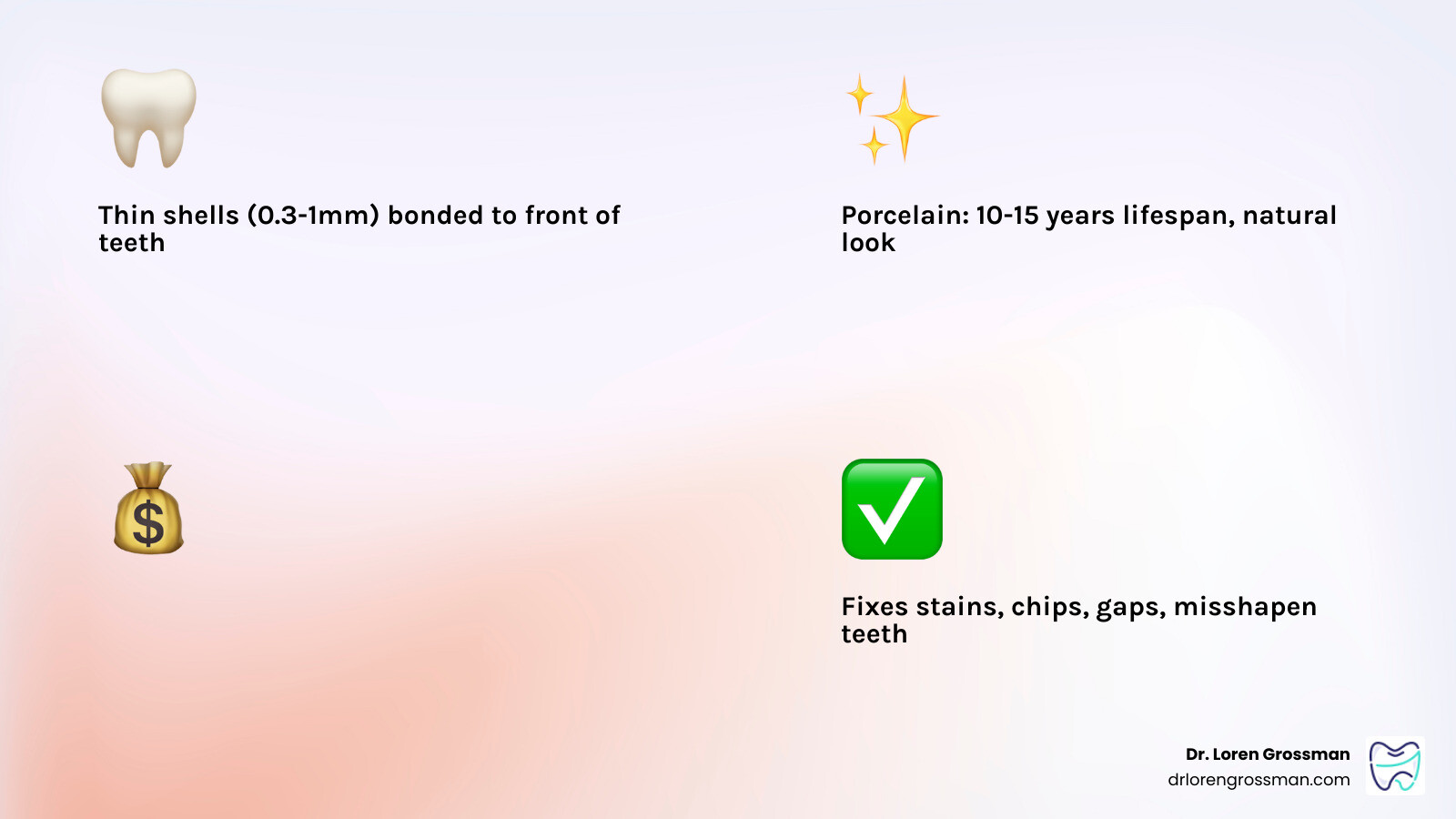
- What they are: Thin, custom-made shells bonded to the front surface of your teeth
- Materials: Porcelain or composite resin (porcelain lasts longer and looks more natural)
- What they fix: Stains, chips, cracks, gaps, and misshapen teeth
- How long they last: 10–15 years on average with proper care
- Cost range: $300–$1,500 per tooth (composite) or $1,000–$4,000 per tooth (porcelain)
- Are they permanent? Yes — enamel is removed, so the process cannot be undone
- Insurance: Typically not covered, as veneers are considered a cosmetic procedure
A great smile does more than look good. It changes how you feel walking into a room, how you talk to people, and how you see yourself. For many people in Northeastern Pennsylvania, small imperfections — a chip here, a stain that won’t budge, a gap that draws the wrong kind of attention — quietly chip away at their confidence every single day.
Dental veneers are one of the most effective and popular ways to fix those issues without major dental surgery. They’re simple in concept: a wafer-thin shell placed over the front of your tooth. But the results can be genuinely life-changing.
I’m Dr. Loren Grossman, a cosmetic and family dentist with over 40 years of experience serving the Wyoming Valley — and smile makeovers, including dental veneers, have been a cornerstone of my practice throughout that time. In the sections ahead, I’ll walk you through everything you need to know, from choosing the right type of veneer to what happens in the chair on placement day.
Understanding Dental Veneers: Materials and Types
When you begin your journey toward a better smile, the first thing we discuss is the material. Not all veneers are created equal, and the right choice depends on your goals, your budget, and the current health of your teeth. According to the Cleveland Clinic, veneers are essentially custom-made masks for your teeth, but the “mask” can be made of several different things.
Porcelain Veneers
Porcelain is the gold standard in cosmetic dentistry. These are thin, glass-like ceramic shells that are incredibly strong and, more importantly, have the same translucent quality as natural tooth enamel. This means they reflect light just like your real teeth do. They are highly resistant to stains from coffee, tea, and red wine. In May 2026, porcelain remains the most requested material because it typically lasts 10 to 15 years—and sometimes up to 20 with meticulous care.
Composite Resin Veneers
Composite veneers are made from a tooth-colored filling material (the same stuff used for dental bonding). We sculpt the resin directly onto your teeth in a single visit. While they are more affordable and require less enamel removal, they generally have a shorter lifespan of 5 to 7 years and are more prone to staining and chipping over time.
Lumineers and No-Prep Options
Lumineers are a specific brand of ultra-thin porcelain veneers. Because they are roughly the thickness of a contact lens, they often require little to no tooth preparation (shaving down the enamel). This makes them a “reversible” option for some, though they aren’t suitable for everyone—especially if we need to mask dark stains or significant misalignment.
| Feature | Porcelain Veneers | Composite Veneers |
|---|---|---|
| Durability | High (10–15+ years) | Moderate (5–7 years) |
| Appearance | Extremely natural/translucent | Good, but more opaque |
| Stain Resistance | Excellent | Moderate |
| Number of Visits | Usually 2–3 | Usually 1 |
| Cost per Tooth | $1,000 – $4,000 | $300 – $1,500 |
| Repairability | Must be replaced if broken | Can often be patched |
The Dental Veneers Guide to Candidacy and Benefits
Are you a good candidate for this transformation? Most people are, provided their underlying oral health is solid. Before we talk about aesthetics, we ensure you don’t have active gum disease or extensive tooth decay. Once those are addressed, veneers can solve a laundry list of cosmetic “headaches.”
As noted by the American Dental Association (ADA), veneers are ideal for:
- Stubborn Discoloration: If professional whitening can’t touch internal stains (like those caused by tetracycline or trauma), veneers provide a permanent “bright white” surface.
- Chipped or Worn Teeth: Years of grinding or a single accidental trip can leave teeth looking jagged. Veneers restore the original length and shape.
- Diastema Closure: If you have small gaps between your teeth that you’d rather not fix with years of braces, veneers can “close” those spaces in just a few weeks.
- Aesthetic Symmetry: Sometimes teeth are naturally too small or oddly shaped (like “peg laterals”). We use veneers to create a uniform, symmetrical smile line.
The psychological benefits are just as important as the functional ones. We’ve seen patients who used to cover their mouths when laughing suddenly find a new sense of social freedom. That boost in self-esteem is often what makes the investment feel “worth it.”
The Step-by-Step Procedure and Recovery
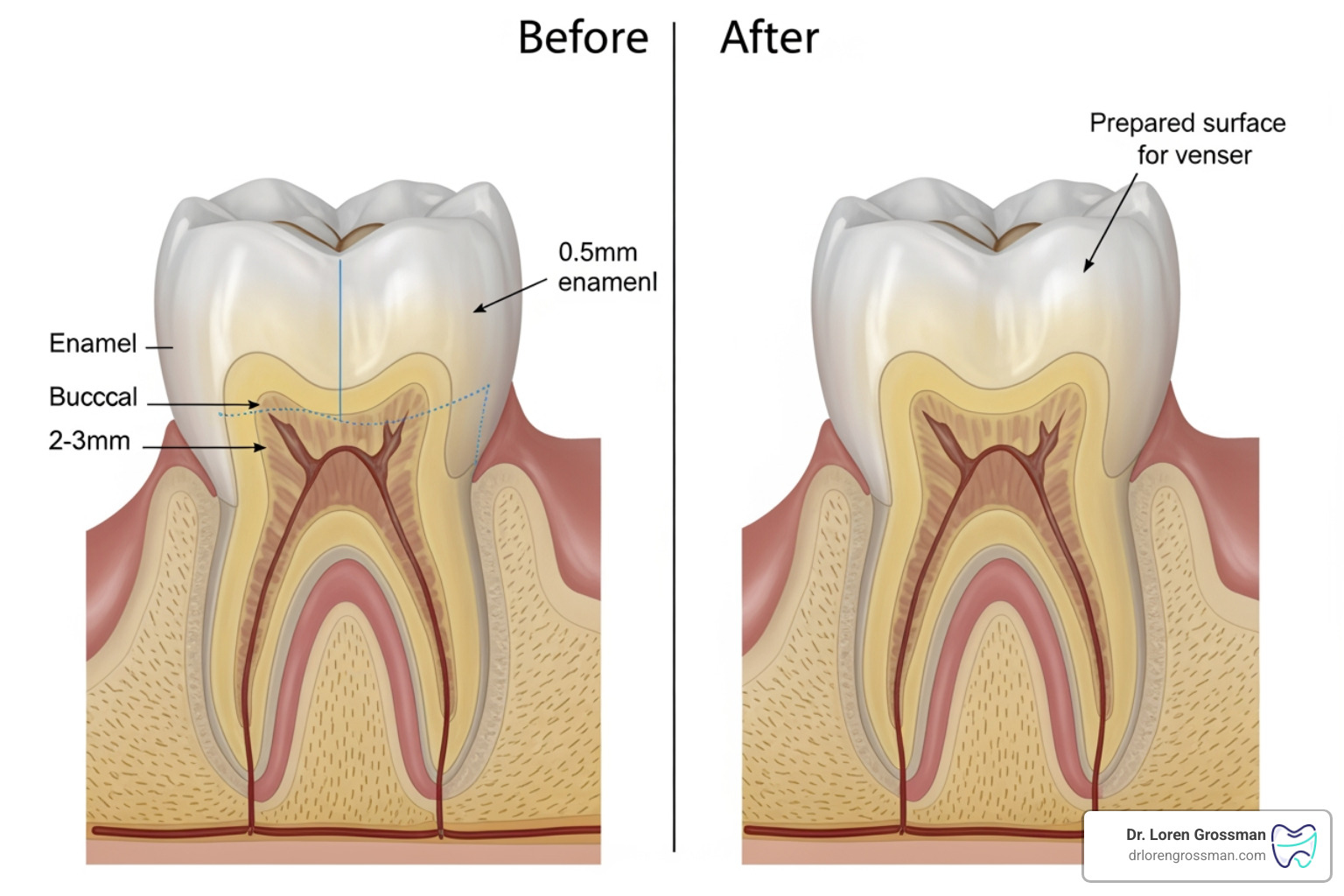
The idea of having your teeth “shaved down” can be intimidating, but the reality is much more conservative than most people realize. In 90% of cases, we only need to remove about 0.5 millimeters of enamel—roughly the thickness of a fingernail.
A Step-by-Step Dental Veneers Guide to the Procedure
- Initial Consultation: This is where we listen to your goals. We use digital imaging to show you what your results might look like and take X-rays to ensure your teeth are healthy enough for the procedure.
- Preparation: We lightly buff the front surface of the teeth being treated. We often use a local anesthetic to ensure you don’t feel a thing. For every shade lighter you want to go, we may need an additional 0.2 mm of reduction to ensure the natural tooth color doesn’t peek through the porcelain.
- Digital Impressions: Instead of messy putty, we typically use digital scanners to create a 3D model of your mouth. This is sent to a high-end dental laboratory where your custom veneers are crafted.
- Temporary Veneers: Since your enamel has been thinned, your teeth might be sensitive. We often place temporary acrylic veneers to protect your teeth while the lab works its magic.
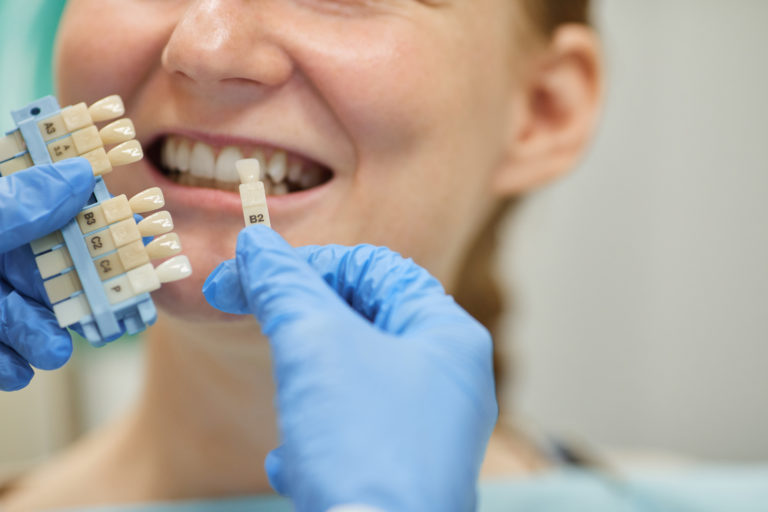
- Final Placement: Once your permanent veneers arrive, we “try them on” using water or glycerin to check the fit and color. When we are both 100% happy with the look, we use a special light-activated dental bonding cement to permanently attach them.
Recovery Expectations: You might experience some mild “bonding sensitivity” to hot and cold for a few days. Your gums might also be slightly sore from the procedure. Most patients adjust to the feel of their new teeth within a week or two. If your bite feels “off” or you notice a sharp edge, you should come back in for a quick adjustment.
Cost, Longevity, and Maintenance
We view veneers as a long-term investment in your appearance and confidence. Because they are classified as an elective cosmetic procedure, dental insurance rarely covers the cost. However, when you consider that porcelain veneers can last 15 years, the “per year” cost becomes much more manageable.
According to research found on Healthline, the typical price for porcelain ranges from $1,000 to $4,000 per tooth. While this is higher than composite, the durability and lifelike appearance often provide better long-term value.
Maintenance: Your Dental Veneers Guide to Long-Lasting Results
Maintaining your new smile isn’t complicated, but it does require consistency. Think of your veneers like a luxury car—they need the right “fuel” and regular “service” to stay in peak condition.
- Non-Abrasive Toothpaste: Avoid “whitening” toothpastes, as they often contain gritty abrasives that can scratch the polish on your porcelain. Stick to a gentle, fluoride-based gel.
- Don’t Use Teeth as Tools: This is the #1 cause of veneer failure. Do not use your teeth to open packages, bite your nails, or tear off clothing tags. Porcelain is strong, but it can crack under “shear force.”
- Night Guards: If you have a history of grinding your teeth (bruxism), we will custom-fit a night guard. This protects your investment from the immense pressure of nighttime clenching.
- Watch the Staining Foods: While porcelain is stain-resistant, the dental cement at the edges is not. Regular professional cleanings are vital to keep those margins invisible.
Comparing Veneers to Other Cosmetic Options
Veneers are fantastic, but they aren’t the only way to get a “Hollywood smile.” Depending on your specific needs, we might suggest an alternative.
- Dental Crowns: While a veneer only covers the front, a crown covers the entire tooth. We use crowns when a tooth is severely decayed or structurally compromised. Veneers are more conservative because they preserve more of your natural tooth.
- Cosmetic Bonding: This is the “budget-friendly” version of veneers. It’s great for fixing a single chipped tooth quickly, but it lacks the longevity and stain resistance of porcelain.
- Orthodontics (Invisalign): If your primary issue is crooked teeth rather than shape or color, we might recommend clear aligners. However, many patients choose veneers because they provide “instant orthodontics” in two visits rather than 12 months.
- Teeth Whitening: If your teeth are perfectly shaped and you just want them brighter, professional whitening is the most conservative (and least expensive) route.
For a deeper dive into these comparisons, the Veneers Guide 2026 provides excellent data on how these treatments stack up in terms of invasiveness and cost.
Frequently Asked Questions about Dental Veneers
Are dental veneers reversible?
In most cases, no. Because we remove a small amount of enamel to make room for the veneer, the tooth will always need a covering to stay protected. If a veneer breaks or reaches the end of its lifespan, it must be replaced. This is why we emphasize that getting veneers is a permanent commitment to your smile.
Does the veneer procedure hurt?
Most patients report very little discomfort. We use local anesthesia during the preparation phase, so you shouldn’t feel anything more than some light pressure. The most “painful” part for most people is the temporary tooth sensitivity that can occur between the prep appointment and the final placement.
How do I choose the right cosmetic dentist?
Experience matters. You want a dentist who has a deep portfolio of “before and after” photos and who uses modern digital technology. In Northeastern Pennsylvania, we pride ourselves on a patient-focused approach. We don’t just “install” veneers; we design a smile that fits your facial structure and personality.
Conclusion
A smile transformation is about more than just teeth—it’s about how you project yourself to the world. Whether you are looking to fix a single bothersome chip or are ready for a full-mouth makeover, dental veneers offer a reliable, beautiful, and long-lasting solution.
At the office of Dr. Loren Grossman, we’ve spent decades helping our neighbors in Kingston and the surrounding Wyoming Valley find their confidence again. We combine advanced dental technology with the personalized care you’d expect from a local practice.
If you’ve been hiding your smile, it’s time to stop. Transform your smile with dental veneers and see what a difference a new grin can make in your life. Give us a call today to schedule your consultation—we can’t wait to see you smile.