A Chipped Tooth Doesn’t Have to Stay That Way
Cosmetic dentistry for chipped teeth offers several proven, fast, and affordable ways to restore your smile — often in a single visit.
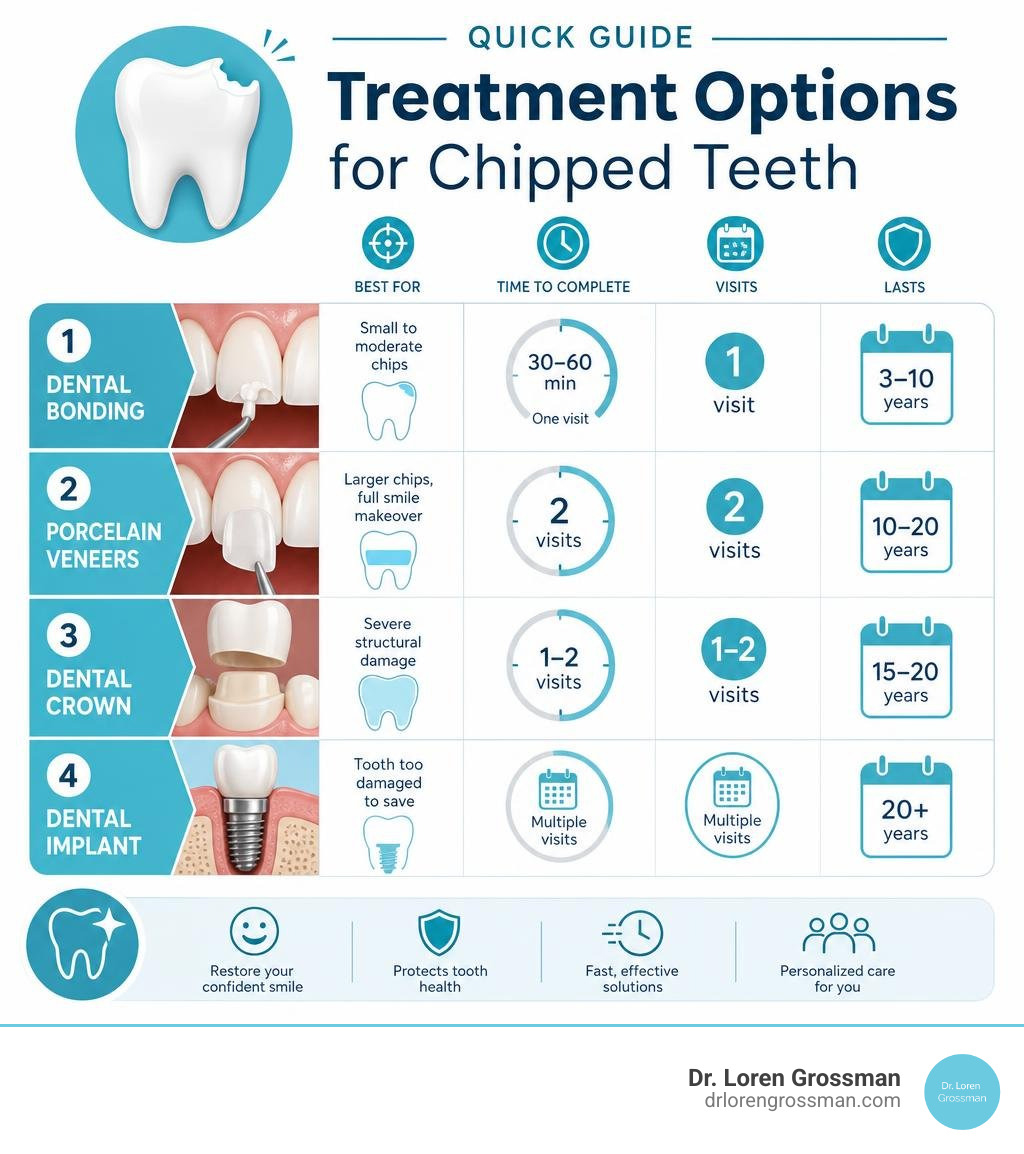
Here are the main treatment options at a glance:
| Treatment | Best For | Time to Complete | Lasts |
|---|---|---|---|
| Dental Bonding | Small to moderate chips | 30–60 min, one visit | 3–10 years |
| Porcelain Veneers | Larger chips, full smile makeover | 2 visits | 10–20 years |
| Dental Crown | Severe structural damage | 1–2 visits | 15–20 years |
| Dental Implant | Tooth too damaged to save | Multiple visits | 20+ years |
A chipped tooth is one of the most common dental problems people face. It can happen in an instant — biting into hard candy, taking a hit during sports, or just an unlucky fall. And unlike a broken bone, a chipped tooth cannot heal on its own. Teeth have no ability to regenerate, which means professional treatment is always needed.
Beyond the look of it, a chip breaks the protective seal of your enamel. That opens the door to bacteria, sensitivity, and even infection if left untreated. The longer you wait, the more complicated — and costly — the fix can become.
The good news? Most chips are very treatable. And depending on the size and location of the damage, your dentist may be able to restore your tooth completely in just one appointment.
I’m Dr. Loren Grossman, a cosmetic and family dentist serving the Wyoming Valley since 1984, and cosmetic dentistry for chipped teeth is one of the most common and rewarding treatments I perform. In over four decades of hands-on practice, I’ve helped countless patients across Northeastern Pennsylvania go from self-conscious about a chip to fully confident in their smile again.
Choosing Cosmetic Dentistry for Chipped Teeth: Aesthetic vs. Restorative Care
When you chip a tooth, you might wonder whether you need a cosmetic dentist or a restorative one. The truth is, modern dental care often blurs the line between the two. While cosmetic dentistry focuses primarily on how your smile looks, restorative dentistry is all about function and health.
When it comes to repairing chipped teeth, you actually get the best of both worlds. Treating a chip isn’t just about hiding a visual flaw; it is a vital step in maintaining your overall oral health.
Your tooth enamel is the hardest substance in your body, but once it is compromised, the delicate inner layers of your tooth (the dentin and pulp) are left exposed. This exposure can lead to rapid tooth decay, extreme temperature sensitivity, and structural weakness that makes the tooth prone to cracking further. By utilizing More info about cosmetic dentistry services, we don’t just make your smile look beautiful again—we seal the tooth, protect the enamel, and restore its structural integrity.
Whether your repair is purely aesthetic or highly restorative depends on the severity of the chip:
- Aesthetic Care: For small, minor chips on your front teeth that don’t cause pain, the goal is to make the tooth look whole and natural again.
- Restorative Care: For larger chips that expose nerves or affect your bite, we focus on rebuilding the tooth’s strength so you can chew without pain or fear of further breakage.
If you are wondering which category you fall into, you can Learn about candidate suitability to see how we evaluate smiles. We aim to deliver The Transformative Power of Cosmetic Dentistry to ensure your teeth are both incredibly strong and visually stunning.
The Top 4 Treatment Options for a Chipped Tooth
Every chipped tooth is unique, which is why we don’t believe in a one-size-fits-all solution. The treatment selection depends heavily on the location of the tooth, the size of the chip, your budget, and your long-term goals.
To help you understand your path forward, we have broken down the top four ways we repair chipped teeth. Each option serves a specific purpose in your smile restoration journey. To see how these fit into our broader dental philosophy, you can Explore our full range of dental services.
1. Dental Bonding: The Fast and Reversible Fix
For minor to moderate chips, dental bonding is often the go-to recommendation. This procedure uses a high-grade composite resin—the same tooth-colored material used for modern fillings—to rebuild the missing portion of your tooth.
The process is incredibly straightforward. We carefully match the resin to the exact shade of your surrounding teeth, apply it directly to the chipped area, sculpt it to match your natural tooth anatomy, and harden it using a specialized UV curing light.
Here is why dental bonding is incredibly popular:
- Single-Visit Convenience: Unlike laboratory-made restorations, bonding can be completed in just one office visit, typically taking only 30 to 60 minutes per tooth.
- Virtually Painless: The procedure is so non-invasive that anesthesia is rarely even necessary unless the chip is very close to a nerve.
- Enamel Preservation: Unlike veneers or crowns, bonding requires little to no enamel removal. It is a completely reversible procedure that leaves your natural tooth structure intact.
To dive deeper into how this process fits into overall oral restoration, you can Read the complete guide to cosmetic tooth repair. If you are looking for a quick, conservative, and budget-friendly fix, we encourage you to Learn more about dental bonding and cosmetic solutions.
2. Porcelain Veneers: The Ultimate Smile Makeover
When a chip is too large for simple bonding, or if you want to address other cosmetic concerns like deep stains, gaps, or slight misalignment at the same time, porcelain veneers are the premier choice.
Veneers are ultra-thin, custom-crafted porcelain shells that are permanently bonded to the front surface of your teeth. Because they are fabricated in a professional dental laboratory, they offer unmatched durability, lifelike translucency, and incredible stain resistance.
While veneers provide a flawless, long-lasting transformation, there are a few key elements to keep in mind:
- Enamel Preparation: To ensure the veneers sit flush with your surrounding teeth and don’t look bulky, we must remove a tiny amount of enamel (typically between 0.3 and 1.2 millimeters). Because of this, the procedure is irreversible.
- Longevity: While composite bonding may need touch-ups after a few years, porcelain veneers typically last 10 to 20 years with proper care.
- Two-Visit Process: Getting veneers requires two appointments—one to prepare the teeth and take impressions, and a second to bond your custom-made veneers in place.
If you are ready to invest in a highly durable, stain-resistant, and visually perfect smile, we invite you to Explore dental veneers options.
3. Dental Crowns: Full-Coverage Protection
If you have suffered severe structural damage, or if the chip has compromised a significant portion of a back chewing tooth, a dental crown is the most reliable treatment option.
Often referred to as a “tooth cap,” a dental crown completely covers the entire visible portion of the tooth above the gumline. This full-coverage protection is essential when a chip is accompanied by underlying decay or structural cracks that threaten to split the tooth.
Crowns are designed to withstand heavy chewing forces and are customized to match the shape, size, and color of your natural teeth. While they require more extensive tooth preparation than veneers, they restore 100% of the tooth’s original strength and function, lasting anywhere from 15 to 20 years. To learn more about how we rebuild heavily damaged teeth, Discover dental crowns and bridges.
4. Dental Implants: Replacing Severely Damaged Teeth
In rare, severe cases, a tooth may chip or fracture so deeply that it extends beneath the gumline or exposes the root structure beyond repair. If the tooth cannot be saved with a crown or root canal therapy, extraction becomes necessary to prevent a serious bone or systemic infection.
When tooth loss occurs, a dental implant is the gold standard for permanent replacement. This state-of-the-art procedure involves surgically placing a tiny titanium post into your jawbone, which acts as a replacement root. Once the bone has healed and fused with the implant, we attach a custom porcelain crown on top.
While dental implants require oral surgery and a healing period of several months, they look, feel, and function exactly like natural teeth and can easily last a lifetime.
Dental Bonding vs. Veneers vs. Crowns
Choosing the right treatment can feel overwhelming. To help you compare your options at a glance, we have put together this simple comparison table:
| Feature | Dental Bonding | Porcelain Veneers | Dental Crowns |
|---|---|---|---|
| Primary Use | Small, minor cosmetic chips | Moderate to large cosmetic issues | Severe structural damage or decay |
| Enamel Removal | None | Minimal (0.3–1.2 mm) | Moderate to Extensive |
| Reversible? | Yes | No | No |
| Lifespan | 3 to 10 years | 10 to 20 years | 15 to 20 years |
| Stain Resistance | Moderate (can stain over time) | High (highly resistant) | High (highly resistant) |
| Average Cost | Low ($300–$600 per tooth) | Moderate to High ($800–$2,500) | High ($1,000–$3,000) |
| Appointments | 1 visit | 2 visits | 1 to 2 visits |
Why Choose Cosmetic Dentistry for Chipped Teeth Over Restorative Crowns?
Whenever possible, we prefer to take a conservative approach to dentistry. Preserving your natural tooth structure is always our top priority.
While a dental crown is an incredible tool for saving a heavily decayed or broken tooth, it requires reshaping and removing a substantial portion of your natural enamel. If your tooth is structurally sound and the chip is primarily a cosmetic issue, choosing a conservative treatment like dental bonding or porcelain veneers is highly advantageous.
By opting for cosmetic solutions first, you preserve your natural enamel, save money, and keep your future dental options open. Before making a decision, it is helpful to read about the 5 things to consider before cosmetic work to ensure you are choosing the path that aligns perfectly with your goals.
How to Maintain Your Cosmetic Dentistry for Chipped Teeth Results
Once we have restored your beautiful smile, keeping it that way requires a bit of daily diligence. While materials like porcelain and composite resin are incredibly strong, they are not completely indestructible.

To maximize the longevity of your dental work, we recommend following these simple maintenance strategies:
- Ditch the Bad Habits: Never use your teeth as tools to open packages, rip tape, or crack nuts. Avoid chewing on hard objects like ice, fingernails, or pens.
- Protect Against Grinding: If you clench or grind your teeth at night (a condition known as bruxism), wear a custom nightguard to protect your restorations from immense pressure.
- Limit Staining Agents: Composite bonding can absorb stains over time. Try to limit dark-colored beverages like coffee, tea, and red wine, or rinse your mouth with water immediately after drinking them.
- Keep Up with Oral Hygiene: Brush twice daily with a non-abrasive toothpaste, floss daily, and visit us every six months for a professional cleaning and exam.
For more expert tips on keeping your smile looking its best, Discover secrets to cosmetic dentistry success.
Step-by-Step: What to Expect During a Dental Bonding Procedure
If you decide that dental bonding is the right choice for your chipped tooth, you will be pleased to know that it is one of the fastest and most comfortable procedures in all of dentistry. Here is exactly what happens during a typical bonding appointment:
- Shade Selection: We begin by using a physical shade guide to precisely match the color of the composite resin to your surrounding natural teeth.
- Tooth Preparation: We gently clean the tooth. Then, we apply a mild etching liquid to the surface. This creates microscopic roughness on the enamel, which helps the bonding agent adhere securely.
- Resin Application: We apply a liquid bonding agent, followed by the putty-like composite resin. We carefully sculpt, shape, and smooth the resin to rebuild the missing portion of your tooth.
- Curing: Once the shape is perfect, we use a specialized UV light to harden the resin in a matter of seconds.
- Polishing: Finally, we trim, shape, and polish the hardened resin so that its texture and sheen match the natural gloss of your surrounding enamel.
When you run your tongue over the finished tooth, it will feel completely smooth and natural!
Frequently Asked Questions About Chipped Teeth
It is completely normal to have questions and even a little dental anxiety when dealing with a damaged tooth. Here are answers to some of the most common questions our patients ask.
Can a chipped tooth heal on its own?
No. While bones can regenerate and heal, tooth enamel is non-living tissue and cannot grow back. Once a tooth is chipped, professional dental treatment is always required to seal the tooth, prevent tooth decay, and protect the internal nerve from bacterial infection. Ignoring even a minor chip can lead to larger cracks, painful sensitivity, and eventually, the need for more invasive treatments.
How long does dental bonding last on a chipped tooth?
With proper care, dental bonding typically lasts between 3 and 10 years before it needs to be touched up or replaced. Its lifespan depends heavily on your oral habits, the location of the bonding, and how well you maintain your oral hygiene. For a detailed look at handling dental mishaps, Read our chipped tooth SOS guide.
When should I see a dentist after chipping a tooth?
You should contact a dentist as soon as possible after chipping a tooth. Even if you aren’t experiencing immediate pain, an exam is crucial to ensure there is no hidden structural damage or nerve exposure. If you are experiencing severe pain, bleeding, or sensitivity to hot and cold, seek emergency dental care immediately.
Getting evaluated quickly is the first step to saving your smile. To take action today, Learn about cosmetic dentistry options in Northeastern Pennsylvania.
Conclusion
A chipped tooth can feel like a major setback, but it doesn’t have to sink your confidence. At the dental practice of Dr. Loren Grossman in Kingston, Pennsylvania, we have spent decades helping our neighbors throughout Northeastern Pennsylvania reclaim their smiles.
Whether you need a quick, single-visit dental bonding procedure or a complete porcelain veneer smile transformation, our experienced team is here to provide personalized, comfortable, and state-of-the-art care.
Ready to see what is possible? View before and after cosmetic dentistry journeys to see real patient transformations, and then Schedule your consultation for cosmetic dentistry with us today. Let’s get your smile back on course!