A Gummy Smile Is More Common Than You Think — And It’s Very Fixable
If you’ve been wondering how to fix a gummy smile, here’s the short answer:
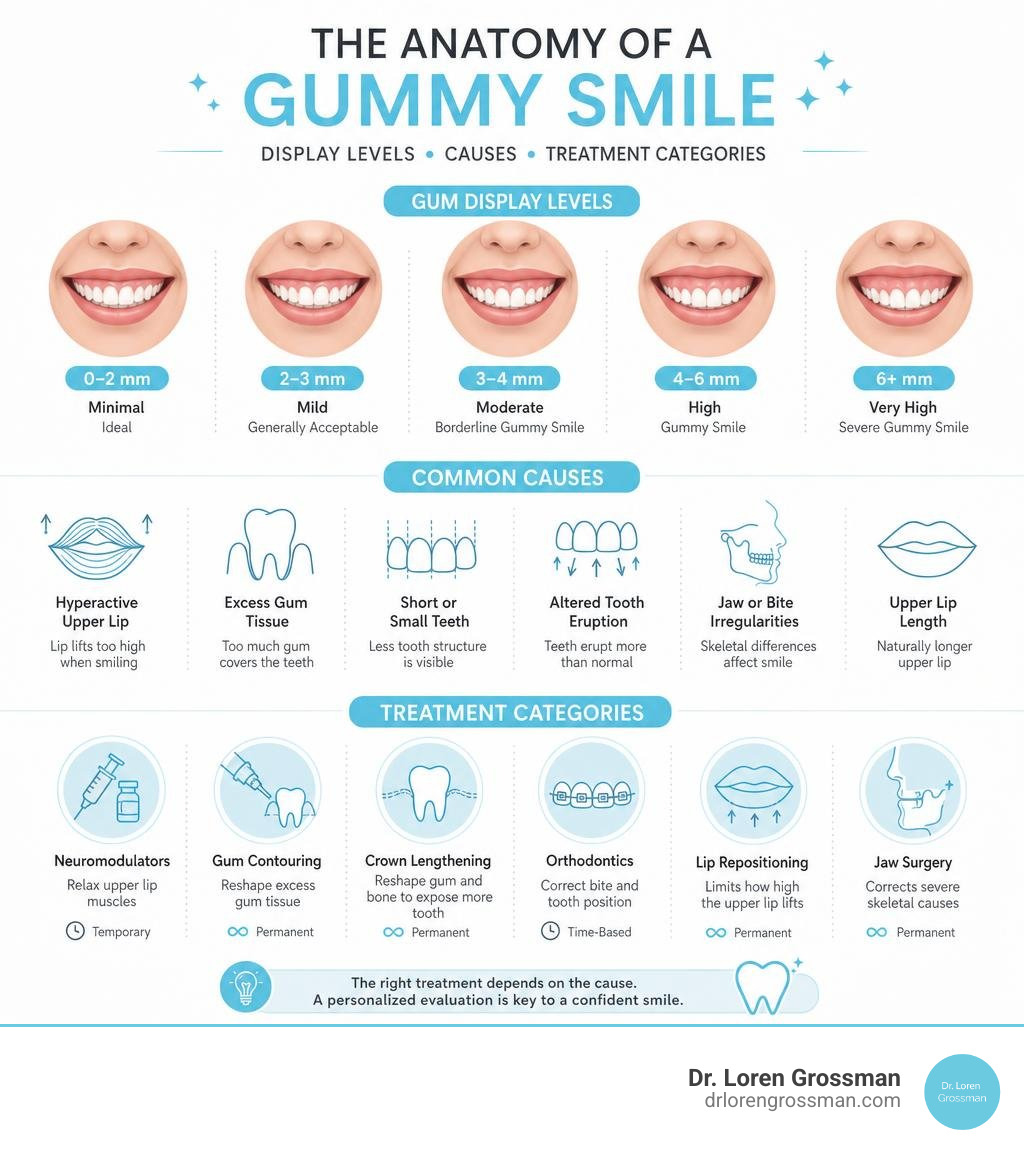
- Botox injections — relax the upper lip muscles temporarily (lasts 3–6 months)
- Laser gum contouring — removes excess gum tissue permanently in one visit
- Crown lengthening — reshapes gum and bone to expose more tooth
- Orthodontics / Invisalign — corrects bite and tooth position over time
- Lip repositioning surgery — limits how high the upper lip lifts
- Orthognathic (jaw) surgery — corrects severe skeletal causes permanently
The right option depends entirely on why your gums show too much when you smile. More on that below.
Have you ever looked at a photo of yourself laughing and felt your eyes go straight to your gum line instead of your smile? You’re not alone. A gummy smile — clinically called excessive gingival display — affects around 10% of adults aged 20–30, and women are twice as likely to have it as men.
Most people consider a smile “gummy” when more than 3–4 mm of gum tissue shows above the upper teeth. But honestly, if you feel self-conscious about it, that’s reason enough to explore your options.
The good news? In 2026, there are more ways to correct a gummy smile than ever — from a quick Botox appointment to a permanent surgical fix — and many are far less intimidating than you’d expect.
I’m Dr. Loren Grossman, a cosmetic and family dentist serving Northeastern Pennsylvania since 1984, and helping patients understand how to fix a gummy smile — with the right treatment for their specific anatomy — is one of the most rewarding parts of my practice. Let’s walk through everything you need to know.
Explore more about how to fix a gummy smile:
What is a Gummy Smile and What Causes It?
To understand how to correct a gummy smile, we first have to look at the anatomy of your grin. In an aesthetically balanced smile, the upper lip should rest comfortably at the top of your teeth, exposing no more than 1 to 2 millimeters of gum tissue. Once that exposure reaches 3 to 4 millimeters or more, it is clinically classified as excessive gingival display.
However, a gummy smile is rarely just about “having too much gum.” It is actually the result of an intricate interplay between your jawbone, your teeth, your lips, and your gum tissue. According to a Scientific review of gummy smile causes, the most common reasons your gums might take center stage include:
- Altered Passive Eruption (APE): This is a developmental condition where your adult teeth erupt properly, but your gum tissue fails to recede to its normal position. The result? Your teeth appear short, square, or “boxy” because a portion of the natural tooth structure remains hidden beneath a blanket of excess gum.
- Hyperactive Upper Lip (Hypermobile Lip): Sometimes, your teeth and gums are perfectly proportioned, but the muscles controlling your upper lip are overachievers. When you laugh or smile, these muscles pull your lip upward like a spring-loaded window shade, exposing far more gum tissue than normal.
- Vertical Maxillary Excess (VME): This is a skeletal condition where the upper jaw bone is simply longer than average. Because the bone structure itself sits lower, the gums and teeth are pushed downward, making a gummy display inevitable when the lips part.
- Gingival Hyperplasia: This refers to swollen or overgrown gum tissue. It can be caused by poor oral hygiene, systemic inflammation, or even as a side effect of certain medications.
- Dentoalveolar Extrusion: In some cases, the front teeth erupt too far forward or downward, bringing the surrounding bone and gum tissue along with them.
Before we can recommend a treatment plan at our Kingston, PA office, we always perform a comprehensive facial and dental analysis to determine which of these factors is at play. Treating a skeletal jaw issue with simple gum contouring won’t yield the results you want, just as treating a hyperactive lip with jaw surgery would be unnecessary.
How to Fix a Gummy Smile: Non-Surgical Treatment Options
Many of our patients in Northeastern Pennsylvania are thrilled to learn that they don’t necessarily need to go under the knife to get the smile they’ve always wanted. Modern cosmetic dentistry offers incredibly effective, minimally invasive, and non-surgical treatments that can yield beautiful results with virtually zero downtime.
If you are exploring cosmetic procedures for the first time, we highly recommend reading The Ultimate Cosmetic Dentistry Guide to see how these non-surgical options fit into a comprehensive smile makeover.
Botox and Fillers: A Temporary Trial Run to See How to Fix a Gummy Smile
If your gummy smile is caused by a hyperactive upper lip, botulinum toxin (Botox) is an absolute game-changer.
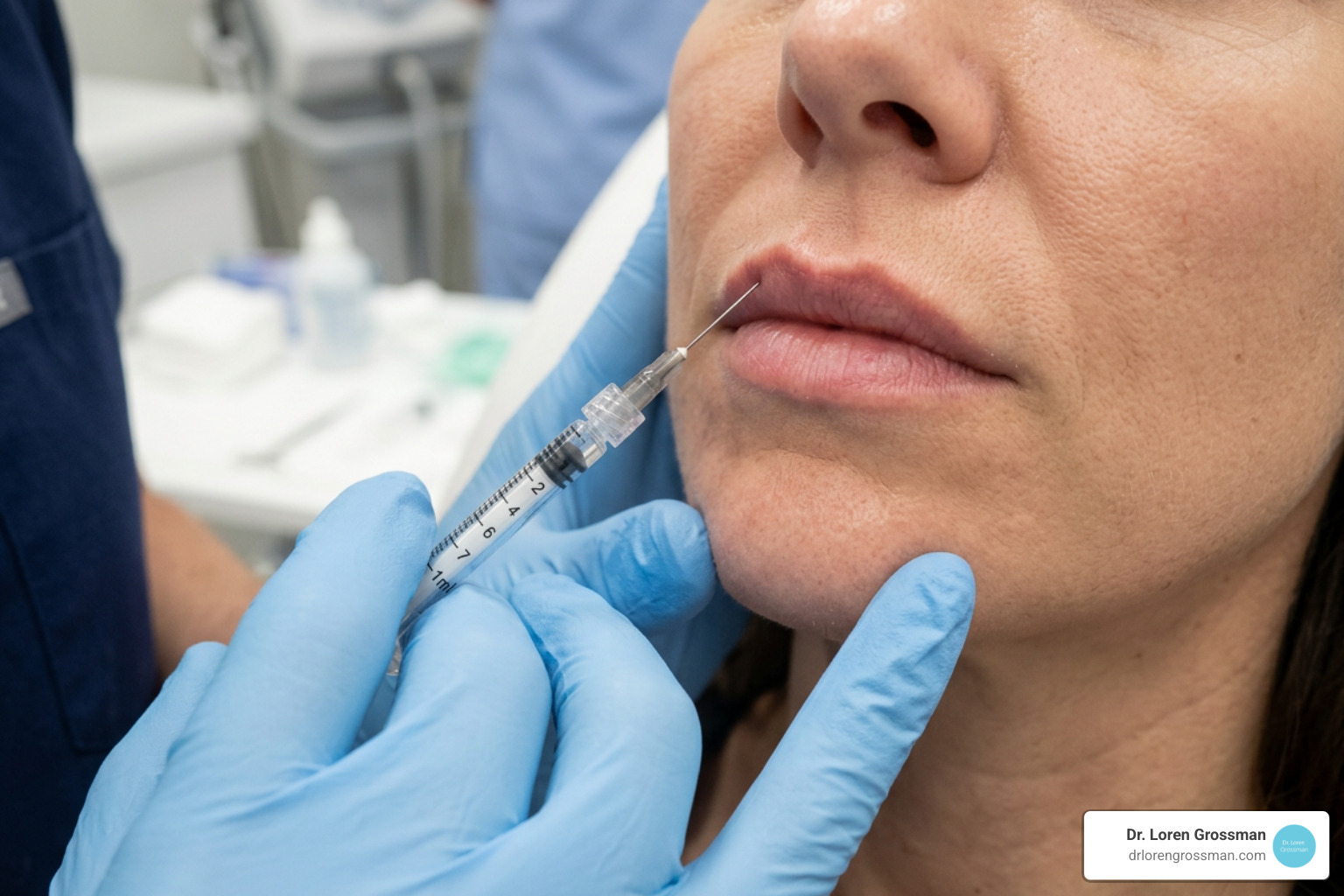
During this quick, 15-minute procedure, we inject small, precise doses of Botox into a highly specific anatomical landmark known as the Yonsei point (located about 1 centimeter lateral to the nostril along the nasolabial fold). This temporarily relaxes the levator labii superioris alaeque nasi (LLSAN) muscle, preventing the upper lip from shooting up too high when you laugh or smile.
The beauty of Botox is that it acts as a low-risk, temporary “trial run.” It allows you to “test drive” a lower, more balanced lip line before committing to a permanent surgical procedure like lip repositioning. The effects generally become visible within 5 to 7 days, with gingival exposure reaching its minimum at the two-week mark. The results typically last between 12 and 36 weeks (3 to 6 months), after which the muscle gradually regains its strength, and a simple maintenance session is needed.
For patients with a very thin upper lip, we can also use hyaluronic acid dermal fillers. By adding subtle volume to the body of the lip, we can naturally lower the lip line, drape it elegantly over the gums, and enhance the overall symmetry of your face.
Orthodontic Solutions and Clear Aligners
When a gummy smile is caused by a misaligned bite or teeth that have erupted too far downward, orthodontic treatment is often the ideal non-surgical path.
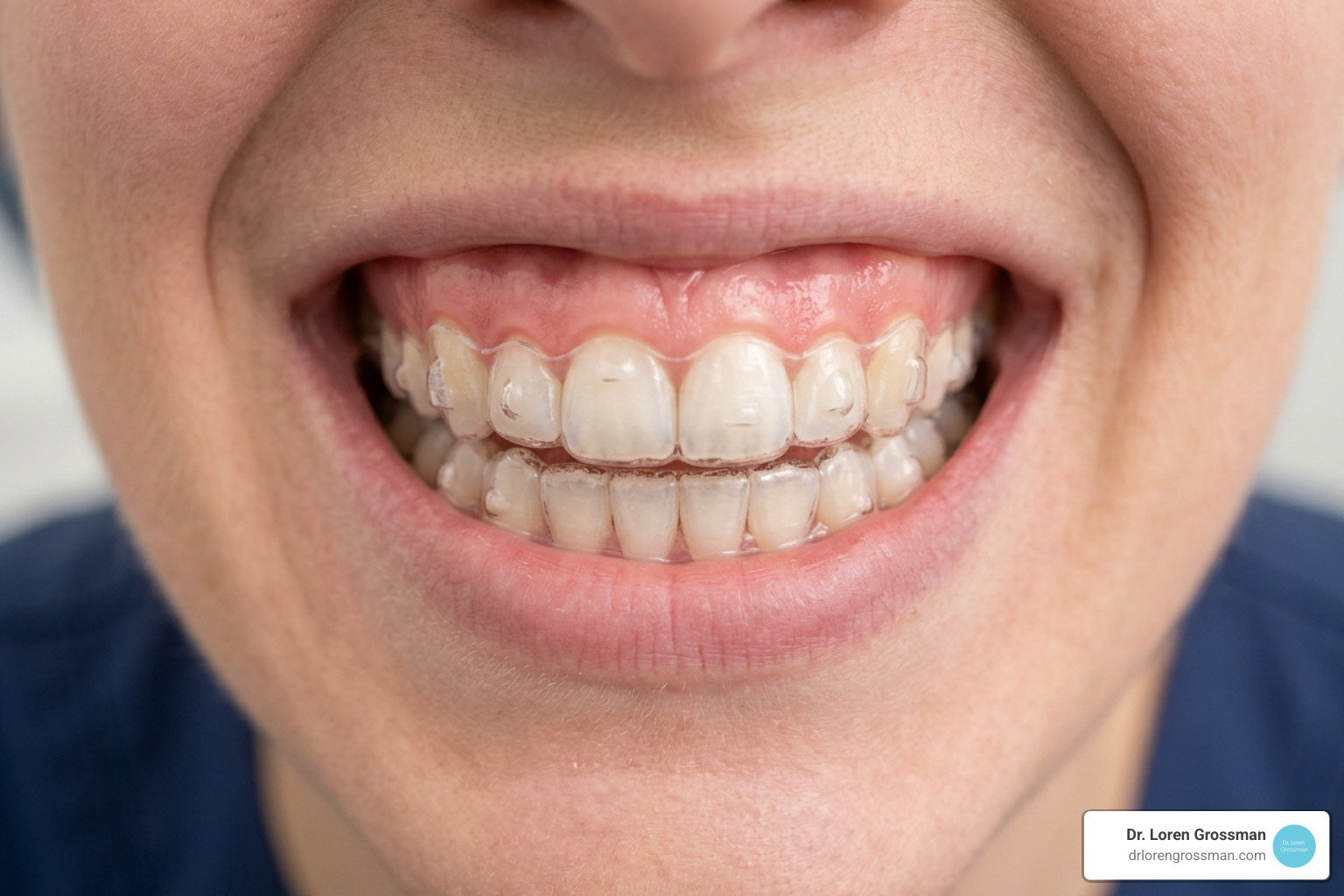
Using clear aligners like Invisalign or traditional braces, we can gradually reposition your teeth. A technique called tooth intrusion physically pushes the front teeth back upward into the jawbone, naturally pulling the gum line up with them.
For more complex orthodontic cases, we may use Temporary Anchorage Devices (TADs) — tiny, painless mini-screws placed in the bone — to act as anchors to pull the teeth upward more efficiently. This process takes anywhere from 12 to 24 months, but it addresses the root structural cause of your alignment issues. If you’re wondering whether your teeth and bite are suited for this approach, you can learn more by reading Am I a Good Candidate for Cosmetic Dentistry?.
Surgical Treatments for Permanent Correction
While temporary treatments and aligners are fantastic, many patients prefer a “one-and-done” approach that provides permanent results. Surgical options for correcting a gummy smile are highly predictable, safe, and can completely transform your facial aesthetics.
Laser Gum Contouring and Crown Lengthening
If you have short, square-looking teeth due to altered passive eruption or excess gum tissue, a laser gingivectomy (often called a gum lift) is one of the most rewarding procedures we perform.
Using an advanced, ultra-precise soft tissue laser, we gently sweep away the excess gum tissue to reveal the beautiful, hidden enamel underneath. Because the laser immediately cauterizes the tissue as it cuts, there is almost no bleeding, no need for traditional scalpels or stitches, and the recovery time is a rapid 1 to 3 days.
However, if the underlying bone sits too close to the new, desired gum margin, the gum tissue has a natural tendency to grow back. In these cases, we perform crown lengthening. This procedure involves reshaping a tiny amount of the supporting bone (osseous surgery) alongside the gum tissue to ensure the gums permanently settle into their new, stable position.
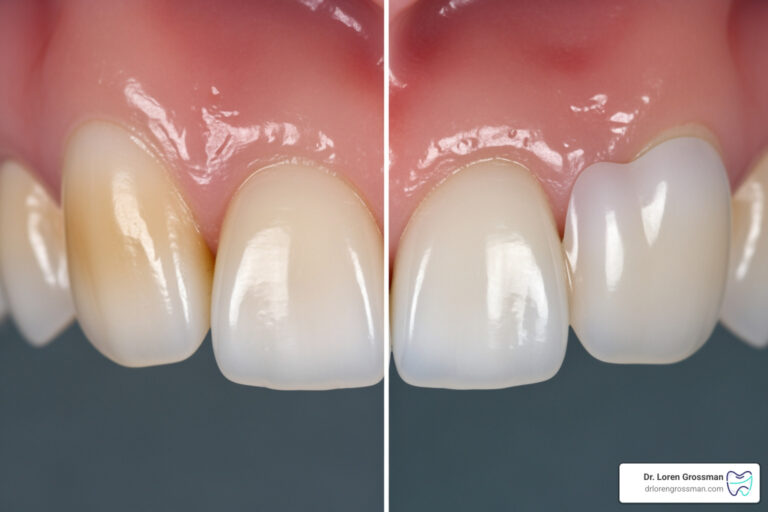
Once the gum line is elevated, we often combine this treatment with custom Dental Veneers to restore the perfect, youthful proportion of your teeth.
The impact of this combined approach is beautifully illustrated by a Real 2026 case study on surgical contouring, where a patient with a severe gummy smile and worn teeth underwent surgical contouring combined with Zirconium crowns, achieving a completely stabilized, balanced, and gorgeous smile with permanent results.
Lip Repositioning and Jaw Surgery: Advanced Ways on How to Fix a Gummy Smile
For patients with a severely hypermobile lip who are tired of temporary Botox injections, lip repositioning surgery offers a permanent alternative. During this procedure, we remove a small, hidden strip of tissue from the inside of the upper lip. By stitching the lip slightly lower on the inside, we physically restrict how far upward it can travel when you smile, keeping your gums beautifully covered.
Finally, for patients with severe Vertical Maxillary Excess (where the upper jaw is significantly too long), orthognathic (jaw) surgery is the gold standard. Under the care of a skilled oral surgeon, the upper jaw is repositioned upward into a more balanced skeletal position. While this is a major surgical procedure with a longer recovery time, it permanently resolves both the aesthetic and functional issues associated with severe jaw misalignment.
Comparing Costs, Recovery, and Longevity
Choosing the right path to fix your gummy smile requires balancing your aesthetic goals, your budget, and the amount of recovery time you are comfortable with. To help you make an informed decision, we have compiled a comparison of the most common treatments available in 2026:
| Treatment | Primary Cause Addressed | Longevity | Recovery Time | Estimated Cost (US Average) |
|---|---|---|---|---|
| Botox Injections | Hyperactive Upper Lip | Temporary (3–6 months) | None (Immediate) | $300 – $600 per session |
| Laser Gum Contouring | Excess Gum Tissue | Permanent | 1 – 3 days | $500 – $3,000 (total) |
| Crown Lengthening | Short Teeth / Excess Bone | Permanent | 1 – 2 weeks | $1,000 – $4,000 per tooth |
| Invisalign / Braces | Misaligned Teeth / Bite | Permanent (with retainer) | None (12–24 mo. active) | $3,000 – $8,000 |
| Lip Repositioning | Hypermobile Upper Lip | Permanent | 1 – 2 weeks | $2,000 – $5,000 |
| Orthognathic Surgery | Vertical Maxillary Excess | Permanent | 4 – 6 weeks (full recovery months) | $20,000 – $50,000 |

When it comes to financial planning, keep in mind that purely cosmetic procedures — like Botox, laser gum contouring, and veneers — are generally not covered by dental insurance. However, if your gummy smile is linked to a functional issue, such as a severe bite misalignment or skeletal jaw discrepancy requiring orthognathic surgery, your medical or dental insurance may cover a portion of the treatment.
For our patients in Kingston, Pennsylvania, we also offer flexible in-house payment plans and third-party financing solutions to make your dream smile highly affordable.
Frequently Asked Questions about Gummy Smile Correction
Can a gummy smile be fixed permanently?
Yes, absolutely! While treatments like Botox and dermal fillers are temporary and require ongoing maintenance, surgical options like laser gum contouring (gingivectomy), crown lengthening, lip repositioning, and orthognathic jaw surgery provide permanent, lifelong corrections. Once the excess gum tissue or bone is reshaped, or the lip movement is surgically modified, the results are highly stable and will not revert.
Are gummy smile treatments covered by dental insurance?
In most cases, treatments performed purely for cosmetic reasons (such as laser gum contouring, Botox, or veneers) are considered elective and are not covered by dental insurance. However, if your gummy smile is a symptom of a functional health issue — such as severe jaw misalignment (Vertical Maxillary Excess) requiring orthognathic surgery, or severe gum inflammation requiring scaling and root planing — your insurance may provide partial coverage. We always recommend contacting your provider to verify your specific benefits.
Is the treatment for a gummy smile painful?
We prioritize your comfort above all else. For minimally invasive treatments like Botox, you will only feel a tiny, brief pinch. For surgical procedures like laser gum contouring, crown lengthening, or lip repositioning, we use local anesthesia to ensure you feel absolutely no pain during the procedure.
Post-operative discomfort is typically mild and easily managed with over-the-counter pain relievers for the first 48 to 72 hours. Furthermore, our use of advanced soft-tissue lasers for gum lifts significantly minimizes post-operative swelling and accelerates the healing process.
Conclusion
At the practice of Dr. Loren Grossman in Kingston, Pennsylvania, we believe that your smile should be your greatest asset, not a source of self-consciousness. Whether your gummy smile is caused by genetics, a hyperactive lip, or excess tissue, we have the advanced technology and decades of cosmetic expertise to deliver a personalized, natural-looking transformation.
If you are ready to take the first step toward a more balanced, confident smile, we invite you to explore our Cosmetic Dentistry Services and schedule a personalized consultation. Let us design a custom Smile Makeover Services plan that fits your life, your goals, and your budget. Contact us today to get started!