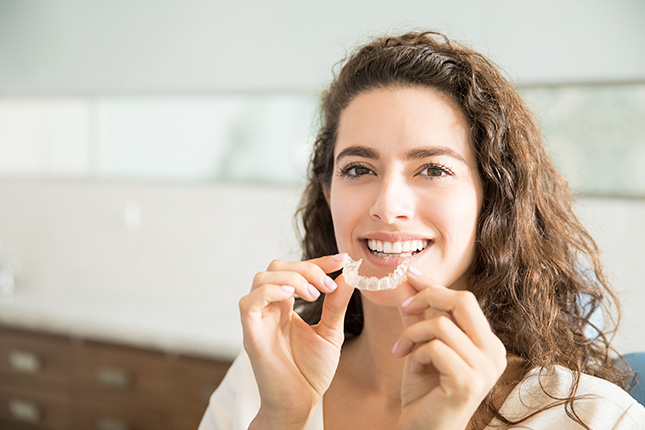
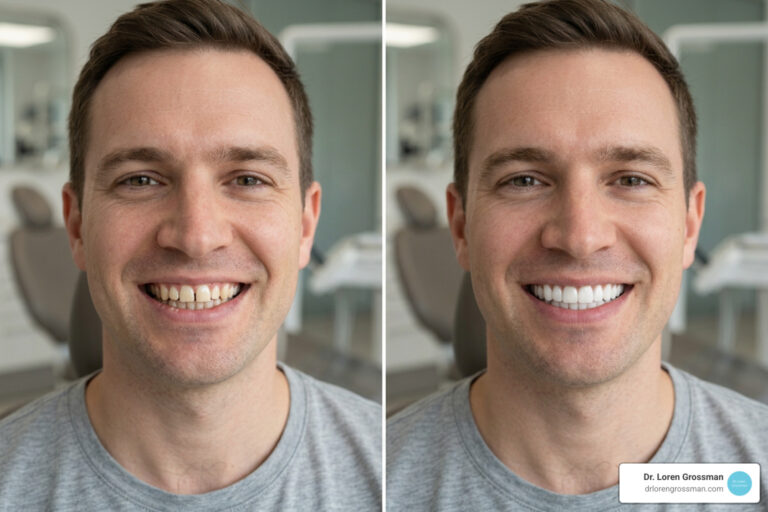
More Than Half of Us Feel Self-Conscious About Our Teeth — Here’s What You Can Do
If you’re wondering how to fix uneven teeth without braces, the good news is that you have more options today than ever before. Whether your concern is a single crooked tooth, minor crowding, or a gap in your smile, several professional treatments can help — many of them without a single metal bracket or wire.
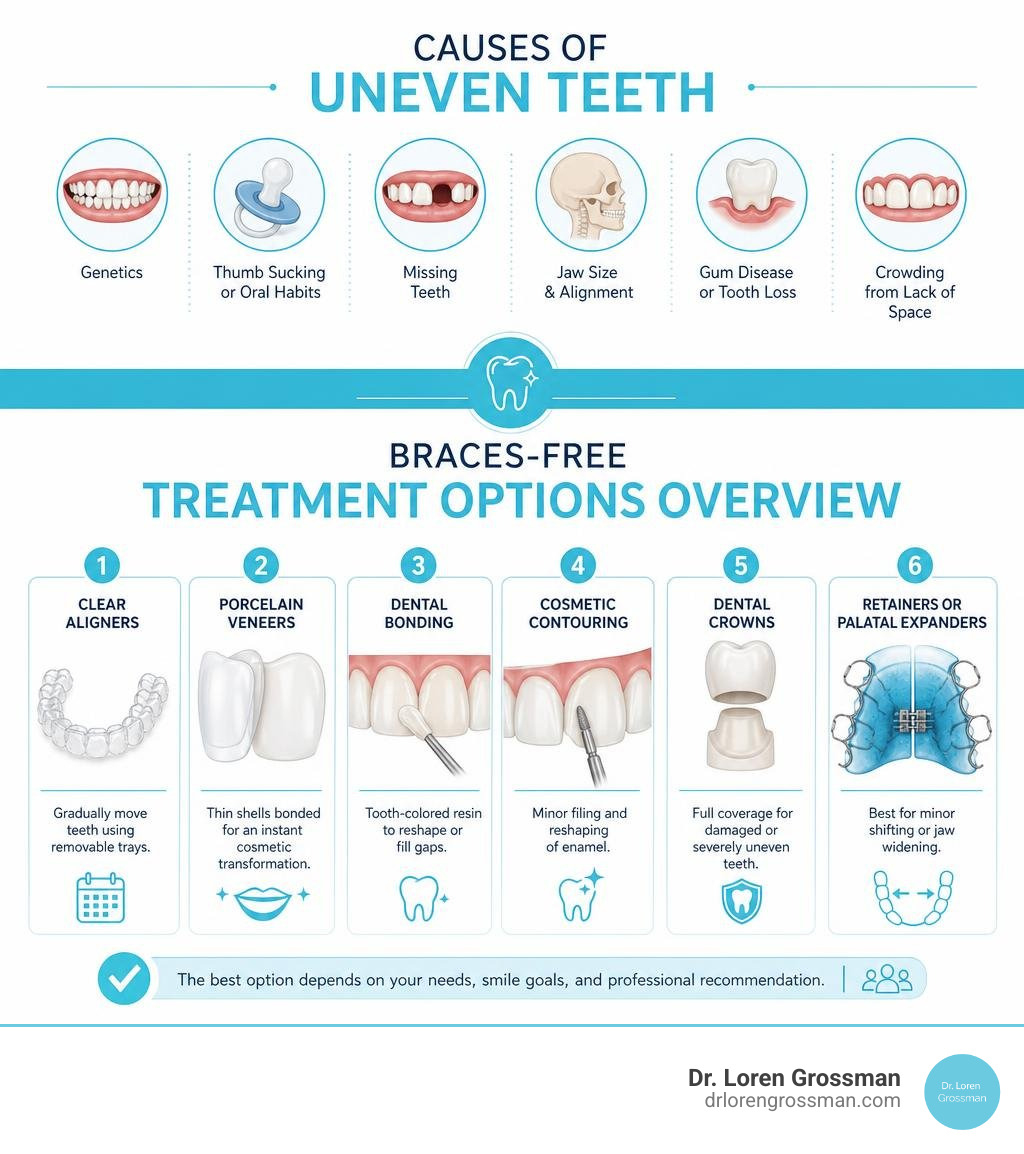
Here are the main ways to fix uneven teeth without braces:
- Clear aligners (e.g., Invisalign) — gradually move teeth using removable plastic trays; 12–18 months on average
- Porcelain veneers — thin shells bonded to the front of teeth for an instant cosmetic transformation; last 10–15 years
- Dental bonding — tooth-colored resin applied to reshape or fill gaps; lasts 3–10 years
- Cosmetic contouring (enameloplasty) — minor filing and reshaping of enamel; done in a single visit
- Dental crowns — full coverage for damaged or severely uneven teeth
- Retainers or palatal expanders — best for minor shifting or jaw widening, especially in younger patients
Not every option is right for every person. The best choice depends on how uneven your teeth are, whether the issue is structural or purely cosmetic, and your timeline and budget.
Adults now make up nearly 30% of orthodontic patients nationwide — and many are choosing braces-free paths that fit their lifestyle and professional image.
I’m Dr. Loren Grossman, a cosmetic and family dentist serving the Wyoming Valley since 1984, and I’ve helped thousands of patients explore how to fix uneven teeth without braces using treatments ranging from Invisalign to porcelain veneers and dental bonding. In the sections below, I’ll walk you through every realistic option so you can make a confident, informed decision.
How to fix uneven teeth without braces vocab to learn:
Structural vs. Cosmetic: How to Fix Uneven Teeth Without Braces
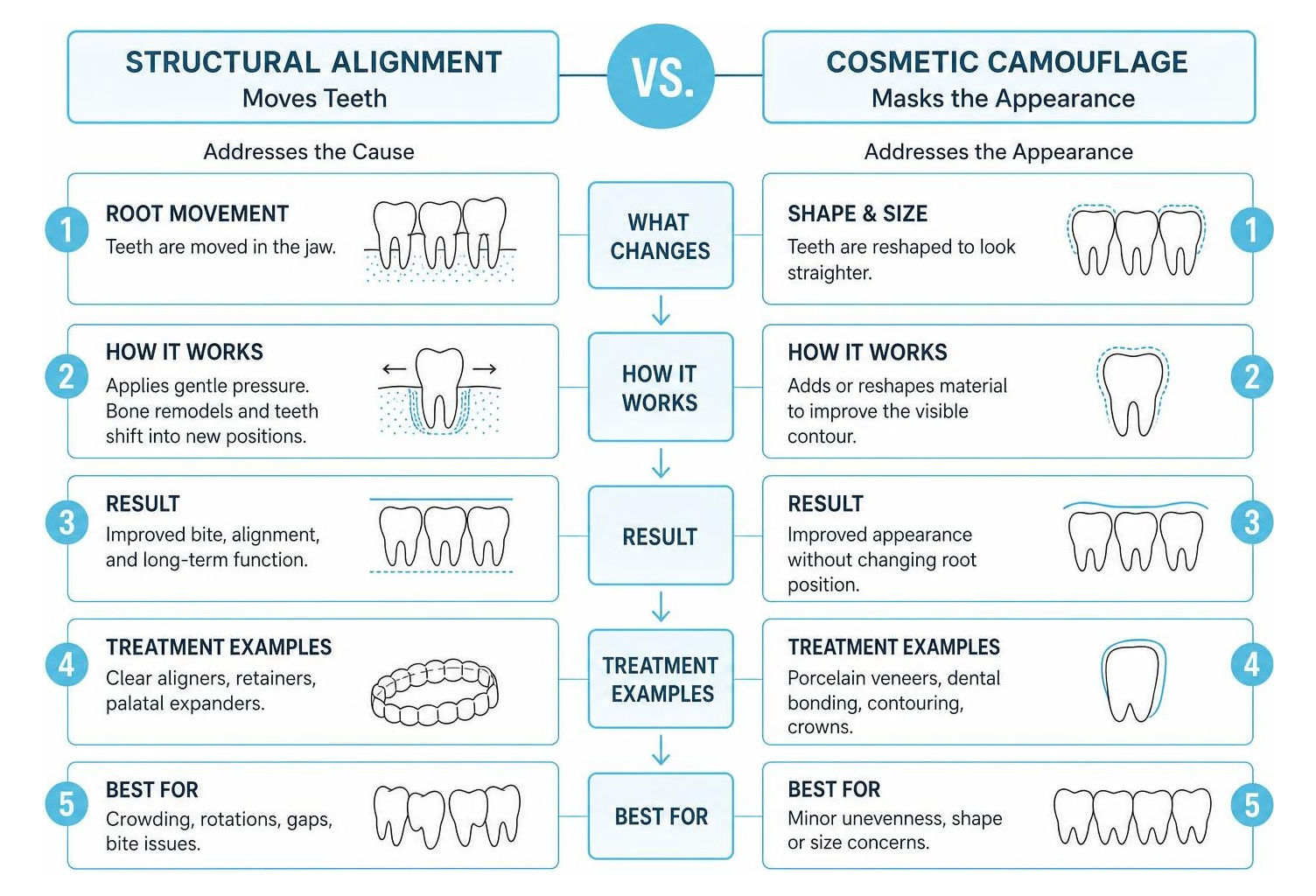
When patients ask us how to fix their smile, the very first step in our Kingston, PA office is determining whether we are dealing with a structural alignment issue or a cosmetic symmetry issue. Understanding this distinction is crucial because it dictates which treatments will actually work for your mouth.
The Biological Reality of How to Fix Uneven Teeth Without Braces
True orthodontic movement is a biological process. Your teeth are not cemented directly into your jawbone; instead, they are suspended by a tiny, springy hammock called the periodontal ligament (PDL). When gentle, continuous pressure is applied to a tooth, the PDL signals the body to dissolve bone on one side of the tooth socket and build new bone on the other. This process of bone remodeling is how clear aligners physically guide your teeth into a brand-new position.
Cosmetic treatments, on the other hand, do not move the roots of your teeth. Instead, they use “cosmetic camouflage” (or what some call “instant orthodontics”) to alter the visible silhouette of your teeth. By using materials like porcelain or composite resin, we can reshape the outer surfaces so that your teeth look perfectly straight, even though their roots remain in the exact same spot.
While cosmetic masking is incredibly fast and highly effective for minor flaws, attempting to mask severe structural misalignments with cosmetic restorations can compromise your long-term dental health. If you try to force a visual fix onto a severe bite problem, you risk placing destructive forces on your new restorations, which can lead to premature chipping, cracking, or nerve damage. For a deeper look at this balance, read about How to Improve Crooked Teeth Without Traditional Braces: What Really Works.
Beyond aesthetics, resolving uneven teeth is essential for your overall health. When teeth overlap or crowd together, they create tiny, hard-to-reach pockets where plaque accumulates. This buildup can lead to localized bleeding during brushing, bad breath, tooth decay, and gum disease. Furthermore, misaligned teeth can disrupt your bite (occlusion), resulting in uneven wear and tear, teeth grinding (bruxism), and painful jaw joint issues like TMJ disorders.
It is also worth noting that teeth naturally shift forward and crowd together as we age due to a process called physiological mesial drift. This is why many adults in Northeastern Pennsylvania notice their lower front teeth becoming increasingly crowded, even if they had perfectly straight teeth in their youth.
Who is a Good Candidate for Braces-Free Alternatives?
You are likely an excellent candidate for braces-free treatment options if you have:
- Mild to moderate crowding or overlapping
- Minor spacing issues or small gaps (diastemas)
- Healthy gums and strong supporting bone structure
- Slightly uneven tooth lengths or minor chips
- A stable, functional bite that does not cause jaw pain
If you have severe crowding, major skeletal overbites or underbites, or active periodontal disease, structural orthodontic treatment or a multi-phase plan will be necessary. A comprehensive, professional dental evaluation is the only way to safely determine which path is right for your unique anatomy.
6 Professional Ways to Straighten and Align Your Smile
If you have decided that traditional metal brackets and wires are not for you, there are several outstanding alternatives. These modern treatments are designed to fit seamlessly into a busy, professional lifestyle while delivering predictable, beautiful results.
1. Clear Aligners (Invisalign)
For patients who want true structural tooth movement without the look of metal braces, clear aligners are the gold standard.
Using advanced SmartTrack material, the Invisalign system uses a series of custom-made, medical-grade plastic trays that fit snugly over your teeth. Each set of aligners is worn for approximately one to two weeks, gently and precisely shifting your teeth closer to their ideal positions.
- The Treatment Timeline: While traditional braces often take around two years, the average Invisalign treatment time for an adult is just 12 to 18 months. For mild cases, results can sometimes be achieved in as little as 6 months.
- The Daily Commitment: To achieve predictable results, you must wear your aligners for 20 to 22 hours daily. You only remove them to eat, drink anything other than water, brush, and floss.
- Why Patients Love It: Aligners are virtually invisible, meaning you can lead boardroom presentations, attend social events, and take photos with complete confidence. Because they are removable, you can eat all your favorite foods and maintain excellent oral hygiene without having to clean around metal brackets.
If you are located in Northeastern Pennsylvania, you can explore this modern, convenient treatment option right here with us at Invisalign in Kingston PA: A Clear Path to Straighter Teeth with Dr. Loren Grossman.
Cosmetic Camouflage: How to Fix Uneven Teeth Without Braces Instantly
What if you do not want to wait months for your teeth to move? If your alignment issues are primarily cosmetic, we can use restorative materials to reshape your smile in a matter of days or even a single visit. This approach is highly popular for adults who want immediate results before a major life event like a wedding or career transition. To learn more about how we blend these artistic techniques, check out Enhancing Smiles with Cosmetic Dentistry: Discover the Art and Science at Dr. Loren Grossman’s Dental Practice.
2. Porcelain Veneers
Often referred to as “instant orthodontics,” porcelain veneers are ultra-thin, custom-made shells of high-quality dental ceramic (such as lithium disilicate) that are permanently bonded to the front surfaces of your teeth.
- How They Work: Veneers do not physically move your teeth. Instead, they act as a beautiful, durable facade that instantly masks minor crowding, gaps, chips, and severe discoloration.
- The Lifespan: High-quality porcelain veneers are highly stain-resistant and incredibly strong, boasting an expected lifespan of 10 to 15 years with proper care.
- The Trade-Off: To ensure the veneers sit flush and look completely natural, we must remove a tiny layer of natural tooth enamel (about the thickness of a contact lens, or 0.3mm to 0.5mm). Because of this enamel preparation, the procedure is irreversible, meaning those teeth will always require a restoration.
To see how we design custom, life-changing veneers, visit Veneer Procedures in Kingston PA: Transform Your Smile with a Trusted Cosmetic Dentist and explore our guide on What Are the Different Types of Veneers.
3. Dental Bonding
If you are looking for a fast, non-invasive, and budget-friendly way to correct minor asymmetry, composite dental bonding is an exceptional choice.
- The Procedure: Using the same tooth-colored composite resin material used for standard dental fillings, we carefully sculpt the material directly onto your tooth to fill in gaps, smooth out rough edges, or make a slightly rotated tooth appear perfectly aligned. We then cure the resin with a special light and polish it to a natural, enamel-like luster.
- The Timeline: Bonding is completed in a single, painless visit, usually requiring no local anesthesia or drilling.
- The Lifespan: Dental bonding typically lasts between 3 and 10 years depending on your daily habits, diet, and regular checkups, after which it may require a simple touch-up or replacement.
You can view real-life transformations using this conservative technique by exploring our Before and After Cosmetic Dentistry: A Beautiful Smile Journey gallery.
4. Cosmetic Contouring (Enameloplasty)
Sometimes, the secret to a symmetrical smile is simply smoothing out minor imperfections. Cosmetic contouring, also known as enameloplasty, is the artistic reshaping of your natural teeth.
- How It Works: We use specialized polishing instruments to gently file away microscopic amounts of your tooth enamel. This allows us to round off sharp canine points, even out jagged edges, and make slightly overlapping teeth appear straight and balanced.
- The Experience: The procedure is entirely painless, takes only 30 to 60 minutes, and requires no numbing.
- The Limitation: Enameloplasty is strictly for very minor, superficial adjustments. Because your enamel is thin and cannot regenerate, we can only remove a tiny fraction of a millimeter to ensure your teeth remain strong and protected.
5. Dental Crowns
While veneers cover only the front surface of a tooth, a dental crown is a custom-made cap that completely covers the visible portion of a tooth down to the gumline.
- When They Are Used: Crowns are typically reserved for teeth that are not only uneven but also structurally compromised by large cavities, old fillings, cracks, or root canal therapy.
- The Benefit: A crown allows us to completely redesign the shape, size, and alignment of a heavily damaged tooth, providing both beautiful cosmetic symmetry and robust structural support.
6. Removable Retainers and Palatal Expanders
In specific scenarios, other dental appliances can help guide your teeth or jaw without the need for full braces.
- Removable Retainers: If you wore braces in the past but experienced a minor orthodontic relapse because you forgot to wear your retainer, a custom-fitted retainer can sometimes be used to nudge those few slightly drifted teeth back into position.
- Palatal Expanders: Primarily used for younger, growing patients whose jawbones have not yet fused, palatal expanders gently widen the upper jaw. This creates more physical space for crowded teeth to align naturally, often preventing the need for braces or tooth extractions later in life.
Comparing Your Options: Timelines, Costs, and Pros & Cons
Choosing the right path requires weighing several factors, including how quickly you want results, your budget, and the biological cost to your natural tooth structure.
| Treatment Option | Average Timeline | Expected Lifespan | Biological Impact | Best For |
|---|---|---|---|---|
| Invisalign Clear Aligners | 12 to 18 months | Permanent (with lifetime retainer wear) | Non-invasive; preserves all natural enamel | Mild to moderate crowding, spacing, and bite issues |
| Porcelain Veneers | 2 to 3 visits | 10 to 15 years | Irreversible; requires minimal enamel removal | Instant correction of minor crowding, chips, and deep stains |
| Dental Bonding | 1 visit (60 mins) | 3 to 10 years | Non-invasive; preserves natural enamel | Quick, affordable fixes for minor gaps, chips, and small rotations |
| Cosmetic Contouring | 1 visit (30 mins) | Permanent | Irreversible; files away microscopic enamel | Smoothing out slightly uneven tooth lengths or jagged edges |
Before making a final choice, it is helpful to review 5 Things to Consider Before Getting Cosmetic Dental Work to ensure your treatment plan aligns perfectly with your long-term goals.
Frequently Asked Questions About Straightening Teeth
Can you close a teeth gap without braces?
Yes, you can absolutely close a teeth gap (diastema) without traditional braces. The best method depends on the size of the gap:
- For small gaps (under 2mm): Cosmetic bonding is an ideal, single-visit solution. We simply apply and sculpt composite resin to the sides of the teeth, closing the gap instantly.
- For comprehensive smile upgrades: Porcelain veneers can close gaps while simultaneously upgrading the color, shape, and size of your teeth.
- For wider gaps (over 3mm): Clear aligners like Invisalign are the healthiest choice. Restorative materials can make teeth look unnaturally wide if the gap is too large, so physically moving the teeth together with aligners ensures a natural, balanced look.
Are there any safe natural or at-home methods to straighten teeth?
No. We strongly caution patients against attempting any DIY dental trends popularized on social media platforms like TikTok.
We have seen incredibly dangerous trends where creators advocate using household items like rubber bands as DIY braces, or filing down their own teeth with nail files. These methods are highly destructive. Using rubber bands can cut off blood flow to the gums, destroy the supporting bone, and cause healthy teeth to fall out. Filing your teeth with a nail file permanently strips away protective enamel, exposing the sensitive inner dentin, causing extreme pain, and leaving your teeth highly vulnerable to rapid decay.
Once tooth enamel is lost, it cannot regenerate. Any structural movement or cosmetic reshaping of your teeth requires professional clinical oversight, precise diagnostic imaging, and sterile, medical-grade instruments.
How do uneven teeth affect oral health beyond appearance?
Uneven or crowded teeth are far more than a cosmetic concern. They directly impact your systemic health and daily comfort:
- Plaque Accumulation: Overlapping teeth create tight crevices that toothbrush bristles and dental floss cannot easily reach. This leads to plaque buildup, tartar formation, and localized bleeding (gingivitis).
- Bite Imbalances: When your teeth do not meet evenly, your jaw muscles must work harder to chew, which can trigger chronic headaches, neck pain, and TMJ discomfort.
- Accelerated Wear: Misaligned teeth often collide at awkward angles during chewing, leading to chipped edges, cracked enamel, and premature wear.
Conclusion

Achieving a healthy, symmetrical smile does not have to mean spending years wearing metal brackets and wires. Whether you choose the discreet, gradual alignment of Invisalign or the instant, dramatic transformation of porcelain veneers or dental bonding, modern dentistry offers safe, highly predictable paths to your dream smile.
At the practice of Dr. Loren Grossman in Kingston, Pennsylvania, we believe that your dental care should fit your life — not the other way around. We combine decades of cosmetic expertise with advanced digital technology to design personalized, conservative treatment plans that protect your oral health while boosting your self-confidence.
If you are ready to explore how to fix uneven teeth without braces, we invite you to take the first step today. Explore our services and book your Free Consultation to begin your journey.
- Ready to learn more? Discover Your Perfect Smile with a Trusted Cosmetic Dentist in Kingston PA.
- Take action today: Transform Your Smile Today with Dr. Loren Grossman’s Cosmetic Dentistry Services.