What You Need to Know Before Getting Dental Veneers
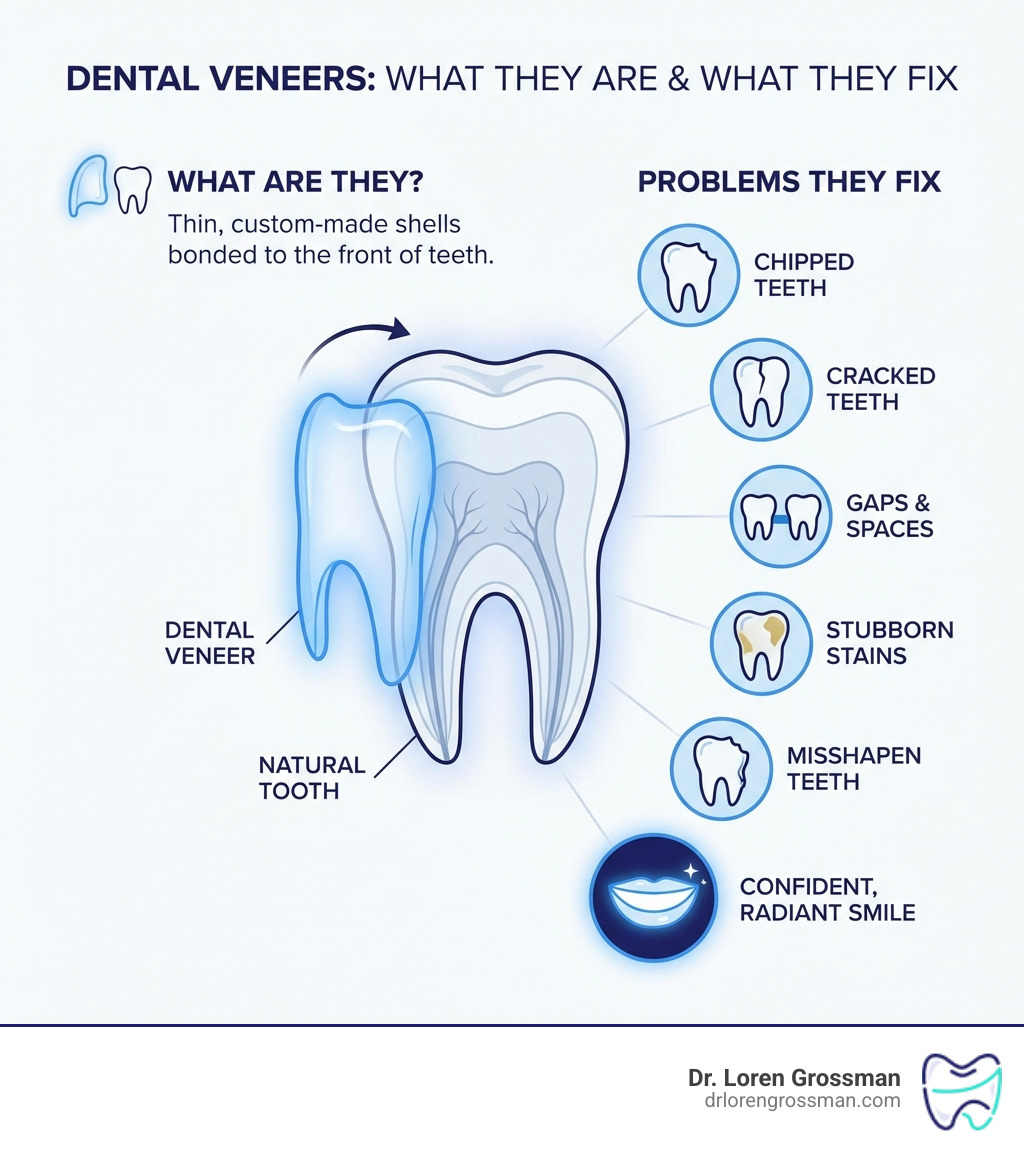
The dental veneers procedure transforms smiles by covering imperfections with thin, custom-made shells bonded to the front of your teeth. Here’s what the process involves:
Quick Overview of the Dental Veneers Procedure:
- Initial Consultation – Your dentist examines your teeth, discusses your goals, and creates a treatment plan
- Tooth Preparation – A small amount of enamel (about 0.5mm) is removed to make room for the veneer
- Impressions – Your dentist takes a mold of your teeth and places temporary veneers
- Final Bonding – The permanent veneers are checked for fit, then bonded to your teeth with special cement
- Follow-up – Your dentist ensures everything feels comfortable and looks natural
The entire process typically takes 2-3 weeks from start to finish, with most patients visiting the dentist 2-3 times.
If you’ve ever wanted a brighter, more even smile, dental veneers might be your solution. These wafer-thin shells—usually made from porcelain or composite resin—cover the front surface of your teeth to hide chips, cracks, gaps, stains, or misshapen teeth.
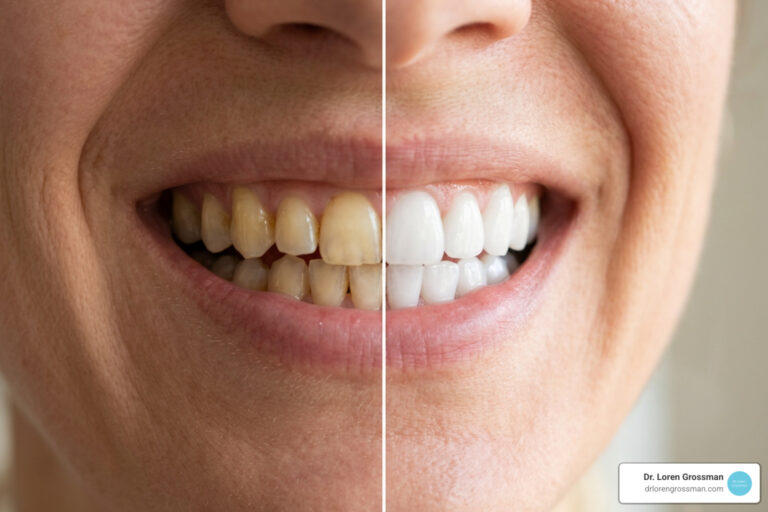
Beyond aesthetics, veneers are a proven cosmetic solution that can dramatically boost your confidence. They effectively address issues like stubborn discoloration, noticeable gaps, or damage from old injuries.
Understanding the procedure is crucial before you commit. The process involves permanently altering your natural teeth by removing a thin layer of enamel, which means there’s no going back. Knowing what to expect helps you make an informed decision.
As Dr. Loren Grossman, I’ve been creating beautiful smiles in the Wyoming Valley since 1984, performing everything from routine care to complex smile makeovers. With decades of experience in the dental veneers procedure, I’ve helped countless patients in Northeastern Pennsylvania achieve the confident, radiant smiles they deserve.
Are Veneers the Right Choice for Your Smile?
Considering a cosmetic dental procedure is a big step. Let’s explore the benefits, risks, and ideal candidates for dental veneers to help you make an informed decision.
The Benefits of Dental Veneers
Dental veneers offer a remarkable change, blending art and science to give you the smile you’ve always dreamed of. Here are some key advantages:
- Dramatic Aesthetic Change: Veneers instantly improve tooth color, shape, size, or length. They cover the front surfaces of your teeth, camouflaging a wide range of imperfections like chips, cracks, discoloration, and gaps for a uniform, pleasing smile.
- Natural Appearance: High-quality porcelain veneers mimic the translucency of natural tooth enamel, making them look incredibly lifelike and difficult to distinguish from your natural teeth.
- Stain Resistance (Porcelain): Porcelain veneers are highly resistant to stains from coffee, tea, and red wine, keeping your new smile bright for years.
- Durability and Longevity: Porcelain veneers are a durable, long-lasting solution, often lasting 10 to 20 years with proper care, making them a worthwhile investment.
- Minimal-Prep Options: Advancements like “no-prep” veneers offer a less invasive option for certain candidates, requiring minimal to no alteration of your natural teeth.
- Confidence Boost: A beautiful smile can dramatically improve self-esteem and confidence. We’ve seen this transformative power in our patients across Kingston, Wilkes-Barre, and Scranton.
Risks and Considerations of the Dental Veneers Procedure
While the benefits are compelling, it’s important to understand the potential risks associated with the dental veneers procedure:
- Irreversible Process: The process for traditional veneers is irreversible. A small amount of tooth enamel (about 0.5 mm) is removed to fit the veneer. This enamel cannot be replaced, so your tooth will always need a covering.
- Potential for Tooth Sensitivity: Some patients experience temporary tooth sensitivity to hot or cold temperatures after tooth preparation. This usually subsides within a few weeks.
- Cost: As a cosmetic treatment, veneers are a significant investment. Costs range from $900 to $2,500 per tooth for porcelain and around $800 for composite, which adds up for a full smile makeover.
- Not Covered by Insurance: Veneers are typically not covered by dental insurance because they are cosmetic. Always check with your provider for specific coverage details.
- Future Replacement Needed: Veneers are durable but not permanent. They require replacement, with porcelain lasting 10-20 years and composite 5-7 years, representing a long-term commitment.
- Not Repairable: Chipped or cracked porcelain veneers usually require full replacement. Minor damage to composite veneers may be repairable.
- Color Cannot Be Changed: The color of porcelain veneers is permanent and cannot be whitened. Whiten your natural teeth beforehand to ensure a perfect match.
- Risk of Decay: Your natural teeth under veneers can still decay. Good oral hygiene is essential to prevent cavities from forming around the edges.
For more detailed information, we encourage you to consult reliable resources like Healthline’s What to Know Before You Get Dental Veneers.
Who is a Good Candidate?
Determining your suitability is a crucial part of the initial consultation. We look for several factors to ensure the best possible outcome:
- Good Oral Health: Ideal candidates must have healthy teeth and gums. Issues like cavities or gum disease must be treated first, as veneers are cosmetic, not a fix for health problems.
- Sufficient Tooth Enamel: You need sufficient tooth enamel for traditional veneers, as a small amount is removed for bonding. Veneers may not be suitable if enamel is too thin.
- Realistic Expectations: It’s important to have realistic expectations. We’ll work with you to align your goals with what veneers can realistically achieve.
- No Heavy Teeth Grinding (Bruxism): Habitual teeth grinding (bruxism) can damage veneers. We may recommend treating bruxism first or using a nightguard.
- Non-Smoker: Smoking can stain veneers (especially composite) and harm gum health, affecting the longevity of your veneers.
- Stable Bite: For significant bite issues or misalignment, orthodontics may be needed first. Veneers can correct minor issues but don’t replace comprehensive orthodontic treatment.
If you’re wondering if you’re a good candidate for this transformative procedure, we invite you to explore more about Am I a Good Candidate for Cosmetic Dentistry? on our site.
The Complete Dental Veneers Procedure: A Step-by-Step Guide
The journey to your new smile with dental veneers is a carefully planned process. Let’s walk through the typical dental veneers procedure.
Step 1: The Initial Consultation and Smile Design
Your journey begins with a consultation to discuss your aesthetic goals and assess your oral health.
- Discussing Your Goals: We’ll discuss your desired changes in tooth color, shape, or alignment to bring your vision to life.
- Oral Examination and Diagnostics: A thorough exam, including X-rays, ensures your oral health is suitable for veneers and identifies any issues to address first.
- Treatment Planning: We create a personalized plan outlining the type and number of veneers and what to expect.
- Shade Selection: We’ll work with you to select the perfect shade for your veneers, ensuring a natural, harmonious look.
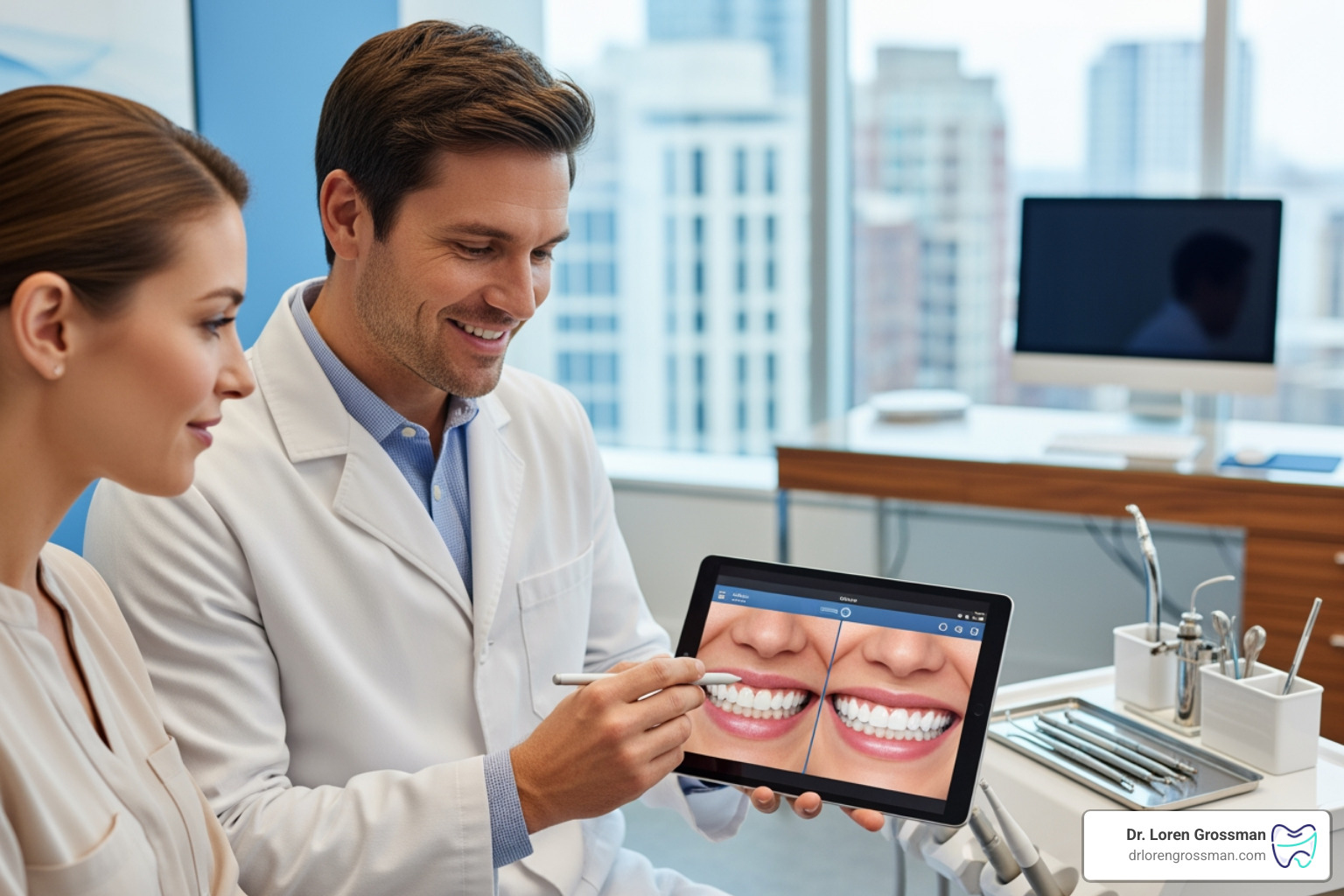
- Digital Smile Preview: We offer digital smile previews so you can see your potential new smile before treatment begins. This helps you visualize the outcome and make an informed decision.
Step 2: Tooth Preparation
Once your smile design is finalized, we prepare your teeth for the veneers.
- Local Anesthetic: We use a local anesthetic to numb the area, ensuring your comfort during the procedure.
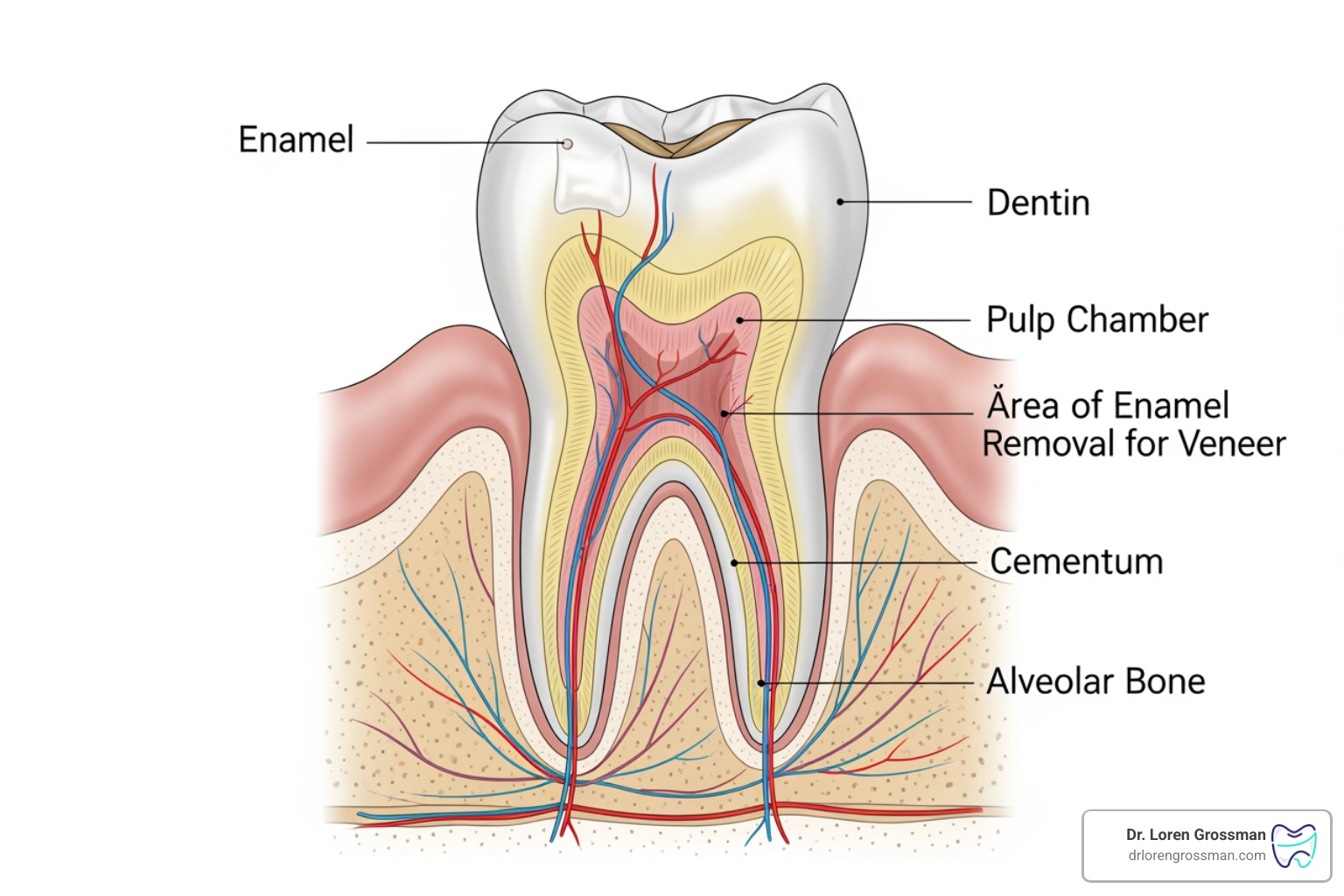
- Reshaping the Tooth Surface: We carefully reshape the tooth’s front surface, removing a thin layer of enamel (about 0.5 mm) for traditional veneers. This creates space for a seamless, natural-looking fit.
- Making Space for the Veneer: This preparation creates an ideal bonding surface and ensures the veneer aligns with your bite without affecting the tooth’s nerves or roots.
You can learn more about this crucial step on our page dedicated to Teeth Prepped for Veneers: How Much Enamel is Actually Removed?.
Step 3: Impressions and Temporary Veneers
After tooth preparation, we create the custom veneers for your new smile.
- Taking a Mold of Your Teeth: We take a precise impression of your teeth using a putty mold or a digital scanner. This mold is used by the dental lab to create your custom-fit veneers.
- Sending to a Dental Lab: The impressions and your shade selection are sent to a dental lab where technicians craft your custom veneers, which takes 2 to 4 weeks.
- Placement of Temporary Veneers: We place temporary veneers to protect your prepared teeth and maintain your smile’s appearance while your permanent ones are made. These temporaries require gentle care.
Step 4: The Final Bonding Appointment
This is the exciting day when your new smile comes to life!
- Removing Temporary Veneers and Cleaning: We remove the temporary veneers and thoroughly clean your teeth to prepare for bonding.
- Checking Fit and Color: We place each veneer to check its fit and color, making any necessary adjustments to ensure you’re happy with the result. The cement shade can also be used to fine-tune the final color.
- Etching the Tooth Surface: We lightly etch the tooth surface to create a stronger bond for the cement.
- Applying Dental Cement: A special cement is applied to the veneer, which is then placed on your tooth.
- Curing with a Special Light: A special light hardens the cement, creating a strong bond between the veneer and your tooth.
- Final Adjustments and Polishing: Finally, we remove excess cement, check your bite, and polish the veneers. You’ll leave with your new, radiant smile!
Understanding Your Options: Types, Longevity, and Cost
When considering a dental veneers procedure, it’s helpful to understand the different types available, how long they last, and the financial investment.
Types of Dental Veneers
The primary types of dental veneers are porcelain and composite resin, each with distinct characteristics.
Here’s a comparison to help you understand your choices:
| Feature | Porcelain Veneers | Composite Resin Veneers | No-Prep Veneers (e.g., Lumineers) |
|---|---|---|---|
| Material | High-quality ceramic (porcelain) | Plastic and ceramic mixture (composite resin) | Thinner porcelain |
| Appearance | Highly natural, mimics tooth enamel translucency, superior light reflection | Good, but generally less natural luster than porcelain | Very thin, can sometimes appear less natural if underlying tooth is dark |
| Durability | Very strong, highly resistant to chipping and breaking | Less durable than porcelain, more prone to chipping | Thinner, potentially less durable than traditional porcelain |
| Stain Resistance | Excellent, very resistant to staining | Good, but can stain over time, especially with dark foods/drinks | Excellent, like traditional porcelain |
| Longevity | 10-20 years (often 10-15 years or more) | 5-7 years | Around 10 years or more |
| Cost (per tooth) | $900 – $2,500 | Approximately $800 (can be higher for lab-made composite, around $1,100) | Varies, often similar to traditional porcelain |
| Procedure Time | Typically 2 visits (preparation, bonding), 2-4 weeks for lab fabrication | Often 1 visit (direct bonding) | Often 1-2 visits, minimal to no tooth preparation |
| Tooth Preparation | Requires removal of a thin layer of enamel (approx. 0.5 mm) | Minimal or no enamel removal | Minimal to no enamel removal |
We can discuss these in detail to determine which type is best suited for your specific needs and goals. For more detailed information on your options, visit our dedicated page on What are the Different Types of Veneers?.
Longevity and Aftercare
The lifespan of your veneers depends on the material and your aftercare.
- Porcelain Veneer Lifespan: Porcelain veneers are durable, lasting 10 to 20 years, making them a long-term investment.
- Composite Veneer Lifespan: Composite veneers are more affordable but have a shorter lifespan of 5 to 7 years.
- Proper Oral Hygiene: To maximize longevity, maintain diligent oral hygiene by brushing twice a day and flossing daily. This prevents cavities from forming around the veneers.
- Avoiding Hard Foods and Objects: Veneers are strong but not indestructible. Avoid biting hard foods (ice, nuts) or using your teeth as tools to prevent chipping.
- Regular Dental Check-ups: Continue to attend regular dental check-ups and professional cleanings to monitor your veneers and overall oral health.
- Wearing a Nightguard: If you grind your teeth (bruxism), we may recommend a custom nightguard to protect your veneers and extend their lifespan.
How Much Do Veneers Cost?
Cost is a significant consideration. Here’s a breakdown of typical costs and influencing factors:
- Cost Per Tooth: Veneers are priced per tooth, so the total cost depends on how many you treat.
- Porcelain Veneer Cost: Porcelain veneers cost between $900 to $2,500 per tooth, reflecting the premium material, lab fabrication, and durability.
- Composite Veneer Cost: Composite veneers are more budget-friendly, costing around $800 per tooth for direct application or $1,100 for lab-made versions.
- Factors Affecting Price: The final cost is influenced by material choice, number of veneers, geographic location (including the Kingston, Wilkes-Barre, and Scranton areas), and the dentist’s expertise. Any prerequisite treatments will add to the overall cost.
Since veneers are typically cosmetic, they are often not covered by dental insurance. We recommend discussing the full cost and payment options with us during your consultation.
Veneers vs. Other Cosmetic and Restorative Treatments
Understanding the differences between veneers and other dental treatments is key to choosing the right path for your smile.
Veneers vs. Dental Crowns
Veneers and crowns both improve teeth but serve different purposes and require different levels of tooth preparation.
- Purpose:
- Veneers: Primarily cosmetic, covering only the front of a tooth to improve its appearance.
- Crowns: Primarily restorative, covering the entire tooth to provide strength and protection to a damaged or weakened tooth.
- Amount of Tooth Reduction:
- Veneers: Involve minimal tooth preparation (about 0.5 mm of enamel from the front).
- Crowns: Require more extensive tooth reduction to fit the full-coverage cap.
- Tooth Coverage:
- Veneers: Cover only the front surface.
- Crowns: Encase the entire tooth.
- Strength:
- Veneers: Durable for aesthetic purposes but not designed to restore a severely compromised tooth.
- Crowns: Designed to restore strength and integrity to a severely decayed or fractured tooth.
Veneers are an intermediate option between bonding and crowns. For extensive damage, a crown is often a better solution. We will discuss the best option for you during your consultation. Learn more about our comprehensive More info about Cosmetic Dentistry services.
Alternatives to Veneers
If veneers aren’t right for you, several excellent alternatives can improve your smile:
- Dental Bonding: For minor chips, cracks, or gaps, dental bonding is a less invasive, affordable option. A composite resin is applied and sculpted on the tooth, often in a single visit.
- Teeth Whitening: For discoloration, professional teeth whitening is a non-invasive option that can dramatically brighten your smile.
- Orthodontics (Braces/Invisalign): For misalignment or bite issues, orthodontics like braces or Invisalign are most effective. They address underlying structural problems for a healthy, straight smile, which veneers cannot fully replace.
- Dental Crowns: As discussed, crowns are the best option for teeth with significant damage, providing both strength and improved appearance.
We offer a range of cosmetic dentistry services and can help you determine the best path for your unique smile makeover.
Frequently Asked Questions about the Dental Veneers Procedure
We understand you likely have many questions about the dental veneers procedure. Here are some of the most common ones:
Is the dental veneers procedure painful?
The procedure is generally well-tolerated and comfortable.
- Minimal Discomfort: A local anesthetic is used during tooth preparation, so you shouldn’t feel pain. Most patients report little to no discomfort.
- Post-Procedure Sensitivity: Mild sensitivity to hot or cold is common for a few days after the final bonding but usually subsides quickly.
- Temporary Soreness: Some temporary gum or jaw soreness may occur if multiple veneers are placed, which is manageable with over-the-counter pain relievers.
- Overall Experience: Patients are often surprised by how comfortable the process is. We prioritize your comfort at our Kingston, Wilkes-Barre, and Scranton offices.
Are veneers permanent?
The answer depends on the veneer type and preparation.
- Traditional Veneers Are Irreversible: The process for traditional veneers is irreversible. Since a small amount of enamel is removed, the tooth will always need a covering, like a veneer or crown.
- Enamel Removal is Permanent: Enamel removal is a permanent alteration to your natural tooth structure.
- Removable or No-Prep Options Exist: “No-prep” options involve little to no enamel removal and may be reversible, but they are still designed for long-term use.
- Veneers Will Need Replacement: Veneers are not a one-time solution. Porcelain lasts 10-20 years and composite 5-7 years before needing replacement due to wear or damage.
Can you still get cavities with veneers?
Yes. It’s a common misconception that you can’t.
- Natural Tooth is Still Susceptible: A veneer only covers the front of the tooth. The rest of the tooth, especially along the edges of the veneer, is still susceptible to decay.
- Veneer Does Not Protect Against Cavities: The veneer itself doesn’t prevent cavities. Plaque buildup around the edges can lead to decay on the natural tooth.
- Importance of Oral Hygiene: Excellent oral hygiene, including daily brushing, flossing (especially around the veneer margins), and regular dental check-ups, is crucial.
- Potential for Complications: A cavity under a veneer can compromise its bond and may require removal of the veneer to treat the decay.
Conclusion: Your Journey to a Flawless Smile
Deciding on a dental veneers procedure is a significant step toward a life-changing smile. We’ve covered the process, types, costs, and alternatives to help you make an informed choice.
Veneers are a powerful solution for correcting cosmetic flaws, giving you a natural, radiant smile that boosts confidence. Investing in your smile is an investment in your overall well-being.
The success and longevity of your veneers depend heavily on the skill of your cosmetic dentist. At Dr. Loren Grossman, we provide personalized care with advanced technology for patients across Northeastern Pennsylvania, including Kingston, Wilkes-Barre, Scranton, and Dallas. We listen to your goals and execute with precision to achieve your dream smile.
Ready to transform your smile? Learn more about our Dental Veneers services and schedule your consultation today! We look forward to helping you achieve the confident, beautiful smile you deserve.