When a Dental Crisis Hits: What to Do Right Now
A dental emergency is any oral health problem that causes severe pain, uncontrolled bleeding, swelling, or risk of infection — and needs professional treatment urgently, not next week.
Here’s a quick overview of what to do:
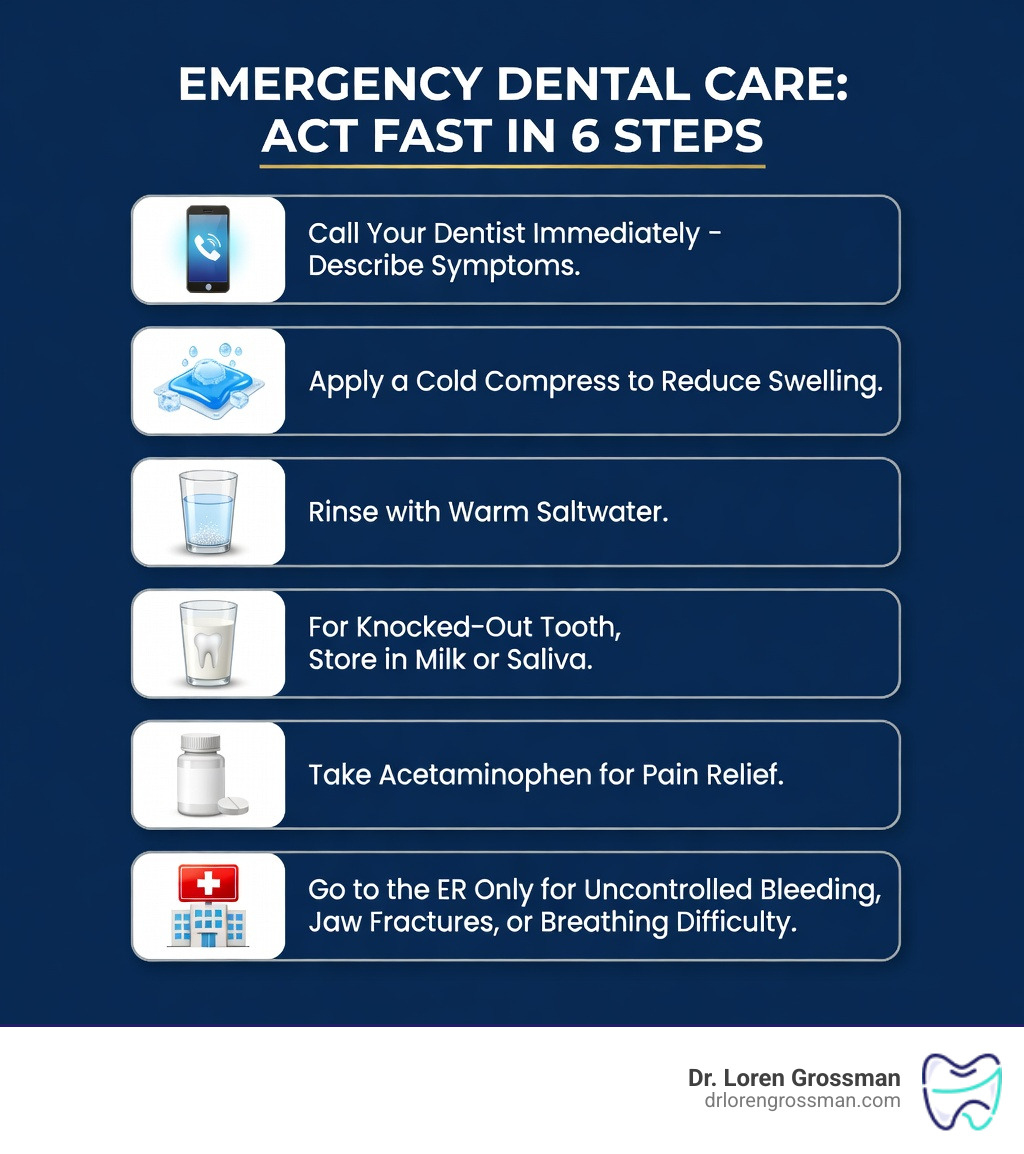
- Call a dentist immediately and describe your symptoms
- Apply first aid — cold compress for swelling, warm saltwater rinse for pain
- For a knocked-out tooth, store it in milk or saliva and get to a dentist within 30 minutes
- Go to the ER if you have uncontrolled bleeding, severe facial swelling, or difficulty breathing
- Take over-the-counter pain relief (acetaminophen) while you wait
Dental pain has a way of arriving at the worst possible moment — a weekend morning, the middle of a work day, or right before a big event. And unlike a cut or a bruise, teeth cannot heal themselves. When something goes wrong, waiting almost always makes it worse. A mild ache can become a serious infection. A knocked-out tooth that might have been saved is lost forever. The difference between a good outcome and a painful, costly one often comes down to how fast you act.
I’m Dr. Loren Grossman, a family and cosmetic dentist serving Northeastern Pennsylvania since 1984, and over four decades I’ve treated countless patients facing a dental emergency — from knocked-out teeth to severe abscesses. I’ll walk you through exactly what to do when a dental crisis strikes.
Identifying a Same Day Dental Emergency
Not every dental hiccup requires dropping everything and rushing to the clinic. If you lose a filling but feel no pain, you can likely wait a day or two for an appointment. However, when the structural integrity of a tooth is compromised or an infection is brewing, it becomes a dental emergency.
We often see patients who try to “tough it out,” only to find themselves in the chair a few days later with a much more complex (and expensive) problem. To help you decide if you need to call us right now, consider this comparison:
| Emergency (See Us Today) | Non-Urgent (Schedule Soon) |
|---|---|
| Knocked-out or loose permanent tooth | Chipped tooth with no pain or sharp edges |
| Severe, throbbing toothache that prevents sleep | Mild tooth sensitivity to hot or cold |
| Swelling of the gums, face, or neck (Abscess) | Lost filling or crown without pain |
| Uncontrolled bleeding after an extraction | Dull ache that goes away with brushing |
| Trauma to the jaw or mouth | Broken denture that still fits reasonably well |
The “Big Three” Emergencies
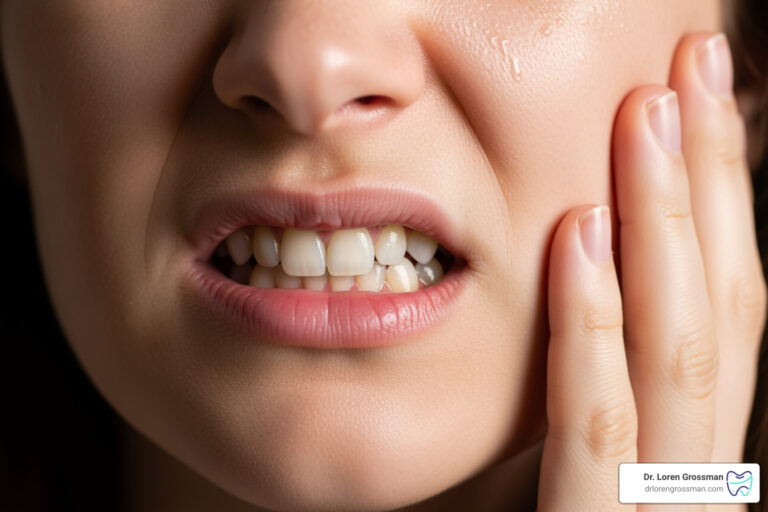
- Severe Toothache: This isn’t just a “twinge.” We are talking about persistent, sharp, or throbbing pain that radiates to the jaw or ear. This often indicates an infection or a deep cavity that has reached the nerve.
- Dental Abscess: This is a pocket of pus caused by a bacterial infection. It usually looks like a small pimple on the gums. If left untreated, the infection can spread to other parts of the body, which is a significant health risk.
- Uncontrolled Bleeding: While a little pink in the sink after flossing is a sign of gum disease, spontaneous or heavy bleeding that won’t stop is a Top 5 Common Dental Emergency that requires an immediate visit.
Our triage process begins the moment you call. We’ll ask specific questions to determine the level of urgency. If there is a risk of losing a tooth or a spreading infection, we prioritize your care to ensure you get relief as quickly as possible.
When a Knocked-Out Tooth is a Dental Emergency
If a permanent adult tooth is knocked out due to a sports injury or accident, the clock starts ticking immediately. Research shows that if a tooth is replaced in its socket within 30 minutes, there is a much higher success rate for the tooth to re-attach and survive.
If you find yourself in this situation, follow these steps:
- Handle with care: Pick the tooth up by the crown (the chewing surface), never the root.
- Rinse gently: If it’s dirty, rinse it with water. Do not scrub it or use soap.
- Try to reinsert: If possible, gently push the tooth back into the socket and bite down on soft gauze to hold it.
- Storage: If it won’t go back in, keep it moist. Place it in a small container of milk or, if that’s not available, in a cup of your own saliva.
Signs of a Spreading Infection
A dental infection doesn’t always stay in the tooth. If you notice a fever, swollen lymph nodes in your neck, or difficulty swallowing and breathing, the infection may be spreading. This is a critical situation. Pus drainage (a foul-tasting liquid) and persistent throbbing are clear indicators that you need professional intervention immediately to prevent systemic illness.
Immediate First Aid and Pain Relief
While you are on your way to see us or waiting for your dental emergency appointment, there are steps you can take to manage the discomfort.
- Warm Saltwater Rinse: Mix half a teaspoon of salt into eight ounces of warm water. This helps kill bacteria and soothe inflamed gum tissue.
- Cold Compress: Apply an ice pack to the outside of your cheek for 15-20 minutes at a time. This is the most effective way to reduce facial swelling and numb the area.
- Pain Medication: Over-the-counter analgesics like acetaminophen (Tylenol) are generally recommended. Important: Never place aspirin directly against the aching tooth or gums; it can cause a chemical burn on your soft tissues.
- Dental Wax or Sugar-Free Gum: If you have a broken tooth with a sharp edge that is cutting your tongue, you can cover it with a piece of dental wax or even a wad of sugar-free gum as a temporary shield.
- Lost Filling/Crown: If a crown falls out, try to keep it. You can sometimes use a tiny dab of toothpaste or over-the-counter dental adhesive to “tack” it back into place temporarily.
For a deeper dive into managing these moments, read our guide on Emergency Dental Services in Kingston, PA: What to Do in a Dental Crisis.
Navigating the Emergency Dental Visit
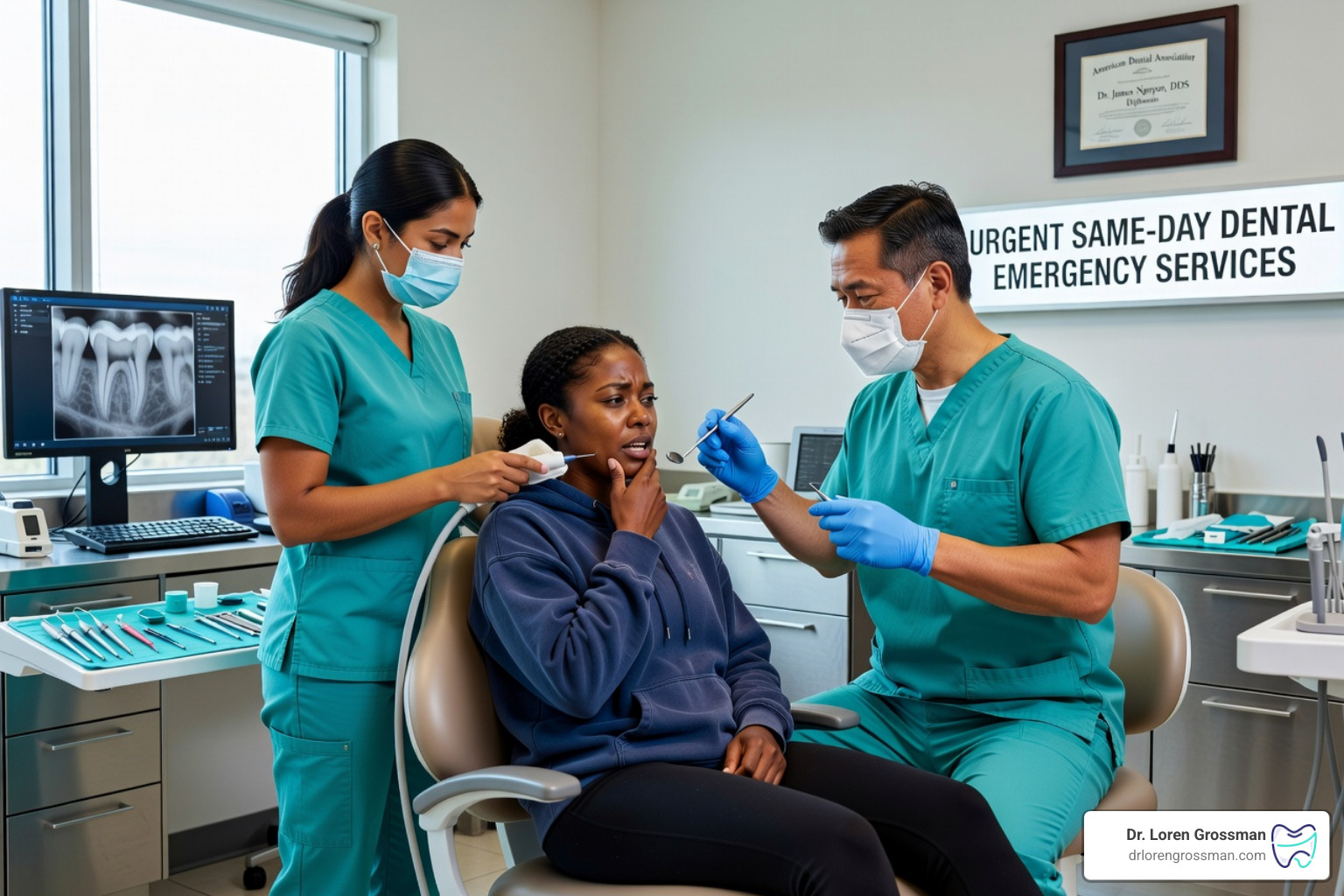
When you arrive for your emergency visit in Wilkes-Barre or Scranton, our goal is two-fold: stop the pain and stabilize the problem.
The process typically follows these steps:
- Triage Evaluation: We’ll quickly assess your vitals and the severity of the issue.
- Digital X-rays: We use advanced imaging to see what’s happening beneath the gum line. This helps us identify abscesses, bone fractures, or hidden decay.
- Diagnosis and Plan: We will explain exactly what is wrong and provide you with treatment options and costs upfront.
ER vs. Dentist: Where Should You Go?
Many people head straight to the Emergency Room for a toothache, but this isn’t always the best move. Most ERs do not have a dentist on staff. They can provide antibiotics or painkillers, but they cannot perform a root canal or pull a tooth.
Go to the ER if you have:
- Uncontrolled bleeding that won’t stop with pressure.
- Suspected jaw fractures or dislocations.
- Severe swelling that makes it hard to breathe or swallow.
- A head injury that caused loss of consciousness or vomiting.
For everything else, broken teeth, abscesses, and severe pain, a visit to our office is the more effective choice. You can also check your symptoms online to help decide the best course of action.
Treatment Options for a Dental Emergency
We strive to provide definitive treatment the same day whenever possible. Depending on your situation, this might include:
- Root Canal: If the nerve is infected, we remove the damaged tissue to save the tooth and stop the pain.
- Emergency Extraction: If a tooth is too damaged to save, we perform a gentle extraction to prevent the infection from spreading.
- CEREC Crowns: Our advanced technology allows us to create and place a permanent crown in a single visit, perfect for fixing a badly broken tooth on the spot.
- Stabilization: For knocked-out or loose teeth, we may use a “splint” to bond the injured tooth to the healthy ones next to it while it heals.
Finding Care After Hours
We know that emergencies don’t wait for business hours. While our office in Kingston operate during standard times, we often have weekend availability or on-call protocols to handle urgent needs. If you call our main line after hours, you will receive instructions on how to reach us or where to go for immediate assistance in Northeastern Pennsylvania.
Frequently Asked Questions about Urgent Dental Care
How much does emergency dental care cost?
The cost of a dental emergency visit varies based on the complexity of the treatment. A simple exam and X-ray are relatively inexpensive, while a root canal or crown will cost more.
We work with most major insurance providers, including Canada Life, Manulife, and Sun Life. Our team provides direct billing to make the process easier for you, and we offer flexible payment plans to ensure that financial concerns don’t stand in the way of your health.
Can a pharmacist help with dental pain?
Yes, your local pharmacist can be a great resource for interim relief. They can recommend antiseptic gels for mouth ulcers or the best combination of over-the-counter painkillers. However, medication only masks the symptoms; it does not fix the underlying dental problem.
How can I prevent future dental emergencies?
While you can’t prevent every accident, you can significantly lower your risk by:
- Wearing a Mouthguard: If you play contact sports in Dallas or Wilkes-Barre, a custom mouthguard is your best defense against knocked-out teeth.
- Routine Checkups: Regular cleanings allow us to catch small cavities before they turn into agonizing abscesses.
- Avoiding Hard Foods: Don’t use your teeth as tools to open packages, and be careful with ice, popcorn kernels, and hard candies.
Check out our full list of Tips from an Emergency Dentist on How to Prevent Dental Emergencies for more advice.
Conclusion
A dental emergency is stressful, painful, and almost always unexpected. But here’s the reassuring part — you don’t have to figure it out alone.
Dr. Loren Grossman has been caring for patients across Kingston, Wilkes-Barre, Scranton, and the rest of Northeastern Pennsylvania for decades. Whether you’re a familiar face we’ve seen every six months or someone who’s never visited us before, the moment you’re in pain is the moment you become our priority.
What sets our approach apart is the combination of advanced technology and genuinely personal care. Tools like CEREC same-day crowns and digital X-rays mean we can diagnose and treat faster — often resolving your crisis in a single visit. But beyond the technology, we simply care about the people sitting in our chair. Getting you out of pain and back to your life is always the goal.
So if something feels wrong right now, don’t wait and hope it gets better. Dental problems rarely resolve on their own — and the sooner you call, the better the outcome tends to be. Reach out to us today through our Emergency Dentistry page, and let’s take it from there.