Understanding Dental Crowns and Bridges in Kingston PA
When we talk about restorative dentistry, we are essentially talking about “smile repair.” Whether a tooth has been compromised by a large cavity, a fracture, or has been lost entirely, our goal is to return your mouth to its full strength and beauty. In Kingston, PA, the two primary tools we use to achieve this are crowns and bridges. These are known as “fixed” prosthetics, meaning unlike dentures, they are bonded or cemented onto existing teeth or implants and can only be removed by a dentist.
What Are Dental Crowns and How Do They Work?
Think of a dental crown as a custom-engineered “cap” for your tooth. When a tooth has lost its natural enamel due to decay or trauma, it becomes vulnerable. A crown completely encases the visible portion of the tooth above the gum line, acting as a new protective outer layer.
We often recommend dental crowns and bridges in Kingston, PA for teeth that have undergone root canal therapy. Because a root canal removes the blood supply to the tooth, the remaining structure can become brittle over time. A crown provides the necessary chewing strength to prevent the tooth from snapping under pressure. Crowns are also the final step for a single dental implant, providing a natural shape that mimics your original tooth.

What Are Dental Bridges and Which Types Are Available?
If a crown is for a single damaged tooth, a bridge is for the “gap” left behind by one or more missing teeth. A traditional bridge consists of two main parts:
- Abutment Teeth: These are the healthy teeth on either side of the gap. We prepare these teeth for crowns.
- Pontic: This is the artificial tooth (or teeth) that “bridges” the space.
In our Kingston practice, we evaluate which type of bridge is best for your specific anatomy:
- Traditional Fixed Bridge: The most common type, where crowns are placed on the teeth adjacent to the gap to hold the pontic in place.
- Cantilever Bridge: Used when there is an adjacent tooth on only one side of the missing tooth gap.
- Resin-Bonded (Maryland) Bridge: Often used for front teeth, this involves a pontic being held in place by metal or porcelain “wings” bonded to the back of neighboring teeth.
When Is a Crown vs a Bridge Recommended?
Choosing between a crown and a bridge depends entirely on the current state of your smile. We typically recommend a crown if you have:
- A tooth with a large filling that is starting to fail.
- A broken or severely worn-down tooth.
- A tooth that is misshapen or severely discolored.
On the other hand, a bridge is the recommended path when a tooth is entirely missing. Leaving a gap in your smile isn’t just a cosmetic issue; it can lead to “tooth shifting,” where neighboring teeth tilt into the empty space, throwing off your bite balance and potentially leading to TMJ issues or further tooth loss.
Materials, Appearance, and Long-Term Durability
Gone are the days when a dental restoration meant a dark metal line at the gum line or a tooth that looked like a piece of Chiclet gum. Modern materials allow us to match the translucency and “bounce” of light found in natural enamel.
Common Materials Used in Kingston, PA Restorations
We select materials based on where the tooth is located and how much “work” it has to do.
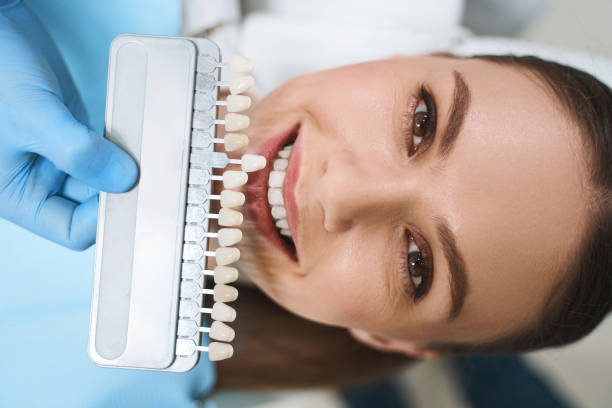
- Porcelain/All-Ceramic: These are the gold standard for front teeth because they provide the best shade match.
- Zirconia: Known for its incredible strength, Zirconia is often used for back molars that endure heavy grinding forces.
- Porcelain-Fused-to-Metal (PFM): This provides a balance of the strength of a metal substructure with the aesthetics of porcelain.
- Gold Alloys: While less common for aesthetic reasons today, gold remains one of the most biocompatible and long-lasting materials for back teeth.
How Dentists Choose the Right Material for Your Smile
When you visit us for dental crowns and bridges in Kingston, PA, we look at several factors before selecting a material. If you struggle with bruxism (teeth grinding), we will opt for high-strength Zirconia or metal. If the restoration is in your “smile zone” (the front teeth), we prioritize all-ceramic materials that won’t show a dark metal edge if your gums recede slightly over the years.
How Long Crowns and Bridges Last With Proper Care
On average, a well-made crown or bridge can last between 10 and 15 years, though many of our patients keep theirs for several decades. The restoration itself cannot decay, but the natural tooth underneath it can. This is why daily brushing and flossing are non-negotiable.
| Material | Average Lifespan | Best For |
|---|---|---|
| Zirconia | 15 – 20+ Years | High-pressure back molars |
| Porcelain | 10 – 15 Years | Front teeth (Aesthetics) |
| PFM | 12 – 15 Years | Bridges requiring extra support |
More info about crowns bridges services
The Step-by-Step Process for Getting a Crown or Bridge
We believe that a “no-rush” policy is the best way to ensure a perfect fit. Getting a restoration usually requires two visits to our Kingston office.
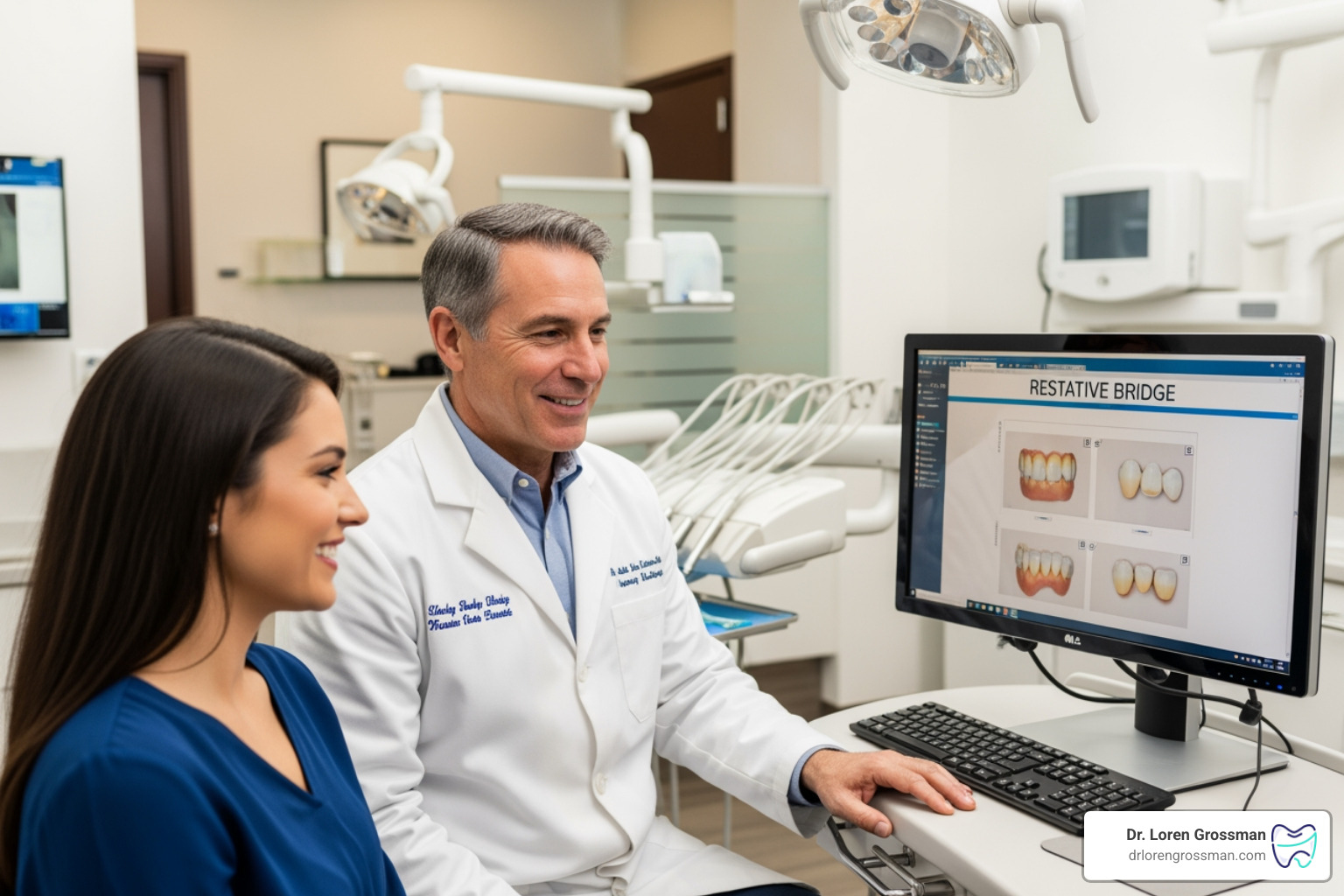
What to Expect at Your Consultation for Dental Crowns and Bridges Kingston PA
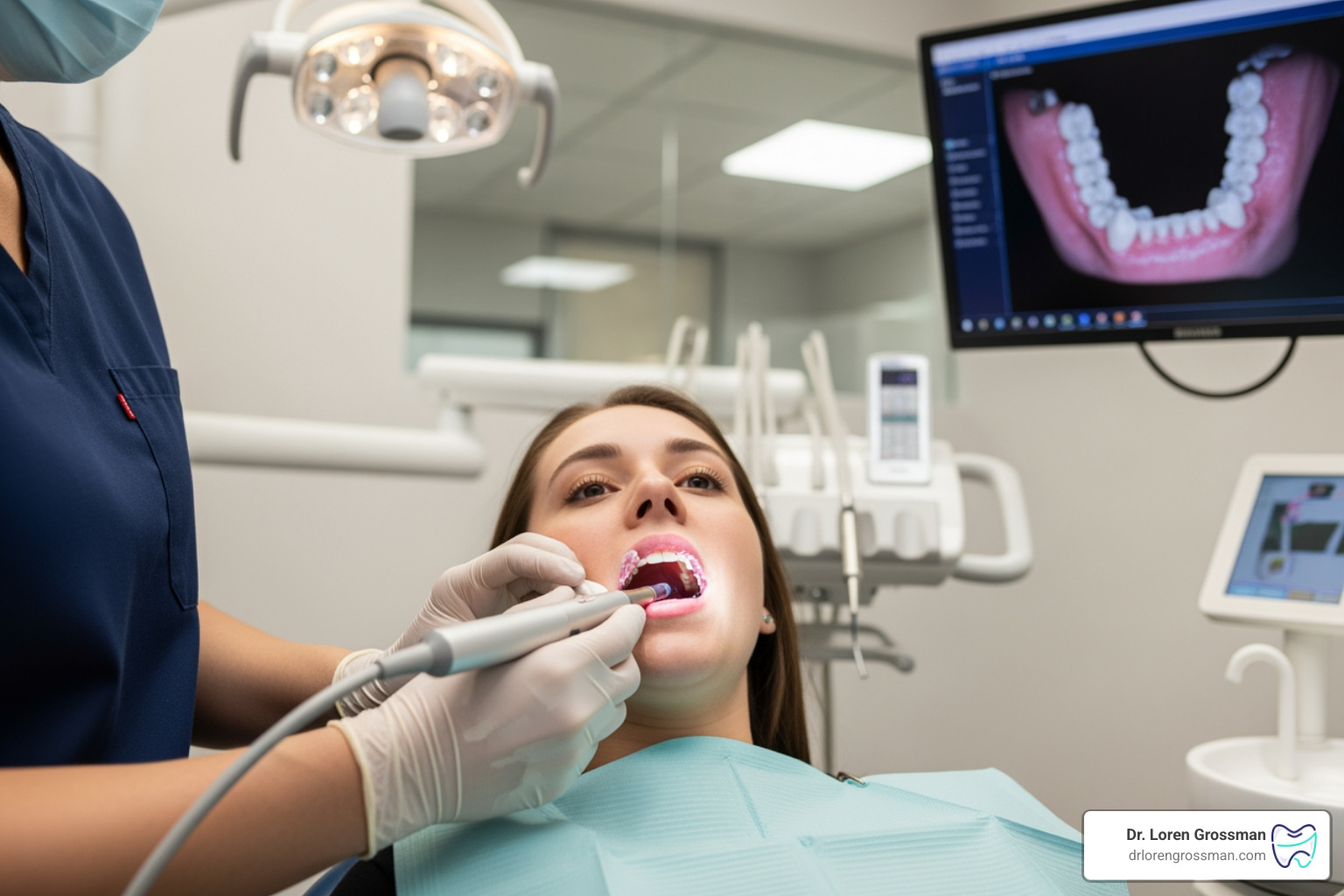
Your journey begins with a comprehensive oral exam. We use digital X-rays and sometimes a 3D digital scan to assess the health of the tooth’s root and the surrounding bone. If there is significant decay or a risk of infection, we may need to address those issues before the crown is placed. We also perform a bite analysis to see how your upper and lower teeth meet.
From Tooth Preparation to Temporary Restoration
Once the plan is set, we numb the area with a local anesthetic. We then “reduce” the tooth—carefully removing a small amount of enamel so the crown can fit over it without looking bulky.
Next, we take a digital impression. No more “goop” in your mouth! This digital file is sent to our lab. While the lab fabricates your permanent restoration (which takes about two weeks), we fit you with a temporary crown or bridge. This protects your prepared teeth and maintains your smile while you wait.
Final Placement, Fit Checks, and Recovery
When your permanent restoration arrives, you’ll return to our office. We’ll remove the temporary and place the new crown or bridge to check the “try-in” fit. We look at the shade, the shape, and most importantly, the bite. Once we are both happy with the result, we use a high-strength dental cement to bond it permanently.
Recovery is usually immediate. You might feel some slight gum tenderness or hot/cold sensitivity for a few days, but this is easily managed with over-the-counter ibuprofen.
Benefits of Crowns, Bridges, and Implant-Supported Options
Restoring your teeth does more than just fix your “look.” It restores the mechanics of your entire face.
How Crowns and Bridges Restore Function and Appearance
When teeth are missing or broken, you might find yourself subconsciously avoiding certain foods or smiling with your hand over your mouth. Dental crowns and bridges in Kingston, PA restore:
- Chewing Efficiency: Eat the foods you love without pain.
- Speech Clarity: Missing teeth can often cause a slight lisp or whistling sound.
- Facial Support: Teeth support your lips and cheeks. Without them, the face can take on a “collapsed” or aged appearance.
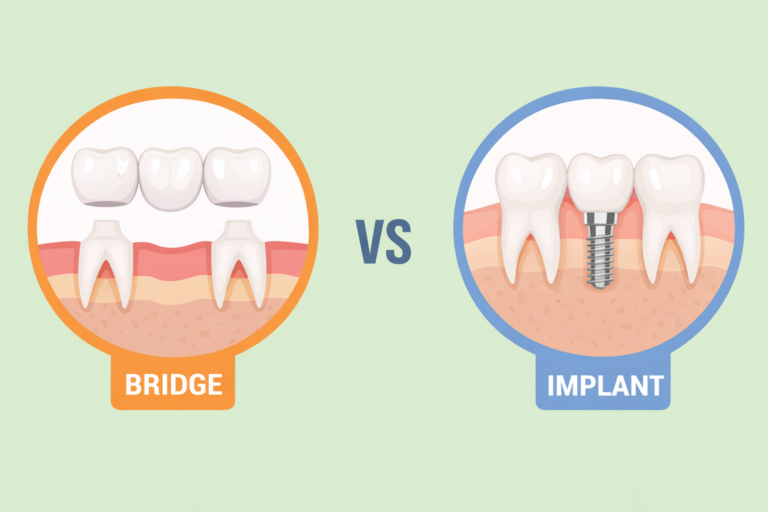
Implant-Supported Crowns and Bridges vs Traditional Restorations
While traditional bridges are excellent, implant-supported options are often considered the “gold standard” today.
- Traditional Bridge: Requires “shaving down” healthy neighboring teeth to act as anchors.
- Implant-Supported Bridge: Uses titanium posts placed in the jawbone.
Benefits of the implant approach include:
- No need to alter healthy adjacent teeth.
- Prevents jawbone absorption (bone loss) by mimicking natural tooth roots.
- Superior stability—it feels exactly like a natural tooth.
Recovery, Aftercare, and Warning Signs to Watch For
To keep your new smile healthy, you must floss under a bridge using a floss threader or an interdental brush. If a crown feels “high” when you bite down, let us know immediately; a simple adjustment can prevent the restoration from cracking.
More info about dental crowns bridges
Cost of Dental Crowns and Bridges in Kingston PA
We understand that dental work is an investment. In Northeastern Pennsylvania, the cost of restorations can vary based on several factors.
Typical Price Factors for Crowns and Bridges
The final price tag is influenced by:
- Material: All-porcelain or Zirconia typically costs more than metal-based options.
- Complexity: If the tooth requires a “build-up” or a root canal first, the total cost will increase.
- Number of Units: A three-unit bridge (two crowns and one pontic) will naturally cost more than a single crown.
Insurance Coverage and Financing Options
Most dental insurance plans cover a portion of crowns and bridges—often around 50%, provided the procedure is medically necessary (not purely cosmetic). Our office helps you navigate PPO benefits and provides pre-estimates so you aren’t surprised by a bill. We also offer payment plans and third-party financing to make the treatment accessible.
Why a Custom Exam Matters More Than Online Price Estimates
You might see “starting at” prices online, but these are often misleading. A custom exam allows us to see the “hidden” details—like the health of your gums or the strength of the underlying bone. A cheap crown that fails in two years is far more expensive than a quality restoration that lasts twenty.
Choosing Dr. Loren Grossman for Dental Crowns and Bridges in Kingston PA
Selecting the right dentist is the most important step in your restorative journey. You want someone who combines the eye of an artist with the precision of an engineer.
What to Look for in a Kingston Restorative Dentist
When searching for dental crowns and bridges in Kingston, PA, look for a practice that utilizes digital imaging and offers a variety of material options. Experience matters—ask how many of these procedures the dentist performs weekly and if they offer long-term follow-up care.
Why Patients Choose Dr. Loren Grossman
At our practice, we’ve been serving the NEPA community since 1984. We aren’t a high-volume dental “factory.” We pride ourselves on:
- Personalized Consultations: We sit down and explain the “why” behind every recommendation.
- Advanced Technology: From digital impressions to 3D imaging, we use tools that make your visit faster and more comfortable.
- Comfort-Focused Care: We know dental anxiety is real, and we go the extra mile to ensure you are relaxed from start to finish.
More info about crowns bridges services
Frequently Asked Questions About Dental Crowns and Bridges
Are crowns and bridges permanent?
While they are called “permanent” because they are not removable like dentures, they are not necessarily “forever.” They are subject to wear and tear. However, with excellent hygiene, they can last for many decades.
Is getting a crown or bridge painful?
Not at all. We use local anesthesia to ensure you are completely numb during the preparation phase. Most patients report that the sensation is no different than getting a standard filling.
Can a bridge or crown be placed on an implant?
Absolutely! In fact, this is one of the most stable ways to replace teeth. An implant crown or bridge provides the most natural feel and protects your jawbone health over time.
Conclusion
Restoring your smile is about more than just aesthetics; it’s about regaining your quality of life. Whether you are dealing with a single cracked tooth or multiple missing teeth, dental crowns and bridges in Kingston, PA offer a reliable, beautiful solution.
At the office of Dr. Loren Grossman, we are dedicated to providing Northeastern Pennsylvania with restorative care that stands the test of time. We invite you to schedule a consultation at our Kingston office to discuss your goals and discover how modern dentistry can transform your confidence.