What Are the Dental Specialties? A Quick Overview
Dental specialties are officially recognized branches of dentistry in which a dentist completes advanced post-graduate training beyond dental school to focus on a specific area of oral health care.
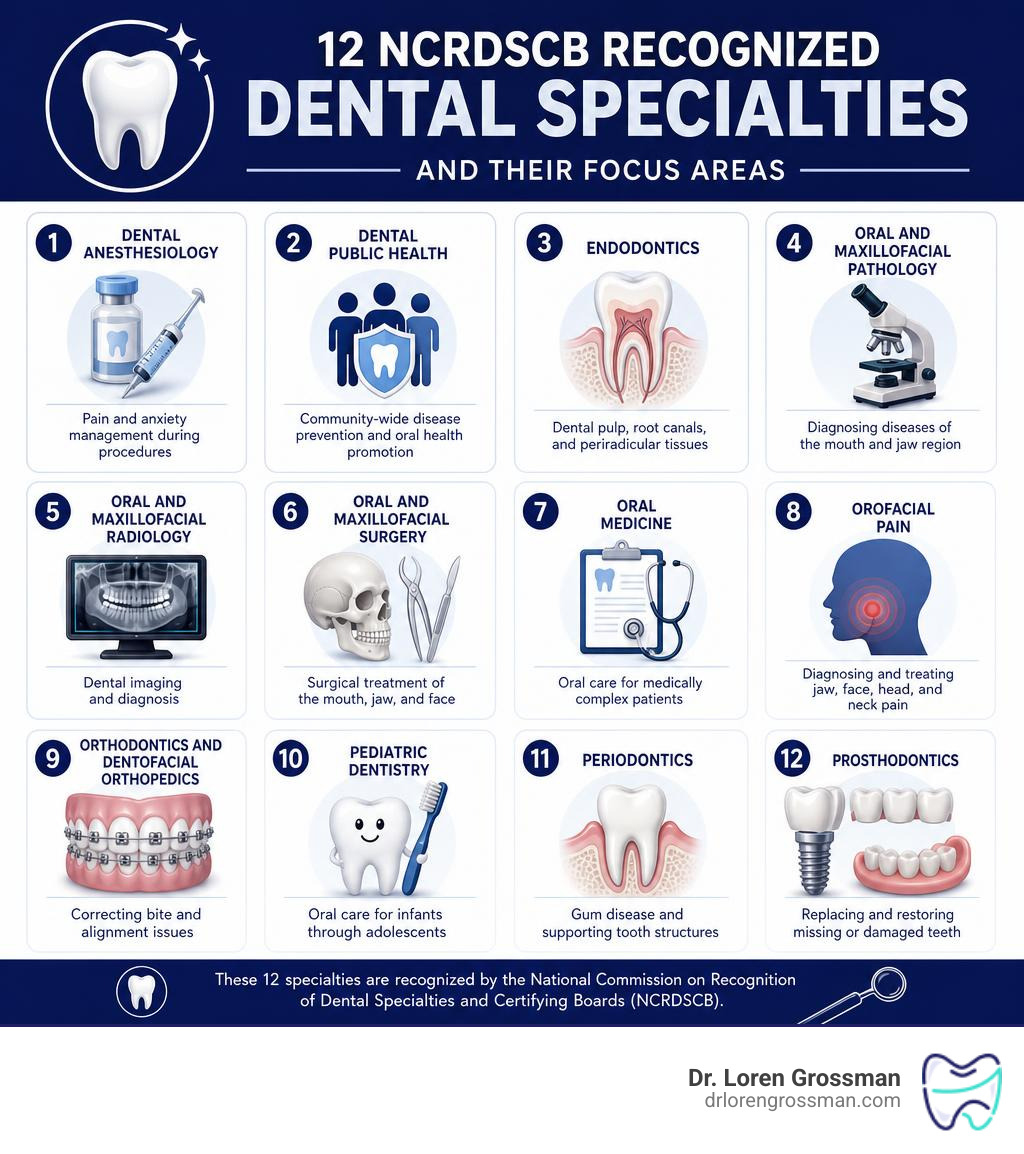
There are currently 12 dental specialties recognized by the National Commission on Recognition of Dental Specialties and Certifying Boards (NCRDSCB):
| # | Specialty | Primary Focus |
|---|---|---|
| 1 | Dental Anesthesiology | Pain and anxiety management during procedures |
| 2 | Dental Public Health | Community-wide disease prevention and oral health promotion |
| 3 | Endodontics | Dental pulp, root canals, and periradicular tissues |
| 4 | Oral and Maxillofacial Pathology | Diagnosing diseases of the mouth and jaw region |
| 5 | Oral and Maxillofacial Radiology | Dental imaging and diagnosis |
| 6 | Oral and Maxillofacial Surgery | Surgical treatment of the mouth, jaw, and face |
| 7 | Oral Medicine | Oral care for medically complex patients |
| 8 | Orofacial Pain | Diagnosing and treating jaw, face, head, and neck pain |
| 9 | Orthodontics and Dentofacial Orthopedics | Correcting bite and alignment issues |
| 10 | Pediatric Dentistry | Oral care for infants through adolescents |
| 11 | Periodontics | Gum disease and supporting tooth structures |
| 12 | Prosthodontics | Replacing and restoring missing or damaged teeth |
Most people know their general dentist well. But when a dental problem goes beyond routine care — think a damaged tooth root, a misaligned bite, or gum disease that won’t respond to basic treatment — that’s when dental specialties becomes important to understand.
As of 2019, roughly 21% of the approximately 200,000 actively practicing dentists in the United States work within one of these recognized specialties. That means most patients will encounter a specialist at some point in their oral health journey — yet few people know what each specialty actually does, or when they might need one.
This guide breaks it all down in plain language: what each specialty covers, how specialists train, when you’d be referred to one, and how to make sense of your options.
I’m Dr. Loren Grossman, D.M.D., a family and cosmetic dentist serving Northeastern Pennsylvania since 1984, and over more than four decades of practice I’ve worked alongside virtually every type of dental specialist to deliver comprehensive care for my patients across the full range of dental specialties. Whether I’m handling a case in-house or coordinating with a trusted specialist, my goal is always to make sure you get exactly the care you need.
General Dentistry vs. Recognized Dental Specialities
General dentists are the primary care providers of the dental world. We examine teeth and gums, diagnose common problems, provide preventive care, restore damaged teeth, and help patients maintain healthy smiles over time.
A dental specialist, on the other hand, completes additional training in a focused area of care. Specialists are often involved when a condition is complex, requires advanced technology, involves surgery, or needs a highly focused treatment plan.
In our Kingston, Pennsylvania practice, our general dentistry services include routine exams, cleanings, fillings, crowns, bridges, preventive care, and treatment planning. When a patient needs advanced specialty care, we help coordinate that process so they are not left trying to decode the dental alphabet alone. DDS, DMD, OMS, CBCT… dentistry has enough abbreviations to make a soup label jealous.
The official list of NCRDSCB recognized specialties currently includes 12 specialties. These are recognized because they require knowledge and skills beyond standard dental school training.
| Category | General Dentist | Dental Specialist |
|---|---|---|
| Degree | DDS or DMD | DDS or DMD plus specialty training |
| Main Role | Broad dental care and prevention | Focused care in a specific area |
| Training After Dental School | May include continuing education | Usually 2-6 years of post-graduate training |
| Common Services | Exams, cleanings, fillings, crowns, cosmetic care, preventive care | Root canals, surgery, orthodontics, gum surgery, prosthetic reconstruction, advanced diagnosis |
| Patient Relationship | Often long-term primary dental home | Often referral-based for a specific issue |
| Treatment Scope | Broad and comprehensive | Narrower, deeper, more complex |
A general dentist and a dental specialist are not competing roles. They work together. Think of your general dentist as the quarterback of your oral health team. Specialists are the highly trained teammates who come in when a particular play needs advanced skill.
Education and Training Pathways for Dental Specialities
To become a dentist in the United States, students typically complete at least three years of undergraduate education, though many earn a bachelor’s degree first. Then they complete four years of dental school and graduate with either a DDS, Doctor of Dental Surgery, or DMD, Doctor of Dental Medicine.
The DDS and DMD degrees are equivalent. Different dental schools use different titles, but both degrees qualify a dentist to practice general dentistry.
To become a specialist, a dentist then completes post-graduate training, usually through a residency or advanced specialty program. Depending on the specialty, this may take about 2-6 additional years.
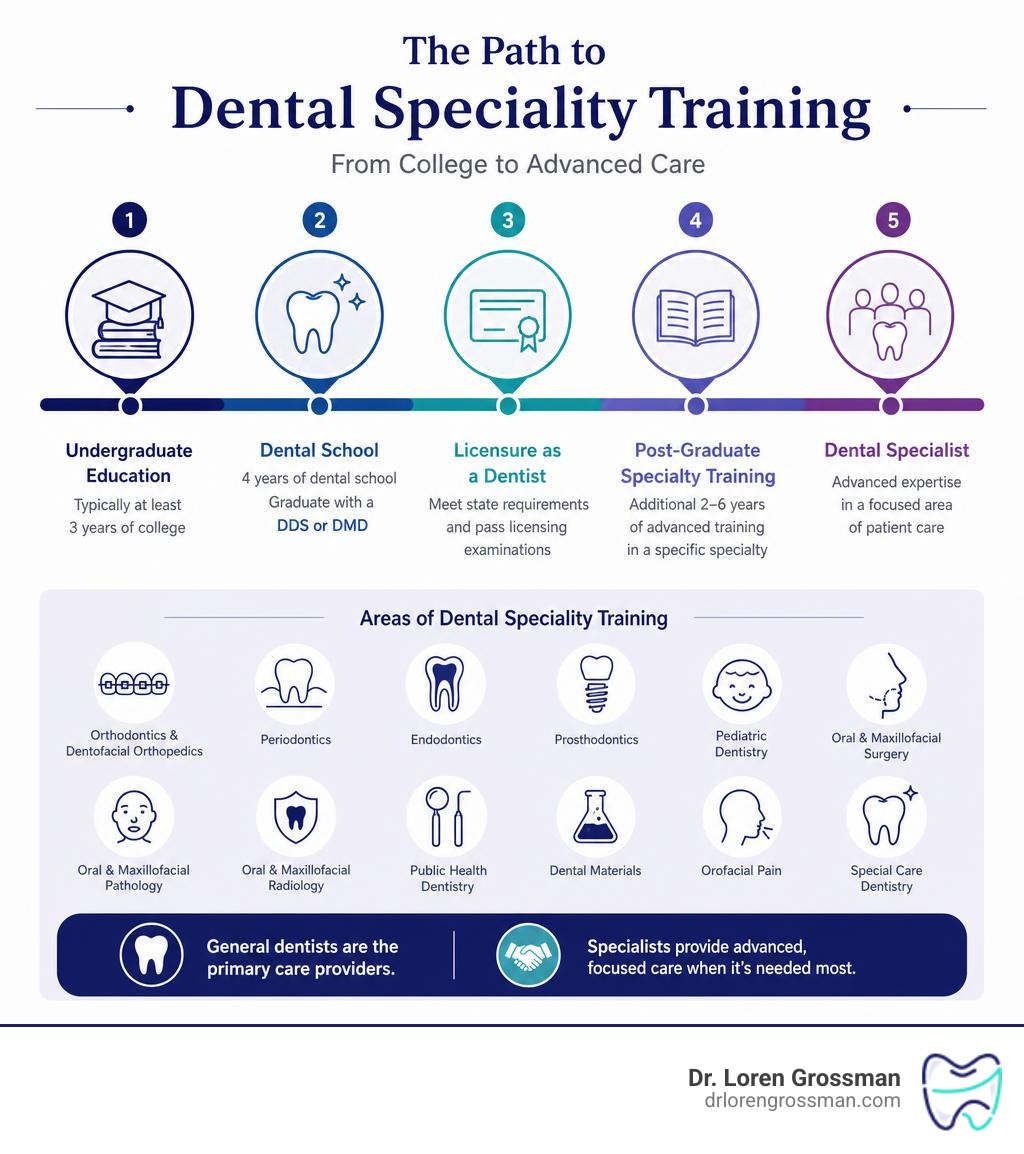
A simplified pathway looks like this:
- Undergraduate education
- Dental school, resulting in DDS or DMD
- Licensure as a dentist
- Specialty residency or post-graduate program
- Optional or required board certification, depending on the specialty and professional goals
- Ongoing continuing education
Specialty programs include classroom study, clinical experience, hospital rotations in some fields, surgical training for some specialties, research, and supervised patient care. By May 2026, the core idea remains the same: specialists train longer so they can manage more focused or complex problems.
The 12 Officially Recognized Dental Specialties
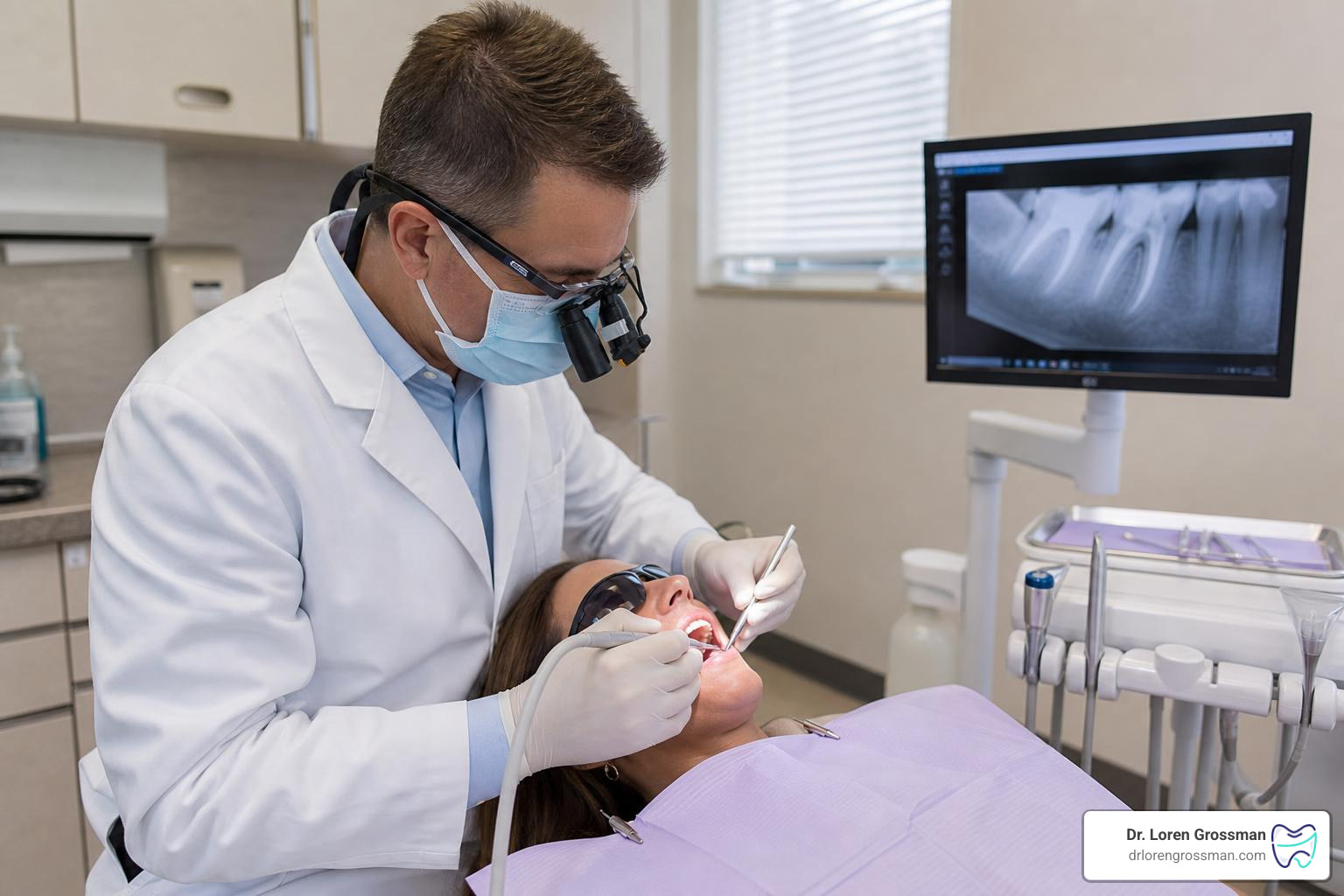
Each dental specialty has a different clinical focus, patient population, set of diagnostic tools, and treatment approach. Some are hands-on surgical fields. Some are diagnostic. Some focus on children, pain, community health, or medically complex patients.
Below is a practical guide to the 12 recognized specialties and what they actually do for patients.
Restorative and Cosmetic Dental Specialities
Many patients hear the word “restorative” and think of fillings, crowns, veneers, or implants. That is partly correct, but within official dental specialities, restorative care is divided across several areas.
Endodontics
Endodontics focuses on the inside of the tooth, especially the dental pulp, nerves, blood vessels, and tissues around the root tip.
Typical procedures include:
- Root canal therapy
- Retreatment of a previous root canal
- Treatment of dental abscesses
- Management of cracked teeth involving the pulp
- Surgical endodontic procedures such as apicoectomy
A general dentist may perform many root canals, but an endodontist is often recommended for molars with curved canals, persistent infection, dental trauma, or severe pain. If you are experiencing swelling, toothache, or sudden dental pain, our emergency dentistry services can help determine whether endodontic care may be needed.
Prosthodontics
Prosthodontics focuses on restoring and replacing missing or deficient teeth and oral tissues. A prosthodontist often handles complex reconstruction, full-mouth rehabilitation, advanced dentures, implant restorations, and esthetic restorations.
The American College of Prosthodontists describes prosthodontics as a recognized specialty involving diagnosis, treatment planning, rehabilitation, and maintenance of oral function, comfort, appearance, and health using suitable replacement materials. You can read more in this overview of prosthodontics.
Typical procedures include:
- Crowns
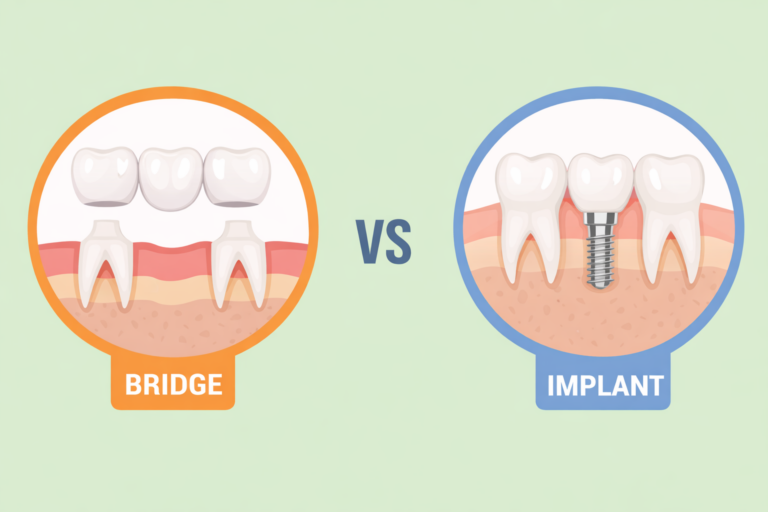
- Bridges
- Dentures
- Implant-supported restorations
- Full-mouth reconstruction
- Complex bite rehabilitation
- Maxillofacial prosthetics in advanced cases
In our office, many restorative needs can be addressed with dental implants and crowns and bridges. For very complex reconstruction, a prosthodontist may be part of the treatment team.
Pediatric Dentistry
Pediatric dentistry is an age-defined specialty for infants, children, teenagers, and children with special health care needs.
Pediatric dentists focus on:
- Child-friendly preventive care
- Fluoride and sealants
- Cavity treatment in children
- Growth and development monitoring
- Early orthodontic concerns
- Dental care for children with medical or developmental needs
- Sedation or hospital-based dentistry when needed
Our pediatric dentistry services help families build healthy habits early, because tiny teeth have big responsibilities.
Orthodontics and Dentofacial Orthopedics
Orthodontics corrects tooth alignment, bite problems, jaw growth concerns, and skeletal or neuromuscular abnormalities affecting the teeth and face.
Typical treatments include:
- Braces
- Clear aligners
- Retainers
- Space maintainers
- Palatal expanders
- Growth modification appliances
- Surgical orthodontic planning in complex jaw cases
For many adults and teens, clear aligner therapy can be a convenient option. We offer Invisalign for appropriate alignment cases.
Periodontics
Periodontics focuses on the gums and supporting structures around teeth, including bone, periodontal ligaments, and tissues around dental implants.
Typical procedures include:
- Diagnosis and treatment of gum disease
- Scaling and root planing
- Gum surgery
- Bone grafting
- Gum grafting
- Dental implant placement in many practices
- Treatment of peri-implant disease
A periodontist may be recommended if gum disease is advanced, bone loss is present, teeth are loosening, or implant-related complications develop.
Surgical and Diagnostic Specialties
Some specialties are focused on surgery, advanced diagnosis, imaging, or the care of patients with complex medical needs.
Oral and Maxillofacial Surgery
Oral and maxillofacial surgery involves surgical treatment of diseases, injuries, defects, and functional or esthetic concerns involving the mouth, jaws, face, and related structures.
Typical procedures include:
- Wisdom tooth removal
- Dental implant surgery
- Jaw surgery
- Facial trauma treatment
- Oral pathology biopsy
- Cyst or tumor removal
- Corrective jaw surgery
- Management of certain TMJ conditions
Oral and maxillofacial surgeons often complete hospital-based training and may provide anesthesia or sedation services as part of surgical care.
Oral and Maxillofacial Pathology
Oral pathology is the specialty focused on identifying and diagnosing diseases of the mouth, jaws, salivary glands, and related tissues.
An oral pathologist may evaluate:
- Unusual mouth sores
- White or red patches
- Oral lesions
- Salivary gland disorders
- Cysts and tumors
- Biopsy samples
- Possible oral cancer changes
If we see a lesion that does not look routine or does not heal as expected, we may recommend biopsy or pathology evaluation.
Oral and Maxillofacial Radiology
Oral and maxillofacial radiology focuses on producing and interpreting images used to diagnose conditions of the mouth, jaws, teeth, and facial structures.
Diagnostic tools may include:
- Dental X-rays
- Panoramic imaging
- Cone beam CT scans
- Advanced digital imaging
- Radiographic interpretation for complex cases
This specialty is especially important for implant planning, jaw pathology, trauma, impacted teeth, and complex surgical cases.
Oral Medicine
Oral medicine bridges dentistry and medicine. It focuses on oral health care for medically complex patients and diagnosis of medically related diseases affecting the mouth and jaw region.
Oral medicine specialists may help with:
- Oral complications of cancer therapy
- Autoimmune oral conditions
- Chronic oral ulcers
- Medication-related oral problems
- Dry mouth and salivary disorders
- Oral symptoms linked to systemic disease
Oral medicine is usually non-surgical. The focus is diagnosis, medical management, coordination with physicians, and long-term care planning.
Emerging and Community-Focused Specialties
Some recognized specialties are less familiar to patients, but they play an important role in safe, comprehensive oral health care.
Dental Anesthesiology
Dental anesthesiology focuses on pain control, anxiety management, and patient safety during dental, oral, and maxillofacial procedures.
This may include:
- Local anesthesia planning
- Nitrous oxide
- Oral sedation
- IV sedation
- General anesthesia
- Monitoring medically complex patients
This specialty is especially important for patients with severe dental anxiety, extensive treatment needs, special health care needs, or medical conditions that require advanced monitoring.
Orofacial Pain
Orofacial pain specialists diagnose and manage pain disorders involving the jaw, mouth, face, head, and neck.
They may treat:
- TMJ disorders
- Facial pain
- Jaw muscle pain
- Nerve-related pain
- Headache disorders related to oral structures
- Burning mouth symptoms
- Sleep-related oral pain concerns
These cases can be tricky because pain does not always follow a neat map. Sometimes the tooth is innocent, even when it is getting all the blame.
Dental Public Health
Dental public health focuses on preventing and controlling dental disease at the community level rather than treating one patient at a time.
Dental public health professionals may work on:
- Community prevention programs
- Fluoride policy
- School-based oral health initiatives
- Access-to-care programs
- Oral health research
- Population-level disease prevention
Most patients do not “see” a dental public health specialist in the same way they see an orthodontist or oral surgeon, but this specialty affects public oral health every day.
Key Differences in Restorative and Surgical Care

Restorative dentistry can mean different things depending on context. In everyday dental care, it often refers to repairing or replacing teeth with fillings, crowns, bridges, veneers, implants, or dentures. In some international systems, restorative dentistry may also be considered a formal specialty that integrates endodontics, periodontics, and prosthodontics. In the United States, however, the NCRDSCB recognizes specific specialties such as endodontics, periodontics, and prosthodontics rather than “restorative dentistry” as one of the 12 official specialties.
A helpful way to separate the restorative fields:
| Field | Main Question It Answers | Common Treatments |
|---|---|---|
| Endodontics | Can we save the inside of the tooth? | Root canals, pulp therapy, abscess treatment |
| Periodontics | Can we restore gum and bone support? | Gum disease therapy, grafting, implant-related care |
| Prosthodontics | How do we replace or rebuild teeth? | Crowns, bridges, dentures, implants, full-mouth rehabilitation |
| General Restorative Dentistry | How do we repair everyday tooth damage? | Fillings, crowns, bonding, preventive repair |
The restorative dentistry scope is often described as integrated care for teeth, supporting structures, function, appearance, and rehabilitation. In practical terms, restorative treatment may be simple, such as a filling, or complex, such as rebuilding a bite after tooth loss, erosion, trauma, or periodontal disease.
Surgical specialties differ because they involve operative intervention in hard or soft tissues. Oral and maxillofacial surgery may involve tooth removal, jaw surgery, biopsy, facial trauma care, or implant surgery. Periodontics may also include surgical treatment of gum and bone tissues.
Non-surgical specialties, such as oral medicine, oral radiology, dental public health, and many orofacial pain cases, focus more on diagnosis, medical management, imaging, prevention, and long-term care coordination.
The key is not whether one specialty is “better.” It is whether that specialty matches the problem.
For example:
- A tooth with infected pulp may need endodontics.
- Missing teeth and bite collapse may need prosthodontic planning.
- Severe gum disease may need periodontics.
- A suspicious oral lesion may need pathology.
- Impacted wisdom teeth may need oral surgery.
- Chronic jaw and facial pain may need orofacial pain evaluation.
Navigating Referrals and Insurance for Specialty Care
Most specialty care begins with a general dentist. During an exam, we assess symptoms, medical history, X-rays, periodontal health, tooth structure, bite, and patient goals. If the case requires advanced training or equipment, we discuss referral options.
A typical referral process may include:
- Examination and diagnosis in our office
- Discussion of the concern and why specialty care may help
- Referral to the appropriate type of specialist
- Transfer of relevant records, X-rays, images, and notes
- Specialist consultation and treatment plan
- Coordination between our office and the specialist
- Follow-up care or restoration after the specialist completes treatment
For example, an endodontist may complete a root canal, then we may restore the tooth with a crown. An oral surgeon may place an implant, then we may restore it with a crown. An orthodontist may align the teeth, then we may complete cosmetic bonding, whitening, or veneers.
Patients often ask whether they can choose a specialist directly. In many cases, yes. However, starting with a general dentist is usually wise because dental symptoms can be misleading. Jaw pain might be TMJ-related, sinus-related, bite-related, nerve-related, or tooth-related. A good diagnosis saves time, money, and unnecessary treatment.
For insurance, specialty care is usually covered differently than routine general dentistry.
Common patterns include:
- Preventive care, such as exams and cleanings, may be covered at a higher percentage.
- Basic restorative care, such as fillings, may have moderate coverage.
- Major services, such as crowns, bridges, dentures, implants, periodontal surgery, or oral surgery, may have lower coverage.
- Orthodontic benefits may have age limits, waiting periods, or lifetime maximums.
- Some oral surgery may fall under dental insurance, medical insurance, or both, depending on the diagnosis and procedure.
- Pre-authorization may be required before treatment.
- Out-of-pocket costs depend on deductibles, annual maximums, copayments, plan exclusions, and whether the provider is in network.
If you are comparing plans or trying to understand general dental network options, insurer tools for finding a dentist can be helpful. For your specific treatment, however, the most important step is to ask for a written estimate and confirm benefits before care begins.
We always encourage patients to ask:
- Is this specialist in my insurance network?
- Is pre-authorization required?
- What diagnostic codes and procedure codes will be submitted?
- What is my estimated out-of-pocket cost?
- Does my plan have a waiting period or annual maximum?
- Will medical insurance be involved?
Insurance is not always thrilling reading. No one curls up by the fire with a benefits booklet. But understanding it before treatment can prevent surprises.
Frequently Asked Questions About Dental Specialties
How do I know if I need to see a dental specialist instead of a general dentist?
You may need a specialist if your condition is complex, severe, persistent, surgical, or outside the usual scope of routine dental care.
Common reasons for referral include:
- Severe tooth pain or swelling
- Root canals with complex anatomy
- Advanced gum disease or bone loss
- Impacted wisdom teeth
- Jaw fractures or facial trauma
- Suspicious oral lesions
- Chronic jaw, facial, head, or neck pain
- Complex tooth replacement needs
- Full-mouth reconstruction
- Significant bite or alignment problems
- Children with special health care needs
- Medical conditions that complicate dental treatment
- Need for sedation or advanced anesthesia
A general dentist can often diagnose the problem and explain whether specialty care is needed. Sometimes we can treat the issue in-house. Other times, the best care means bringing in a specialist.
What is the difference between a prosthodontist and a general dentist who does cosmetic work?
A prosthodontist completes advanced residency training focused on complex restoration and replacement of teeth. This training typically includes implants, crowns, bridges, dentures, occlusion, esthetics, full-mouth reconstruction, and sometimes maxillofacial prosthetics.
A general dentist may also provide excellent cosmetic and restorative care, depending on training, experience, technology, and case complexity. Many cosmetic treatments, such as veneers, whitening, bonding, crowns, and smile design, are commonly provided in general dental practices.
At our office, we offer cosmetic dentistry, dental veneers, teeth whitening, Zoom Whitening, and comprehensive smile makeover planning.
The difference usually comes down to complexity.
A general dentist may be a great fit for:
- Whitening
- Veneers
- Cosmetic bonding
- Single crowns
- Simple bridges
- Minor bite improvements
- Smile enhancements
A prosthodontist may be recommended for:
- Severe tooth wear
- Multiple missing teeth
- Failed complex dental work
- Full-mouth reconstruction
- Complex implant cases
- Major bite collapse
- Cancer, trauma, or congenital oral defects
In many cases, we coordinate care so patients receive the right mix of general, cosmetic, restorative, and specialty support.
Are treatments by dental specialists covered by standard dental insurance?
Sometimes, but coverage varies widely.
Dental insurance plans often separate care into categories such as preventive, basic, major, and orthodontic services. Specialist treatment may fall into basic or major categories depending on the procedure.
Examples:
- A specialist consultation may be covered, partially covered, or applied to a deductible.
- Root canal therapy may be covered as a basic or major service.
- Periodontal treatment may have specific frequency limits.
- Oral surgery may require pre-authorization.
- Orthodontics may have lifetime maximums.
- Implants may be covered by some plans and excluded by others.
- Sedation may only be covered when medically necessary.
Before specialty treatment, ask for:
- A written treatment plan
- Procedure codes
- Diagnostic codes when applicable
- Pre-treatment estimate or pre-authorization
- Explanation of deductibles and annual maximums
- Clarification of what happens if insurance pays less than expected
The short answer: do not assume specialty care is covered the same way as routine cleanings. It often is not.
Conclusion
Understanding dental specialties helps you make better decisions about your oral health. General dentists provide the foundation: exams, prevention, diagnosis, restorative care, cosmetic care, and long-term planning. Specialists add advanced training for complex areas such as root canals, gum disease, oral surgery, orthodontics, prosthetic reconstruction, oral medicine, pain disorders, imaging, pathology, anesthesia, pediatric care, and public health.
At Dr. Loren Grossman, we believe comprehensive dentistry works best when patients understand their options. Whether we provide your care directly through our services or coordinate with a specialist, our goal is the same: healthy teeth, confident smiles, and treatment that makes sense for your life.
If you want a deeper specialty-by-specialty breakdown, visit our guide to the 12 ADA recognized specialties. And if you are in Kingston or Northeastern Pennsylvania and unsure where to start, start with us. We will help you figure out whether your concern belongs in general dentistry, cosmetic dentistry, or one of the recognized dental specialities.