Is Professional Teeth Whitening Worth the Cost?
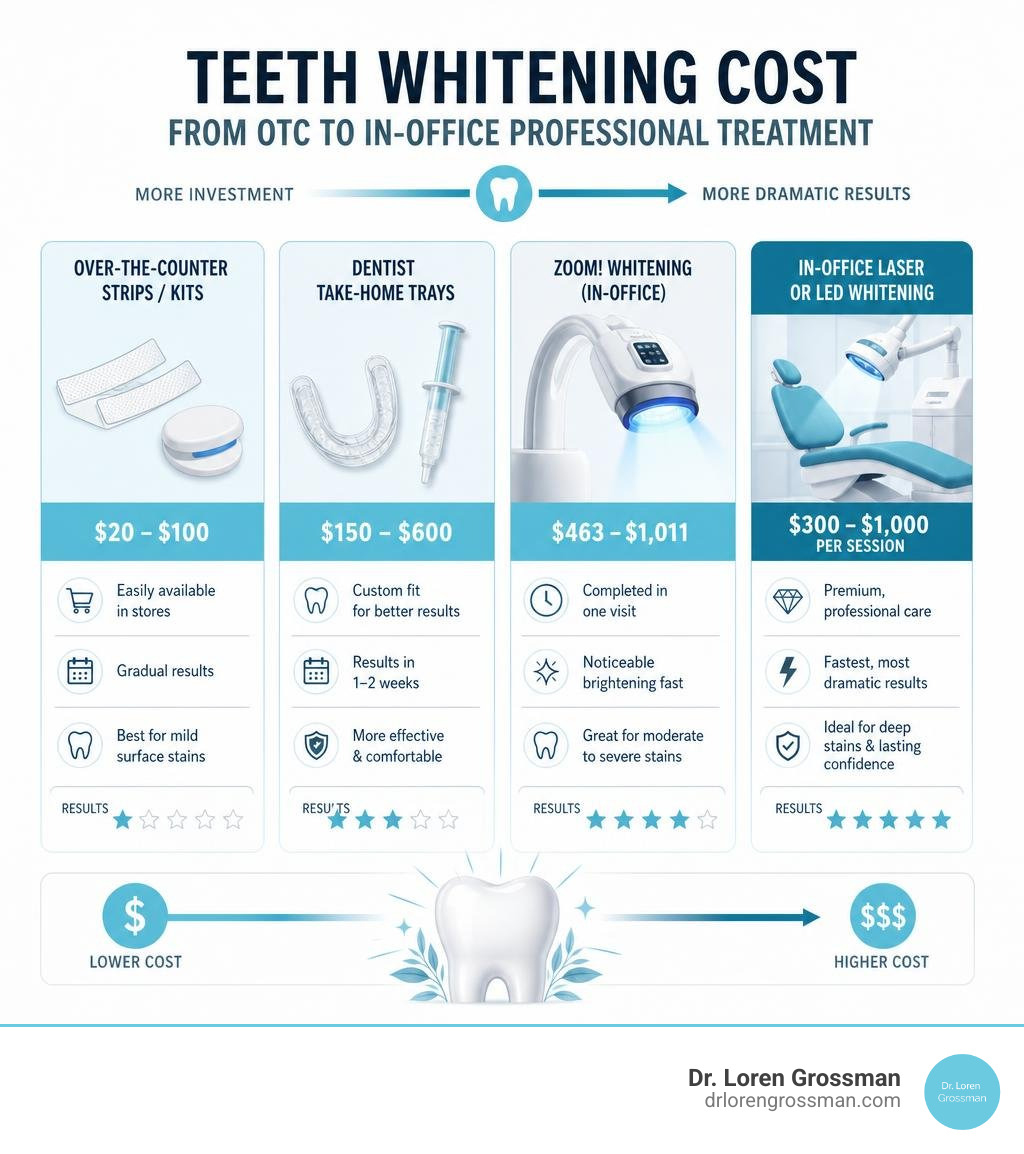
Teeth whitening cost at a dentist office typically falls in this range in 2026:
| Treatment Type | Typical Cost Range |
|---|---|
| In-office laser or LED whitening | $300 – $1,000 per session |
| Zoom! whitening | $463 – $1,011 |
| Dentist take-home custom trays | $150 – $600 |
| Over-the-counter strips/kits | $20 – $100 |
Nearly 96% of Americans believe a white smile is an important social asset — yet stained or yellowed teeth hold countless people back from smiling with confidence. Coffee, tea, red wine, aging, and even certain medications all leave their mark over time.
The result? A booming whitening industry where Americans spend close to $2 billion annually — on everything from $5 drugstore pastes to $1,000 in-office treatments.
That wide price gap raises a fair question: Does paying more at the dentist actually get you better results?
The short answer is yes — but the details matter a lot. The type of treatment, where you live, and the severity of your staining all shape what you’ll actually pay and what you’ll actually get.
I’m Dr. Loren Grossman, D.M.D., a cosmetic and family dentist serving the Wyoming Valley since 1984, and I’ve personally helped hundreds of patients weigh the real teeth whitening cost at a dentist office — including options like Zoom! II chairside whitening — against what store-bought products can realistically deliver. In this guide, I’ll walk you through everything you need to make a confident, informed decision about your smile.
Basic teeth whitening cost dentist office vocab:
- best teeth whitening treatment options
- how long does teeth whitening last
- professional teeth whitening vs at home
What is the Teeth Whitening Cost at a Dentist Office?
When you begin researching how to lift years of dark stains from your enamel, the sheer variety of price tags can feel overwhelming. In-office treatments are medical-grade procedures performed under strict clinical supervision. This is why the upfront cost is higher than a box of strips from your local Kingston pharmacy.

Generally, the Teeth Whitening Cost 2026: In-Office vs At-Home vs OTC benchmarks reveal that in-office dental whitening ranges from $300 to $1,000 per session, with some complex or high-end cosmetic laser treatments reaching up to $1,500.
If you choose a specialized system like Zoom Teeth Whitening, which uses a proprietary light-activated gel to accelerate the bleaching process, the national average is around $583, with most patients paying between $463 and $1,011 depending on their specific needs.
Understanding what goes into this pricing is crucial. When you pay for an in-office treatment, you are not just buying the bleaching gel. You are paying for:
- A comprehensive pre-treatment dental exam to ensure your teeth and gums are healthy enough for bleaching.
- The application of specialized, light-activated hydrogen peroxide formulas (often up to 35% to 40% concentration, compared to the 10% or less found in retail products).
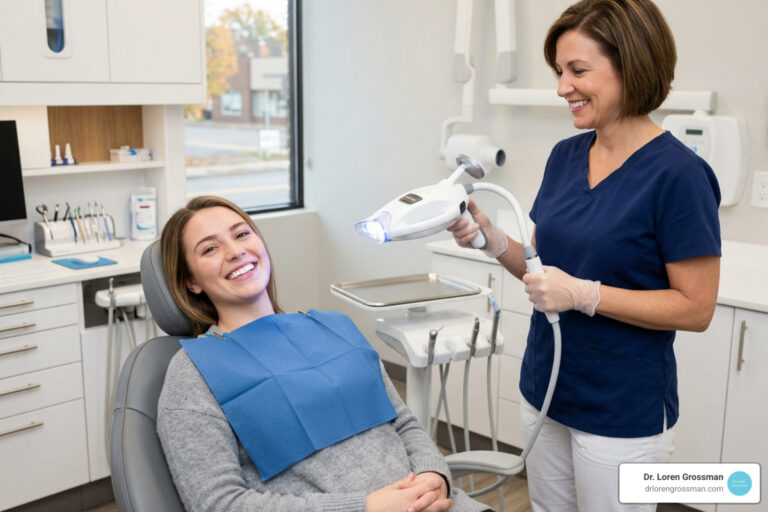
- Clinical isolation of your gums, lips, and cheeks to prevent chemical burns and minimize post-treatment sensitivity.
- The expertise of trained dental professionals who monitor your comfort and shade progress in real-time.
Average Teeth Whitening Cost at a Dentist Office in 2026
To help you budget, let’s look at the average costs for professional treatments in 2026. According to the How Much Does Teeth Whitening Cost? (2026 Guide) | CostWhale, the national average for high-tech laser dental whitening sits at $792, with a typical range of $611 to $1,368.
For a basic, non-laser chemical in-office bleaching session, the average cost across the United States is roughly $450 to $500. However, data compiled in the Average Cost to See a Dentist | 2026 Pricing Guide shows that the network average for in-office whitening is approximately $480, while basic treatments can start as low as $300 in some regions and scale up to $800 depending on the complexity of the stains.
If you prefer the convenience of whitening at home but still want professional-strength results, dentist-provided take-home kits are an exceptional middle ground. These kits, which feature custom-molded trays made from digital scans or physical impressions of your teeth, typically cost between $150 and $600 (with a national average of $375 to $500).
Factors That Influence Your Teeth Whitening Cost at a Dentist Office
Why does one dental practice charge $350 while another down the street charges $800? Several distinct factors influence the final quote you receive:
- Geographic Location and Local Market Conditions: Dental fees are closely tied to the local cost of living, commercial rent, and operational overhead. In major metropolitan areas like New York City or San Francisco, dental procedures can cost 25% to 45% above the national average. Conversely, in Northeastern Pennsylvania, our patients benefit from much more reasonable, stable pricing structures that align closely with state averages (the Pennsylvania average for professional whitening is approximately $408, typically ranging from $102 to $816).
- The Severity and Type of Staining: Extrinsic stains (caused by external factors like coffee, tea, red wine, and smoking) are relatively straightforward to lift. Intrinsic stains (discoloration inside the tooth structure caused by aging, trauma, or childhood exposure to tetracycline antibiotics) are notoriously stubborn. If you have deep intrinsic staining, you may require multiple in-office sessions or a combination protocol of in-office treatment paired with several weeks of custom take-home trays, which naturally increases the overall investment.
- The Specific Treatment Method: Simple chemical bleaching gels are less expensive to administer than proprietary, light-assisted systems. Laser and LED-activated systems require specialized, highly calibrated equipment and single-use patient kits, which increases the materials cost for the practice.
- The Dentist’s Expertise and Clinical Preparation: Before we can safely apply high-concentration bleaching gels to your teeth, we must verify that you do not have active decay, root exposure, or severe periodontal disease. If you require a professional cleaning or a filling before whitening to prevent excruciating nerve pain, these preparatory procedures will be billed separately.
Comparing Professional Whitening vs. At-Home and OTC Options
It is incredibly tempting to walk down the oral care aisle at your local supermarket and grab a $35 box of whitening strips. After all, the packaging promises a “celebrity smile” in just a few days. However, when evaluating the cost, it is vital to look at the value per shade gained and the multi-year maintenance cost, rather than just the initial price tag.
The fundamental difference between professional whitening and over-the-counter (OTC) options lies in the chemistry and the application method.
Professional treatments utilize highly concentrated hydrogen peroxide (typically 35% to 40%) or carbamide peroxide. Because these chemicals are so potent, they can only be safely applied under the watchful eye of a dentist who protects your delicate oral tissues.
OTC options must be safe for unsupervised consumer use, meaning they contain very weak concentrations of peroxide (usually under 10%). While they can successfully lift mild, surface-level stains, they cannot penetrate deep into the microscopic pores of your enamel to break up intrinsic discoloration.
Furthermore, store-bought strips and generic boil-and-bite trays are flat and uniform. Your teeth, however, are beautifully unique, three-dimensional structures. When flat strips are applied to curved teeth, they inevitably fail to reach the crevices between your teeth, leading to uneven, patchy results.
Worse yet, the excess gel on these strips frequently comes into direct contact with your gums, leading to chemical irritation and painful, white chemical burns on your gingival tissue.
To see how these methods stack up, let’s explore the direct comparison below:
| Feature | In-Office Professional Whitening | Dentist-Supervised Custom Trays | Over-the-Counter Strips & Kits |
|---|---|---|---|
| Average Cost (2026) | $450 – $1,000 | $150 – $600 | $20 – $100 |
| Active Ingredient | 35% – 40% Hydrogen Peroxide | 10% – 22% Carbamide Peroxide | 3% – 10% Hydrogen Peroxide |
| Application Method | Clinically applied gel with barrier | Custom-molded vinyl trays | Flat plastic strips or generic trays |
| Time to Results | 60 to 90 minutes (Immediate) | 10 to 14 days (Gradual) | 2 to 3 weeks (Gradual) |
| Shade Improvement | 5 to 8 shades lighter | 4 to 6 shades lighter | 2 to 4 shades lighter |
| Results Longevity | 1 to 3 years | 1 to 3 years (with cheap refills) | 3 to 6 months |
| Gum Protection | Complete (Liquid dental dam) | High (Trays trimmed to gumline) | None (Gel easily touches gums) |
As we discuss in our detailed breakdown of Professional Teeth Whitening vs At Home and Which One Wins, custom take-home trays provided by your dentist often represent the single best long-term value.
While the upfront cost of custom trays ($150 to $600) is higher than drugstore strips, the custom-molded vinyl trays last for years. When your smile needs a quick touch-up before a major event, you do not need to buy a whole new kit. You simply purchase a cheap refill syringe of professional-strength bleaching gel from our office for a fraction of the cost, making it incredibly economical over time.
For a comprehensive look at how to navigate these choices safely, check out our Which Whitening Method Wins: A Guide to Your Best Options.
Safety, Side Effects, and Enamel Protection
A major concern we hear from our patients in Northeastern Pennsylvania is: Will teeth whitening ruin my enamel?
When performed correctly under professional supervision, the answer is a resounding no. Dental enamel is the hardest substance in the human body. Professional bleaching gels work by safely passing through the microscopic pores of your enamel to reach the discolored molecules in the dentin below, breaking the chemical bonds that hold the stains together without altering the physical structure of your enamel.

However, DIY whitening hacks and unsupervised over-the-counter use can be incredibly damaging. For example, abrasive charcoal toothpastes, baking soda scrubs, and viral social media “hacks” function like sandpaper. They scratch and wear down your protective enamel. Once your enamel is worn away, the yellow dentin underneath is exposed, permanently darkening your smile and causing chronic, severe sensitivity.
To learn more about keeping your smile safe, read our guide on Whiten Your Way: The Safest Methods for a Brighter Smile.
The most common side effect of professional whitening is temporary tooth sensitivity and mild gum irritation. This occurs because the bleaching process temporarily dehydrates your teeth, exposing the microscopic tubules that lead directly to the nerves inside your teeth.
In a professional setting, we take extensive precautions to prevent and manage this discomfort:
- We apply a specialized liquid barrier (a gingival dam) to completely isolate your gums from the bleaching gel.
- We utilize professional formulas that contain built-in desensitizing agents, such as potassium nitrate and amorphous calcium phosphate, which help block pain signals and rebuild enamel minerals.
- We can customize the concentration of the gel and the duration of the treatment based on your personal history of tooth sensitivity.
- We provide post-treatment desensitizing gels and fluoride varnishes to immediately soothe the nerves and rehydrate your teeth.
Results Longevity, Insurance, and Financing
Once you invest in a professional whitening treatment, you naturally want those sparkling results to last as long as possible. Generally, professional in-office whitening results last anywhere from 12 to 18 months, and often up to 3 years with meticulous oral hygiene and lifestyle care.
Your daily habits play the largest role in determining how long your teeth stay bright. If you regularly consume heavily pigmented foods and beverages—such as coffee, black tea, red wine, dark berries, soy sauce, and tomato-based pasta sauces—or if you use tobacco products, your teeth will restain much faster.
To prolong your results, we recommend using a straw for dark beverages, rinsing your mouth with water immediately after eating, and brushing twice daily with a non-abrasive whitening toothpaste.
For a deep dive into keeping your smile bright, check out our clinical recommendations on How Long Does Teeth Whitening Last and How to Make It Stay.
Navigating Insurance and Financing Options
We must address a universal truth of modern dentistry: dental insurance does not cover cosmetic teeth whitening. Because whitening is classified as an elective cosmetic procedure rather than a medically necessary treatment, insurance companies will not pay for it. Furthermore, per IRS guidelines, cosmetic whitening is generally not eligible for reimbursement through Health Savings Accounts (HSA) or Flexible Spending Accounts (FSA).
However, you should never let upfront costs stand between you and a confident smile. At our Kingston practice, we believe that exceptional cosmetic dentistry should be accessible. To help make your treatment affordable, we offer several flexible payment and financing solutions:
- Third-Party Financing: We partner with reputable healthcare lenders, such as CareCredit, which offer low-interest and interest-free promotional payment plans. This allows you to break up the cost of your whitening treatment into manageable monthly payments.
- In-House Savings Plans: For our patients without traditional dental insurance, we offer customized in-house dental savings plans that provide significant discounts on cosmetic treatments, including professional whitening.
- Seasonal Promotions: We frequently run seasonal specials and package deals—such as combining a professional cleaning with a whitening treatment—to help you maximize your savings.
Frequently Asked Questions About Professional Teeth Whitening
To help you feel completely confident before booking your consultation, we have compiled answers to the most common questions our patients ask about professional teeth whitening.
Does dental insurance cover the cost of teeth whitening?
No. Because teeth whitening is an elective cosmetic procedure designed solely to improve the appearance of your smile, it is excluded from coverage by all major dental insurance plans.
However, we highly recommend scheduling a routine dental exam and cleaning before your whitening treatment. If you have insurance, your preventive exam and cleaning are typically covered at 100%, ensuring your teeth are clean, healthy, and perfectly prepared for the whitening process without any extra out-of-pocket costs.
How often can you safely get your teeth professionally whitened?
To protect your enamel and prevent chronic tooth sensitivity, professional in-office whitening should only be performed once every 12 to 18 months.
If you use a dentist-supervised at-home custom tray system, a brief touch-up of 1 to 2 days every 6 months is generally safe and highly effective for maintaining your ideal shade, provided you are using the correct gel strength recommended by our office.
Will professional whitening work on crowns, veneers, or fillings?
No. Professional bleaching agents only work on natural tooth structure. They cannot penetrate or alter the color of porcelain, composite resin, or dental acrylics.
If you have visible crowns, porcelain veneers, or tooth-colored fillings on your front teeth, they will remain their original color while your surrounding natural teeth get lighter. This can lead to a highly noticeable, mismatched smile.
If you have existing dental restorations or are planning to get them, we always recommend whitening your natural teeth first. Once your desired shade is achieved, we can craft your new crowns or veneers to perfectly match your bright, beautiful new smile.
Conclusion
When evaluating the teeth whitening cost dentist office options present, it is easy to focus solely on the initial price tag. However, the true value of professional whitening lies in its safety, predictability, and dramatic, long-lasting results.
While drugstore kits can provide minor, temporary improvements, they carry a high risk of uneven results, chemical gum burns, and enamel damage.
At the dental practice of Dr. Loren Grossman, we are proud to provide top-tier cosmetic and general dentistry in Northeastern Pennsylvania. Combining advanced clinical technology with a personalized, patient-focused approach, we ensure your whitening treatment is safe, comfortable, and tailored to your unique smile goals.
Whether you are preparing for a wedding in Wilkes-Barre, a job interview in Kingston, or simply want to reclaim your self-confidence, a professional smile transformation is an investment in yourself that pays dividends every single day.
Ready to unlock a brighter, healthier smile? Explore our Services – Teeth Whitening options and contact our Kingston, PA office today to schedule your personalized cosmetic consultation!