Why Dental Implants Are the Gold Standard for Tooth Replacement
Dental implants are artificial tooth roots—typically titanium posts—surgically placed into your jawbone to support replacement teeth. They’re designed to look, feel, and function like your natural teeth, offering a permanent solution for missing or damaged teeth.
Quick Facts About Dental Implants:
- What they are: Titanium posts that replace tooth roots and support artificial teeth
- Success rate: Over 95% when properly maintained
- Lifespan: Up to 25 years or more with good care
- Healing time: 3-9 months for bone fusion (osseointegration)
- Best candidates: People with healthy gums, sufficient jawbone, and good overall health
- Key benefit: Prevent bone loss and preserve facial structure, unlike dentures or bridges
If you’re one of the many people in Northeastern Pennsylvania dealing with missing teeth, uncomfortable dentures, or damaged teeth that need replacement, you’re likely searching for a solution that restores both function and confidence. Missing teeth affect more than just your smile—they can lead to jawbone deterioration, shifting teeth, and difficulty eating. The good news? Modern dental implant technology has transformed tooth replacement from temporary fixes into permanent, natural-looking solutions.
The journey to dental implants involves several phases: consultation and planning, surgical placement, a healing period where the implant fuses with your jawbone, and finally, attachment of your custom-made crown. While the process takes several months from start to finish, the result is a stable, durable tooth replacement that can last decades.
I’m Dr. Loren Grossman, and I’ve been placing dental implants and performing complex restorative procedures in the Wyoming Valley since 1984, helping hundreds of patients regain their confidence with permanent tooth replacement solutions. As a Fellow of the Academy of General Dentistry with specialized training in dental implants, I’ve witnessed how this technology has revolutionized patient outcomes and quality of life.
What Are Dental Implants and How Do They Work?
At its core, a dental implant is a sophisticated medical device designed to replace the root of a missing tooth. Think of it as a sturdy anchor for your new tooth. These artificial roots are typically small, screw-shaped posts made from titanium, a material renowned for its biocompatibility-meaning it’s well-tolerated by the human body and can integrate seamlessly with bone. We surgically place these posts directly into your jawbone, where they form a strong, lasting bond.
The primary function of a dental implant is to provide a stable foundation for a replacement tooth or teeth. Unlike traditional bridges or dentures, which rest on the surface of your gums or rely on adjacent teeth for support, dental implants mimic the natural tooth root system. This connection to the jawbone not only secures your new tooth but also plays a crucial role in maintaining your oral health by preserving the surrounding bone structure. Without a tooth root stimulating the jawbone, the bone naturally begins to resorb or shrink over time, which can lead to changes in facial structure and further tooth loss. Dental implants help prevent this bone loss, maintaining the integrity of your jaw and facial appearance.
For a deeper dive into the safety and efficacy of these remarkable devices, you can explore scientific research on dental implant safety from the FDA: Dental implants: what you should know. We also offer more information about our dental implant services right here in Northeastern Pennsylvania: dental implant services.
Components of Dental Implants
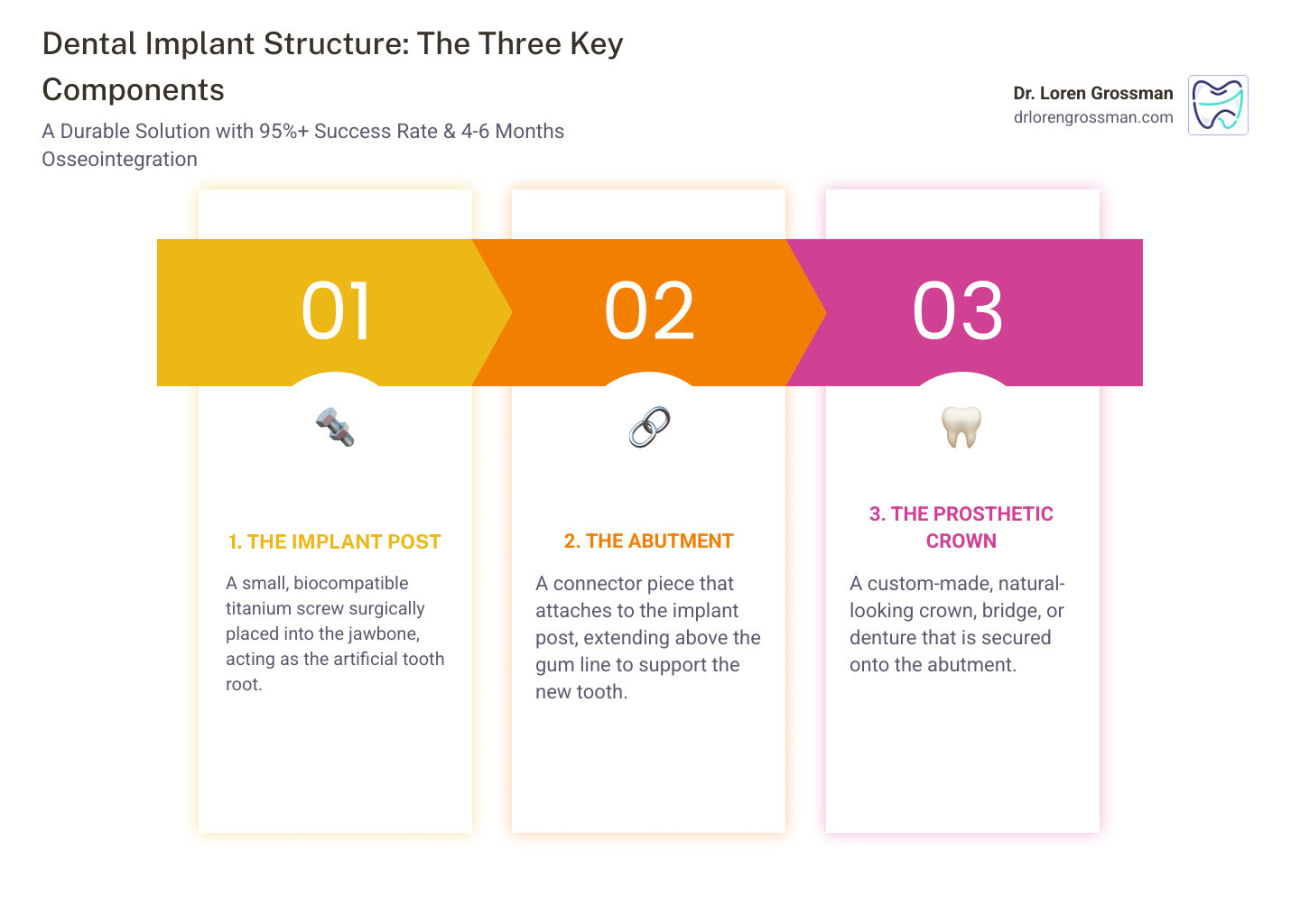
A complete dental implant system is typically composed of three distinct parts, each playing a vital role in restoring your smile:
- Implant Body (The Fixture): This is the titanium post that we surgically place into your jawbone. It acts as the artificial tooth root. The surface of these implants is often treated with special coatings to encourage bone growth and fusion.
- Abutment: Once the implant body has fused with the jawbone, we attach a small connector piece called an abutment. This component protrudes above the gum line and serves as the attachment point for your new tooth.
- Prosthetic Crown: This is the visible part of your new tooth-the custom-made crown, bridge, or denture that sits atop the abutment. Crafted from durable, tooth-colored materials like porcelain, it’s designed to match your existing teeth in shape, size, and color, ensuring a natural-looking and functional replacement.
The Science of Osseointegration
The magic behind dental implants lies in a biological process called osseointegration. This fancy term simply means “bone bonding.” After we place the titanium implant body into your jawbone, your body’s natural healing mechanisms kick in. Over a period of several months, your jawbone cells grow directly onto and around the implant surface, creating a remarkably strong and stable connection. This fusion is what gives dental implants their unparalleled structural stability and durability.
The healing period for osseointegration typically ranges from 4 to 6 months, though it can sometimes extend up to 9 months or longer depending on individual healing capabilities and the need for additional procedures like bone grafting. During this crucial time, the implant becomes an integral part of your anatomy, providing a solid, immovable foundation for your new tooth. This biological integration is a primary reason why dental implants boast a documented success rate of over 95%.
The Surgical Process and Healing Timeline
The journey to a restored smile with dental implants is a carefully planned and executed process, often involving several stages to ensure optimal results. Our goal is always to provide you with a comfortable and predictable experience.
The initial phase involves a thorough examination of your oral health, including detailed X-rays and 3D imaging. This allows us to assess your jawbone density and structure, identify any potential challenges, and carefully plan the precise placement of each implant. This advanced planning is a cornerstone of new technology and dental implant placements, ensuring accuracy and predictability. For a general overview of how implant dentistry is commonly planned and guided with modern imaging, you can also review the American Dental Association’s patient resource: Dental implants.

Once the planning is complete, the surgical placement of the implant body typically proceeds under local anesthesia, ensuring you feel no pain during the procedure. Many patients are surprised to find that the surgical placement is often less uncomfortable than a tooth extraction! During this step, we make a small incision in your gum to access the jawbone, prepare the site, and carefully insert the titanium implant. After placement, the gum tissue is gently closed over the implant, beginning the essential healing phase.
The healing process, known as osseointegration, is where your jawbone naturally fuses with the implant. This can take anywhere from three to nine months, or sometimes longer, as your body builds new bone around the implant. While this sounds like a long time, it’s a critical step for the long-term success and stability of your implant. Once osseointegration is complete, we uncover the implant and attach the abutment, followed by the placement of your custom-made prosthetic crown, bridge, or denture. Scientific research consistently shows high implant success rates, underscoring the effectiveness of this multi-stage approach. For example: scientific research on implant success rates.
Bone Grafting and Candidacy Factors
Not everyone has sufficient jawbone density to support dental implants right away. Bone loss can occur due to long-term missing teeth, gum disease, or trauma. This doesn’t necessarily mean you’re out of luck! We can often address this through bone grafting procedures.
Bone grafting involves adding bone material-either from your own body, a donor, or synthetic sources-to areas of your jaw that lack adequate volume. This creates a stronger foundation for the implant. A common type of bone graft, especially for the upper jaw, is a sinus lift, where we lift the sinus membrane and place bone graft material to increase bone height. It may take several months for the transplanted bone to grow enough new bone to support a dental implant.
Beyond bone density, several other factors influence candidacy for dental implants:
- Good Oral and Overall Health: We look for healthy gums, free from active periodontal disease. While chronic illnesses like diabetes or heart problems don’t automatically disqualify you, they must be well-controlled to ensure proper healing and long-term success.
- Non-Smokers: Smoking significantly impairs healing and increases the risk of implant failure. We strongly recommend quitting smoking before and after implant treatment for the best outcomes. Research highlights the negative impact of smoking on implants.
- Patience and Commitment: The dental implant process requires patience through the healing phases and a commitment to meticulous oral hygiene and regular follow-up appointments.
- Age is Not a Barrier: There’s no upper age limit for dental implants, provided your oral and overall health are good. We’ve helped many patients in their golden years enjoy the benefits of implants here in Kingston, Wilkes-Barre, Scranton, and Dallas.
- Realistic Expectations: While implants are incredibly successful, understanding the process, timeline, and maintenance requirements is key to satisfaction.
A periodontist, a specialist in the structures supporting teeth, often plays a crucial role in assessing gum and bone health and performing bone grafting procedures.
Types of Dental Implants and Applications
One of the great advantages of dental implants is their versatility. They can be used to replace a single tooth, multiple teeth, or even an entire arch of teeth, providing solutions custom to your specific needs.
- Single Tooth Implant: This is the most straightforward application. We place one implant into the jawbone to replace the root of a missing tooth, then top it with a custom-made crown. This solution is ideal because it doesn’t require altering adjacent healthy teeth, unlike a traditional bridge.
- Multiple Teeth: If you’re missing several teeth in a row, implants can support a fixed bridge. For example, two implants can anchor a bridge that replaces three or four missing teeth. This avoids the need for a removable partial denture and preserves adjacent natural teeth.
- Full Arch (All Teeth): For individuals missing all teeth in an upper or lower arch, or both, full arch dental implants offer a solution. Concepts like “All-on-4” (or All-on-5/6) use strategically placed implants (as few as 4-6 per arch) to support a full set of non-removable, fixed prosthetic teeth. This is a game-changer for those who struggle with traditional dentures, providing stability, comfort, and the ability to eat virtually anything.
- Implant-Supported Overdentures: For patients who prefer a removable option but desire more stability than conventional dentures, implants can be used to anchor a removable denture. These “snap-on” dentures attach securely to a few implants, preventing slippage and improving chewing efficiency. They transfer pressure to the bone structure rather than the gums, enhancing comfort and preserving bone.
Here’s a quick comparison of common tooth replacement options:
| Feature | Dental Implants | Traditional Bridge | Removable Denture |
|---|---|---|---|
| Support | Integrated into jawbone | Rests on adjacent natural teeth | Rests on gums (partial may clip to teeth) |
| Bone Health | Preserves jawbone by stimulating it | Does not stimulate bone; bone loss can occur | Does not stimulate bone; accelerated bone loss |
| Durability | Very durable, can last 25+ years | Typically 10-15 years, may need replacement | 5-10 years, may need relining/replacement |
| Adjacent Teeth | No alteration to healthy adjacent teeth | Requires grinding down adjacent healthy teeth | May put stress on adjacent teeth (partials) |
| Comfort/Feel | Feels most like natural teeth, very stable | Stable, but may feel less natural than implants | Can slip, cause soreness, feel bulky |
| Cleaning | Brush and floss like natural teeth | Requires special tools for cleaning under bridge | Must be removed and cleaned daily |
| Cost | Higher initial investment, long-term value | Moderate initial cost, potential future costs | Lower initial cost, ongoing maintenance/replacement |
Beyond these primary applications, specialized types of implants exist. For instance, orthodontic mini-implants (TADs) are temporary devices used to provide anchorage for orthodontic tooth movement. Small-diameter implants (mini-implants) are often used for transitional prostheses or to improve denture retention, especially in the lower jaw. We will work with you to determine the best solution for your unique needs.
Benefits, Risks, and Maintenance for Longevity
Choosing dental implants is an investment in your oral health and overall well-being. We’ve seen the transformative impact they have on our patients’ lives across Northeastern Pennsylvania.
The benefits are extensive:
- High Success Rate: With a documented success rate of over 95%, dental implants are one of the most reliable dental procedures available.
- Durability and Lifespan: Designed for longevity, dental implants can last up to 25 years or even a lifetime with proper care and maintenance. This makes them a truly permanent solution compared to other tooth replacement options.
- Natural Look and Feel: Because they integrate with your jawbone, implants provide a stable foundation for prosthetic teeth that look, feel, and function like your natural teeth. You’ll often forget you even have them!
- Improved Chewing and Speech: Implants restore your ability to chew a wide variety of foods with confidence, improving nutrition and enjoyment of meals. They also eliminate the slipping and clicking associated with dentures, allowing for clearer speech.
- Bone Preservation: This is a crucial, often overlooked benefit. Implants stimulate the jawbone, preventing the bone loss that occurs when a tooth is missing. This helps maintain your facial structure and prevents a “sunken” appearance.
- Protection of Adjacent Teeth: Unlike traditional bridges, implants don’t require altering or grinding down healthy adjacent teeth, preserving your natural tooth structure.
- Improved Quality of Life: The confidence that comes with a complete, functional smile is invaluable.
However, like any medical procedure, there are potential risks and complications, and proper maintenance is key to their long-term success. One of the primary concerns is peri-implantitis, a destructive bacterial infection that can lead to implant failure, similar to periodontal disease. Prevention is paramount, emphasizing excellent oral hygiene. It’s also important to be aware of how factors like smoking can impact your implant’s longevity; scientific research on smoking and implants clearly shows increased risks for smokers. If you’re concerned about safety, we encourage you to read our detailed article addressing the question, Are dental implants safe?.
Professional Care and Long-Term Success
Maintaining your dental implants for long-term success requires a collaborative effort between you and your dental care team. Here in Kingston, Wilkes-Barre, Scranton, and Dallas, our team of dental professionals works seamlessly to ensure your implants thrive.
- The Team Approach: The process often involves a general dentist for overall coordination and restoration, an oral surgeon or periodontist for surgical placement, and a prosthodontist for designing and fitting your custom prosthetic teeth.
- Regular Cleanings and Check-ups: Just like natural teeth, implants need regular professional cleanings and examinations. These visits allow us to monitor the health of your implants, detect any early signs of issues like peri-implantitis, and ensure your bite remains properly aligned.
- Diligent Home Care: Your daily routine is critical. Brush your implants at least twice a day with a soft-bristled brush and floss daily, paying special attention to the areas around the implant. Interdental brushes or water flossers can be particularly effective.
- Managing Biting Forces: Excessive biting forces, often from grinding or clenching your teeth (bruxism), can stress implants and lead to complications. If you habitually grind or clench, we may recommend a nightguard to protect your implants and natural teeth. Ensuring the correct number of implants are placed to handle bite forces is also a crucial planning step.
Potential Complications and Risks
While dental implants are highly successful, it’s important to be aware of potential risks and complications, which we thoroughly discuss with all our patients. For a comprehensive overview, we recommend reading our article, How Safe Are Dental Implants?.
Some potential risks include:
- Infection: Though rare, infection at the implant site can occur, especially if oral hygiene is not maintained. Antibiotics may be prescribed during or after surgery to minimize this risk.
- Nerve Injury: In some cases, implant placement, particularly in the lower jaw, can affect nerves, potentially leading to numbness, tingling, or pain in the lips, gums, or tongue. Careful planning with 3D imaging helps minimize this risk.
- Sinus Perforation: When implants are placed in the upper jaw, there’s a small risk of penetrating the sinus cavity. This is typically managed during surgery, sometimes requiring a sinus lift to prevent it.
- Inadequate Osseointegration: Occasionally, the implant may fail to fuse with the jawbone. This can be due to poor bone quality, infection, smoking, or excessive forces on the implant during healing. If an implant doesn’t integrate, it may need to be removed, and the site allowed to heal before another attempt.
- Peri-implantitis: As mentioned, this inflammatory condition can lead to bone loss around the implant if not addressed, potentially requiring treatment or even implant removal in severe cases.
- Mechanical Failures: While implants themselves are incredibly strong, components like abutment screws or prosthetic crowns can occasionally loosen, chip, or fracture. These are generally repairable.
- Systemic Health Issues: Certain medical conditions (e.g., uncontrolled diabetes, osteoporosis, or radiation therapy to the head/neck) can increase risks or affect healing, making a thorough medical history review essential.
We take every precaution to minimize these risks through meticulous planning, advanced surgical techniques, and personalized patient care.
Frequently Asked Questions
We understand you likely have many questions about dental implants. Here are some of the most common ones we hear from our patients in Northeastern Pennsylvania.
How much do dental implants cost?
The cost of dental implants can vary significantly depending on several factors, including the number of implants needed, the type of prosthetic (single crown, bridge, full arch), the need for additional procedures like bone grafting, and the specific materials used. While the initial investment for dental implants is generally higher than for traditional bridges or dentures, it’s important to consider them a one-time cost that provides long-term value. Unlike other tooth replacement options that may need frequent repairs or replacements, implants can last for decades.
Regarding insurance coverage, many dental insurance plans offer some coverage for dental implants, although the extent varies widely. We recommend checking with your insurance provider to understand your specific benefits. Our team is always here to help you steer the financial aspects and explore payment options to make your treatment accessible.
How do I care for my implants?
Caring for your dental implants is surprisingly similar to caring for your natural teeth, but with a few extra considerations to ensure their longevity.
- Daily Brushing: Brush at least twice a day using a soft-bristled toothbrush. Pay close attention to the area where the implant crown meets the gum line.
- Flossing: Floss daily to remove plaque and food particles from around your implants. Specialized implant floss or interdental brushes can be particularly effective for cleaning hard-to-reach areas. A water flosser can also be a great addition to your routine.
- Professional Checkups: Regular dental checkups and professional cleanings are non-negotiable. We recommend visits every six months, or as advised by your dentist, to monitor the health of your implants, gums, and surrounding teeth. This allows us to catch any potential issues like peri-implantitis early.
- Avoid Hard Foods: While implants are strong, avoid chewing on extremely hard items like ice, hard candies, or non-food objects, as these can damage your prosthetic crown or even the implant itself.
- Nightguards: If you grind or clench your teeth (bruxism), a custom nightguard can protect your implants from excessive forces during sleep.
Consistent oral hygiene is the best way to prevent complications and ensure your implants last for many years.
Who is a good candidate for the procedure?
Determining if you’re a good candidate for dental implants involves a comprehensive evaluation by our experienced team. Generally, the best candidates share a few key characteristics:
- Good Oral Health: You should have healthy gums, free from active periodontal disease. Any existing gum disease must be treated before implant placement.
- Sufficient Bone Density: Your jawbone needs to be strong and dense enough to support the implant. If you’ve experienced bone loss, bone grafting procedures can often help you become a candidate.
- Good Overall Health: While age is not a limiting factor, good general health is important for successful healing. Chronic conditions like uncontrolled diabetes or certain autoimmune diseases can affect healing, so these must be managed effectively.
- Non-Smokers: As discussed, smoking significantly compromises healing and increases the risk of implant failure. We strongly advise quitting smoking for the best possible outcome.
- Commitment to Oral Hygiene: Candidates must be willing to commit to diligent daily oral hygiene and regular dental check-ups to maintain their implants.
- Missing Teeth or Uncomfortable Dentures: If you have one or more missing teeth, or struggle with ill-fitting or uncomfortable dentures, and meet the health criteria, you are likely a good candidate for implants.
During your initial consultation, we will thoroughly review your medical and dental history, conduct a detailed examination, and use advanced imaging to determine if dental implants are the right solution for you here in Northeastern Pennsylvania.
Conclusion
Dental implants represent a significant advancement in modern dentistry, offering a durable, functional, and aesthetically pleasing solution for missing teeth. We believe everyone deserves a healthy, confident smile, and this extensive guide aims to provide you with a comprehensive understanding of how dental implants can achieve that.
From understanding the intricate process of osseointegration to navigating the surgical steps and committing to long-term care, we hope you feel more informed and empowered about this life-changing treatment. With an impressive success rate and the potential to last for decades, dental implants are truly the gold standard for tooth replacement, offering benefits that extend far beyond aesthetics—they preserve your jawbone, improve your chewing ability, and restore your self-confidence.
At Dr. Loren Grossman, we are dedicated to providing top-tier cosmetic and general dentistry in Northeastern Pennsylvania. Our personalized care, combined with advanced technology and a patient-focused approach, ensures exceptional smile changes. We’re here to guide you through every step of the process, helping you achieve a radiant, lasting smile.
Are you ready to find how dental implants can transform your life? We invite you to explore your options and Restore your confidence with dental implants today.