How to Find a Good Family Dentist for Every Age
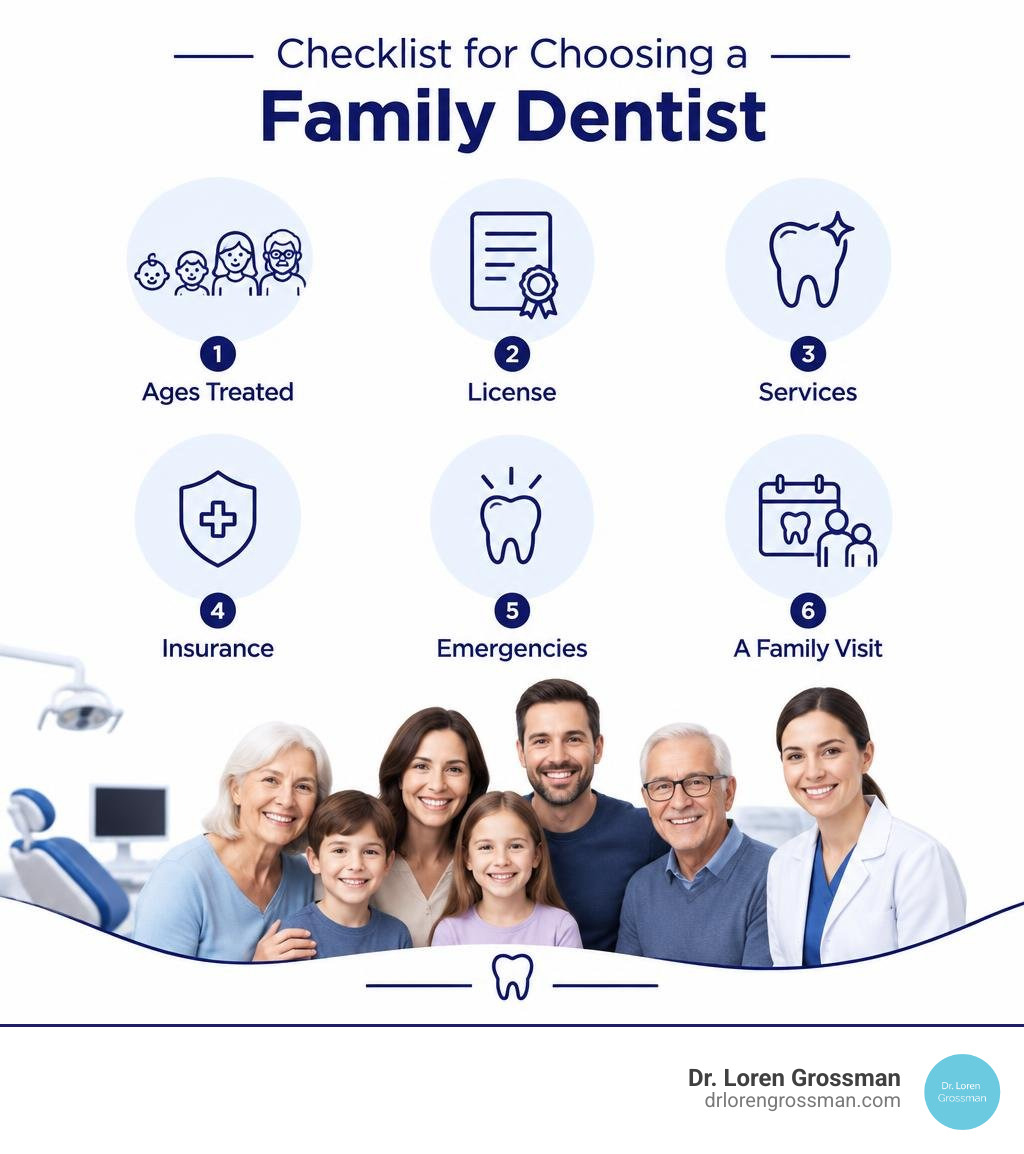
Start with your family’s needs, then look for a dentist who treats every age in your household. Check the dentist’s state license, office hours, insurance coverage, and range of services. Ask how the practice handles anxious patients and dental emergencies. Finally, book a visit for a child and an adult to see how the team communicates with both.
A convenient office matters, but so does a dentist your family can trust as its needs change. I’m Dr. Loren Grossman, and I’ve provided family dental care in the Wyoming Valley since 1984, from children’s fillings to implants; that experience shapes my advice on how to find a good family dentist.
Family Dentistry vs. General and Pediatric Dental Practices
When you begin searching for a dental provider, the sheer number of options can feel overwhelming. Many clinics market themselves under broad labels, but there are distinct differences between family practices, pediatric specialists, and general dental clinics. Understanding these distinctions ensures your household receives streamlined, high-quality care without unnecessary referrals.
A standard general dental practice often focuses on adult oral care, occasionally treating older teenagers. A pediatric specialist undergoes two to three additional years of post-dental school residency to treat infants, children, and teens with complex behavioral or developmental needs. In contrast, dedicated family dentists and lifelong oral health providers bridge this gap entirely. We design our practice workflows, clinical equipment, and patient education to serve patients at every life stage, from a baby’s first erupted incisor to custom dentures and implants for grandparents.
The primary benefit of choosing a true family practice is continuity of care. Instead of fragmenting your household across multiple offices, your family maintains a single continuous oral health record under one roof. This allows us to spot genetic dental trends, such as enamel hypoplasia or bite misalignments, across generations.
Understanding the Dental Home Concept
The American Dental Association (ADA) and the American Academy of Pediatric Dentistry (AAPD) strongly advocate establishing a continuous “dental home.” A dental home is an ongoing, trusted relationship between the dentist and the patient that encompasses all aspects of oral health care delivered in a comprehensive, accessible, and family-centered way.
According to pediatric dental guidance, establishing this home should happen by age one or within six months of the emergence of a child’s first tooth. Introducing children to a clinical environment early builds comfort and prevents dental anxiety before it starts. Moreover, maintaining standard checkups twice a year within the same clinical environment creates a reliable preventive foundation that supports healthy habits well into adulthood.
Comparing Provider Types for Multi-Generational Families
To help you decide which model suits your household, here is a direct comparison of the three primary practice types:
| Feature | Family Dentistry | Pediatric Specialty Clinic | General Dentistry Practice |
|---|---|---|---|
| Patient Age Scope | Toddlers, children, teens, adults, and seniors | Infants through late adolescence (usually age 18) | Primarily adults and older teens |
| Multi-Patient Scheduling | Yes (block appointments for parents and kids) | Kids only (parents must visit a separate clinic) | Limited pediatric accommodation |
| Continuity of Care | Lifelong (no need to age out of the practice) | Patients must transition to a new dentist at adulthood | Adult-focused recordkeeping |
| Clinical Services | Preventive, pediatric, restorative, cosmetic, and implants | Pediatric restorative, early interceptive orthodontics | Adult restorative, cosmetic, periodontal care |
| Office Environment | Designed for all generations and comfort levels | Tailored exclusively for young children | Standard clinical setting |
When children reach late adolescence in a pediatric-only practice, they must transition to a completely new provider. Choosing a comprehensive family practice eliminates this friction, allowing teens to transition into adult dental care seamlessly with a team they already know and trust.
Essential Steps on How to Find a Good Family Dentist
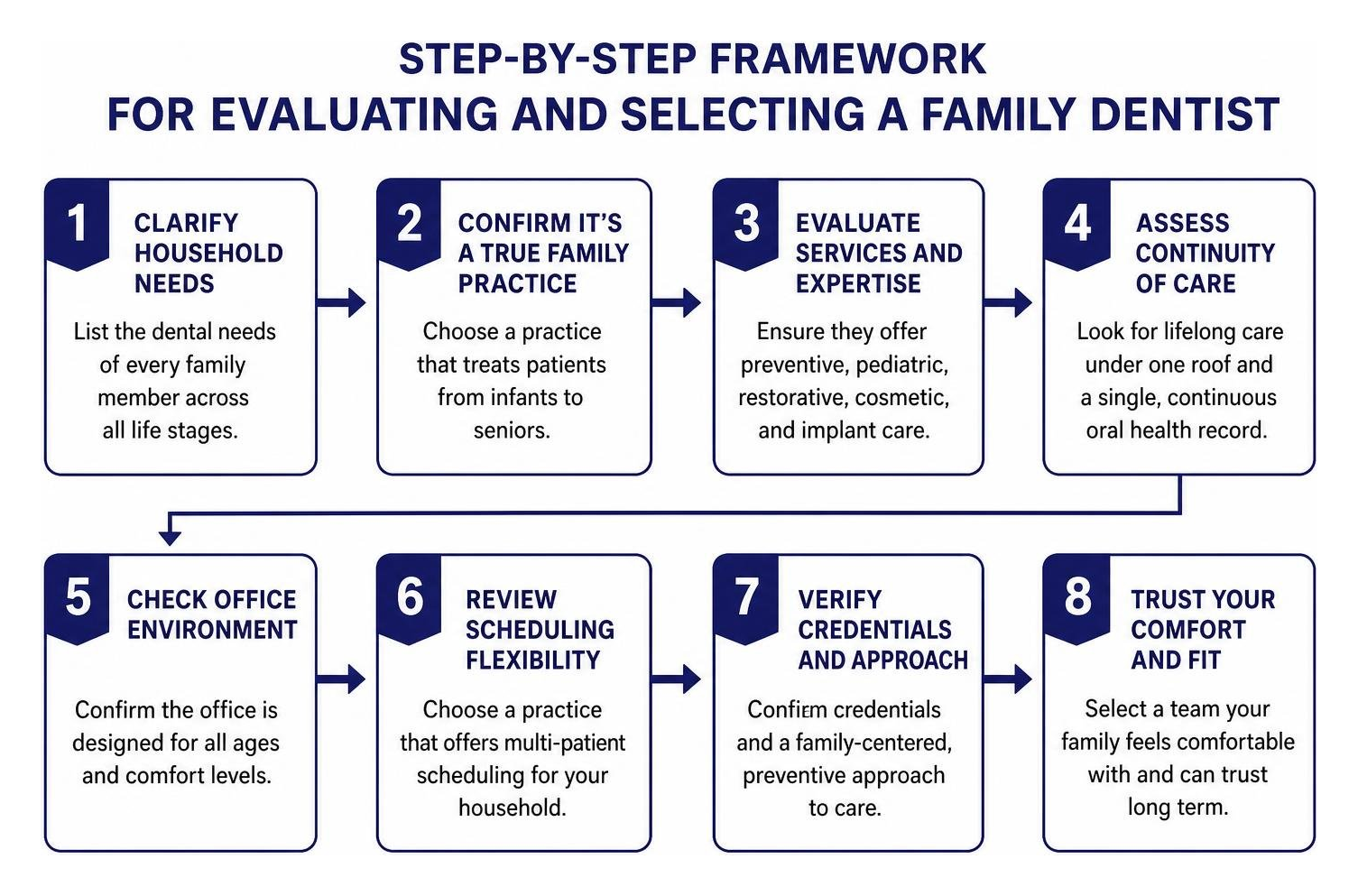
Finding the ideal dental practice requires a structured approach. Rather than picking the closest office on a digital map, taking deliberate steps will ensure that the provider you choose meets your household’s clinical, scheduling, and emotional needs.
Clarifying Household Needs: How to Find a Good Family Dentist for All Ages
Before making phone calls, sit down and map out the specific dental requirements of every member of your household:
- Infants and Toddlers: Need gentle introduction visits, developmental monitoring, and preventive fluoride treatments.
- School-Age Children & Teens: Require dental sealants, cavity prevention, sports mouthguards, and orthodontic assessments.
- Adults: Require routine maintenance, regular dental check-ups, periodontal screenings, cosmetic whitening, and restorative fillings or crowns.
- Seniors: Often need specialized care for dry mouth, root caries, bridges, implant restorations, or partial and full dentures.
Once you have a clear picture of these needs, you can immediately rule out practices that refer basic age-group treatments out to third-party specialists.
Verifying Professional Credentials and Clinical Experience
Technical competence and ethical standards are non-negotiable when it comes to your family’s health. Always verify that any prospective dentist holds an accredited Doctor of Dental Surgery (DDS) or Doctor of Dental Medicine (DMD) degree.
Next, check the state dental board website—such as the Pennsylvania State Board of Dentistry—to verify that the dentist holds an active, unencumbered license with no record of disciplinary actions. Look for clinicians who actively participate in continuing education and maintain professional affiliations with organizations like the American Dental Association or regional dental societies. Ongoing education ensures that the dentist remains skilled in modern restorative techniques, diagnostic tools, and patient safety protocols.
Booking a Joint Consultation: How to Find a Good Family Dentist in Practice
The ultimate test of a dental practice is experiencing it firsthand. We recommend booking a joint consultation or back-to-back cleaning appointments for one adult and one child on the same afternoon.

Pay close attention to how the clinical team and front desk interact with both of you. A genuine family dentist should effortlessly shift communication styles—explaining hygiene tips to a child using simple, non-threatening language while offering detailed, transparent clinical explanations to the adult. If the staff seems rushed or impatient with your child, it is a strong indicator that the practice may not be fully equipped for multi-generational care.
Critical Factors to Evaluate: Services, Technology, and Emergencies
A top-tier family practice combines broad clinical expertise with modern diagnostic technology to deliver accurate, comfortable treatments under one roof.

Advanced Technology and On-Site Laboratory Capabilities
Modern dental technology significantly improves diagnostic accuracy and patient comfort. When evaluating practices, ask whether they utilize:
- Digital Radiography: Reduces radiation exposure by up to 80% compared to traditional film X-rays and produces instant, high-resolution images.
- Intraoral Cameras: Allows you to see exactly what the dentist sees on a chairside screen, turning diagnosis into an educational, transparent conversation.
- Digital Impressions: Eliminates messy, uncomfortable impression putty when creating crowns or aligners.
Another critical differentiator is whether the practice features an integrated on-site dental laboratory. Only about 5% of dental clinics nationwide have an integrated on-site laboratory. Having on-site fabrication capabilities allows our team to customize shades, adjust crowns, and repair dental appliances with incredible precision and speed, saving your family multiple visits and weeks of waiting.
Managing Dental Anxiety and Special Needs Accommodations
Dental anxiety affects both children and adults. A quality family dental office takes proactive measures to make every visit stress-free. Inquire about the practice’s comfort amenities and sedation options:
- Mild Sedation (Nitrous Oxide): Safe for both pediatric patients and adults, helping nervous patients relax while remaining fully awake.
- Oral Conscious Sedation: Ideal for adults undergoing extensive restorative treatments or those with severe needle phobia.
- Sensory Accommodations: Availability of noise-canceling headphones, darkened treatment rooms, or weighted blankets for neurodivergent children or patients on the autism spectrum.
- Desensitization Visits: “Meet-the-chair” appointments where young kids can explore the operatory, count their teeth, and meet the staff without undergoing any clinical procedures.
Assessing Emergency and After-Hours Protocols
Dental emergencies are unpredictable, especially in households with active children and teens playing sports. A broken tooth, severe toothache, or knocked-out incisor requires prompt clinical intervention.
Ask the practice directly:
- Do you reserve daily schedule blocks for same-day emergency appointments?
- How are after-hours urgent calls handled when the office is closed?
- What is the step-by-step protocol for treating pediatric dental trauma versus adult emergencies?
A reliable practice provides a clear emergency phone routing process and clear guidance on preserving damaged teeth until you reach the office.
Evaluating Practical Logistics: Insurance, Billing, and Office Atmosphere
Clinical excellence must be paired with convenient logistics. When choosing dental care for loved ones, logistical ease determines whether routine preventive care remains consistent or falls by the wayside.
Insurance Verification and Transparent Billing Practices
Dental insurance can be notoriously complex, especially when family members are covered under different policy tiers. A reputable practice provides a dedicated insurance coordinator who verifies benefits before treatment begins.
Key financial items to look for include:
- Transparent Estimates: Itemized treatment plans with standard CDT procedure codes so you know out-of-pocket costs upfront.
- Flexible Financing: Options like CareCredit or in-house payment arrangements for extensive restorative or cosmetic work.
- FSA/HSA Compatibility: Streamlined documentation to submit claims to your Flexible Spending or Health Savings Accounts.
- In-House Membership Plans: Clear, discounted preventive packages for family members who do not have traditional dental insurance.
Analyzing Online Reviews and Assessing Office Culture
While online ratings provide helpful insights, look for recurring patterns rather than fixating on single extreme reviews. Read feedback on Google and healthcare review platforms, noting how patients describe:
- Front-desk courtesy and billing transparency
- Punctuality and waiting room times
- How gentle the hygienists and dentists are with nervous children
- Cleanliness and modern operatory sterilization standards
When you visit the clinic, observe the environment. Is the reception area tidy, comfortable, and welcoming? Are operatories immaculately maintained? A positive, orderly environment reflects a team that takes pride in patient safety and service.
Common Mistakes to Avoid When Selecting a Dental Provider
Many families rush their decision and end up switching practices within a year. Avoid these common pitfalls when finding a local dentist:
- Choosing Exclusively by Proximity: Picking the practice closest to your house without verifying if they treat the entire age range of your household.
- Relying Solely on Marketing Labels: Believing every clinic that lists “family dentistry” on its website without asking about specific pediatric or senior accommodations.
- Skipping Licensure and Credential Checks: Assuming all practicing clinicians maintain clean records and up-to-date continuing education.
- Ignoring Emergency Availability: Forgetting to ask about emergency and weekend triage until a dental crisis actually happens.
- Overlooking Chairside Communication: Staying with a provider who talks down to children or dismisses adult questions about treatment options.
Frequently Asked Questions About Family Dentistry
What is the recommended age for a child’s first dental visit?
Pediatric dental standards recommend that a child see a dentist by age one or within six months of their first baby tooth emerging. This initial visit focuses on examining oral development, screening for early decay, and discussing proper infant brushing, teething, and pacifier habits with parents.
Can a family dentist perform cosmetic treatments and pediatric care under one roof?
Yes. A comprehensive family dental practice provides routine pediatric preventive care—such as fluoride varnishes and sealants—alongside advanced adult treatments, including professional teeth whitening, porcelain veneers, clear aligners, and dental implant restorations.
Why is an integrated on-site dental laboratory beneficial?
An on-site laboratory allows the dental team to design, fabricate, and customize crowns, veneers, and bridges directly within the facility. This speeds up treatment turnaround times, allows for custom chairside shade-matching, and ensures that any necessary fit adjustments can be completed immediately.
Conclusion
Choosing the right dental partner is an investment in your family’s lifelong health, comfort, and confidence. A true family practice simplifies your life by consolidating care, monitoring generational oral health trends, and creating a supportive environment where both children and adults feel completely at ease.
At the practice of Dr. Loren Grossman in Kingston, Pennsylvania, we have spent decades providing personalized, top-tier general, cosmetic, and restorative dentistry to families across Northeastern Pennsylvania. Explore our comprehensive dental services today to discover how our patient-centered care and modern technology can keep your family smiling for years to come.