Finding Affordable, Quality Dental Care for Your Child
Finding a pediatric dentist near me that accepts medicaid is crucial for ensuring your child receives quality dental care without financial strain. While tooth decay is the most common preventable chronic disease among children, less than half of all dentists in the U.S. accept Medicaid, creating a barrier for many families. Fortunately, Medicaid and the Children’s Health Insurance Program (CHIP) provide comprehensive dental coverage for children up to age 21.
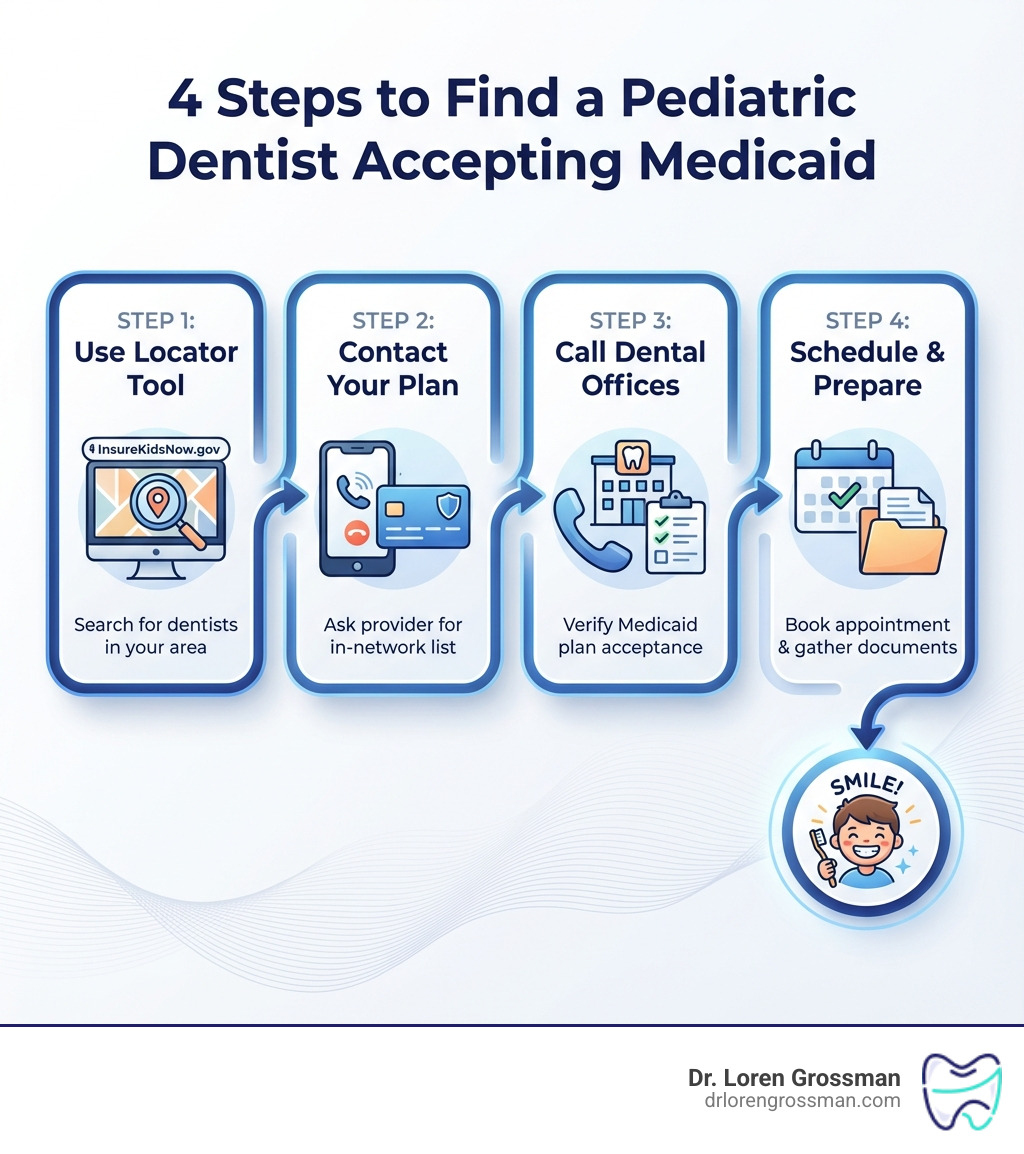
This guide will walk you through finding a qualified dentist, understanding coverage, and preparing for your child’s first visit. Here’s how to locate one quickly:
Quick Steps to Find a Medicaid Pediatric Dentist:
- Use InsureKidsNow.gov – Enter your location to find dentists accepting Medicaid in your area.
- Call Your Medicaid Plan – Request a list of in-network pediatric dentists from member services.
- Contact Dental Offices – Verify they accept your specific Medicaid plan and are taking new patients.
- Check State Resources – Visit your state’s Medicaid website for provider directories.
I’m Dr. Loren Grossman, and I’ve been providing comprehensive dental care to families in the Wyoming Valley since 1984. With decades of experience working with children and navigating insurance, I know how important it is to find a pediatric dentist near me that accepts medicaid who offers specialized, compassionate care. Let me help you steer this process so your child can enjoy a lifetime of healthy smiles.
Why a Pediatric Dentist is the Best Choice for Your Child
When it comes to your child’s oral health, a pediatric dentist offers a specialized approach uniquely custom to the needs of growing smiles. They complete two extra years of training focused on child development, behavior management, and the unique aspects of children’s oral health, from infancy through adolescence.
This specialized training provides several key benefits:
- Child-Friendly Environment: Pediatric dental offices are designed to be welcoming for children, with colorful decor, toys, and child-sized equipment to reduce anxiety and make visits a positive experience.
- Anxiety Management: Pediatric dentists are skilled in techniques like “tell-show-do” to calm apprehensive children. They are also experts in sedation options for more extensive procedures or for children with significant dental phobia.
- Specialized Knowledge: They understand how habits like thumb-sucking impact development and are equipped to handle the needs of infants, toddlers, and children with special healthcare needs.
Choosing a pediatric dentist helps establish good oral hygiene habits early and fosters a positive attitude towards dental health. To learn more about the importance of specialized care, we encourage you to read our article on Why choosing the right pediatric dentist matters.
Here’s a quick comparison to highlight the differences:
| Feature | Pediatric Dentist | General Dentist |
|---|---|---|
| Training | 2-3 years additional specialized training in child development and behavior management. | General dental school training for all ages. |
| Office Environment | Designed specifically for children, with colorful decor, toys, and child-sized equipment. | Typically caters to adults, though some may have kid-friendly elements. |
| Special Needs | Extensive experience and training in treating children with special healthcare needs. | May treat some special needs patients, but typically less specialized training. |
When to See a Pediatric Dentist
The American Academy of Pediatrics recommends a child’s first dental visit by age one or within six months of their first tooth erupting. This early visit establishes a “dental home” and helps prevent future problems.
While general dentists can handle routine check-ups, a pediatric dentist’s expertise is invaluable in specific situations:
- Complex Dental Issues: For severe decay, oral surgery, or extensive restorative work.
- Dental Emergencies: To handle injuries like a chipped or knocked-out tooth with speed and compassion.
- Children with Special Healthcare Needs: To provide adapted care for children with specific health conditions or disabilities.
- Behavioral Challenges or Dental Anxiety: To use specialized behavior management techniques to ensure a comfortable visit.

While general dentists can be a good option for routine care, a pediatric dentist offers a comprehensive and specialized approach that caters to every stage of a child’s oral development, ensuring they receive the highest quality of care.
Understanding Your Child’s Medicaid Dental Benefits
Understanding your child’s Medicaid dental benefits is a key step to ensuring their oral health. Medicaid and the Children’s Health Insurance Program (CHIP) are government-funded programs providing comprehensive dental coverage for children up to age 21. This removes financial barriers and allows families to prioritize preventive care.
The focus of these benefits is on prevention and early intervention to combat issues like tooth decay. By knowing what’s covered, you can make informed decisions for your child’s health. For an in-depth look, refer to the official Dental services covered by Medicaid page.
What Dental Services Does Medicaid Cover?
Medicaid provides comprehensive dental benefits for children. Here’s a breakdown of what you can generally expect:
- Preventive Care: This is the cornerstone of Medicaid coverage and includes:
- Check-ups/Examinations: To monitor oral development and identify issues early.
- Cleanings: To remove plaque and tartar that brushing can miss.
- Fluoride Treatments: To strengthen tooth enamel and resist decay.
- Dental Sealants: A protective barrier applied to back teeth to prevent cavities.
- Diagnostic Services:
- X-rays: To detect cavities, check developing teeth, and identify underlying issues.
- Restorative Treatments:
- Fillings: To repair teeth affected by cavities.
- Crowns: To restore teeth with extensive damage or decay.
- Root Canals (Pulpal Therapy): To save a tooth with deep decay or infection.
- Oral Surgery:
- Extractions: The removal of severely damaged or problematic teeth.
- Orthodontic Services: Braces may be covered if medically necessary to correct severe issues affecting function, like eating or speaking. This typically requires pre-authorization.
Our team ensures that children receive the treatments they need without unnecessary delay, leveraging these comprehensive benefits.
How to Enroll Your Child in Medicaid for Dental Care
Eligibility Requirements:
Eligibility for Medicaid is based on household income and family size, with specific thresholds varying by state. It generally serves low-income children, families, pregnant women, and individuals with disabilities. To check if your child qualifies in Pennsylvania, visit the PA Department of Human Services website or HealthCare.gov.
Application Process:
- Contact the PA Department of Human Services: This office oversees Medical Assistance (Medicaid in PA) and can provide current eligibility and application information.
- Complete the Application: Applications can often be completed online, by mail, or in person at a local county assistance office.
- Provide Required Documents: You will typically need your child’s Social Security number and proof of household income, Pennsylvania residency, and citizenship or eligible immigration status.
- Submit and Wait for Approval: After submitting your application, the state will review it and notify you of its decision.
- Choose a Pediatric Dentist: Once approved, you can find a pediatric dentist that accepts Medicaid and schedule an appointment.
For more information on navigating family dental care, you might find our article on More on family dental care helpful.
How to Find a Pediatric Dentist Near Me That Accepts Medicaid
Finding a pediatric dentist near me that accepts medicaid can be challenging, as less than half of U.S. dentists accept it. The key is to use the right resources and verify information carefully.
It’s crucial to confirm that a dental office accepts your specific Medicaid plan, as coverage can vary by state and managed care provider. This proactive step prevents surprises and ensures your child’s appointment goes smoothly.

Let’s break down the most effective steps to find a pediatric dentist in Northeastern Pennsylvania who accepts Medicaid.
Step 1: Use Online Government Resources
Start with official government resources designed to help you find providers.
- InsureKidsNow.gov: This is an excellent starting point. The website offers a user-friendly “dentist locator” tool to help families find dentists that accept Medicaid and CHIP. You can select Pennsylvania, enter your ZIP code, and specify your child’s dental plan. We highly recommend using the Find a dentist with InsureKidsNow.gov tool.
- State Medicaid Websites: Your state’s Medicaid agency website (Pennsylvania Department of Human Services) will often have a provider directory. Look for sections related to “provider search” or “find a doctor/dentist” and filter by specialty (pediatric dentistry) and location.
Step 2: Contact Your Medicaid Plan Provider
Your next step is to contact your Medicaid plan provider directly.
- Call the Member Services Number: Look on your child’s Medicaid insurance card for the member services phone number. Representatives can provide a current list of in-network pediatric dentists in your area.
- Request a List: Be specific when you call. Ask for a list of pediatric dentists in your desired location (e.g., Kingston, Wilkes-Barre) who are accepting new patients under your child’s specific Medicaid plan.
- Verify Coverage Details: While on the phone, take the opportunity to verify what specific dental services are covered under your plan.
Step 3: What to Ask When You Call a Dental Office
Finally, call the dental offices you’ve identified to confirm details.
Here’s what we recommend you ask:
- “Do you accept [Your Child’s Specific Medicaid Plan]?” Be precise with the name of the plan. Do not assume that because they accept “Medicaid” generally, they accept your child’s specific plan.
- “Are you currently accepting new pediatric patients who have [Your Child’s Specific Medicaid Plan]?” Some offices may accept Medicaid but might not be taking new patients.
- “What is your experience working with children, especially young ones or those with dental anxiety?”
- “What should I expect during my child’s first visit?”
- “What are your office hours, and how do I schedule an appointment?”
By asking these questions, you’ll gather all the necessary information to find the best pediatric dentist near me that accepts medicaid for your child.
Preparing for Your Child’s First Dental Visit
A child’s first dental visit is a major milestone that should be a positive experience. A good first impression helps build a lifetime of healthy oral habits. With a few simple steps, you can make it a smooth and happy occasion.
Our goal is to create a fun, welcoming atmosphere to ease dental anxiety. To help you prepare, we’ve created a guide on How to prepare your child for their first visit with practical tips for a positive experience.
What to Expect During the Appointment
When you arrive at our office, you’ll notice our child-friendly space. Here’s a general idea of what to expect during your child’s first appointment:
- A Warm Welcome: We start with a friendly greeting and an office tour to help your child feel comfortable.
- “Tell-Show-Do” Technique: We explain procedures in simple terms, show them the tools, and then gently perform the task to build trust.
- Gentle Examination: For infants, we often use a “knee-to-knee” exam where the child lies across the parent’s and dentist’s laps. Older children are examined in the dental chair with a gentle touch.
- Oral Hygiene Discussion: We’ll review proper brushing, flossing, and diet, and answer any questions you have about home care.
- Scheduling the Next Visit: We’ll help you book your child’s next check-up to ensure continuous preventive care.
We strive to make every visit a positive one, building a foundation for healthy oral habits.
The Importance of Early and Regular Dental Care
Early and regular dental care is vital for a child’s overall health and confidence. Its primary goal is preventing cavities and gum disease through regular check-ups, cleanings, and preventive treatments like fluoride and sealants.
Establishing a “Dental Home” by age one, as recommended by The American Academy of Pediatrics, creates a consistent, family-centered source of care. This allows us to monitor growth, track oral health, and intervene early when needed.
Untreated dental issues can affect a child’s ability to eat, speak, and learn. Investing in early dental care safeguards their physical and social development, protecting their overall well-being.
Frequently Asked Questions about Pediatric Dental Care and Medicaid
We know you might have more questions about your child’s dental care and how Medicaid fits into the picture. Here are answers to some common concerns:
How do I know if my child is eligible for Medicaid dental benefits?
Eligibility is typically based on household income and size, varying by state. You can check your state’s Medicaid agency website or the HealthCare.gov marketplace to see if you qualify. For families in Pennsylvania, you would typically refer to the Pennsylvania Department of Human Services website for specific income guidelines and application details.
Are orthodontic services like braces covered by Medicaid?
Medicaid may cover orthodontic services if they are deemed medically necessary to correct a severe problem that affects your child’s health, such as difficulty chewing or speaking. Pre-authorization is usually required. This means that purely cosmetic orthodontic treatments are generally not covered, but if a child’s bite or alignment issue is causing functional problems or significant pain, Medicaid may step in. We can help assess your child’s needs and assist with the pre-authorization process if medically necessary.
What if I can’t find a local pediatric dentist that accepts Medicaid?
If you’re struggling to find a pediatric dentist near me that accepts medicaid in areas like Kingston, Wilkes-Barre, Scranton, or Dallas, don’t despair. Contact your state’s Medicaid office or your managed care plan for assistance. They can provide a comprehensive list of providers that might not be easily found through general searches. You can also check with local community health centers or dental schools, which often have programs that accept Medicaid and may offer specialized pediatric dental services. Sometimes, expanding your search slightly beyond your immediate town to a neighboring community might yield more options.
Your Partner in Your Child’s Oral Health
Finding a pediatric dentist near me that accepts medicaid is a vital step in securing your child’s healthy future. By using government resources, contacting your Medicaid provider, and calling dental offices directly, you can find the right care.
Early, consistent dental visits are key to preventing tooth decay and establishing a foundation for lifelong oral health. A healthy smile contributes to a child’s confidence and overall well-being, impacting their ability to eat, speak, and learn.
For families in Northeastern Pennsylvania, including Kingston, Wilkes-Barre, Scranton, and Dallas, Dr. Loren Grossman offers compassionate pediatric dental care. We are committed to a patient-focused approach that delivers exceptional experiences. Let us be your partner in your child’s oral health journey.
Learn more about our pediatric dentistry services and let us help your child smile brightly for years to come.