Understanding Veneers Before Shaved: What You Need to Know
When considering veneers before shaved, many people worry about the extent of tooth alteration required. Here’s what you need to know:
Quick Answer:
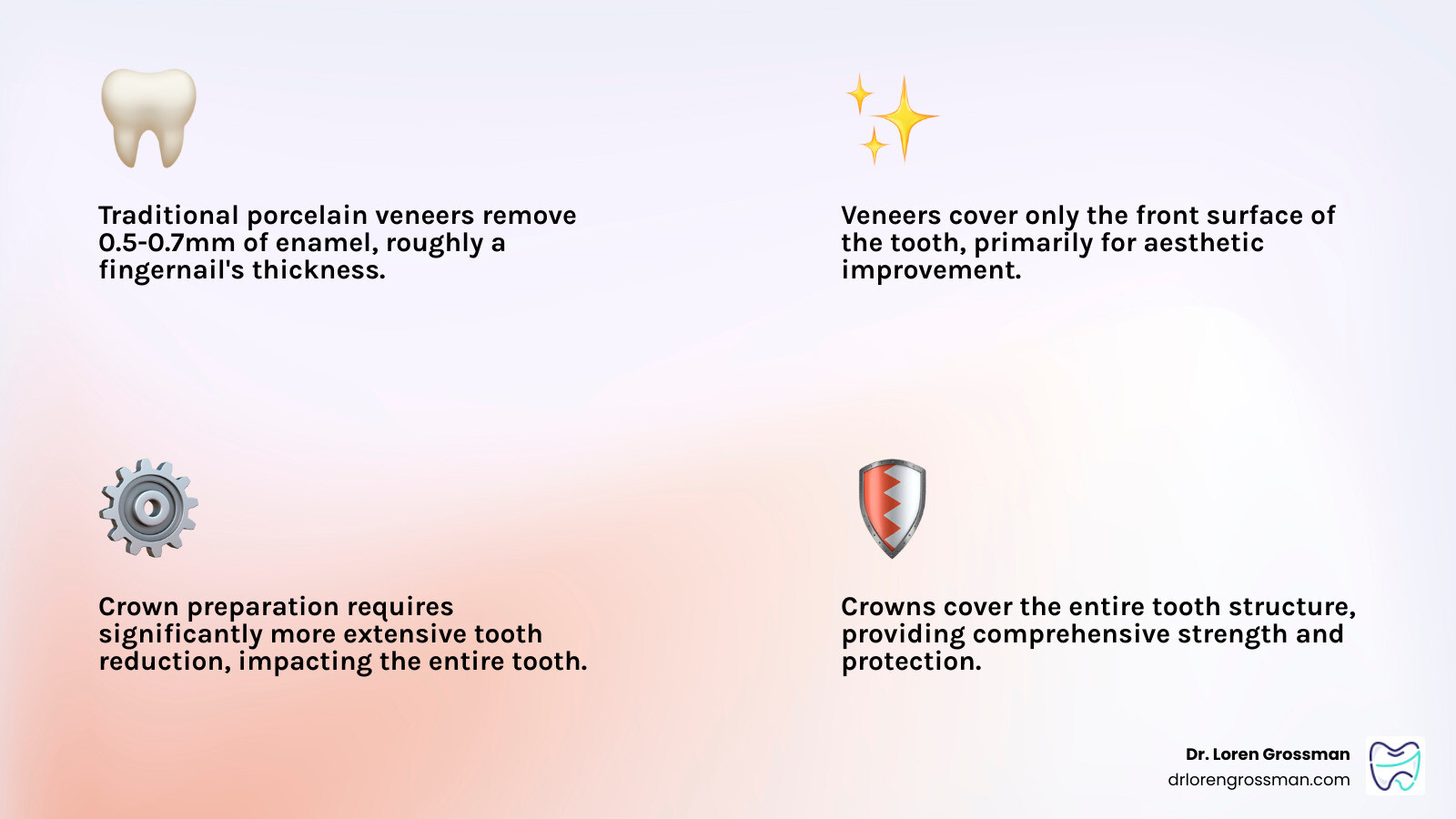
- Traditional porcelain veneers require removing 0.5 to 0.7 millimeters of enamel (roughly the thickness of a fingernail)
- Composite veneers need only 0.1 to 0.3 millimeters of preparation
- No-prep veneers require minimal to no enamel removal for suitable candidates
- The process is not the same as crown preparation, which removes significantly more tooth structure
- Tooth preparation is permanent and irreversible
One of the biggest misconceptions about dental veneers is that your teeth must be “shaved down to pegs.” This scary image, often spread through social media, actually shows crown preparation—not veneer preparation. The reality is far less dramatic. Modern veneer techniques focus on conservative preparation, removing only the minimal amount of enamel necessary to ensure a natural-looking, properly fitting result.
The confusion between veneers and crowns has caused unnecessary fear for many patients. A veneer is a thin shell that covers only the front surface of a tooth to improve appearance. A crown covers the entire tooth structure for strength and protection, requiring much more extensive reduction. Understanding this difference is crucial when making informed decisions about your smile.
I’m Dr. Loren Grossman, and I’ve been changing smiles in the Wyoming Valley since 1984, performing everything from simple cosmetic work to complex smile makeovers. Throughout my decades of experience, I’ve witnessed the evolution of veneer technology and always prioritize preserving natural tooth structure while helping patients understand exactly what veneers before shaved involves for their unique situation.
The Truth About Tooth Preparation: Why is Enamel Removed for Veneers?
Altering your natural teeth for veneers before shaved can sound daunting. However, this process, known as tooth preparation, is a precise step designed to create the ideal foundation for a beautiful, functional, and long-lasting smile. The goal is to improve your teeth, not damage them.
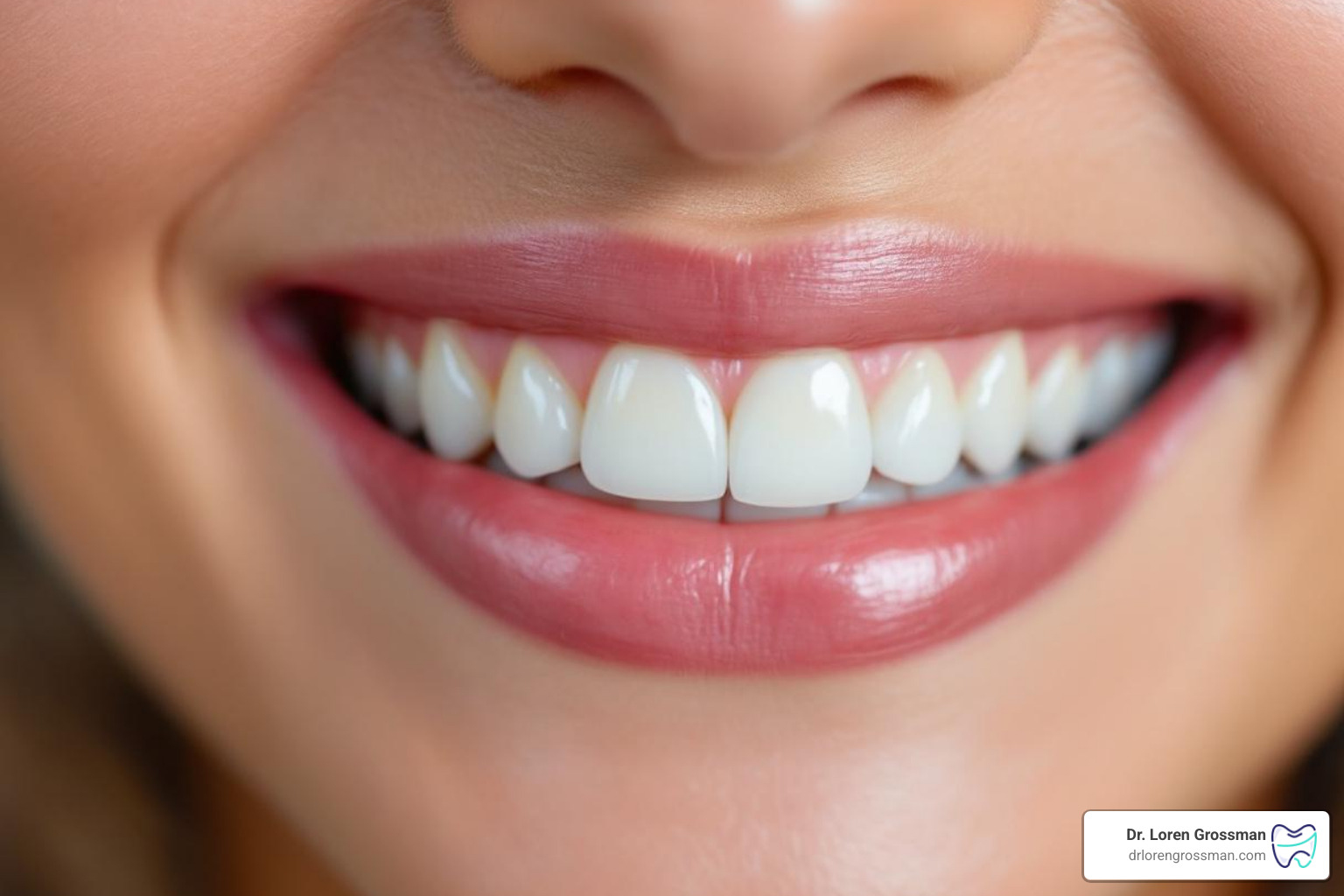
So, why is a small amount of enamel removed? There are several key reasons:
- To Create Space: Veneers have thickness. Removing a tiny layer of enamel—often less than a millimeter—allows the veneer to sit flush with your gumline, ensuring a seamless, natural look instead of a bulky one.
- To Achieve a Natural Appearance: A prepared tooth allows the veneer to mimic the translucency and light-reflecting properties of natural enamel. This meticulous step is crucial for achieving a result that looks authentic.
- For a Stronger Bond: Enamel reduction creates a slightly roughened surface, which is essential for a durable bond between the veneer and your tooth, ensuring it stays securely in place for years.
Our goal is always to be as conservative as possible, preserving the maximum amount of healthy tooth structure. For more in-depth information about the entire process, we invite you to explore More info about the veneers process.
Once enamel is removed, the process is irreversible. This is why a thorough consultation is paramount before proceeding with veneers before shaved.
What Do Teeth Look Like After Being Shaved for Veneers?
The phrase “shaved teeth” conjures frightening images, but the reality is far from the “peg teeth” seen in misleading online posts. After minimal enamel reduction for veneers, your teeth will look different, but not drastically damaged.
Immediately following preparation, your teeth will appear:
- Slightly smaller and less shiny: Because a thin layer of enamel has been removed, the surface will have a matte or roughened texture to facilitate bonding.
- Not “peg teeth”: This is the most important point. For veneers, we only prepare the front surface, and the reduction is minimal. Your teeth will retain their general shape and structure, just slightly refined.
- Protected by temporary veneers: We place protective temporary veneers after preparation. These shield your teeth from sensitivity and maintain your smile’s aesthetics while your custom permanent veneers are crafted in a dental lab.
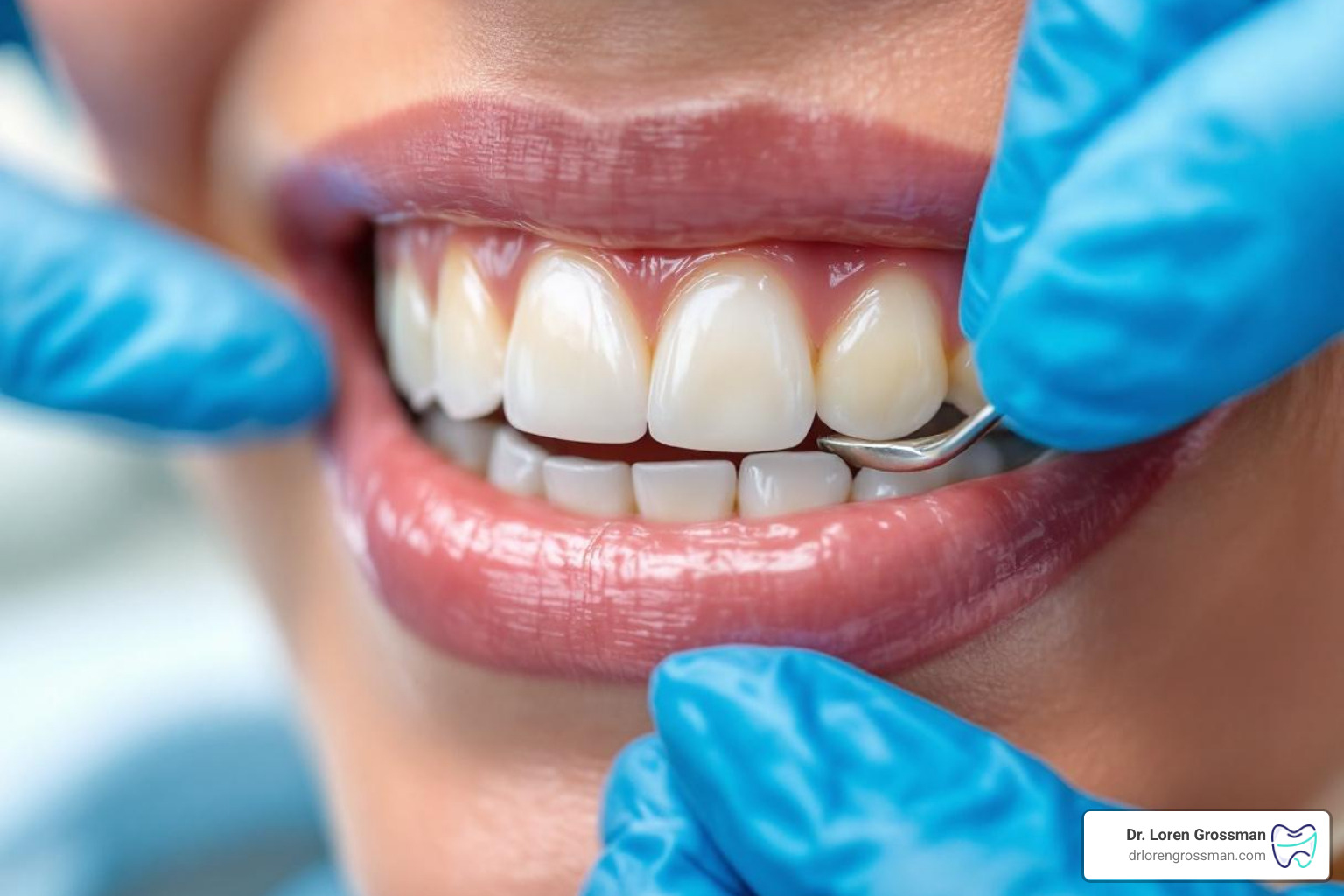
Your prepared teeth are in a transitional, protected state, ready to receive their beautiful new coverings.
Is the Tooth Shaving Process Painful?
One of the most common questions we hear is, “Will it hurt?” The tooth preparation process for veneers before shaved is typically not painful. We take great care to ensure your comfort.
Here’s how we manage discomfort:
- Local anesthesia: Before we begin, we administer a local anesthetic to completely numb the area. You may feel some pressure or vibration, but you shouldn’t experience pain.
- Post-procedure sensitivity: It’s common to experience some temporary sensitivity to hot or cold temperatures after the anesthetic wears off. This is normal and typically resolves within a few days.
- Managing discomfort: We provide instructions for managing any sensitivity, which might include over-the-counter pain relievers or desensitizing toothpaste. Your comfort is our top priority.
How Much Enamel is Shaved? A Look at Different Veneer Types
The amount of enamel removed for veneers before shaved is not a one-size-fits-all answer; it varies depending on the type of veneer and your individual dental needs. Our philosophy always centers on a conservative approach, preserving as much of your natural enamel as possible.
Enamel is the hard, protective outer layer of your teeth. Its preservation is key to long-term dental health. We carefully assess your unique situation to determine the minimal amount of enamel reduction necessary to achieve your desired aesthetic and a strong, durable result.
Here’s a comparison of typical enamel removal for different veneer types:
| Veneer Type | Enamel Removal (Approx.) | Longevity | Primary Use Cases |
|---|---|---|---|
| Traditional Porcelain | 0.5 – 0.7 mm | 10-15+ years | Significant aesthetic changes (color, shape, size), covering severe discoloration, correcting minor misalignment, closing gaps. |
| Composite Resin | 0.1 – 0.3 mm | 5-10 years | Minor chips, cracks, discoloration, small shape adjustments. Often a more conservative and cost-effective option. |
| No-Prep / Minimal-Prep | 0 – 0.3 mm | Varies (often 5-10 years) | Mild discoloration, minor shape improvements, closing small gaps, adding length to naturally small teeth. Best for already well-aligned teeth with good enamel. |
For a deeper dive into the characteristics of each type, please see our guide on What are the different types of veneers?.
Traditional Porcelain Veneers
Known for their strength and natural look, these veneers require about 0.5mm to 0.7mm of enamel removal—roughly the thickness of a fingernail. This creates space for the porcelain to bond seamlessly without adding bulk. Porcelain is highly durable and stain-resistant, with Scientific research on porcelain veneer longevity supporting a lifespan of 10-15 years or more. It also allows for incredible customization of color and shape to create a smile that is uniquely yours.
Composite Resin Veneers
Composite veneers are a more conservative option, often requiring only 0.1mm to 0.3mm of enamel removal. In some cases, no preparation is needed at all. This preserves more natural tooth structure and allows for application in a single visit. While strong, composite resin is generally less durable and stain-resistant than porcelain, typically lasting 5-10 years with proper care, as noted in Research on composite veneer durability. They are also a more affordable option for many patients.
The “Veneers Before Shaved” Procedure: A Step-by-Step Guide
The journey to a new smile with veneers before shaved is an exciting, multi-step process. We guide our patients through each phase to ensure comfort and a personalized experience, from your first consultation to the final reveal of your new smile.
For a more comprehensive overview, please refer to A detailed guide on the dental veneers procedure.
Step 1: The Consultation and Smile Design
Your journey begins with a personalized consultation to discuss your goals and evaluate your oral health.
- Discussing Goals: We listen to your aesthetic desires, whether it’s for whiter, more uniform teeth or closing gaps.
- Oral Health Evaluation: We conduct a full exam to ensure your teeth and gums are healthy. Any issues like decay must be treated first.
- Smile Preview: Using digital imaging and sometimes wax-up models, we show you a preview of your new smile. This allows you to visualize the results and confirm your preferences before any irreversible steps are taken.
This initial stage is critical and the perfect time to ask questions. For guidance, check out our Questions to Ask Your Cosmetic Dentist.
Step 2: The Preparation Appointment for Veneers Before Shaved
Once your smile design is finalized, we proceed with the preparation appointment.
- Enamel Reshaping: We numb the area with a local anesthetic and then carefully remove a minimal amount of enamel from the front of the teeth to ensure a natural, non-bulky fit for the veneers.
- Taking Impressions: We take highly accurate digital scans or impressions of your prepared teeth. These are sent to a dental lab to craft your custom porcelain veneers.
- Placing Temporaries: We place custom-made temporary veneers to protect your teeth from sensitivity and maintain your smile’s appearance while your permanent ones are being made. You’ll need to be gentle with them and avoid hard or sticky foods.
Step 3: The Final Bonding of Your Perfect Smile Veneers
About two to three weeks later, you’ll return for the final placement of your custom-crafted veneers.
- Trying In the Veneers: We remove the temporaries, clean your teeth, and place the final veneers to check their fit, color, and shape. This is your chance to approve the final look before they are permanently bonded.
- Permanent Bonding: Once you approve, we use a specialized adhesive to bond each veneer to your tooth.
- Curing the Bond: A special light hardens the adhesive, creating a strong, durable bond.
- Final Adjustments: We check your bite and make any minor adjustments needed for comfort and proper function.
The result is a radiant, natural-looking smile. We are dedicated to helping you Achieve the Smile of Your Dreams right here in Northeastern Pennsylvania.
Veneers vs. Crowns: Debunking the “Peg Teeth” Myth
The “peg teeth” myth is a persistent misconception about veneers before shaved, stemming from confusion between veneer and crown preparation. The two procedures are vastly different in scope and purpose.
The image above vividly illustrates the difference. On the left, a tooth is minimally prepped for a veneer—only the front surface is refined. On the right, a tooth prepared for a crown shows significant reduction on all sides, creating a smaller, “peg-like” structure.
The core difference lies in their purpose:
- Veneer Purpose: Veneers are a cosmetic solution. They are thin shells designed to cover the front surface of a tooth to improve its appearance.
- Crown Purpose: Crowns are a restorative solution. They cover an entire tooth to restore its strength and function after significant damage from decay or fracture.
The “peg teeth” seen online are almost always the result of aggressive crown preparation, which is necessary for the crown to fit. For veneers, such extensive removal is completely unnecessary. Understanding this distinction is vital when considering The Transformative Power of Cosmetic Dentistry.
How Preparation for Veneers Before Shaved Differs from Crowns
The preparation techniques for veneers before shaved versus crowns reflect their different goals. For veneers, we conservatively remove 0.3 to 0.7 millimeters of enamel from the front surface only, preserving most of the natural tooth. For crowns, the tooth is reduced by 1.5 to 2 millimeters or more on all sides to fit a restorative cap.
Veneer preparation is an aesthetic refinement, while crown preparation is a functional restoration for a severely damaged tooth. When performed by an experienced cosmetic dentist, veneer preparation is a precise, conservative, and safe procedure.
Long-Term Effects, Risks, and Aftercare
Understanding the long-term effects, risks, and aftercare is key to enjoying your new smile for years to come. The decision to get veneers before shaved is a commitment to a permanent alteration, as the removal of enamel is irreversible. Once prepared, your teeth will always need to be covered by veneers or another restoration.
Tooth Sensitivity: Temporary sensitivity to hot or cold is common after the procedure but typically subsides within a few weeks. We can recommend desensitizing toothpaste to help manage this.
Minimizing Risks: We minimize risks through a thorough evaluation, using precise instruments for conservative enamel removal, and employing meticulous bonding techniques to protect the underlying tooth. A strong bond is critical for a secure, long-lasting attachment.
Aftercare Tips: Protecting your investment is crucial. Maintain excellent oral hygiene by brushing with a soft-bristled brush and non-abrasive toothpaste, and flossing daily. Attend regular six-month check-ups. Avoid using your teeth as tools (like opening packages) and be cautious with hard foods. While veneers are stain-resistant, limiting coffee and red wine can help maintain their brilliance.
Longevity and Addressing Conditions like Bruxism
The lifespan of your veneers depends on the material and your care.
- Veneer lifespan: With proper care, porcelain veneers can last 10-15+ years, while composite veneers typically last 5-10 years.
- Night guards: If you grind your teeth (bruxism), a common condition affecting many people, we will strongly recommend a custom night guard. Grinding can put excessive force on your veneers, leading to damage. You can learn more about the prevalence of bruxism here: Studies show bruxism is common.
- Protecting veneers from damage: Avoid biting on extremely hard objects like ice or hard candy. If a veneer does get damaged, contact us promptly for repair.
By following these guidelines, you can significantly extend the life of your veneers and enjoy your confident smile for many years.
Frequently Asked Questions about Veneer Preparation
We understand that you might have many questions when considering veneers before shaved. Here are answers to some of the most common inquiries we receive:
Do all veneers require shaving teeth?
No. While traditional veneers require minimal preparation (0.5-0.7mm), “no-prep” options exist that require little to no enamel removal. No-prep veneers are suitable only for specific cases, typically for patients with well-aligned teeth that don’t require significant shape or color changes. The best option for you depends on your unique dental needs and aesthetic goals.
Can you go back to your normal teeth after traditional veneers?
No, the process is irreversible. Because a small amount of enamel is permanently removed, your teeth will always need to be covered by veneers or another restoration for protection and aesthetics. This is a crucial factor we discuss with all our patients across Northeastern Pennsylvania before proceeding.
How do dentists minimize risks during the tooth shaving process?
We minimize risks by adhering to rigorous standards. This includes a thorough consultation and meticulous planning, a conservative approach to remove only the necessary enamel, and the use of precision instruments. We also place protective temporary veneers and use advanced bonding techniques to ensure a secure, long-lasting result that protects the natural tooth. This ensures the preparation is safe, comfortable, and sets the stage for a beautiful smile.
Your Path to a Confident Smile
The decision to get veneers is a personal one, and we hope this extensive guide has demystified the process of veneers before shaved. The key takeaway is that modern veneer preparation is a precise, conservative, and safe procedure, vastly different from the aggressive “peg teeth” myth often associated with crowns.
At Dr. Loren Grossman’s office, we are committed to providing top-tier cosmetic dentistry across Northeastern Pennsylvania, including Kingston, Wilkes-Barre, Scranton, and Dallas. We believe in:
- Minimal preparation: Prioritizing the preservation of your natural tooth structure.
- The importance of a skilled dentist: Our decades of experience ensure meticulous planning and execution.
- Personalized care: Every smile is unique, and we tailor our approach to your specific needs and aesthetic goals.
- Achieving natural results: Crafting veneers that improve your smile beautifully while looking completely natural.
Your journey to a confident, radiant smile begins with an informed conversation. We invite you to schedule a consultation with us to discuss your options, address any further questions you may have, and explore how we can help you achieve the smile of your dreams. Learn more about our Dental Veneers services and take the first step towards a brighter, more confident you.