More Than a Million Reasons to Restore Your Smile
Finding a trusted Wilkes-Barre implant dentist is one of the most important decisions you can make for your long-term oral health. Whether you’re missing one tooth or several, dental implants offer a permanent, natural-looking solution that protects your jawbone and restores your confidence.
Quick answer — what to know about dental implants in Wilkes-Barre:
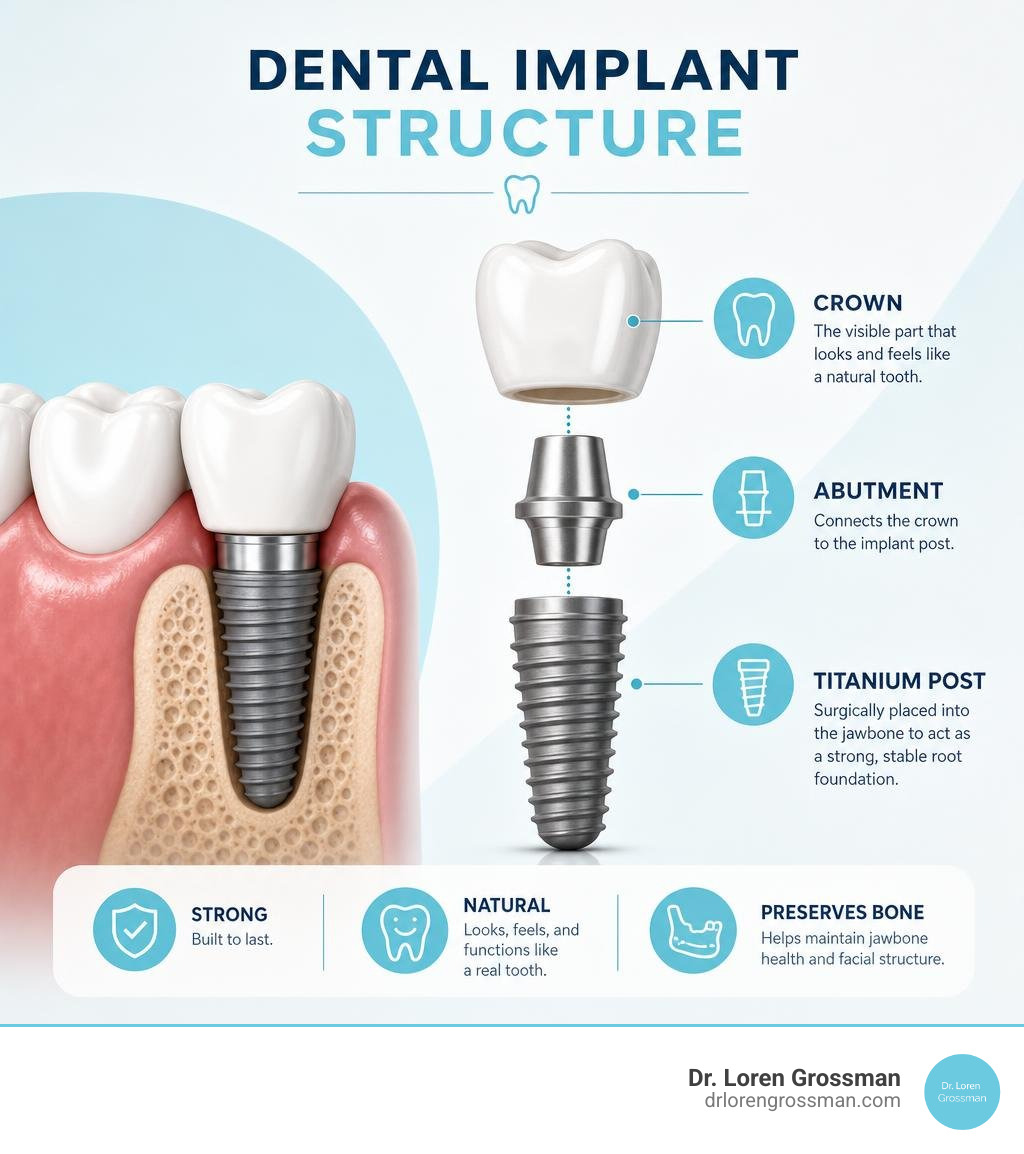
- What they are: Titanium posts surgically placed into the jawbone to replace missing tooth roots
- Who they’re for: Adults with missing teeth, failing teeth, or loose dentures
- Two main types: Traditional implants and mini dental implants (less invasive, faster recovery)
- Average cost: Roughly $3,000–$6,500 per implant, depending on complexity
- Financing: Most practices accept major insurance and offer third-party payment plans
- Recovery: Mini implants: 24–48 hours; traditional implants: several months for full osseointegration
- Where to start: Schedule a free or low-cost consultation with an experienced local implant dentist
The numbers are striking. 178 million Americans are missing at least one tooth, and around 40 million have lost all of their teeth. Left untreated, a missing tooth can cause the surrounding jawbone to lose up to 50% of its volume within just one year — silently reshaping your face and making future treatment harder.
Yet for many people, the path to getting implants feels unclear. Which type is right for you? How much will it cost? How long does recovery take? This guide answers all of that. For a neutral overview of implant materials, benefits, and risks, you can also review the FDA’s patient resource, Dental Implants: What You Should Know.
I’m Dr. Loren Grossman, D.M.D., a cosmetic and family dentist serving the Wyoming Valley since 1984 — and as your local Wilkes-Barre implant dentist, I’ve spent over four decades performing everything from routine care to complex implant placements right here in Northeastern Pennsylvania. Let’s walk you through everything you need to know.
Traditional vs. Mini Dental Implants: Which Is Right for You?
When exploring tooth replacement options, you will quickly discover that dental implants are not a one-size-fits-all solution. In modern implantology, we primarily categorize implants into two groups: traditional dental implants and mini dental implants. Understanding the biological and structural differences between these two can help you make an informed decision alongside your Wilkes-Barre implant dentist.
To help you visualize how these two options stack up, we have put together a comparative breakdown:
| Feature | Traditional Dental Implants | Mini Dental Implants |
|---|---|---|
| Average Diameter | Approximately 3.0 mm to 5.0 mm | Less than 3.0 mm |
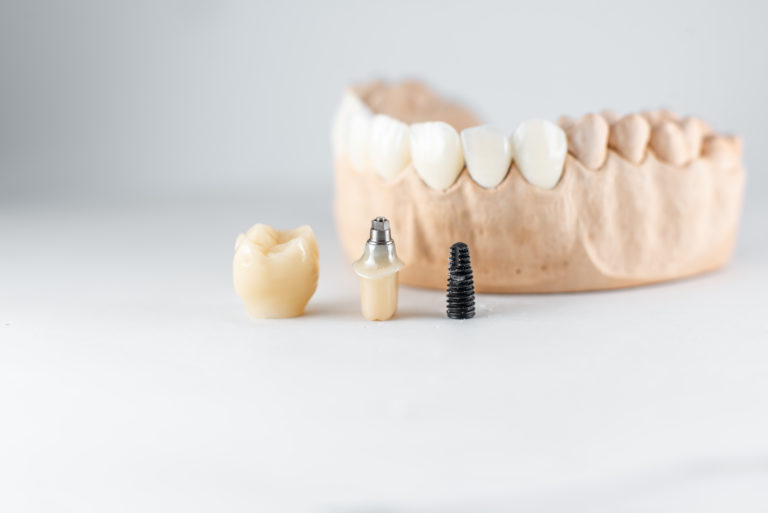
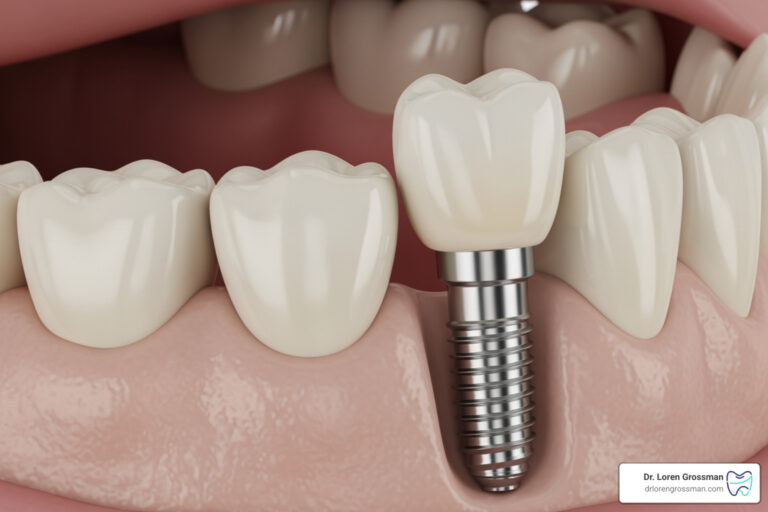
| Structure | Multi-piece (Implant post, abutment, and crown) | One-piece solid titanium post with a ball-shaped end |
| Bone Grafting Required? | Frequently (especially if bone loss has occurred) | Rarely (can bypass thin bone limitations) |
| Surgical Invasiveness | Moderate (requires incisions, flap surgery, and sutures) | Minimally invasive (placed through a small pilot hole) |
| Healing & Recovery Time | 3 to 6 months for complete osseointegration | 24 to 48 hours for normal daily activities |
| Loading of Restoration | Delayed (restored after the bone heals completely) | Immediate (often loaded with a crown or denture same-day) |
| Cost Comparison | Standard pricing (higher surgical and material costs) | Often up to 50% less expensive than traditional |
Traditional Dental Implants: The Gold Standard for Structural Integrity
Traditional implants have been used for decades with exceptional success. Because they are wider (typically around 5 mm in diameter), they provide a highly stable foundation that mimics the strength of a natural tooth root.
However, because of their size, traditional implants require a healthy volume of jawbone. If you have been missing a tooth for a while, bone resorption has likely occurred. In these cases, we must perform a bone graft before placing the implant to ensure there is enough bone structure to support it.
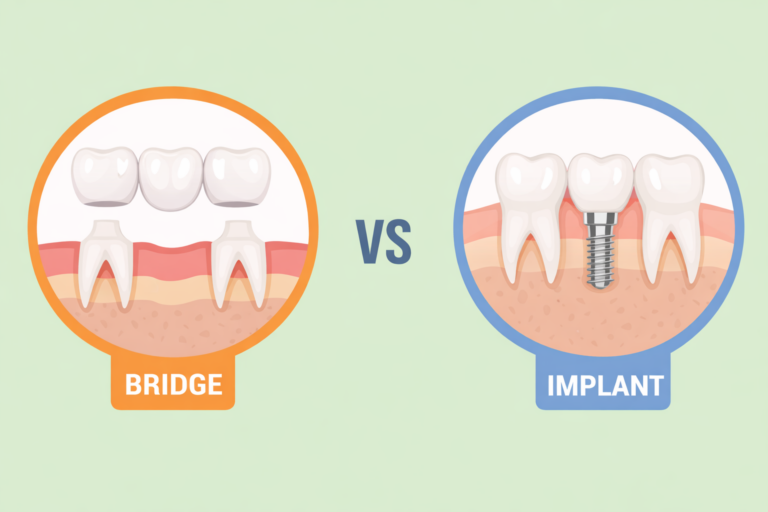
To learn more about the science behind these restorations, check out our A-Z Guide to Dental Implants and explore how they stack up against other options in The Ultimate Showdown Dental Bridge or Implant.
Mini Dental Implants: The Faster, Less Invasive Alternative
If you have experienced significant bone loss or want to avoid the discomfort and extended timeline of bone grafting, mini dental implants in Wilkes-Barre, PA may be the ideal alternative.
Because mini dental implants are less than 3 mm wide, they require a fraction of the bone volume. The surgical process is incredibly straightforward: rather than cutting open the gum tissue, the dentist drills a tiny pilot hole and threads the solid titanium post directly into the bone. This process is so minimally invasive that most patients experience almost no post-operative pain and can return to their normal eating habits within 24 to 48 hours.
Choosing the Right Wilkes-Barre Implant Dentist
Choosing a dental professional to perform your implant procedure is a decision that impacts both your health and your wallet. Implant dentistry is a highly specialized field requiring a blend of surgical skill, artistic vision, and advanced diagnostic technology.
If you are looking for a qualified Wilkes-Barre Dentist to restore your smile, you should focus on finding a team that prioritizes customized treatment plans, advanced technology, and a patient-first approach. Let’s look at what separates an exceptional provider from the rest when searching for Dental Implants Near Me.
What to Look for in a Wilkes-Barre Implant Dentist
When researching local clinicians, do not hesitate to ask detailed questions about their training and office capabilities. Here are the core pillars of an elite implant practice:
- Post-Graduate Training and Continuing Education: Dental school provides a foundation, but implant technology evolves rapidly. Look for a dentist who has completed hundreds of hours of advanced continuing education specifically in implantology, bone grafting, and full-mouth reconstruction.
- State-of-the-Art Diagnostic Technology: To place an implant safely, a dentist must understand your unique anatomy. Practices utilizing 3D Cone Beam Computed Tomography (CBCT) imaging can view your jawbone, nerve pathways, and sinus cavities in high-definition three dimensions. This allows for computer-guided implant placement, which increases precision and reduces surgical time.
- Intraoral Digital Scanners: Say goodbye to messy, gag-inducing impression trays. Advanced practices use digital scanners (like the 3Shape TRIOS) to capture highly accurate, instant 3D models of your teeth. To read more about how these modern tools improve your treatment, explore our guide on New Technology and Dental Implant Placements.
- In-Office Laboratory Capabilities: Practices that feature specialized lab equipment or close relationships with local master ceramists can deliver faster repairs, adjustments, and customized restorations.
How a Wilkes-Barre Implant Dentist Ensures Patient Comfort
Did you know that approximately 36% of people in the United States suffer from dental fear or anxiety? We completely understand that the thought of oral surgery can feel intimidating. However, modern dental techniques have made implant placement one of the most predictable and comfortable procedures in all of dentistry.
To keep you completely relaxed, a premier dental team will offer multiple comfort measures:
- Advanced Local Anesthesia: Computerized numbing systems deliver local anesthetic at a precise, controlled rate, completely eliminating the “sting” of a traditional needle.
- Sedation Options: From mild nitrous oxide (laughing gas) to oral conscious sedation, you can choose a level of relaxation that allows you to drift comfortably through your appointment.
- Compassionate Care: A judgment-free, warm atmosphere makes all the difference. Your team should take the time to answer your questions, explain every step of the process, and move at a pace you are comfortable with.
If you are wondering about the safety profile of these procedures, we address those concerns in detail in our article, Are Dental Implants Safe?.
The Dental Implant Journey: Timeline and Recovery

Getting dental implants is a journey, not a single event. While the timeline can vary depending on whether you choose traditional or mini implants, the biological process remains incredibly fascinating.
To help you prepare, let’s break down the typical step-by-step timeline of what you can expect:
Step 1: The Comprehensive Consultation and 3D Imaging
Your journey begins with an in-depth examination. We use CBCT 3D scans to evaluate your jawbone density, locate vital nerves, and map out the exact angle and depth for your future implant. This step is entirely collaborative; we discuss your medical history, aesthetic goals, and lifestyle needs to design your custom treatment plan.
Step 2: Pre-Surgical Preparations (If Needed)
If you have a damaged tooth that needs to be extracted, or if your jawbone requires additional volume, we will perform these procedures first. For traditional implants, a bone graft may require a healing period of 3 to 6 months before the implant post can be placed.
Step 3: The Implant Placement Surgery
On the day of your surgery, we administer your chosen sedation or local anesthesia to ensure you are entirely comfortable. We then make a precise, minor incision in the gum tissue (or a small pilot hole for mini implants) and gently place the biocompatible titanium post into the bone. The procedure is surprisingly quick, often taking less than an hour per implant.
Step 4: Osseointegration (The Healing Phase)
This is where the magic of science happens. Over the next 3 to 6 months (for traditional implants), a biological process called osseointegration occurs. Your living jawbone cells actually grow and fuse directly to the microscopic textured surface of the titanium post. This creates an incredibly strong, permanent bond, turning the implant into a true structural part of your body.
To dive deeper into this fascinating biological process, read our article Dental Implants from Science to Smile.
Step 5: Placing the Abutment and Crown
Once osseointegration is complete, we attach a small connector piece called an abutment to the top of your implant. Finally, we place your custom-shaded, hand-crafted porcelain crown over the abutment. Your new tooth will look, feel, and function exactly like a natural tooth.
For more details on the safety and long-term success rates of this process, you can read How Safe Are Dental Implants?.
Financing and Affordability Options in Northeastern PA
We believe that financial barriers should never stand in the way of a healthy, confident smile. While dental implants are a premium treatment, they are also a lifelong investment in your health. To help make your care manageable, modern dental practices offer a variety of payment structures, insurance coordination, and financing options.
The cost of dental implants can vary depending on your specific needs. On average, patients across different practices pay between $3,158 and $6,533 per traditional implant, with an average overall cost of around $4,259. Factors influencing this range include the need for bone grafting, extractions, and the type of final restoration (such as a single crown, bridge, or implant-supported denture).
To make this investment fit comfortably into your monthly budget, you can explore several avenues:
- Dental Insurance Coordination: While many traditional dental insurance plans historically viewed implants as cosmetic, more providers now offer partial coverage for the restorative portions of the procedure (such as the crown or abutment). A dedicated billing team will submit claims on your behalf to maximize your benefits.
- Third-Party Flexible Financing: Many patients utilize reputable healthcare lenders like CareCredit, Proceed Finance, or Lending Club. These programs offer quick approvals (often within minutes) and feature low-interest or interest-free promotional periods, allowing you to break your treatment cost into affordable monthly payments.
- In-Office Savings Plans: If you do not have insurance, look for practices that offer membership or savings plans. These programs provide discounted rates on preventative and restorative treatments for a low annual fee.
If you live in the Wyoming Valley, you can find localized details on budgeting and care options by reading about Dental Implants in Kingston PA and exploring Dental Implants Dallas PA.
Frequently Asked Questions About Dental Implants
Can I get dental implants if I have bone loss?
Yes! Having bone loss does not automatically disqualify you from getting dental implants. If you wish to receive traditional implants, we can perform a bone graft or a sinus lift to rebuild the lost bone volume and create a solid foundation. Alternatively, you may be an excellent candidate for mini dental implants, which are designed to utilize minimal bone structure and often eliminate the need for grafting entirely.
How long do dental implants last?
With proper care, dental implants are designed to be a lifetime solution. Because the titanium post fuses directly with your jawbone, it acts as a permanent root. While the custom porcelain crown on top may experience normal wear and tear over 10 to 15 years, maintaining excellent oral hygiene and attending regular dental cleanings will keep the implant foundation strong forever.
Can I get dental implants if I wear Invisalign?
Yes, but the timing is highly critical. Because dental implants fuse permanently to the jawbone, they cannot move like natural teeth do during orthodontic treatment. Therefore, if you require both Invisalign and implants, we will almost always design your treatment plan so that Invisalign moves your natural teeth into their ideal positions first, leaving a perfect space where we will place your implant afterward.
To learn more about how these two life-changing treatments interact, read our comprehensive guide, Invisalign and Dental Implants All You Must Know.
Conclusion
At the practice of Dr. Loren Grossman, we believe that everyone in Northeastern Pennsylvania deserves to smile with absolute confidence. Missing teeth or loose, shifting dentures can make eating, speaking, and socializing feel like a constant source of stress.
By combining decades of clinical expertise with advanced 3D imaging, gentle sedation options, and a warm, patient-centered approach, we make the dental implant journey seamless, comfortable, and highly rewarding. Whether you are looking for a single-tooth replacement or a full-mouth smile transformation, our Kingston-based team is here to guide you every step of the way.
Are you ready to stop hiding your teeth and start enjoying your favorite foods again? Take the first step toward a healthier, more beautiful smile today.
Visit our dedicated service page to learn more about our advanced Dental Implants solutions, and contact our office to schedule your personalized consultation. Let us help you rediscover the joy of a complete, radiant smile!