What Are the Side Effects of Dental Veneers?
Veneers side effects are something every patient should understand before committing to this popular cosmetic procedure. Here is a quick overview of the most common ones:
| Side Effect | Type | How Long It Lasts |
|---|---|---|
| Tooth sensitivity | Short-term | Days to weeks |
| Gum irritation | Short-term | Days to weeks |
| Chipping or breaking | Long-term risk | Ongoing |
| Irreversible enamel loss | Permanent | Lifelong |
| Color mismatch | Long-term | Until replacement |
| Veneer detachment | Long-term risk | Ongoing |
| Increased decay risk | Long-term | Ongoing |
Veneers are generally safe and have a high success rate. But like any dental procedure, they come with real trade-offs worth knowing about before you sit in the chair.
I’m Dr. Loren Grossman, a cosmetic and family dentist with over 40 years of experience performing smile makeovers, including veneer procedures, in the Wyoming Valley of Northeastern Pennsylvania. I’ve seen how understanding veneers side effects helps patients make confident, informed decisions. Let’s walk through everything you need to know.
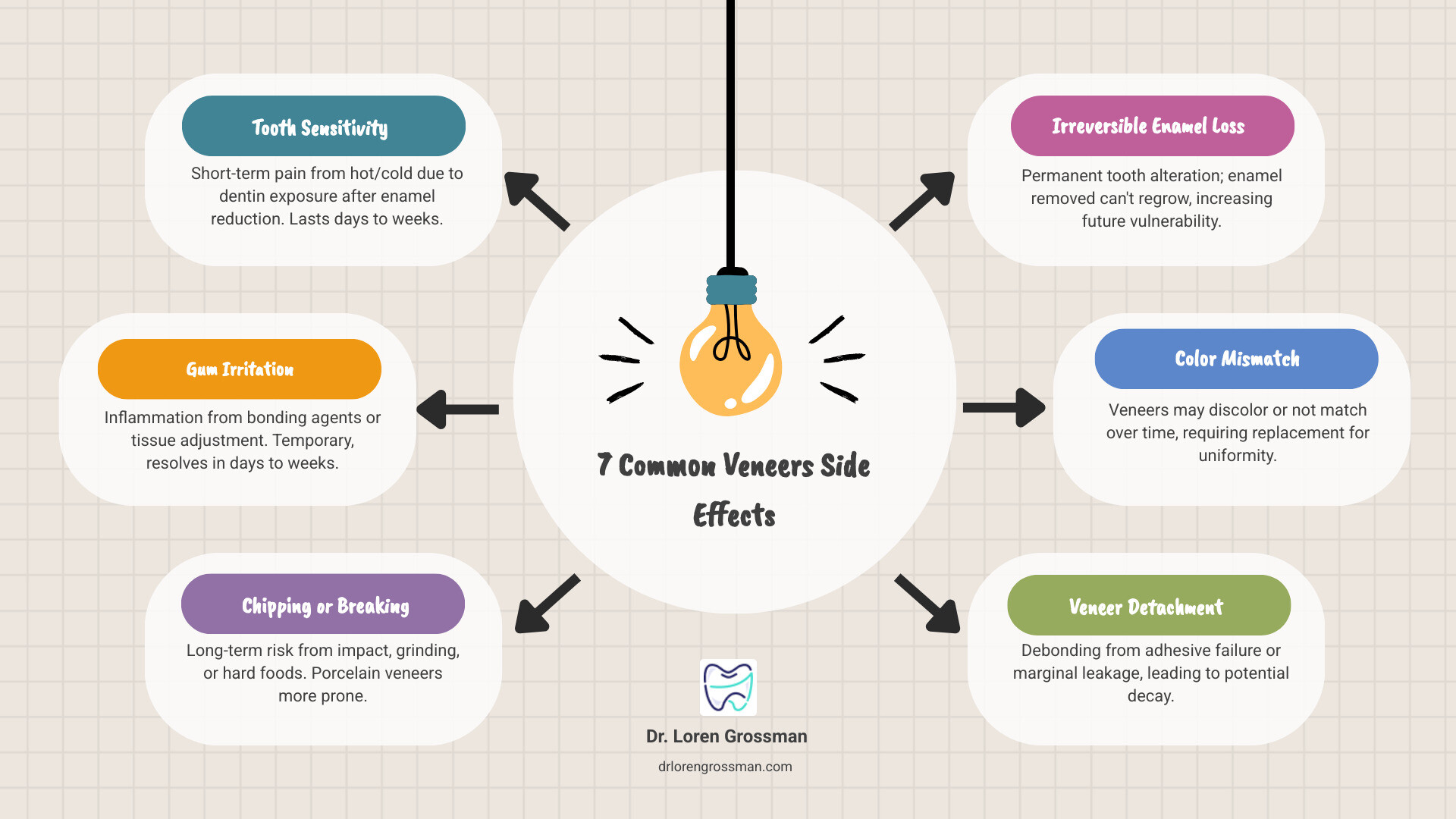
Understanding Dental Veneers and the Application Process
Before we dive into the potential downsides, it is important to understand exactly what we are putting on your teeth. Dental veneers are essentially ultra-thin, custom-made shells designed to cover the front surface of your teeth. Think of them like high-tech artificial fingernails, but for your smile. They are used to improve the color, shape, size, or length of teeth that might be chipped, stained, or slightly misaligned.
In our Northeastern Pennsylvania offices, we generally work with two primary materials:
- Porcelain Veneers: These are the “gold standard.” They are incredibly durable, highly stain-resistant, and mimic the light-reflecting properties of natural teeth better than any other material. Because they are custom-crafted in a lab, they typically require at least two appointments.
- Composite Resin Veneers: These are made from a tooth-colored filling material. They can often be applied in a single visit. While they are more affordable, they aren’t quite as durable as porcelain and may stain over time.
The process begins with a consultation where we discuss your aesthetic goals. To ensure the veneers don’t look “bulky” or “fake,” we usually need to remove a tiny amount of enamel—often about 0.5mm to 1mm—from the front of the tooth. This provides a rough surface for the bonding agent to grip and ensures the veneer sits flush with your gum line.

Once the teeth are prepped, we take impressions (or a digital scan) and send them to a dental laboratory. While you wait for your permanent porcelain shells, we often provide temporary veneers. During the final visit, we use a special light-activated adhesive to permanently bond the veneers to your teeth. To get a deeper look at the mechanics, you can read our guide on how to understand a dental veneers procedure.
Common Short-Term Veneers Side Effects
Most patients experience some level of adjustment during the first few days or weeks. These side effects are generally temporary and part of the body’s natural healing process.
Tooth Sensitivity
The most frequent complaint we hear is increased sensitivity to hot and cold temperatures. Because we have removed a thin layer of protective enamel, the underlying dentin (which contains microscopic tubules leading to the nerve) is more exposed. This can cause a “zing” when you sip your morning coffee or enjoy an ice cream cone in Kirby Park.
Gum Irritation
Your gums need time to get used to their new “roommate.” The edges of the veneers, known as margins, sit right at or slightly below the gum line. Even with a perfect fit, the inflammation of the soft tissue is common as the gums heal from the procedure and adjust to the new material.
Speech and Bite Adjustments
It might sound funny, but changing the thickness or length of your front teeth can temporarily affect your speech. You might notice a slight lisp when pronouncing “s” or “f” sounds. Additionally, your bite might feel “off” for a few days as your jaw muscles adjust to the new tooth shapes.
| Side Effect | Porcelain Veneers | Composite Veneers |
|---|---|---|
| Sensitivity | Moderate (due to enamel prep) | Low (less prep required) |
| Durability | High (10-20 years) | Moderate (5-7 years) |
| Stain Resistance | Excellent | Fair |
| Repairability | Must be replaced if broken | Can often be patched |
Why Veneers Side Effects Include Tooth Sensitivity
To understand why sensitivity happens, we have to look at the anatomy of your tooth. Enamel is the hardest substance in the human body, but it’s also your tooth’s primary insulator. When we prep a tooth for veneers, we are essentially thinning that insulation.
This exposure can lead to what we call “temporary pulpitis”—a fancy way of saying the nerve inside the tooth is a little grumpy and inflamed. In most cases, the nerve settles down within a few weeks as the bonding agent seals the tooth and the nerve adapts. If you’re worried about how much of your natural tooth is altered, check out our detailed breakdown of teeth prepped for veneers.
Managing Gum Irritation and Inflammation
While some redness is normal, we want to ensure it doesn’t turn into a long-term problem. Proper fit is everything. If a veneer isn’t seated perfectly, it can create a “ledge” that traps bacteria, leading to chronic inflammation or even gum recession.
We recommend a gentle touch during the first week. Use a soft-bristled toothbrush and avoid aggressive flossing right at the gum line until the tenderness subsides. If you’re in the Kingston area and notice persistent swelling, our team at our Dr. Loren Grossman in Kingston, PA is always ready to perform a quick adjustment to ensure your comfort.
Long-Term Risks and Maintenance Challenges
Veneers are a long-term commitment, but they aren’t “forever” in the same way your natural teeth are meant to be. They are dental prosthetics, and like any prosthetic, they have a lifespan and potential for failure.
Lifespan and Replacement
According to clinical data, porcelain veneers typically last between 10 and 20 years with proper care. Composite veneers have a shorter lifespan, usually needing replacement every 5 to 7 years. Eventually, the bonding material can degrade, the gums may recede and expose the edges, or the veneer itself may lose its luster.
Marginal Leakage
Over time, a tiny gap can form between the veneer and the natural tooth. This is called marginal leakage. If bacteria get into that gap, they can cause a cavity underneath the veneer. Since the veneer covers the front, you might not see the decay until it becomes a significant problem, which is why regular check-ups in our Scranton or Wilkes-Barre offices are so vital.
Structural Risks: Chipping, Breaking, and Falling Off
While porcelain is strong, it is also brittle. It doesn’t handle “shear forces” well. If you have a habit of biting your nails, chewing on pens, or using your teeth to open bags of chips, you are asking for trouble.
Bruxism (Teeth Grinding) is the number one enemy of veneers. If you grind your teeth at night, the sheer pressure can snap a porcelain veneer right off or cause it to shatter. If you do grind, we will likely insist on a custom nightguard to protect your investment.
Professional Tips to Minimize Veneers Side Effects
Maintaining your veneers doesn’t have to be a full-time job, but it does require a bit more mindfulness than natural teeth. Here is our “Pro-Veneer” checklist:
- Switch to Non-Abrasive Toothpaste: Many whitening toothpastes contain abrasive silica that can scratch the surface of your veneers over time, dulling their shine. Look for gels or toothpastes specifically labeled for cosmetic work.
- Soft Brushes Only: A hard-bristled brush can contribute to gum recession, exposing the edges of your veneers.
- Avoid Staining Agents: While porcelain is stain-resistant, the bonding resin at the edges is not. Excessive red wine, coffee, or smoking can cause dark lines to appear around the margins.
- Don’t Be a Tool: Never use your veneered teeth to cut thread, pull out a localized staple, or crack a nut.
If you’re preparing for your first consult, we have a list of questions to ask your cosmetic dentist to help you cover all your bases regarding long-term care.
The Irreversibility of Enamel Removal
This is perhaps the most significant “side effect” of all: Veneers are a permanent life choice.
Once we shave down that 0.5mm to 1mm of enamel, it is gone forever. Enamel does not grow back. Because the tooth is now thinner and the protective outer layer is reduced, that tooth will always need to be covered by something—whether it’s a veneer or a crown—for the rest of your life.
If a veneer falls off or breaks 15 years from now, you cannot simply decide to go “natural” again. You will need to pay for a replacement. This is why we spend so much time ensuring our patients in Northeastern Pennsylvania are fully committed to the process before we begin.
Candidacy: Who Should Avoid Getting Veneers?
Not everyone is a good candidate for veneers. In some cases, the risks of veneers side effects outweigh the benefits. We may recommend against veneers if you have:
- Active Gum Disease: Veneers require a healthy foundation. Placing them on teeth with receding or bleeding gums is a recipe for failure.
- Extensive Decay: If a tooth has large fillings or significant cavities, a full crown is usually a safer, more structural choice.
- Insufficient Enamel: If your enamel is already worn thin from acid reflux or aggressive brushing, there may not be enough surface area to bond the veneer securely.
- Severe Misalignment: Veneers can fix minor “crookedness,” but they aren’t a substitute for braces or Invisalign if your bite is significantly off.
- Chronic Bruxism: If you are a heavy grinder and refuse to wear a nightguard, your veneers will likely fail prematurely.
Frequently Asked Questions About Veneer Risks
Is the veneer procedure irreversible?
Yes. Because a layer of enamel is removed during the preparation phase, the tooth is permanently altered. You will always need a restoration (veneer or crown) on that tooth to protect the underlying structure and prevent extreme sensitivity or decay.
How long do veneers typically last before needing replacement?
Porcelain veneers are quite durable and generally last 10 to 20 years. Composite veneers are a bit more fragile and usually last between 5 and 7 years. Your personal habits—like oral hygiene and whether you grind your teeth—will play a huge role in their actual longevity.
Can veneers cause permanent nerve damage?
While extremely rare, it is possible. If a tooth is over-prepared (too much enamel and dentin removed), the “pulp” or nerve of the tooth can become irreversibly inflamed. This might require a root canal. This is why choosing an experienced, licensed cosmetic dentist is the most important step in the process.
Conclusion
At the practice of Dr. Loren Grossman, we believe that a beautiful smile is one of the best investments you can make in yourself. Whether you are in Kingston, Scranton, or Wilkes-Barre, our goal is to provide results that are not only stunning but also sustainable.
Understanding veneers side effects isn’t about scaring you away from the procedure, it’s about empowering you to take care of your new smile so it lasts for decades. If you are ready to explore your options and want a personalized evaluation of your dental health, we invite you to transform your smile with dental veneers at one of our Northeastern Pennsylvania locations. We’ll help you navigate the risks and rewards to achieve the confident, radiant look you’ve always wanted.