How Long Do Veneers Last? Here’s What You Need to Know First
If you’re wondering how long do veneers last, here’s the short answer:
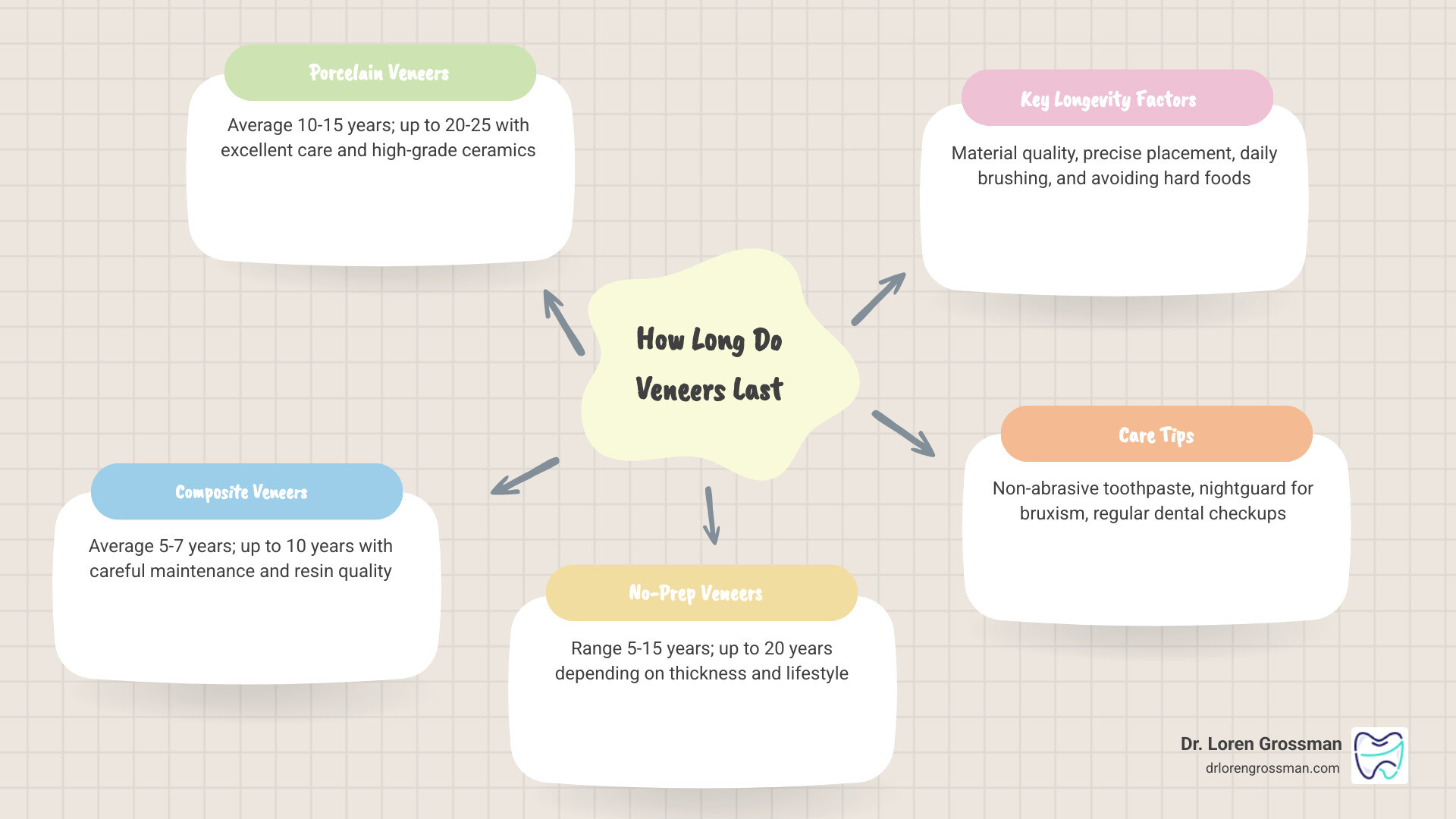
| Veneer Type | Average Lifespan | Best Case |
|---|---|---|
| Porcelain | 10-15 years | 20-25 years |
| Composite | 5-7 years | Up to 10 years |
| No-prep | 5-15 years | Up to 20 years |
The American Dental Association puts the average at around 10 years, but with proper care, many patients get significantly more.
Your results depend on two things: the material used and how well you care for them. That’s really it.
Veneers are one of the most popular cosmetic dental treatments available today — and for good reason. They can hide chips, stains, gaps, and uneven teeth with results that look completely natural. But like any dental work, they don’t last forever. Knowing what to expect before you commit helps you protect your investment and plan ahead.
I’m Dr. Loren Grossman, a cosmetic and family dentist serving the Wyoming Valley since 1984, and in over four decades of placing veneers I’ve seen what makes them last — and what shortens their life. I’ll walk you through everything you need to know about how long veneers last and how to get the most out of yours.
What Are Dental Veneers and How Do They Work?
At its simplest, a dental veneer is a custom-made, wafer-thin shell designed to cover the front surface of a tooth. Think of it like a high-tech “false nail” for your tooth, but one that is permanently bonded and crafted from materials that mimic the light-reflecting properties of natural enamel.
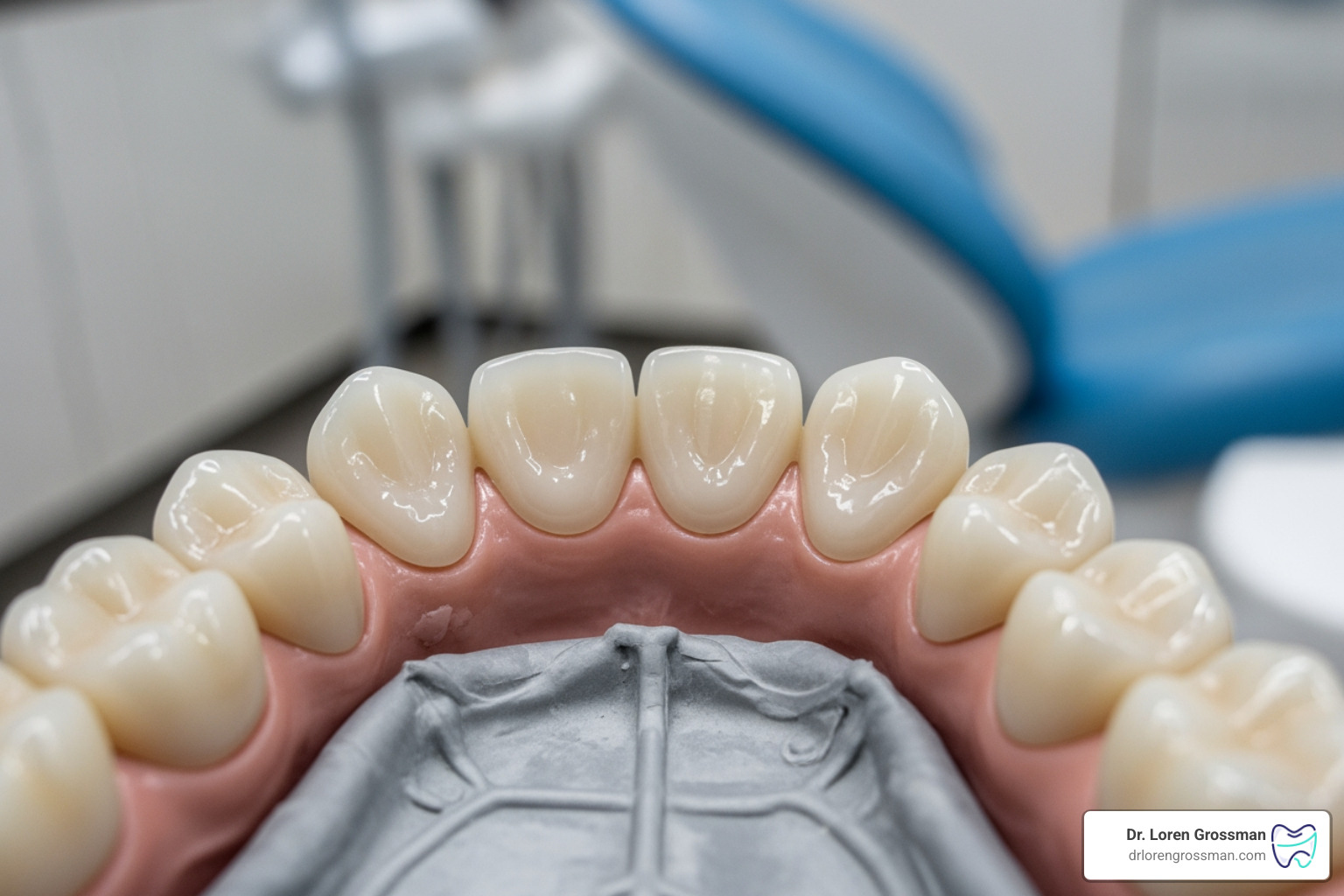
Veneers are primarily a cosmetic tool. While they can provide some structural protection, their main job is to transform the aesthetics of your smile. We use them to address a wide variety of concerns, including:
- Discoloration: Stains from tetracycline, excessive fluoride, or large resin fillings that can’t be fixed by whitening.
- Wear and Tear: Teeth that have become worn down over time.
- Damage: Chipped or broken teeth.
- Alignment: Slightly crooked or uneven teeth (often called “instant orthodontics”).
- Gaps: Closing small spaces between teeth (diastemas).
To understand how veneers work, you have to understand the bonding process. For traditional veneers, we remove a very small amount of enamel—usually about 0.5mm, which is roughly the thickness of a contact lens. This creates space for the veneer so your tooth doesn’t look bulky. Once the enamel is prepped, we use a high-strength dental cement to bond the shell to your tooth.
It is important to understand the basics of veneers before starting. One of the biggest advantages is that porcelain is highly stain-resistant, meaning your new smile will stay bright much longer than natural teeth would. However, the process is generally irreversible because of that initial enamel removal. You can explore the different types of veneers to see which material fits your lifestyle and budget best.
Pros and Cons of Veneers
Pros:
- Provide a natural tooth appearance.
- Porcelain is stain-resistant.
- Can make a smile 10x whiter.
- Less invasive than crowns.
Cons:
- The process is usually irreversible.
- Teeth may be more sensitive to hot and cold.
- They can be an out-of-pocket expense as insurance often views them as elective.
How Long Do Veneers Last? Comparing Porcelain and Composite
When patients ask us about longevity in our Kingston office, we always start by comparing the two heavy hitters: porcelain and composite resin. As of May 2026, the technology behind these materials has never been better, but there is still a clear winner in the “marathon” of dental restorations.
| Feature | Porcelain Veneers | Composite Veneers |
|---|---|---|
| Typical Lifespan | 10–15 Years | 5–7 Years |
| Max Lifespan | 25+ Years | 10 Years |
| Stain Resistance | Excellent | Moderate |
| Repairability | Must be replaced if chipped | Can often be patched |
| Cost Per Tooth | $925 – $3,500 | $250 – $1,500 |
Determining how long you can expect veneers to last is a matter of weighing the upfront investment against the replacement frequency. While porcelain costs more initially, its durability often makes it more cost-effective over a 20-year period. You can read more about veneer longevity to see how these materials hold up under daily pressure.
How long do porcelain veneers typically last?
Porcelain is the gold standard for a reason. In our experience, porcelain veneers last between 10 and 15 years for the vast majority of patients, but it is not uncommon to see them last 20 or even 25 years.
Clinical studies show a 95% success rate at the 10-year mark. This longevity is due to the high-grade ceramics used, which are incredibly hard and non-porous. Unlike natural enamel, porcelain won’t “soak up” coffee or red wine stains. For a deep dive into the 2026 standards for these restorations, check out our Complete Dental Veneers Guide 2026.
How long do composite veneers typically last?
Composite veneers (often called “bonding”) are made from a tooth-colored resin material. They are a fantastic, budget-friendly option and can often be applied in a single visit. However, the material is softer and more porous than porcelain.
On average, composite veneers last 4 to 8 years. They are more prone to chipping and will eventually pick up stains over time, much like your natural teeth. Because they don’t last as long, you may find yourself replacing them twice as often as you would porcelain. Understanding the veneer process for each material is key to making the right choice for your smile.
Factors and Care: Maximizing Your Veneer Lifespan
The “average” lifespan is just that—an average. Some people wear their veneers out in seven years, while others are still smiling brightly with the same set twenty years later. What makes the difference? It usually comes down to material quality, the skill of the placement, and your daily habits.
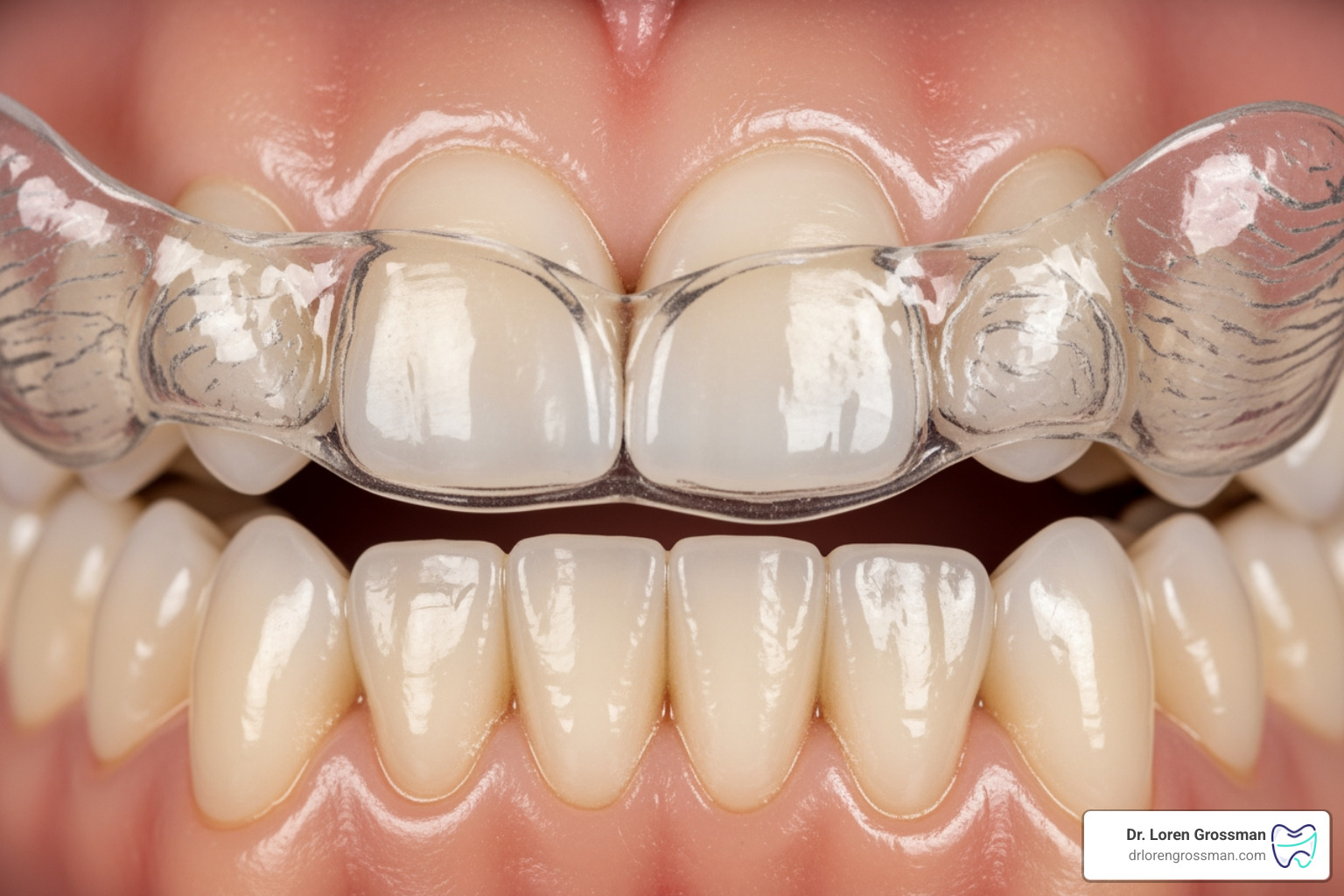
One of the biggest “veneer killers” is bruxism (teeth grinding). If you clench or grind your teeth at night, you are putting thousands of pounds of pressure on those thin shells. This can cause the bonding to fail or the porcelain to crack. This is why we almost always recommend a custom nightguard for our veneer patients.
It’s also vital to be aware of veneer side effects and risks such as gum recession, which can expose the edges of the veneer. Choosing an experienced provider ensures a precise dental veneers procedure, which is the foundation of a long-lasting restoration.
Daily Maintenance Habits
You don’t need a specialized “veneer cleaning kit,” but you do need to be intentional.
- Use a soft-bristled toothbrush: Hard bristles can create microscopic scratches on composite veneers and irritate the gum line.
- Non-abrasive toothpaste: Avoid whitening toothpastes that contain silica or baking soda, as these can wear down the polish on your veneers.
- Floss daily: You can’t get a cavity in a veneer, but you can get one under it. Flossing keeps the margins clean.
- Antibacterial mouthwash: This helps keep your gums healthy, preventing the recession that makes veneers look “old.”
Lifestyle and Dietary Adjustments
While veneers are tough, they aren’t indestructible.
- Avoid “Teeth as Tools”: Never use your teeth to open packages, bite your nails, or chew on pens. This is the fastest way to chip a veneer.
- Watch the Hard Foods: Be careful with ice, hard candies, and popcorn kernels.
- Staining Substances: If you have composite veneers, limit coffee, tea, and red wine. Porcelain is resistant, but the bonding agent at the edges can still stain.
- Sports Protection: If you play contact sports in the Kingston area, always wear a professional-grade mouthguard.
When to Replace Your Veneers: Signs and Comparisons
Even with the best care, there may come a day when your veneers need to be retired. We monitor the health of your restorations during every six-month checkup.
One of the most common reasons for replacement is gum recession. As we age, our gums may pull back slightly. If they recede past the top of the veneer, you might see a dark line or a visible edge. While the veneer itself is still fine, the “aesthetic failure” means many patients choose to replace them.
Another factor is the health of the tooth underneath. If a cavity develops on the back of the tooth, it can compromise the bond. It’s a common question: how much enamel is actually removed during the process? Because we are conservative with our prep, we try to leave as much natural structure as possible to make future replacements easier.
Veneers vs. Dental Crowns
Patients often confuse these two, but they serve different purposes:
- Thickness: Veneers are about 1mm thick; crowns are usually 2mm or more.
- Coverage: Veneers cover only the front; crowns cover the entire tooth like a “cap.”
- Longevity: Crowns typically last 5 to 10 years, though high-quality ones can last longer. Surprisingly, porcelain veneers often have a longer aesthetic lifespan than crowns in cosmetic cases.
- Purpose: Veneers are for looks; crowns are for structural support and strength.
Frequently Asked Questions
Are veneers permanent or reversible?
Traditional porcelain and composite veneers are considered permanent and irreversible. This is because we must remove a small amount of enamel to ensure a natural fit. Once that enamel is gone, that tooth will always need a restoration (either a new veneer or a crown) to protect it.
However, there are “no-prep” options like Lumineers. These are so thin that they can sometimes be bonded directly to the tooth without prep work. If you are looking for veneer procedures in Kingston, PA, we can discuss whether you are a candidate for these reversible options.
Do veneers damage your natural teeth?
No, veneers do not “rot” your teeth. When placed by a professional, they are perfectly safe. However, the tooth underneath is still a natural tooth. If you don’t brush and floss, bacteria can get under the veneer and cause decay. This isn’t a fault of the veneer, but rather a result of oral hygiene habits.
What are the signs that veneers need to be replaced?
You should call us if you notice:
- Loosening: If the veneer feels like it’s “wiggling.”
- Sensitivity: Increased pain to hot or cold temperatures.
- Visible Cracks: Small “craze lines” or actual chips in the material.
- Dark Edges: Staining or decay at the gum line.
- Aesthetic Deterioration: If the veneers no longer match your surrounding teeth or have lost their shine.
Conclusion
So, how long do veneers last? While the materials have an expiration date, your habits determine whether that date is five years away or twenty-five. By choosing high-quality porcelain, maintaining a rigorous cleaning schedule, and protecting your teeth from physical trauma, you can ensure your investment pays off for decades to come.
At the office of Dr. Loren Grossman, we pride ourselves on delivering the kind of precision and care that Northeastern Pennsylvania has trusted for over 40 years. Whether you’re in Kingston or the surrounding Wyoming Valley, we are here to help you navigate your smile transformation with honesty and expertise.
Ready to see what veneers can do for you? Transform your smile with dental veneers by scheduling a consultation with our team today. Let’s build a smile that lasts a lifetime!