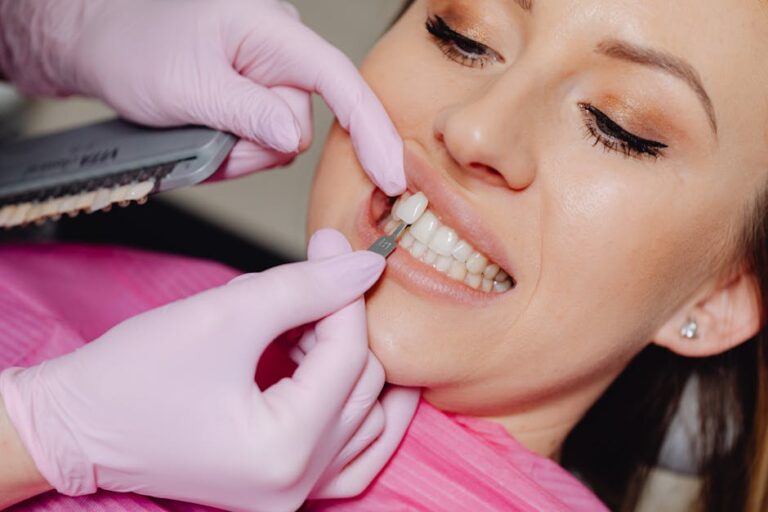
Why a Gap Between Your Teeth Is More Fixable Than You Think
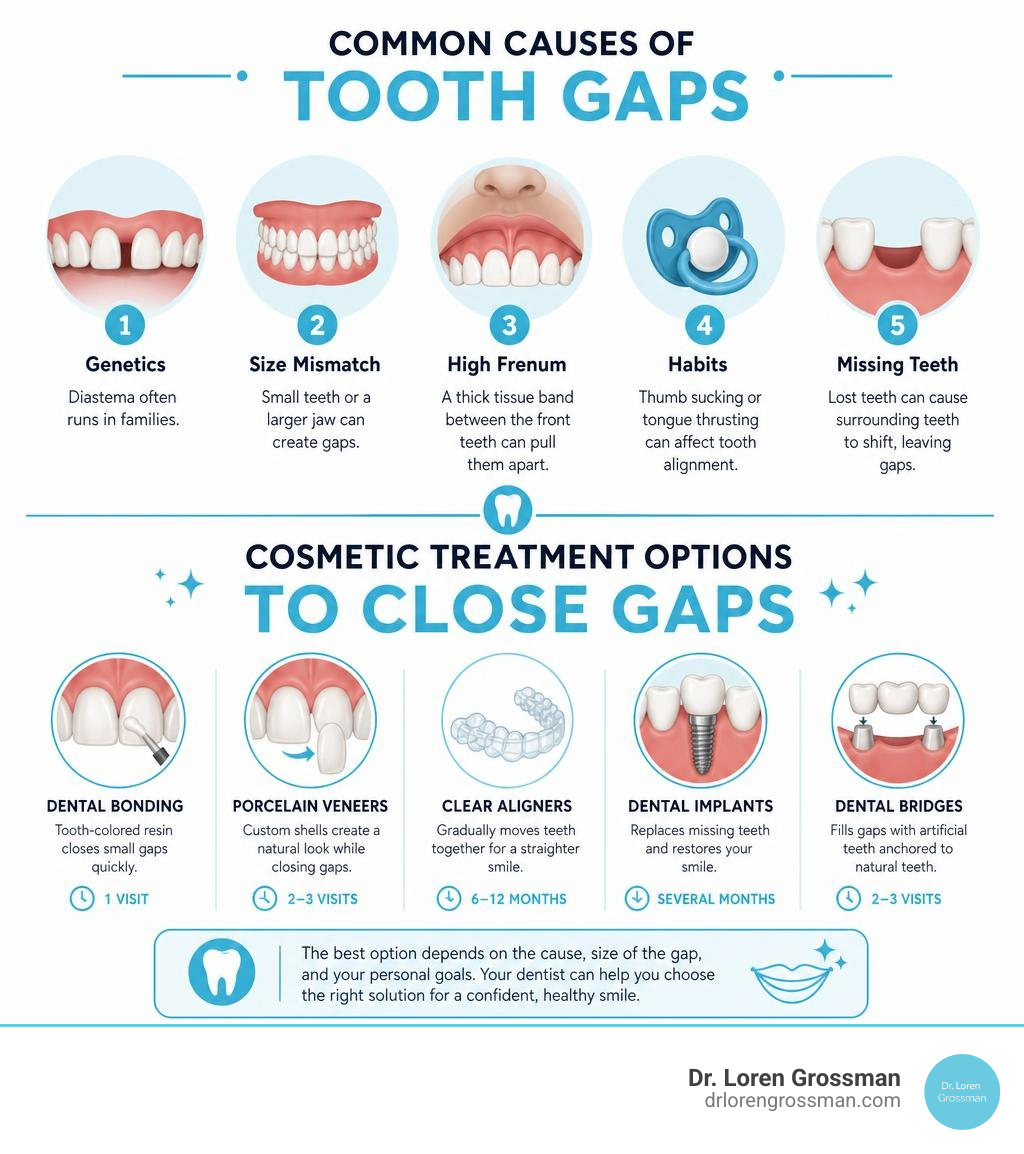
Cosmetic dentistry for gaps in teeth offers several proven solutions — from quick same-day fixes to longer-term structural corrections. Here is a fast overview:
| Treatment | Best For | Time to Results |
|---|---|---|
| Dental bonding | Small gaps (under 2mm) | 1 visit |
| Porcelain veneers | Moderate gaps + smile redesign | 2-3 visits |
| Clear aligners | Generalized spacing or bite issues | 6-12 months |
| Dental implants | Gaps caused by missing teeth | Several months |
| Dental bridges | Missing teeth with anchor support | 2-3 visits |
A gap between your teeth — known clinically as a diastema — is one of the most common smile concerns people bring to a dentist. In fact, roughly 1 in 5 adults worldwide has a visible tooth gap.
For some people, it is barely noticeable. For others, it is the first thing they see every time they look in the mirror or appear in a photo.
The good news? Most gaps can be closed — often faster and with less hassle than people expect.
Whether your gap is small and purely cosmetic, or larger and affecting how you chew or speak, there is likely a treatment that fits your situation, your timeline, and your budget.
I’m Dr. Loren Grossman, D.M.D., a cosmetic and family dentist serving the Wyoming Valley since 1984, with decades of hands-on experience in cosmetic dentistry for gaps in teeth — from simple bonding to full smile makeovers. In the sections below, I’ll walk you through every major option so you can make a confident, informed decision before you ever sit in the chair.
Understanding Diastema: Causes, Risks, and When to Treat
A diastema can occur anywhere in the mouth, though it is most famous when it sits right between the two upper front teeth (a midline diastema). While pop culture icon status has been achieved by famous gaps like those of Michael Strahan or Anna Paquin, many of our patients in Kingston, PA, prefer a seamless, uniform smile.
Understanding why your teeth have separated is the first step in finding the right solution. Gaps develop due to a variety of factors:
- Genetics and Anatomy: Often, a gap is simply a matter of DNA. If you inherited a larger jawbone but smaller teeth, your teeth will naturally spread out to fill the space, resulting in a jaw-to-tooth size mismatch.
- Oversized Labial Frenum: The labial frenum is the small tissue fold connecting your upper lip to your gums. If this tissue is unusually thick or grows too far down between your front teeth, it acts like a physical wedge, blocking the teeth from coming together.
- Childhood Habits: Prolonged thumb-sucking, pacifier use beyond infancy, or tongue thrusting (pushing the tongue against the front teeth when swallowing) can place continuous forward pressure on the teeth, splaying them outward and creating gaps.
- Gum Disease and Bone Loss: This is a critical health-related cause. Advanced periodontal disease destroys the bone structure supporting your teeth. As the bone weakens, teeth lose their stability and begin to shift, often creating new or widening gaps.
The Risks of Leaving Gaps Untreated
While many people view a diastema as a purely aesthetic issue, leaving gaps untreated can introduce genuine risks to your oral health.
First, spaces between teeth act as natural food traps. Plaque buildup and food particles accumulate easily in these open areas, making them prime breeding grounds for bacteria. This increases your risk of localized tooth decay and gum disease.
Second, untreated spacing can impair your bite alignment. When teeth are not properly aligned, chewing forces are distributed unevenly across your jaw. This can lead to premature tooth wear, jaw discomfort, and eventually TMJ (temporomandibular joint) complications.
If you are wondering whether your spacing is purely cosmetic or a functional risk, reviewing the criteria for cosmetic dentistry candidates can help you understand when it is time to seek professional care.
Top Options in Cosmetic Dentistry for Gaps in Teeth
Modern dental science has evolved to offer highly customized options. We no longer rely on a “one-size-fits-all” approach. Whether you want an instant change or a biological shift of your natural teeth, we can tailor a plan specifically for your anatomy.

According to a clinical review of The Top 3 Best Solutions for a Tooth Gap – Mednfly, the most effective pathways to close a diastema are dental bonding, orthodontic therapy, and porcelain veneers.
Below is a detailed comparison matrix outlining how these options, along with restorative solutions, stack up against one another:
| Treatment | Best For | Est. Lifespan | Typical Cost (Per Tooth) | Enamel Prep Required? | Reversible? |
|---|---|---|---|---|---|
| Dental Bonding | Gaps < 2mm; quick fixes | 3 to 7 years | $300 – $600 | None | Yes |
| Porcelain Veneers | Multiple cosmetic issues; gaps < 3mm | 10 to 20 years | $1,000 – $2,000+ | Minimal (0.3mm – 0.5mm) | No |
| Clear Aligners | Widespread spacing; bite issues | Lifelong (with retainer) | $3,000 – $6,000 (total) | None | Yes |
| Dental Implants | Gaps caused by missing teeth | 15+ years (95%+ success) | $3,000 – $5,000+ | None | No |
| Dental Bridges | Missing teeth with healthy neighbors | 10 to 15 years | $2,000 – $5,000 (total) | High (on anchor teeth) | No |
Dental Bonding: Fast Cosmetic Dentistry for Gaps in Teeth
If you are looking for the fastest, most conservative, and most budget-friendly way to close a gap, composite dental bonding is often the perfect candidate.

During this procedure, we apply a tooth-colored composite resin directly to the sides of the teeth bordering the gap. We carefully sculpt, shape, and smooth the resin to widen the teeth naturally, closing the space. A specialized UV light is then used to cure and harden the material in seconds.
The entire process is completed in a single, comfortable visit and typically requires no local anesthesia because we do not have to alter your natural enamel. It is one of the most popular cosmetic dentistry procedures for patients seeking rapid, non-invasive improvements.
- Pros: Completed in under an hour; highly affordable; preserves 100% of your natural tooth structure; completely pain-free.
- Cons: Composite resin is more porous than natural enamel or porcelain, meaning it can stain over time from coffee, tea, or red wine; it is also more prone to chipping if you bite into hard foods.
- Lifespan & Maintenance: Expect bonding to last between 3 to 7 years. To maximize its lifespan, avoid biting directly into hard candies, ice, or apples with your bonded teeth, and maintain excellent daily brushing and flossing habits.
Porcelain Veneers: Durable Cosmetic Dentistry for Gaps in Teeth
For patients seeking a dramatic, long-lasting transformation that looks completely natural, porcelain veneers are the undisputed gold standard. Veneers are ultra-thin, custom-made shells of medical-grade porcelain designed to cover the front surface of your teeth.
Unlike bonding, which is sculpted directly in your mouth, porcelain veneers are fabricated in a professional dental laboratory. This allows for unmatched precision in color matching, translucency, and structural design. We can use veneers to close gaps while simultaneously correcting chips, stains, and minor tooth misalignments.
If you want to explore how these custom shells can completely redesign your smile, read our comprehensive guide on services – dental veneers.
- Pros: Incredible stain resistance; highly durable; matches the light-reflecting properties of natural enamel; can last up to two decades with proper care.
- Cons: Requires two to three appointments; involves a non-reversible process where a microscopic layer of enamel (0.3mm to 0.5mm) is removed to ensure the veneers sit flush with your gumline; higher upfront cost.
- Lifespan & Maintenance: Porcelain veneers typically last between 10 and 20 years. Maintenance is simple: treat them like natural teeth with regular brushing, flossing, and biannual dental cleanings. If you grind your teeth at night, we will customize a nightguard to protect your investment.
Clear Aligners and Orthodontics: Structural Movement
When gaps are widespread, exceed 3mm in width, or are accompanied by a misaligned bite, adding material to the teeth (like bonding or veneers) can make the teeth look cartoonishly wide. In these cases, the most biologically sound approach is to physically move the teeth into their ideal positions using orthodontic therapy.
Clear aligners, such as Invisalign, are highly popular among adults because they are virtually invisible and can be removed for eating and cleaning. Aligners apply gentle, continuous force to gradually shift your teeth closer together over a period of 6 to 12 months. For complex structural cases, traditional orthodontic braces may be recommended.
Moving your teeth physically is a key component of a complete smile transformation in Pennsylvania, ensuring both your bite and your aesthetics are perfectly balanced.
- Pros: Preserves 100% of your natural tooth structure without any dental materials bonded permanently to your teeth; corrects underlying bite and alignment issues.
- Cons: Requires strict patient compliance (aligners must be worn 22 hours per day); treatment takes months rather than days; requires a lifelong commitment to wearing a retainer at night to prevent the teeth from drifting back to their original positions.
- Lifespan & Maintenance: The results are permanent, provided you wear your retainers as directed. Without retainer compliance, the relapse rate for spacing issues is incredibly high.
Dental Implants, Bridges, and Crowns: Solutions for Missing Teeth
Sometimes, a gap is not just a space between two teeth — it is the result of a missing tooth altogether. When a tooth is lost due to trauma, decay, or extraction, the surrounding teeth will naturally begin to drift into the empty space, creating unsightly and unstable gaps throughout your arches.
To restore both form and function, we utilize advanced restorative dentistry:
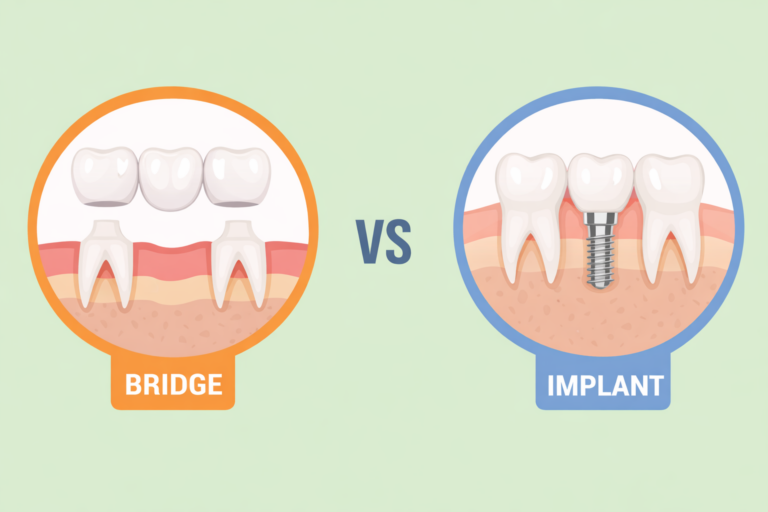
- Dental Implants: The premium option for a missing tooth. A titanium post is surgically placed into your jawbone, acting as a replacement root. Once integrated with the bone, a custom porcelain crown is attached. Implants boast a success rate of over 95% over 10 years. You can learn more about this permanent option by reading our guide to dental implants near me.
- Dental Bridges: A classic and highly reliable solution. A dental bridge consists of a false tooth (pontic) held in place by dental crowns bonded to the healthy teeth on either side of the gap. This is a fantastic option if the adjacent teeth also require cosmetic or structural restoration. Discover the details in our guide on dental bridges 101.
- Dental Crowns: If a tooth adjacent to a gap is severely damaged or decayed, a full-coverage dental crown can be designed to be slightly wider than the original tooth, safely closing the space while restoring the tooth’s strength.
Choosing the Right Treatment Based on Gap Size and Clinical Factors
Deciding on the best treatment for your diastema requires a careful clinical evaluation. We do not just look at the gap itself; we analyze your entire oral ecosystem.
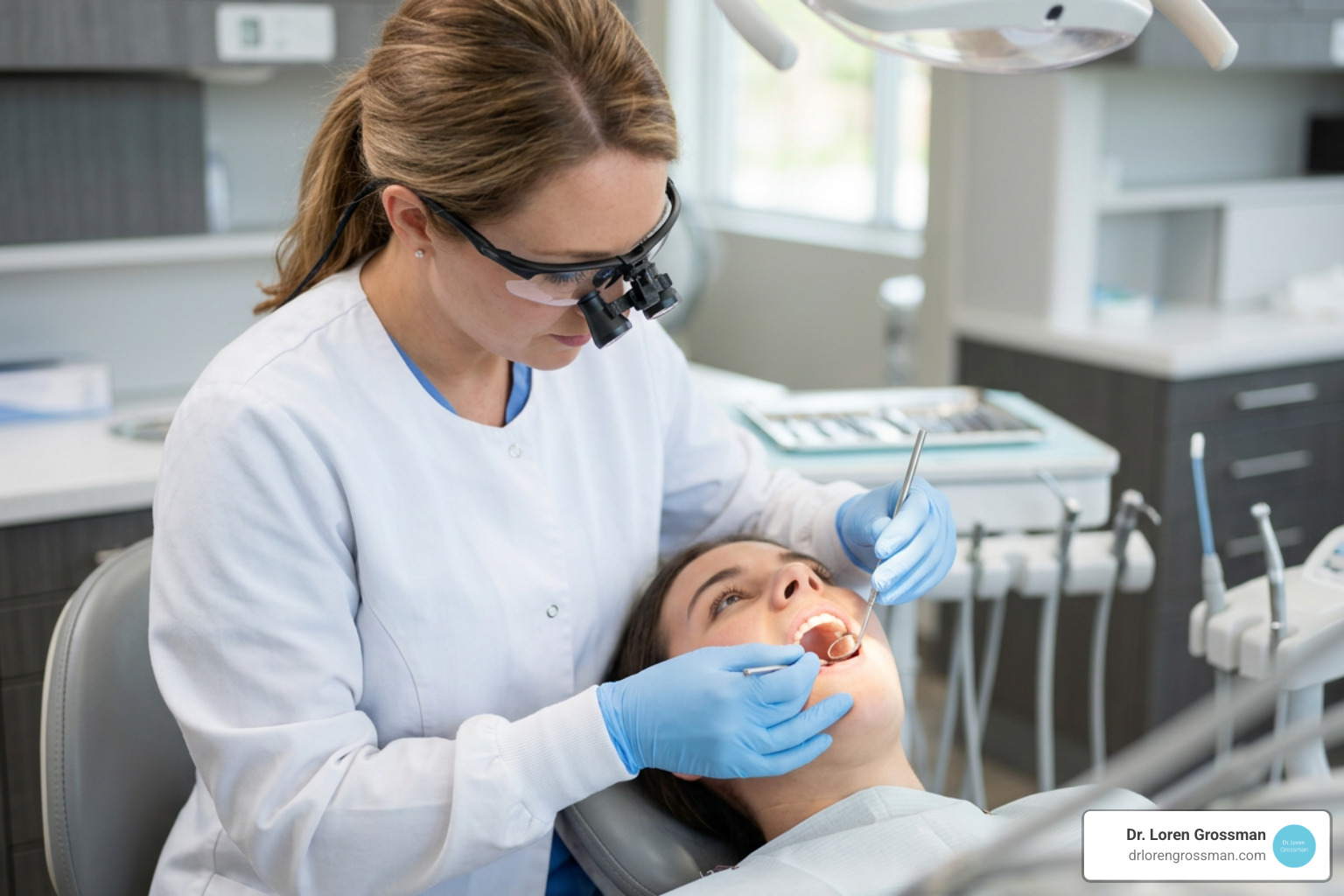
During a cosmetic consultation, we evaluate several key factors:
- Gap Width: Gaps under 2mm are easily filled with bonding or veneers. Gaps over 3mm often require aligners first, as filling a large gap with bonding alone can result in teeth that look disproportionately wide and bulky.
- Occlusion (Your Bite): If your front teeth collide heavily when you chew, bonding or veneers may chip prematurely. We must ensure your bite is stable before applying cosmetic materials.
- Periodontal Health: We will never perform cosmetic work on a foundation of active gum disease. If bone loss or gum inflammation is present, we must treat and stabilize your gums first.
- Facial Proportions: We design smiles that complement your facial symmetry, lip line, and skin tone, ensuring your finished smile looks completely natural.
Specialized Treatments: Bioclear, Peg Laterals, and Frenectomies
For unique spacing issues, we use specialized clinical techniques:
- Bioclear Matrix System: This is a modern, non-invasive alternative to traditional bonding and veneers. Bioclear uses clear, flexible anatomical forms wrapped around your teeth, into which we inject warm, tooth-colored composite. It is particularly effective for closing “black triangles” — the dark, triangular spaces that appear near the gumline as we age or after orthodontic treatment. Bioclear restorations are incredibly smooth, highly stain-resistant, and last 7 to 10 years.
- Peg Laterals: Sometimes, the teeth adjacent to your front teeth (lateral incisors) develop as abnormally small, cone-shaped teeth. This leaves natural gaps on either side. We can use bonding, Bioclear, or porcelain veneers to build these teeth up to their proper proportions, instantly closing the gaps.
- Frenectomy: If your diastema is caused by an oversized labial frenum, we may recommend a quick, minor surgical procedure to release this tissue. Performing a frenectomy before orthodontic or cosmetic treatment prevents the muscle tension from pulling the teeth apart again in the future.
For patients looking for a comprehensive makeover that addresses multiple spacing and aesthetic issues at once, we often recommend exploring our custom smile makeover services.
Choosing Your Cosmetic Dentist and Preparing for Treatment
Your smile is one of your most valuable assets, which means choosing the right professional to perform your treatment is a decision that shouldn’t be rushed.
When looking for a cosmetic dentist in Luzerne County and the broader Northeastern Pennsylvania (NEPA) region, look for a provider who combines clinical expertise with artistic vision.
At our practice, we believe the best cosmetic results are built on collaboration and advanced technology. We utilize digital bite analysis to ensure your restorations will not interfere with your natural chewing movements. We also provide customized treatment plans tailored to your unique facial proportions.
To help you navigate this process, we have put together a guide on finding the right cosmetic dentist to ensure you feel comfortable and confident in your choice.
What to Expect During Your Consultation
Your journey begins with a comprehensive smile evaluation. During this initial visit, we will:
- Take digital X-rays and high-resolution photographs of your teeth.
- Perform a thorough periodontal and bite assessment.
- Discuss your aesthetic goals, timeline, and budget.
- Create a digital preview or diagnostic wax-up, allowing you to see a physical or digital model of what your completed smile will look like before we ever begin treatment.
Frequently Asked Questions about Fixing Tooth Gaps
Can a tooth gap close on its own in adults?
No. While children often have gaps that close naturally as their permanent teeth erupt and their jawbones develop, adult teeth are firmly set in place. In adults, gaps will either remain completely stable or, more commonly, gradually widen over time due to natural tooth shifting, age, or bone loss from gum disease. Active dental intervention is required to close an adult diastema.
Is closing gaps without braces safe for my teeth?
Yes, absolutely. Treatments like composite bonding, Bioclear, and porcelain veneers are exceptionally safe and highly conservative. Dental bonding and Bioclear require zero removal of your natural tooth enamel. Porcelain veneers require only a microscopic buffing of the enamel (0.3mm to 0.5mm) to ensure a seamless fit. When performed by an experienced, licensed cosmetic dentist, these procedures preserve the health and structural integrity of your teeth.
Can a tooth gap come back after treatment?
Yes, regression is possible if the underlying cause of the gap is not addressed or if post-treatment protocols are ignored. For orthodontic treatments (like aligners or braces), teeth have a natural “memory” and will drift back to their original positions if you do not wear your retainers consistently. For cosmetic treatments like bonding or veneers, gaps can appear to return if advanced gum disease develops, causing the underlying bone to weaken and the teeth to shift.
Conclusion
Closing a gap in your teeth is about far more than just changing your appearance — it is about restoring balance to your bite, protecting your oral health, and giving you the freedom to smile, speak, and laugh without a second thought. Whether you choose the rapid, single-visit convenience of dental bonding, the stunning durability of porcelain veneers, or the structural alignment of clear aligners, a beautiful and stable transformation is entirely within reach.
At the office of Dr. Loren Grossman, we are dedicated to providing the highest standard of personalized cosmetic care to our patients in Kingston, PA, and throughout Luzerne County. We combine state-of-the-art dental technology with a warm, patient-first approach to help you achieve the healthy, radiant smile you deserve.
Ready to take the first step toward your perfect smile? Schedule a consultation for cosmetic dentistry services with our team today, and let us help you close the distance to a more confident you!