The Truth About Getting a New Smile Without Touching Your Teeth
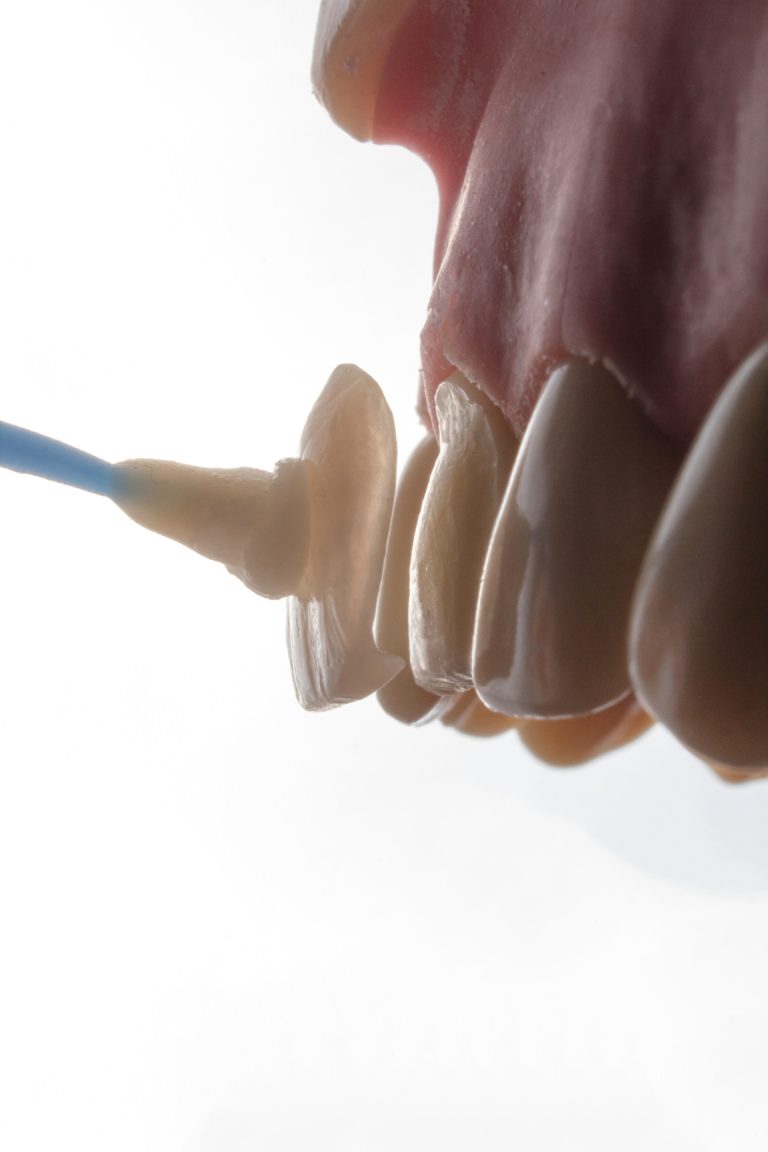
No prep veneers are ultra-thin porcelain shells — typically around 0.33 mm thick — bonded directly to the front of your teeth without grinding or shaving down healthy enamel.
Here’s a quick summary of what you need to know:
| Question | Quick Answer |
|---|---|
| What are they? | Ultra-thin porcelain shells bonded to teeth with no enamel removal |
| How thick? | ~0.33 mm (thinner than a contact lens) |
| Are they reversible? | Semi-reversible — no tooth structure removed, but bonding alters enamel chemistry |
| Who are they for? | Minor gaps, discoloration, chips, small or worn teeth |
| How long do they last? | 5–7 years or longer with proper care |
| Cost per tooth | $800–$2,000 |
| Do they hurt? | No — typically no needles or anesthesia needed |
A lot of people want a better smile but stop themselves when they hear the words “tooth shaving.” The idea of a dentist grinding down healthy teeth — permanently — feels like too big a trade-off. It’s one of the most common concerns I hear from patients in Northeastern Pennsylvania.
The good news is that for the right candidate, there’s a way to get a dramatically improved smile without any of that.
I’m Dr. Loren Grossman, a cosmetic and family dentist with over 40 years of experience in smile transformations, including no prep veneers for patients who want beautiful results while keeping their natural tooth structure intact. In the sections below, I’ll walk you through everything you need to know — from how these veneers work to whether you’re a good candidate.
No prep veneers glossary:
What Are No Prep Veneers and How Do They Work?
When people think of dental veneers, they often picture a dentist using a high-speed drill to shave down a significant portion of their natural enamel. While traditional veneers are an excellent and highly durable option for many, they do require this irreversible modification.
No prep veneers (sometimes referred to as prepless or minimal-prep veneers) offer a alternative. They are designed to improve the appearance of your teeth with little to no alteration of your natural tooth structure. Instead of removing enamel to make room for a thick ceramic shell, we use ultra-thin materials that bond directly to the existing front surfaces of your teeth.
Because we do not have to drill away healthy enamel, the procedure is incredibly conservative. It preserves your natural teeth while correcting cosmetic imperfections like chips, gaps, and minor misalignments. To explore the broader world of dental veneers, you can read our Complete Dental Veneers Guide 2026.
According to cosmetic dentistry experts, these restorations are a legitimate clinical option for the right patient, rather than just a marketing buzzword. As noted in this guide on What Are “No-Prep” Veneers?” Are They Too Good to Be True? – Dental Health Society, they work beautifully when the goal is to add volume or length to the teeth without changing their underlying foundational structure.
The Science Behind No Prep Veneers
The magic of prepless veneers lies in modern materials science. To create a restoration that is incredibly thin yet strong enough to withstand the daily forces of chewing, dental laboratories use advanced ceramics:
- Feldspathic Porcelain: This classic material allows for exceptional optical properties. It mimics the natural translucency and light-reflecting qualities of enamel even at a minimal thickness of 0.2 mm to 0.3 mm.
- Lithium Disilicate: Known for its superior strength, this glass-ceramic can be pressed or milled incredibly thin while maintaining high fracture resistance.
Because these veneers are so thin—typically around 0.33 mm—they rely heavily on the bond between the porcelain and your natural enamel.
From a scientific standpoint, bonding dental resin to intact enamel creates one of the strongest bonds possible in dentistry. Enamel is rich in minerals, which makes it far more receptive to adhesive bonding than the deeper dentin layer of the tooth. When we bond a prepless veneer directly to enamel, we achieve maximum adhesion and long-term stability.
Several major dental manufacturers produce high-quality prepless options, including:
- Lumineers: Perhaps the most famous brand, made from patented Cerinate porcelain.
- Vivaneers: An ultra-thin option (0.33 mm) manufactured by Glidewell Laboratories.
- DURAthin: Custom-made, super-thin porcelain veneers designed to be bonded directly to teeth without preparation.
No-Prep Veneers vs. Traditional Veneers
The primary difference between traditional and prepless veneers is the amount of tooth modification required.
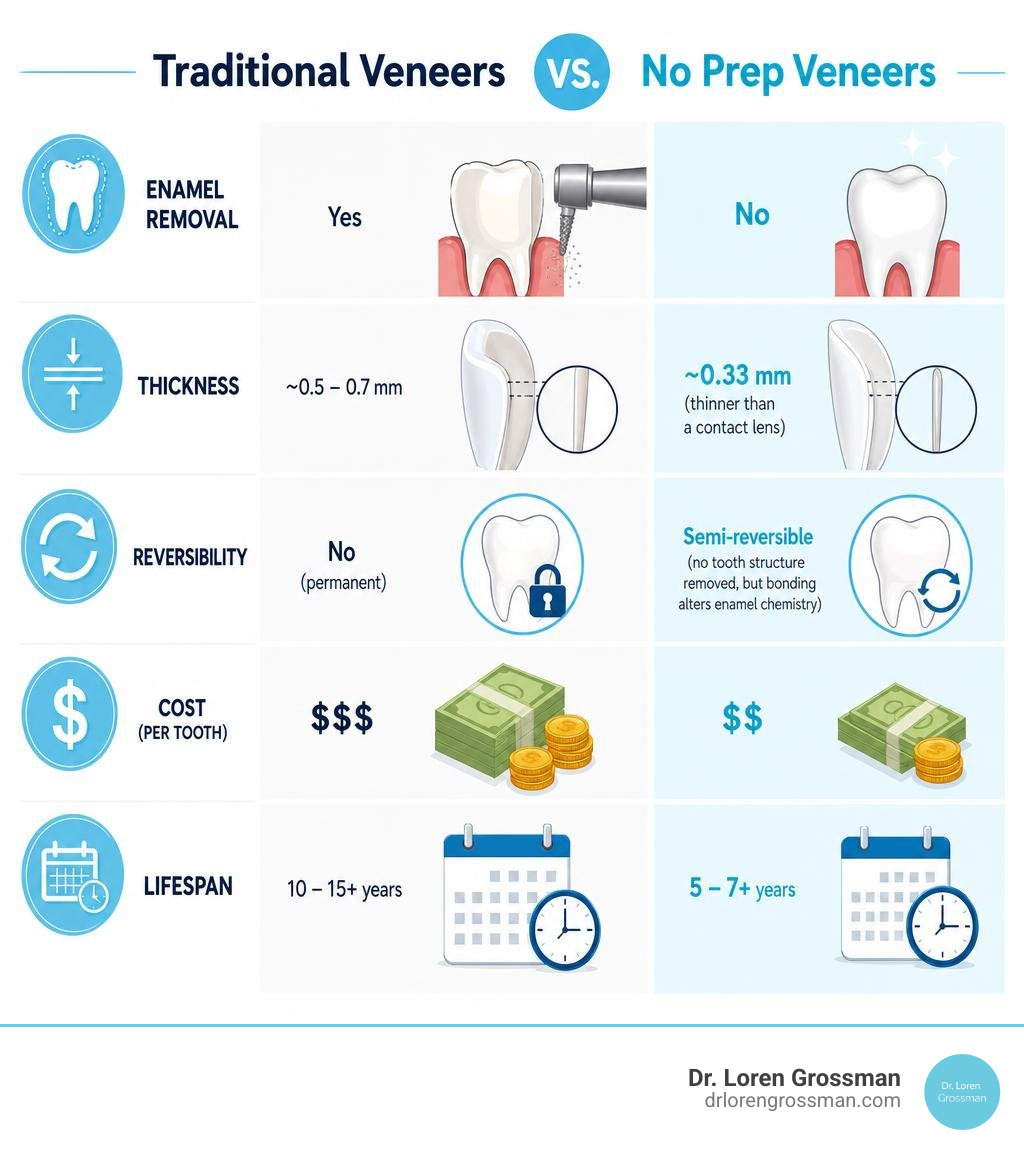
Traditional porcelain veneers typically require us to grind away approximately 0.5 mm of healthy enamel. This is done to prevent the finished veneer from looking bulky or “overcontoured” at the gumline. To understand exactly what this entails, see our article on Teeth Prepped for Veneers: How Much Enamel Is Actually Removed?.
For patients with dental anxiety, the traditional preparation process can feel intimidating because it involves local anesthesia, needles, and the sound of the drill. Prepless veneers eliminate almost all of these triggers. They are non-invasive, needle-free, and do not require temporaries.
| Feature | Traditional Veneers | No-Prep Veneers |
|---|---|---|
| Enamel Removal | ~0.5 mm to 0.7 mm | 0.0 mm (minimal surface etching) |
| Average Thickness | 0.5 mm to 1.0 mm | 0.2 mm to 0.33 mm |
| Anesthesia/Needles | Usually required | Typically unnecessary |
| Temporary Veneers | Required for 2–3 weeks | None needed |
| Reversibility | Irreversible | Semi-reversible (enamel remains intact) |
| Bonding Strength | High (bonds to enamel/dentin) | Exceptionally high (bonds purely to enamel) |
The Step-by-Step Process of Getting Prepless Smiles
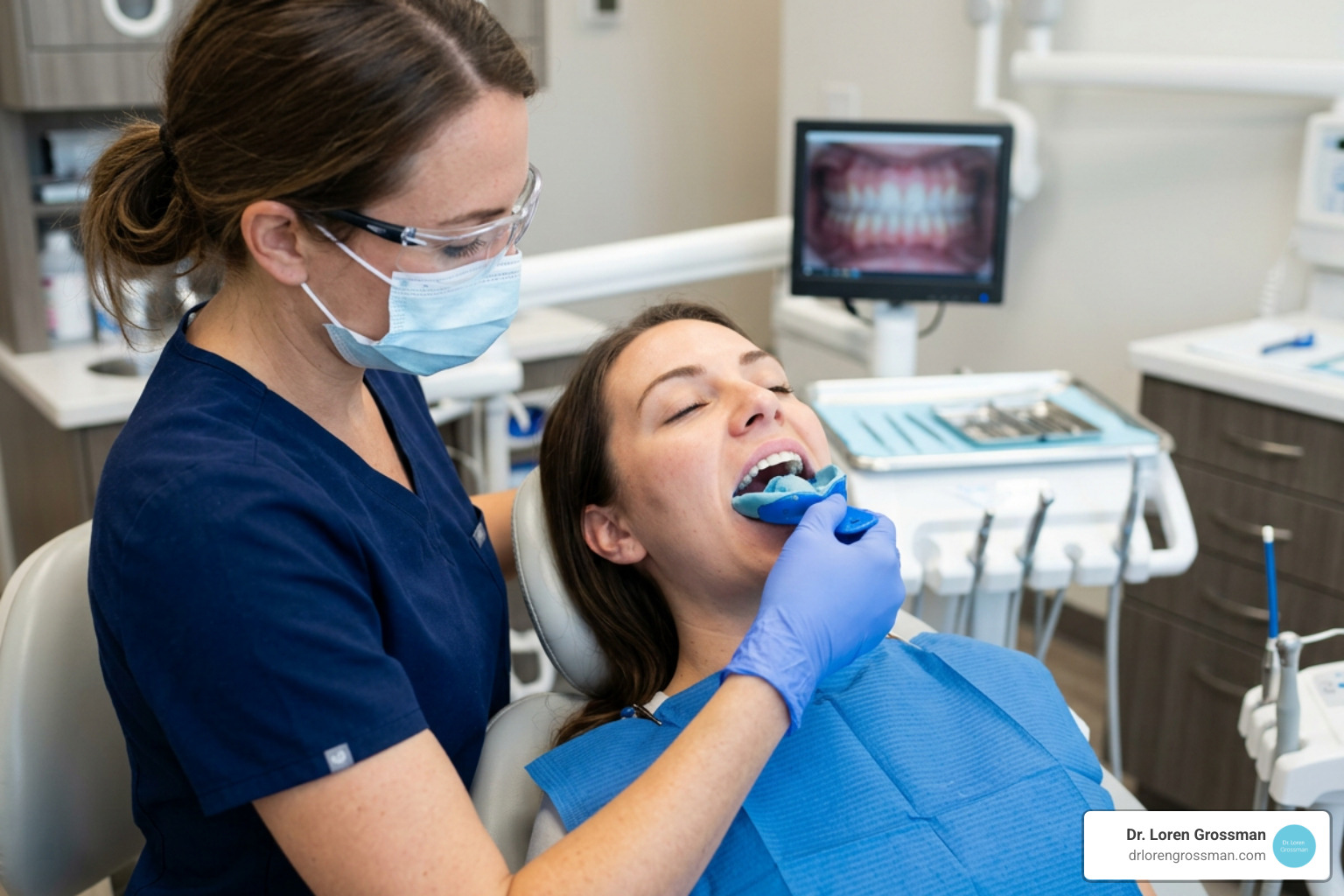
Getting prepless veneers is a streamlined, comfortable experience that can typically be completed in just two to three visits. Because there is no major tooth reduction, you won’t have to wear plastic temporary veneers while waiting for the dental laboratory to craft your final restorations. Let’s look at how we bring your new smile to life.
Consultation and Digital Smile Design
Every successful smile makeover begins with a comprehensive consultation. During this initial visit, we evaluate your overall oral health, discuss your aesthetic goals, and determine if prepless veneers are the right fit for your teeth.
We use advanced diagnostic tools to plan your treatment:
- Digital Smile Design: We take high-resolution facial photographs and 3D intraoral scans to map out your new smile digitally. This allows us to analyze your bite, tooth alignment, and facial symmetry.
- Diagnostic Wax-Up and Mock-Up: Before any permanent changes are made, we create a physical or digital model of your proposed smile. We can even place a temporary, tooth-colored resin “mock-up” directly over your teeth. This lets you preview and approve your new look in the mirror before the laboratory begins fabrication.
Custom Fabrication and Bonding of No Prep Veneers
Once you approve the smile design, we take precise impressions or digital scans of your teeth. These files are sent to a specialized dental laboratory where master ceramists custom-craft each veneer to match your desired shape, size, and shade.
When your veneers return from the lab, you will return to our office for the placement appointment:
- Trial Fitting: We place the dry veneers on your teeth to check the fit, margins, and color. We make sure they blend seamlessly with your natural teeth and align perfectly with your gums.
- Surface Etching: We clean your teeth using a pumice paste. Next, we lightly score or etch the enamel surface with a mild phosphoric acid gel for about 30 seconds. This creates microscopic texture on the enamel to ensure a powerful bond.
- Bonding: We apply a specialized dental cement or adhesive resin to the inside of the ultra-thin veneer, place it precisely on your tooth, and use a special curing light to harden the adhesive instantly.
- Final Polish: We remove any excess cement, check your bite to ensure comfort, and give the restorations a final polish. You leave our office with a brand-new smile immediately!
To learn more about what to expect during a standard dental appointment, read our guide on the Dental Veneers Procedure: A Detailed Guide.
Who is the Ideal Candidate for Prepless Restorations?

While the idea of “no-drill veneers” sounds perfect for everyone, they are actually a highly specialized clinical solution. Because we are adding a layer of porcelain on top of your existing teeth without shaving them down, prepless veneers work best when we need to add volume, length, or width to your smile.
Ideal candidates typically have:
- Conoid Teeth (Peg Laterals): Teeth that are naturally small, pointed, or undersized.
- Diastemas (Gaps): Small spaces or gaps between teeth that need to be closed.
- Retroclined Teeth: Teeth that sit slightly backward in the dental arch, leaving room to add thickness forward.
- Worn or Short Teeth: Teeth that have lost length due to age or minor wear, but still have healthy enamel.
- Minor Discoloration: Mild staining that can be masked by ultra-thin porcelain.
Who should consider alternative treatments? If your teeth are already large, forward-facing, or severely crowded, adding a prepless veneer will make them look bulky, thick, and unnatural. In these cases, traditional veneers or orthodontic treatments are a much better option.
Additionally, if you have deep, dark discoloration (such as tetracycline staining), ultra-thin prepless veneers may not be thick enough to mask the dark underlying tooth structure. Patients with active gum disease, untreated decay, or severe teeth grinding (bruxism) must have these issues resolved before considering any veneer procedure.
To compare your options, check out our resource on What Are the Different Types of Veneers?.
Longevity, Costs, and the Reality of Reversibility
Investing in your smile is a major decision. It is important to understand the lifespan, financial investment, and long-term structural implications of prepless restorations before moving forward.
How Long Do They Last and What Do They Cost?
With proper care, prepless veneers can last 5 to 7 years or longer, and some high-quality porcelain brands can last up to 15 to 20 years.
In fact, clinical research supports the incredible durability of porcelain bonded directly to enamel. A landmark study of 318 porcelain veneers cemented in 84 patients showed an impressive 93.5% survival rate after 10 years. The main key to this longevity is maintaining excellent oral hygiene, avoiding biting on hard objects (like ice or pens), and wearing a protective nightguard if you grind your teeth.
In terms of cost, prepless veneers are comparable to traditional options:
- Traditional Porcelain Veneers: Typically range between $925 and $2,500 per tooth.
- No-Prep Veneers: Typically range between $800 and $2,000 per tooth (though some high-end custom brands can reach up to $2,500 depending on the complexity of the case).
Because veneers are considered a cosmetic procedure, dental insurance rarely covers the cost. However, many dental offices—including ours—offer flexible financing plans to make your dream smile achievable. For a deeper look at the treatment experience, explore The Painless Truth About Getting Veneers.
Are Prepless Veneers Truly Reversible?
One of the biggest selling points of prepless veneers is the claim that they are “completely reversible.” Because we do not drill away your natural tooth structure, the underlying teeth remain healthy and intact.
However, from a clinical standpoint, it is more accurate to call them semi-permanent rather than fully reversible:
- Enamel Etching: To bond the veneer securely, we must treat the enamel with a mild acid etch. This microscopic etching permanently alters the texture of the outer enamel surface.
- Removal Process: If you ever decide to remove the veneers, a dentist must carefully polish away the strong bonding resin. While your natural tooth structure is preserved, this removal process can cause minor surface alterations to your enamel.
Therefore, you should go into the procedure viewing veneers as a long-term commitment. To learn more about safety, read about Veneers Side Effects and Risks You Need to Know Before You Go.
Frequently Asked Questions About Prepless Veneers
Do no-prep veneers look bulky or fake?
They do not look bulky if they are placed on the right candidate by an experienced cosmetic dentist. If placed on teeth that are already large or forward-facing, they can create an “overcontoured” look or a ledge at the gumline that traps plaque. However, when used to build up small, gapped, or retroclined teeth, they blend seamlessly and look incredibly natural.
Can no-prep veneers stain over time?
High-quality dental porcelain is highly glazed and exceptionally stain-resistant—even more so than natural tooth enamel. While your veneers won’t stain from coffee, tea, or red wine, the dental cement at the very edges of the veneer can occasionally pick up minor discoloration over many years if oral hygiene is neglected. Regular cleanings will keep them looking bright.
Is the application of prepless veneers painful?
Not at all! Because we do not drill or shave down your sensitive dentin, the process is entirely non-invasive. Most patients do not require any local anesthesia or numbing injections. It is a fantastic, stress-free option for anyone with dental anxiety or sensitive teeth.
Conclusion
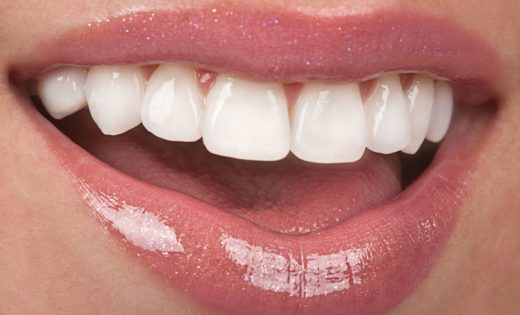
No-prep veneers offer an incredible, conservative pathway to a flawless smile without the fear of permanent tooth shaving. By preserving your natural enamel and utilizing ultra-thin, state-of-the-art porcelain, we can correct gaps, chips, and minor cosmetic imperfections comfortably and quickly.
However, achieving a beautiful, natural-looking result requires a highly skilled hand and an honest evaluation of your candidacy. If you live in Kingston, Pennsylvania, or the surrounding Northeastern Pennsylvania area, we would love to help you explore your options.
At the office of Dr. Loren Grossman, we combine advanced dental technology with a warm, patient-focused approach to deliver exceptional smile transformations. Ready to take the first step toward your perfect smile? Visit our Services: Dental Veneers page to learn more, or contact us today to schedule your personalized cosmetic consultation!