Which Veneer Is Right for You? A Quick Answer First
When weighing porcelain veneers vs composite veneers, the core difference comes down to material, cost, and how long you want your results to last.
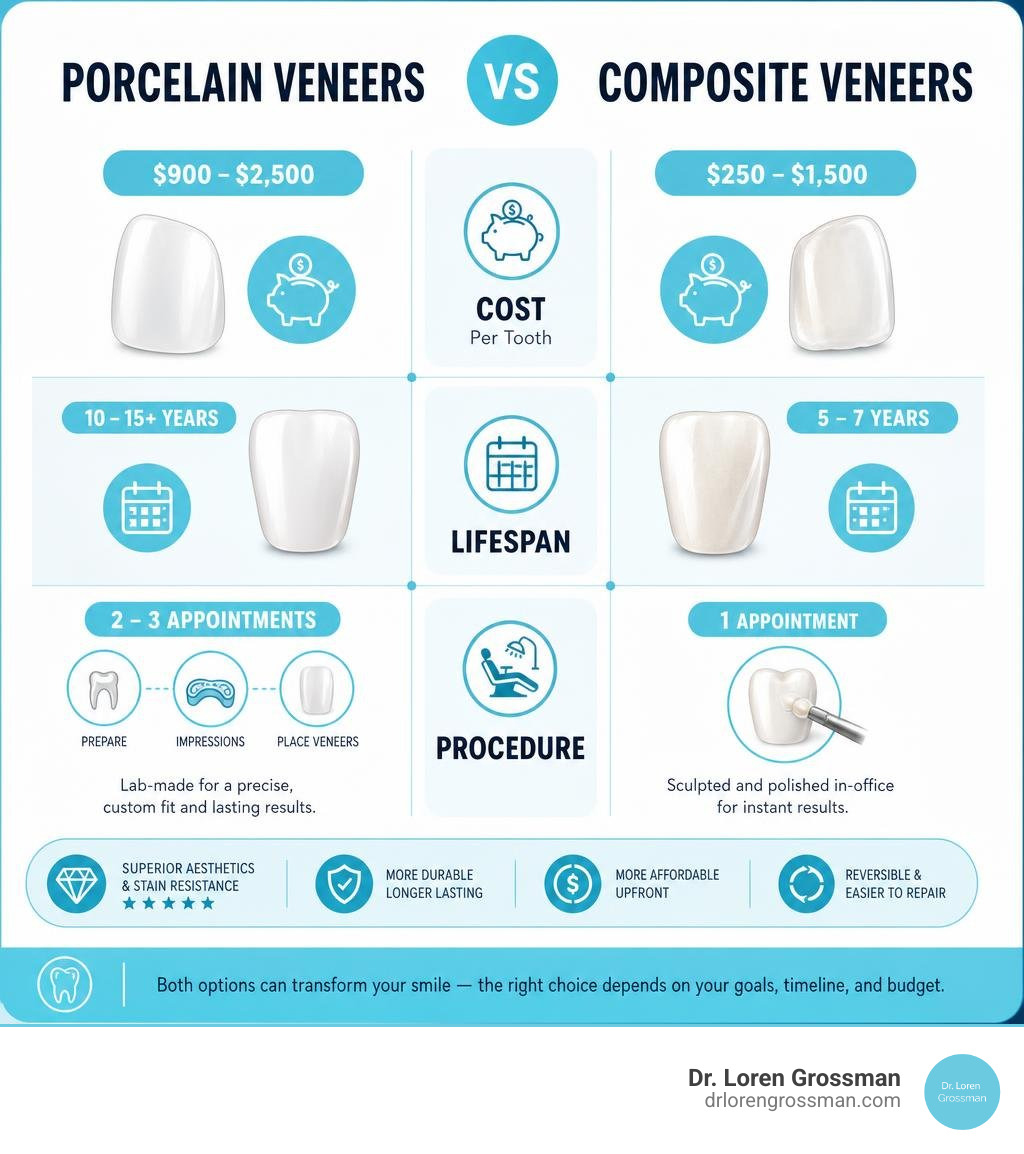
| Feature | Porcelain Veneers | Composite Veneers |
|---|---|---|
| Material | Dental ceramic (lab-made) | Tooth-colored resin (applied in-office) |
| Appearance | Highly natural, mimics enamel translucency | Natural-looking, but less light-reflective |
| Lifespan | 10-15+ years (up to 20+) | 5-7 years (up to 10-12 with good care) |
| Stain resistance | Excellent — non-porous surface | Moderate — can discolor over time |
| Cost per tooth | $900-$2,500 | $250-$1,500 |
| Visits required | 2-3 appointments | 1 appointment |
| Reversible? | No — requires enamel removal | Yes — minimal to no enamel removal |
| Repairability | Usually requires full replacement | Can be repaired in a single visit |
Bottom line: Porcelain veneers offer superior durability and aesthetics but cost more and are permanent. Composite veneers are faster, more affordable, and reversible — but need replacing sooner.
Choosing between these two options is one of the most common questions patients ask before a smile makeover. And it makes sense — both can dramatically improve how your teeth look, but they serve different needs, budgets, and timelines.
The global dental veneers market was valued at $2.6 billion and is projected to reach $3.9 billion by 2030, with porcelain veneers accounting for over 54% of that revenue. That tells you something: most patients who invest in veneers are choosing porcelain — but composite veneers are a genuinely excellent option for the right person.
This guide will walk you through every key difference so you can make a confident, informed decision.
I’m Dr. Loren Grossman, a cosmetic and family dentist serving Northeastern Pennsylvania since 1984, with decades of hands-on experience helping patients choose between porcelain veneers vs composite veneers based on their unique smile goals and budgets. Whether you’re considering a single-tooth fix or a full smile makeover, I’ll help you understand exactly what each option involves before you commit.
Porcelain veneers vs composite veneers word guide:
Porcelain Veneers vs Composite Veneers: Key Differences in Material and Aesthetics
To understand why these two treatments perform so differently, we have to look closely at the materials themselves.
Porcelain veneers are crafted from high-quality dental ceramic. This material is incredibly dense, glass-like, and completely non-porous. Because of this structure, porcelain is highly resistant to surface stains from coffee, red wine, tea, and tobacco. Furthermore, porcelain possesses a unique optical property: it is translucent. Natural tooth enamel allows light to pass through it before reflecting off the dentin underneath. Dental porcelain mimics this exact light-reflective property, making it nearly impossible to distinguish a well-made porcelain veneer from a natural tooth.
On the other hand, composite veneers are made from a durable plastic called composite resin. This is the same tooth-colored material used for dental fillings. While modern nanohybrid composites look beautiful and can be polished to a high shine, the material is inherently more porous than ceramic. Over time, composite resin will gradually absorb microscopic food pigments, meaning composite veneers are more susceptible to staining and losing their initial polish.
Aesthetically, both options can look incredibly natural when placed by an experienced cosmetic dentist. However, porcelain is generally considered the “gold standard” for a seamless, luminous finish. If you are interested in exploring other material options, you can learn about the different types of veneers to see how modern alternatives compare.
For a deeper dive into the technical material sciences that separate these options, check out this comprehensive clinical guide on veneer materials.
Durability, Longevity, and Survival Rates
When you invest in your smile, you want to know how long that investment will last. This is where the gap between porcelain and composite becomes most apparent.
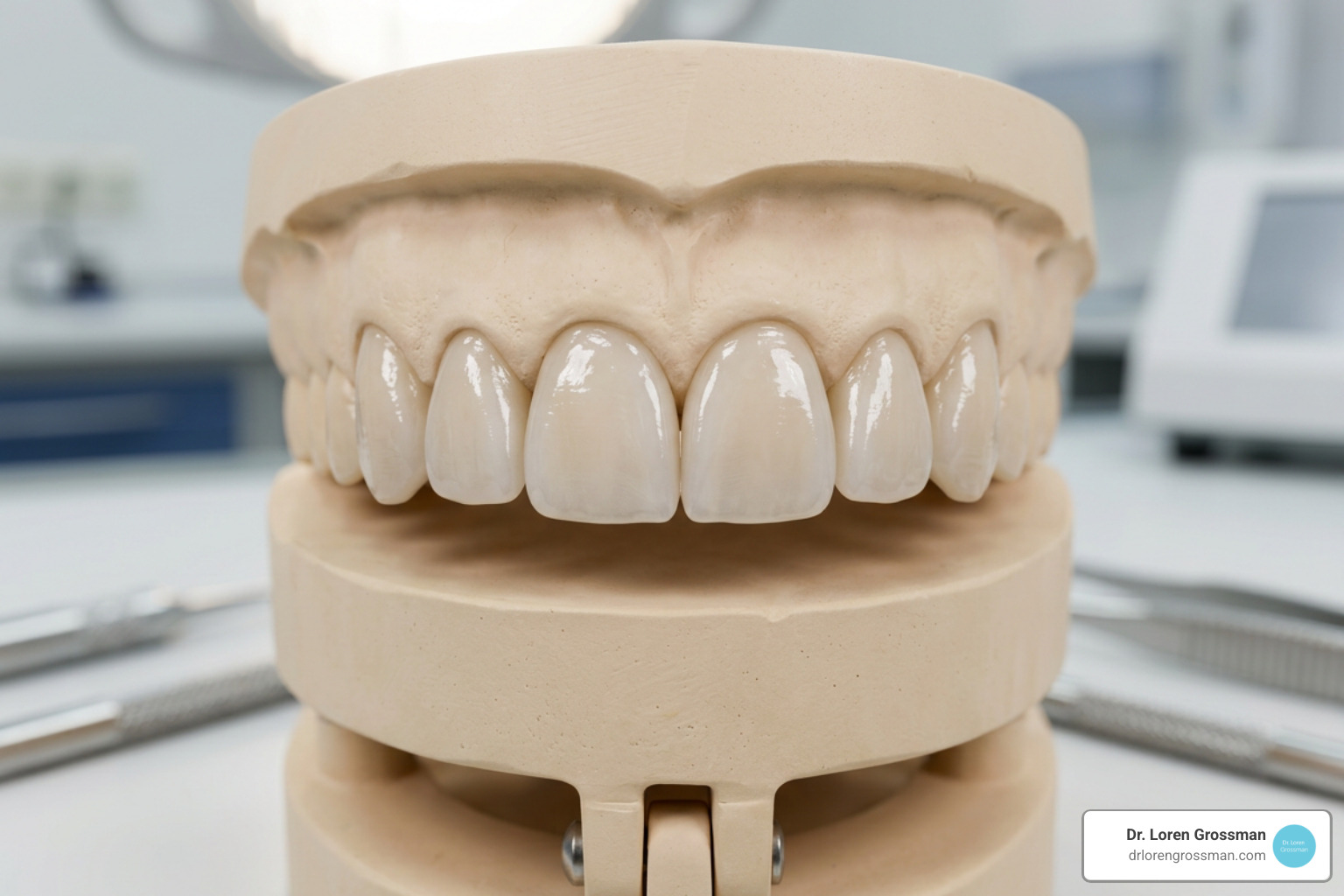
The structural strength of these materials is measured by their flexural strength. Porcelain has a flexural strength of 400 to 1,200 MPa (with high-strength options like E-max lithium disilicate leading the pack), whereas composite resin typically ranges between 70 and 150 MPa. This means porcelain is roughly three to eight times stronger and far more resistant to chipping under normal biting forces.
According to clinical studies:
- Porcelain veneers have an exceptional 10-year survival rate of 93% to 97%.
- E-max lithium disilicate specifically boasts a 97.4% survival rate at the 10-year mark.
- Direct composite veneers have reported 10-year survival rates of 50% to 65%, which is significantly lower.
While composite is highly versatile, it simply cannot match the long-term wear resistance of dental ceramic. If you are completely new to this treatment, it helps to understand the basics of veneers and how they interact with your natural teeth before evaluating their long-term survival.
Comparing Longevity: Porcelain Veneers vs Composite Veneers
On average, porcelain veneers last between 10 to 15 years, and it is very common for them to last 20 years or more with meticulous home care and routine professional cleanings. Because the ceramic does not degrade or wear down easily, the primary reason for replacement is usually gum recession (which exposes the natural tooth root underneath) rather than damage to the veneer itself.
In contrast, composite veneers typically last 5 to 7 years. With exceptional maintenance and regular professional polishing, some patients can stretch their composite veneers to 10 or 12 years. However, because the resin is softer, it will naturally accumulate minor scratches, chips, and surface discoloration over the years, requiring more frequent maintenance or full replacement.
For a complete breakdown of what to expect over the years, read our complete 2026 veneers guide.
The Procedure: What to Expect During Treatment
The process of getting veneers is quite different depending on which material you choose. The main difference lies in how much tooth preparation is required and where the veneers are actually made.
For porcelain veneers, a small amount of natural tooth enamel must be removed — usually between 0.3mm and 0.7mm from the front surface of the tooth. This is done to ensure the veneer sits flush with your gumline and doesn’t look bulky. Because tooth enamel cannot be replaced or regenerated once it is removed, this makes porcelain veneers an irreversible, permanent treatment. After preparation, your dentist takes a digital or physical impression of your teeth and sends it to a dental laboratory, where a master ceramist custom-crafts your restorations.
Composite veneers are much more conservative. They are typically applied using a “direct bonding” method, where the composite resin is sculpted directly onto your teeth in a single visit. Because the material is built up on the tooth, it often requires minimal to no enamel removal. This preserves your natural tooth structure and makes the procedure largely reversible.
To help you visualize this choice, you can explore the veneers process to see how preparation changes based on your smile goals.
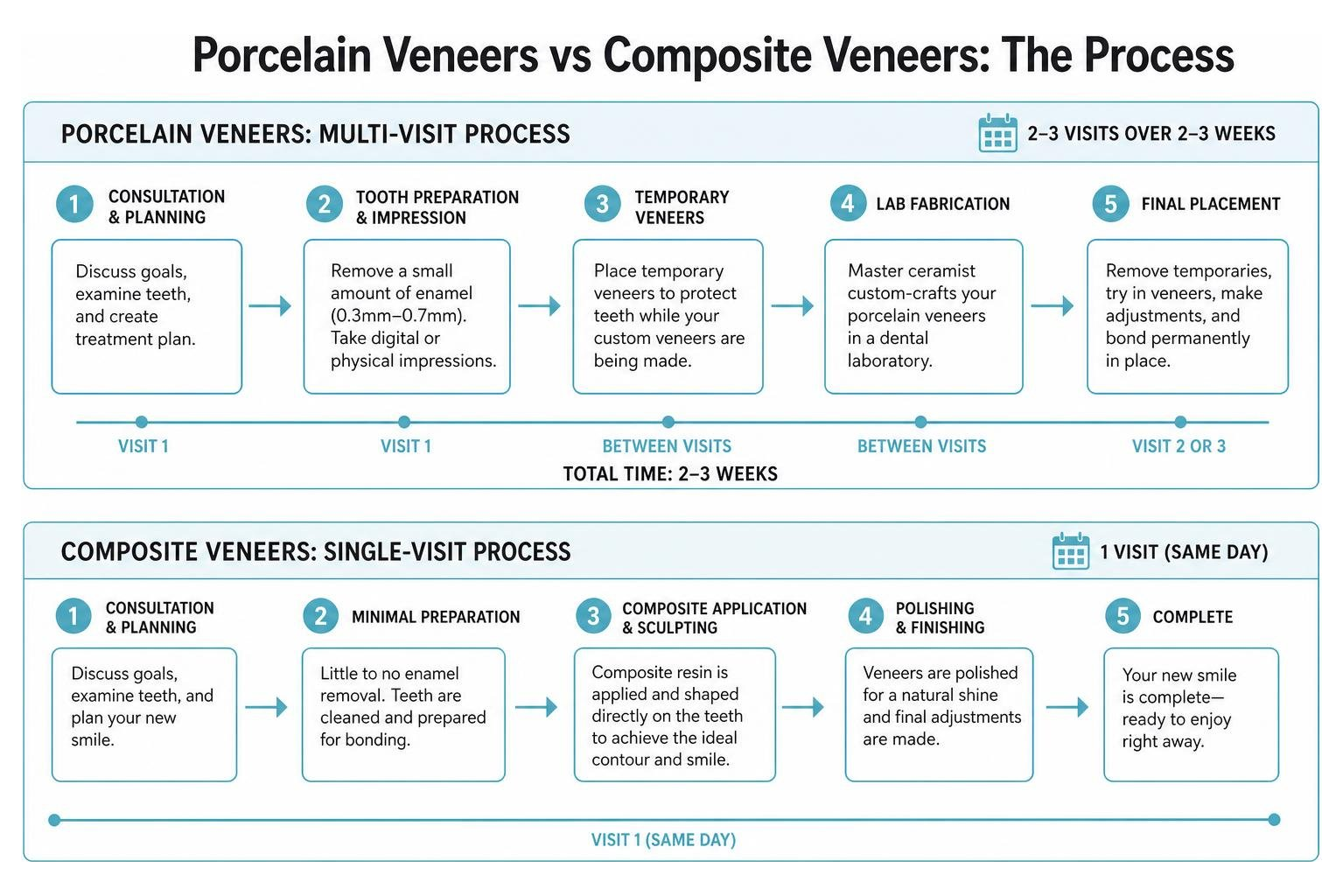
Procedure Timelines for Porcelain Veneers vs Composite Veneers
Because of the steps involved, the timelines for these procedures look very different:
Porcelain Veneers (2 to 3 Visits over 2 to 3 Weeks):
- Visit 1 (Consultation & Planning): We design your smile, take records, and discuss your aesthetic goals.
- Visit 2 (Preparation & Temporaries): We lightly reshape the teeth, take impressions, and place temporary acrylic veneers to protect your teeth while the lab fabricates your custom porcelain.
- Visit 3 (Bonding): We remove the temporaries, test the fit and color of the porcelain veneers, and permanently bond them to your teeth.
Composite Veneers (Single-Visit Transformation):
- The Single Appointment: We prepare the tooth surface (often just a light etching to help the material stick), apply the composite resin in layers, sculpt it by hand, cure it with a special high-intensity light, and polish it to a natural shine. You walk out of the office with a brand-new smile in just a few hours.
If you are trying to map out your schedule, learning how to understand the procedure from scratch can take the mystery out of your upcoming appointments.
Cost Analysis and Long-Term Financial Value
The upfront price tag is often the deciding factor for many patients.
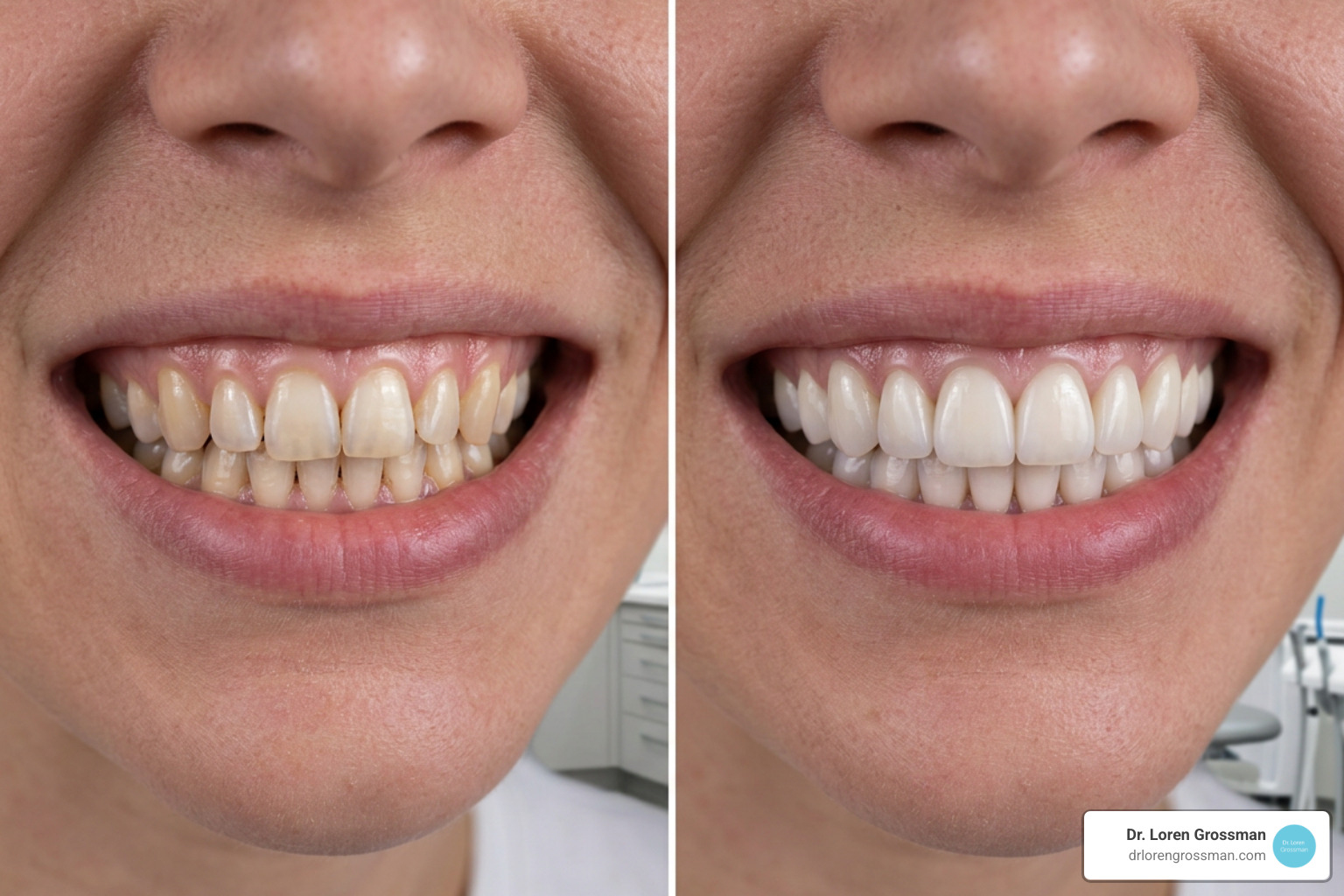
On average, porcelain veneers cost between $900 and $2,500 per tooth. Composite veneers are much friendlier on the wallet upfront, typically costing between $250 and $1,500 per tooth.
Because cosmetic dentistry is generally not covered by dental insurance, it is important to look at the lifetime cost rather than just the initial price. Let’s look at a 20-year timeline:
- Composite Veneers: If you pay $600 per tooth initially, but have to replace them every 6 years, you will pay for them 3 to 4 times over 20 years. That brings your total cost to $1,800 – $2,400 per tooth, plus the cost of occasional repairs and polishing.
- Porcelain Veneers: If you pay $1,500 per tooth upfront, and they last 15 to 20 years, your annualized cost is actually lower, and you save yourself multiple rounds of dental work.
For local patients in Kingston, Pennsylvania, planning your budget is easier when you understand the local pricing landscape. Take a look at our guide on veneers cost in PA to get a realistic estimate of your treatment.
Reversibility and Repair Options
Accidents happen. Whether you bite down on a stray peach pit or trip while running, veneers can occasionally chip. How they are repaired is a major point of comparison:
- Composite Veneers: If a composite veneer chips, it is incredibly easy to fix. We can simply add more composite resin directly to the chipped area, cure it, and polish it in a single, inexpensive office visit. Furthermore, because little to no enamel was removed, if you ever decide you no longer want them, they can usually be safely removed.
- Porcelain Veneers: Porcelain cannot be easily patched in the mouth. If a porcelain veneer fractures or debonds completely, the entire veneer must be remade by a dental lab and replaced. This makes repairs more costly and time-consuming.
To learn more about how we design and manage these restorations, explore our clinical approach to smile design using dental veneers.
Frequently Asked Questions About Veneers
Navigating cosmetic dentistry can bring up a lot of questions. Here are the answers to some of the most common things patients ask us.
Can I whiten my veneers after they are placed?
No. Neither porcelain nor composite veneers will respond to traditional teeth whitening treatments (like hydrogen peroxide gels). Once they are bonded, their color is locked in.
Because of this, we always recommend that patients complete any desired teeth whitening on their natural teeth before getting veneers. This allows us to match your new veneers to the bright, fresh shade of your surrounding natural teeth. If you get composite veneers, keep in mind that your natural teeth may yellow over time while the composite stays the same, or vice versa, which is why maintaining a stable shade is so important.
What alternative treatments should I consider if veneers aren’t right for me?
If you are not sure if veneers are the best option for your smile, there are several great alternatives to consider:
- Cosmetic Bonding: Ideal for repairing a single chipped tooth or closing a small gap without doing a full set of veneers.
- Dental Crowns: If a tooth is heavily decayed, structurally weakened, or has had a root canal, a crown is a better choice because it covers the entire tooth and provides structural strength.
- Orthodontics: If your primary concern is severely crooked teeth or a misaligned bite, orthodontic treatment (like Invisalign) is a healthier, more permanent solution than using veneers to mask alignment issues.
To see how these options fit together in a complete treatment plan, you can read our guide on how to transform your smile with dental veneers and other cosmetic procedures.
How do I care for my veneers to maximize their lifespan?
Taking care of your veneers isn’t difficult, but consistency is key to protecting your investment:
- Brush and Floss Daily: Use a soft-bristled toothbrush and a non-abrasive fluoride toothpaste. Abrasive toothpastes (like those formulated for heavy whitening) can scratch composite resin and dull the glaze on porcelain.
- Avoid Biting Hard Objects: Never use your teeth as tools to open packages, and avoid chewing on ice, hard candies, or fingernails.
- Wear a Nightguard: If you clench or grind your teeth at night (bruxism), the intense pressure can easily fracture both porcelain and composite. A custom nightguard is the cheapest insurance policy for your new smile.
- Keep Up with Regular Cleanings: Routine visits allow us to polish away surface stains on composite veneers and check the margins of your porcelain veneers to ensure no decay is forming underneath.
Conclusion
Deciding between porcelain veneers vs composite veneers is ultimately a personal decision. If you want a fast, budget-friendly, and reversible cosmetic fix, composite veneers are a fantastic option. If you are looking for a highly durable, stain-resistant, and incredibly natural-looking transformation that will last for decades, porcelain veneers are worth the investment.
At the office of Dr. Loren Grossman, we have spent over four decades providing top-tier cosmetic and general dentistry in Northeastern Pennsylvania. From our state-of-the-art office in Kingston, Pennsylvania, we use a patient-focused approach and advanced technology to deliver personalized, beautiful smile transformations that boost your confidence.
If you are ready to explore your options and find the perfect match for your smile goals and budget, schedule a consultation for dental veneers with us today. Let’s work together to design a smile you’ll be proud to show off!