The Best Foods for Strong Teeth Start With Everyday Choices
The best foods for strong teeth include cheese, plain yogurt, calcium-rich greens, nuts, and fish. Crunchy carrots and apples also help by encouraging saliva, which washes away food particles and helps protect enamel. For a healthier smile, choose water more often than soda, and limit sticky candy and frequent sugary snacks.
Food can help protect and strengthen weakened enamel, but it cannot replace enamel that has been lost. Your eating habits work best alongside brushing with fluoride toothpaste, flossing, and regular dental visits.
I’m Dr. Loren Grossman, and I’ve cared for families in the Wyoming Valley since 1984. I help patients pair the best foods for strong teeth with practical dental care; the guide below shows which everyday choices help and which ones can hurt.
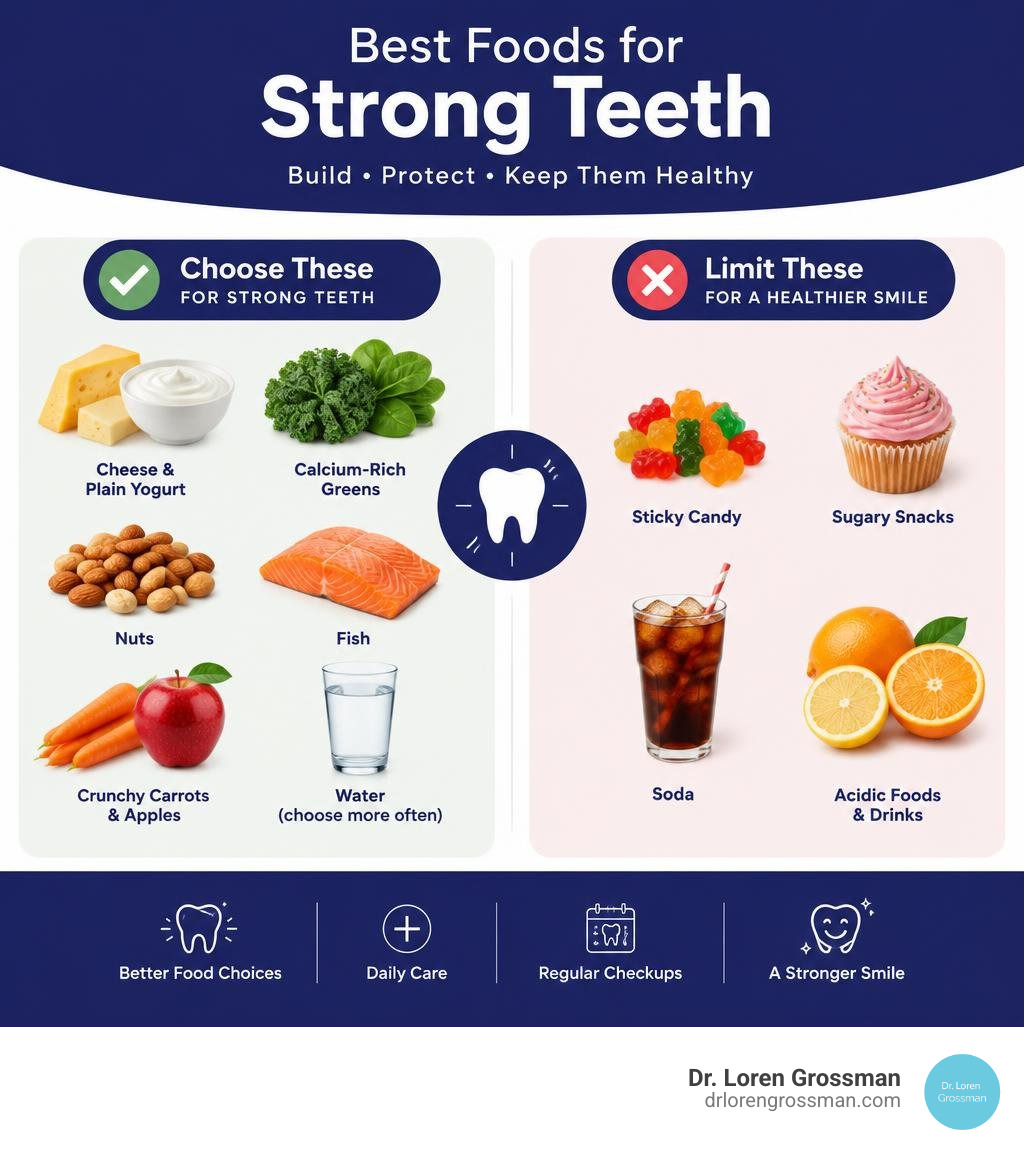
How Nutrition Drives Enamel Remineralization and Gum Health
Your tooth enamel is the hardest substance in your body, but it is not an inert shell. Enamel is dynamic, living through a constant biochemical tug-of-war known as the demineralization and remineralization cycle. Roughly 96 to 97 percent of mature enamel is composed of hydroxyapatite, an exceptionally dense crystalline lattice made of calcium and phosphate ions: $\text{Ca}_{10}(\text{PO}_4)_6(\text{OH})_2$.
Every time you eat, oral bacteria ferment carbohydrates and produce metabolic acids. When mouth pH drops below the critical demineralization threshold of roughly 5.5, those acid molecules pull calcium and phosphate straight out of the enamel crystal structure.
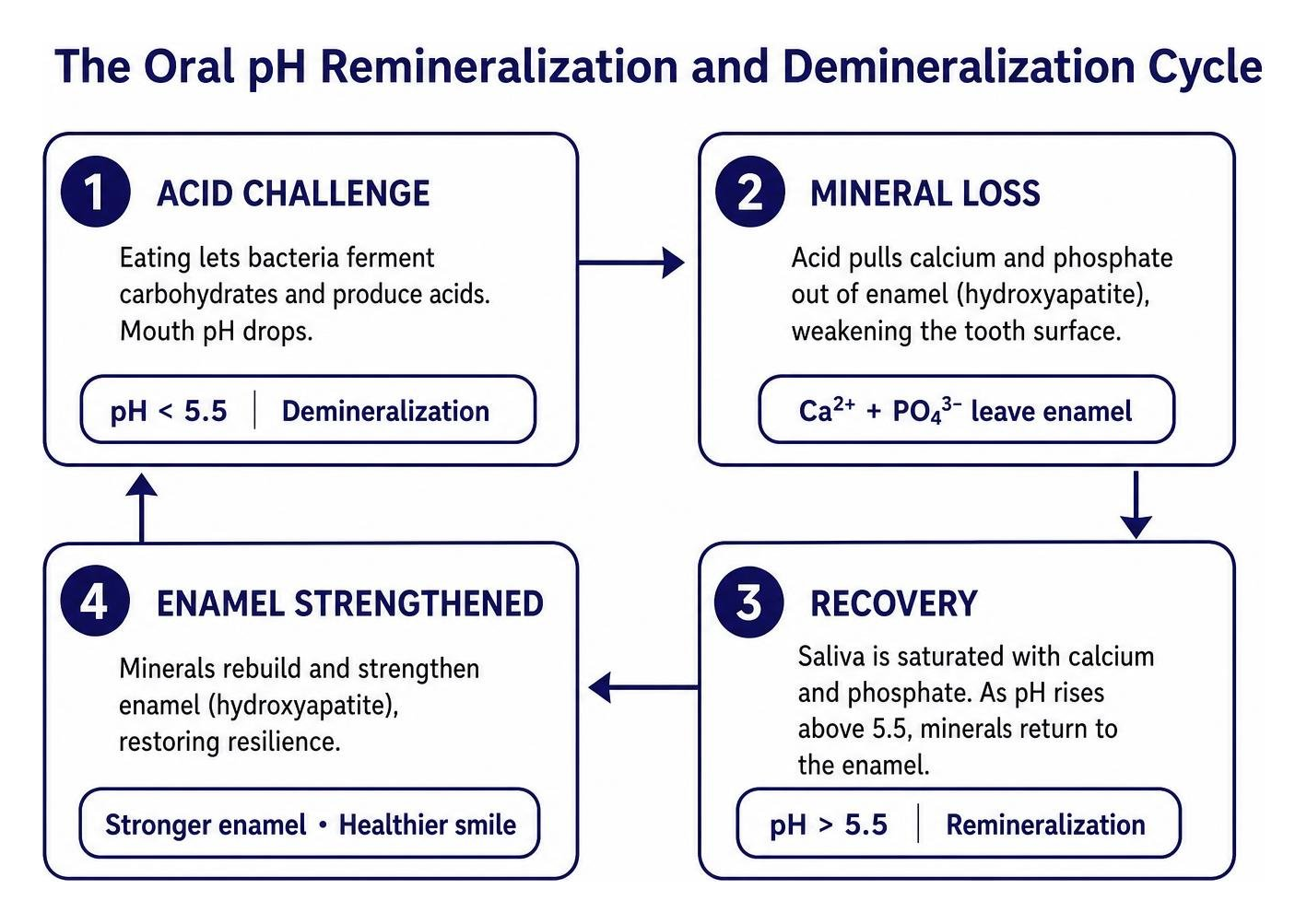
Fortunately, your saliva is saturated with dissolved minerals designed to reverse this process. By consuming a diet rich in bioavailable minerals, you elevate the mineral density of your saliva. To ensure that enamel repair happens efficiently, specific nutrients must work together:
- Calcium & Phosphorus Synergy: Hydroxyapatite cannot form without both building blocks present simultaneously. Saliva draws heavily on systemic mineral pools provided by nutrient-dense foods. Exploring a clinical guide on nutrition and enamel repair reveals how essential this structural pair is for baseline enamel density.
- Vitamin D3: Acts as the biological gatekeeper, regulating gut absorption of calcium and maintaining the serum calcium levels required for mineral-dense saliva. Studies link adequate vitamin D levels to an approximate 40% reduction in cavity rates.
- Vitamin K2: Works in tandem with D3 by activating osteocalcin and matrix GLA protein, directing calcium into bones and teeth rather than depositing it into soft tissues or arterial walls.
- Saliva Buffering: Chewing dense, fibrous foods stimulates the salivary glands to pump out bicarbonate-rich saliva, neutralizing acid spikes within minutes.
Optimizing these daily nutritional pathways alongside proven preventive dental care tips establishes a robust oral microbiome and provides the biological foundation needed to protect your teeth for decades.
The Best Foods for Strong Teeth and Healthy Enamel
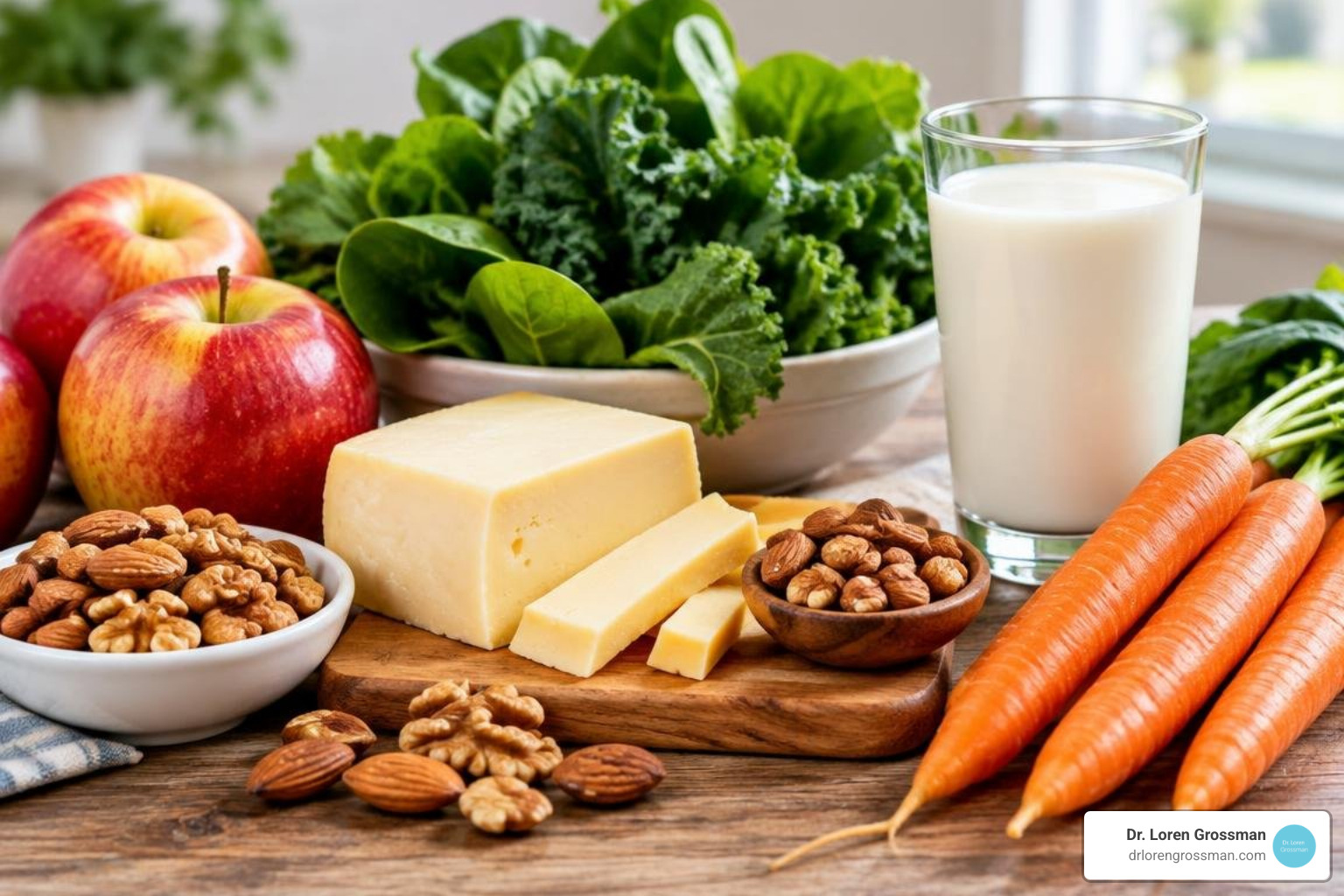
What you place on your plate directly dictates your oral chemistry. Foods that fight decay provide structural minerals, stimulate cleansing salivary flow, or deliver potent polyphenols that disrupt bacterial biofilm.
| Food Category | Key Examples | Primary Nutrients | Dental Mechanism |
|---|---|---|---|
| Aged Hard Chews | Cheddar, Parmigiano-Reggiano, Swiss | Calcium, Casein (CPP-ACP), Phosphorus | Raises oral pH, coats enamel, halts acid attacks |
| Fermented Dairy | Plain Greek yogurt, Kefir | Calcium, Probiotics, Phosphorus | Competes with S. mutans, strengthens enamel lattice |
| Low-Oxalate Greens | Bok choy, Kale, Collard greens | Bioavailable Calcium, Vitamin K | High-absorption calcium without oxalate interference |
| Fatty Cold-Water Fish | Wild salmon, Sardines (with bones) | Vitamin D3, Vitamin K2, Omega-3s, Phosphorus | Maximizes calcium uptake, reduces periodontal inflammation |
| Fibrous Vegetables | Raw carrots, Celery sticks | Dietary fiber, Water, Beta-carotene | Cleanses tooth surfaces, stimulates alkaline saliva |
| Antioxidant Fruits | Blueberries, Strawberries | Polyphenols, Malic acid | Blocks bacterial adhesion by up to 60% |
| Mineral Seeds & Nuts | Pumpkin seeds, Almonds | Phosphorus, Magnesium, Calcium | Provides non-dairy minerals for hydroxyapatite |
Top Dairy and Calcium-Rich Choices: The Best Foods for Strong Teeth
Dairy products—specifically aged cheeses and fermented yogurts—remain top-tier choices for strengthening enamel.
When you chew a piece of hard, aged cheese like cheddar or Parmigiano-Reggiano, several protective mechanisms occur at once. A clinical trial published in General Dentistry demonstrated that consuming just 20 grams of cheddar measurably raised oral pH and increased enamel surface hardness within minutes. Furthermore, a 2024 study noted that eating cheese immediately after a meal reduced overall cavity risk by 30%.
Cheese contains casein phosphopeptides (CPP), specialized milk proteins that bind with calcium and phosphate to create amorphous calcium phosphate (ACP). This complex adheres directly to the enamel surface, stabilizing bioavailable minerals right where acidic wear occurs.
Unsweetened Greek yogurt and kefir supply these same minerals alongside live beneficial cultures. These active probiotics compete against cariogenic (cavity-causing) bacteria like Streptococcus mutans, reducing plaque toxicity. Reviewing the latest scientific research on cavity-fighting foods underscores that dairy’s unique matrix of casein, calcium, and phosphorus provides natural protective benefits similar to clinical remineralizing pastes.
Plant-Based and Crunchy Options: Best Foods for Strong Teeth on a Vegan Diet
You do not need to rely solely on dairy to build resilient teeth. Plant-based diets offer rich mineral and mechanical benefits when structured strategically.
The key is avoiding the “oxalate trap.” While raw spinach boasts high total calcium on paper, its high oxalic acid content binds to the mineral, allowing your body to absorb only about 5% of it. In contrast, low-oxalate greens like bok choy, kale, and collard greens deliver over 50% bioavailable calcium straight into your system.

Crunchy vegetables also serve as mechanical cleansers:
- Raw Carrots & Celery: Celery acts as nature’s floss. Its fibrous strands scrub tooth surfaces, while the deliberate chewing it requires stimulates a rapid surge of cleansing saliva.
- Pumpkin Seeds & Almonds: A quarter-cup of pumpkin seeds delivers concentrated dietary phosphorus and magnesium, minerals essential for locking calcium into the crystalline enamel matrix.
Fatty Fish, Eggs, and Antioxidant Powerhouses
Trace micronutrients and fat-soluble vitamins direct minerals where they belong while shielding gum tissue from chronic inflammation.
- Sardines (Canned with Soft Bones): A single 90-gram tin provides approximately 350 mg of calcium, 270 mg of phosphate, 200 IU of vitamin D, and bioavailable vitamin K2. It is one of the most complete dietary tooth-strengthening packages available.
- Wild Salmon & Pastured Egg Yolks: Rich sources of vitamin D3 that ensure your digestive system absorbs the calcium you consume.
- Blueberries: Packed with specific polyphenols that clinical trials show can reduce bacterial adhesion to enamel surfaces by up to 60%, preventing plaque from organizing into damaging tartar.
- Unsweetened Green Tea: Naturally delivers catechins that suppress bacterial metabolism along with trace amounts of natural fluoride that incorporate into surface enamel.
The Worst Everyday Foods and Drinks for Tooth Enamel
Just as certain foods fortify your smile, common dietary choices can rapidly strip minerals away. Demineralization begins the moment oral pH dips below 5.5.
Frequent consumption of damaging items causes enamel erosion and cold sensitivity, exposing the yellow, porous dentin beneath.
- Sodas, Seltzers, and Energy Drinks: Often registering at an acidic pH between 2.5 and 3.2, these drinks contain citric and phosphoric acids that chemically strip enamel minerals on contact—even in sugar-free varieties.
- Sticky Candies and Dried Fruit: Gummies, caramels, and dried fruit pack concentrated sugars into the deep pits and fissures of your molars, fueling bacterial acid production for hours.
- Refined Crackers and Potato Chips: Fermentable starches break down into simple sugars via salivary amylase, creating a sticky paste that lodges between teeth.
- Lemon Water Sipping: While touted in wellness trends as alkalizing, pure lemon water has a local oral pH of ~2.5, softening enamel when sipped continuously throughout the day.
Daily Meal Strategies to Protect Enamel and Maximize Remineralization
How you consume your meals is just as important as what you eat. Every meal triggers an “acid-attack window” lasting roughly 20 to 40 minutes before saliva can restore oral neutrality.

To minimize mineral loss and maximize natural repair throughout your day, use this practical framework:
- Consolidate Acids: Consume fruits, vinaigrettes, or coffee in a single 20-minute meal window rather than grazing or sipping over several hours.
- Finish Meals with Hard Cheese: Conclude lunch or dinner with a single cube of aged cheddar or Parmigiano-Reggiano to immediately neutralize residual acids and deposit protective CPP-ACP complexes.
- Rinse Immediately, Brush Later: Swish with plain water after eating to remove debris, but wait at least 30 minutes before brushing. Brushing immediately against acid-softened enamel can abrade valuable mineral layers.
- Stimulate Midday Saliva: Chew xylitol-sweetened gum for 20 minutes after snacks to promote protective saliva flow.
- Floss Daily: Food particles lodged between teeth foster localized acid pockets. Pairing a nutrient-dense diet with a daily flossing routine protects interproximal enamel surfaces where toothbrushes cannot reach.
Frequently Asked Questions About Foods for Dental Health
Can food actually rebuild or regrow lost tooth enamel?
No food, supplement, or dental product can regrow enamel once it has physically worn away or formed a true cavity. Enamel contains no living cells (ameloblasts are lost once teeth erupt).
However, nutrient-dense foods can remineralize microscopic subsurface weaknesses before an irreversible cavity forms. If erosion has exposed the underlying layer, you can take steps to alleviate sensitive tooth discomfort through topical remineralization treatments and professional restorative care.
Is fruit bad for your teeth due to natural sugar and acid?
Whole fruit is beneficial when eaten correctly. Unlike processed fruit juices, whole apples, pears, and berries are packed with water and structural dietary fiber. Biting into a crisp apple stimulates saliva production that dilutes natural fructose and buffers organic acids.
To protect your enamel, eat whole fruits alongside meals rather than as continuous snacks, and avoid slowly sucking on high-acid citrus wedges.
How long does it take to see dental improvements from dietary changes?
Systemic and topical dietary benefits unfold across distinct timelines:
- Within Days: Salivary pH stabilizes and natural buffering capacity rises, creating a fresher, less acidic oral environment.
- Within 2 to 4 Weeks: Improved antioxidant and vitamin intake enhances microvascular blood flow in your gums, significantly reducing bleeding during brushing and flossing.
- Over 1 to 2 Years: Consistent intake of bioavailable calcium, phosphorus, and fat-soluble vitamins yields denser surface enamel and up to 30% fewer new carious lesions across clinical evaluations.
Conclusion
Building strong, decay-resistant teeth is a daily habit that begins on your plate. By choosing remineralizing dairy, low-oxalate greens, wild-caught fish, and crunchy, saliva-stimulating vegetables—while minimizing constant acid and sugar exposure—you give your enamel the essential fuel it needs to stay healthy and strong.
Dietary habits form a vital first line of defense, but they work best alongside personalized preventive care. At our Kingston, PA practice, Dr. Loren Grossman provides comprehensive evaluations, advanced diagnostic imaging, and attentive care tailored to protect your smile. Contact our team today to schedule your visit and explore our comprehensive general dentistry services.