Can You Whiten Veneers with Over-the-Counter or Professional Bleach?
When patients ask whether over-the-counter strips, LED home kits, or in-office bleaching systems can brighten their smile restorations, the biological and chemical answer is a definitive no. Learning the truth about getting veneers begins with understanding that dental restorations behave entirely differently from organic enamel.
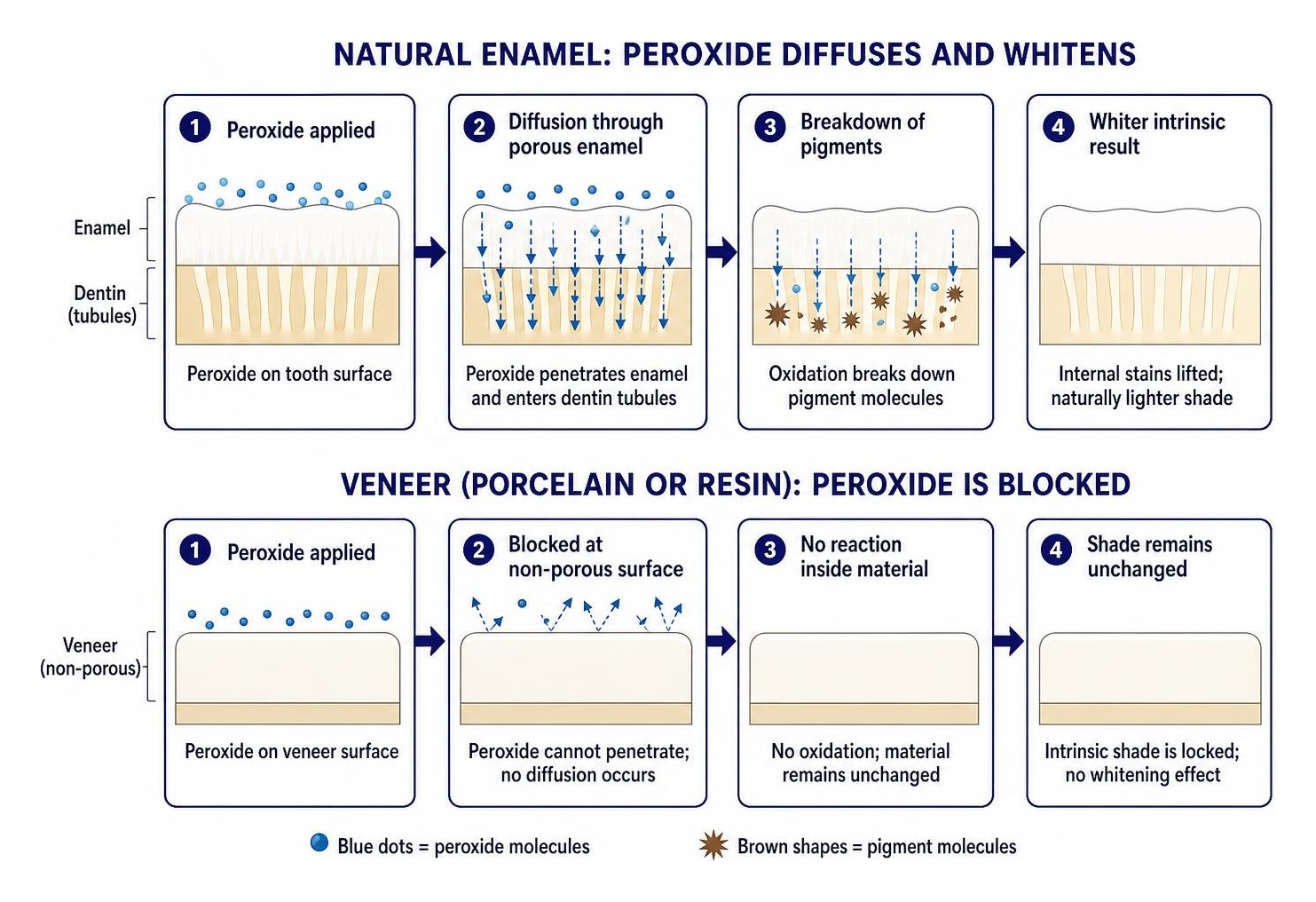
Standard whitening systems rely on active bleaching compounds—primarily hydrogen peroxide or carbamide peroxide. These peroxide compounds penetrate the semi-porous crystalline structure of natural enamel, reaching deep into the microscopic dentin tubules beneath. There, they break down organic chromogens (pigment molecules) through an oxidation reaction, lifting internal discoloration and yielding a lighter intrinsic tooth shade. According to the American Dental Association, whitening products are designed specifically for natural tooth structure and are not effective on restorative materials such as porcelain or composite resin.
Dental restorations, whether crafted from dental ceramic or cured resin, are fundamentally inert synthetic materials. Peroxide cannot permeate them or alter their color matrix. In color science and cosmetic dentistry, shade variations are measured using Delta-E ($\Delta E$) values:
- A color shift becomes perceptible to the human eye at a $\Delta E$ of roughly 1.2.
- A difference reaches a clinically unacceptable aesthetic mismatch near a $\Delta E$ of 2.7.
Applying aggressive bleaching gels across a smile with existing restorations causes natural teeth to shift rapidly past that 2.7 threshold while the veneers remain locked at their original manufactured shade. Furthermore, soaking dental work in high-concentration peroxide gels can chemically etch surface glazes, roughening the restoration and leaving it more vulnerable to plaque accumulation.
Why Chemical Bleaching Agents Fail on Porcelain and Resin
To understand why chemical bleaching fails on cosmetic dental work, we must examine the material science behind restorative dentistry. Natural tooth enamel is an organic-inorganic composite containing millions of microscopic pores and fluid-filled dentinal tubules. Bleaching agents rely on these pathways to diffuse through the tooth structure, generating free radicals that break the chemical double bonds of embedded stains.
In contrast:
- Porcelain veneers are crafted from feldspathic porcelain or high-strength lithium disilicate glass-ceramics. These materials are fired in dental kilns at temperatures exceeding 1,800°F and sealed with an impervious glaze. They contain no porous channels, organic matrix, or dentinal pathways. Peroxide molecules cannot enter the vitreous ceramic surface, leaving the internal shade completely unaffected.
- Composite resins consist of an inorganic filler matrix bound together by dimethacrylate polymers. While resin is slightly more porous than porcelain, its synthetic structure resists the oxidative breakdown typical of natural tooth bleaching. Bleaching agents will not systematically lighten resin and can degrade the silane coupling agents that bind the composite together.
The Risk of Developing an Uneven Two-Tone Smile
The primary clinical hazard of using traditional whitening systems when you have veneers is creating a mismatched, “two-tone” smile. Because peroxide only alters natural enamel, surrounding untreated teeth and adjacent natural margins will lighten, while the restorations remain unchanged.
Reviewing the potential side effects and risks of veneers highlights how critical proper shade harmony is to aesthetic dentistry. If you have porcelain veneers on your four upper front teeth and bleach your entire smile, your natural canines and premolars may lighten several shades. The veneers will suddenly appear yellow, dull, or dark by comparison.
This stark contrast often drives patients to apply even more bleaching gel in an attempt to “force” the veneers to match, causing severe tooth sensitivity and gum irritation without changing the restoration’s color.
Porcelain vs. Composite: Staining Risks and Lifespan
Understanding the behavioral differences between porcelain and composite materials helps explain how restorations interact with everyday pigments and how their appearance changes over time. Reviewing the different types of veneers provides helpful context for managing expectations regarding durability, aesthetics, and stain resistance.
| Restorative Feature | Porcelain Veneers | Composite Resin Veneers |
|---|---|---|
| Material Base | Fired ceramic / Lithium disilicate | Dimethacrylate polymer resin |
| Surface Porosity | Non-porous (vitrified glaze) | Micro-porous polymer matrix |
| Resistance to Stains | High (impervious to dietary dyes) | Moderate (absorbs chromogens over time) |
| Average Lifespan | 10 to 15+ years | 5 to 7 years |
| Response to Peroxide | Zero chemical color shift | Zero chemical lightening; possible resin degradation |
| Restoration of Luster | Professional fine polishing paste | Chairside resurfacing and composite repolishing |
| Primary Failure Cause | Ceramic fracture, gum recession | Marginal staining, dullness, chipping |
Many patients also seek reassurance about tooth preservation when evaluating materials. When understanding whether veneers ruin your natural teeth, it becomes clear that both materials safely protect underlying tooth structure when placed and maintained properly, though their maintenance requirements differ.
Porcelain Veneers: Non-Porous Glaze and Longevity
Porcelain veneers are the gold standard for long-term aesthetic stability. The ceramic surface undergoes vitrification during fabrication, turning the outer layer into a dense, glass-like shield. This impervious surface glaze resists penetration by intense chromogens such as black coffee, dark teas, red wine, and berry sauces.
Porcelain veneers typically deliver a functional lifespan of 10 to 15 years—and often longer with exceptional home care. Because the porcelain itself cannot absorb external dyes, any discoloration seen on a porcelain restoration is almost exclusively confined to superficial surface debris or the adhesive cement line along the margin where the veneer joins the natural tooth.
Composite Veneers: Resin Porosity and Extrinsic Staining
Composite veneers (often placed as direct composite bonding) offer a conservative, single-visit solution. However, resin chemistry differs substantially from glass-ceramics. Polymer resins have micro-porosities that can absorb dietary chromogens over time.
With an average lifespan of 5 to 7 years, composite restorations are more susceptible to surface wear and gradual staining from frequent exposure to tannins, dark pigments, and acidic beverages. While composite veneers cannot be bleached lighter with peroxide kits, a cosmetic dentist can often restore their original luster through chairside resurfacing and micro-polishing discs, lifting embedded surface stains without replacing the entire restoration.
Why Veneers Lose Their Luster Over Time
If dental porcelain is non-porous and impervious to staining, why do older veneers sometimes appear dull, discolored, or aged?
Restorations rarely change color from the inside out; instead, their visual transformation is driven by surface deposits, structural changes in the surrounding oral tissues, and micro-abrasions to the protective glaze. Understanding how cosmetic restorations interact with tooth anatomy is key, especially when exploring steps for getting veneers without aggressive shaving.
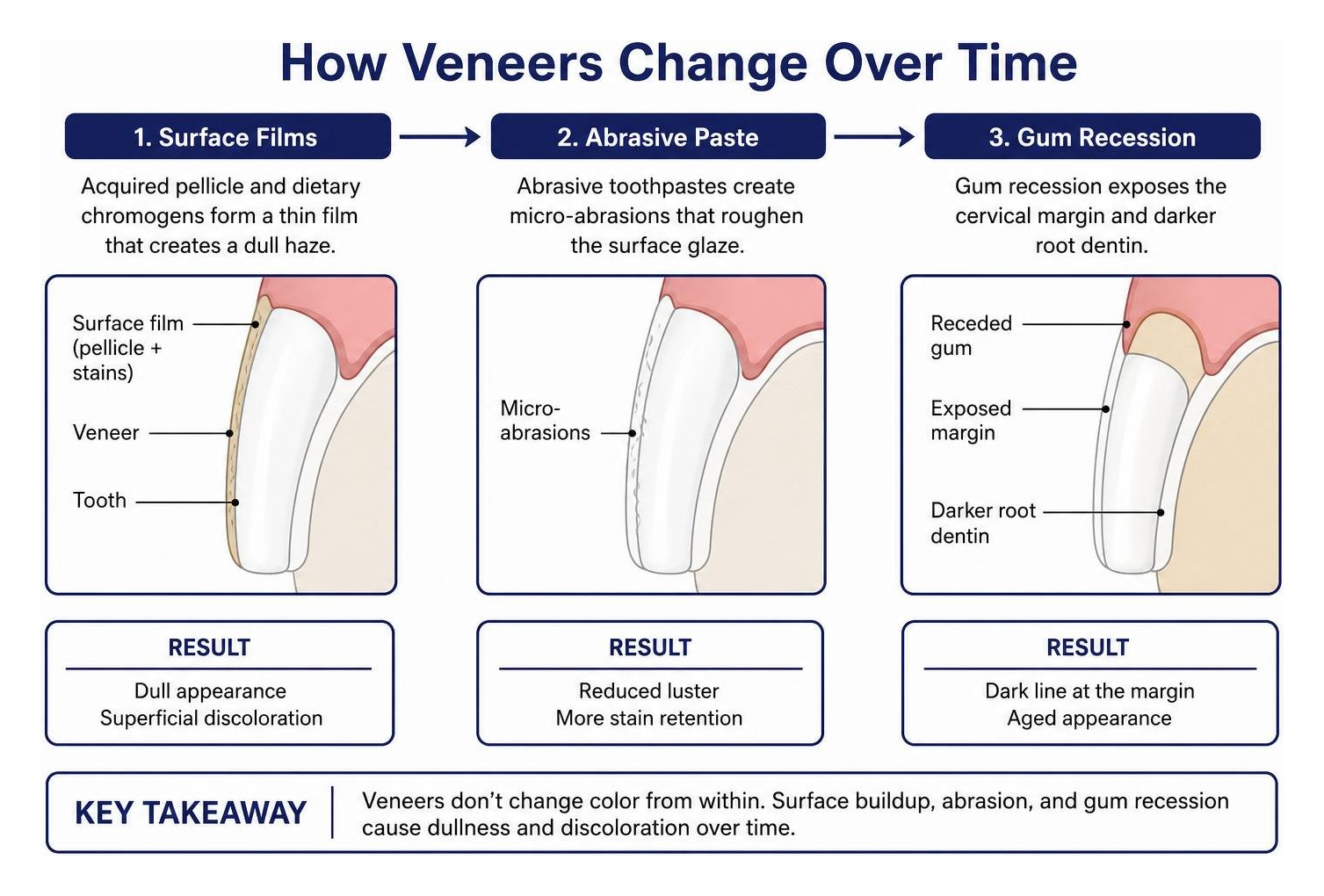
The oral environment is dynamic. Within seconds after brushing, a microscopic layer of salivary glycoproteins known as the acquired pellicle coats all surfaces in your mouth—both natural enamel and dental ceramic. While this thin film protects teeth, it acts like a sticky base for dietary chromogens, creating a superficial dull haze over time if not properly polished during regular dental hygiene visits.
Gum Recession and Exposed Margins
One of the most common reasons a veneer smile appears discolored is natural gumline change. Periodontal research indicates that approximately 88% of adults aged 65 and older exhibit at least one site of gum recession.
As gum tissues recede over time, they expose the cervical margin—the transition zone where the ultra-thin edge of the veneer meets the natural tooth root. Because root surfaces are composed of naturally darker, yellow-toned dentin without protective enamel coverage, this exposed area creates a dark or discolored line along the upper edge of your smile, even though the veneer porcelain itself remains pristine.
Surface Scratches and Micro-Abrasion
Many patients accidentally dull their veneers by trying to clean them with aggressive oral hygiene products. Using highly abrasive toothpastes, stiff-bristled toothbrushes, or DIY trends like activated charcoal powders creates microscopic scratches across the ceramic surface glaze.
These micro-grooves alter how light reflects off the veneer. Instead of producing the bright, mirror-like specular reflection of healthy enamel, the scratched surface scatters light diffusely, making the restoration look chalky and matte. These tiny abrasions also trap dietary stains, accelerating future discoloration.
How to Safely Brighten and Maintain Your Veneers
While you cannot alter the manufactured color of your restorations with standard bleaching gels, you can safely maintain, protect, and brighten your smile using evidence-based aesthetic protocols.

Practicing proper techniques for caring for dental veneers preserves their factory finish and protects the underlying bonding adhesive. Pair these habits with a clear understanding of how long teeth whitening results last to keep your natural teeth and cosmetic restorations looking harmonious year after year.
Professional Cleaning and Chairside Polishing
The safest and most effective way to restore the luster of dull veneers is through routine professional prophylaxis. Dental hygienists use specialized, non-abrasive polishing agents—such as ultra-fine aluminum oxide or diamond polishing pastes—designed specifically for aesthetic restorations.
Standard coarse prophy pastes used on natural teeth can scratch ceramic glazes and composite surfaces. Dedicated cosmetic polishing pastes gently remove extrinsic pellicle staining, tobacco residue, and beverage discoloration without altering the structural integrity or surface smoothness of the restoration.
Strategic Timing: Whitening Natural Teeth Before Veneer Placement
To achieve a bright, uniform smile with veneers, treatment sequencing is critical. The optimal approach is to whiten your natural teeth before fabricating and bonding permanent restorations.
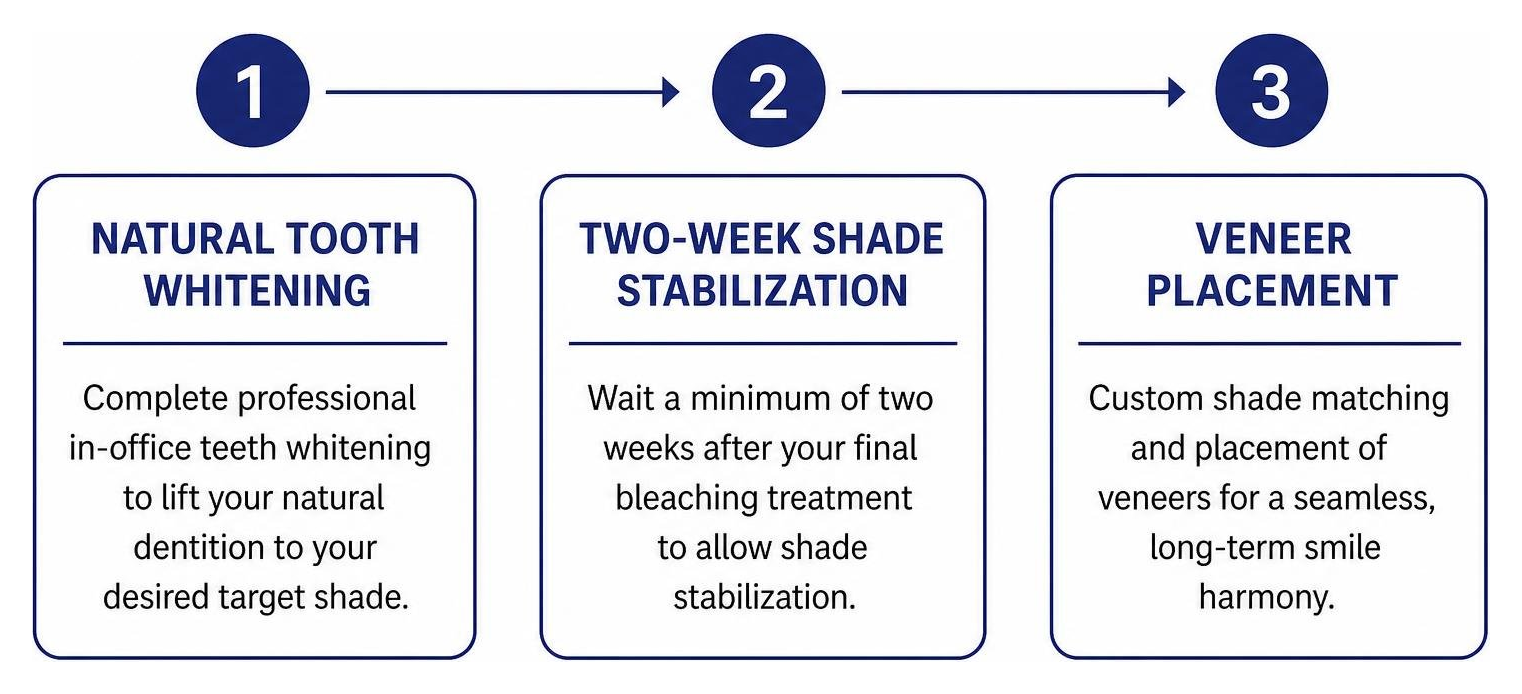
- Complete Whitening First: Undergo professional in-office teeth whitening to lift your natural dentition to your desired target shade. When evaluating your options, comparing professional vs at-home whitening treatments helps ensure you achieve consistent, predictable shade reduction.
- Two-Week Shade Stabilization: Wait a minimum of two weeks after completing your final bleaching treatment before selecting your veneer shade or preparing your teeth. This waiting period allows oxygen radicals to dissipate from the enamel (which would otherwise interfere with the composite bonding resins) and allows the rehydrated natural enamel shade to stabilize completely.
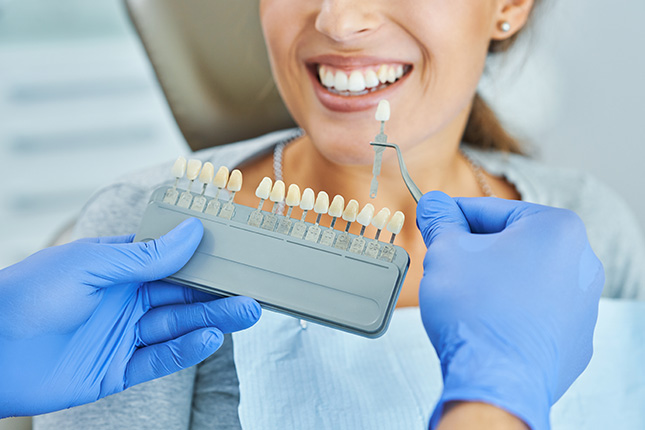
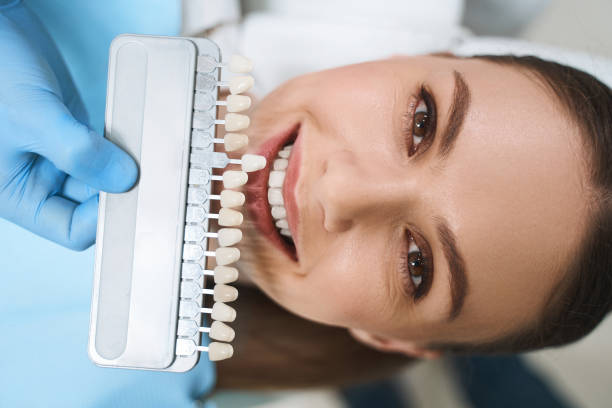
- Custom Shade Matching: Your cosmetic dentist will match the porcelain ingot or composite shade precisely to your newly brightened natural teeth, ensuring seamless, long-term smile harmony.
Replacing Old or Severely Mismatched Veneers
When veneers have reached the end of their aesthetic lifespan—whether due to persistent margin leakage, severe composite resin breakdown, or significant color divergence from natural teeth—replacement is often the best cosmetic solution.
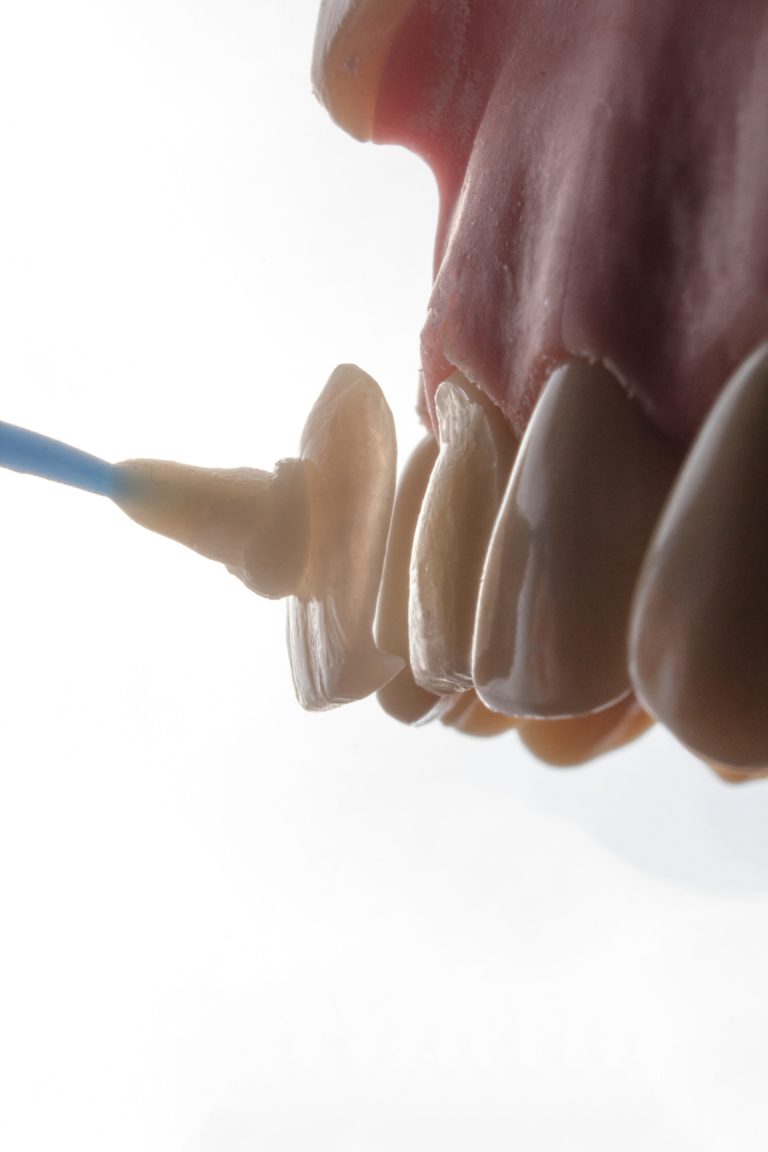
Cosmetic revision involves carefully removing the old restorative layer, evaluating the underlying natural tooth structure, and fabricating new custom ceramic restorations that match your ideal shade, contours, and aesthetic goals.
Frequently Asked Questions About Veneer Care
Can you whiten veneers with purple or charcoal toothpaste?
No. Purple color-correcting toothpastes use temporary optical dyes that wash away quickly and do not alter the underlying shade of porcelain or resin.
Charcoal toothpastes are particularly risky for cosmetic restorations. Charcoal has a high Relative Dentin Abrasivity (RDA) value, creating abrasive particles that scratch the delicate protective glaze of porcelain and composite veneers. Over time, these micro-abrasions leave your restorations looking dull, matte, and more susceptible to surface staining. Always use a low-RDA, non-abrasive fluoride toothpaste with a soft-bristled toothbrush.
Can you whiten veneers after they are already bonded?
No. Once a veneer is permanently bonded to your tooth, its intrinsic shade cannot be lightened by chemical bleaching. You can safely remove surface stains through professional dental polishing, and you can selectively whiten surrounding natural teeth under dental supervision to help balance your smile’s overall color.
However, if your bonded veneers are noticeably darker than you would like, replacing them with new, lighter porcelain restorations is the only reliable way to achieve a brighter shade.
When should you see a dentist for discolored veneers?
You should schedule an evaluation with your cosmetic dentist if you notice:
- Dark brown or black lines along the gum margins where the veneer meets the tooth.
- A visible color difference between your restorations and adjacent natural teeth that doesn’t improve with brushing.
- A rough, chalky texture on the surface of your veneers that catches food or plaque.
- Chipping, debonding, localized gum swelling, or tenderness around the restored teeth.
These symptoms often indicate issues like marginal microleakage, gum recession, or loss of the surface glaze—concerns that require professional care rather than at-home treatments.
Conclusion
Standard whitening strips, charcoal pastes, and peroxide gels cannot alter the color of dental restorations. Attempting to bleach existing restorations risks causing uneven two-tone smiles, damaged glazes, and painful tooth sensitivity.
If you are concerned about dullness, surface staining, or mismatched restorations in Northeastern Pennsylvania, our team can help you find a safe, effective solution. In our Kingston, Pennsylvania practice, Dr. Loren Grossman combines extensive cosmetic dentistry experience with personalized care to help you maintain a bright, healthy, and natural-looking smile.
If you are ready to address discolored restorations or explore aesthetic options, schedule a comprehensive cosmetic consultation to transform your smile with custom dental veneers crafted to look bright, balanced, and natural.