Do Veneers Ruin Your Teeth? Here’s the Short Answer
Do veneers ruin your teeth? No — not when they are placed correctly by a skilled dentist. But there are real trade-offs worth knowing before you commit.
Here’s a quick summary:
| Question | Answer |
|---|---|
| Is enamel removal permanent? | Yes — 0.3–0.7 mm is removed and cannot grow back |
| Do teeth stay healthy underneath? | Yes, with proper hygiene and fit |
| Can you get cavities under veneers? | Yes, if oral hygiene is poor |
| Are veneers reversible? | No — teeth will always need coverage after preparation |
| Do veneers cause permanent sensitivity? | Usually not — mild sensitivity is temporary (3–5 days) |
| Do veneers last long? | Porcelain veneers last 10–15+ years with good care |
So veneers are not harmful in the way most people fear — but they are a permanent, long-term commitment. That distinction matters a lot.
Millions of people get veneers and keep healthy, strong teeth for decades. Others run into problems — usually because of poor placement, a bad fit, or skipping basic oral hygiene. The procedure itself is not the enemy. The details are.
This guide breaks down exactly what happens to your teeth during the veneer process, what the real risks are, and how to know if veneers — or a less invasive option — are right for you.
I’m Dr. Loren Grossman, D.M.D., a cosmetic and family dentist serving Northeastern Pennsylvania since 1984, and over four decades of performing smile makeovers have given me a clear, perspective on whether do veneers ruin your teeth is a myth or a legitimate concern. I’ll walk you through the honest facts so you can make a confident, informed decision.
Do Veneers Ruin Your Teeth? Separating Myth from Reality
When patients visit our Kingston office, the most common fear we hear is that their teeth will be whittled down into “shark pegs.” This is one of the biggest myths in cosmetic dentistry. In reality, modern veneers are designed for enamel preservation.
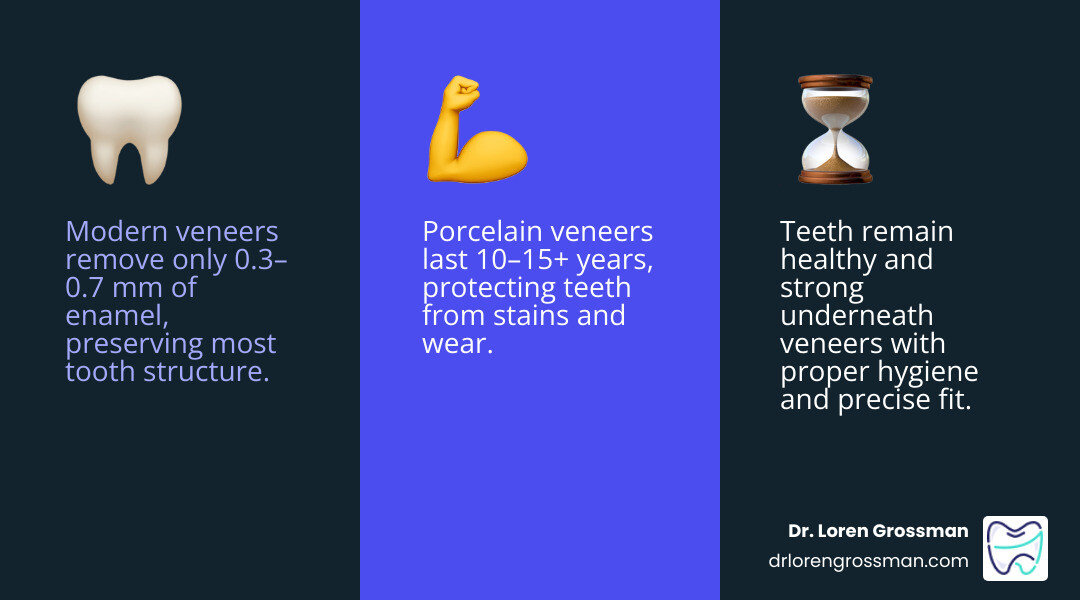
The goal of a high-quality veneer is to enhance the tooth, not replace it. According to research from University Family Dental, veneers actually keep the tooth healthy and strong underneath. When done with professional precision, the structural integrity of your tooth remains intact. You aren’t “ruining” the tooth; you are providing it with a durable, stain-resistant, and aesthetically pleasing shield.
Why the “Do Veneers Ruin Your Teeth” Fear Exists
This fear isn’t entirely baseless — it comes from the “old days” of dentistry or from seeing poorly executed work. In the past, aggressive preparation was more common because materials weren’t as strong or thin as they are in 2026.
If a dentist removes too much enamel, it can lead to:
- Irreversible changes: Once enamel is gone, it’s gone for good.
- Chronic tooth sensitivity: Removing too much protective layer can expose the dentin.
- Weakened structure: Over-prepped teeth are more prone to fractures.
However, these issues are almost always the result of outdated techniques or a lack of clinical skill, rather than the veneers themselves.
How Modern Dentistry Protects Your Smile
Today, we use Digital Smile Design and advanced imaging to plan exactly how much (or how little) tooth structure needs to be adjusted. We focus on conservative bonding, which means we only remove the bare minimum of enamel required for the veneer to sit flush with your gum line.
Modern veneers are made of biocompatible porcelain, which mimics the light-reflecting properties of natural enamel. We use enamel-safe adhesives that create a chemical bond so strong that the veneer and the tooth essentially become one unit. This protects the natural tooth from external wear and staining.
The Veneer Preparation Process: What Happens to Your Enamel?
The preparation process is where the “magic” happens. To ensure your new smile doesn’t look bulky or “chiclet-like,” we usually need to make a small amount of room.
Here is the typical step-by-step:
- Local Anesthesia: We ensure you are completely comfortable and numb.
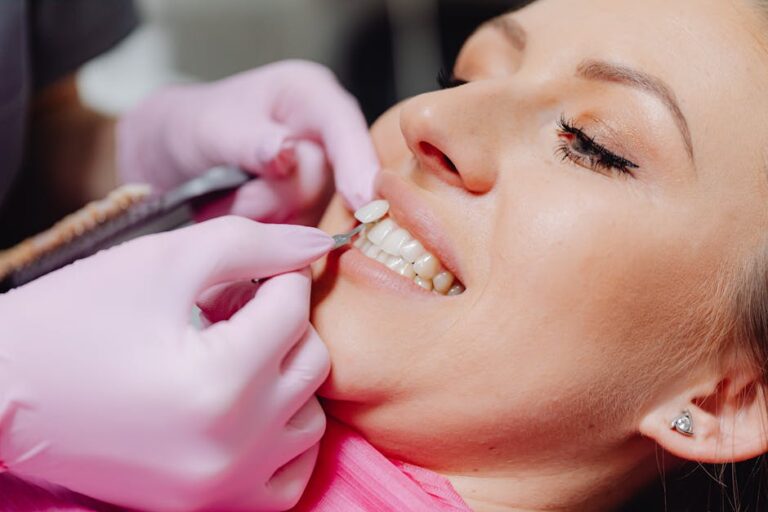
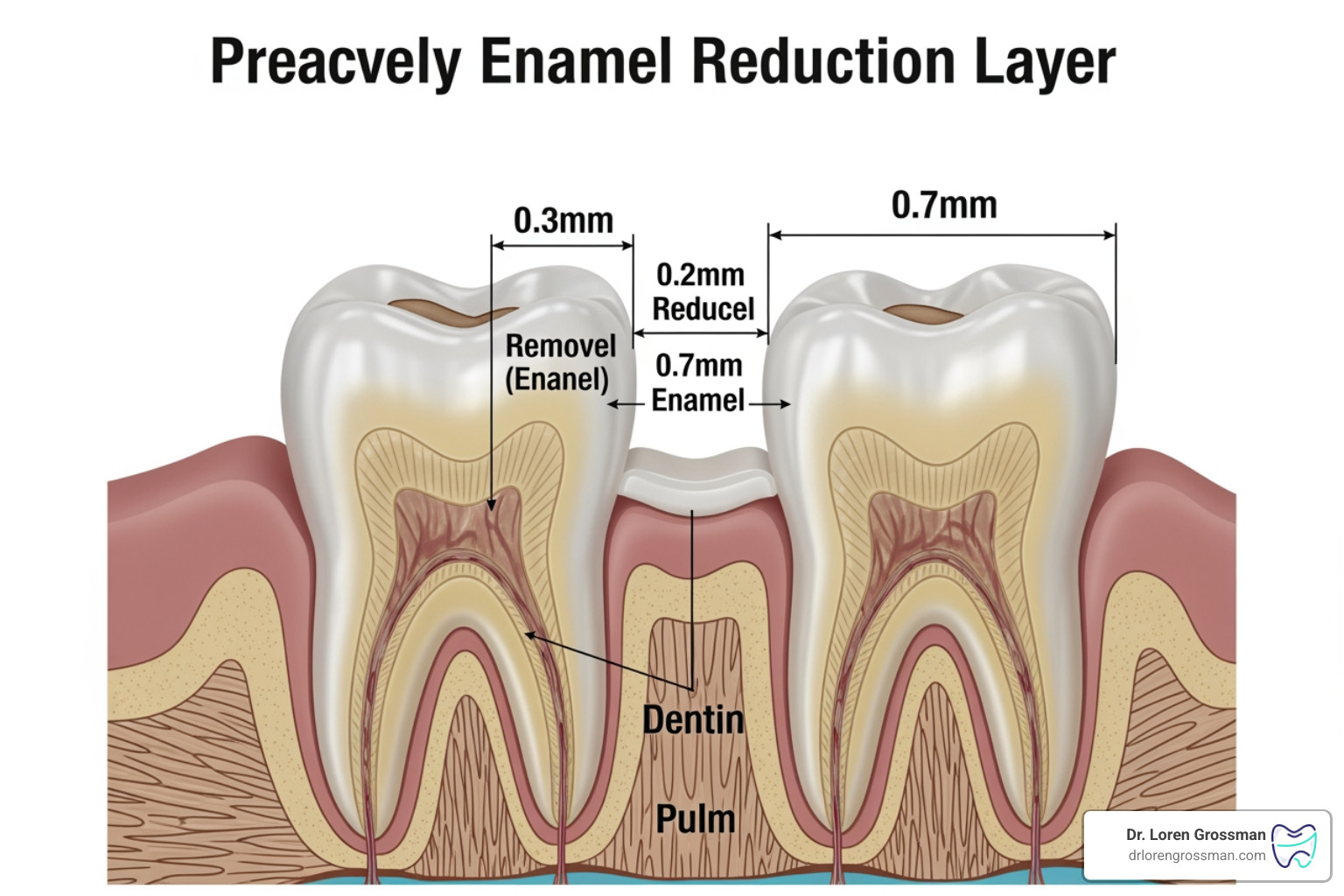
- Tooth Reshaping: We remove a very thin layer of enamel—usually between 0.3mm and 0.7mm. To put that in perspective, that’s about the thickness of a fingernail.
- Custom Fabrication: We take a digital impression of your prepared teeth.
- Temporary Veneers: While your custom porcelain is being crafted, we provide temporaries so your teeth are never exposed or unsightly.
Minimal-Prep and No-Prep Alternatives
For some patients, we can avoid the “shaving down” process almost entirely. Lumineers and other ultra-thin porcelain options allow for “no-prep” or “minimal-prep” applications.
These are great because:
- They preserve 100% (or nearly 100%) of your natural enamel.
- The process is often reversible since the tooth structure wasn’t altered.
- They are ideal for closing gaps or slightly enlarging small teeth.
However, case selection is vital. No-prep veneers aren’t for everyone; if your teeth are already large or crowded, adding a layer on top without prep could make them look unnaturally thick.
Do veneers ruin your teeth by making them permanently sensitive?
It is normal to experience some thermal sensitivity to hot and cold immediately after the prep and the final bonding. This is because the tooth has undergone a minor “trauma” and the nerves are adjusting.
According to Lake Forest Smiles, this discomfort is temporary, typically lasting only 3 to 5 days. We take great care to ensure pulp protection during the process. If sensitivity lasts longer, it usually indicates a bite alignment issue that can be easily adjusted.
Long-Term Health: Can Your Natural Teeth Still Decay?
One of the most dangerous myths is that veneers make your teeth “cavity-proof.” This is false. While the porcelain itself cannot decay, the tooth structure underneath and around the edges (the margins) certainly can.
Maintaining Strength and Bite Load Distribution
Veneers are incredibly durable, but they aren’t indestructible. We carefully analyze your bite alignment to ensure the load-bearing capacity is distributed evenly across your teeth. If you have a “heavy bite” or grind your teeth (bruxism), we will recommend a night guard. This prevents the porcelain from fracturing and protects the bond between the veneer and your natural enamel.
Do veneers ruin your teeth if they need replacement after 15 years?
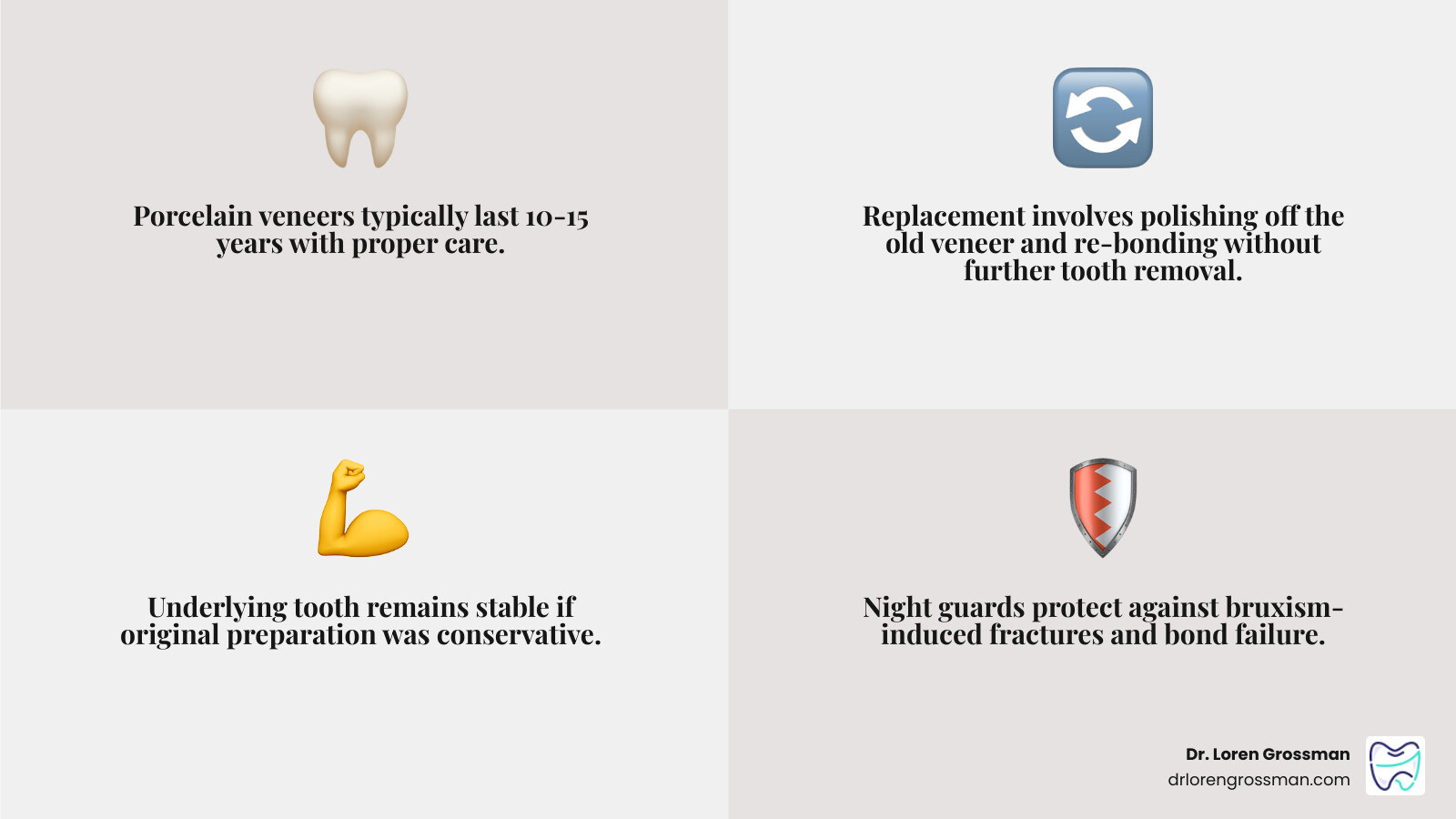
Veneers are not a “one and done” solution for the rest of your life. Most porcelain veneers have a lifespan of 10–15 years, though we often see them last much longer with excellent care.
When it comes time for replacement:
- The old veneer is carefully polished off.
- The underlying tooth stability is assessed.
- A new bond is created. The re-bonding process does not “ruin” the tooth further, provided the original prep was conservative and the tooth has been kept clean.
Comparing Conservative Options: Veneers vs. Crowns and Bonding
If you are worried about “shaving down” your teeth, it’s helpful to see how veneers stack up against other common treatments.
| Feature | Porcelain Veneers | Dental Crowns | Composite Bonding |
|---|---|---|---|
| Enamel Removal | Minimal (0.3–0.7mm) | Extensive (2mm+) | None to Minimal |
| Durability | High (10–15 years) | Very High (15+ years) | Moderate (5–7 years) |
| Stain Resistance | Excellent | Excellent | Poor (can stain) |
| Purpose | Cosmetic/Minor Damage | Structural/Severe Damage | Minor Chips/Gaps |
Veneers are much more conservative than full-coverage crowns, which require removing significantly more tooth structure to fit the “cap” over the entire tooth.
Who is a Poor Candidate for Veneers?
We take our “do no harm” oath seriously. We may advise against veneers if you have:
- Active Decay or Gum Disease: These must be treated before any cosmetic work.
- Insufficient Enamel: If you’ve already lost significant enamel from acid reflux or over-brushing, there may not be enough to bond to.
- Severe Misalignment: Sometimes braces or Invisalign are needed first to move teeth into a safer position for veneers.
Less Invasive Alternatives to Consider First
Before committing to the permanent change of veneers, we often discuss:
- Professional Whitening: If color is your only concern, this is the least invasive start.
- Cosmetic Bonding: Using composite resin to fix small chips. It’s reversible and requires no enamel removal.
- Clear Aligners: To fix gaps or crowding without altering the tooth surface.
Frequently Asked Questions about Veneer Safety
Can you get cavities under a veneer?
Yes. If plaque accumulates at the margin (where the veneer meets the tooth), bacteria can seep underneath. This is why brushing, flossing, and regular professional cleanings are non-negotiable.
Do veneers ruin your teeth if they fall off?
If a veneer debonds, your tooth isn’t “ruined,” but it will feel strange and may be sensitive because the enamel was previously prepped. This is a dental emergency, and we can usually re-cement or replace the veneer quickly to protect the exposed enamel.
Is the veneer process painful?
Not at all. We use local anesthesia during the prep and bonding phases. Most patients report only a “tight” sensation for a day or two after the final placement, but the recovery timeline is very short.
Conclusion
At the practice of Dr. Loren Grossman, we believe that a smile makeover should be a life-enhancing experience, not a source of stress. When patients ask us, “do veneers ruin your teeth,” we can confidently say that with modern techniques, the answer is a resounding no.
By choosing a personalized treatment plan in our Kingston, Pennsylvania office, you are ensuring that your natural teeth remain healthy, strong, and protected while you enjoy the confidence of a flawless smile. We combine decades of experience with a patient-focused approach to make sure your transformation is both beautiful and biologically sound.
Ready to see what’s possible for your smile? More info about dental veneers services is just a click away. Let’s give your teeth the makeover they deserve without the “ruin” you’ve been worried about.