Do Veneers Stain Over Time? The Science of Veneer Discoloration
Porcelain veneers do not stain over time because their glazed ceramic surface is non-porous, though the bonding margin at the gumline may discolor; composite resin veneers are porous and gradually absorb stains. To understand why a restoration might lose its initial brilliance, we have to look at the microscopic structure of the materials used in modern dentistry. Patients invest in cosmetic treatments expecting a permanently bright smile, but materials interact with our oral environment in distinctly different ways.
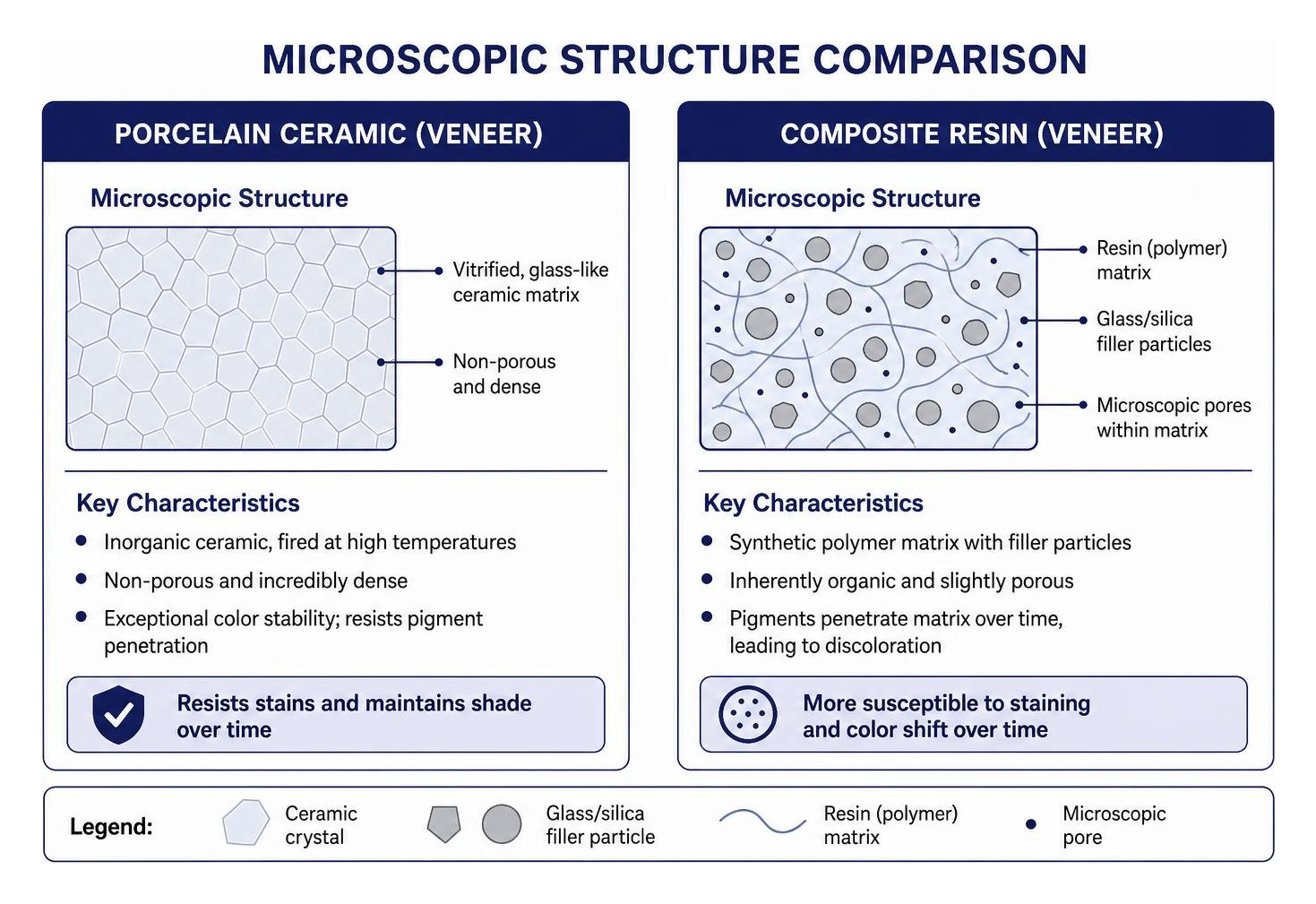
Porcelain is an inorganic ceramic that is baked at high temperatures in a specialized dental laboratory. This process creates a vitrified, glass-like glaze across the surface. Because it is non-porous and incredibly dense, glazed porcelain provides exceptional color stability. Research published in the Journal of Clinical and Experimental Dentistry confirms that ceramic surfaces maintain their shade fidelity significantly better than resin-based alternatives when challenged by daily environmental pigments.
Composite resin, on the other hand, consists of a synthetic polymer matrix blended with microscopic glass or silica filler particles. While today’s micro-hybrid and nano-filled resins look gorgeous upon initial placement, the resin matrix itself is inherently organic and slightly porous. A study in the Journal of Advanced Oral Research demonstrated that composite resin materials exhibit significantly greater color shifts than ceramics when exposed to standard dietary chromogens. Over time, pigments find microscopic footholds within the resin matrix, leading to progressive discoloration.
Furthermore, extrinsic stains can mimic actual material discoloration. Even if a porcelain veneer remains completely impervious to stains, surface plaque, calcified tartar, and biofilm accumulation can coat the front of the veneer. When this layer thickens, the underlying restoration looks dull, yellowed, or discolored, even though the ceramic underneath remains pristine.
How Do Veneers Stain Over Time Compared to Natural Enamel?
Natural tooth enamel looks solid, but it is actually a semi-permeable crystalline lattice packed with microscopic pores known as enamel tubules. Whenever you enjoy a cup of black coffee, dark berries, or a glass of Cabernet Sauvignon, staining pigments called chromogens penetrate deeply into these microscopic channels. Over years, intrinsic stains settle deep within natural dentin and enamel, causing your teeth to yellow and darken.
Porcelain acts entirely differently. Because high-grade dental ceramic lacks open tubules, chromogens simply cannot penetrate the glazed surface. Pigments slide off the glazed exterior just like liquid rolling off a clean glass window. This fundamental physical difference is one of the biggest reasons patients explore what are the different types of veneers when deciding how to achieve a permanently brighter appearance.
Composite veneers sit somewhere in the middle. While they do not have organic tubules like natural teeth, the resin base absorbs microscopic amounts of water and dissolved pigments over time. As a result, untreated composite veneers will gradually darken in a manner very similar to natural enamel, whereas porcelain maintains its factory-fresh shade year after year.
Why Do Veneers Stain Over Time at the Gumline?
If high-grade porcelain is impervious to pigments, why do some patients develop an unsightly yellow, brown, or dark line right at the gumline?
The answer lies in the adhesive seam. When performing a dental veneers procedure, we gently secure the ceramic shell to your natural tooth using a specialized light-cured resin bonding cement. This adhesive line at the margin—where the porcelain meets your natural tooth near the gum tissue—is micro-thin, but it consists of resin rather than glazed ceramic.
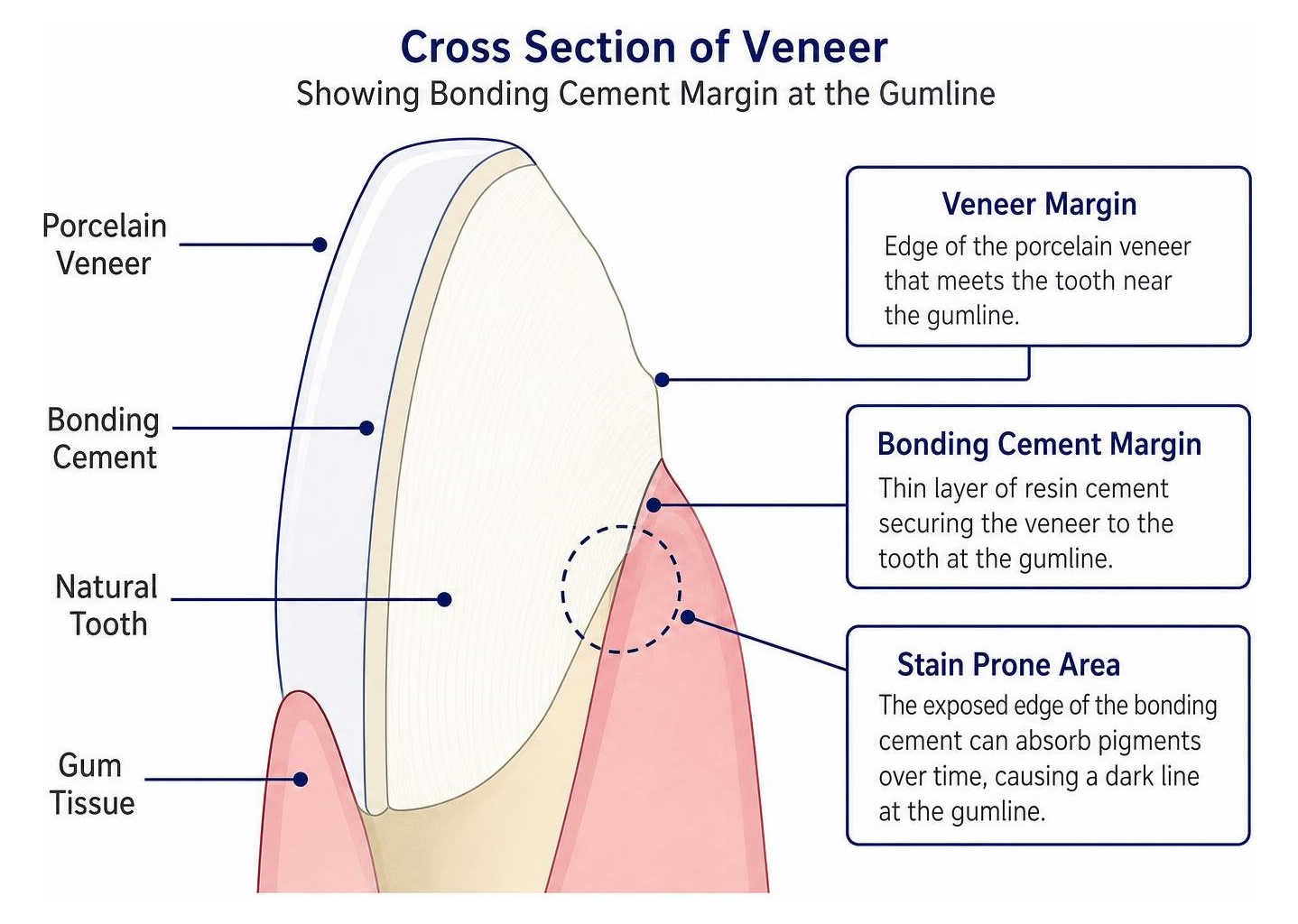
Over time, this resin cement line can experience microscopic wear or slow microleakage. Daily exposure to hot liquids, acidic foods, and dark chromogens causes the exposed edge of the bonding cement to absorb stains. When patients notice a dark border framing their cosmetic restorations after seven to ten years, it is almost never the porcelain changing color; it is the organic bonding cement at the margin that has absorbed dietary pigments.
Porcelain vs. Composite Veneers: 10-Year Stain Resistance Comparison
When planning a smile makeover, weighing the long-term aesthetic durability of each material against your budget and expectations is essential. Evaluating porcelain vs composite veneers over a full ten-year horizon reveals significant differences in maintenance requirements, color retention, and overall longevity.
| Feature / Metric | Porcelain Ceramic Veneers | Composite Resin Veneers |
|---|---|---|
| Primary Material | Glazed, high-density feldspathic or lithium disilicate ceramic | Organic polymer matrix with glass/silica filler particles |
| Material Porosity | Virtually non-porous; glass-like glazed surface | Micro-porous polymer structure |
| Initial Stain Resistance | Maximum (impervious to chromogens) | High initially, but declines as surface polish wears |
| Onset of Visible Stains | Minimal to no surface staining over 10–15+ years | Progressive surface staining noticeable in 2–3 years |
| Margin Discoloration Timeline | Bonding cement may show edge wear at 7–10 years | Margins and body discolor concurrently within 3–5 years |
| Maintenance Needs | Routine 4–6 month cleanings and margin checks | Frequent professional repolishing every 6–12 months |
| Average Lifespan | 10 to 15+ years with proper home care | 5 to 7 years before refinishing or replacement is needed |
| Susceptibility to Dietary Acids | High chemical resistance | Susceptible to surface softening and micro-pitting |
The 10-Year Timeline for Porcelain Ceramic Longevity
With proper fabrication, placement, and home care, porcelain veneers offer remarkable longevity. Here is what patients can realistically expect across a 10-year span:
- Years 1 to 5: The porcelain surface retains complete shade stability, optical translucency, and surface gloss. The bonding margins remain clean, smooth, and imperceptible.
- Years 5 to 7: The glazed ceramic shell continues to resist all dietary pigments completely. If oral hygiene has been inconsistent or if abrasive toothpastes were used, microscopic dulling of the surface glaze may begin, though true material staining does not occur.
- Years 7 to 10: The porcelain ceramic itself remains fully color-stable. However, the organic bonding cement along the gumline margin may begin to exhibit minor discoloration or microleakage, especially in individuals who consume high quantities of coffee, red wine, or tobacco. Professional cleanings or minor marginal re-polishing typically restore a seamless look.
Why Composite Resin Discolors Faster and Needs Maintenance
Direct composite veneers provide an accessible, conservative transformation, but their physical chemistry dictates a much shorter aesthetic lifespan. Because composite materials are composed of a resin matrix, they are susceptible to surface abrasion from everyday chewing, dietary acids, and regular brushing.
Within the first two to three years of placement, this microscopic wear removes the high-gloss surface layer achieved during your initial appointment. Once this factory finish dulls, dietary chromogens from foods and drinks easily lodge in the micro-fissures of the resin. Surface staining on composite restorations is progressive; without periodic in-office polishing using specialized aluminum oxide paste discs, the material takes on a muted, yellowish cast. By years five to seven, composite veneers often exhibit deeper intrinsic staining and marginal breakdown, generally requiring complete resurfacing or replacement to restore optimal brightness.
Dietary and Lifestyle Habits That Impact Veneer Color Stability
While the intrinsic properties of your dental materials play a foundational role, your day-to-day habits heavily dictate how bright your restorations look over the years. External pigments, mechanical wear, and physiological changes all influence smile aesthetics.
The Effects of Coffee, Tea, and Red Wine on Bonding Margins
Dark, deeply pigmented beverages are the primary culprits behind margin discoloration and composite staining:
- Coffee: Coffee contains intense dark chromogens that readily adhere to organic polymers. While glazed porcelain deflects these particles, the resin bonding cement at the edge can absorb them over time.
- Tea: Many patients assume tea is gentler than coffee, but black and green teas are packed with concentrated tannins. Tannins are bitter, astringent plant compounds that dramatically enhance the ability of chromogens to bind to resin materials and natural tooth surfaces.
- Red Wine: Red wine delivers a damaging triple threat: dark anthocyanin pigments, high concentrations of tannins, and natural acidity. The acid temporarily lowers oral pH and softens composite resins or bonding cement edges, making them exceptionally vulnerable to immediate pigment absorption.

To minimize margin staining without giving up your favorite morning or evening beverages, practice simple defensive habits:
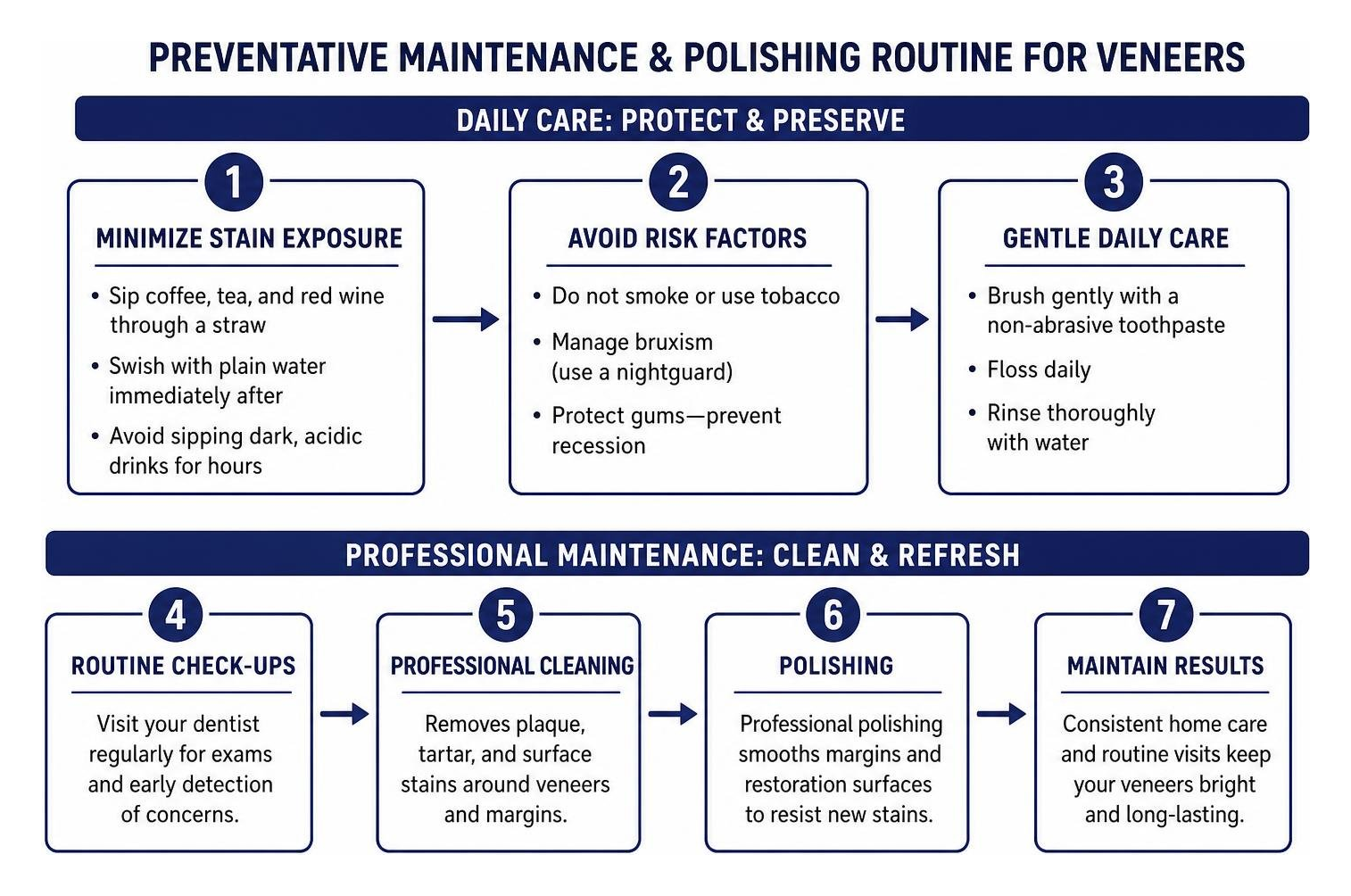
- Sip iced coffee, cold brew, or iced tea through a straw to bypass the visible facial surfaces and margins of your front teeth.
- Swish vigorously with plain water immediately after finishing coffee, tea, or red wine to flush away residual tannins and chromogens.
- Never sip on dark, acidic drinks continuously over several hours; keeping exposure brief gives your saliva time to neutralize oral acids and protect your margins.
Smoking, Bruxism, and Gum Recession Factors
Dietary chromogens are not the only lifestyle threats to your smile’s appearance. Other systemic and behavioral factors can dramatically change how your veneers look:
- Smoking and Tobacco Use: Nicotine and tobacco tars create tenacious, dark brown residues. While porcelain itself resists tobacco absorption, tar accumulates aggressively on the porous bonding margins and composite resin surfaces. Tobacco also compromises gum tissue health, increasing the risk of periodontal inflammation.
- Bruxism (Teeth Grinding and Clenching): Grinding subjects restorations to immense mechanical stress. This clenching creates microscopic fractures along the incisal edges and margins of your veneers. These rough micro-cracks readily trap plaque, food debris, and dark stains. Wearing a custom-fitted nightguard protects your investment against mechanical stress and edge micro-fractures.
- Gum Recession and Aging: Natural gums can recede over time due to aggressive brushing, periodontal issues, or natural aging. When the gumline recedes, it exposes the underlying root surface of the natural tooth just above the veneer. Because tooth roots are composed of softer, naturally darker dentin that stains very quickly, this creates a distinct dark or yellow band above the veneer. Understanding these long-term considerations is a vital part of evaluating veneers side effects and risks before starting treatment.
Professional Stain Removal, Whitening Limitations, and Care Routine
Keeping a cosmetic restoration clean requires the right balance of gentle daily maintenance and specialized professional care. Using harsh treatments or abrasive products can inadvertently damage your smile.
Can Stained Veneers Be Whitened with Standard Bleaching?
A widespread misconception among dental patients is that commercial whitening strips, bleaching trays, or in-office laser whitening can brighten discolored veneers.
Standard teeth whitening products do not work on porcelain or composite resin. Dental bleaching agents rely on carbamide peroxide or hydrogen peroxide to penetrate organic enamel pores and break chemical double bonds within intrinsic chromogens. Because porcelain is an inorganic ceramic and composite resin is a cured synthetic polymer, bleaching gels have zero chemical effect on them.
Attempting to whiten a smile with veneers can backfire:
- If you apply whitening gel to natural teeth that have porcelain veneers attached to the front, only the exposed natural tooth structure will lighten. This creates an uneven, patchy color mismatch between your natural teeth and your restorations.
- If the bonding margin has turned yellow, bleaching gels will not lighten the stained resin cement.
When staining occurs, the solution depends on the source. Superficial composite stains can be addressed through in-office micro-abrasion and diamond polishing pastes. If the bonding cement behind a porcelain restoration has discolored, a skilled cosmetic dentist can carefully renew the margin or, if necessary, replace the cement or the restoration itself. Reviewing our complete dental veneers guide gives you a clear look at what each cosmetic option involves over its lifetime.
Daily Maintenance: Brushing Techniques, Toothpaste, and Cleanings
Safeguarding your restorations against discoloration requires adopting a gentle, non-abrasive daily regimen. Proper techniques for caring for dental veneers will preserve both the high-gloss ceramic finish and the adhesive margins:
- Use Non-Abrasive Toothpaste: Steer clear of commercial “whitening” toothpastes, charcoal scrubs, and formulas containing baking soda. These products contain abrasive silica particles designed to scrub surface stains off durable natural enamel. On restorations, these abrasives create millions of microscopic scratches across the ceramic glaze and composite resin, leaving them dull and far more prone to picking up new stains. Look for gentle, non-abrasive fluoride gel formulations with a low Relative Dentin Abrasivity (RDA) rating (ideally under 70–80).
- Choose a Soft-Bristled Brush: Always brush with an extra-soft or soft-bristled manual or electric toothbrush. Angle the bristles at 45 degrees toward the gumline and clean using light, circular motions rather than heavy scrubbing.
- Floss Daily Around Margins: Clean between your teeth daily using traditional floss or a water flosser. Removing plaque biofilm from interproximal margins prevents bacteria and chromogens from degrading the bonding edge.
- Maintain 4 to 6 Month Cleanings: Schedule professional cleanings every four to six months. Dental hygienists use specialized, non-abrasive fine prophy pastes and fine ultrasonic scalers designed specifically for porcelain and composite restorations, removing stubborn tartar without scratching delicate surfaces.
Frequently Asked Questions About Veneer Staining
Can you remove stains from veneers at home?
You cannot safely remove embedded stains from veneers at home. Attempting to scrub discolored margins or composite surfaces with DIY home remedies—such as baking soda pastes, lemon juice, activated charcoal, or abrasive whitening kits—will scratch the ceramic glaze and abrade composite resin.
While routine daily brushing with a soft-bristled brush removes soft plaque and surface food residue, any noticeable discoloration along the edges or across the face of the restoration must be evaluated and polished by your dental team using specialized diamond polishing pastes.
How often should veneer patients schedule dental cleanings?
Patients with cosmetic restorations should schedule professional dental cleanings and examinations every 4 to 6 months.
During these visits, your hygienist uses gentle polishing techniques to clear away surface stains and plaque buildup around the margins before it calcifies into rigid tartar. Regular visits also give your dentist an opportunity to inspect the margins under magnification, checking for early signs of microleakage, gum recession, or resin degradation so small concerns can be resolved before they turn into noticeable discoloration.
Can bonding cement be replaced without replacing the entire veneer?
In many instances, yes. If a porcelain veneer is structurally sound, undamaged, and securely attached, but shows a fine line of discoloration along the gumline, a skilled dentist can often perform a localized margin repair.
Using ultra-fine diamond burs and specialized instruments, the dentist carefully removes the thin line of stained resin cement right at the margin, cleans the microscopic gap, and applies fresh, shade-matched resin composite before finishing with a high-gloss polish. If the discoloration is extensive or microleakage extends beneath the body of the veneer, replacing the entire restoration is usually the best approach to guarantee long-term aesthetics and structural integrity.
Conclusion
A radiant, beautiful smile transforms your confidence and how you present yourself to the world. While high-grade porcelain veneers offer incredible resistance to everyday stains, protecting your smile requires proper material selection, smart daily hygiene habits, and ongoing professional care.
At the practice of Dr. Loren Grossman, D.M.D., we have helped patients across Kingston, Pennsylvania, and the greater Wyoming Valley achieve and protect breathtaking smiles since 1984. Whether you are considering your first smile transformation or need a comprehensive evaluation of existing restorations that have lost their shine, our team provides personalized cosmetic assessments and proactive maintenance plans tailored to your lifestyle.
To explore how high-grade ceramics can rejuvenate your appearance, schedule a consultation for cosmetic dental veneers with our experienced team today.