Are Veneers for Top Teeth Only Worth It?
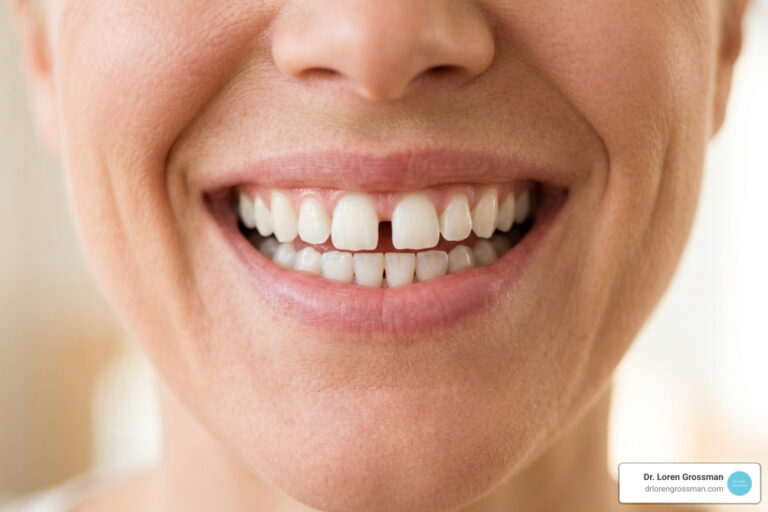
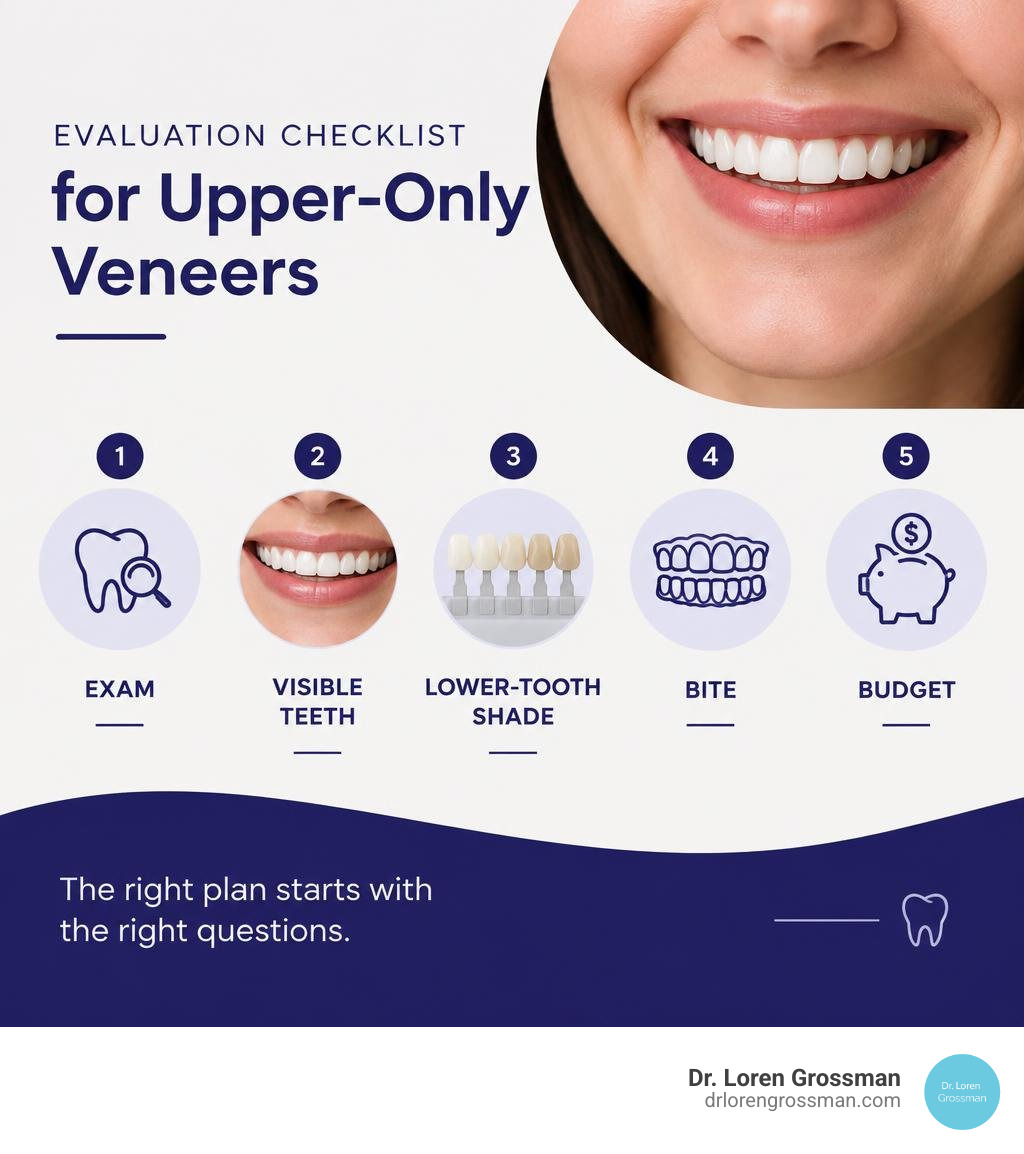
Yes, you can get veneers on only your top teeth. It may cost less than treating both arches, and it can look natural if the plan fits your smile. Start with a dental exam, check which upper teeth show when you smile, and discuss whitening your lower teeth before choosing the veneer shade. Your dentist should also check your bite, since a color match alone won’t make a veneer plan work well.
I’m Dr. Loren Grossman, and I’ve helped patients in Northeastern Pennsylvania plan smile makeovers since 1984, including veneers for top teeth only. I work closely with trusted labs to make sure the final smile suits the person wearing it. According to the American Dental Association, porcelain veneers are a durable, widely used option for improving the appearance of front teeth.
Can You Get Veneers for Top Teeth Only to Save Money?
When evaluating a smile makeover, one of the most common questions we hear is whether treating just the upper arch is an effective way to cut expenses. The short answer is yes. Choosing veneers for your upper teeth alone significantly lowers your overall investment compared to a full-mouth restoration. Because the upper teeth (the maxillary arch) are the primary focus of your smile line, improving them delivers an immediate, dramatic cosmetic return.
By directing your treatment budget where it has the greatest visual impact, you eliminate the expense of placing restorations on bottom teeth that may already be healthy, well-aligned, and less visible during everyday conversations. You can explore standard treatment pricing in our cosmetic dentistry cost guide to see how a targeted upper treatment compares to full-arch restorations.
However, saving money should never come at the expense of your oral health or aesthetic harmony. Placing restorations exclusively on the maxillary arch requires careful consideration of:
- Maxillary Visibility: Evaluating how much tooth structure is displayed when you speak, laugh, and smile at rest.
- Facial Aesthetics: Ensuring the new restorations provide natural lip support without appearing overly bulky.
- Bite Balance (Occlusion): Making sure your natural lower teeth meet the newly veneered upper teeth evenly to prevent chipping, premature wear, or jaw discomfort.
When planned with precision, treating only the top arch is a clinically sound, cost-effective cosmetic strategy.
How Many Units Are Needed for Veneers for Top Teeth Only?
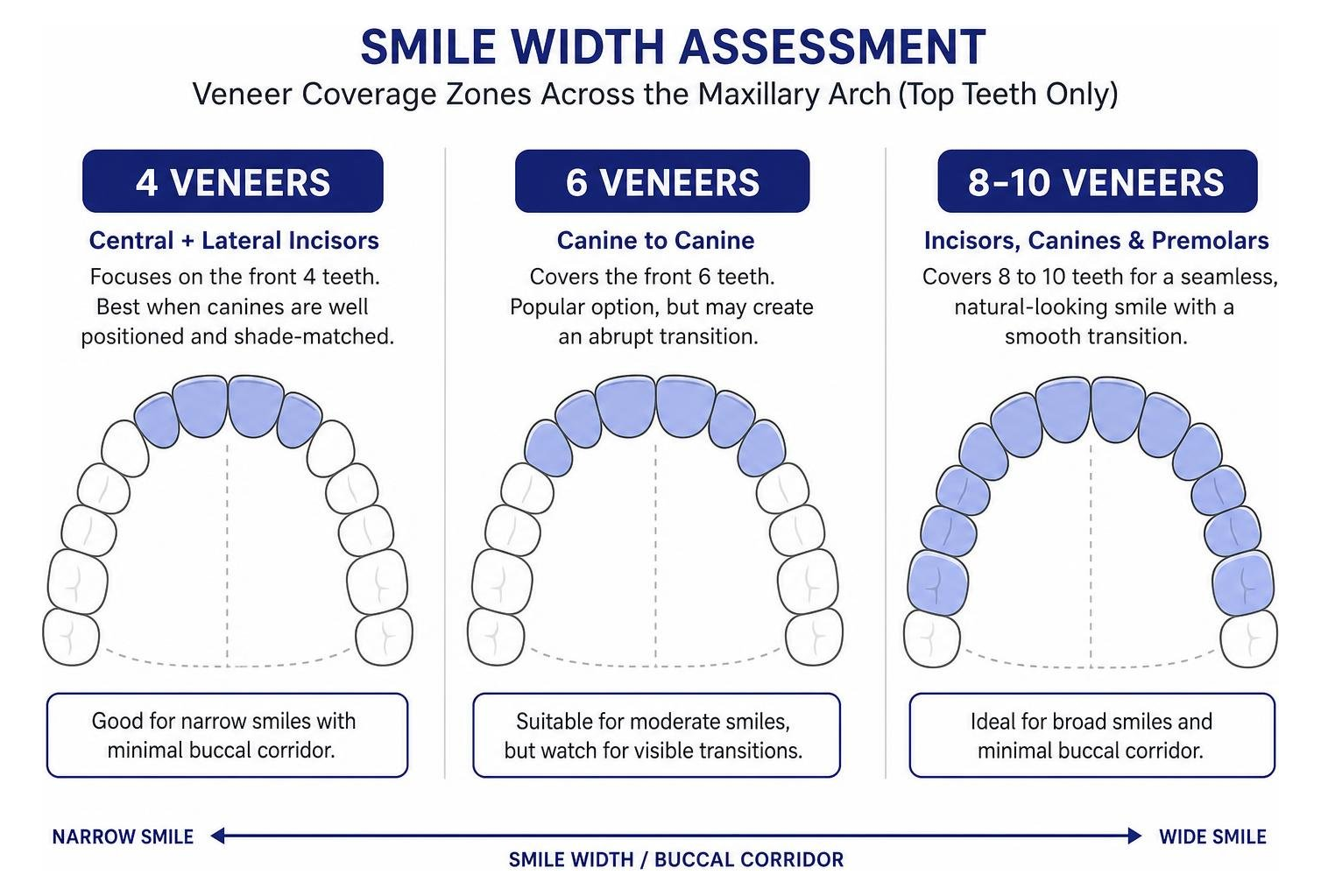
A successful upper-arch transformation depends on how many teeth you display when smiling broadly. There is no single universal number; rather, the ideal unit count is determined by your buccal corridor—the dark space visible in the corners of your mouth when you smile.
Depending on your unique smile anatomy, typical treatment plans include:
- 4 Veneers: Focuses strictly on the central and lateral incisors. This works well if your natural canines are nicely positioned and shade-matched.
- 6 Veneers: Covers canine to canine. While popular, treating only six teeth can sometimes create an abrupt visual transition.
- 8 to 10 Veneers: The most recommended option for a broad smile, covering incisors, canines, and the premolars to create a seamless, flowing transition.
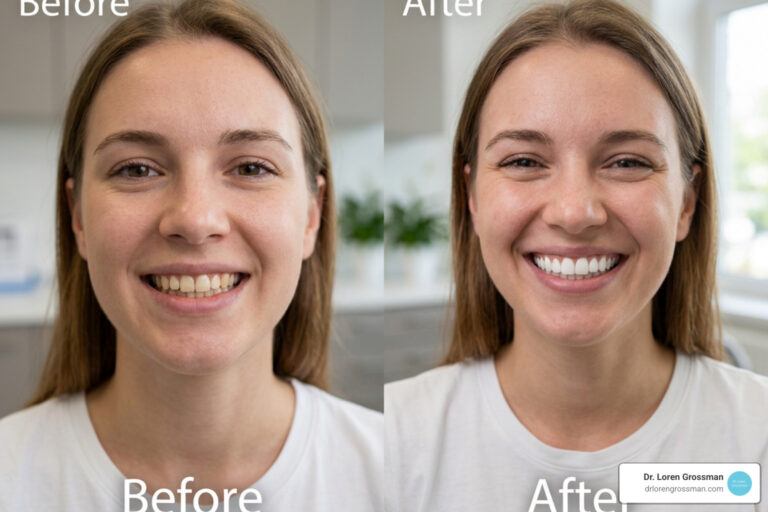
Reviewing real patient smile transformations illustrates how expanding the treatment zone to 8 or 10 teeth ensures natural proportions and avoids an artificial look.
The Aesthetic Risks of Treating Too Few Upper Teeth
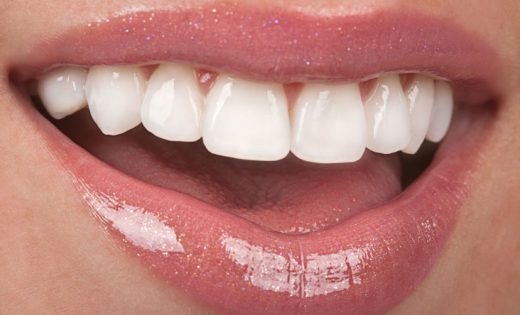
One of the biggest cosmetic pitfalls in single-arch cosmetic dentistry is treating too few teeth. When patients opt for only 4 or 6 upper veneers despite having a wide smile, a noticeable contrast often appears between the bright, perfectly shaped restorations and the darker natural premolars directly behind them.
In aesthetic dentistry circles, this stark boundary is sometimes called the “Matthew Perry effect”—a reference to when celebrity smiles feature bright front teeth that end abruptly, creating a noticeable gap in color and shape along the lip line.
Key risks of treating too few upper teeth include:
- Awkward Canine Transitions: Canines are naturally slightly darker and more pointed; leaving them untreated next to bright incisors can disrupt symmetry.
- Premolar Shadowing: Untreated premolars can make the smile appear narrow or incomplete.
- Color Mismatch: A bright upper smile can make natural adjacent teeth appear yellowed or discolored by comparison.
How to Match Bottom Teeth to Your Upper Veneers
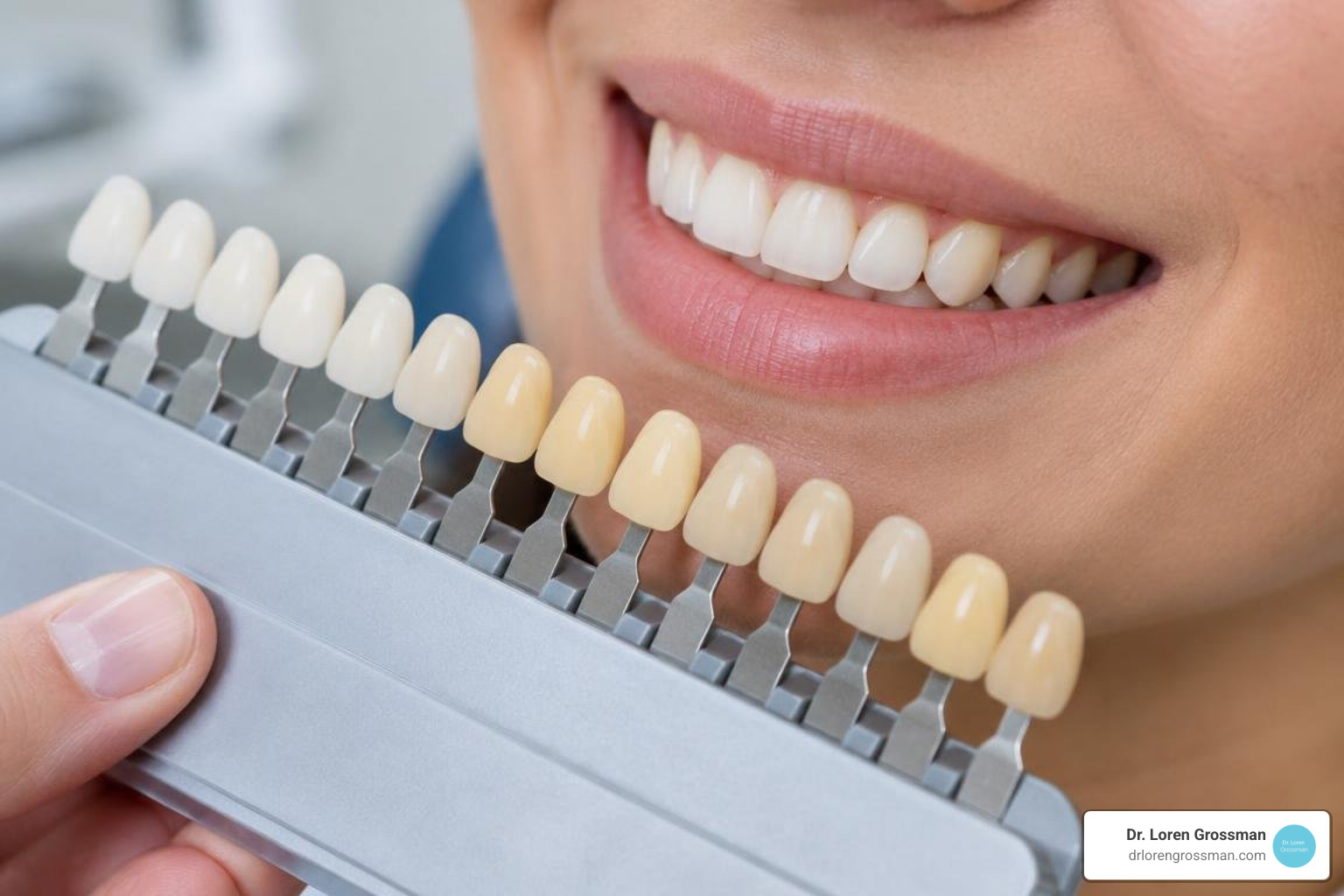
When choosing veneers for top teeth only, achieving visual balance between your upper restorations and your natural lower teeth is critical. Porcelain and composite materials are completely non-porous and do not respond to whitening agents once fabricated. Therefore, the secret to a cohesive smile is to brighten the lower arch before establishing the final shade of your upper veneers.
Combining professional whitening with restorative care allows you to brighten up your smile naturally, setting a vibrant baseline shade for your custom restorations.
Before initiating lower arch bleaching, we assess your teeth for conditions that could influence the whitening process:
- Micro-cracks: Fine structural lines in enamel that may cause temporary sensitivity during bleaching.
- Gum Recession: Exposed root dentin that requires gentle, specialized desensitizing protocols.
- Baseline Tooth Sensitivity: Pre-existing nerve responsiveness that guides the concentration of the whitening gel used.
Professional Whitening Options for Lower Teeth
To align your lower teeth with your planned upper restorations, several professional whitening approaches are available:
- In-Office Power Bleaching: Utilizes high-concentration hydrogen peroxide gels, often activated by a specialized light source, to lift stubborn deep stains in a single appointment.
- Custom Take-Home Whitening Trays: Precision-molded trays designed from digital impressions of your lower arch. You wear these trays with professional-grade carbamide or hydrogen peroxide gel for a set period daily, achieving gradual, predictable brightening over one to two weeks.
- Combination Protocols: Starting with an in-office power session followed by custom tray maintenance at home to maximize enamel hydration and shade stability.
Maintaining Long-Term Color Balance
Because your natural lower teeth remain vulnerable to everyday staining while your upper porcelain veneers resist discoloration, ongoing shade maintenance is essential.
To keep your upper and lower arches in aesthetic harmony:
- Perform Periodic Bleaching Touch-Ups: Use your custom lower trays every 4 to 6 months for a brief touch-up to prevent yellowing.
- Adopt Dietary Precautions: Rinse with water after drinking coffee, black tea, red wine, or consuming dark sauces.
- Consider Minor Composite Bonding: If a specific lower tooth has an irregular edge or persistent deep stain, subtle composite bonding can blend it seamlessly without requiring a full veneer.
Material Options and Care for Upper Teeth Veneers
Selecting the proper restorative material affects the longevity, appearance, and prep requirements of your upper-arch makeover. Reviewing the different types of veneers helps clarify which solution best matches your aesthetic preferences and budget. According to the American Dental Association, porcelain veneers are a durable, widely used option for improving the appearance of front teeth.
| Feature | Porcelain Veneers | Composite Resin Veneers |
|---|---|---|
| Material Composition | High-grade dental ceramic | Direct or indirect composite resin |
| Expected Lifespan | 10–20 years | 5–8 years |
| Stain Resistance | Extremely high | Moderate (can discolor over time) |
| Enamel Reduction | Conservative (0.3mm–0.7mm) | Minimal to none |
| Application Process | Multi-step lab fabrication | Often single-visit direct bonding |
| Aesthetic Realism | Exceptional light reflection | Very good, highly customizable |
Clinical literature consistently demonstrates that traditional porcelain maintains its polish and structural integrity longer than alternative materials.
Comparing Durability and Care of Veneers for Top Teeth Only
Proper daily maintenance is essential to protect both your custom upper restorations and the natural teeth underneath. Following our guide to caring for dental veneers will help safeguard your cosmetic investment for decades.
Best practices for preserving your restorations include:
- Use Non-Abrasive Toothpaste: Avoid abrasive whitening toothpastes containing baking soda or harsh silica, which can scratch the surface glaze of composite and porcelain over time.
- Brush with a Soft-Bristled Brush: Clean gently along the gumline twice a day to maintain healthy gum tissue and prevent margin recession.
- Wear a Custom Nightguard: If you clench or grind your teeth during sleep (bruxism), a custom nightguard protects your upper restorations from excessive biting forces that can cause chipping or debonding.
- Avoid Using Teeth as Tools: Never use your veneered teeth to open packages, bite into hard objects (like ice or popcorn kernels), or tear tape.
The Treatment Journey: Step-by-Step Procedure

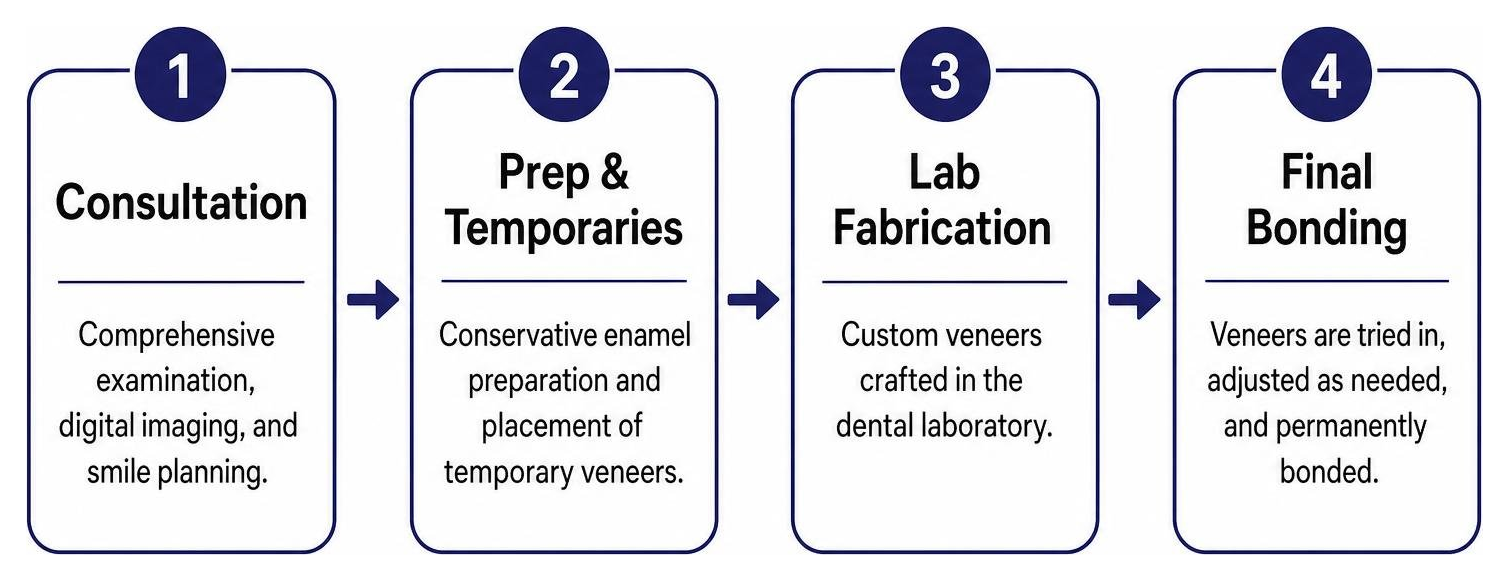
Transforming your upper arch is a precise, collaborative process that combines advanced digital diagnostics with artistic craftsmanship. To understand the full clinical path, review our comprehensive step-by-step veneers guide.
Preparation and Provisional Restorations
The placement process begins with a detailed aesthetic evaluation and diagnostic planning:
- Comprehensive Examination and Digital Imaging: We evaluate your facial proportions, lip line, and bite kinematics, using digital photography and 3D intraoral scans to create a digital smile preview.
- Conservative Enamel Preparation: A thin layer of enamel—typically around 0.5 millimeters—is gently reshaped from the front surface of the treated upper teeth. Understanding how much enamel is removed during prep reassures patients that modern techniques are conservative and protect the core structural tooth health.
- Provisional (Temporary) Veneers: High-quality temporary restorations are fabricated and placed over your prepared teeth. These temporaries protect your enamel, prevent sensitivity, and allow you to test-drive the shape, length, and speech patterns of your new smile while the master dental lab crafts your permanent porcelain shells.
Permanent Bonding, Occlusion Check, and Protection
Once your custom restorations arrive from the dental laboratory:
- Try-In and Aesthetic Check: We remove the provisionals and temporarily place the permanent veneers to verify that their fit, margins, shade, and contour blend naturally with your smile and your lower teeth.
- Light-Cured Chemical Bonding: The tooth surface and porcelain shells are treated with specialized etching agents and primers. A high-strength, light-cured resin adhesive is applied, and a curing light permanently locks the veneers to your enamel.
- Occlusion and Bite Refinement: We carefully check how your lower natural teeth contact the backs of your new upper veneers during chewing and speaking, making micro-adjustments to ensure balanced biting forces.
- Final Polish and Protection Plan: The margins are polished to a glassy smooth finish, and impressions may be taken for a protective nightguard.
Frequently Asked Questions About Upper Arch Veneers
Do veneers on top teeth ruin your natural teeth underneath?
When performed by an experienced cosmetic dentist, veneers do not ruin your underlying teeth. The preparation process removes only a fraction of a millimeter of outer enamel to make room for the restoration. The core tooth structure, dentin, and nerve remain healthy and intact.
The custom porcelain shell is bonded securely to the tooth, protecting the underlying enamel from everyday wear and acid erosion. However, as explained in our article on whether veneers damage natural teeth, proper oral hygiene—including daily flossing and routine dental cleanings—is essential to prevent decay along the edges of the restoration.
Can you get bottom veneers later if you start with the top?
Yes. Starting with an upper-arch restoration and completing a lower-arch makeover at a later time is a common, effective phased treatment plan. When we design your top veneers, we maintain detailed digital records of your baseline tooth shade, final porcelain material formulations, and bite characteristics.
If you decide to treat your lower teeth in the future, we reference these records to design matching lower restorations that fit your bite smoothly and maintain consistent color across both arches.
Are top teeth veneers covered by dental insurance?
In most cases, veneers placed primarily for aesthetic reasons—such as closing small gaps, evening out minor tooth lengths, or masking natural discoloration—are categorized as elective cosmetic treatments and are not covered by standard dental insurance policies.
However, if a veneer or porcelain crown is required to repair a tooth damaged by structural trauma or severe decay, partial restorative coverage may apply. Our team assists patients with insurance verification and financing options, as outlined in our guide on insurance coverage for dental veneers.
Conclusion
Choosing veneers for your upper arch alone is an effective, accessible way to revitalize your smile without the cost of treating both arches. By taking the time to plan your smile width, assess your bite balance, and brighten your lower teeth beforehand, you can achieve a natural, balanced result that looks great from every angle.
If you are considering a single-arch makeover in Kingston, Pennsylvania, or the surrounding Northeastern Pennsylvania area, our team is here to help. Schedule a personalized consultation with Dr. Loren Grossman today to evaluate your smile and explore what custom porcelain veneers can do for your confidence.