What Veneers Before and After Results Actually Look Like
Veneers before and after photos show one of the most dramatic transformations in cosmetic dentistry. Here is a quick snapshot of what patients typically experience:
Common problems veneers fix:
- Gaps between teeth
- Chips and worn edges
- Deep stains that whitening can’t touch
- Mild misalignment or uneven tooth shape
What results to expect:
- Brighter, more even smile in as few as 2-3 appointments
- Natural-looking finish that fits your face
- Results that last 10-15 years with porcelain
If you have ever hidden your smile in photos, winced at a chip you just can’t ignore, or tried every whitening kit on the shelf without results — you already know that feeling. Veneers can close gaps, cover stains, and reshape uneven teeth faster than braces and with results that look genuinely natural, not fake or overly bright.
But not every smile transformation turns out the same. The difference between a stunning result and one that looks “off” often comes down to planning, materials, and the skill of the person placing them.
I’m Dr. Loren Grossman, a cosmetic and family dentist serving Northeastern Pennsylvania since 1984, and I’ve performed countless veneers before and after smile makeovers — from single-tooth corrections to full smile redesigns. In the sections below, I’ll walk you through everything you need to know before booking your first consultation.
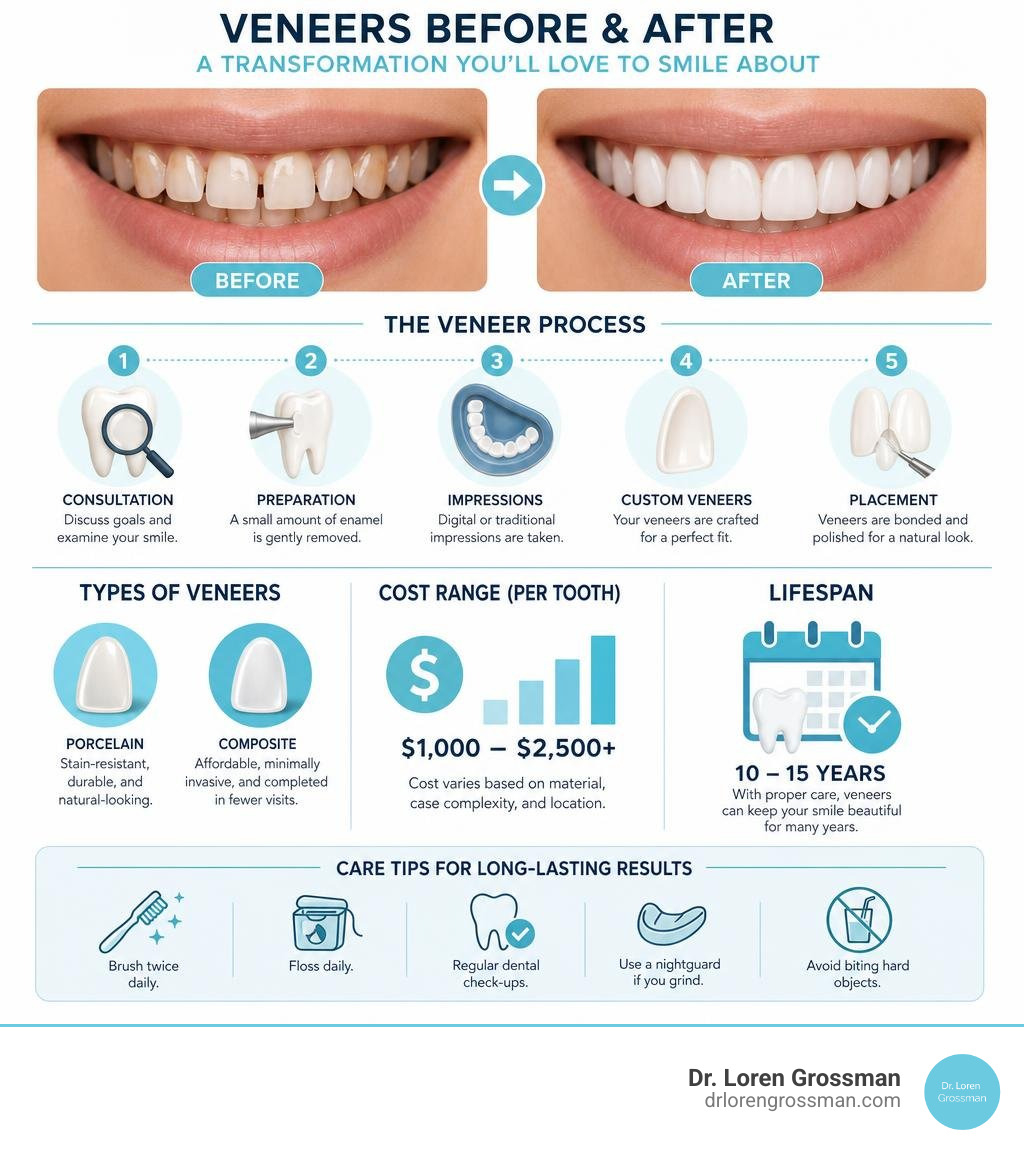
Veneers before and after vocab explained:
What Are Dental Veneers and How Do They Work?
Dental veneers are ultra-thin, custom-made shells designed to cover the front surface of your teeth. Think of them as custom-tailored jackets for your teeth-they are shaped, shaded, and bonded to blend seamlessly with your natural smile.
To understand how they work, we have to look at the anatomy of your tooth. The outermost layer of your tooth is the enamel, which is incredibly strong but can chip, wear down, or stain over time. In traditional cosmetic dentistry, a microscopic layer of this enamel (usually between 0.3 and 0.7 millimeters) is gently shaved down to make room for the veneer. This ensures that the restored tooth does not look bulky or unnatural. Once prepared, the veneer is permanently bonded to this enamel layer, creating a durable, beautiful shield.
Whether you are struggling with a persistent gap (diastema), chipped edges from an old sports injury, severe discoloration from tetracycline or root canals, or minor misalignment, veneers offer a comprehensive solution. Rather than undergoing years of orthodontic treatment, veneers can deliver a symmetrical, radiant smile in just a few weeks. For a general overview of the treatment, you can also read more about dental veneers as a cosmetic dentistry option.
To dive deeper into the fundamentals of this treatment, check out our guide on Understanding the Basics of Veneers.
Comparing the Main Types of Veneers
When planning your veneers before and after journey, choosing the right material is one of the most critical decisions you will make. Different materials offer unique advantages in terms of aesthetics, durability, and cost.
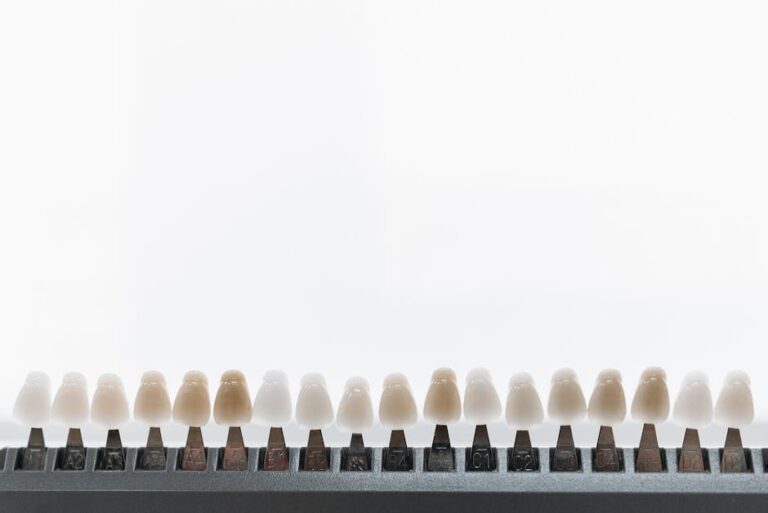
- Porcelain Veneers: The gold standard in cosmetic dentistry. Porcelain mimics the natural light translucency of real teeth beautifully. It is highly resistant to staining and incredibly strong.
- E-max Veneers: Made from high-strength lithium disilicate glass-ceramic, E-max veneers are famous for their thin structure, which preserves more of your natural enamel during preparation. Our Emax veneers are 100% porcelain with a 7-layer handmade Emax finish, offering unparalleled realism. They also typically come with a 2-year guarantee.
- Composite Veneers: Made from a tooth-colored resin (the same material used for dental bonding), these can often be applied in a single visit. While they are more affordable upfront, they are more prone to chipping and staining over time.
- Zirconia Veneers: Known for extreme durability, zirconia is ideal for patients with severe tooth wear or those who tend to grind their teeth. However, they can sometimes look slightly more opaque than E-max or traditional porcelain.
To help you compare, here is a quick breakdown of how these materials stack up:
| Feature | Porcelain Veneers | E-max Veneers | Composite Veneers | Zirconia Veneers |
|---|---|---|---|---|
| Lifespan | 10 to 15 years | 10 to 15+ years | 3 to 7 years | 10 to 15+ years |
| Appearance | Highly natural, translucent | Exceptionally natural (7-layer) | Good, but can look flatter | Strong, but slightly opaque |
| Stain Resistance | High | High | Moderate | High |
| Enamel Removal | Moderate (0.3–0.7mm) | Minimal | None to minimal | Moderate |
| Relative Cost | High | Premium | Budget-friendly | High |
For a more exhaustive look at choosing the perfect material for your smile goals, read our article on how to Transform Your Smile with Dental Veneers.
Real Patient Veneers Before and After Transformations
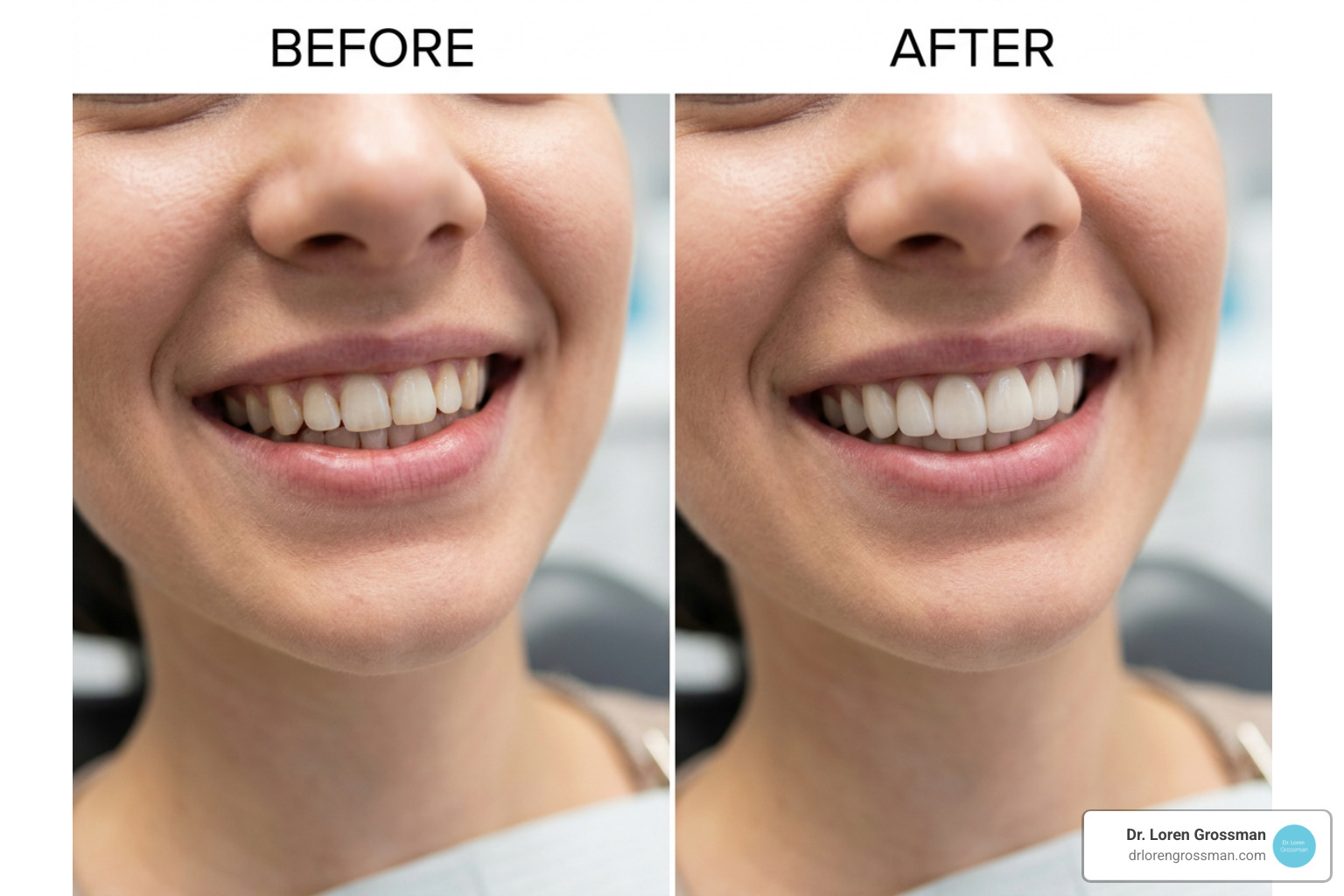
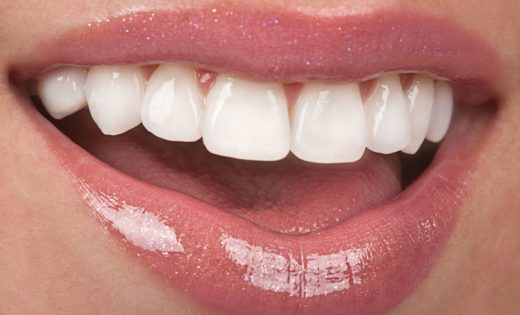
When you look at a veneers before and after gallery, you aren’t just looking at whiter teeth. You are looking at restored confidence, improved facial symmetry, and a youthful, healthy smile arc.
Realistic expectations are key here. A successful smile makeover shouldn’t look like a row of identical white piano keys. Instead, the best results feature subtle variations in shade, natural translucency at the edges, and proportions that complement your jawline, lips, and skin tone.
To see some of these incredible journeys firsthand, we invite you to Witness the Magic of a Smile Makeover Before and After and read more about the Before and After Cosmetic Dentistry experience.
Celebrity Veneers Before and After vs. Everyday Patients
We have all seen the dazzling Hollywood smiles on the red carpet. Many celebrities opt for veneers to enhance their personal brand and on-screen presence. On the high end, celebrity veneers can cost anywhere from $2,500 to $4,500 per tooth.
However, “celebrity-style” teeth can sometimes look too perfect, opaque, or bright white, creating an artificial contrast. For everyday patients in Northeastern Pennsylvania, we focus on a natural translucency and custom shading. Our goal is to design a smile that looks like you were born with beautiful teeth, not like you bought them.
Real Case Studies: Solving Gaps, Chips, and Discoloration
Let’s look at a few common scenarios we regularly treat in our Kingston, PA office:
- The Diastema (Gap) Closure: A patient came to us with a large gap between their front teeth. While orthodontics was an option, they wanted a faster solution. We placed four custom porcelain veneers, closing the gap instantly and balancing the proportions of their smile.
- The Chipped & Worn Smile: Years of minor grinding had left a patient’s front teeth short, flat, and chipped. By placing six E-max veneers, we restored the lost length, corrected the reverse smile arc, and gave them a youthful, vibrant appearance.
- Severe Staining: A patient with deep, gray tetracycline staining (which cannot be corrected with traditional bleaching) received a full upper arch of eight veneers. The result was a naturally bright, stain-resistant smile that completely changed their self-esteem.
You can browse more of these real-life transformations in our Before and After Gallery.
The Step-by-Step Veneers Process
Getting veneers is a collaborative journey that requires precision at every step. Here is what you can expect when you work with us:
- The Consultation & Smile Design: We sit down to discuss your aesthetic goals, examine your oral health, and take digital scans and photos.
- Tooth Preparation: If traditional veneers are chosen, we gently remove a tiny sliver of enamel (0.3 to 0.7mm) under local anesthesia to ensure complete comfort.
- Impressions & Temporaries: We take a highly accurate digital impression of your prepared teeth and send it to our world-class dental lab. While your permanent veneers are being handcrafted, we place beautiful temporary veneers so you never have to walk around with gaps.
- The Final Placement: Once your custom veneers arrive, we try them on, make any necessary micro-adjustments to the fit and shade, and permanently bond them to your teeth.
It is important to remember that because enamel is removed, traditional veneers are considered a permanent, irreversible treatment. To make sure you are fully prepared, read our breakdown of the Veneers Process: What You Must Know and our comprehensive Dental Veneers Procedure Guide.
Preparing for Your Veneers Before and After Journey
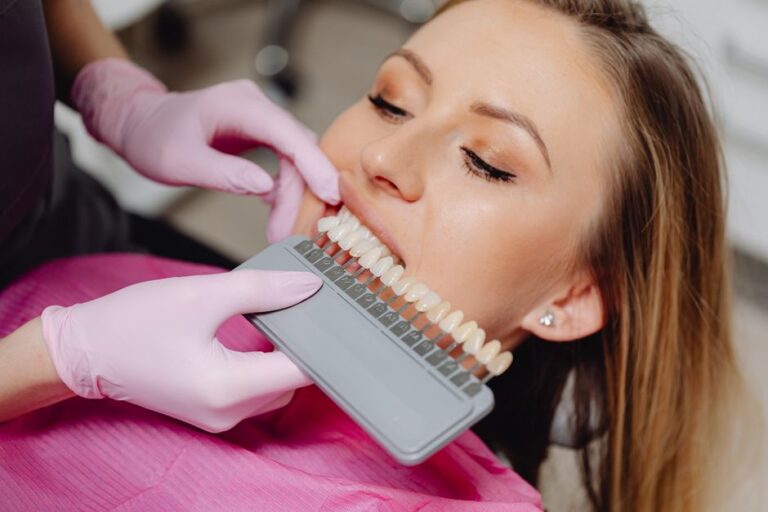
To take the guesswork out of your transformation, we utilize advanced smile design technology. Before we ever touch your teeth, we can create a digital mockup or a physical “trial smile.” This temporary mockup is placed over your natural teeth, allowing you to see, feel, and approve your new smile in the mirror before committing to the final restorations.
Cost of Veneers: Understanding Your Investment
When researching veneer pricing, you will find a wide range of costs. For instance, dental tourism packages in countries like Turkey can range from $250 to $500 per tooth. However, traveling abroad for cosmetic dental work comes with significant risks, including limited follow-up care, language barriers, and lack of recourse if a restoration fails or causes bite issues.
In the United States, and specifically within the Northeastern Pennsylvania region, high-quality porcelain veneers generally range from $1,000 to $2,200 per tooth. The total investment depends on several factors:
- The material selected (E-max and premium porcelain vs. composite resin)
- The complexity of your bite and alignment
- The number of teeth being treated (most patients choose 6 to 8 veneers for a balanced smile)
- Whether preparatory treatments like gum contouring or whitening are needed first
While the upfront cost of premium porcelain is higher than composite bonding, the long-term value is unmatched. Because porcelain resists staining and can last up to 15 years or more, it is a highly durable investment in your confidence and oral health. To help make your dream smile accessible, we offer flexible financing options and payment plans.
Longevity, Maintenance, and Candidacy
To get the most out of your veneers before and after transformation, proper aftercare is essential. While porcelain itself is stain-resistant and cannot decay, the natural tooth structure underneath is still vulnerable.
To maximize your veneer lifespan:
- Brush twice daily with a non-abrasive fluoride toothpaste and floss daily.
- Wear a custom night guard if you have a history of grinding or clenching your teeth (bruxism).
- Avoid biting directly into hard objects like ice, hard candy, or non-food items (like pen caps or fingernails).
- Visit us regularly for professional cleanings and examinations.

Are You a Good Candidate?
A good candidate for veneers has healthy teeth and gums, sufficient natural enamel, and specific cosmetic concerns they want to address. If you have active gum disease, severe tooth decay, or major alignment issues, we will need to address those first.
Sometimes, alternatives are a better fit:
- Cosmetic Bonding: Great for minor, single-tooth chips or small gaps. It is faster and cheaper but has a shorter lifespan (3 to 7 years).
- Teeth Whitening: If color is your only concern, professional whitening is a non-invasive first step.
- Orthodontics (Invisalign): If your teeth are severely crowded or misaligned, orthodontic treatment is the healthiest way to straighten your smile before considering cosmetic enhancements.
Learn more about finding your path to a flawless smile in our Perfect Smile Veneers Guide.
Frequently Asked Questions about Veneers
Are dental veneers permanent and reversible?
Traditional porcelain and E-max veneers are permanent because a small amount of enamel must be removed to accommodate the shell. This process is irreversible. If a veneer is damaged or wears out after 10-15 years, it must be replaced to keep the underlying tooth protected.
Do veneers stain from coffee or wine?
High-quality porcelain and E-max veneers are highly stain-resistant. Because the ceramic glaze is non-porous, everyday stain-makers like coffee, tea, and red wine will not discolor them. However, composite resin veneers are porous and can stain over time, much like natural teeth.
How long do porcelain veneers last compared to composite?
Porcelain and E-max veneers typically last between 10 to 15 years (and often longer with meticulous care). Composite veneers have a much shorter lifespan, usually requiring replacement or touch-ups every 3 to 7 years.
Conclusion
Your smile is one of the first things people notice about you. If gaps, chips, or stubborn discoloration are keeping you from smiling freely, a customized cosmetic transformation can truly be life-changing.
Our team at Dr. Loren Grossman is dedicated to providing a highly personalized, comfortable, and artistically crafted experience right here in Kingston. We combine decades of cosmetic expertise with state-of-the-art technology to deliver results that look natural, feel comfortable, and stand the test of time. To explore your options and find out if you are a candidate, read about our local Veneer Procedures in Kingston PA: Transform Your Smile with a Trusted Cosmetic Dentist.
Ready to take the first step toward your own incredible before-and-after? Schedule a Consultation for Dental Veneers with us today, and let’s design the smile you’ve always wanted!