Implant-Supported Dentures in PA: A More Secure Fit
Implant-supported dentures in PA attach to implants placed in the jaw, giving the denture a more secure fit than one that rests only on the gums. They may be removable or fixed in place. The right option depends on your jawbone, oral health, and goals. A dental exam can help you learn which approach may work for you.
I’m Dr. Loren Grossman, and I’ve cared for patients in Northeastern Pennsylvania since 1984, including patients receiving dental implants. If your search for “implant supported dentures pa” brought you here, I’ll help you understand the options and what to ask at a consultation.
Implant-Supported Dentures in PA: Options, Benefits, and How They Work
Think of a traditional denture as a boat floating on the gums. It works, until a wave (like a crisp apple) comes along. Implant posts act like anchors. They give the denture something solid to hold on to, so it moves less when you eat, talk, or laugh. If you want a refresher on the basics, our overview of dental implant basics explains how implants work from the science to the finished smile.
What are implant-supported dentures, and how do they differ from traditional dentures?
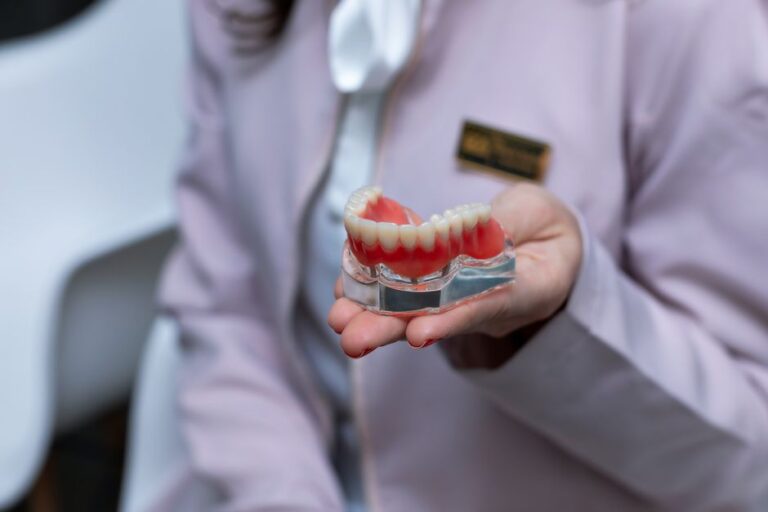
An implant-supported denture is a full or partial set of replacement teeth that connects to small titanium posts placed in your jawbone. A traditional denture relies on suction, the shape of your gums, and often denture adhesive. Over time, the jaw changes shape after tooth loss, and that can make a conventional denture feel loose.
Here is how the two compare:
| Feature | Implant-supported denture | Traditional denture |
|---|---|---|
| Support | Implants in the jawbone | Gums and suction |
| Stability | Firm, with little shifting | Can slip or move |
| Adhesive | Usually not needed | Often needed |
| Bone stimulation | Implants help stimulate the jaw | Does not stimulate the bone |
| Removal | Removable overdenture or fixed denture | Removed daily |
| Upfront cost | Higher | Lower |
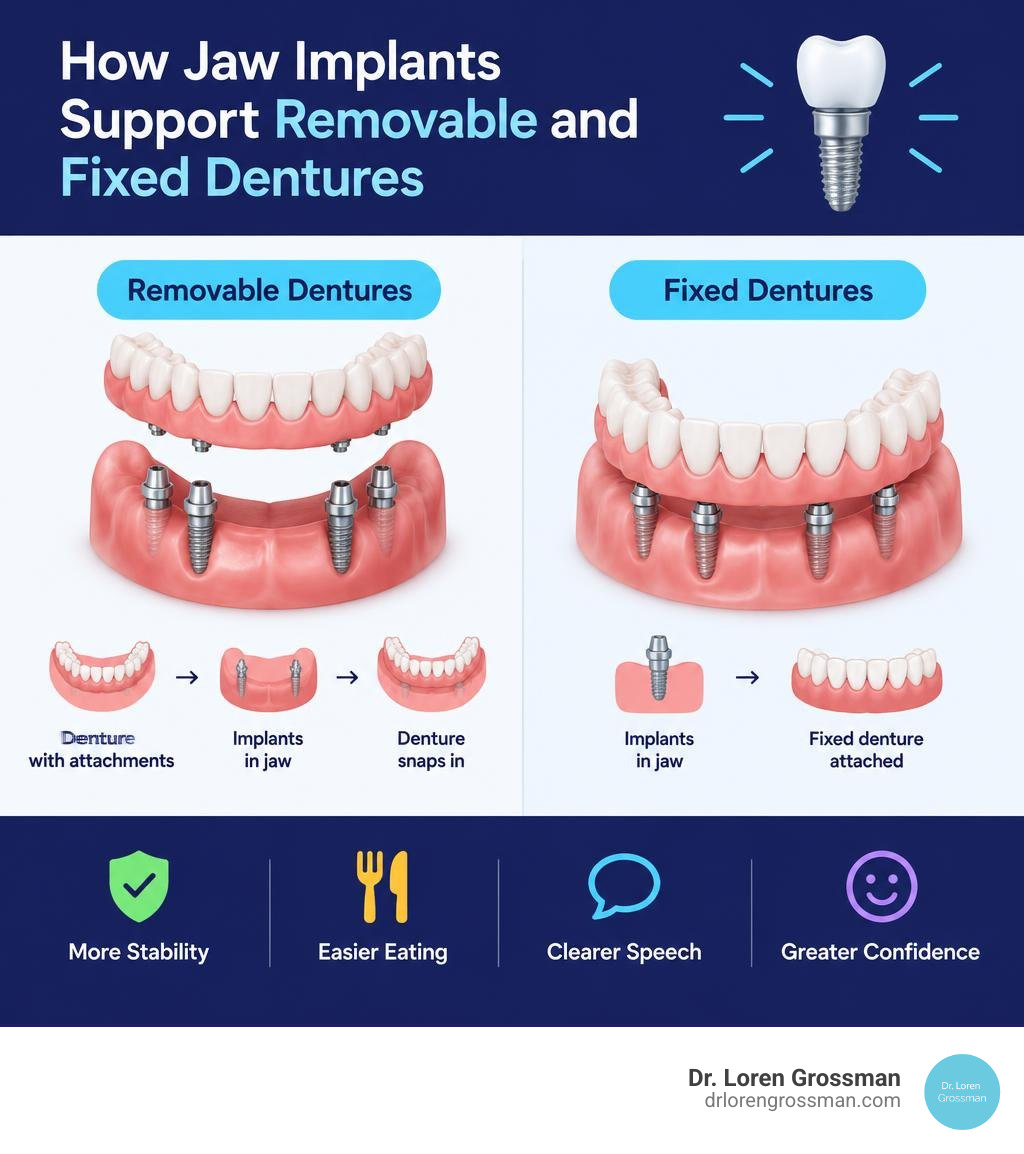
With an overdenture, attachments on the implants hold the denture in place, and you can take it out for cleaning. A fixed denture is secured to the implants and is removed only by a dental professional.
What benefits can implant-supported dentures offer?
Many patients choose implants for comfort and confidence. The main advantages include:
- Chewing comfort: Patients report a 98% improvement in chewing ability compared with conventional dentures, which means more of the foods you enjoy.
- Speech clarity: A denture that stays put means fewer worries about slipping words.
- Bone stimulation: Implants transfer chewing forces to the jaw, which helps preserve bone in the areas they support.
- Denture stability: Less rubbing and shifting can mean fewer sore spots.
- Confidence: Smiling, laughing, and eating in public feel easier when your teeth stay where you put them.
Which implant-supported denture options are available?
There are two main families of treatment, and the implant count varies with each.
- Snap-on overdenture: A removable denture clicks onto implants through attachments. It often uses fewer implants, and daily cleaning is simple because you take it out.
- Fixed full arch: A complete arch of teeth is secured to several implants. It feels more like natural teeth, but it usually involves more implants and a higher investment.
Teeth can be made from acrylic, which is lightweight and easier to modify, or zirconia, a strong ceramic that resists wear and staining. If you are weighing your choices, our article on denture options can help you think through what fits your lifestyle.
Candidacy, Treatment Steps, and Recovery in Pennsylvania
Good news first: many people qualify. The key is a careful exam and a plan built around your mouth, not a one-size-fits-all approach. Patients in our area can learn more about dental implant services in Wilkes-Barre and what a visit involves.
Who is a candidate for implant-supported dentures in PA?
About 36 million Americans are edentulous, meaning they have no natural teeth, and many of them may be candidates. In general, a good candidate has:
- Enough jawbone density to hold implants, or the ability to rebuild bone with bone grafting
- Healthy gums, free of untreated infection
- Well-controlled health conditions such as diabetes
- A willingness to stop or reduce smoking, which raises the risk of implant failure and slows healing
- A commitment to daily cleaning and regular checkups
Age alone is not a barrier. Overall health and healing ability matter far more.
What happens during the implant-supported denture procedure?
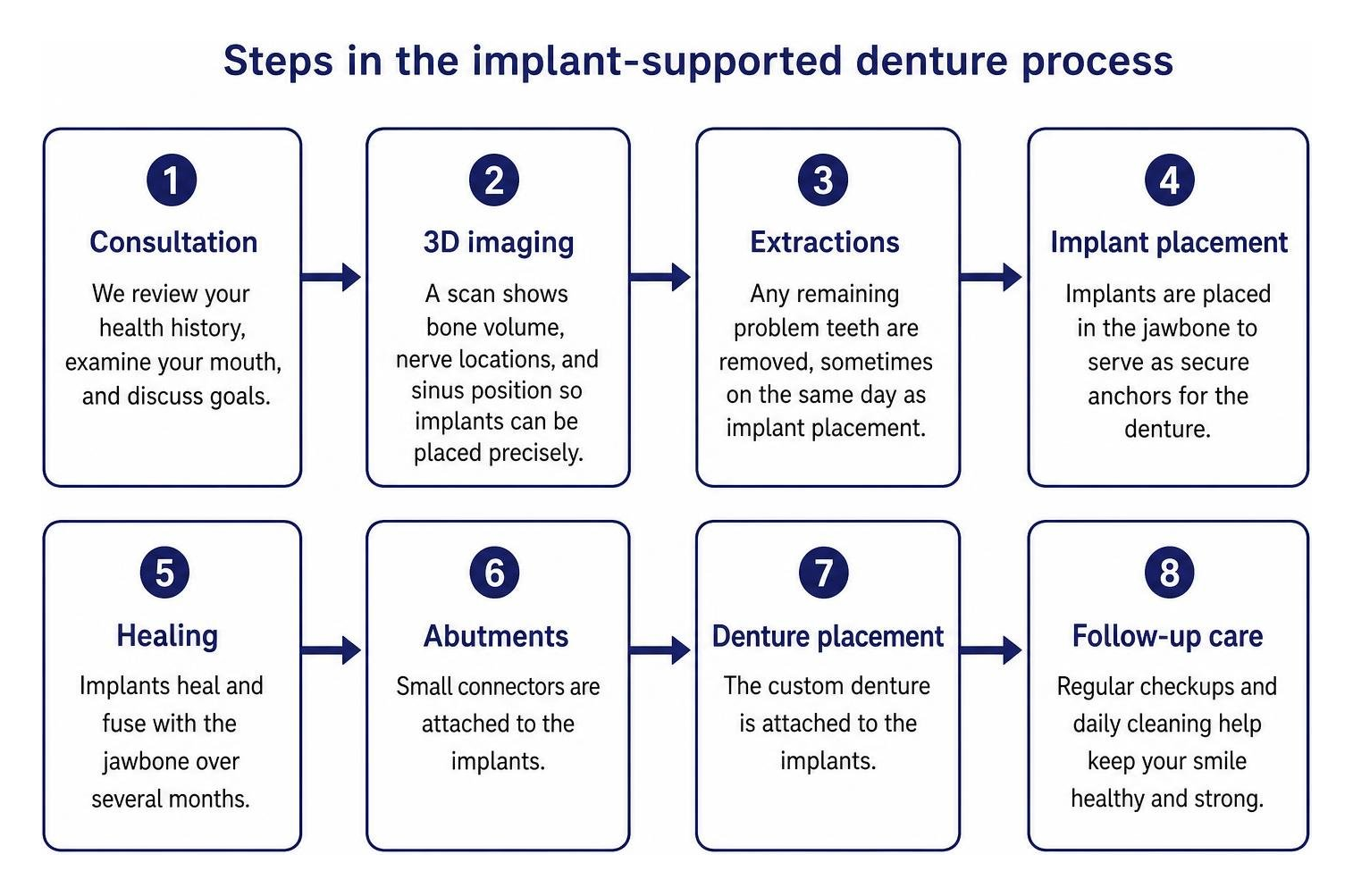
The process generally follows these stages:
- Consultation: We review your health history, examine your mouth, and discuss goals.
- 3D imaging: A scan shows bone volume, nerve locations, and sinus position so implants can be placed precisely.
- Extractions: Any remaining problem teeth are removed, sometimes on the same day as implant placement.
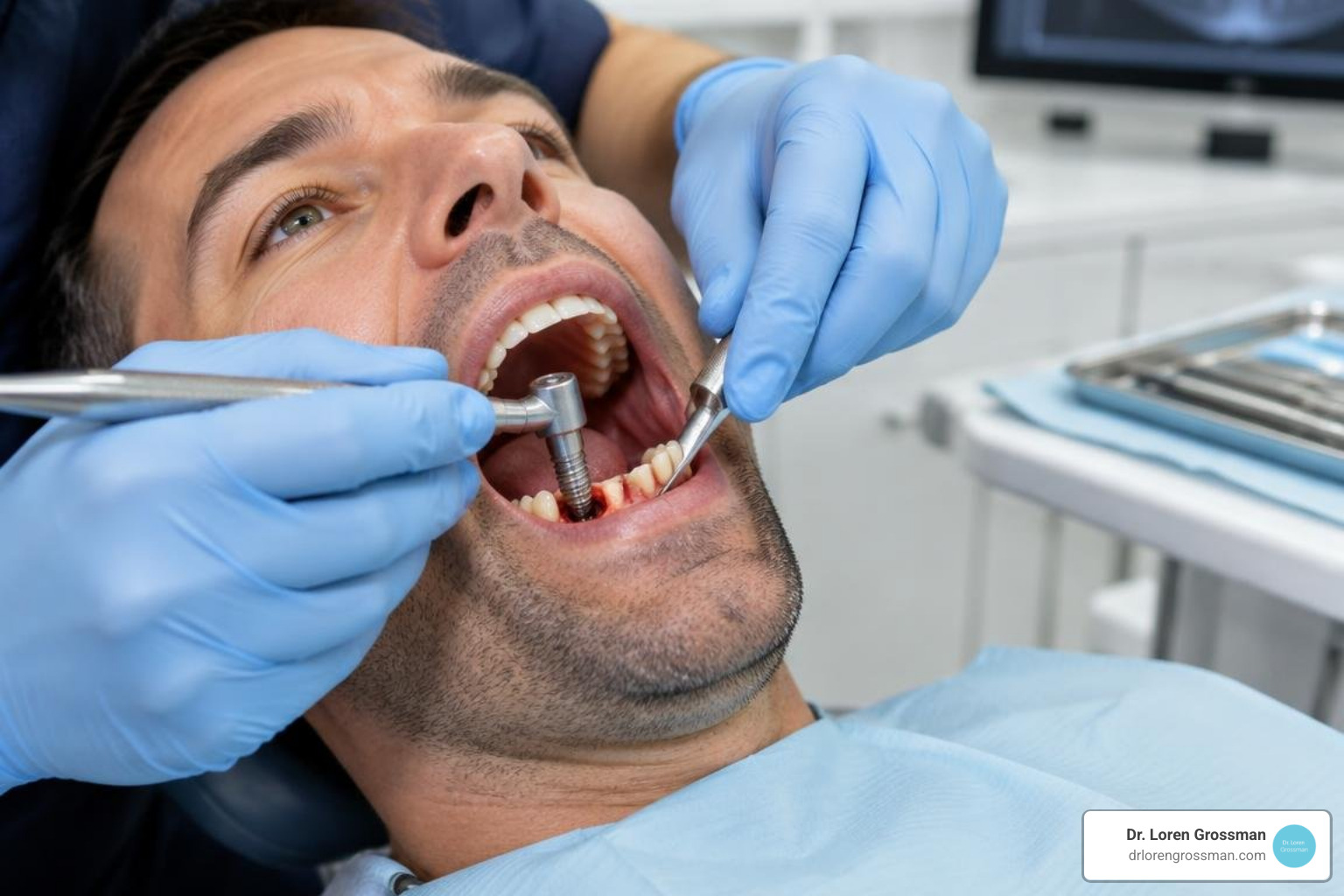
- Implant placement: Implants are placed in the jaw under anesthesia or sedation, based on your needs.
- Healing abutments and a temporary denture: Connectors are placed, and you may wear a temporary set of teeth while you heal.
- Osseointegration: The implants fuse with your bone over the following months.
- Final prosthesis: Your custom denture is made, fitted, and adjusted.
How long does treatment take, and what is recovery like?
Some patients leave with same-day temporary teeth. Full healing usually takes about 3 to 6 months, and the final denture is attached once the implants are stable. Total timelines vary if bone grafting or extractions are needed.
In the first days, expect some swelling, soreness, and minor bleeding. Cold packs, prescribed or recommended pain relief, and rest help. Stick to soft foods such as yogurt, eggs, soups, and mashed vegetables, then return to your regular diet gradually as your dentist advises. Follow-up visits let us check healing and adjust your temporary teeth. For deeper reading, scientific research on dental implants consistently supports careful planning and follow-up as keys to good outcomes.
Cost and Insurance for Implant-Supported Dentures in PA
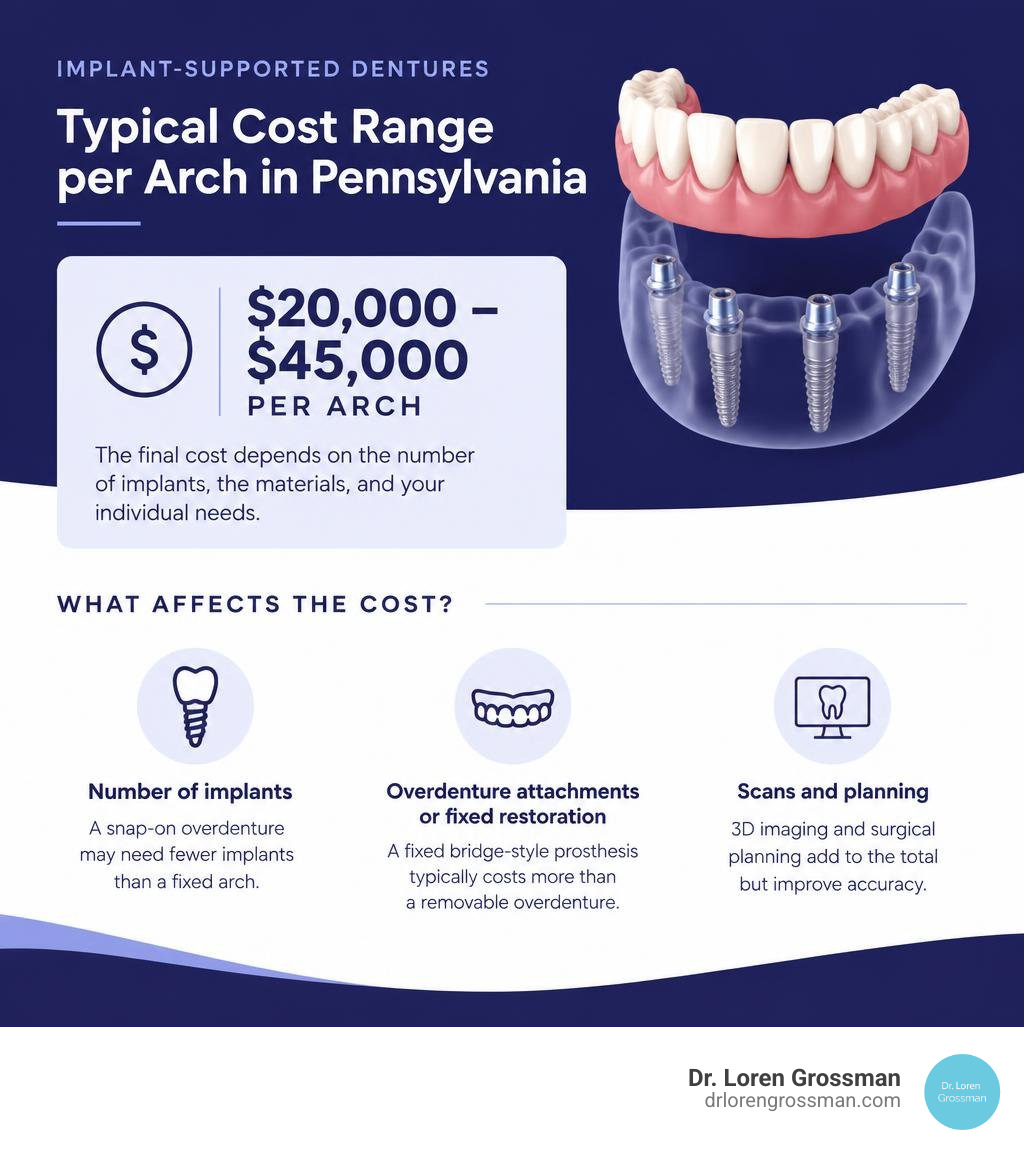
Let’s talk numbers honestly. In Pennsylvania, a full-arch implant-supported denture often ranges from $20,000 to $45,000 per arch, depending on the number of implants and the materials chosen. That is a wide range because every mouth is different. Extractions, bone grafting, and the type of denture all play a part. Ask for a written estimate that lists each phase so there are no surprises.
What affects the cost of implant-supported dentures in PA?
- Number of implants: A snap-on overdenture may need fewer implants than a fixed arch.
- Overdenture attachments or fixed restoration: A fixed bridge-style prosthesis typically costs more than a removable overdenture.
- Scans and planning: 3D imaging and surgical planning add to the total but improve accuracy.
- Preparatory care: Extractions, gum treatment, and bone grafting may be needed first.
- Material choice: Zirconia generally costs more than acrylic.
Many practices offer financing options, so ask what is available to spread payments over time.
Does dental insurance cover implant-supported dentures?
Coverage varies a lot. Many dental plans have an annual maximum, often limited to a modest amount, and some exclude implants altogether. Others cover part of the denture portion or related services like extractions. Medical insurance may sometimes help when treatment is medically necessary, though this is not common.
Before starting, request preauthorization and ask your plan what it covers. Our office can help you understand your benefits, but expect some out-of-pocket costs. Knowing the figure up front makes the decision much calmer.
Risks, Longevity, and Long-Term Care
Implants are a well-studied treatment, but no procedure is risk-free. Our guide on dental implant safety goes deeper. The good news is that most problems are preventable or treatable when caught early.
What are the potential risks or downsides?
Possible complications include:
- Infection or bleeding after surgery
- Nerve injury, which is uncommon with careful planning
- Sinus complications, mainly with upper jaw implants
- Implant failure, when the implant does not fuse with the bone
- Bone loss around the implant from peri-implantitis, a gum infection around implants
- Cost and the need for surgery, which are the main practical downsides
Scientific research on implant safety points to smoking, poor oral hygiene, and uncontrolled diabetes as common risk factors. Thorough planning and good home care lower your risk considerably.
How successful are implant-supported dentures, and how long can they last?
The numbers are encouraging. Over 10 years, success rates exceed 95% in the lower jaw and range from 90% to 95% in the upper jaw. Five-year survival for implant-supported overdentures is 96.7% for lower implants and 95.2% for upper implants.
The implants themselves can last for decades with good care. The denture parts wear down sooner. Attachments on overdentures and the teeth may need replacement or relining over the years, much like tires on a car that still has a great engine.
How should you care for implant-supported dentures?
Daily habits make the difference:
- Brush the denture and gums every day with a soft brush and non-abrasive cleaner.
- Clean around the implants using interdental brushes or floss made for implants. A water flosser can help reach tight spots.
- Remove an overdenture at night and clean it, as the American Dental Association advises for denture care.
- Fixed dentures stay in place, so careful cleaning underneath matters even more.
- Schedule professional cleanings and routine exams, usually every 3 to 6 months.
- Replace worn attachments when your dentist recommends it.
Frequently Asked Questions About Implant-Supported Dentures in PA
Can implant-supported dentures be placed if I have bone loss?
Often, yes. Bone grafting can rebuild lost bone volume before or during implant placement. 3D imaging shows exactly how much bone you have, so we can plan the safest approach for you.
Are implant-supported dentures removable?
It depends on the type. A removable overdenture snaps on and off for cleaning. A fixed denture is attached to the implants, and only a clinician can remove it during checkups or repairs.
How soon can I eat normally after implant surgery?
Plan on soft foods at first while the area heals. You can gradually add firmer foods as comfort improves, following your dentist’s guidance. Full chewing strength typically returns after the final denture is in place.
Conclusion
Implant-supported dentures can turn a wobbly, frustrating denture into a steady, confident smile. The best choice depends on your bone, health, budget, and goals, which is why a personalized consultation matters. If you live in Kingston or elsewhere in Northeastern Pennsylvania, we would be glad to review your situation and walk through each step with you. You can also read our A-Z guide to dental implants for more background, then explore dental implant treatment options with our team.