Dental Implants vs. Dentures in Pennsylvania: Which Fits Your Needs?
Dentures usually cost less upfront and do not require implant surgery. Dental implants cost more and take longer to place, but they stay fixed while you eat and speak and help preserve jawbone. If you have significant bone loss, removable dentures may be easier to fit; implants may still be possible after a bone assessment. The best choice depends on your health, budget, and goals.
I’m Dr. Loren Grossman, and I’ve cared for Wyoming Valley patients since 1984, including those needing complex dental implants. I help people searching for dental implants vs. dentures in Pennsylvania understand their options and choose a path that fits their needs.
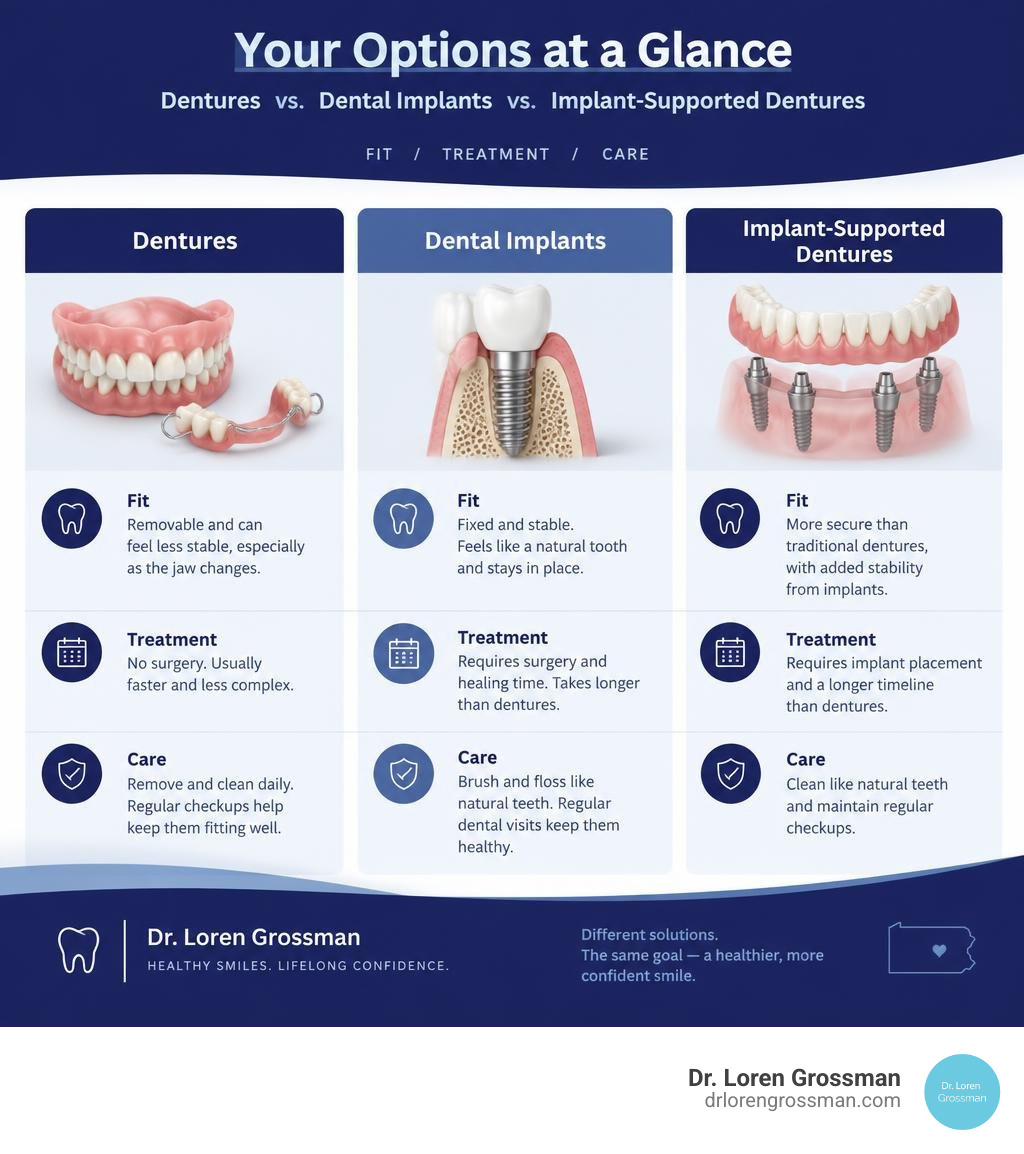
Dental implants vs. dentures in Pennsylvania: the practical differences
Dentures replace missing teeth with a removable appliance. A full denture replaces all teeth in an upper or lower arch, while a partial denture fills gaps when some natural teeth remain. They can restore the appearance of a smile without surgery, but their fit depends on the shape of the gums and jaw.
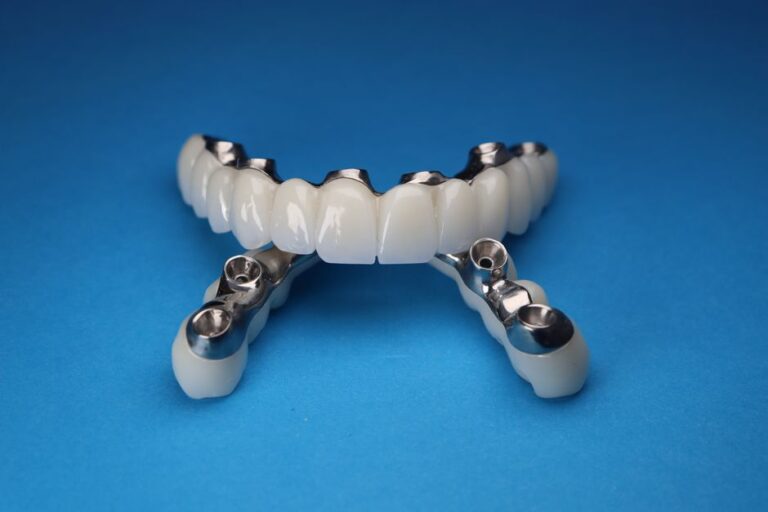
A dental implant is a small post, usually made of titanium, placed in the jawbone to support a replacement tooth. Once the implant has healed and joined with the bone, an abutment connects it to a crown. Implants can replace one tooth or help support a larger restoration.

| Feature | Removable dentures | Dental implants |
|---|---|---|
| Stability | Rest on the gums; may shift, especially if fit changes | Fixed in the jaw and generally stable during eating and speaking |
| Treatment | Impressions, fabrication, fitting, and adjustments; no implant surgery | Planning, surgery, healing, and placement of the final restoration |
| Upkeep | Remove for cleaning and usually soak overnight | Brush and floss around the restoration; attend regular checkups |
| Everyday use | May need adhesive and some food adjustments | Usually feels more like fixed teeth, though adjustment is still needed |
| Jawbone | Do not replace tooth roots or provide the same stimulation to the bone | Can help preserve bone around the implant by transmitting chewing forces |
Dental implants vs. dentures in Pennsylvania: benefits and drawbacks
Dentures are often a practical choice when you want to replace several or all teeth without surgery. They can be made even when jawbone volume is low, and their initial cost is usually lower than the cost of implant treatment. They can also be adjusted or remade as your mouth changes.
Their trade-offs include movement, pressure spots, and the need for periodic adjustments. After teeth are lost, the jawbone can gradually change shape, which may affect how a denture fits. A denture may need relining or replacement to restore comfort and stability.
Implants are anchored in the jaw, so they do not rely on suction or adhesive for stability. They can make chewing feel more secure and help limit bone loss around the implant. However, treatment involves surgery, healing time, and a higher initial cost. Implants also require careful daily hygiene and healthy gums. As with any surgery, complications can occur, and not every patient is a candidate.
We discuss individual implant treatment options based on the number of teeth being replaced, oral health, bone volume, and a patient’s priorities.
Dental implants vs. dentures in Pennsylvania: effects on speech, eating, and confidence
Both options can improve speech and eating compared with having missing teeth, but either may take time to get used to. New denture wearers may notice a change in pronunciation or saliva at first. A loose or poorly fitting denture can move during conversation or make some foods harder to manage. Follow-up adjustments can improve the fit.
Implants are fixed in place, which can help avoid slipping while speaking or chewing. Many people find that they can eat a broader range of foods once treatment is complete, although they should follow their dentist’s guidance while healing. Comfort depends on good planning, healthy tissues, and a well-fitting restoration.
Replacing missing teeth can also help people feel more at ease socially. We can talk through implant-supported smile options and how they may fit your daily routine and goals.
Dental implants vs. dentures in Pennsylvania: costs, insurance, and lifespan
Dentures generally cost less upfront. Implant treatment costs more initially because it may include imaging, surgery, temporary teeth, abutments, crowns, and sometimes bone grafting. The total depends on how many teeth need replacement, the type of restoration, and the treatment needed to prepare the mouth. An individualized estimate is more useful than a single advertised price.
Long-term costs matter too. Dentures may need adjustments, relining, repairs, or replacement as the jaw changes. Acrylic dentures commonly need replacing every five to eight years; porcelain dentures may last up to about a decade, depending on use and care. Implants can last many years, but the crown or other attached restoration can wear, chip, or need repair or replacement. Implants are not maintenance-free.
Dental insurance coverage varies by plan. Some plans may contribute toward dentures or parts of implant treatment, while others have exclusions, annual limits, waiting periods, or restrictions on covered procedures. Medicaid eligibility and benefits also depend on the patient’s circumstances and current plan rules. Before starting treatment, ask the insurer for a written estimate of benefits and confirm what costs remain your responsibility.
We can discuss Pennsylvania dental financing options and review dental insurance coverage considerations as part of planning. A treatment estimate should spell out the recommended steps and expected fees so you can compare options with a clear picture of both immediate and future costs.
Candidacy, treatment, and care: choosing an option that fits
Jawbone loss, health, and implant candidacy
An implant needs enough healthy jawbone to support it. Tooth loss, gum disease, infection, and time without teeth can reduce bone volume. A dental exam and imaging help us assess the bone and plan treatment.
Significant bone loss does not automatically rule out implants. In some cases, bone grafting or other preparatory treatment may be considered, but it adds time and cost and is not appropriate for everyone. Removable dentures may be easier to fit when bone is limited, though changes in the jaw can still affect their fit. Implant-supported dentures may be an option if implants can be placed safely and securely.
We also consider gum health, medical history, medications, and habits such as smoking. Some health conditions can affect healing, so share your full medical history and ask how it may influence treatment. The right choice depends on an in-person assessment, not just a comparison chart.
What to expect during implant treatment or denture fitting
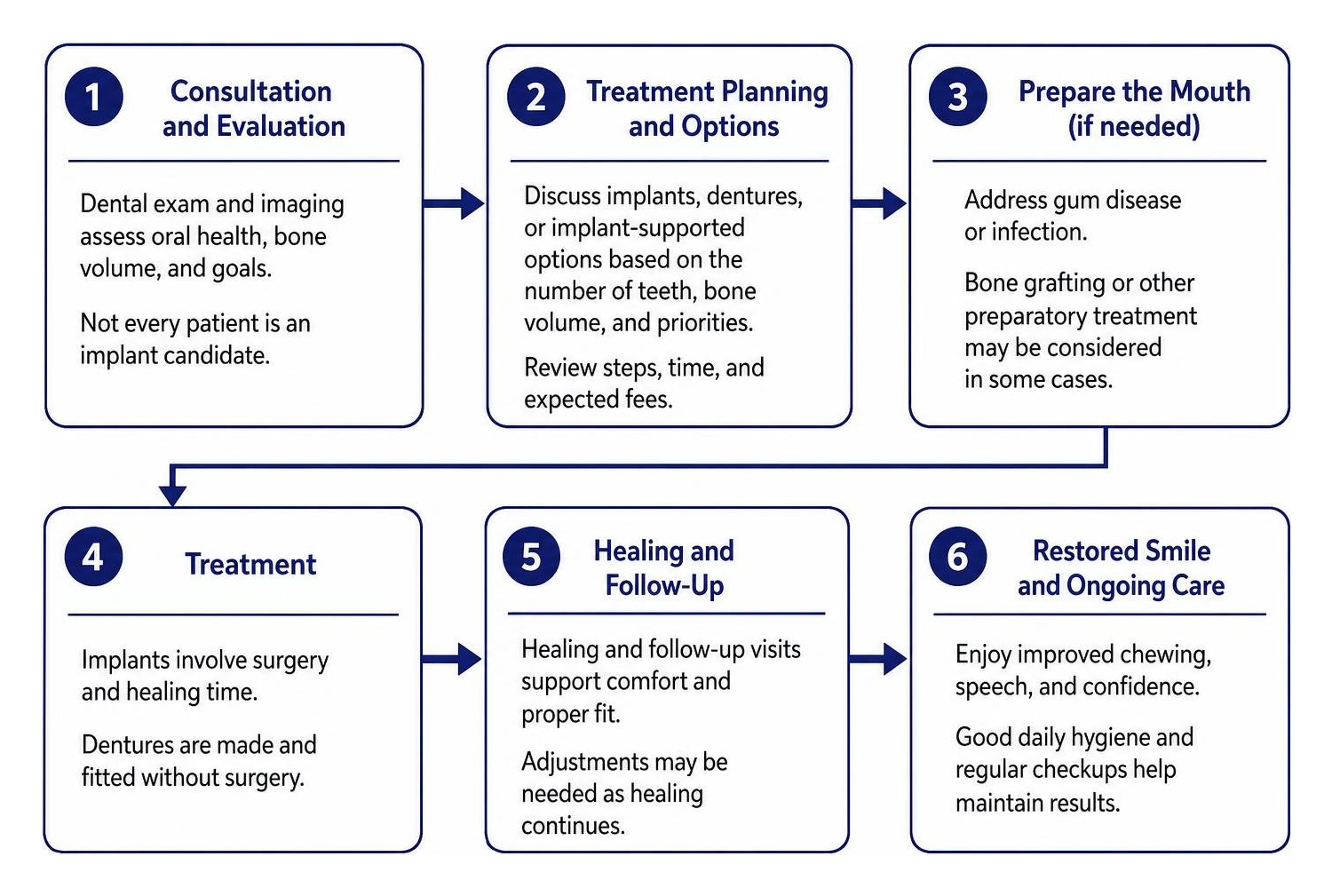
Implant treatment usually begins with a consultation, an exam, and imaging. If a tooth needs removal, extraction may happen before or during the overall treatment plan. The implant is placed in the jaw, then allowed to heal and integrate with the bone. After healing, the abutment and final crown or other restoration are fitted. The timeline varies; some patients need additional healing or preparatory procedures.
For dentures, we examine the mouth, take measurements or impressions, and arrange for the appliance to be made. At the fitting, we check how it looks and feels and make adjustments as needed. Follow-up visits can address sore spots or changes in fit.
Recovery after implant surgery varies from person to person. Temporary soreness, swelling, or bruising can occur, and we provide instructions for care during healing. We review dental implant safety and the benefits and risks relevant to your health before treatment. Planning may also use dental implant placement technology to support careful assessment and placement.
Upgrading removable dentures to implant-supported dentures
Yes, some people who already wear dentures can move to an implant-supported option. First, we assess the existing denture, the gums, jawbone volume, and overall health. The plan may involve placing implants and modifying or replacing the current appliance so it connects securely to them.
Depending on the design, an implant-supported denture may be removable by the patient for cleaning, or it may be fixed and removable only by a dental professional. Implant support can improve stability compared with a conventional denture, which may make speaking and chewing feel more secure. It still needs daily cleaning around the gums and attachments, plus regular professional care. We can review implant-supported treatment options to determine whether a change is appropriate.
Daily care and maintenance
Removable dentures should be rinsed after meals and brushed daily with a denture brush or other recommended cleaner. Clean your mouth and gums as well. Most removable dentures should be taken out at night and soaked in water or a denture-cleaning solution. Handle them carefully over a folded towel or basin of water to reduce the chance of breakage if dropped.
For implants, brush twice daily and clean between teeth and around the implant restoration. Implant-supported dentures need extra attention around the attachments and gumline. Follow instructions for whether your specific restoration should be removed at home. Regular dental checkups help us monitor the gums, fit, and condition of the restoration. Dentures may need relining or replacement; implant crowns and other components may need repair over time.
Frequently asked questions about dental implants and dentures in Pennsylvania
Are implants or dentures better for significant jawbone loss?
Removable dentures may be easier to fit when jawbone volume is low because they do not need to be anchored in bone. However, bone loss can change the shape of the gums and make a denture less stable over time.
Implants require an assessment of bone and gum health. Some patients with bone loss may be candidates after grafting or other treatment; others may be better served by dentures. We determine the options after an exam and imaging.
Can I switch from dentures to implant-supported teeth later?
Often, it is possible to explore the switch. We assess your current denture, bone volume, gum health, and medical history, then discuss whether implants could support a fixed or removable restoration. The existing denture may need modification or replacement. A consultation can clarify the likely steps, timing, and cost.
How long do implants and dentures last?
Dental implants can last for many years, but their lifespan depends on factors such as oral hygiene, gum health, smoking, and regular dental care. The crown or denture attached to an implant may wear or need repair sooner than the implant itself.
Acrylic dentures commonly need replacement every five to eight years, while porcelain dentures may last up to about a decade. Changes in the mouth can mean that a denture needs adjustment or relining before then. Regular checkups help identify fit or maintenance issues early.
Conclusion
The choice between dentures and implants comes down to more than upfront cost. Comfort, jawbone health, treatment time, daily care, budget, and personal goals all matter. We can help you compare those factors and understand which options may be suitable for your needs in Kingston and the surrounding Wyoming Valley.
To discuss your goals and schedule a dental implant consultation, contact our office.