Finding Dental Implants in Wilkes-Barre, PA
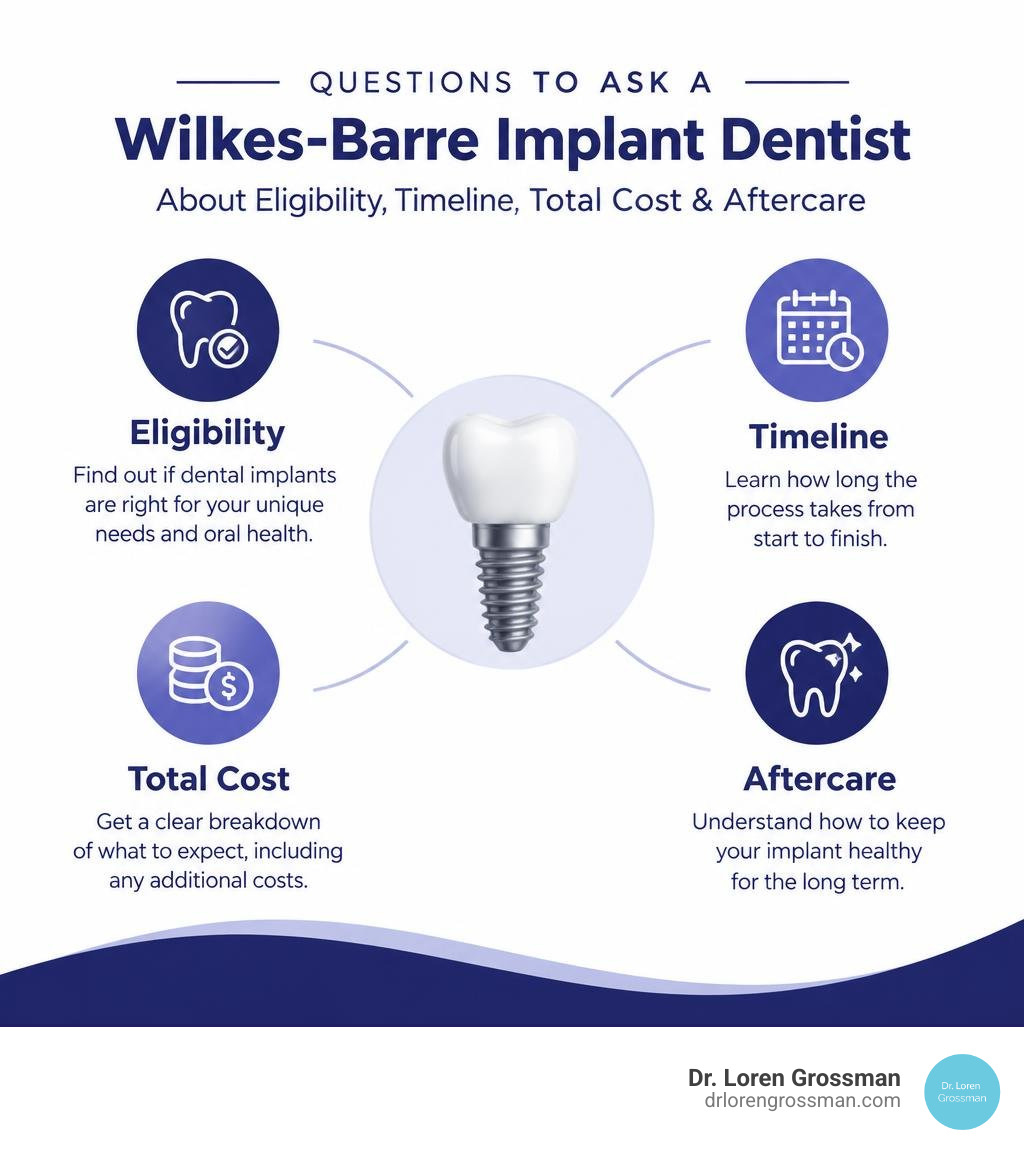
If you’re looking for dental implants in Wilkes-Barre, PA, start with a consultation. A dentist can check your gums and jawbone, explain whether an implant is right for you, and give you a treatment plan with a cost estimate. Implants replace missing tooth roots and support replacement teeth, helping you chew and smile with confidence.
I’m Dr. Loren Grossman, and I’ve cared for Wyoming Valley patients since 1984, including patients who need complex dental implant treatment. If you searched for dental implants wilkes-barre pa, this guide will help you know what to ask at your first visit and what to expect afterward.
Missing a tooth can affect your day-to-day life more than you might expect. It changes how you chew your favorite foods, shifts your natural bite, and can make you feel self-conscious when it is time to laugh or speak. Over 70% of adults aged 35 to 44 in the United States have lost at least one permanent tooth, so you are certainly not alone. Fortunately, restorative dentistry has made incredible strides. Dental implants provide a permanent, lifelike foundation that preserves your jawbone and restores your smile to peak condition.
Understanding Dental Implants: How They Work and Why They Excel
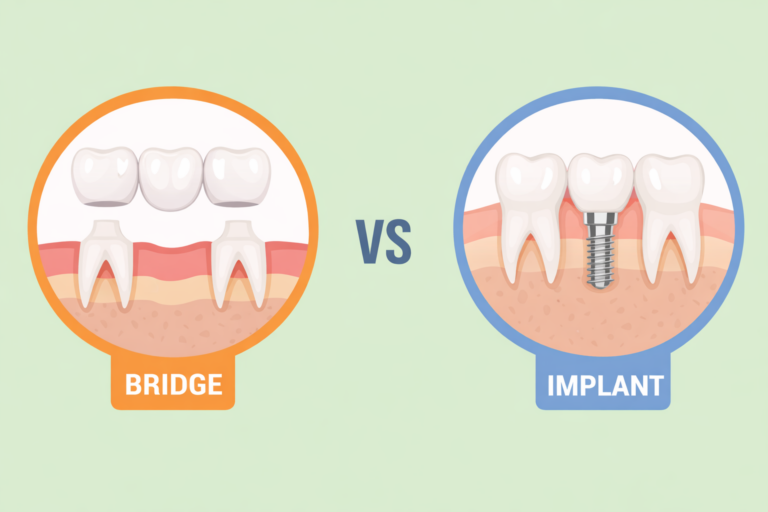
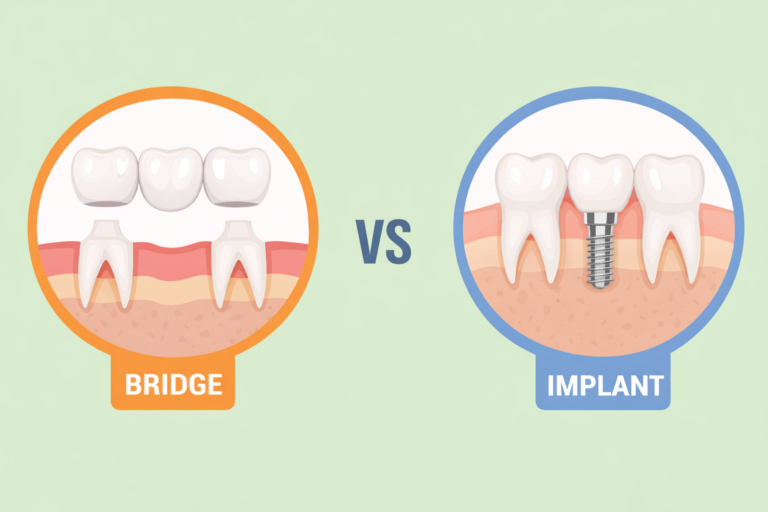
Dental implants are widely considered the gold standard for tooth replacement because they replicate the entire anatomy of a natural tooth from root to crown. Unlike traditional restorations that rest on top of your gums or rely on adjacent teeth for support, an implant fuses directly with your living jawbone.
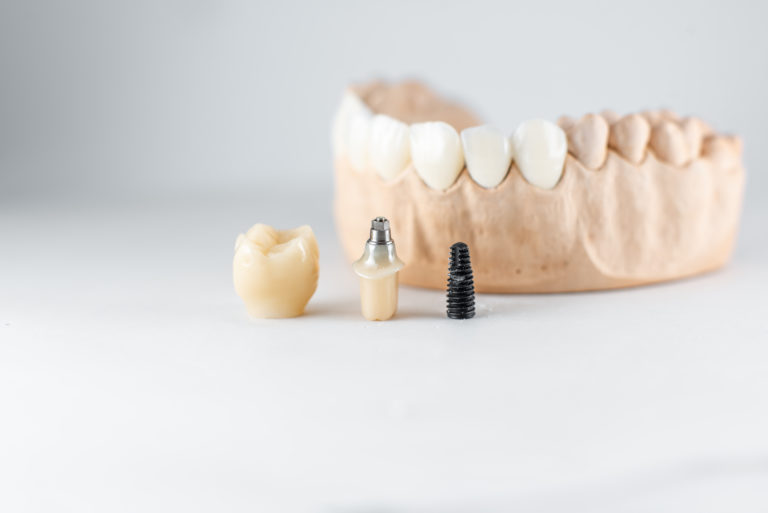
A complete dental implant restoration consists of three primary components:
- The Titanium Post: A small, biocompatible cylinder placed directly into the jawbone that acts as a sturdy prosthetic tooth root.
- The Abutment: A durable connector piece attached to the top of the post to securely anchor the restoration.
- The Custom Crown: A lifelike, handcrafted porcelain or ceramic crown designed to match the shade, translucency, and shape of your surrounding teeth.
The secret behind their success is a biological process called osseointegration. After the post is placed, your bone cells naturally grow around and bond with the titanium surface. This provides an unyielding anchor that prevents the bone atrophy typically triggered by missing teeth.
When considering tooth replacement, patients often compare their options to see which best matches their lifestyle and budget. Understanding the science behind modern dental implants helps clarify why they outperform older methods.
| Feature | Dental Implants | Fixed Dental Bridge | Traditional Dentures |
|---|---|---|---|
| Anchoring Method | Fused directly into the jawbone | Anchored to adjacent natural teeth | Rests on the gums with suction or adhesive |
| Impact on Adjacent Teeth | None; preserves healthy enamel | Requires grinding down adjacent teeth | May cause wear on supporting teeth |
| Jawbone Preservation | Yes; stimulates healthy bone growth | No; underlying bone continues to recede | No; progressive bone loss accelerates over time |
| Chewing Efficiency | Restores 90%+ of natural bite force | Restores moderate bite force | Often limited to soft or easy-to-chew foods |
| Average Lifespan | 25+ years to a lifetime with care | 7 to 10 years before replacement | 5 to 7 years before relining or replacement |
| Patient Satisfaction | 92% satisfaction rate | Moderate satisfaction | Mixed satisfaction due to slipping/soreness |
Choosing between these options often comes down to your personal oral health goals, which is why comparing dental bridge or implant options with your dentist is an essential first step.
Advanced Technology Behind Dental Implants in Wilkes-Barre, PA
Modern dental technology has streamlined the implant experience. Today, clinicians utilize sophisticated diagnostic and surgical tools to maximize comfort and ensure exact positioning.
Using high-resolution 3D Cone Beam Computed Tomography (CBCT) imaging, we can capture a three-dimensional map of your oral structures. This allows us to assess bone volume, nerve pathways, and sinus cavities with pinpoint accuracy. Combined with digital intraoral scanners, we eliminate the need for messy impression trays.
These digital scans feed directly into computer-guided surgical software. This enables us to plan the exact depth, angle, and position of each implant before the procedure even begins, minimizing chair time and accelerating healing. You can explore how new technology in implant placement delivers predictable, lasting results and offers permanent smile solutions near you.
Who Is a Good Candidate for Dental Implants in Wilkes-Barre, PA?
Most adults in good general health who are missing one or more teeth are eligible for dental implants. However, successful osseointegration depends on several clinical factors:
- Sufficient Bone Density: You need enough healthy jawbone to securely anchor the post. If you have experienced bone loss from long-term tooth absence or periodontal disease, pre-treatments like bone grafting or sinus lifts can rebuild the foundation.
- Healthy Gum Tissue: Your gums must be free from active periodontal infections to protect the implant from complications.
- Good Overall Health: Uncontrolled systemic conditions, such as unmanaged diabetes or certain autoimmune disorders, can slow down healing and require careful coordination with your physician.
- Tobacco Habits: Smoking or using tobacco products reduces blood flow to oral tissues and increases the risk of implant failure. Non-smokers or patients willing to pause smoking during recovery experience significantly higher success rates.
For a broader look at restorative pathways, check out our guide to restoring your smile in NEPA.
Integrating Aligners and Restorations
In many smile makeovers, tooth loss occurs alongside crowding, spacing, or malocclusion (a misaligned bite). If remaining teeth have drifted into an open space, placing an implant right away might result in an awkward bite or aesthetic compromise.
In these cases, we often combine clear aligner therapy with implant treatment. Aligners gently shift your natural teeth into their ideal alignment first, creating the perfect space for your new tooth. Because dental implants fuse solid into bone and cannot be moved with orthodontics, combining Invisalign and dental implants in the correct sequence ensures a harmonious, fully functional smile.
The Dental Implant Procedure: Step-by-Step Timeline and Recovery
Getting dental implants is a structured, multi-phase process designed to ensure safety and long-term durability.
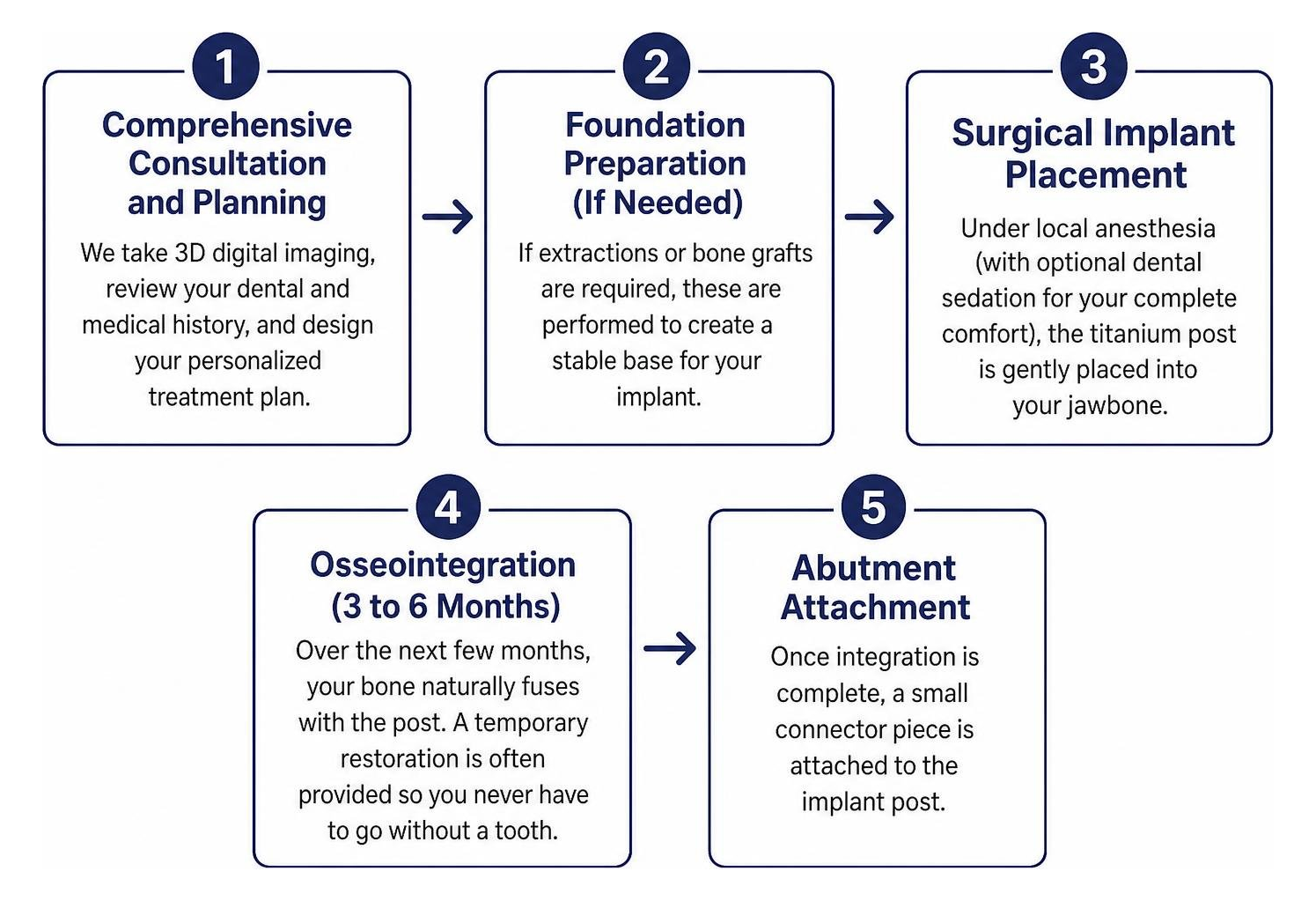
- Step 1: Comprehensive Consultation and Planning: We take 3D digital imaging, review your dental and medical history, and design your personalized treatment plan.
- Step 2: Foundation Preparation (If Needed): If extractions or bone grafts are required, these are performed to create a stable base for your implant.
- Step 3: Surgical Implant Placement: Under local anesthesia (with optional dental sedation for your complete comfort), the titanium post is gently placed into your jawbone.
- Step 4: Osseointegration (3 to 6 Months): Over the next few months, your bone naturally fuses with the post. A temporary restoration is often provided so you never have to go without a tooth.
- Step 5: Abutment Attachment: Once integration is complete, a small connector piece is attached to the implant post.
- Step 6: Final Custom Crown Delivery: Your final custom crown is secured into place, restoring full function and natural aesthetics.
Across the United States, single-tooth dental implants boast a clinical success rate of over 95%, with full-arch restorations achieving up to 98% success.
Post-Operative Safety and Long-Term Maintenance
Dental implants are extraordinarily safe and have a 10-year survival rate of 95.2%. However, keeping them healthy requires consistent daily care. Just like natural teeth, implants are vulnerable to plaque buildup, which can lead to a condition known as peri-implantitis—an inflammatory reaction in the gums and bone surrounding the fixture.
To protect your investment:
- Brush twice daily with a soft-bristled toothbrush and non-abrasive toothpaste.
- Floss daily using implant-safe unwaxed tape or an oral irrigator (water flosser).
- Visit our office every six months for professional cleanings and examinations.
Understanding how safe dental implants are and reviewing the expected lifespan of replacement teeth will give you peace of mind throughout your recovery.
Pricing, Insurance, and Selecting Local Implant Providers
Choosing the right dental professional is the most important decision you will make on your implant journey. Look for a provider who possesses extensive clinical experience, uses in-house 3D imaging, and prioritizes clear communication. Discover more about choosing a trusted Wilkes-Barre implant dentist to ensure you receive top-quality care close to home.
We proudly offer comprehensive implant services in Kingston, PA, serving individuals and families across the entire Wyoming Valley.
Understanding the Cost of Dental Implants in Wilkes-Barre, PA
In Pennsylvania, the average cost for a single dental implant generally ranges from $3,000 to $4,500. This estimate typically covers the surgical placement of the titanium post, the custom abutment, and the handcrafted crown. Total costs may vary depending on preliminary procedures, such as extractions or bone grafting.
While dental insurance historically excluded implants, many modern plans now offer partial coverage for the crown, preliminary imaging, or extractions. We also provide flexible third-party financing solutions to fit treatment comfortably into your budget. When considering the long-term investment, dental implants are exceptionally cost-effective—traditional bridges and dentures often require costly adjustments, repairs, and replacements every 5 to 10 years. For more details on comprehensive aesthetic care, visit our guide to top Wilkes-Barre dental care.
Frequently Asked Questions About Dental Implants
How long do dental implants last?
With proper oral hygiene and regular dental checkups, dental implants are designed to last a lifetime. Studies demonstrate a 10-year survival rate of over 95.2%. While the titanium post is permanent, the custom crown may experience normal wear and tear over 15 to 20 years and can easily be maintained or replaced if needed.
Is getting a dental implant painful?
Most patients report that getting a dental implant involves minimal discomfort, often comparing it favorably to a simple tooth extraction. The procedure is performed under local anesthesia, ensuring you are completely numb. For patients with dental anxiety, sedation options are available. Any mild post-procedure tenderness can easily be managed with over-the-counter pain relievers for a few days.
Are dental implants safe for older adults?
Yes! Age alone is never a barrier to receiving dental implants. As long as you have good overall health and sufficient bone volume (or are a candidate for bone grafting), implants provide life-changing stability. They allow older adults to eat a balanced, nutritious diet without the slipping, pinching, or messy adhesives associated with removable dentures.
Conclusion
Losing a tooth does not mean you have to settle for discomfort or hide your smile. Modern dental implants restore your appearance, preserve your natural facial structure, and give you back the full chewing power of natural teeth.
At Dr. Loren Grossman’s practice, we combine decades of clinical experience with a warm, patient-first approach to give you exceptional results. If you are ready to regain your oral health, schedule a consultation for dental implants with our team today!