Why Dental Crowns and Bridges Matter for Your Smile
Dental crowns and bridges are fixed prosthetic devices that repair damaged teeth or replace missing ones, restoring both function and appearance to your smile.
Quick Answer:
- Dental Crowns – Cap or cover a damaged tooth to protect it from further deterioration, infection, or tooth loss
- Dental Bridges – Replace one or more missing teeth by anchoring a false tooth (pontic) to surrounding teeth or implants
- Materials – Typically made from porcelain, ceramic, gold alloys, or zirconia to match natural teeth
- Lifespan – Last 10-15 years or more with proper care and maintenance
- Not Removable – Unlike dentures, crowns and bridges are permanently cemented in place
Missing or damaged teeth affect more than just your appearance. They can make eating difficult, change the way you speak, and cause surrounding teeth to shift out of alignment. This shifting can lead to bite problems, gum disease, and even TMJ disorders.
Dental crowns protect weakened teeth—whether from decay, fractures, or root canal treatment—by covering them completely. Bridges fill the gaps left by missing teeth, preventing the domino effect of teeth moving into empty spaces.
Both crowns and bridges are fixed restorations, meaning they’re cemented onto your existing teeth or dental implants. Only a dentist can remove them, which makes them a stable, long-term solution compared to removable options like dentures.
As Dr. Loren Grossman, I’ve been restoring smiles in Northeastern Pennsylvania since 1984, performing everything from complex dental crowns and bridges to complete smile makeovers with a hands-on, personalized approach. My experience with advanced materials and techniques ensures you receive durable, natural-looking restorations custom to your unique needs.
Understanding Dental Crowns and Bridges and Their Functions
When we talk about restorative dentistry, we are focusing on returning your mouth to its full functional and aesthetic potential. Understanding the fundamentals of what are dental crowns and tooth bridges is the first step toward a healthier smile.
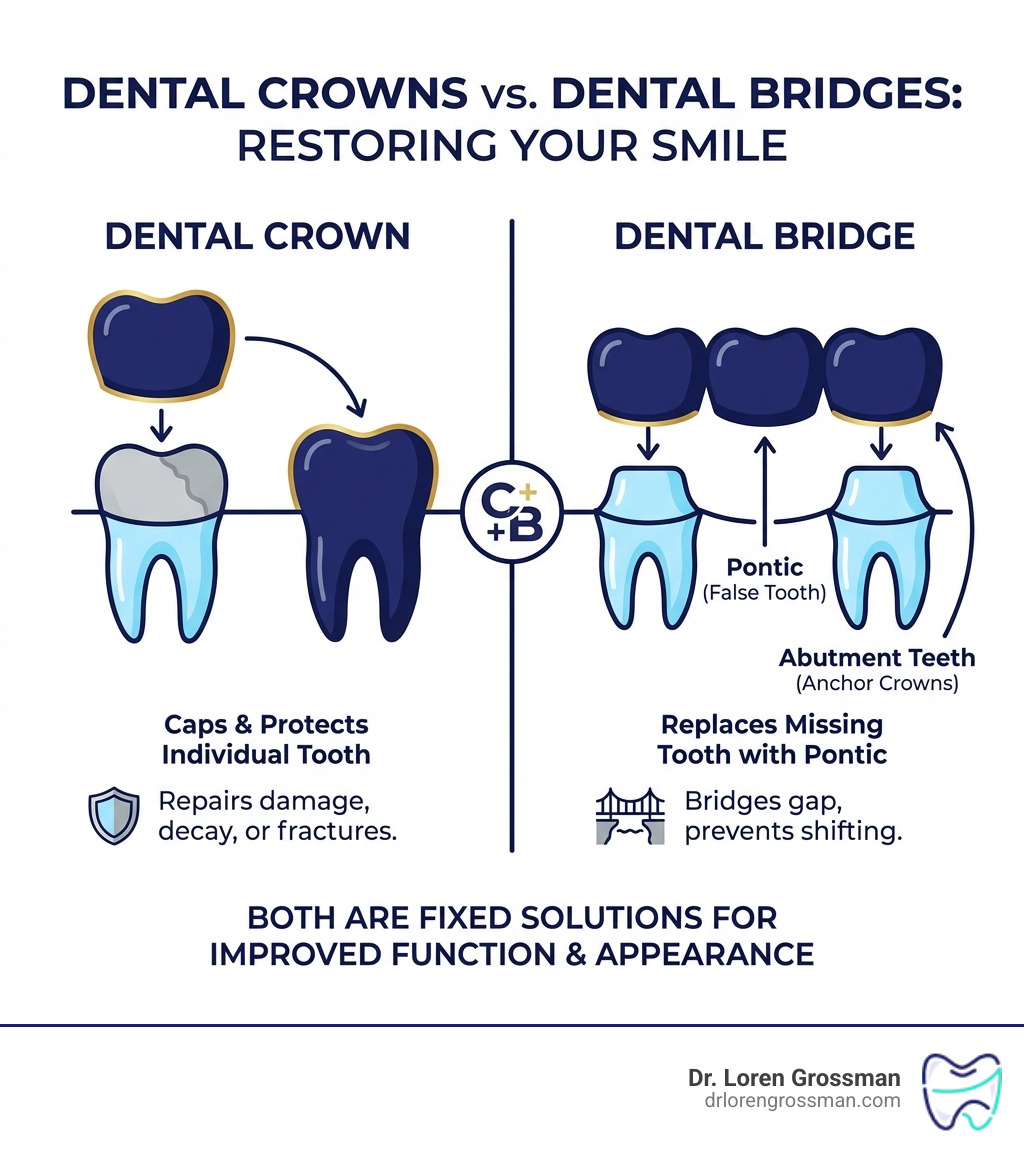
The primary function of a dental crown is to act as a protective “helmet” for a tooth that has been compromised. On the other hand, the primary function of a dental bridge is to fill a literal gap in your smile, preventing the remaining teeth from drifting into the empty space.
When a tooth is lost, the bone that once supported it begins to resorb or shrink. Furthermore, the teeth adjacent to the gap and the tooth directly above or below it will start to move. This shifting can lead to a “bad bite” (malocclusion), which makes it harder to chew and can cause pain in the jaw joints. By utilizing dental crowns and bridges, we can lock those teeth in their proper positions and maintain the structural integrity of your entire mouth.
What is a Dental Crown?
A dental crown is often referred to as a “cap” because it fits entirely over the top of a tooth, right down to the gum line. At our practice, we use crowns & bridges to restore teeth that have seen better days.
Common reasons a dentist might recommend a dental crown include:
- Protecting a weak tooth: If a tooth is heavily decayed or has a large filling, it is at high risk of fracturing. A crown holds the tooth together.
- Restoring a fractured tooth: For teeth that are already broken, a crown restores the original shape and size.
- After a Root Canal: Once a tooth has undergone root canal therapy, it becomes brittle because the blood supply has been removed. A crown is essential to prevent it from cracking.
- Cosmetic Improvement: If you have a severely discolored or misshapen tooth, a crown can provide a beautiful, uniform appearance.
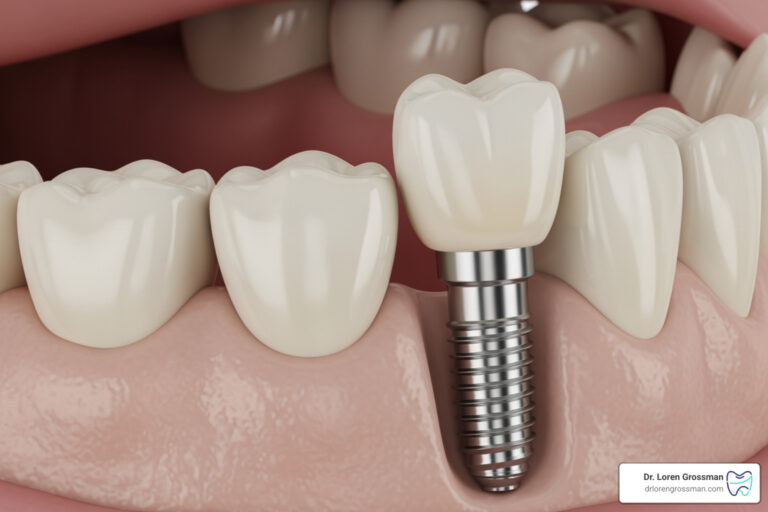
- Covering an Implant: A crown is the final piece of the puzzle for a dental implant, providing the chewing surface.
In our general dentistry department, we emphasize that crowns are not just about looks; they are about preservation. By “capping” a tooth, we shield it from further deterioration, which might otherwise lead to painful infections or the need for extraction.
How Dental Bridges Replace Missing Teeth
A dental bridge is a prosthetic that “bridges” the gap created by one or more missing teeth.
Here is how the anatomy of a bridge works:
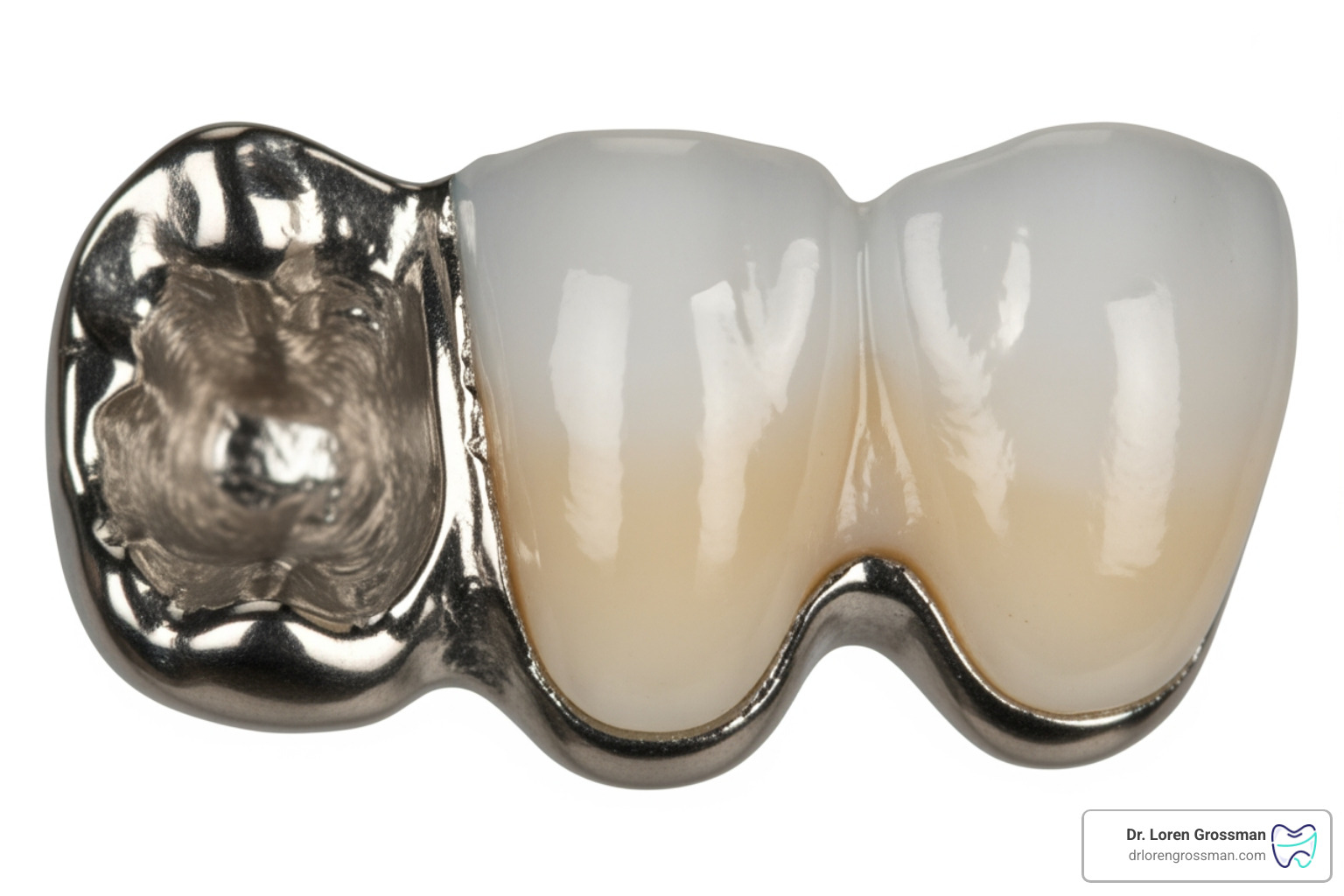
- Abutments: These are the anchor points. They are usually the healthy natural teeth on either side of the gap, though they can also be dental implants. These teeth are prepared and covered with crowns.
- Pontic: This is the “fake” tooth that sits in the middle of the bridge, filling the gap where your natural tooth used to be.
The bridge is a single, solid piece that is cemented onto the abutments. This configuration provides a stable surface that feels and functions much like your natural teeth. By filling these gaps, we help patients in Wilkes-Barre and Dallas avoid the complications of tooth shifting, such as gum disease and temporomandibular joint (TMJ) disorders, which are often caused by the imbalance of a missing tooth.
Materials and Types of Restorations
Choosing the right material for your dental crowns and bridges is a collaborative process. We consider the location of the tooth, the amount of “bite force” it endures, and your aesthetic goals.
Common Materials for Dental crowns bridges
In the field of cosmetic dentistry, we have seen incredible advancements in dental materials. We no longer rely solely on dark metal restorations.
| Material | Best For | Aesthetics | Durability |
|---|---|---|---|
| Porcelain / Ceramic | Front teeth | Excellent (matches tooth color) | High |
| Zirconia | Back teeth (molars) | Good (very opaque) | Extremely High |
| Gold / Metal Alloys | Molars (heavy grinders) | Poor (metallic) | Highest |
| Porcelain-Fused-to-Metal (PFM) | Any tooth | Good | Very High |
Porcelain and Ceramic are the gold standard for front teeth because they mimic the translucency of natural enamel. Zirconia has become incredibly popular in Northeastern Pennsylvania because it is virtually indestructible, making it ideal for the heavy chewing forces of the back molars. For patients who struggle with grinding (bruxism), Gold Alloys remain an excellent choice because they are gentle on the opposing teeth and rarely chip.
Different Types of Dental Bridges
Not every gap is the same, which is why there are several dental bridges available to suit different clinical needs:
- Traditional Bridge: The most common type. It involves creating a crown for the tooth or implant on either side of the missing tooth, with a pontic in between.
- Cantilever Bridge: This is used when there are adjacent teeth on only one side of the missing tooth space. It is less common today and generally not recommended for the back of the mouth where it could put too much pressure on the single anchor tooth.
- Maryland Bridge (Resin-bonded): Often used for front teeth. Instead of using crowns, this bridge uses a metal or porcelain framework with “wings” that are bonded to the backs of your existing teeth. It requires very little tooth preparation.
- Implant-Supported Bridge: This is the strongest option. Instead of being supported by natural teeth, the bridge is supported by dental implants. This is ideal for replacing three or more missing teeth in a row.
The Procedure, Longevity, and Care
Getting dental crowns and bridges typically requires two appointments, though new technology is changing that. Regardless of the method, we prioritize your comfort. We use local anesthesia to ensure the area is completely numb, so you won’t feel pain during the preparation.
Getting a Traditional Crown vs. CEREC
In a traditional procedure, we first prepare the tooth by removing a small amount of enamel to make room for the crown. We then take a physical impression (using that “goopy” putty) and send it to a dental lab. You’ll wear a temporary restoration for about two weeks while the lab fabricates your permanent one.
However, we are proud to offer CEREC technology (Chairside Economical Restoration of Esthetic Ceramics). Using CAD-CAM technology, we can take a digital scan of your tooth—no putty required! A milling machine right in our office carves your permanent crown from a solid block of ceramic in minutes. This means you can walk in with a damaged tooth and walk out with a permanent, high-quality crown in just one visit.
Maintenance for Dental crowns bridges
While these restorations cannot get cavities themselves, the natural tooth structure underneath them can.
- Brush Twice Daily: Use a fluoride toothpaste to keep the gum line healthy.
- Floss Daily: This is critical. For bridges, you cannot floss “down” through the contact. You must use a floss threader or superfloss to slide the floss under the pontic to remove food and plaque.
- Avoid Hard Objects: Don’t chew on ice, hard candy, or pens, as this can chip the porcelain.
- Regular Cleanings: Professional cleanings in our Kingston or Wilkes-Barre offices are essential to ensure the cement remains intact and the supporting teeth stay healthy.
Bridges vs. Dental Implants
Many patients ask us whether they should choose a bridge or dental implants. While bridges are faster and don’t require surgery, implants offer significant long-term benefits.
As explained in Dental Implants from Science to Smile, implants consist of a titanium root that is surgically placed into the jawbone. This root stimulates the bone, preventing the bone loss that naturally occurs after a tooth is pulled. Unlike a traditional bridge, an implant does not require us to file down the healthy adjacent teeth.
However, if you have insufficient jawbone or prefer a non-surgical route, a bridge remains a fantastic, time-tested solution.
Frequently Asked Questions about Crowns and Bridges
What is the ideal age for a dental bridge?
Most dentists recommend waiting until at least age 17 or 18 when jaw growth is complete. If a child or teenager loses a permanent tooth, we may use a temporary option like a Maryland bridge or a “flipper” (a removable partial) until they are old enough for a permanent fixed bridge or implant.
Is the procedure for getting a dental bridge painful?
The procedure is typically painless. We use local anesthesia to numb the gums and the teeth being worked on. After the numbness wears off, you might feel some minor sensitivity or gum soreness for a few days, but this is easily managed with over-the-counter pain relievers.
How many teeth can a dental bridge replace?
A dental bridge most commonly replaces one to three consecutive teeth. While it is possible to replace up to four teeth in a row, this requires exceptionally strong anchor teeth on both sides. If too many teeth are missing, we usually recommend an implant-supported bridge for better stability.
How long do dental crowns and bridges typically last?
With proper care, they typically last between 10 and 15 years. Some patients find their restorations last much longer—even a lifetime—if they maintain excellent oral hygiene and avoid habits like grinding or chewing on hard objects.
Can a bridge be removed and recemented?
If a bridge becomes loose because the cement has failed, we can often clean it and recement it. However, if the bridge is loose because the underlying tooth has decayed, the bridge may need to be replaced after the decay is treated.
Conclusion
At the practice of Dr. Loren Grossman, we believe that everyone deserves a smile they can be proud of. Serving Kingston, Wilkes-Barre, Scranton, and the surrounding Northeastern Pennsylvania area, we combine decades of experience with advanced technology to provide dental crowns and bridges that are as durable as they are beautiful.
Don’t let a damaged or missing tooth affect your confidence or your health any longer. Our patient-focused approach ensures that your treatment plan is custom specifically to you. Book your consultation for dental crowns bridges today and take the first step toward your smile change.